-
Richard Nixon’s Years at Fullerton High School
The following is from a work-in-progress about the history of Fullerton. You can support my ongoing research and writing on Patreon.
When I attended Fullerton Union High School, I remember hearing that former president Richard Nixon had attended my school. I never thought about it much since then, but as I’ve been researching the history of Fullerton, this fact seems important. Nixon was from Orange County. He was born in Yorba Linda, attended school in Fullerton and later Whittier, and his personal and political roots are deeply embedded in this place. The Nixon Library is in Yorba Linda. When he was president, he established the “Western White House (Casa Pacifica)” in San Clemente.
Nixon attended Fullerton High School from 1927-1928, his freshman and sophomore years. His years as a student are documented in an Oral History Project conducted by Cal State Fullerton. The project includes a series of interviews with people who knew him as a student.
This document is a fascinating read because it shines light both on Nixon the young man, and on the culture of Fullerton in the late 1920s, when he was a student here.

Richard Nixon (left) with friends at Fullerton High School. Photo courtesy of the National Archives. Regarding Nixon’s personality as a high-schooler, the consensus from the interviews is that he was “a quiet fellow,” a “serious student,” not “an easy person to get to know,” and yet “an excellent public speaker,” and “a tough opponent in a debate.”
Irvin Chapman, son of Fullerton’s first mayor Charles C. Chapman, came from similar circumstances as Nixon. Both men grew up on farms, somewhat isolated from the community-at-large. Chapman recalls, “A person who comes in from living in a house on an orange ranch or a farm back in those days…has a feeling of being apart from the community…I felt, and I think I kind of basically had a very similar nature to his [Nixon’s], reserved and kind of apart from the kids that lived in the town…I think both nature and the environment in which he grew up tended to make him that way, so he was reserved and shy and did not make an effort to get acquainted.”
Nixon played violin in the school orchestra, tried football (rather unsuccessfully), and participated in dramatic plays. But his real skill, as a student, was in debate. Chapman recalls, “He was always well-prepared…never could you get a point on him that he wasn’t prepared for with a rebuttal in his card file… He had done his research and he knew it.” Nixon, the young man, even in high school, “seemed to have a desire that he was going to be someone in politics,” said classmate James Grieves, “He was tenacious, very tenacious.”
Fullerton Union High School, at that time, had a dress code for girls, but not for boys, according to Nixon’s former English teacher, Helen Dryer. “If a girl stepped over the line at all,” Dryer recalls, “she was called in before the uniform dress board.” Regarding boy’s clothing, she said, “They could dress, I suppose, as they pleased.”
The 1920s was the Prohibition Era and the Fullerton leadership, including Charles C. Chapman and Louis Plummer, had rather rigid ideas about morality and “good citizenship.” Grieves describes a typical school assembly at the high school in those days: “The principal would have something to say, something was bugging them or some corrective measures had to be taken, and then there would probably be a speaker who would talk on various subjects…smoking, drinking, safaris [safaris?]…our sex lectures were always put on for separate audiences, girls one time and fellows the next.”
But Fullerton was not completely conservative. For entertainment, students could see films at the Chapman [later called the Fox] theater or vaudeville shows at the Rialto Theater. Another popular weekend activity at the time, according to Nixon’s schoolmate Rowe Boyer, was “to congregate on the sidewalk or sit on the car and watch people Saturday night…Everybody would go down on Saturday night and walk up and down the sidewalk, if nothing else.”
Some of Nixon’s classmates, like Irvin Chapman and James Grieves, continued their relationships with Nixon after high school, as he climbed the ranks of American politics. Chapman and his father Charles had the most interaction with Nixon, as the Chapmans were deeply involved in Republican politics. Irvin recalls a speech that Nixon gave to the Lincoln Club (an elite cadre of Orange County uber-wealthy businessmen who helped bankroll the political careers of Nixon and Reagan). “It was after he had been defeated by Kennedy for President,” Chapman recalls, “He seemed to be much more in command of the situation. The speech that he made that night was, I think, probably one of the best ones that I have ever heard him make.”
James Grives was an Air Force officer during the early years of the Cold War. He recalls, “My speciality was intelligence…I had the problem of indoctrinating troops in anti-Communist activities. I had worked with the American Legion and the Associated Farmers in this capacity, and I have attended Communist meetings undercover.” Grieves and Nixon shared anti-communist zeal: “At that time Dick [Nixon] was heading the national anti-communist move, you know, and was chairman of the House Committee on Un-American activities. That really kicked him off in national politics,” Grieves recalls.
-
Fullerton Tribune: 1893
The following is from a work-in-progress about the history of Fullerton. You can support my ongoing research and writing on Patreon.
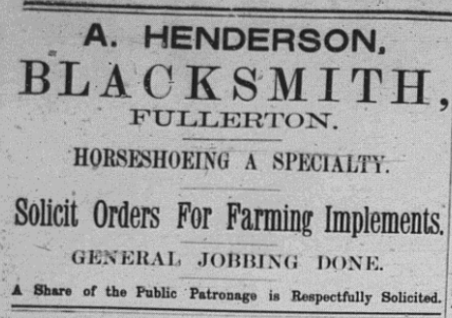
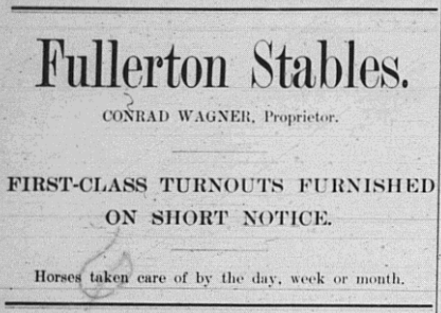
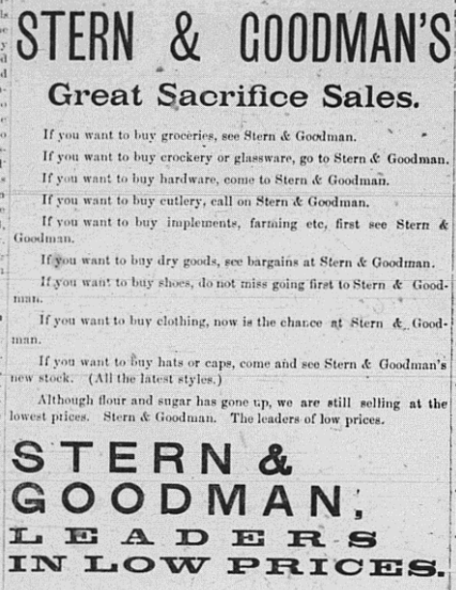
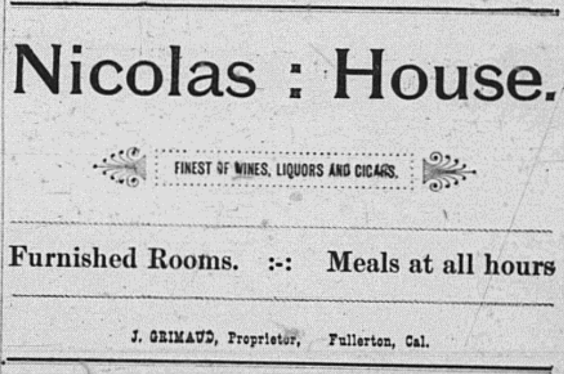
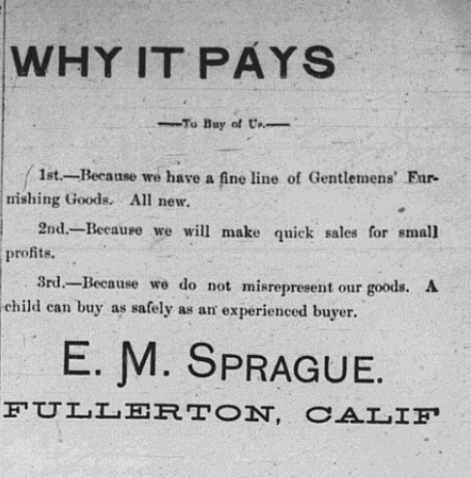
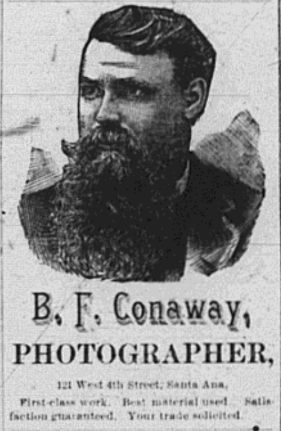
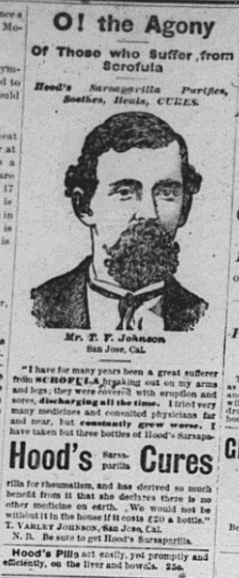
The Local History Room of the Fullerton Public Library has microfilm from the Fullerton Tribune newspaper stretching back to 1893. I am in the process of reading over the microfilm, year by year, to get a sense of what was happening in the town over the years. Here are excerpts from some of the articles from that year. I will occasionally include some context for the articles in italics. The headlines and text in regular font are direct quotes from the Tribune. Note: Some of the language is offensive and racist. In general, I have kept this language because I don’t think there is value in sanitizing the past. Also, to add a bit of levity, I have sprinkled in some ads from the 1893 Tribune.

May 6
A hot national topic in 1893 was the Chinese Exclusion Act, which severely curtailed Chinese immigration to the United States, required all Chinese residents in the US to obtain special papers, and placed several limitations on the rights of Chinese residents in the US. As you can tell by the articles printed in the Tribune, editor Edgar Johnson was strongly in favor of the Chinese Exclusion Act.
Unregistered Chinamen Will Not be Arrested After May 5
Orders have been issued to treasury officers, special agents, internal revenue agents, and others not to arrest unregistered Chinamen after May 5. On that date the Geary Chinese law provides that all unregistered Chinese in the United States may be arrested. As the constitutionaliry of the Geary act will be tested before Supreme Court on May 10, it has been decided to await the decision before ordering wholesale arrests.
Up to noon, May 2, fourteen of the 110 Chinamen in this city had registered and it is expected that most of the others will do so between now and Friday next, the last day under the Geary Exclusion Act.
High School Secured
In 1893, local residents voted to create the Fullerton Union High School District. There was some debate at the time as to whether to create a county high school (likely in Santa Ana). Also, at the time, some voters were not keen on being taxed to provide for public education after eighth grade. You can check out my brief history of Fullerton Union High School HERE.
The dreads and uncertainties of election are over and the high school came out first best. There were some unpleasant hitches in some districts ut the majority of the votes cast were in favor of the district. Only seven were against it. Two of those made the excuse that “it was a law to tax the poor man to educate the rich man’s children.” A second thought will show that the poor man pays little or now tax, and almost always has more children to educate.
Local and Personal
A regular feature of each issue of the Fullerton Tribune in 1893 was the “Local and Personal” section. This was a mix of gossip, random local happenings, and sometimes thinly veiled ads.
–Ladies, call at the Gem Pharmacy and get a fan free of charge.
–Buy McCormick Mower from John Schauman of Anaheim.
-The census report shows that there are 77 census children in Orangethrope district, 33 girls and 44 boys.
–Do not fail to read Stern & Goodman’s new ad this week and take advantage of great offers they make.
–J. Hall of New York, accompanied by Mrs. War and daughter of Pasadena, are visiting friends in Fullerton.
–The Tribune will no doubt be greatly improved during this month as the editor will be absent for the next three or four weeks.
–J. Sansinena has purchased from the Stearns Rancho Company 3,000 acres of the La Habra ranch, four miles north of Fullerton.
–At the last meeting of the Board of Supervisors saloon licenses were granted to W. J. Ree, J. Grimaud, Caroline Dierksen, and Paul Golter, all of this place.
–Wm. Crowther informs us that everying up in the Placentia country is looking fine, and that there will be a full peach crop, light apricot crop and an average walnut crop.
May 13
Too Many Here Now
There is a rush of immigrants for this country. Several thousands are now on the ocean headed for this port. The reason for the rush is that the new immigration law went into effect May 3. The steerage passengers on all steamships leaving all foreign ports on and after May 3 are to be subjected to a new system of questions on their arrival and will come under the control of the new Board of Inspectors. To forestall this many have taken passage and they will be here in swarms next week. Then thousand Italians left Marseilles on eleven steamships, which have just sailed from that port. The Belgravia is bringing 1400. There are 1300 more round from Bremen, and there is migration from other ports equally as large.
The High School Once More
We thought we had settled the high school question but…The district attorney decided that, because all the voters did not avail themselves of the provisions and privileges provided by law, we would have it over. We will not say what we think about the district attorney’s decision for fear he might not like it and our sporting editor is away, but we will “keep a thinkin.” Anaheim has voted down the question and this will be the only high school this side of the river.
Some parties from Santa Ana told voters in these precincts that we were deluding the people when we told them if they did not vote this district now, we would most likely be “roped” into supporting a county school, as nobody in Santa Ana wished to try a county high school election again, and yet in the Santa Ana Evening Blade of the 8th, in speaking of the overthrow of the high school question in Anaheim, we find the following: “The truth is that the county should have one High School for the present and it should be located in Santa Ana.”
Orange Growers Union
A.F. Rendlhton, A. McDermont, Theo Staley and W.W. McFadden who were appointed organizing committee of the Orange Growers Union, a meeting of which was held in Chadbourne Hall a few days ago, went to Los Angeles last Tuesday to meet with the Southland Union, to take measures for a permanent organization of the six Southern Counties.
The plan is to control the entire orange crop against commission men. They will sell to local dealers or sell fob or any way except to take a leap in the dark with their valuable orange crops.
Union Water Company Meeting
All directors of Union Water Company were present at the meeting of the board last Saturday: Mr. Botsford, Dr. Gardner, Mr. Zeyn, Mr. Amerige.
-The last school census showed Buena Park again of 14 pupils, Orangethorpe 9, Fullerton 14, Placenta 0.
In 1893, Fullerton did not have any police officers.
-One result of having police officers in Anaheim who will not permit rowdyism and vulgarity on their streets, may be seen nearly every Sunday in this village. Men who have imbibed too much of the ardent, but who dare not make a noise in the streets of their own city, come over here and indulge in conduct which in a village having police officers would result in their arrest and punishment. Moral: Let us have a constable in town to keep order.
Local and Personal
The Women’s Christian Temperance Union was quite active in Fullerton, and they were ultimately successful in getting a local ban on saloons in 1906, well before the national Prohibition amendment.
-The reading room and gymnasium now sports new curtains, thanks to the WCTU.
-Rod Stone’s horse fell last Tuesday in front of the Chadbourne block, and threw his whole weight on Rod’s foot, causing a severe fracture.
-Arrangements are being made to subdivide the La Habra valley north of here and sell in small tracts. That will be a great “boom” for Fullerton.
Tribune editor Edgar Johnson was not too good at separating news from opinion in his paper. His views on local and national issues come through loud and clear.
-Do you want to pay a high price for a high school beyond your reach, or a low price for one within reach? Vote for the high school.
-The WCTU of Fullerton will meet at the residence of OM Skinner at Orangethorpe Wednesday, May 17. All members are requested to be there. Mrs. Alice Hunt will be present.
-W.M. McFadden, Theodore Staley, A. McDermont, and A.T. Pendleton went to Los Angeles this week to attend a meeting of orange growers of Southern California and to organize a shippers association.
-Judging from the great numbers of dogs to be seen on our streets we think it would be a good thing if the bounty which was removed from coyote scalps was placed on the scalps of the worthless dogs which infest the community.
The St. George Hotel was one of the first buildings built in the newly-established town of Fullerton, built by town founders George and Edward Amerige. It has since been torn down.
The St. George Hotel tried to close for the summer but the demands were so great they have had to give rooms and may begin giving meals again before winter. One night this week they report ten new arrivals for rooms. The hotel has been open every winter.
Do you want a plan by which the poor and rich alike can give their children an advanced education without expense of boarding them away and sending them out from the tender, watchful, parental care? Then vote for the high school.
Do you want to sell your land or have the value increased so you can sell any tie you may choose? Then make this section so attractive that intelligent, progressive people with families will want to settle here and have all the advantages of civilization. Vote for the high school.
Rev. Cowan, pastor of the Methodist church here, is meeting with marked success in his work in this parish. On last Sunday evening several of our young men united with the church. There are others who are seriously considering the matter and it is hoped they may come out and avow their intention of becoming Christians. God speed the good work.
Do you know that locating the high school in Fullerton for five years does not locate it here forever. The high school board will settle that, and if Fullerton does not keep to the front with attractive offers, they can locate it where they please and may take it away from us. Each district has equal say in the board, regardless of voting strength, so there is no chance for us to get the cinch as some suggested. However, we always intend to ake such attracive offers that they will always want to keep it here.

Great Chinese Frauds
Collector of Port Lotan at Portland on May 4 finished the examination of the certificates of the 612 Chinese who arrived on the steamer Danube from Victoria. Only four have been allowed to land, and it is probably that not more than one hundred out of the entire number will be permitted to enter this country. Collector Lotan has discovered 188 certificates which bear unmistakable evidence of fraud, and in consequence has telegraphed the Treasury Department at Washington for instructions. Pending instructions from the department no more Chinese will be landed.
While the evidence at present is incomplete, it is said that a most gigantic combination to violate the exclusion law has been unearthed and sensational developments are looked for. Many of the Chinese certificates are signed by reputable citizens of this city, and in addition they bear the seal of a notary public. A number of persons who acknowledge they signed the certificates deny that they swore to the same before a notary.
May 20
In addition to the Chinese, Italian immigrants were also looked upon with suspician in the late 1800s.
Slaves of Padrones
Immigrant Inspector Conkling in his official report to the Treasury Department as to the violation of the alien contract labor law, among other statements, says:
“The padrone system is the most damnable, outrageous and injurious to American workingmen of any system that was ever practiced in the United States, and there is no denying the fact that it exists in almost every city in this country where there is an Italian colony.”
The report details how Italian laborers are brought into this country and coached and instructed on the journey over, so that when they arrive by false swearing they evade the inspectors.
Conkling says that the railroad contractors need not be so closely watched in future in regard to the violation of the alien contract labor law as the Italian bankers and padrones. The former, in partnership with the padrones, furnish the money and newly arrived Italisns were supplied in hundreds to work on American railroads to the exclusion of American workingmen.
…
Three negroes were lynched at Bearden, Ark, May 9 for a murderous assault made on Jerre Norman, a prominent young businessman of that place. Norman died from the wounds, which were inflicted with an ae upon his head as he was returning from his store at midnight.

The supreme court has decided the anti Chinese law constitutional and the Chinese worshipers are making a great bug bear of how to send them back. Just leave all such small subjects to us, Uncle Sammy. What have we got all these war vessels for if they are not to transport Chinese upon? If they will just begin moving these fellows, it won’t be very long before there will be some room left for white people in this country. It is not going to trouble commerce so much either. They are going to keep selling us all we will buy and smuggle a contraband Chinaman in each package of tea and we will do the same.
May 27
The long contemplated suit of the Santa Ana Irrigation Co. and the Anaheim Union Water Co. vs. The Jurupa Land and Water Co. has been filed. It is to restrain defendants from taking water from the Santa Ana river for irrigation purposes, on the ground that said water belongs to the plaintiffs.
A Journalist on Journalism
The most obvious faults of the daily newspaper of the present day are its inaccuracy and its partisan unfairness. From these failings the magazine is at least tolerably exempt. The daily newspaper has become so untrustworthy with its looseness of statement, its disregard of truth and its often willful perversion of facts that fair-minded men men sometimes say that they find that they find more satisfaction in reading the journals of the party to which they are opposed than in those of their own political faith. No man can be certain that he has found the truth anywhere in the newspapers until it has been affirmed by a majority of them all.
If the monthly magazine ever becomes a daily newspaper let us hope that its first and last purpose in life will be to tell the whole truth accurately. In the feverish race to “distance all contemporaries” the daily metropolitan journal too often throws decency and discretion to the winds. Things have finally come to such a pass that none of these will believe the others. They are al busy in the discrediting of each other’s news, denying the accuracy of each other’s reports and undervalueing the enterprises of every one but one–their own journal. In such a state of things what can be expected of the general public, looking on at the jealous contention from the outside? Is not the imperia observer tempted to say, as he often does, “Gentelmen, you tell the truth about each other!?
June 3
A Long Stride in Civilization
The high school election is now over again. This time the district attorney has decided it is “a go.” We never felt better in our lives; thank you! We are glad we had it over and haven’t been “hot” at any body, or, if we have, we cannot remember when it was, now. In two of the precincts the votes were far heavier than they had ever been in school elections, so it showed there was some interest.
In addition to oranges, oil was a major growing industry in Fullerton.
The Fullerton Oil company has received a new three inch cable and a sand line for their well in Brea Canyon.
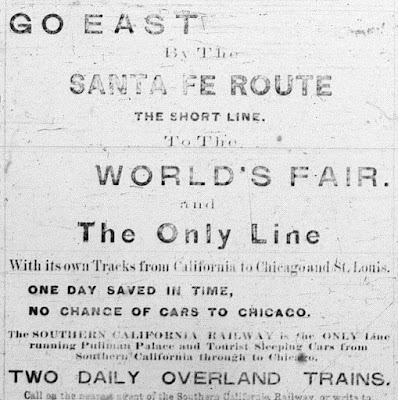
One of the most significant national events of 1893 was the Chicago World’s Fair. Edgar Johnson visited the fair and included some dispatches from what he saw.
The World’s Fair was opened last Sunday.
June 10
Meeting of the Union Water Company
Kellogg, McFadden, Amerige, Tuffee, Rust, and Zeyn were present at meeting of Board of Directors of Union Water Company last Saturday. The treasurer reported $4,425 on hand.
Yorba irrigators complained they were not receiving their full share of water. Secretary was instructed to inform them he was looking through the other end of the telescope.
De los Reyes and Valenzuela of Yorba claim $40 damage for overflow of ditch. Referred to E.R. Amerige and Superintendent, with power to arbitrate and settle.

We thought we settled the Chinese question two weeks ago for all time but the fellows who are serving us over at Washington will not obey and we will have to “tell them again.” They move too slow to suit us. A great many people and organizations are doing lots of complaining that this is “barbarous and an imposition and unchristian” and we do not know what all else. Now did they think it was barbarous when the law was passed compelling every citizen to register and give height and complexion and color of hair and state that a corner was knocked off the starboard side of the head and a crack across the larboard side, and one eye was a glass one and the other never was, and they were humpbacked and knock-kneed? Did leading citizens issue circulars ordering the people not to register; that the law was unconstitutional and would not be enforced and then levy a $5 tax on every fellow to fight it? Is it any more hardship on a Chinaman to register than it is on a white man? Does any other natioanlity come here and refuse to abide by every law of the land? The truth is, the Chinaman, as a class, are the only foreigners who openly defy and silently disregard every law. There is no way of collecting a dollars worth of tax except to cut it off while the money is in the hands of their employers, and then have a “racket.” If a white man comes into oppositioin to the law or disregards it, he is liable to be deprive of his liberty a few days or forever. If the Chinese had simply walked up and registered, they could yet have remained here and saved a great deal of “barbarism in humanity” &c. They have their own laws here and highbinders to execute them, and are amost as separate a government here as in China. At the present rate of increase they will soon be the government and serve a white man up for breakfast every morning as long as they last. Beside this, there are “many other things too numerous to mention.” Walk up, Johnnie, and mind what we say and it will save you lots of trouble.

The Anaheim papers published a table showing the acreage in orange, walnut, and deciduous trees in the irrigation district. They gave Anaheim 2164, Placenta 1307, Fullerton 302, Orangethorp 420, Brookhurst 296, Total 4489. That is decidedly rich. There are 320 acres in one tract alone, within the Fullerton school district and bordering on the town site. We would like to know where Anaheim stops and Fullerton starts in. Write a few more like that and people will believe everything they see in your papers.
At the school elections last week the following trustees were elected: H. Hetebrink (Placentia), J.P. Drake (Fullerton), O.M. Skinner (Orangethorp).
Next Saturday there will be an election in each school house in the high schoo district for the purpose of electing three representativs to meet the county superintendent at Fullerton on the 20th, to locate and nam the high school.
June 17
Fruit-growing will always be the leading industry of Southern California; or at least, of those sections that are capable of growing fruits to perfection. It is gratifying to note the large acreage being continually set out to fruit trees in the northern portion of Orange county. The orange and the walnut are the leading fruits at this time and of these hundreds of acres of young orchards may be seen in every direction, growing thriftily and promising heavy yields in the near future…In five years from now the shipments of citrus and deciduous fruits form this section of Orange county will run up into the hundreds of carloads, and bring in to the fortunate growers some hundred thousand acres.
June 22
Evidently, the Amerige brothers ran into some financial trouble with the St. George Hotel.
E.R. and G.H. Amerige of Fullerton have instituted suit against Sheriff Lacy and others of Santa Ana, Tustin, and Anaheim for $2,711 damages on account of the forced sale of the furniture of the St. George Hotel a few months ago.
Last Tuesday, June 20th, the delegates from the different school districts met the county superintendent at the school house, to name and locate the high school. As the location was virtually settled in Fullerton, the Fullerton delegates insisted that the delegates from districts should do the naming. After a short discussion a motion was made to call it the Fullerton Union High School, and it was unanimously carried.

June 29
1893 was also the year of a major financial depression in America, the Panic of 1893, which caused the closure of hundreds of banks, including some local ones like the Bank of Anaheim.
The Commercial Bank of Santa Ana and the bank of Orange opened up for business yesterday. The other county banks are expected to reopen in a few days.
Fullerton has a large number of business houses, a good school system, churches, societies and lodges, a good water supply, both for domestic use and for irrigation, but chief of all to fix the strangers attention is the admirable location, unequaled climate, superior business facilities and health producing surroundings.
We are glad to learn that the suspension of the California Fruit company is only temporary, and as soon as returns from eastern consignments come in, the embarrassment will be passed over.
Judge Towner has decided in favor of the irrigation district, sustaining the demurrer in the case brought against it by W.F. Botsford and others. It is reported that the case will be taken to the supreme court on appeal.
We believe the time has come when the state of California should be divided, and if every newspaper will agitate the question… the state of South California can be created. We should be separated because the industries of the south are entirely foreign to those of the north.

July 6
Although the population of the town numbers but a few hundred, its large brick blocks would be a credit to Santa Ana or any other city of even larger proportions.
The Fullerton High School district has been organized with Henry Schultaz, president and A.S. Bradford secretary. The board will employ a teacher tomorrow. They have a number of applicants we are informed.
Bank of Anaheim
The called meeting of the depositors in the Bank of Anaheim was held Saturday night. Mr. James, the president of the bank, submitted the following proposition, under which the bank could reopen for the transaction of business at once.
All depositors having deposits of $50 or less would be paid at once; those having from $50 to $100 would receive 20 percent on the resumption of business; those from $100 to $500 would receive 5 percent, the balance to be paid in two, four, and six months, equal payments; certificates of deposit payable at such times times to be issued to all those who so desired.
Upon motion the above proposition was unanimously accepted depositors were then required to come forward and sign the said proposition, and there was a general rush to the secretary’s table.
Judge J.B. Pierce introduced the following resolution which on motion was adopted unanimously;
Resolved, that the depositors in the Bank of Anaheim, in meeting assembled, express the utmost confidence in the integrity of Mr. James as president of the Bank of Anaheim, and in his ability as a Banker and financier, and fully indorse his proposition looking to the resumption of business.

July 13
The most important matters affective Pacific Coast interests will be the question of Hawaiian annexation and of Chinese deportation.
Nearly every bank in Australia has been compelled to close its doors within the past four months. The prostration of every commercial interest is likewise involved by the collapse.
Fruit growing will undoubtedly become Fullerton’s greatest industry. Shipments are annually increasing. The important part is to produce the best varieties. Our advantages of soil and climate place us in the front rank of fruit producing sections.
California, especially the Southern portion, is gaining considerable credit for its display at the World’s Fair.
Foreign Immigration
The question of foreign immigration is one of great importance just at this time and one that should be given consideration by congress at an early day. Setting aside the danger of infection from those who have been exposed to cholera there are grave reasons why immigrants from foreign countries should be prevented from entering this country without restriction. No country on earth owes more to its foreign born population than the United States does, and every fair minded man is willing to give them all the praise that is due them for the good they have done in helping to build up this nation. The hardy Germans and Scandinavians, the English, Irish, and French people who have come to our country to make their home with us and help make this nation the greatest one on earth should be given all praise and glory. They hewe down our forests, builded our railroads, dotted our limitless prairies with homes and in every way identified themselves with the high aims that have made our republic such a grand success. All these ever true American will be ready to clasp hands with. Without them our importance as a nation would have been much less than it is today.
But there is another class of foreigners that should be looked to. We have no use for the gentleman who sells peanuts and bananas on the streets of our cities and incidentally carry out the plans and purposes of such societies as the Mafia. We can get along perfectly well without that class of people who herd together and invite disease and death by their unlcleanly habits of life. We do not need the ignorance and immorality of Southern and Eastern Europe. Thieves, thugs, and prize fighters are not one of the necessary elements in the population of a great and enlightened nation like ours, and we can very well dispense with any addition to our present supply. In short we have no possible reason for allowing paupers or ignorant people to swarm into our country by the hundred thousands every year and some wise laws on the subject of immigration should be put in force.

Election Notice, School Tax
Notice is hereby given to the qualified electors of Fullerton School District, County of Orange, State of California, that an election will be held on the 24th day of July, 1893, of which will be submitted the question of setting a tax to finish and furnish the east room of the Fullerton school building, also the hall second floor. It will be necessary to raise $600.
The editor of the Tribune has traveled over 15,000 miles in the past six months and has yet to see a place that he likes as well as Fullerton.
Thirty-three young ostriches may now be seen at the ostrich farm near Fullerton. The little fellows were parched just a few days ago.
Work at the Puente oil well is progressing nicely and the well is now over 1300 feet deep.
A busy scene is to be viewed daily at the Fullerton depot. A constant line of wagons loaded with grain, fruit, potatoes, wool, etc. are arriving from early till late, and inside a number of men are employed in loading cars, weighing, marking, and otherwise manipulating the various products of Fullerton’s fertile soil.
The case of the Anaheim and Santa Ana water companies vs. the Jurupa Land and Water company made its first appearance in the Superior Court on Tuesday, when the defendants were granted 20 days additional time to answer. This case promises to be a long drawn out affair, in which residents of Orange County are deeply interested.
The members of the Fullerton High School board met Saturday afternoon and after a somewhat extended consultation, employed Prof. W.R. Carpenter, a former teacher in th Santa Ana public schools, as principal. This will be the beginning of the Fullerton High School.
July 22
The World’s Fair Fire
The fear that has existed for months in the minds of the citizens of Chicago found its realization July 10 in a frightful holocaust at the World’s Fair that claimed nearly two score victims and for a time threatened the destruction of the entire White City. The disaster is all the more dreadful because of its sudden transformation from an innocent flame into a death-dealing catastrophe.
The Santa Ana laundry employs 22 hands, and not one Chinaman.
We wish to call attention to the ad of the Farmer’s & Merchants Bank, one of the strongest institutions on the Pacific coast, and one of the few banks that withstood the late financial panic.
A company is negotiating with the Stearns Rancho Company for the lease of the oil-bearing lands north of Fullerton. In case the deal is made, which is more than probable, extensive operations will begin at once.
The papers of the surrounding towns seem to take a malicious delight in circulating the report that Fullerton is to have another saloon. This is a mistake; the rumor started from the fact that a saloon already here recently moved into more commodious quarters.
July 29
What Fullerton Needs
In the first place we want a bank. A banking house in Fullerton, we venture to say, would increase our present outside trade by at least one half…
Another institution that would be of great benefit to the town…is a water company…with regard enough for its patrons to keep its pipes under the ground, instead of lying in the public roads, a nuisance to travelers and a discomfort to those who relish an occasional glass of cold water this warm weather.
Another project that is awakening considerable interest in this neighborhood is the incorporation of Fullerton. Some oppose on the grounds of taxation.
The Union High School
To the patrons and taxpayers of this district: Some weeks ago there was submitted to you the question: Shall we organize and maintain a Union High school in our community. By your votes you said yes, and accordingly on the first Saturday in July, the Board was organized, composed of the clerks of the four districts.
On the following Saturday the Board met…and voted to raise $2000 for the support of the school for the present year…
A number of roughs, hailing from everywhere, make it a point to come to Fullerton every Sunday, and after imbibing a library quantity of tarantula juice proceed to paint the town a bright, brilliant, carmine tint. They do this with the knowledge that we have no peace officer in this section, and accordingly they have no fear of arrest. We need a constable and a justice of the peace. Anaheim, a small village a few miles south of here, has two of each.

August 5
Smuggling Chinese and Opium into the United States
The treasury is informed that fifteen persons–eight of them Federal officers–have been indicted at Portland, OR for smuggling Chinese and opium into the United States.
Tingle says the Collector at Portland must have received about $50 per head for each Chinaman smuggled in. There were 1700 Chinese brought in, and the “revenue” derived by these enterprising officials from this source must have amounted to about $85,000.
When a woman has learned to make a pudding she has leaned but the smallest part of her duty. She needs to know how to sit at the table and dispense a hospitality so cordial and enlivening that the pudding shall be forgotten.
Incorporation
The subject of incorporation increases in interest every day. The benefits and disadvantages are being weighed by careful discussion, and before many months we hope to be able to refer to our place as the “incorporated town of Fullerton.” The objection most commonly brought forward is that of increased taxation.
An incorporated town escapes a portion of the state and county tax, so that the total assessment is but very little more–nothing, in fact, when the benefits of municipal government is considered. If we were incorporated we could put a stop to many disagreeable things that we are now compelled to put up with. We could keep under subjection the roughs that come here from other places, to get drunk, and to do as they please generally; we could compel the water company to place its water pipes under ground; we could reduce the price of water to a reasonable figure; we could provide for the keeping in good condition of our streets and sidewalks; prohibit the reckless driving that is all too common, and, in fact, do many other things that would be conducive to the peace and comfort of the people of this community.
…
The Tribune of last week printed an item to the effect that a number of hard cases come here and raise a disturbance, and added the suggestion that we have an officer here. This has been copied by a number of papers, who, jealous of our prosperity, hunt for every excuse to give us a “black eye.” The Fullertonites are all law-abiding and peaceable people. The disturbing element come from the outside. We are a small town, but Los Angeles and Santa Ana are not above misquoting us in order to spread the impression that we are a tough place.
While banks are closing every day in the East, those that are suspended in California are now, with few exceptions, open for business, wth more cash than before.
Otto Des Granges, while working in the sun on Thursday last, became overheated, which caused a temporary aberration of his mental faculties. He is now resting easily and will be out in a few days.
A real estate transaction of considerable interest to Fullertonites was consummated last Tuesday. The fine ranch of Col. R.J. Northam, at this place was sold through a Los Angeles real estate firm to L.B. Benchly, a well-known San Francisco capitalist for $50,000 cash. The ranch consists of 247 acres, mostly planted in walnuts, which are now two and four years old. Mr. Benchly is a man of large means, being interested in gas, electric light and railroad stocks, etc. His intention is to build a fine residence here, upon which work will commence at an early date. The price is paid is about $220 per acre, which is a good figure for so large a body of land.
Yesterday afternoon the growers met and organized an association to be known as the Fullerton Walnut Grower’s Association. After the constitution and bylaws had been adopted, the following members were enrolled: B.F. Porter, W.M. McFadden, Theo Staley, S.F. Daniels, Chas Wagner, A.T. Pendleton, A.H. Basten, F. Spears & Co., M.V.B. Lovering. H.W. Schults.
August 12
Shall We Incorporate
The talk on this subject, pro and con, is going on at a lively rate, and each day draws us nearer to the time when we shall cut loose from county government and “keep house” for ourselves. We have talked to a number of well-known citizens in regard to this movement, and so far, nearly everyone thinks the idea a good one. No one will deny that it would be the best thing that could be devised for the improvement and welfare of our town. The expense of running a municipality need not be great if proper care is taken to put good men in the offices.
One could go on for hours and enumerate the advantages of incorporating, others can talk just as long on the disadvantages. But we have yet to hear an objection advanced against this move that cannot be refuted by intelligent reasoning. Let us agitate this subject, think about it–talk about it, and we are sure that in a short space of time all will agree with us that we must incorporate.
One good that would result from incorporating would be that we could put a stop to the promiscuous dumping of garbage into the streets. This is not only an eyesore, but a menace to the health of the public.
Apropos of the subject of incorporation, we will call attention to an incident that occurred last Sunda evening. Two rigs, a cart and double team, being driven by men whom we understand belong to a threshing outfit at work in the La Habra valley, drove up from the landing, all having aboard a generous quantity of “booze.” After crossing the railroad track they gave free reign to their horses and raced up Spadra street as hard as the jaded animals could run, at the same time making the air blue with their cursing and imprecations. A lady was driving near Amerige avenue and the “hobos” drove as close as they could narrowly escaping a collision. After driving a short distance and finding no more chances of terrorizing anyone, they drove back towards the depot, nearly as fast as before. Here they made a fresh start up Spadra street again. Just as they reached the corner by the Tribune office, the men in the cart attempted to make a short turn up Commonweath avenue, the result being that the cart was upset and teh mandlin drivers were flung to the ground. Unfortunately they were not injured, and gathering themselves together they started for home. Those of our citizens who, unlike the reporter, stay at home Sundays, cannot realize the disgraceful scenes of this character which are of weekly occurrence. This has got to be stopped, and the simplest way is to incorporate. A few arrests with the consequent fines would teach these hoodlums that it is not the greatest of fun to endanger other people’s lives and make a disgraceful show of themselves at the same time.

August 26
The executive committee of the orange-growers of Southern California held a meeting in Los Angeles last Tuesday, in which there was a general discussion as to the marketing of fruit. It was urged that all the growers should work together in harmony, and that local districts should unite on some basis. It was urged that each district should have its own brand, and that the oranges should be classified and marked in that way. It was further urged that culls should never be sent away from home, and that a central organization should fix the brand so that the practice in the several districts should be the same.
September 2
It is rumored that a practical hotel man is negotiating for the St. George. As the owners are in the East it is hard to say who the negotiations are being carried on with. However, we hope it is true, and that the hotel will soon open its doors to the public.
September 9
The Chinese who failed to avail themselves of the Geary act are now sorry for their obstinancy. They are leaving the state in large numbers daily, and Judge Ross is doing all he can to hasten the departure of those who will not go voluntarily.

Last saturday night at the dance at the halfway-house, fight occurred which might have resulted more seriously. A colored man named Brown, after accumulating a comfortable “jag,” went out to the dance and succeeded in making himself obnoxious to one of the Mexicans, who invited Mr. Brown to step outside and settle the affair. After fighting a few minutes Brown began to use his knife, when the Spaniard drew his revolver and commenced to shoot. Six shots were fired, two of which took effect on Brown, one hitting him over the right eye and one in his right side. Both are mere flesh wounds, and are not at all serious.
The recent heavy rains in the mountains sent such a volume of water down the river that the dam at the head of the ditch was partly washed out. The damage was quickly repaired however and the ditches have been running bank full since.
September 16
Of the 157 national banks that were forced to suspend during the depression, 34 have resumed business, 62 are in the hands of bank examiners with excellent prospects of speedy resumption and 57 are in charge of receivers. Most of the latter, however, are said to be small concerns of no great importance.
In Sonoma county it is reported the hop-pickers are mostly white men, and there are some thousands merrily at work in the fields, camping out in the warm nights, and, no doubt, glad that ranchers are dispensing generally with coolie labor. There is need of every method of giving employment to industrious and willing labor.
Heretofore one of the great obstacles to deporting Chinese, under the Geary law, has been the lack of funds. The bill recently introduced in the senate approaching $500,000 for that purpose should pass at once, and as much more money should be appropriated as may be necessary to the complete enforcement of that most salutory statute.
Labor saving machines are throwing thousands of men out of employment, particularly in the printing business. What is most needed is some invention that wlll employ the vast and continually increasing number of the unemployed.
There are five criminal cases on the calendar and five prisoners in the county jail.
Orange county has never been in a more prosperous condition than at the present time.
Why should not the depositors in our banks have the same kind of security that the banks require?
School opened up Monday morning with a large attendance, there being 31 scholars in the grammar department and 36 in the primary.
There are about 700 acres of land in this county cultivated by Chinamen.
The supervisors met Monday to consider the best method of preventing overflows from the river.
Andrew McNally, of the big Chicago firm of Rand, McNally & Co. publishers who purchased a large tract of land near Fullerton recently, will be here this winter when he intends to have a portion of the tract panted to a great variety of shade trees. An artificial lake will also be made, besides other features which wil make the place very attractive. After this is done, it is Mr. McNally’s intention to sell of the balance o the property in small tracts.
Anaheim Bank Closed
The Anaheim bank decided Friday, Sept 6, to go into liquidation and wind up its business as a banking institution. It was apparent from the statement of the condition of the bank subitted to the directors by the president, that it would be impossible to meet the probable demand for coin, Sept. 18, when the first payment to depositors, who had money in the bank when it close the first time, had to be met.
Mr. James resigned his position and W.S. Bartlett was chosen to succeed him.
Mr. James says that the depositors will be paid in full. Notwithstanding this fears are expressed that there will be considerable loss. A report sent out from Anaheim says he has been dabbling in real estate and has been concerned in Mexico mines. It is also reported that preferences were give to certain creditors of the bank, and that a number of depositors were notified it was going to close and they withdrew their money immediately.
It would have been much better for the people of Fullerton had the bank not reopened, because a large number of them have made deposits since then and deposits since were even received from some of our citizens the day before the bank closed.
If the bank does not send out a favorable report in a few days the depositors should call a meeting and take some action in this important matter.
Thai closing of this bank is bound to make times hard, money scarce and collections slow in this section for several months.
An Anaheim business man informed a representative of the Tribune on Monday that stock is now being taken for a new ban to be opened there soon.
September 23
Compromise may do on the silver bill, but we want none on the Chinese question.
The labor organizations of San Francisco are preparing for a big “Chinese Must Go” demonstration to be held October 9.
The people in Fullerton and vicinity had over $20,000 in the Anaheim bank when it failed. A bank could have been started in Fullerton with this amount of money.
Why is it that with all the talk about hard times in our midst it is impossible for our ranchers to get men to work at irrigating, even at the fair wages of two dollars a day? Such has been the case in and around Fullerton all of the past summer and is so today. The same complaint is general all through the country. The fact is there are not the men to be had and if some of the able bodied men who loaf around the cities living off the bounty of the charitable would go out where they could get work and pay it would be better for all concerned.

September 30
Orange County real estate transfers this week–$11,716.
Hundreds of tramps are now arriving in Southern California. If this interruption continues, the newcomers will not only impoverish the towns they flock into, but will in no ways better their own condition. The dilemma will soon become so serious that the whole state will be called upon to take some action to remedy it.
October 14
The drift of public sentiment in the United States is strongly towards the ownership and operation of railroads by the government, as well as of the telegraph.
The following account of Plez James with the Anaheim Bank is condensed…We have made an especial examination of the accounts of Mr. Plez James, and find therefrom that he has used the funds of the bank, for a series of years, for the purpose of private investment in lands in the state of Nevada and in mines in the Republic of Mexico.
A gentleman connected with one of the county banks was in Fullerton last Saturday looking over the field with the intention of starting a bank here. He reports that an eastern man will furnish most of the capital if they meet with sufficient inducements. Our people should offer them every opportunity they can. Let is have a bank. It is not at all necessary to organize with a large capital stock. A gentleman informed us sometime ago that he would furnish a suitable room a year free of charge. This is the best time of year to open a bank.
Col. Northam, manager of the Stearns Rancho Company, is reported to be responsible for a shortage of $125,000. Northam says he will be able to show that he has done nothing wrong, and attributes the investigation of his magement of the company to the enmity of G.B Polhemus. Northam’s unable was one of the original owners of Stearns’ ranch and Polhemus and he were bitter enemies, and the unfriendly feeling has been extended to his nephew. It has been developed that John T. Hoyle, who made the motion for investigation, did so at the request of Polhemus.
November 4
An Important Meeting Held by the Tax-Payers. Oppose it and will Fight it. Suit has been brought against the Irrigation District
One of the most important and enthusiastic meeting of the tax payers that has been held in Fullerton for some time, was the meeting in Chadbourne hall on Tuesday afternoon. Although the notice of the meetng was not generally known there was a large crowd present, and the greatest enthusiasm was displayed.
This meeting was the outcome of the recent tax by the directors of the irrigation district of 81 cents, and the expressions of the different tax payers present showed there was an earnest and determined purpose to no longer submit to this outrageous squandering of the public money and it was time time a halt was called. The board of directors of the irrigation district were severely censured for the want of back bone displayed at the meeting at which the tax was levied, for being bulldozed by their attorney, Mr. B, on levying said tax and showing their lack of confidence in themselves and their own actions…
November 11
The St. George hotel has been leased by Mrs. Jessie Patton of Homestead, PA, and will be ready to receive guests on and after Monday.
Fullerton is now undoubtedly one of the most enterprising towns in Southern California and the outlook or the town and country was never brighter than it is at the present time. The St. George, the finest and dostliest hotel in the county, has opened up for business, work will soon begin on Mr. Benchley’s fine residence, Robt. Northam will at once erect a residence just north of Fullerton at a coost of $8,000 or $10,000 and make many other improvements, another large warehouse is nearing completion, two or three new cottages will be built immediately, another butcher shop will b opened next Monday, a new blacksmith shop will be opened in a week or two, and a gentleman is trying to get a large building to open a general merchandise store. What town can make a better showing than this?
Fleishman & Niltscher have opened a meat and sausage market at Orangethorpe. All kinds of fresh meats kept on hand, sausage a speciality. Wagon visits Fullerton, Placenta and Orangethorpe daily.

-
Oral Histories: Raymond Thompson
The following is from a work-in-progress about the history of Fullerton. You can support my ongoing research and writing on Patreon.
Attitudes toward war have changed over the years in Fullerton. During World War I and II, people organized parades honoring returning soldiers. However, during the Vietnam War, people voiced their dissent. Demonstrations at Cal State Fullerton, included “a draft/Vietnam war protest, which brought the police SWAT squad to campus” (Fullerton: A Pictorial History).
A transcript of a 1968 interview for the CSUF Oral History Program includes a fascinating conversation between a college student and an elderly judge, former Fullerton city attorney Raymond R. Thompson about changing attitudes toward war in Orange County and Fullerton:
Student: In seeing the reactions of the country—Orange County especially—to World War I, World War II, Korea and now Vietnam; when Company ‘L’ left from Santa Ana in World War I there were fanfare parades, the people backed the men and gave them little presents and things. Then in World War II the people seemed to have more of a community spirit with the Guard or with the Army companies that went in. I may be looking at it with more of a subjective attitude because I attend college, where I think reactions in general seem to be different, but now it seems to have changed. Whether the people think the war is right or wrong, the community doesn’t seem to be backing these companies any longer in the way they did. Would you attribute this to size?
Thompson: Well, in World War I and World War II, no one had the slightest doubt or misgiving about the propriety of it there. You are absolutely right, if you were even to intimate or give the slightest clue that you had any second thoughts about it, it would just be unthinkable, because of the complete dedication and fervor in favor of the war. No doubt that it was right against wrong, but now in this Vietnam situation, people are very free to speak their objection. If a young man burned his draft card in World War I or World War II, especially World War I, why he would probably be lynched.
Student: That he would. Do you think that education had affected this, the changes in education, if there had been any?
Thompson: I don’t know, I think maybe we were really absolutely right, in those two instances, fighting the Kaiser who was out to conquer the world, then fighting Hitler, who was out to enslave the world, and had murdered millions of innocent Jews and other groups that he didn’t like. In fighting something like that, there isn’t much room for argument. But way over there (Vietnam) and to send our boys over there to be killed, take sides in a scrap, well, maybe not. You probably have your feelings about it. At least you know how free people are to express their doubts about this particular enterprise.
Student: The youth of the country now seem to be voicing more dissent. In 1930 or 1920, thereabouts, do you think the youth were busier, had more work to do, say, on the farms? Maybe because it was a farming community less leisure time didn’t make dissent that available?
Thompson: That’s probably part of it.
Perhaps the spirit of dissent that characterized the 60s and early 70s dissipated some in the 80s and 90s, but I do not remember there being much dissent regarding the Persian Gulf War or the Iraq War, or the War in Afghanistan, at least not in Fullerton. I remember a few scattered (and sort of small) protests when I attended Cal State Fullerton from 2004-2007.
A Daily Titan article from 2007 describes one such protest: “Nearly two-dozen California State University-Fullerton students marched in protest at the Quad on Thursday while holding anti-war signs and chanting, “We want freedom. We want peace.”
However, as was typical of Iraq War protests in Fullerton, “there were Students supporting the war in Iraq assembled on the grass holding signs of their own. “Freedom isn’t free,” they yelled over the protesting crowd” (Daily Titan, 2007)
I recall a protest in the early 2000s on the corner of Imperial Highway in Brea Blvd where, on one side of the intersection, people held signs that said things like “No Blood for Oil,” and on the other side of the intersection, people waved American flags and held “Support Our Troops” signs.
I suppose the best characterization I can give of current attitudes toward war in Fullerton is…conflicted.
Judge Raymond R. Thompson. Source: Wikimedia Commons -
Early Settlers: Earl D. Gage
The following is from a work-in-progress about the history of Fullerton. You can support my ongoing research and writing on Patreon.
Earl D. Gage was born in Nemaha County, Kansas. As a young man he worked on his family’s corn farm.
In 1890, he moved out west to the newly-established town of Fullerton, and worked in horticultural and orchard work. The following year, he helped his parents move out to Fullerton as well.
In 1900, Gage purchased thirty acres from Edward Atherton, who at one time owned the California Ostrich Farm. Instead of ostriches, Gage grew orange trees, and had his own nursery, from which he sold buds and trees. He also grew avocados.
He, like many local ranchers of this time, joined the Placentia Orange Growers Association, was a shareholder in the Anaheim Union Water Company, and built a house on his ranch.
In 1909, he married Mayme Clark. They had two children, Lydia and Mildred.
He was a Republican and advicated for prohibition of alcohol, along with his wife. He attended the First Baptist Church where he was a trustee.
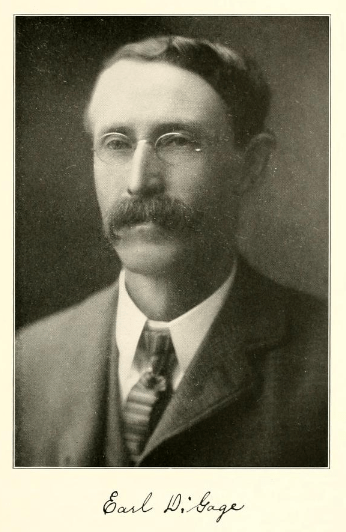
Portrait of Earl D. Gage from Samuel Armor’s History of Orange County. -
Free Lecture on Philip K. Dick in Orange County!
This Friday, February 3, I’ll be giving a free lecture on the topic of science fiction writer Philip K. Dick, who lived in Fullerton and Santa Ana in the last years of his life. Some of his most acclaimed works–including A Scanner Darkly and VALIS–are set in Orange County.

The lecture will take place at ModelMania (232 W. Commonwealth Ave.) in Fullerton during the Downtown Fullerton Art Walk, from 6-9pm.

Anyone who has seen the films Blade Runner, Total Recall, A Scanner Darkly, Minority Report, Paycheck, Next, Screamers, or The Adjustment Bureau is at least familiar with the work of science fiction author Philip K. Dick, who was one of the most prolific and critically acclaimed writers of the 20th century. He earned science fiction’s highest honor, the Hugo Award, in 1963 for his novel The Man in the High Castle. In his lifetime, Dick published 44 novels, and approximately 121 short stories.
The impact of Philip K. Dick’s ideas about modern life cannot be underestimated. In a 2002 article from the New York Times Review of books entitled “It’s Philip Dick’s World, We Only Live In It,” Laura Miller explains Dick’s influence on postmodern literature: “Dickian devices and themes–implanted memories, commodified identities, simulacra–haunt contemporary literary fiction…The naming of years after corporate sponsors in David Foster Wallace’s Infinite Jest, the downtrodden, stigmatized souls in George Saunders’s futuristic short stories, with their degrading theme park jobs, the dream worlds Haruki Murakami’s characters tumble into and out of–all partake of Dick’s peculiar mixture of wretched ontology and underdog sympathies.”
Philip K. Dick’s place in the pantheon of contemporary American writers is well-established and well-known. What is NOT well-known is that this literary titan spent the last years of his life in Fullerton, California, and that some of his best and final work (like A Scanner Darkly) is actually set in Orange County. He moved here after a mental breakdown in 1972. “There is nothing more reassuring to someone who’s gone through an acute identity crisis than clean plastic apartments, streets, restaurants, and furniture,” he wrote, “Nothing gets old or worn of dirty here because if it does the police come in and kill it.”
It was at his residence in Fullerton that Philip K. Dick had his famous “Religious Experience” after being mesmerized by the Christian fish necklace of a prescription delivery woman. His visions of God and the afterlife were documented by cartoonist Robert Crumb.

It was in PKD’s final years in Orange County that he sought to integrate a lifetime of learning and searching into searing explorations of “What is Real?” and “What is Human?”
-
Early Settlers: Frank Kyle Kirker
The following is from a work-in-progress about the history of Fullerton. You can support my ongoing research and writing on Patreon.
Frank K. Kirker was born in Kentuky in 1868, the son of James M. Kirker, captain of a steamboat on the Ohio and Mississippi rivers. As a child, he worked with his father on the steamboat.
Later, according to biographer Samuel Armor, “he studied the science of refrigeration and for years traveled for the York Manufacturing Company of York, Pennsylvania, selling and installing large refrigeration plants…and in his travels he covered the entire West, installing notable plants in Winslow and Tucson, Ariz.; San Francisco, Santa Rosa, and Sacramento, Cal.”
In 1907, he decided to settle down from his travels, and bought 20 acres of land on East Orangethorpe Avenue in Fullerton, and planted an orange ranch, building a house on the ranch. He became a shareholder in the Anaheim Union Water Company, and marketed his oranges through the Placentia Orange Growers Association of Fullerton.
In 1905 he married Harriet H. Schwinge in Los Angeles. They had three children: James, Catherine, and Helen (who died in infancy).
As were so many businessmen of his time, Kirker was a Mason.

Portrait of Frank Kyle Kirker from Samuel Armor’s History of Orange County -
Oral Histories: Fred Strauss
The following is from a work-in-progress about the history of Fullerton. You can support my ongoing research and writing on Patreon.
Fred Strauss was a German/Jewish immigrant who moved to Fullerton in 1909. For many years, he worked for the Stern and Goodman’s store, the first general store in Fullerton.
During the 1930s, when Hitler came to power in Germany, his Jewish relatives in Germany began to write him letters, begging him to help them escape. “Everybody was crying that they wanted to come, come, come,” he recalled. They were hard times for Jews in Germany. “My brother was standing on the sidewalk one time and the storm troopers put him in a concentration camp,” he said.
During the Depression, Strauss did not have a lot of money to help out his suffering relatives, but he did manage to help many of them come to the United States, with great difficulty. He recalls the story of how he managed to help them escape the Holocaust:
“I decided I was going to bring them over and I had such a time. I had to go to the judges; I had to go to the police department; I had to go to everybody else. I had to have a photostatic copy of my bank account, which I had to lie a little bit about because it wasn’t what it should have been. It cost me quite a little sum of money and I couldn’t get them out. I had a friend by the name of Howard Irwin who was very well-acquainted with our governor [Frank] Merrian who was our governor of California then. Howard was living in Long Beach and he went to bat for me. He went to the governor and asked if he could help me. So the governor sent a wire to the American Consul in Stuttgard, Germany to release my folks at once. In fourteen days my mother, my brother, and his wife were on their way to this country. Of course, Hitler took everything away from them, they didn’t have anything at all.”
As dramatic and inspiring as this story is, it disturbs me that it was so difficult for Strauss to get his suffering family out of Germany. If he did not know a guy who knew the governor, his family would most likely have died. “If it wasn’t for Governor Merriam, not one of them would have been here,” Strauss recalls, “They would have all been killed.” I wonder how many Jewish Americans during the Holocaust were not so fortunate as Strauss to have this rare connection. I wonder how many people died because of bureaucratic red tape.
Source: CSUF Oral History Project, 1976

-
Oral Histories: Charles Clark (Postmaster)
The following is from a work-in-progress about the history of Fullerton. You can support my ongoing research and writing on Patreon.
Charles Clark came to Fullerton in 1908. He began work with the Post Office in 1911 and served as Fullerton’s Postmaster from 1952 until his retirement in 1957. In 1971, Anne Riley interviewed him for the Fullerton College Oral History Program. Here are some of his recollections of early Fullerton.
On why he moved here
“We were going to Los Angeles and there was a big sign there by the depot. It said, ‘three thousand carloads of oranges shipped each year and two hundred carloads of English walnuts.’ I always liked English walnuts and oranges, so I thought that’s where I’d like to live, and so did my folks. So we located there.”
On who picked and packed the thousands of carloads of oranges
“Mexicans.”
On the smallest park in the United States
“They had the smallest park in the United States by the mail box down in front of the post office there on Commonwealth. It was twelve by twelve. It had a little fence around it and sweet peas grew. It was advertised as the smallest park in the United States. People came from all around to see it.”
On the flu epidemic of 1918
“So many people died. One time, down at the depot, there were eighteen coffins there to be transferred back east…Here in Fullerton, for about two or three weeks in the post office they’d call up there and want somebody to be pallbearers. For one or two weeks there, I was pallbearer three or four times…It was sad…Here, there were just so many people that died.”
On fingerprinting Germans during WWI
“There were so many Germans, and there were quite a few Germans here who’d never been naturalized. So I had to take fingerprints of the Germans. These old German ladies that I knew, I’d take their fingerprints, and I’d sit down with them and they’d cry and I’d cry. Some of them are prominent citizens here now, that I know.”
On war bonds
“If people wouldn’t buy war bonds, pressure would be put on them. I know one prominent citizen here who was a very rich man. He was German. He said, ‘To hell with them.’ He wasn’t going to buy any bonds. But when he came up to town he couldn’t buy any food. He couldn’t buy anything. People wouldn’t sell him a cigar even. So he came through with five thousand dollars.”
On the Ku Klux Klan
“It was quite active here, believe me. I didn’t join it, but I had a lot of invitations. A lot of the prominent people did. They’d get everybody kind of up in arms, you know. They had a big sign right on the corner of Commonwealth and Spadra (how Harbor) there, ‘KKK.’ We didn’t have any black people here at all. I don’t know. It was just one of those things, I guess. But now, look back and see how foolish it was.”
On who delivered vegetables
“Chinamen.”
On taking baths at the barbershop
“We didn’t have all the conveniences we have now. We didn’t have very sanitary plumbing. I don’t know if many had hot water heaters. A lot of us took a bath uptown there at the barbershop. It cost twenty-five cents to take a bath. That’s where a lot of us fellows took a bath.”
On pigeon racing
“We had pigeon racing in those days. Kids now have, oh, everything they see, television, radio, motorcycles and everything else. But in those days, we had pigeon racing. Once I had a five hundred miler [race] from Marysville, California.”

Fullerton Post Office. Photo courtesy of Wikipedia. -
Oral Histories: Jessie Corona de Montoya
The following is from a work-in-progress about the history of Fullerton. You can support my ongoing research and writing on Patreon.
Victoria Consuelo Celestina (nicknamed “Jessie”) Corona de Montoya was interviewed in 1975 by Esther Katz for the CSUF Oral History Program.

Jessie Corona de Montoya at home in Fullerton, May 1976 with her Indian basket collection and one of her original works done with feathers, beads, and leather. Source: CSUF Oral History Program. A Yorba Descendant
Jessie (born around 1906) was a descendant of the pioneer Yorba family on her father’s side. Her father was Jose Maria Corona and his mother was Manuela Vejar, a direct descendent of Don Bernardo Yorba, a son of Jose Antonio Yorba, who came with the Portola expedition to California in 1769.

Manuela Vejar Yorba de Corona (Jessie’s grandmother on her father’s side) circa 1866. Photo courtesy of the CSUF Oral History program. Her mother Romanita Aguilar was born in Arizona. Her parents met at a dance, and were married in a church in Anaheim in 1894 or 1893, with “a big feast that went on for three days.”
Her siblings were Ramon Francisco (Ray), then Orlando Antonio, Alphonso Filiberto, Lorinda Dulcinea, Juan Alejandro, Arturo Jose Maria, and Eduardo Lorraine. Three of her brothers served in the first World War.

Ramon Marcos Corona (Jessie’s brother), 1901. Source: CSUF Oral History Program. Her family lived on Raymond Avenue since 1915, when most of the land was agriculture–citrus and walnuts.
Childhood Memories
As a young child, she sometimes went to live with her grandmother (on her mother’s side, who was part Native American), who lived on a small plot of land where the Prado Dam is now.
Montoya lovingly recalls her grandmother’s deep knowledge of growing and preparing food: “She raised squash, tomatoes, corn…when she harvested all those vegetables, she dried them in the sun. She dried her corn and string beans, and then she saved them in little sacks that she made, until wintertime. When wintertime came, she dropped these vegetables in boiling salted water, and it was just like they were just picked.” Near the garden, her grandmother had plum, apricot, and peach trees.

Romanita and Celestina (Jessie’s mother and grandmother), 1901. Source: CSUF Oral History Program. She remembers the native remedies she learned from her grandmother, such as sauco, yerba del manso, mansanilla, and yerba buena, which she continued to use.
She remembers, as a young child in Fullerton, swimming in a local irrigation ditch.
“There was an irrigation ditch on Orangethorpe and Raymond that was to irrigate all the orange orchards and walnut orchards that were around our home,” she said. “This little ditch was about two feet deep and maybe about three feet wide. In the summer, when it got so hot, that’s where we’d swim. A lot of times if the zanjeros that cleaned these ditches didn’t come around and clean them, they were full of moss and real slippery. A lot of times we wouldn’t step in, we’d slide in. That’s how we cooled off–that’s where my brothers and I played.”
She would walk about two and a half miles to school from Raymond Avenue through orange orchards where she went to the old brick grammar school on Lemon and Wilshire, which has since been torn down.
The family had a horse, and she remembers when “all three of us were on that horse riding through the orange orchards. We had a friend who had a flatbed wagon. Without my parents’ knowledge, we’d all climb onto this wagon and ride up to the Bastanchury Hills where St. Jude’s Hospital is now to pick watermelons.”
Her younger brother John had two whippet dogs, greyhounds and she remembers going into the Bastanchury hills to hunt rabbits.
Jessie has fond memories of the large family get-togethers of her childhood. The Spanish and Mexican families of early California, from which she descended, were very large.

Romanita Aguilar de Corona (Jessie’s mother) circa 1901. Source: CSUF Oral History Program. “It seems like all the pioneers, if they weren’t related, they liked to believe that they were just one big family,” she recalls. “The Sepulvedas from Pomona, the Vejares, my grandmother, oh, I could name so many.”
“The family was so large that my parents would plan to meet, maybe in the Santa Ana Canyon where the river runs, and everybody would take something to picnic. It was usually carne asada, tortillas, and salsa,” she said. “I guess there were as many as forty to sixty people that attended…if there was a baptism, a marriage or other occasion for a party, or a get-together, we would have one. Sometimes they would last the whole weekend.”
She remembers that there was always somebody who could play the guitar or a violin. Her mother sang beautifully and would often sing Spanish songs while her brother played the violin.
Disease Epidemics
Jessie remembers two disease epidemics of early Fullerton–the first being a smallpox epidemic.
“We were quarantined. Our doctor was Dr. Clark here in Fullerton and Dr. Truxaw from Anaheim,” she remembers. “the health authority came with a very big sign, “In Quarantine.”
The second was the flu pandemic of 1918.
“I think there were six of us sick at one time and my dad and mother taking care of us, six in bed with the influenza…a lot of people died. There were lots and lots of deaths from that,” she remembers.
A Family Tragedy
Her father started out as a rancher, with fifty acres of land in Riverside County. The family didn’t own much land in Fullerton, mainly just the house and a bit of surrounding land. After her father quit farming, he worked as a foreman in a rock and gravel company.
Her father was a Republican who was very interested in politics. He served as a school trustee for the grammar school, and played the tuba in the first city band.
She remembers a trip her father took to San Clemente Island around 1919 to shear the wild sheep, back when civilians were allowed to go there (it is now wholly owned and operated by the U.S. military). Jessie still had a pillow filled with the wool her father brought back.
Her father tragically died in 1922 in a work accident in which he was burned to death. He was 55. Jessie was 13. Her mother, on the other hand, lived to be 99.
Racism in Early Fullerton
The ancestry of the Coronas was a mixture of French, German, Mexican, and Native American. Thus, some of the members had blonde hair and blue eyes, and some were darker-skinned. This variety of complexions and mixed ancestry led to a lot of confusion and conflict in the 1920s in Fullerton, where discrimination against Mexicans and African Americans was fairly widespread.
“In the twenties, there were people that weren’t allowed anywhere,” Jessie recalls, “Mexican people, even blacks…they wouldn’t serve them, just because they had a dark skin.”
Describing her experiences going to the movies at the Chapman (later called the Fox) Theater, she remembers, “Another thing that was really bad, I thought the worst, and was so humiliating was when you went in a theater and they flashed a flashlight on your face, to see what color you were.” In those days, “the blacks and other races sat on the left-hand side, in a little small area.”
Jessie recalls an experience where she and her siblings went to the public pool in Fullerton. To enter the public pool, they had to go though a turnstile. Her youngest brother, Edward Lorraine, had blonde hair and blue eyes, and he was allowed in. Her sister, who had light brown hair and an olive complexion, was allowed in. When one of her darker-skinned brothers tried to get in, the man at the turnstile said, “You can’t come in, we have a day for Mexicans to swim.”
This made her older sister, Esther, really mad. Jessie recalls, “She grabbed the man and she pulled him over right close to her face and she said, ‘He is my brother. His skin is darker than mine. How come you let the blonde one in? They’re from the same father and mother.” Esther, in a rage, “hit him one time, she grabbed him…by the hair. She grabbed him by the neck and she punched that man until somebody called the police.”
When the police came, Esther held her ground.
“What’s this all about?” the police asked.
“He wouldn’t let us in for swimming. We paid our way; we had money. He let those two in and then when this brother was ready to go in, he wouldn’t’ let him it. So when he said there was a certain day for Mexicans to swim that made me awfully mad because we are Americans, and I never knew we were anything else but Americans.”
The police man looked at the beat-up turnstile man.
“Did you do this to him?” the officer asked Esther.
“Yes,” she said, “and I’ll do it again.”
“You let them go on in and swim,” the officer said.
“I wouldn’t go in there if he paid me,” she said, and took her siblings home.
Jessie recalls another incident where her family was at the movies in Anaheim and a couple teenagers called her father a “Kraut” because he had blonde hair and blue eyes. This was during WWI, and her brother was actually overseas fighting the Germans.
“That made us very angry,” she recalls, “We were twelve, and maybe seven and eight…so all three of us in unison jumped over dad and mom, over the next seat where those two young men were, they were teenagers, and beat up on them. We were outlaws, I guess.”
Marriage and the Depression
Jessie married her husband Patricio very young (at age 16), and they had two sons, Eduardo Patricio and Ronaldo.

Patricio and Jessie as newlyweds. Source: CSUF Oral History Program. Her husband was a brickmason and during the Great Depression had trouble finding work locally, so he found work in Santa Barbara, and then in San Simeon, working on the construction of Hearst Castle.
She remembers her husband telling her about how William Randolph Hearst would fly his mistress, Hollywood actress Marion Davies, to the castle. He told her of the lavish parties Hearst would throw with many celebrities.
After the Depression, Jessie and her family moved back to Fullerton, and stayed there, raising her two sons Eduardo Patricio and Ronaldo.

The Corona Family about 1945. Back Row: Al, Arthur, John, Orlando, Ramon. Front row: Lorinda, Romanita (mother), Jessie. Source: CSUF Oral History Program. 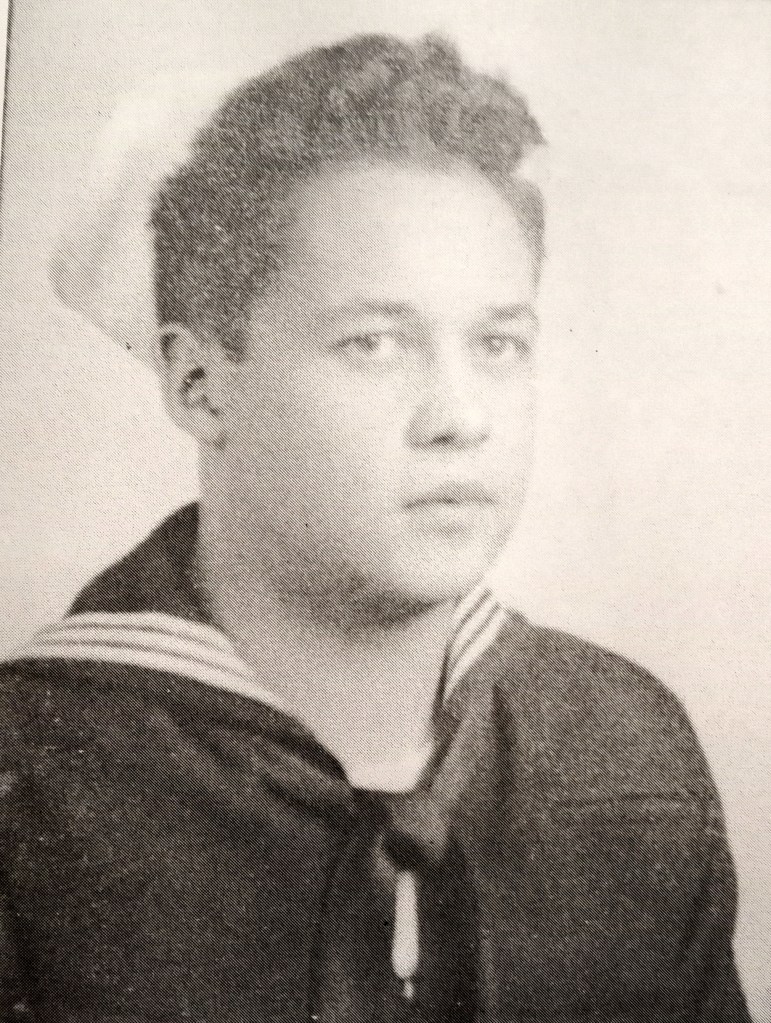
Edward Patricio Montoya (Jessie’s son), 1942. Source: CSUF Oral History Program. At the time of the Interview, Jessie showed to the interviewer some of the handicrafts that she learned from her grandmother that she continued to do, such as woven baskets and hand-painted gourds.
Reflecting on the past, Jessie says she misses the large family gatherings that her large extended family used to do regularly: “It seems like they have just drifted apart. How come we don’t get together? I’ve a lot of cousins, a lot of relatives, but we don’t have those big get-togethers, the picnics that they had long ago.”
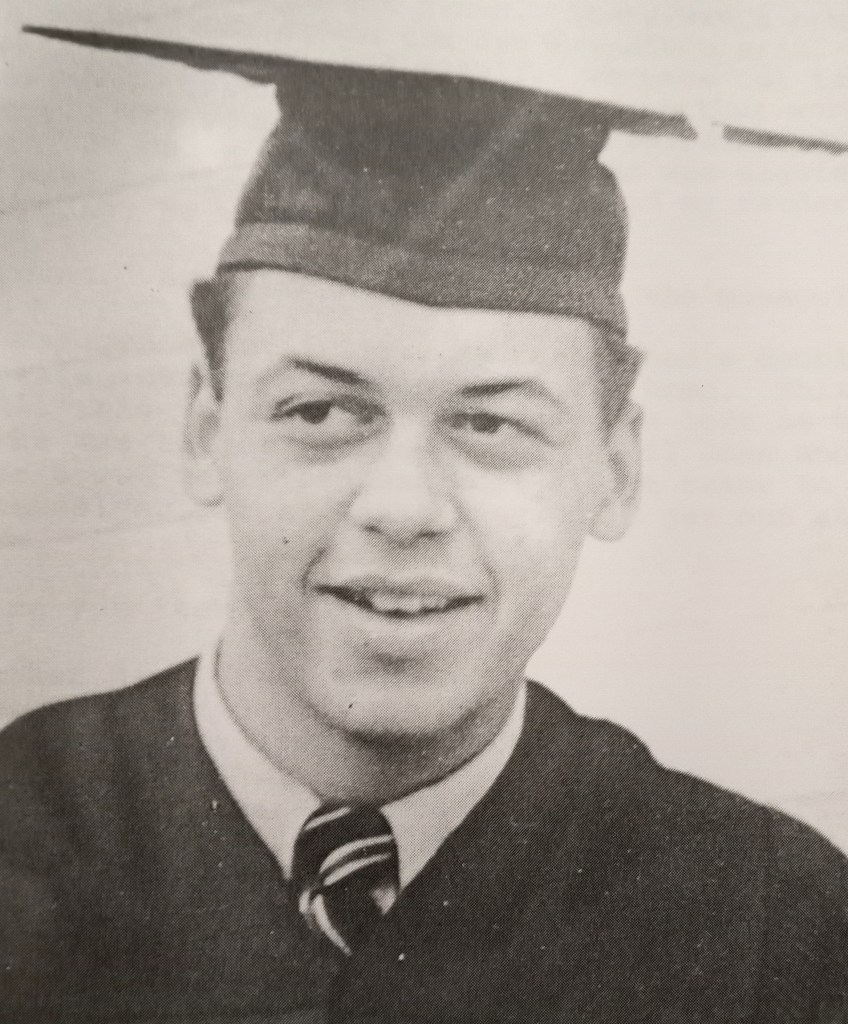
Ronaldo Montoya (Jessie’s son), 1968. Source: CSUF Oral History Program. -
Early Settlers: Paul John Lotze
The following is from a work-in-progress about the history of Fullerton. You can support my ongoing research and writing on Patreon.
Paul John Lotze was born in Germany in 1884, the fourth of seven children born to William M. and Augusta Lotze.
In 1899, he emigrated to the United States, settling first in Kansas, where he worked on a farm for three years.
In 1902, he moved to San Bernardino, where he lived for six years, and learned the plumbing and sheet metal trades.
In 1908, he moved to Fullerton and established his plumbing and sheet metal business. He did the plumbing for Fullerton high school.
In 1920, he built a shop at 124 West Commonwealth Avenue.
In 1910, he married Amelia Matilda Holve, also a native of Germany, who came to California in 1907. They had three children: Clarence, Walter and Lucille.
The family home was located on South Highland Avenue, where he planted an orange grove.

Portrait of Paul John and Amelia Lotze from Samuel Armor’s History of Orange County
-
Subscribe
Subscribed
Have a WordPress.com account? Log in now.

