The following is from a work-in-progress about the history of Fullerton. You can support my ongoing research and writing on Patreon.
For thousands of years, the native Americans who inhabited the Los Angeles basin and North Orange County, including Fullerton, (called the Gabrieleno Band of Mission Indians Kizh Nation, or just Kizh) had no documented interactions with Europeans. Beginning in the 1500s, waves of explorers, conquistadors, settlers, and missionaries would forever alter their way of life.
The first recorded contact between the Kizh and Europeans is the 1542 expedition of Spanish explorer Juan Rodriguez Cabrillo, who led a crew of sailors up the California coast, searching for a waterway across North America.
The next recorded contact happened 60 years later in 1602, with an expedition led by Sebastian Vizcaino, who was seeking a northern harbor for Spanish galleons returning from Manila.
150 years would elapse between the Vizcaino expedition and the next one, which began in 1769, led by Gaspar de Portola, a soldier who had recently been appointed governor of Las Californias, New Spain. The impetus for the expedition was concern by the Spanish crown that English and Russian explorers would encroach on “their” territory (Alta, or upper, California).
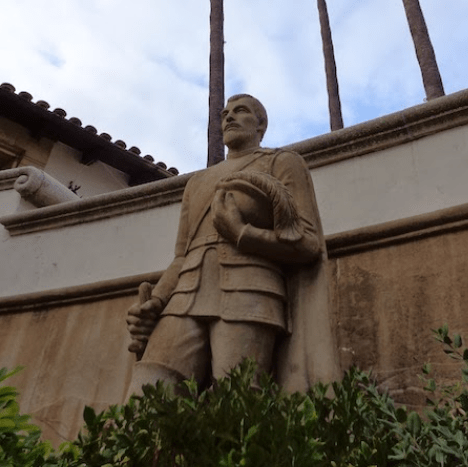
The Portola expedition was the first overland attempt at actual colonization of Alta California, not just exploration. Portola was accompanied by soldiers and Franciscan missionaries, including Father Junipero Serra (head of the Franciscan mission to the Californias).
Captain Fernando Rivera y Moncada led an advance group, consisting mainly of soldiers, scouts and engineers. Portolá and Serra followed in a second group with the civilians, livestock and baggage.
Three ships were dispatched to aid the expedition with supplies.
The expedition began on the Baja California peninsula, and went north toward Monterey. Upon arrival in San Diego, Serra stayed, while Portolá and Rivera led a smaller group north.
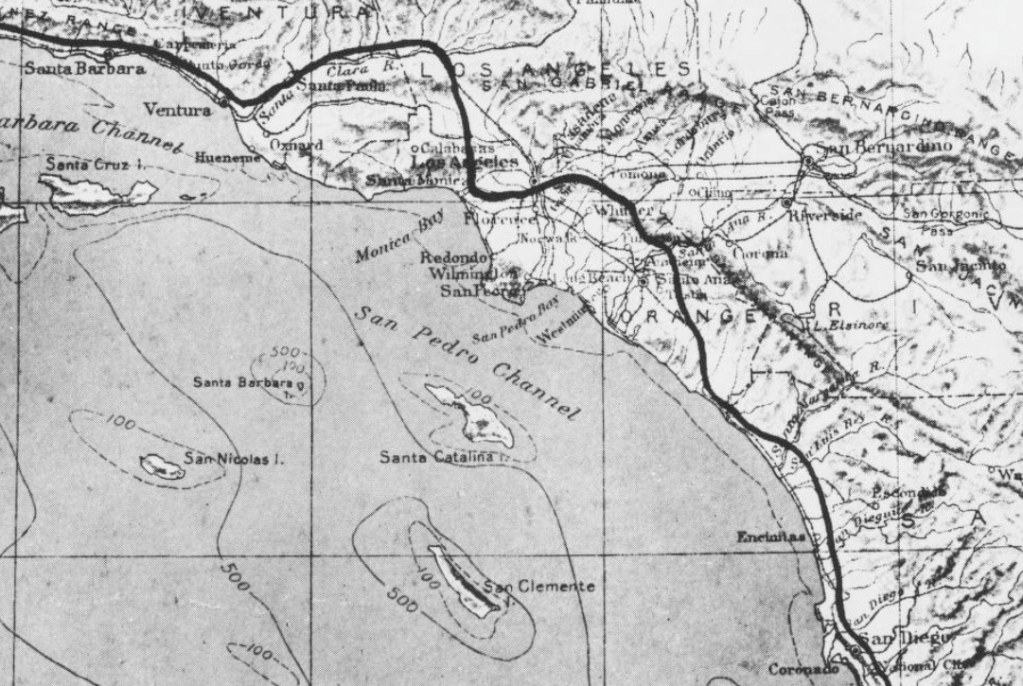
Three members of the expedition kept journals: Portola, Miguel Constanso, and Father Juan Crespi.
Below are excerpts from the portion of Portola’s journal (which have survived) as he traveled through present-day Orange County. I have introduced the daily entries with the present day-locations where he traveled.
July 22, 1769: To Christianitos Canyon, which reaches the Pacific at the southern edge of today’s city of San Clemente: “We proceeded for three hours and a half, the entire way through a pleasant country of ranging hillocks. We halted in a gully where there was much pasture and a pool of water. Here there was a village of about twenty natives in which Father Crespi and Father Gomez baptized two dying children.”
July 23: North up Christianitos Canyon, over the hills and down to San Juan Creek (named later for the mission). They followed the creek west to the future location of Mission San Juan Capistrano. The state highway that now follows San Juan Creek in this area is named Ortega Highway after the leader of Portolá’s scouts. On this day, the travelers crossed from today’s San Diego County into Orange County: “We proceeded for four hours. Much pasture and water, and many trees.”
July 24: To Aliso Creek. The neighborhood where the creek exits the hills is now called Portola Hills: “We proceeded for about three hours and a half. We halted in a gully which had much water, pasture, and many trees, where we came upon an Indian village of about fifty persons; they made us a present of much grain and we made them a suitable return. We rested for a day.”
July 26: Short march northwest along the edge of the foothills, to a spring at the northern edge of today’s Irvine, California. From a hill above, the party first sees the broad coastal plain of northwestern Orange County: “We proceeded for three hours on a good road. Scant pasture; no water for the animals, though enough for the men.”
July 27: To Santiago Creek, so named by Crespí: “We proceeded for three hours on a good road. Much pasture and water.”
July 28: To the Santa Ana River, one of the major rivers of southern California. The soldiers of the expedition gave the river the name Santa Ana. A strong earthquake is felt that afternoon; aftershocks are recorded over the next few days: “We proceeded or two hours on a good road and we halted by a stream about eight yards wide and about sixteen inches deep which flowed with great rapidity. Here, at twelve o’clock, we experienced an earthquake of such violence…[text lost]…supplicating Mary Most Holy. It lasted about half as long as an Ave Maria and, about ten minutes later, it was repeated though not so violently. Much pasture and water. Here there was a very large Indian village of about seventy inhabitants, to all appearances very docile.”
July 29: North-northwest to the hills north of modern Fullerton, or possibly a little further north into La Habra: “We proceeded for three hours on a good road. Much pasture, but water sufficient only for the men. Here there was an Indian village of about fifty inhabitants.”
July 30: Leaving Orange County and entering Los Angeles County, the expedition heads north over the pass (La Habra) through the Puente Hills. Today’s North Harbor Boulevard follows the Portolá route over the pass. The march continued northwest to the San Gabriel River, where the party built “a bridge of poles” to cross the miry riverbed. This bridge (La Puente in Crespi’s diary) is remembered in the name of today’s nearby city of La Puente: “We proceeded for four hours on a good road, with the exception of two very steep hills. We halted in a very large valley where there was much pasture and water. Here we had to construct a bridge to cross the gully. I consider this a good place for a mission.”
[Mission San Gabriel would be established in 1771]
July 31: West-northwest to the western end of San Gabriel Valley, near the modern city of Alhambra: “We proceeded for four hours; near the camp we found much water with a great deal of pasture which had grown [so tall] that the animals had to jump in order to get through it. Here we rested [for one day]. We experienced six or seven severe earthquakes. In this valley we discovered, on the south side between two mountains, a spring that flowed like a river, giving evidence of deep soil.”
In a future post, I will include excerpts from the journal of Father Juan Crespi, which are much more detailed. Portola was a to-the-point military man. Crespi was a writer.


Leave a Reply