-
Photographs Then & Now: Fullerton Grammar School/Fullerton College Parking Lot
The following is from a work-in-progress about the history of Fullerton. You can support my ongoing research and writing on Patreon.
For this series, I compare a historic photo of Fullerton with a contemporary one from approximately the same angle. Below are two photographs of the northwest corner of Wilshire and Lawrence Avenues–the first is of Fullerton’s second Grammar School, which opened in 1913, but was badly damaged in the 1933 earthquake and eventually torn down. It is now a Fullerton College parking lot, as shown in the second photo.
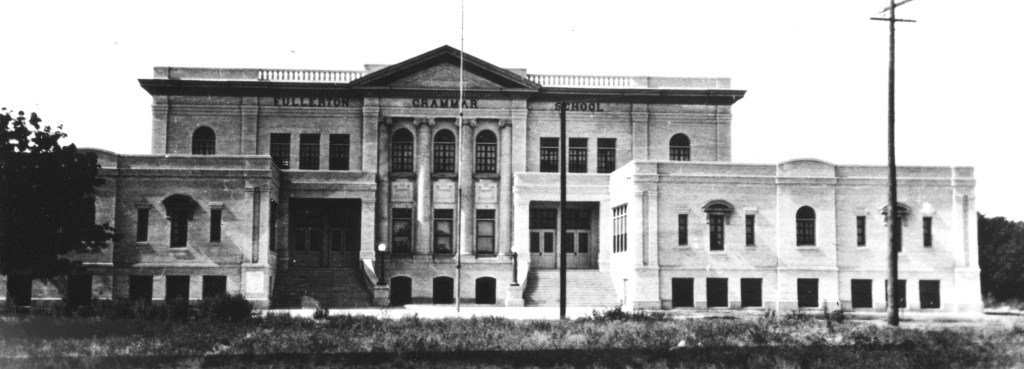
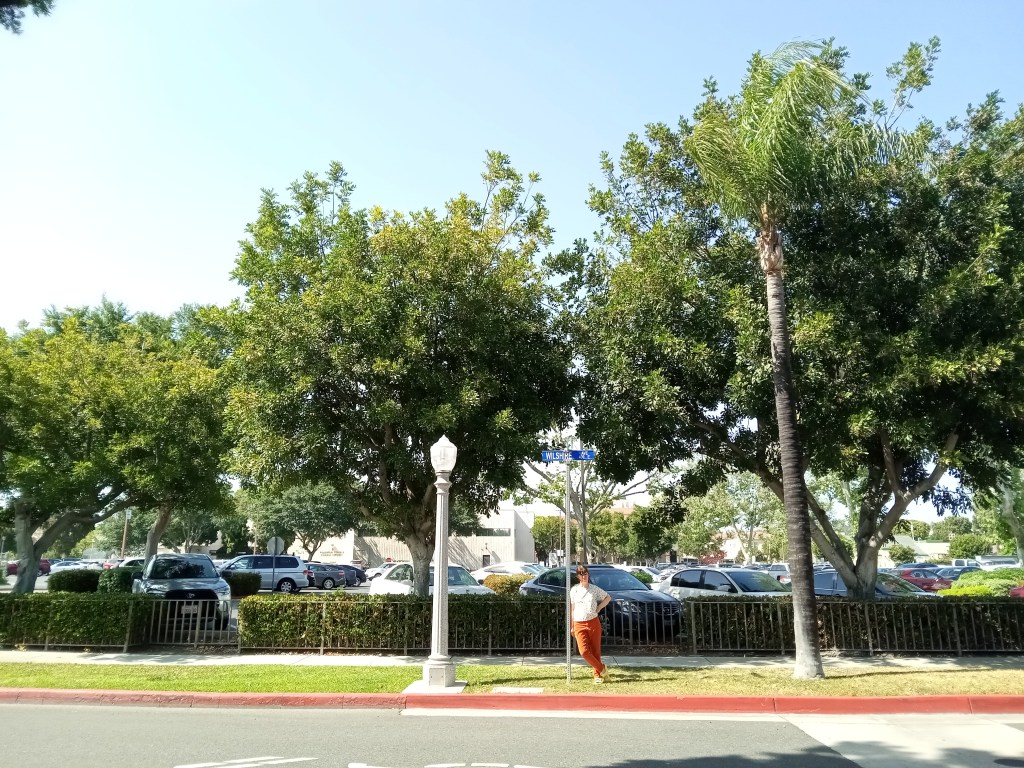
Here is the school from another angle, with a photo today from (approximately) the same angle.
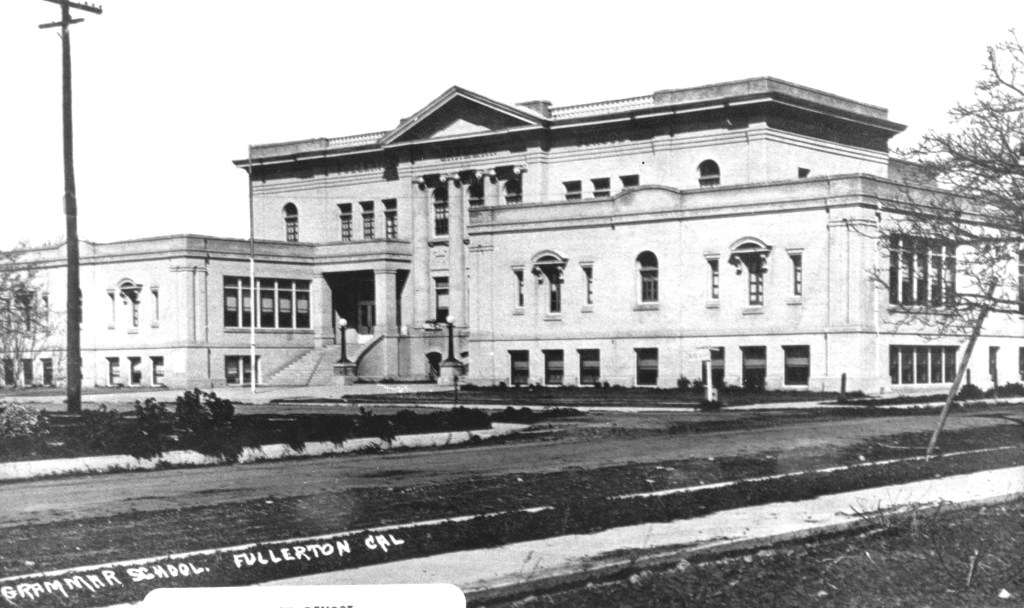

And, just for fun, here’s another photo of the school.

-
Photographs Then & Now: Carnegie Library/Fullerton Museum Center
The following is from a work-in-progress about the history of Fullerton. You can support my ongoing research and writing on Patreon.
For this series, I compare a historic photo of Fullerton with a contemporary one from approximately the same angle. Below are two photographs of the northwest corner of Wilshire and Pomona Avenues–one of the Carnegie Library, which opened in 1907 and one of the Fullerton Museum Center, built in 1942.


-
Photographs Then & Now: Baptist Church/Wilshire Avenue Community Church
The following is from a work-in-progress about the history of Fullerton. You can support my ongoing research and writing on Patreon.
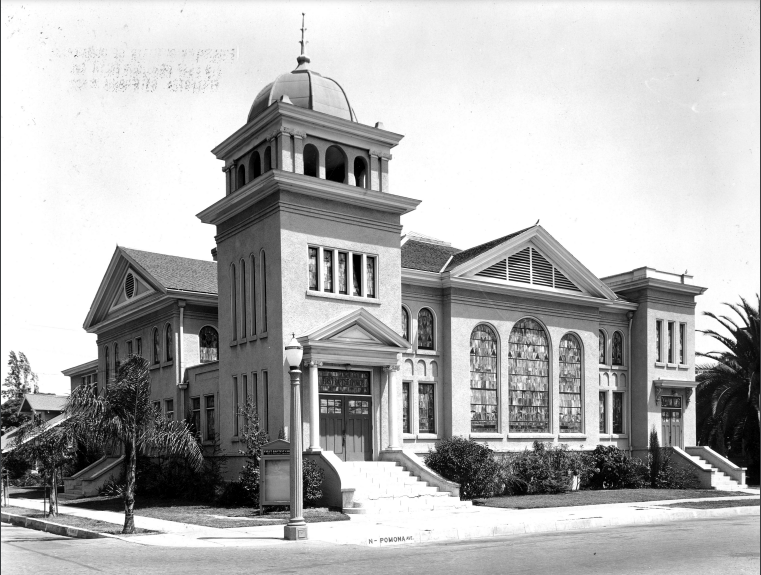
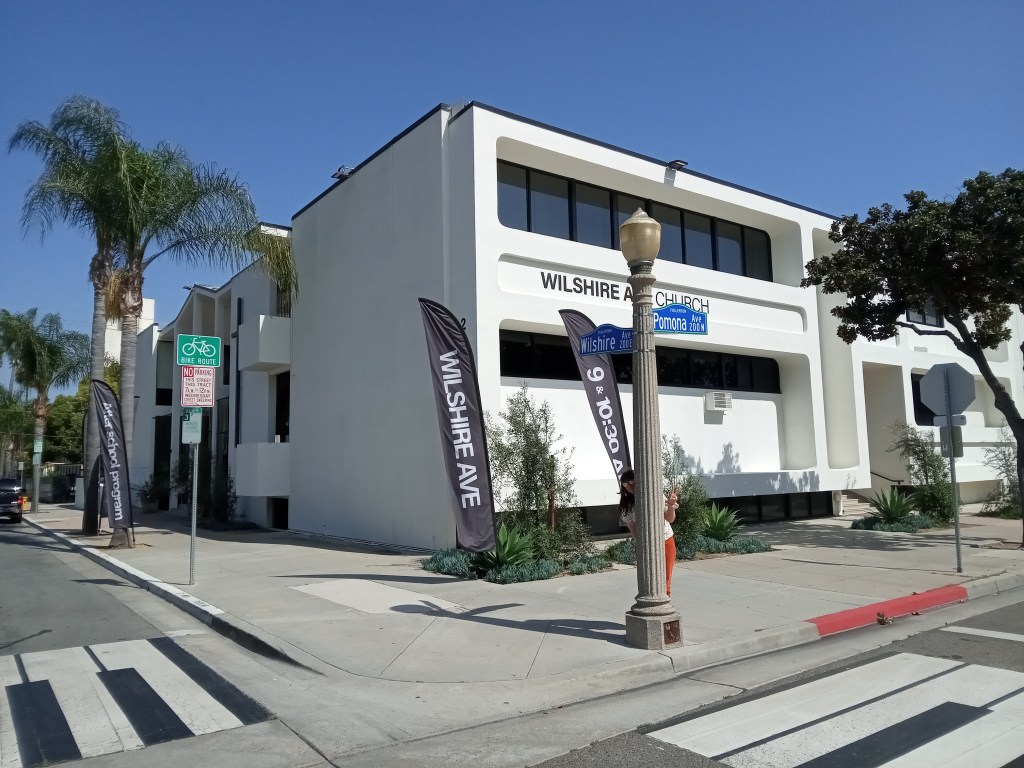
For this series, I compare a historic photo of Fullerton with a contemporary one from approximately the same angle. Below are two photographs of the southeast corner of Wilshire and Pomona Avenues–one of the Baptist Church, built in 1912, and one of the Wilshire Avenue Community Church today, which was built in 1968.
-
News Headlines: 1922

The following is from a work-in-progress about the history of Fullerton. You can support my ongoing research and writing on Patreon.
The Local History Room of the Fullerton Public Library has microfilm from the Fullerton Tribune newspaper stretching back to 1893. I am in the process of reading over the microfilm, year by year, to get a sense of what was happening in the town over the years, and creating a mini archive. Below are some news stories from 1922.
Growth
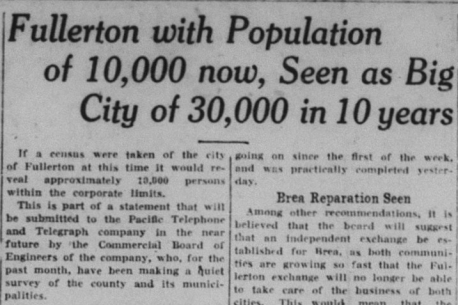
Throughout the 1920s, Fullerton enjoyed a period of rapid growth, as shown by a 1922 population of over 10,000, 20 miles of paved roads, 15 new subdivisions on the market, hundreds of new homes being built, and 15 new business blocks going up. The grammar school had 1071 students, the high school 800 students, and the junior college 150 students. The 1921 shipments of oranges and lemons was 2645 carloads, walnuts was 120 cars, and the oil territory produced 30,000,000 barrels annually.
Ground was broken for the California Hotel (now called Villa Del Sol), which would open in 1923.

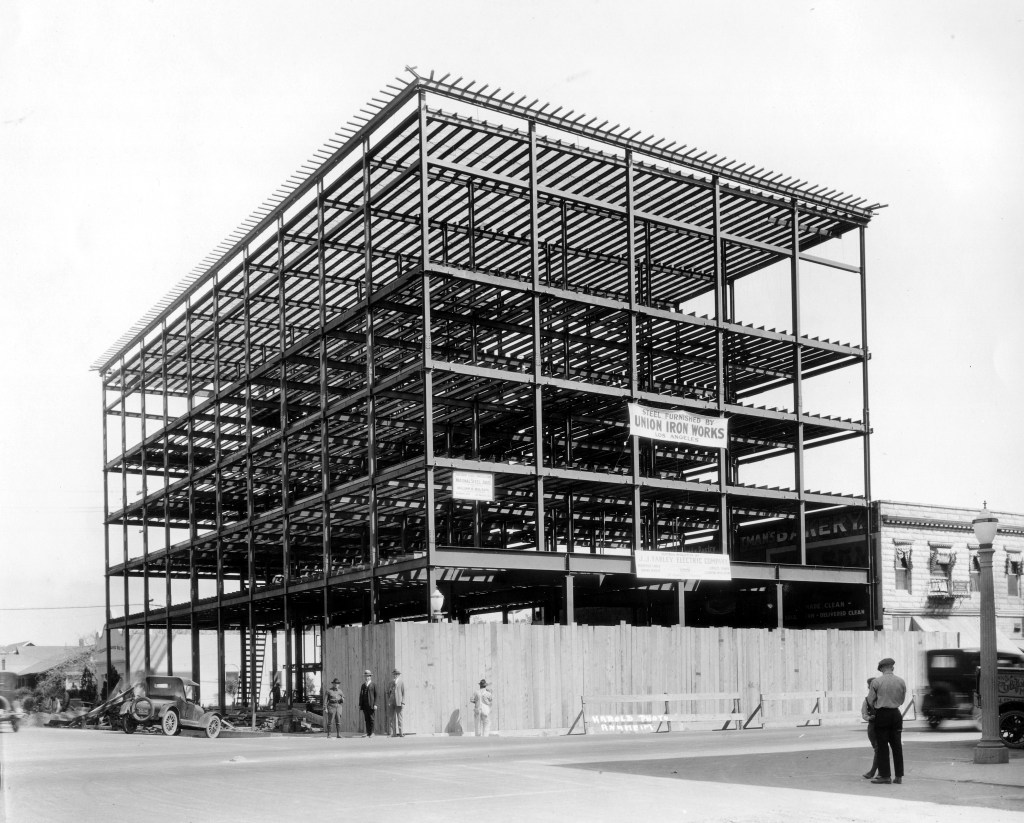
Additionally, plans were being made for the Chapman Building, which was at one time the tallest building in Orange County (5 stories).
New buildings were constructed at Fullerton High School.

There were plans in the works for constructing a City Hall; however these were stalled and eventually scrapped. Fullerton City Hall (now the police station) would not be built for another 20 years.

The City Hall that was not to be. Meanwhile, the city government rented quarters in the Wickersheim building on West Commonwealth downtown.
There were also plans to expand the Fullerton Public Library and to build a “Plunge” (swimming pool at Hillcrest Park). However, when a bond issue was put to the voters for the Library and Plunge, voters rejected them, preferring to only pass road bonds.
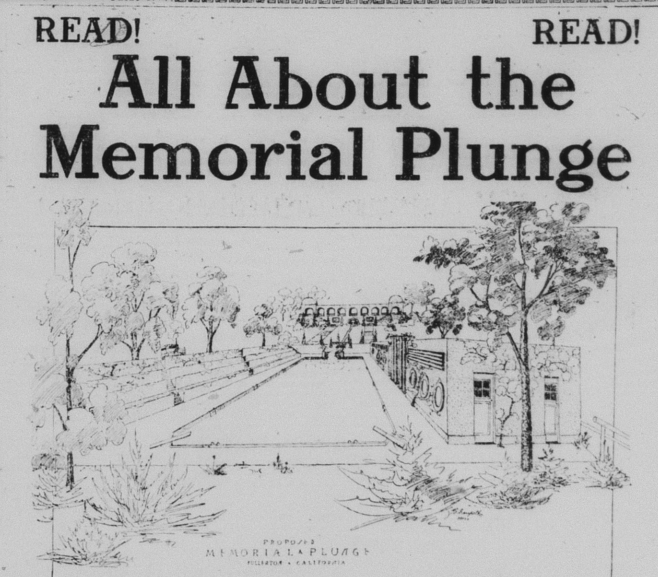
The Memorial Plunge that was not to be. 
The Library expansion would have to wait until the New Deal. 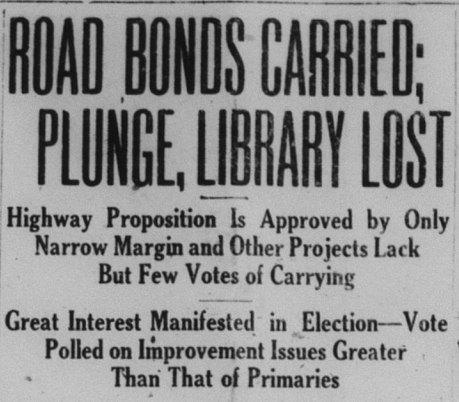
Infrastructure
Fullerton’s new downtown electric streetlight system went online.

Regionally, plans were made for the Prado Dam, which would help to conserve the water of the Santa Ana River for irrigation purposes.
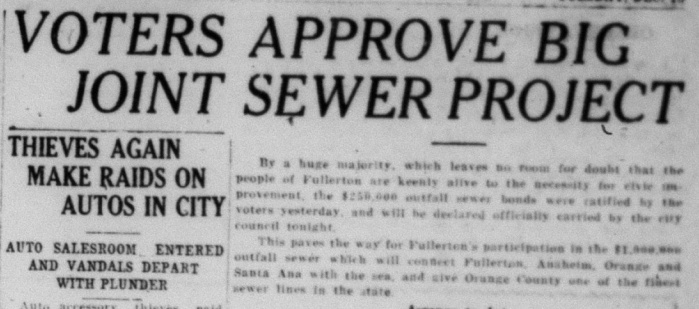
Fullerton joined other cities for the creation of a larger sewer system.
Education
Fullerton’s new grammar school (called Ford School) was completed (it was later torn down).
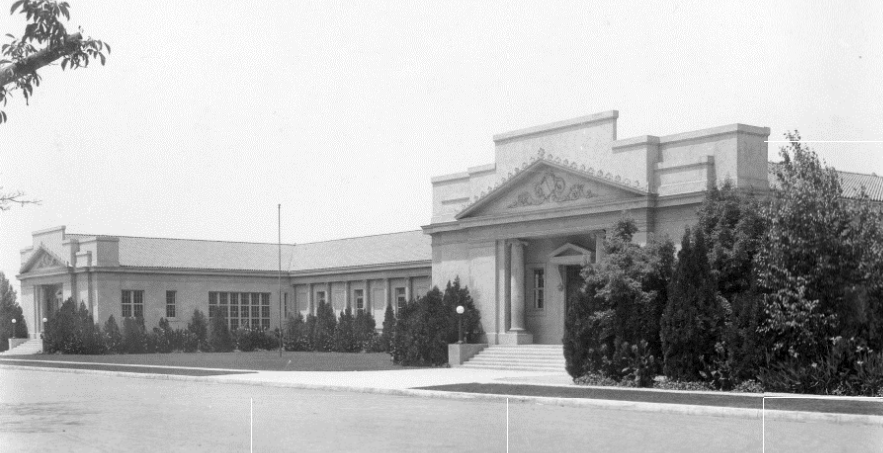
Ford School. Another grammar school was built east of downtown, to supplement the old red brick schoolhouse (it too was later torn down).

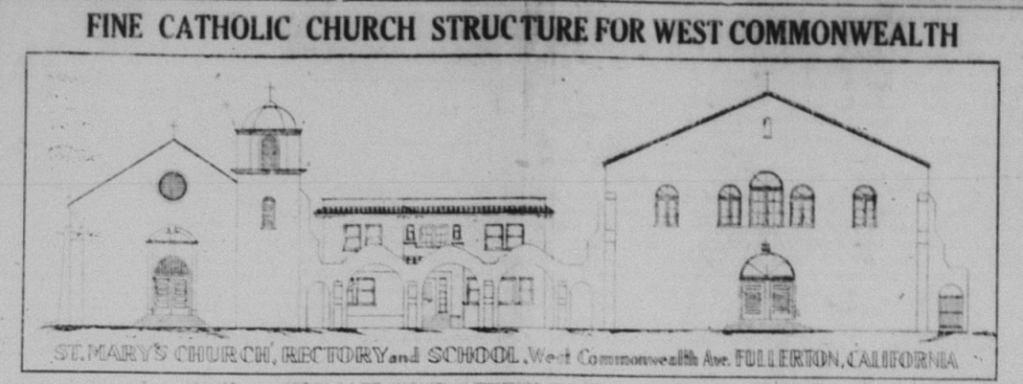
The Catholic Church was also busy building its own school.
Housing
As mentioned before, many new housing subdivisions were built. Unfortunately, most of these had racially-restrictive housing covenants, which prevented non-whites from purchasing or renting homes there.
In a recent post on this topic, Fullerton Heritage wrote:
“By the 1920s, they [racial covenants] were quite common, particularly in what is now the historic areas of the city…Fullerton newspaper advertisements for new housing subdivisions often signaled whether a tract was limited to whites only. A few advertisements were direct, but most used a coded language that potential homebuyers would understand. Words or phrases, such as ‘rigidly restricted’, ‘exclusive tract’, ‘reserved for the finest’ indicated that minorities were excluded from a subdivision.”
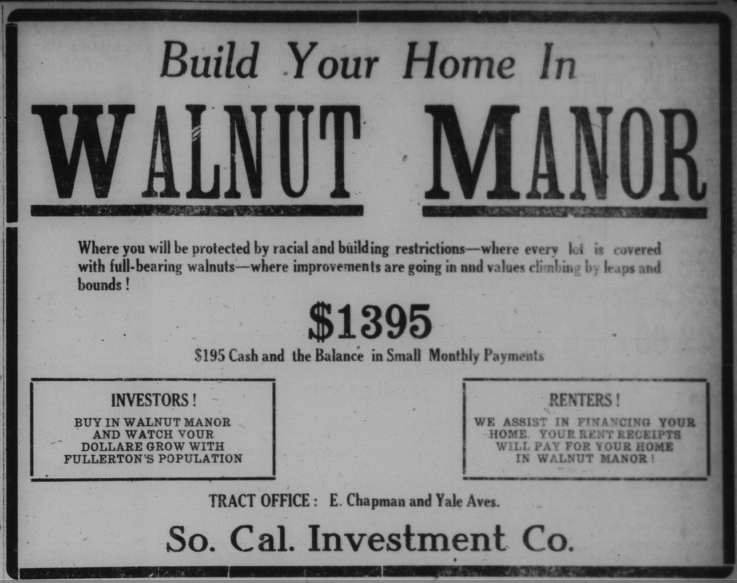
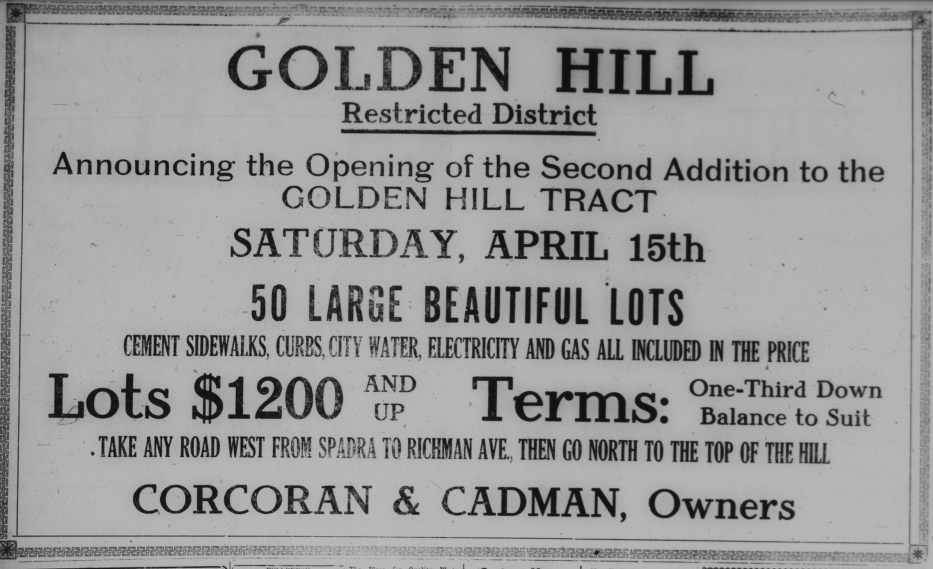
Advertisements for new housing subdivisions made bold claims about the importance of homeownership. As non-whites were excluded from this foundation of “nation-making,” residential housing restrictions may be seen as an example of institutional racism.

Builders could not build homes fast enough to keep up with demand. This “housing shortage” created a situation of very high rents.
To alleviate this problem as new homes were being built, the Fullerton Board of Trade came up with an idea to build temporary tent houses on the field next to the newly-built Ford School, which prospective home buyers could rent while they looked for a house to purchase.
Not surprisingly, this brought a storm of protest from surrounding homeowners.
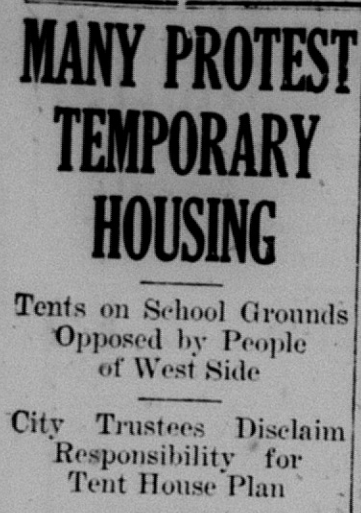
“Like the eruption of a Mt. Vesuvius, a storm of protest has burst forth against the action of those responsible for the erection of tent houses on the West side Grammar School grounds for rent to people seeking a place of abode,” the Tribune stated.
A Mrs. G.F. Molleda of 317 N. Richman avenue, said, “No decent white man will put his family in a tent among low class foreigners and criminals…The hundreds of children that are supposed to be surrounded with an environment of beauty and refinement while being educated, are to be daily confronted with a view of dirty tent inhabitants and clotheslines of black, dirty rags.”
“I am speaking for all the homeowners in the vicinity of the West Side grammar school when I make this protest,” continued Mrs. Molleda, “and a petition is being prepared which will voice this protest in no unmistakable terms.”
Despite the statements from the Board of Trade that the tent houses would be neat and sanitary and “only the most desirable class of people would be permitted” to rent there, the nearby neighbors weren’t having it.
“Two hundred people signed a petition condemning the idea of increasing Fullerton’s housing capacity in this manner,” the Tribune stated. “The main points set forth in opposition being that the established of the project in this particular location would be detrimental to property interests, a menace to the school children and would tend to destroy the effect of the beautiful new school building and grounds recently created up there.”
“R.S. Gregory of the Board of Trade housing committee, under whose jurisdiction the placing of the tent houses has been left, warmly defended the action of the committee, stating in effect that the colony was not one in which undesirable people would be housed, but instead would be one in which only the most desirable class of people would be permitted to live, and these only long enough to permit them to find homes in the city,” the Tribune stated.
Americanization
As Fullerton was building new schools and homes, it was also building separate facilities for its Mexican farm workers and their children under the auspices of an “Americanization” program.
“As Fullerton is the center of a great citrus and walnut growing section, many Mexicans are needed to do the work on the groves and great numbers of them are employed by the packing houses during the time when the fruit is being picked, packed, and shipped,” the Tribune stated. “On this account the Mexican problem has become quite a serious one, and Fullerton has been gradually increasing its facilities for handling this problem by educating the foreigner and teaching him American customs.”

“In order to promote Americanization in this community, the Bastanchury Ranch Company and the Placentia Orange Growers Association have announced their intention to Principal Plummer of the Fullerton Union High School and Junior College, to erect school houses on their properties in Fullerton,” the Tribune stated. “This work will commence shortly on the Bastanchury property and on the Placentia Orange Growers’ land in town and the school houses will be completed in time for the fall opening of school in September.”
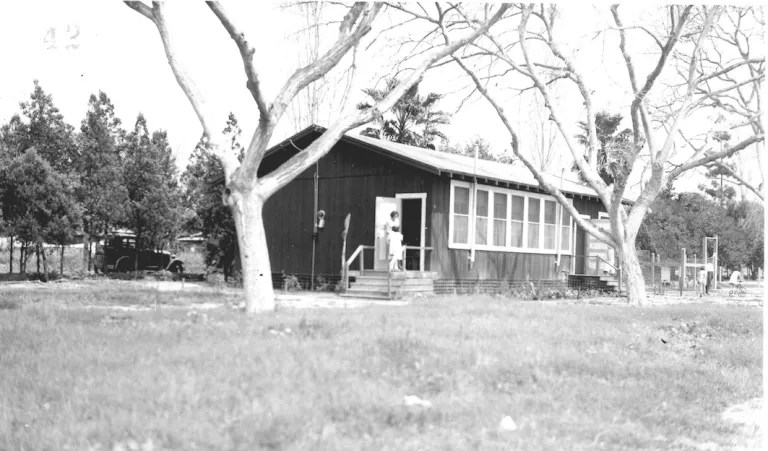
Bastanchury Ranch Mexican School. Druzilla Mackey, who had done similar work at “the Mexican colony in La Habra” was put in charge of Fullerton’s Americanization program.
There were at least two “Mexican” schools in Fullerton, one on the Bastanchury ranch amidst the several work camps, and another closer to downtown Fullerton, at Balcom.
The downtown camp, was called Camp Progressive, and later Campo Pomona “is at present composed of twelve houses each occupied by the family of an employee of the association. Each house is equipped with toilet facilities and there are two bath houses for community use, as a central community washhouse.”
The Placentia Orange Growers Association, who paid for the camp believed “that it will not only be an asset to their business but an institution of demonstrated worth to the community.”
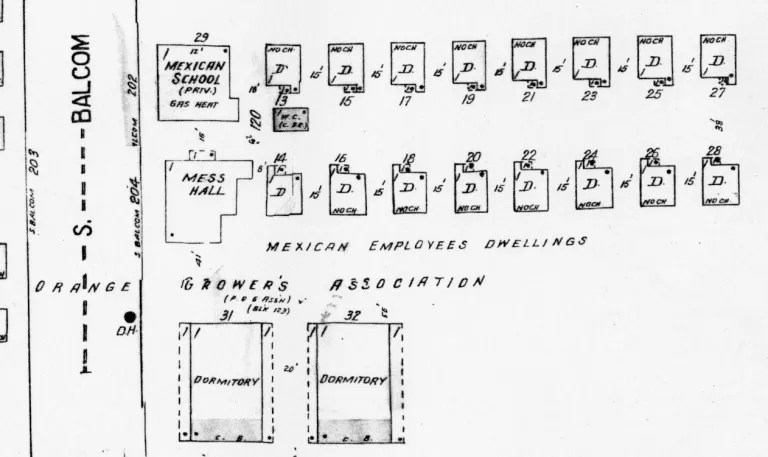
Camp Progressive/Campo Pomona 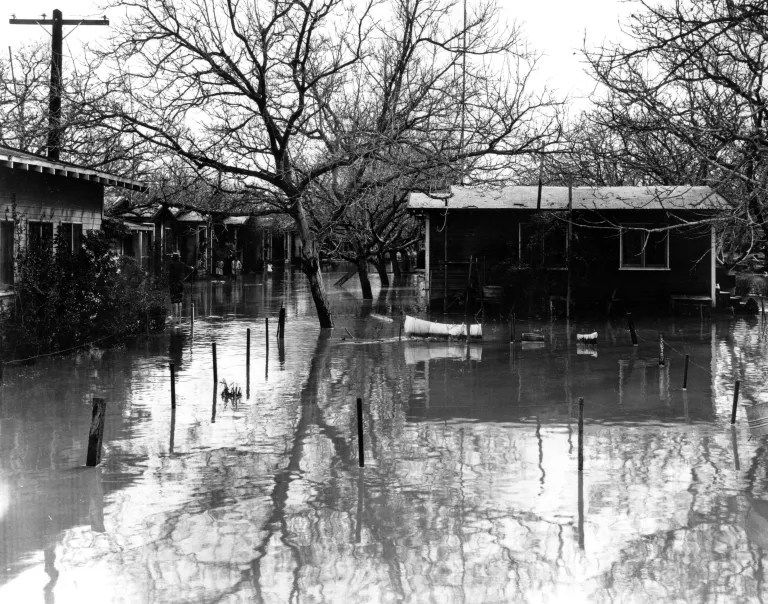
Campo Pomona during the 1938 flood. Despite the fact that Mexicans were generally excluded from purchasing houses in Fullerton’s neighborhoods or attending its stately new schools, the proponents of Americanization saw what they were doing as a positive, helpful thing.
Local Politics
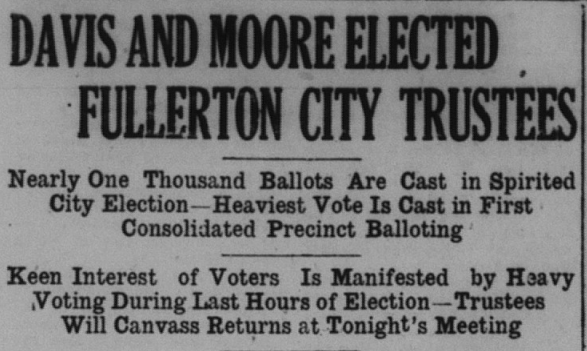
In the 1922 midterm election, Fullerton voters elected Roy Davis (who worked at the Fullerton Ice Co.) and W.A. Moore (of the Fullerton Realty Co.). Gurman Hoppe (of the Stein, Hoppe, and Hax store) was defeated.
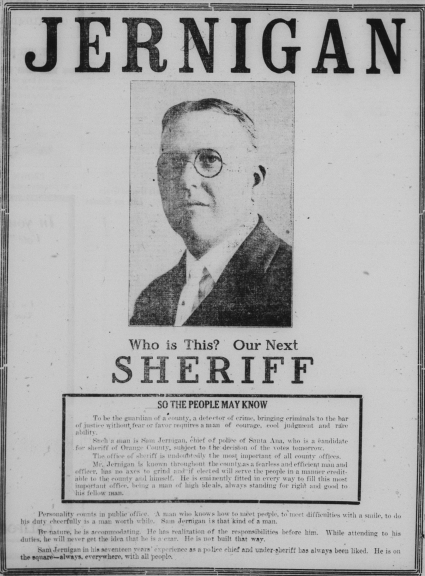
Sam Jernigan, a member of the Ku Klux Klan, was elected county sheriff.
Republican Friend Richardson was elected governor, defeating Republican incumbent William D. Stephens. During his tenure, Richardson would roll back many of the progressive reforms begun by Hiram Johnson.

F.M. Dowling and E.J. Munger were elected as Trustees of High School:
In 1922, at the prompting of the Chamber of Commerce, Fullerton considered hiring a City Manager, which would fundamentally alter the form of local government, moving a certain measure of administrative authority away from elected officials and toward an unelected (appointed) city manager.

“Characterizing certain departments of the city government as totally inefficient, lacking in harmony and not working to the best interests of the people of Fullerton, because of jealousy and interlapping authority, a resolution was today introduced by the executive committee of the Chamber of Commerce by G.W. Finch urging that organization to support a movement for the creation of a city manager for Fullerton,” the Tribune states.
Ku Klux Klan
According to a 1979 UCLA doctoral dissertation entitled “The Invisible Government and the Viable Community: The Ku Klux Klan in Orange County, California During the 1920s” by Christopher Cocoltchos, at least one of the men elected to Fullerton City Council in 1922 would join the Ku Klux Klan–W.A. Moore.
“Councilman W.A. Moore, Judge French, and Superintendent of Schools Plummer [yes, that Louis Plummer] joined the Klan in the latter part of 1923, and R.A. Mardsen entered in mid-1924. Civic leaders were especially eager to join. Seven of the eighteen councilmen who served on the council between 1918 and 1930 were Klansmen,” writes Cocoltchos.
The Ku Klux Klan was on the rise nationally in the 1920s, achieving a peak membership of around 5 million in cities and towns all over America—not just in the South, but also in the West.
Throughout 1922, there are numerous articles about the growing KKK both around the country and locally.

The above article includes a letter written by a prominent Santa Ana pastor, condemning the KKK and a local church for inviting a Klan member to preach:
“Christian civilization has fallen very low indeed, if the church must consent to men being ‘hooded and gowned’ to show kindness or to practice virtue. I have faith to believe that American Patriotism will never allow justice to lose its purity nor the law its righteousness and majesty in hooded lawlessness,” Rev. Oliver writes.
It’s important to understand that the Ku Klux Klan saw itself as a Protestant Christian organization.
At a standing-room only sermon, Rev. C.R. Montague, pastor of the First Methodist Church of Fullerton, gave a sermon in which he (sort of) condemned the Ku Klux Klan.
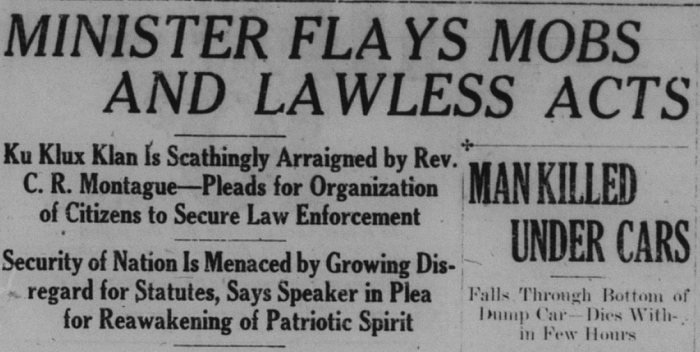
However, his condemnation was only for the actions of the KKK, not their principles or values.
“While he scored the alleged acts of the Ku Klux Klan wherein that hooded body is said to have perpetrated acts of violence in an effort to remedy conditions which they believed were without the pale of law, Rev. Montague stated that he believed in fair play for them all, and expressed his entire approval of the tenets of the Klan as outlined in their published statements and oaths–allegiance to the United States government and a ‘square deal’ for every man,” the Tribune stated.
One of the main tenets of the Klan not mentioned explicitly in this article was white supremacy.
In order to boost their membership, the Ku Klux Klan tapped into issues that were popular at the time, such as Prohibition, which had been the law of the land since the passage of the 18th Amendment in 1919. Bootlegging was widespread, and the KKK saw itself as a force against bootlegging.
A Klan raid on an alleged bootlegging operation in Inglewood in 1922 resulted in a policeman [and alleged Klan member] being killed and two others wounded. This prompted a grand jury investigation of the Klan’s activities locally.

Los Angeles District Attorney Woolwine sharply criticized the KKK, saying, “It seems to me that no right-thinking American could find the slightest excuse for the existence in this county of an organization such as the Ku Klux Klan.”
The grand jury found the Klan responsible:
“We, the jury, find that the deceased came to his death from a gunshot wound in the abdomen by Officer Frank Woerner in the performance of his duty while the deceased was acting as a member of an illegal, masked and armed mob, presumably instigated and directed by members of the Ku Klux Klan, and we recommend that the District Attorney convene the grand jury of this county to investigate this case further and take the necessary steps to prosecute the perpetrators of this crime.”
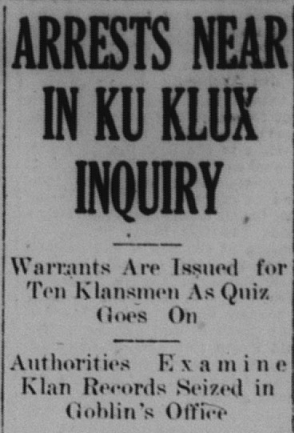
More arrests of Klansmen followed, as well as a raid on the KKK’s offices in downtown Los Angeles at Seventh and Broadway. As a part of this investigation, a list of Klansmen in Southern California was obtained, which revealed that the KKK had over 200 members in Orange County.

“That there are 203 members of the Ku Klux Klan in Orange county and only approximately 25 of that number are residents of other sections than Santa Ana, was the statement of District Attorney A.P. Nelson this morning,” the Tribune reported. “Of the Klan members outside of Santa Ana, there are said to be about 10 in Anaheim and three or more in Orange, Fullerton, Placentia, Huntington Beach and Seal Beach.”
It should be noted that this 1922 Klan list was incomplete, and another list would be discovered in 1924 that had over 1,200 names of Orange Countians.
Nelson chose not to make the names on the list public, but said he had it in his possession, should the KKK attempt further crimes.
Interestingly, like Rev. Montague, DA Nelson did not condemn the beliefs of the Klan, only their vigilante methods.
“Although stating that he thought the principles of the klan as outlined by the organization to be truly American, Mr. Nelson said that he was absolutely opposed to any organization, no matter what its principles that works by the methods attributed to the Ku Klux Klan, masked and with identities concealed to take law in their own hands,” the Tribune states.
After it became known that Nelson had the membership list, a mystery man appeared at his home while he was gone and tried to get his wife to get her husband to drop any further investigation into the Klan.
Meanwhile, the KKK tried to extort money from Black ministers in Los Angeles.
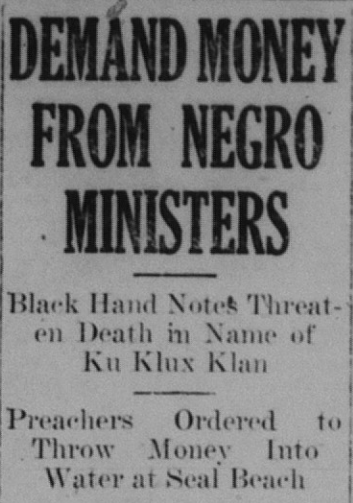
“Five negro ministers, one in Watts and the other four in Los Angeles, have received letters threatening themselves and their congregations with death unless they paid sums ranging from $1000 to $10,000 to the writers of the demands who signed themselves the ‘Ku Klux Klan’ according to a statement made at the sheriff’s office today,” the Tribune reported.
Given the growing popularity of the Klan and its threat to law and order, the Orange County Board of Supervisors voted to bar Klan members from working for the county.
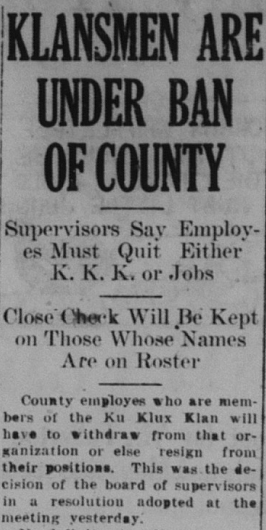
“With the complete list of Klan members in the possession of District Attorney A.P. Nelson a complete check will be kept on the actions of those affected by the ultimatum of the supervisors. The names of those affected will not be made public,” the Tribune reported.
The resolution adopted by the Supervisors was as follows:
“Whereas, it has been called to the attention of the Board that certain employees of the county of Orange are members of and identified with the branch of that organization known as the Ku Klux Klan, and
“Whereas, the Board feels that membership in such an organization is not compatible with the duty which county employees owe to the public as servants of the public
“Now, therefore, it is hereby resolved and ordered by the Board of Supervisors of the County of Orange, State of California, that all county employees, who are members of such Ku Klux Klan be and they are hereby requested to furnish to the District Attorney of the County of Orange satisfactory evidence of their withdrawal as members of the organization known as the Ku Klux Klan or tender to the proper officer of the county their resignation as an employee of said county.
Meanwhile in Oklahoma, an explicitly anti-Klan group formed. Because the KKK saw themselves as an “invisible empire,” this new group called itself the Knights of the Visible Empire.

“The Knights of the Visible Empire are gathering strength to oppose the white-shrouded host–the knights of the invisible realm. The Southwest is splitting into two factions–klan and anti-klan,” the Tribune reported. “Within the last few months the Ku Klux Klan has shown its strength. It appears to exist in every community. In the big, modern, fast-growing cities of the Southwest it numbers thousands of its “invisible empire.” This has been proved by parades and demonstrations in such cities as Dallas, Forth Worth, Beaumont, Waco, Oklahoma City, Tulsa, and other places.”
And then the Tribune makes a shocking, albeit buried, report:
“Here, only a few weeks ago, nearly 3,000 hooded figures passed through the streets. The parade was fifteen blocks in length. At its head masked riders bore aloft the emblem of the klan. Overhead an airplane circled, bearing a flaming cross.”
By “here” I can only assume Johnson meant Fullerton, or a nearby town.
In my previous research on the KKK in Fullerton and Orange County, I found evidence of large rallies in Anaheim and Fullerton, although I thought they only happened in 1923 and 1924. Evidently, there was also a huge Klan parade in 1922. Strangely, the Tribune doesn’t report on it outside the short paragraph above. Probably, as is sometimes the case today, some Fullertonians didn’t want to admit that the KKK was in their community, and prominent members joined.
Culture & Social Life
The Klan wasn’t the only group growing in popularity in 1922. A Bible class that met at the Rialto Theater drew hundreds, and then thousands of boys and men on Sunday mornings.
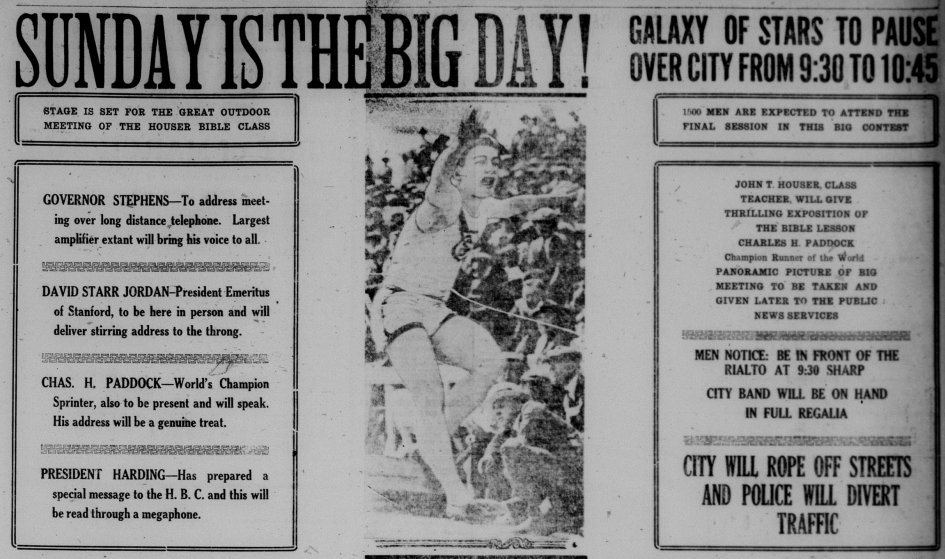
The Houser Bible class was in a kind of competition with a similar Bible class in Santa Ana to see who could draw the most members. Not really the point of a Bible class, but whatever. At its peak, the Bible class grew to such proportion that Spadra (Harbor) had to be closed for at least one high-publicized meeting.
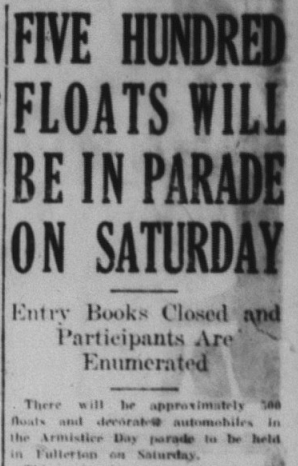
The other big gathering, outside of Klan Rallies and Bible Studies, was the Armistice Day parade, celebrating the ending of World War I. This was a truly massive event, with thousands of attendees and around 500 floats!

For more ordinary entertainment, Fullertonians went to see movies and vaudeville shows at the Rialto Theater (this was before the Fox was built).
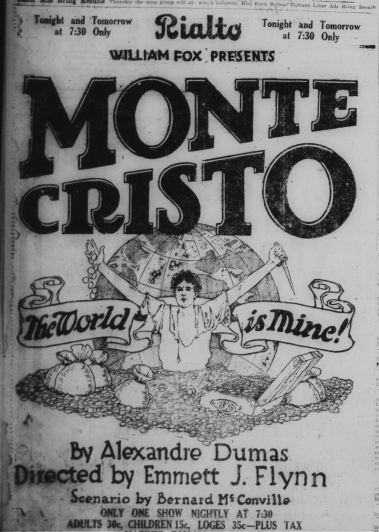


Unfortunately for movie-goers, Will B. Hays (former Postmaster General under president Harding) was hired to censor movies of content deemed objectionable.

“A genuine ‘spring cleaning’ to purge motion pictures of all semblance of salaciousness was promised today by Will B. Hays, who leaves President Harding’s cabinet March 4 to head a new association of motion picture producers and distributors,” the Tribune reported.
“I will head what you might term a moral crusade in the film industry after March 4,” Hays said, adding that this would not be censorship. “I have two objects. We will attempt to attain and maintain the highest standards in motion picture production and seek to develop the moral and educational values of motion pictures to their highest degree. That is all we plan.”

Movie mogul Joseph M. Schenck said, “Arrangements have been made for a review of each picture that is prepared. The report of this review will go to Will Hays and his decision will be final. If he orders the picture changed, it will be changed. If he orders it ‘scrapped’ it will be discarded without argument.”
Much of the discussion centered around depiction of sex in movies.
“Very much has been said on the subject of ‘sex’ in pictures. But there exists a confusion in the minds of many regarding the definition of sex. A great many think that the word sex is synonymous with salaciousness. This is not true,” Schenck said. “The sex picture will continue to lead in presentation on the screen. But the salacious picture will not be tolerated…And it will be one of the principal part of Mr. Hays’ duties to see that this is not done.”
There was much less discussion about depictions of violence. I always have found it ironic that many Americans tend to be much more averse to depictions of sex than depictions of violence in movies.
For musical entertainment, Fullertonians purchased and listened to records.

Just as there was something of a moral panic about sex in movies, there was also backlash against the influence of jazz music.

Another popular form of entertainment was the traveling Chautauqua show that came through town each Spring.

Crime
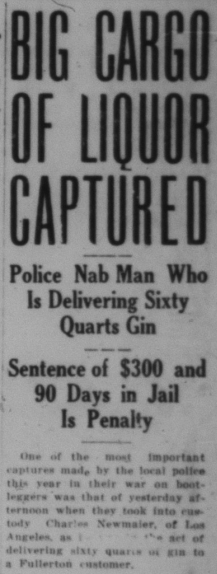
Because this was during Prohibition, the most common “crimes” were liquor-related. One of the major ironies of Prohibition was that, despite its goals of “cleaning up” America, it led directly to an increase in organized crime and political corruption.
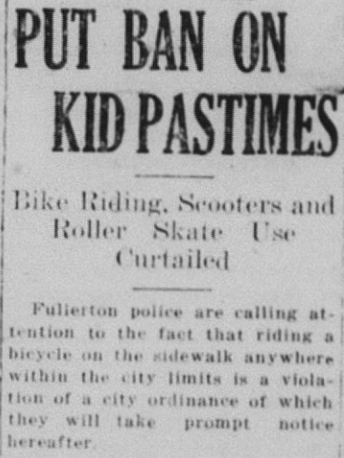
Among other fun-killing laws, Fullerton started cracking down on roller skating, scooters, and riding bikes on sidewalks.
Transportation
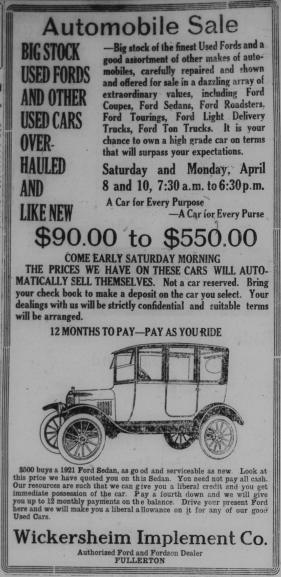
In transportation news, automobiles were very popular, with a few different car dealerships in town, like William Wickersheim’s newly-built Ford dealership on Commonwealth (It’s now the Ace Hardware Store).

An auto camp at Hillcrest Park was a popular spot for travelers.

Residents of South Fullerton organized to fight a proposed new Union Pacific Rail line through their area.

Ultimately, the UP rail line went in.
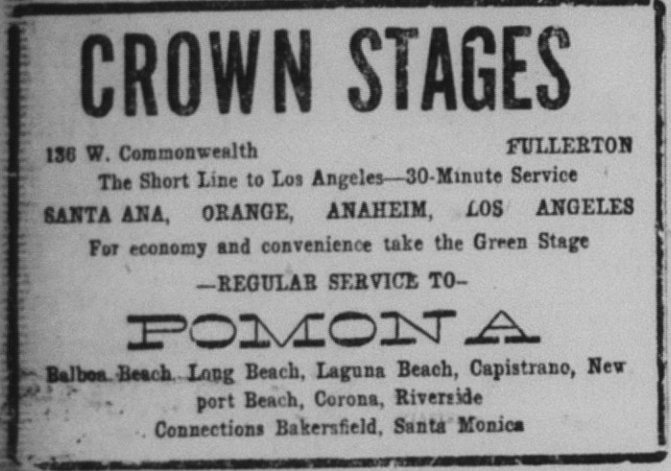
There was also bus service to and from Fullerton, the Crown Stages.
National News
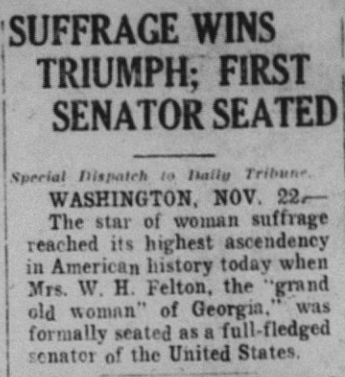
In national news, the first female U.S. Senator was elected, Rebecca Felton. Unfortunately, she was a former slave owner and white supremacist.
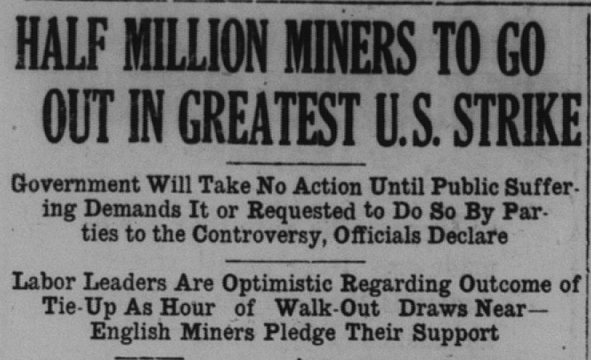
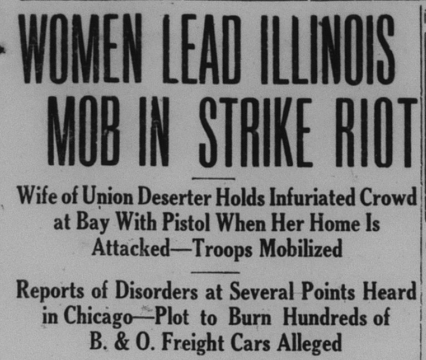
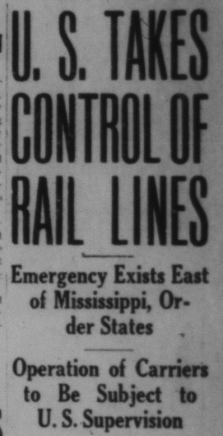
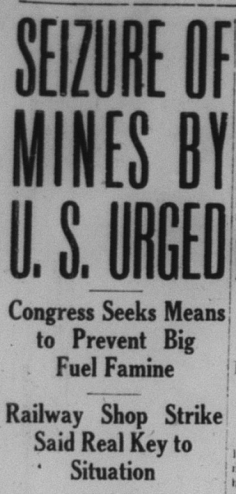
Major strikes happened across the United States, particularly coal miners and railroad workers. In the case of the miners’ strike, U.S. troops were called in. To force an end to the rail workers’ strike, the government (briefly) took control of the rail lines.
These two industries–coal and railroads–were vital to the US economy in the 1920s, as they were major sources of power and transportation of goods and people.

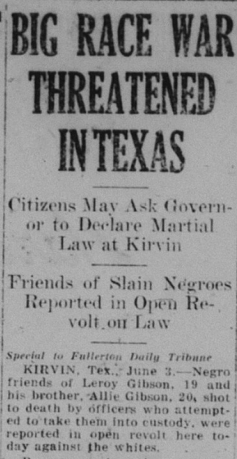
In keeping with the rise of the Ku Klux Klan nationally, there were occasional outbursts of racial violence.
World News
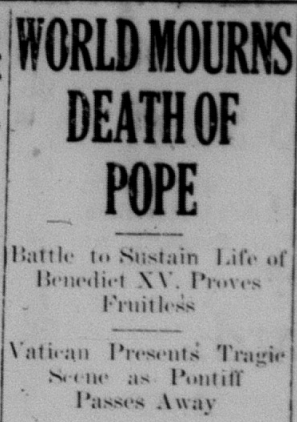
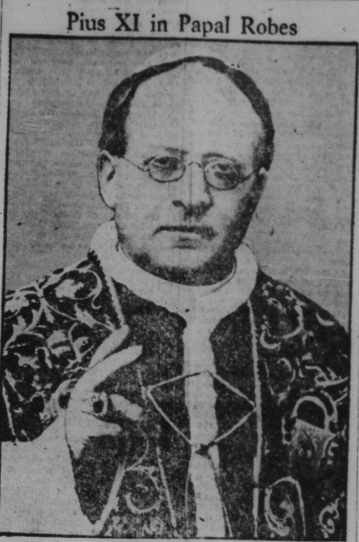
In world news, Pope Benedict XV died. In his place, Pope Pius XI was chosen as the next Pope.
In the aftermath of World War I, and in an effort to prevent further wars, major world powers sought to establish limitations on armaments.

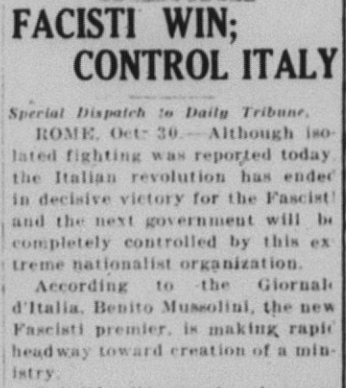
Unfortunately, this peace would not last. In Italy, fascists took over the country.

Great Britain was having trouble holding onto its empire, with rumblings of independence movements in Ireland, India, and elsewhere.
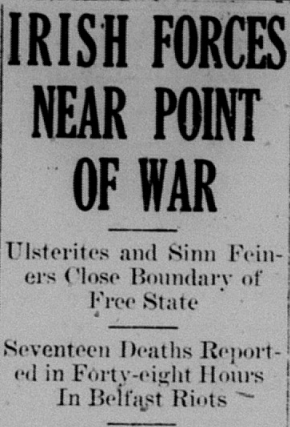
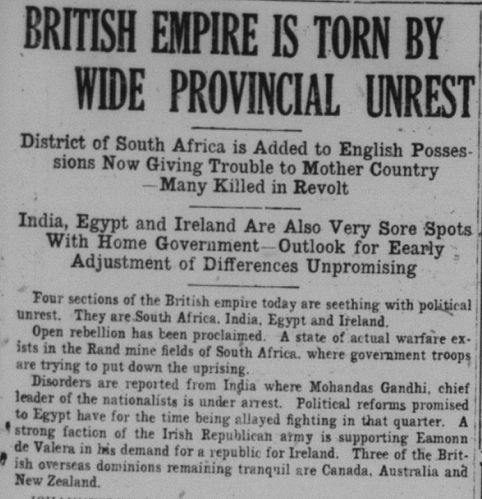
As is the case today, much of the global conflict was over resources, like oil.

Deaths
Among notable local deaths was Fullerton pioneer rancher Henry Burdorf, who died at age 81.
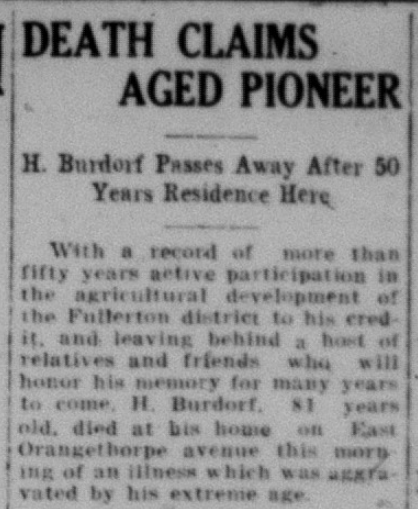
He died at his house on East Orangethorpe avenue. Burdorf came to Orange County from San Francisco and lived on his ranch for fifty years. He was one of trustees of the first grammar school district. I plan to write more on Burdorf in a future post.
After the death of the leader of a Placentia vegetarian cult, Walther Thales, died in 1921, his successor D.W. Weiderhold died in 1922.

Miscellaneous
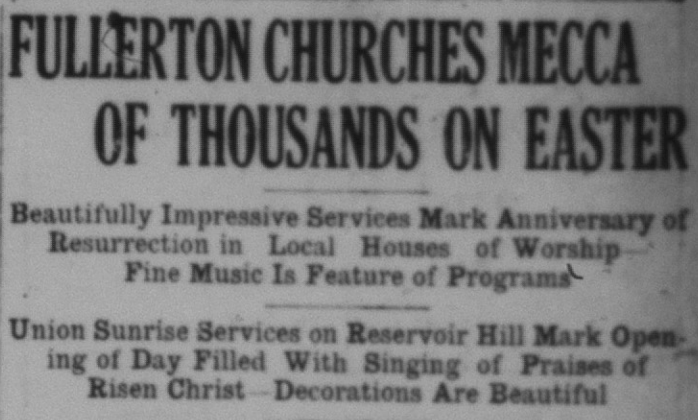
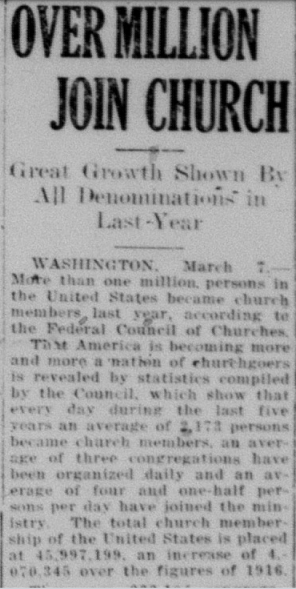
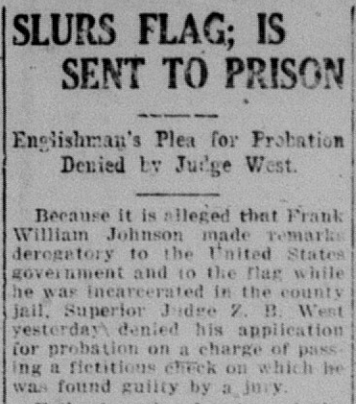
And here are some miscellaneous articles from 1922:

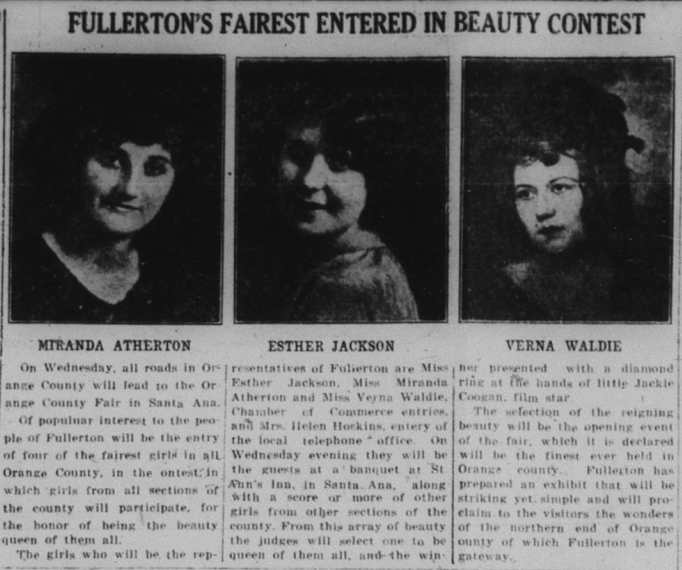


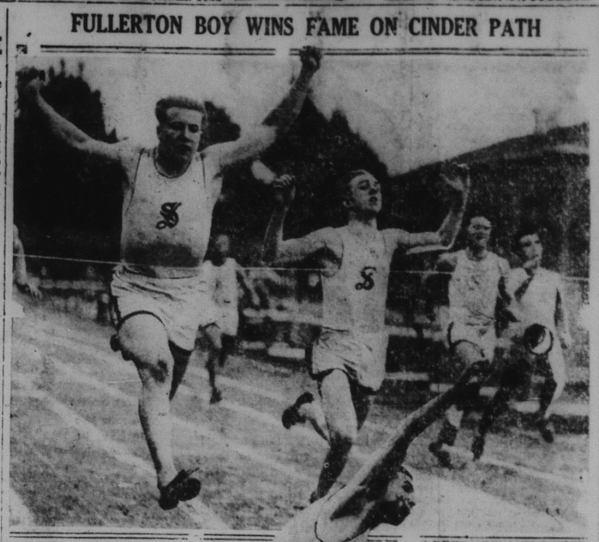
Glenn Hartranft, from Fullerton, was a track star at Stanford University. 



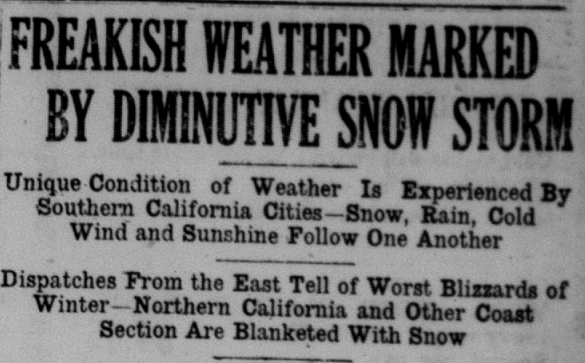
Stay tuned for more headlines from 1923!
-
Early Settlers: The McDermont Family
The following is from a work-in-progress about the history of Fullerton. You can support my ongoing research and writing on Patreon.
Recently, while going through the 1921 Fullerton Tribune newspaper microfilm archives, I came across an article entitled “Early Days in Fullerton are Depicted by Real Pioneers,” which featured the recollections of Anna Grace Ford, daughter of Alex McDermont, whose family were very important early settlers of Fullerton.
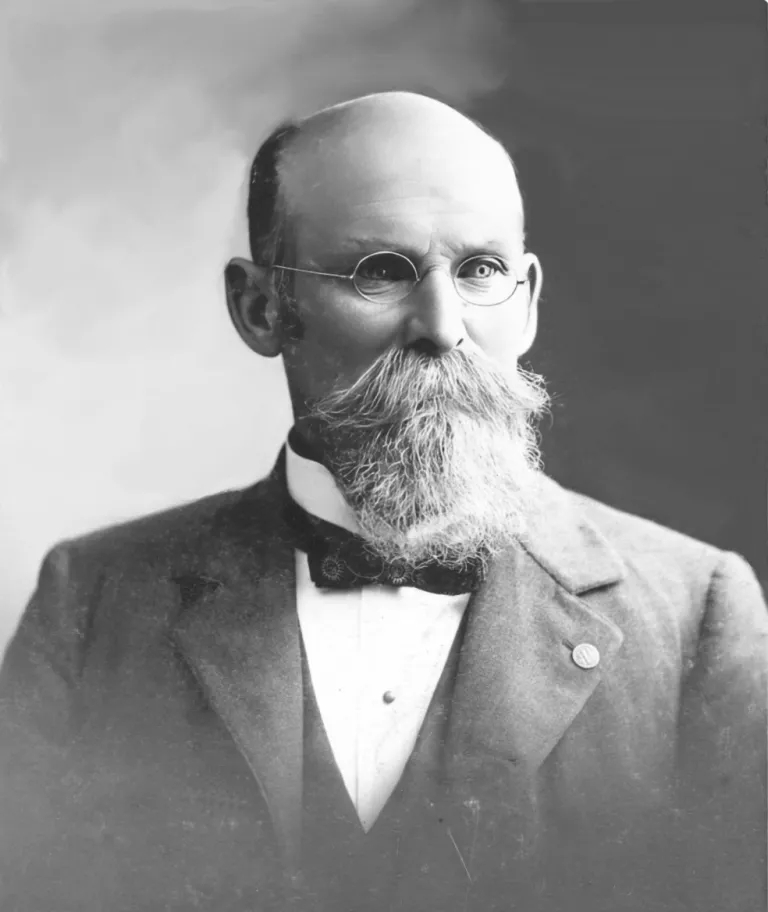
Alexander McDermont. Photo courtesy of the Fullerton Public Library Local History Room. The McDermonts came from the midwest to the area that would become Fullerton in a covered wagon in 1882, five years before the actual town was founded.
Anna describes first seeing the property: “When we reached the brow of the hill, just north of what is now City Airport, my father told us that now we could see our new home. I was 8 years old but I will never forget the feeling of bewilderment that came over me as I saw this vast field of dry mustard, outlined now and then by a few gum trees and a rough house on Orangethorpe.”
The only roads were the unpaved Orangethorpe and Spadra (now Harbor). McDermont purchased a sixty-acre tract of land from J.M. Guinn. The McDermont property was bounded by what is now Euclid Street on the west, Brea Creek channel on the north, Woods Avenue on the east and the Santa Fe Tracks on the south.
Anna remembers the famous Polish singer Madam Modjeska and her husband (who had settled elsewhere in Orange County) visited their home.
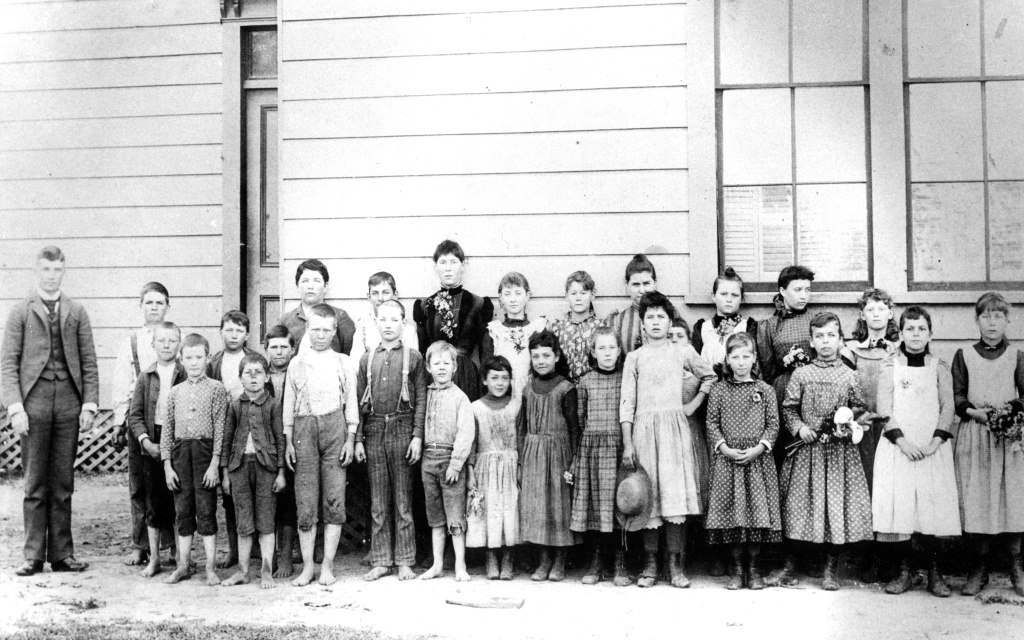
Students and teachers outside Orangethorpe School, 1880s. Photo courtesy of the Fullerton Public Library Local History Room. The only local schools at this time were in Placentia, Anaheim, and a one-room building on Orangethorpe avenue, which the McDermont children attended. In 1887, a school was opened in Fullerton “in the building used for a blacksmith shop on S. Pomona avenue between Commonwealth and Santa Fe avenues. Seats were provided by nailing planks to the walls of the building…and among the pupils for the first few days was a large gopher snake that insisted on maintaining its position under the seat until it was driven out and denied further school privileges,” according to the Tribune.
A bit later, a larger brick school house was built in town at Wilshire and Lemon, which was later torn down. Young Anna constituted the first graduating class in 1890.
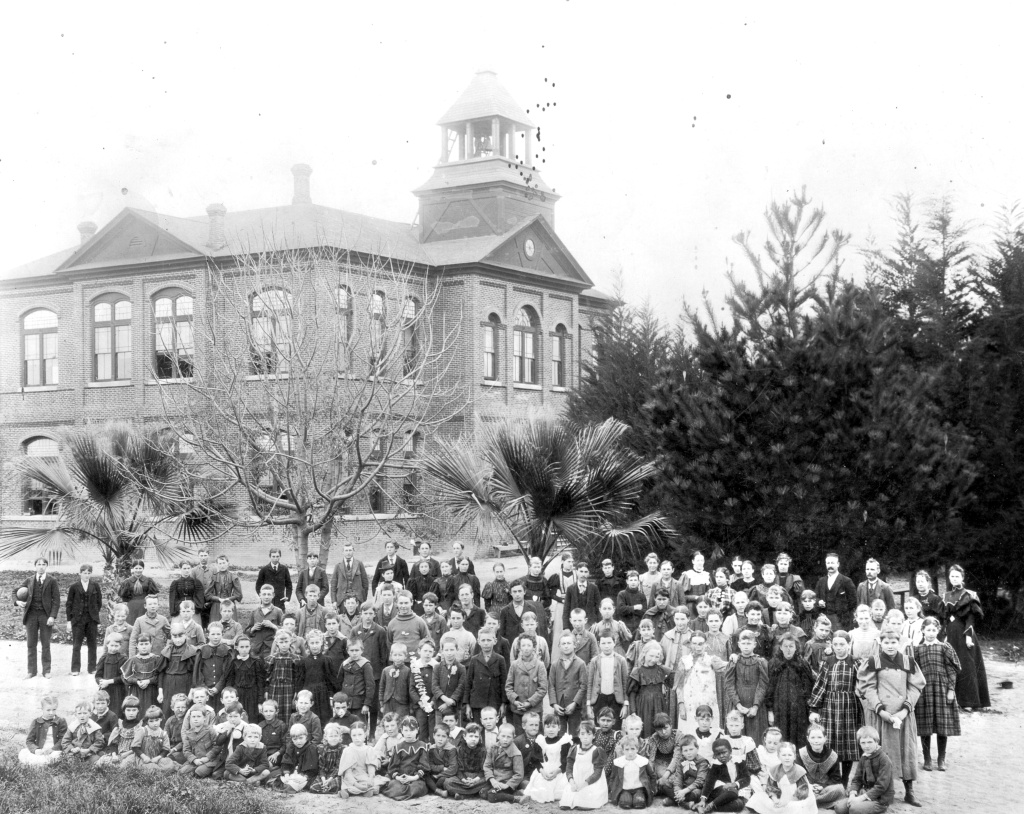
Fullerton Brick Schoolhouse, 1890s. Photo courtesy of the Fullerton Public Library Local History Room. Alex McDermont became a successful rancher, and was helpful in getting the Santa Fe Railroad to pass through Fullerton, donating the right-of-way through his ranch. The railroad was crucial for the early success of the town of Fullerton, which was officially founded by George and Edward Amerige in 1887.
As Fullerton developed, “McDermont became prominent in Fullerton civic circles,” Bob Ziebell writes in Fullerton: a Pictorial History, “being among those who brought a newspaper to town and among the first subscribers to capital stock in the community’s first bank [The Fruit Growers Bank]. He also ‘used his influence’ to help create the Fullerton Union High School…served as a director of the Placentia Orange Growers Association and of the water company; and was manager of the Walnut Growers Association.” He was also Chairman of the Chamber of Commerce and among the first library trustees.
The McDermonts built a home on what became Euclid Avenue, and then lived in a home on what later became 311 West Commonwealth Avenue, which was eventually demolished to make way for today’s Fullerton Public Library.
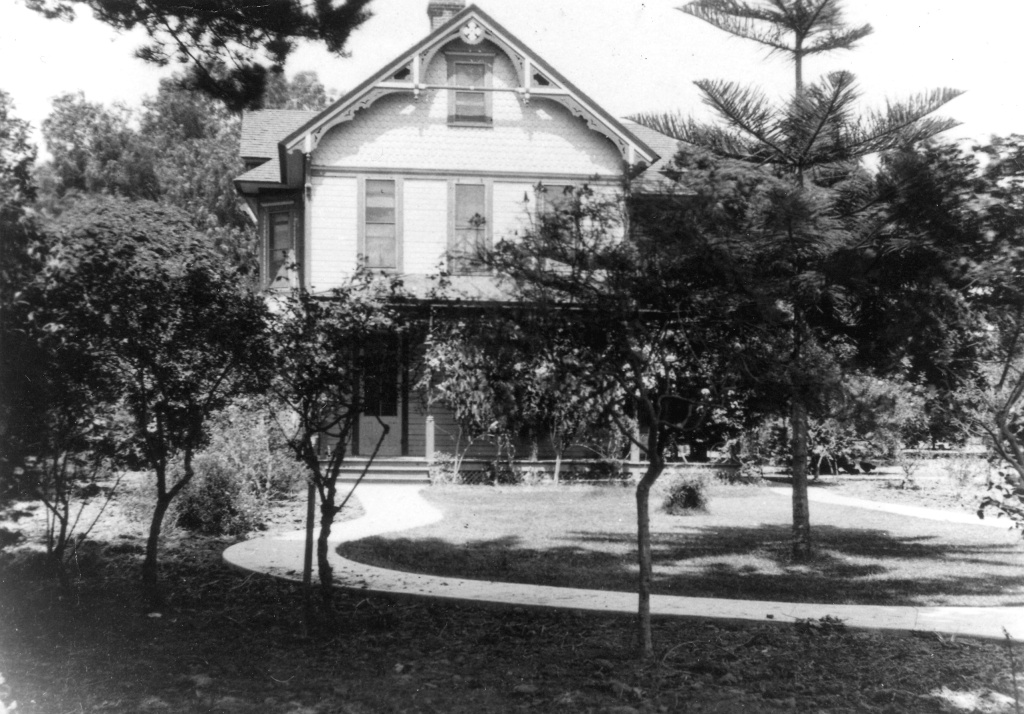
House where the McDermont family lived on the site of what is now the Fullerton Public Library. “McDermont built a large business building at the southwest corner of Spadra (Harbor) and Amerige in 1893, which, when it burned to the ground in a major fire in 1908, spurred formation of the Fullerton Fire Department,” Ziebell writes.
Another influential member of the McDermont family was Anna McDermont (not to be confused with her niece Anna), who was a member of the park commission “and contributed intelligent advice and much active work to the plans which were made and carried out for the development and beautifying of the town,” according to the Tribune. “Her work was an important factor in the establishment of the public library and she been called the mother of the Fullerton Women’s Club.”
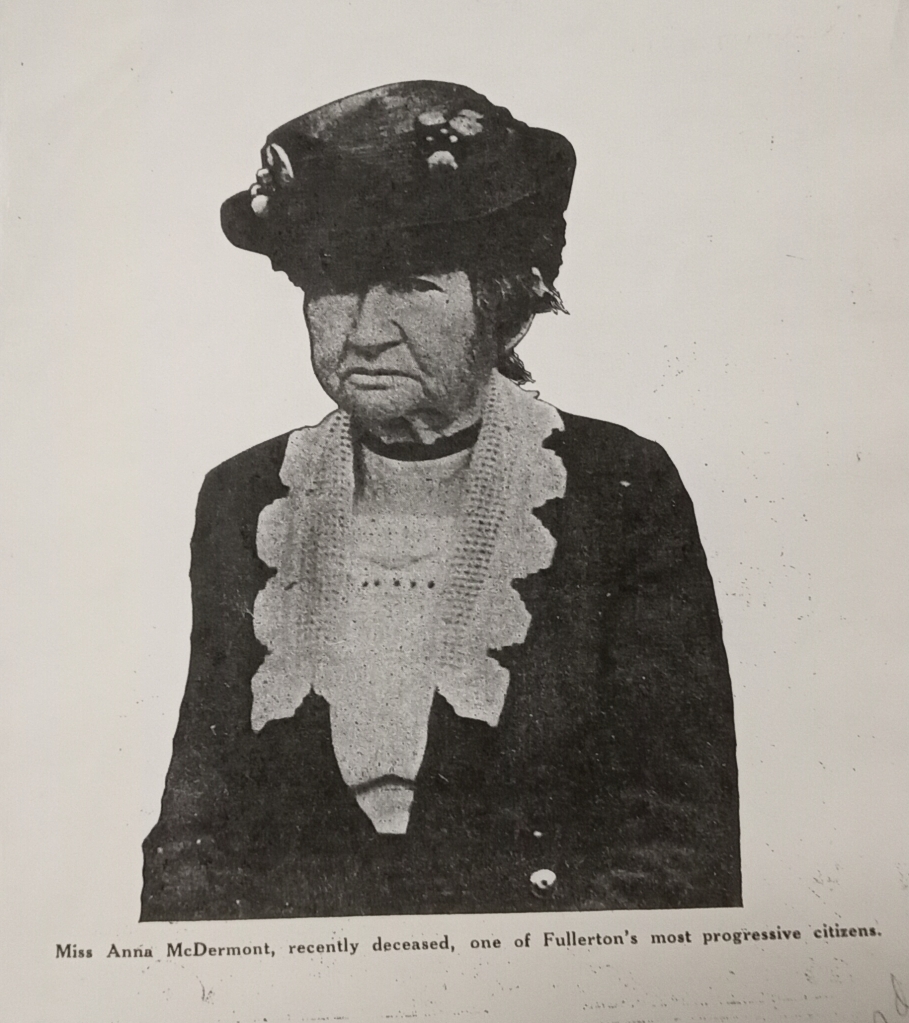
Photo courtesy of the Fullerton Public Library Local History Room. Both Alex and his sister Anna passed away in 1921, but the family remained important local citizens.
-
News Headlines: 1921
The following is from a work-in-progress about the history of Fullerton. You can support my ongoing research and writing on Patreon.
The Local History Room of the Fullerton Public Library has microfilm from the Fullerton Tribune newspaper stretching back to 1893. I am in the process of reading over the microfilm, year by year, to get a sense of what was happening in the town over the years, and creating a mini archive. Below are some news stories from 1921.
In 1921, Warren G. Harding was inaugurated as president. The governor of California was William Dennison Stephens, Fullerton was represented in congress by Rep. Phil D. Swing, and Fullerton’s mayor was William F. Coulter.
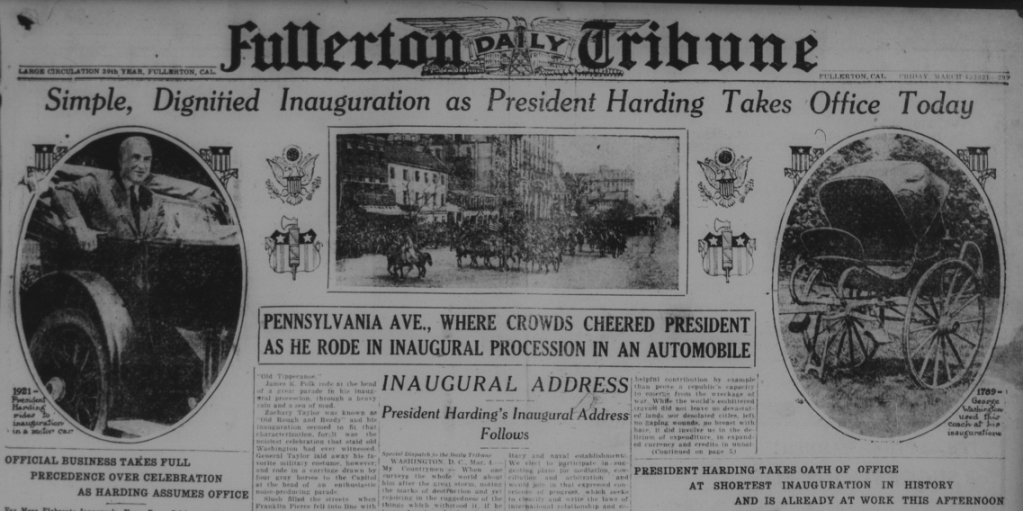
In 1921, Fullerton was growing quite rapidly. The population was 6,600, a big increase over the past two years.
An article entitled “Building Boom On” states, “With five new business buildings under way in the downtown section, a new grammar school and scores of dwellings being erected in the outlying districts the activity in this direction has been most marked, and is entirely gratifying to all who are interested in the city’s progress…In addition to the above the new public work on sewers and lights have given employment to many men, and the water extension construction to begin in the near future, will swell the total to many more.”
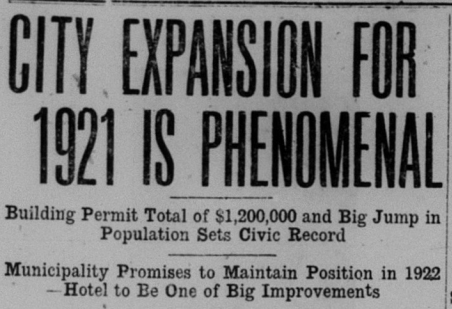
Below are advertisements for some of the new housing subdivisions. In those days, people would often buy a lot and then either build their own house or hire a contractor to build it for them. This was the “Builder Generation” of which my grandpa Glenn (in Wisconsin) was a member. He built most of the houses that his family lived in himself, with a little help from his friends. This Do-It-Yourself ethos is also why many of the older subdivisions have such an interesting and charming variety of homes. The idea of a “master-planned” community in which a single company built all the houses virtually identically would not really take off until after World War II.
Unfortunately, many of the neighborhoods built in Fullerton in the 1920s included racially-restrictive housing covenants that prevented non-whites from purchasing homes there.
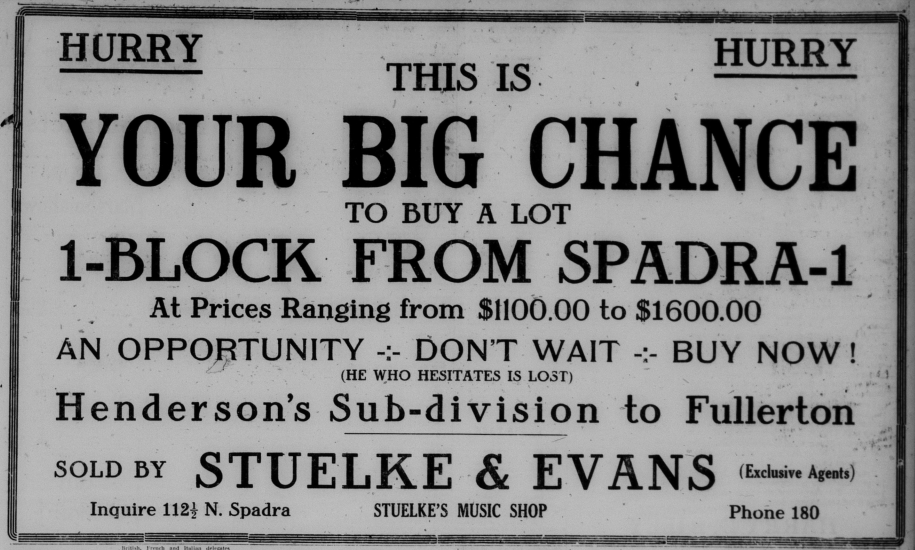

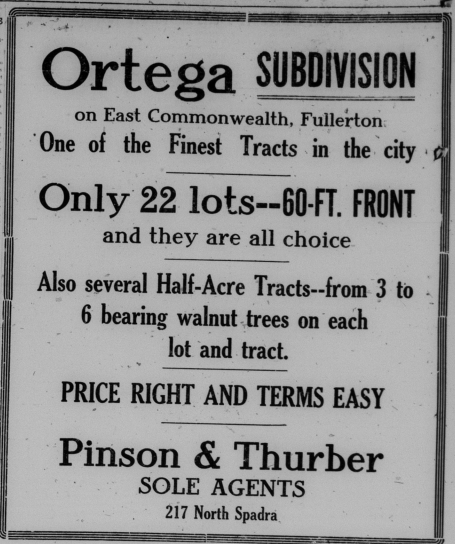
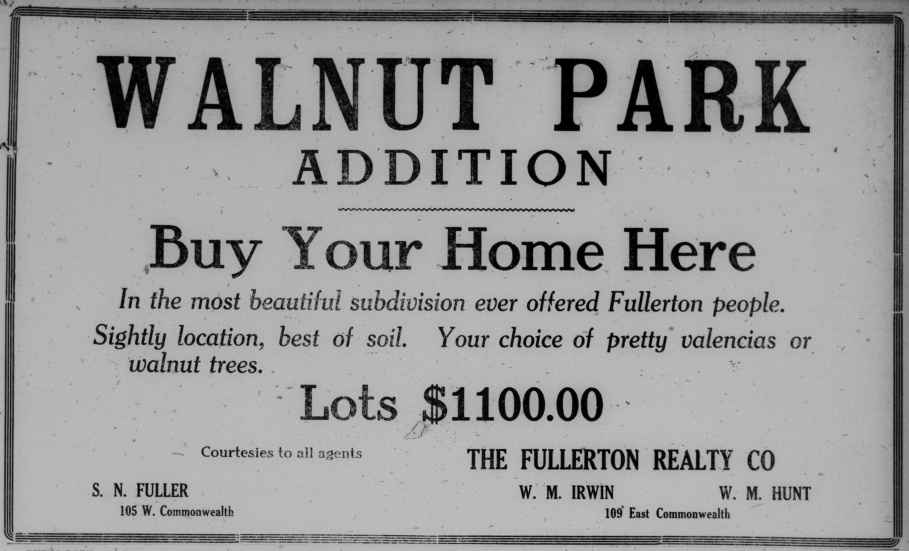
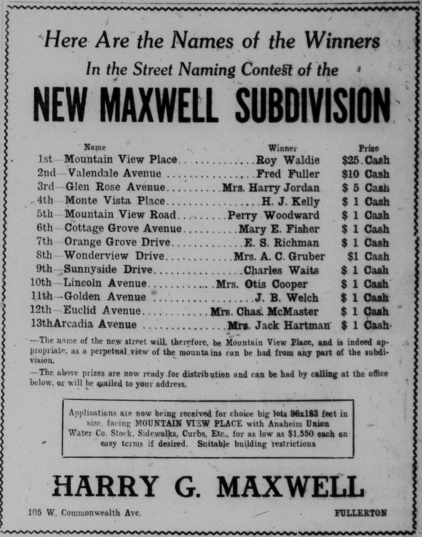
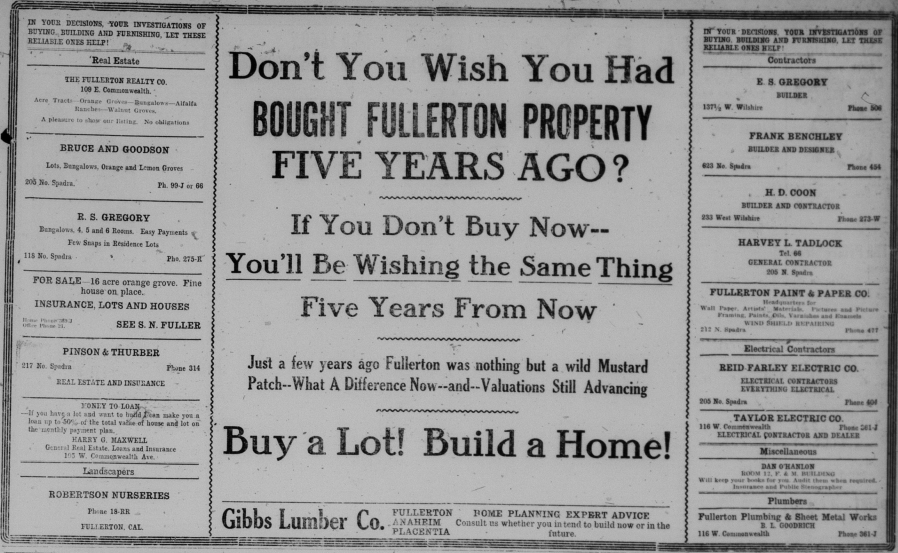


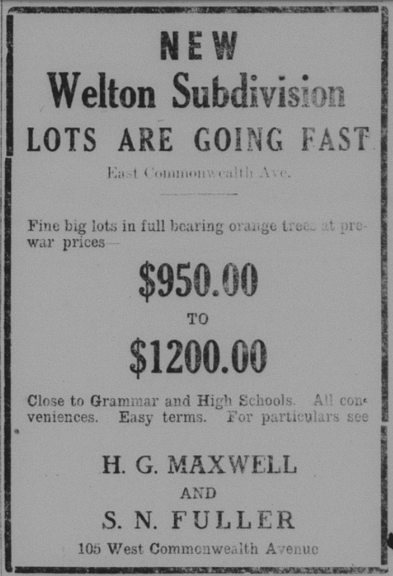

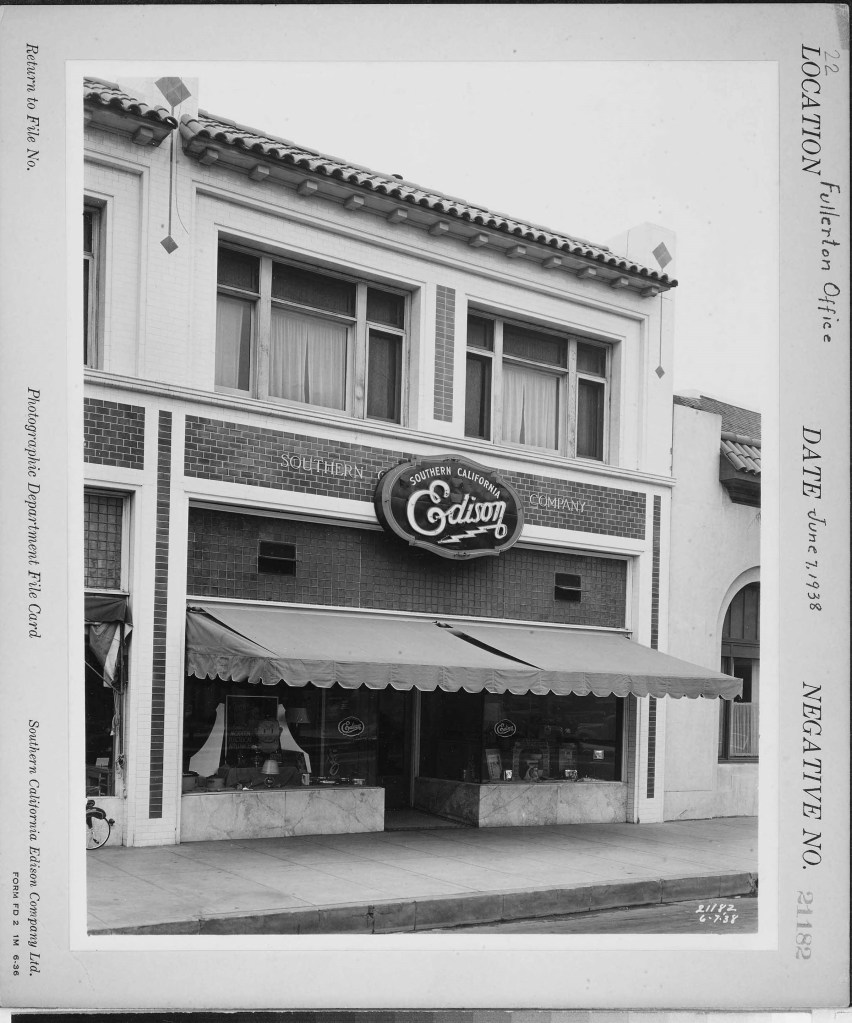
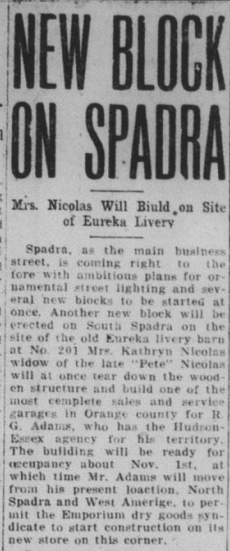
And here are descriptions of some of the new business blocks that were built downtown, along with some photos courtesy of the Fullerton Public Library Local History Room.
A business block on North Spadra just north of the Christian Church, known as the Benchley building:

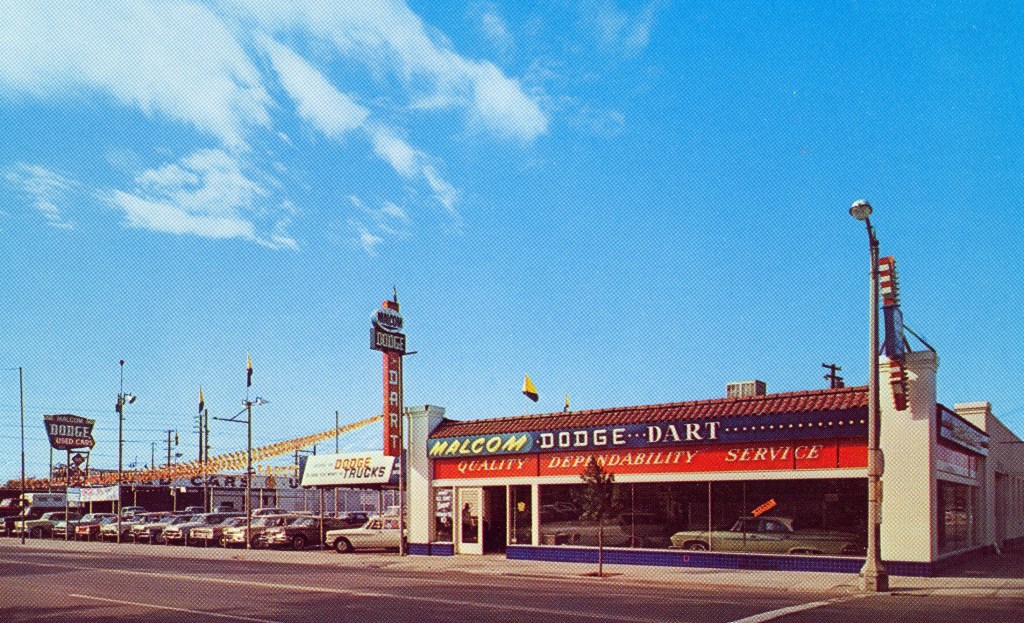
A business block on the southwest corner of Santa Fe and Spadra (now Harbor) where the parking structure is now. This was before the grade separation on Harbor that allowed the trains to pass over, when the street was flat.
The photo below is of a car dealership on this lot in the early 1960s.
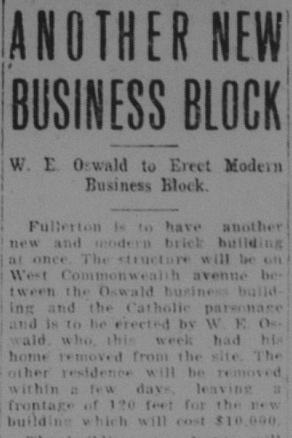
A business block at 136 West Commonwealth that now houses a few bars, including Garcia’s Mexican restaurant.
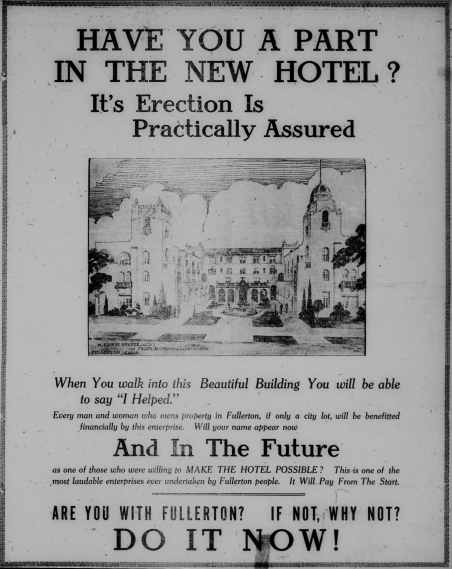
In 1921, Fullerton business owners and residents began raising money for what would become the California Hotel (now called Villa del Sol), which would open in 1923.
Infrastructure
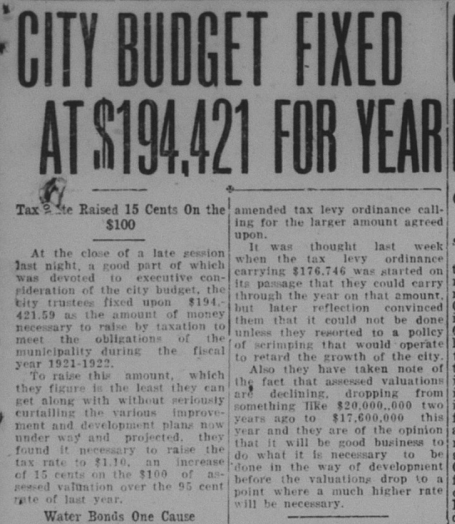
To accommodate all these new homes, businesses, and people, new infrastructure projects were undertaken to expand sewers, water lines, lighting, and more.
Some of this was paid for with regular local taxes, and some was financed by bonds, which were approved by a vote of the people.
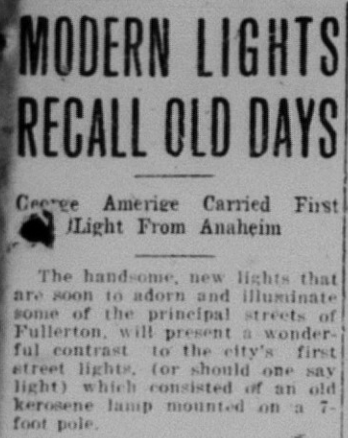
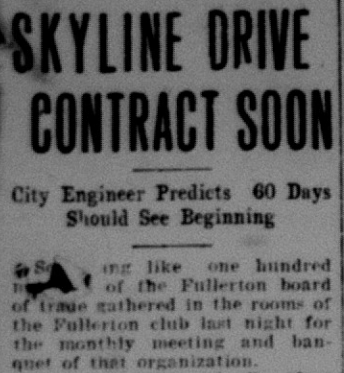
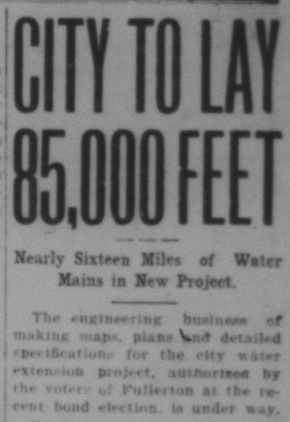
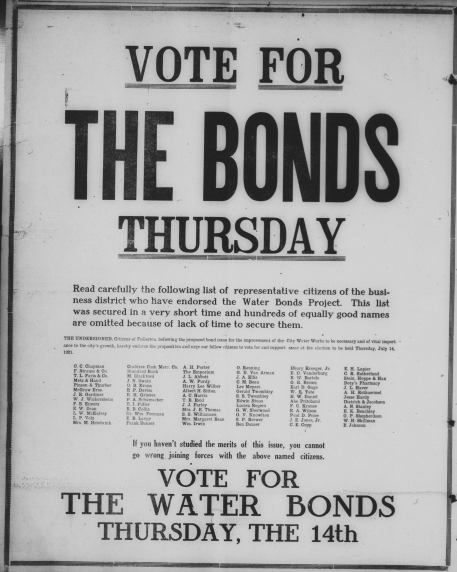
Crime
A notable criminal case involved two Black men (E.G. Brooks and Eddie Woods) who allegedly assaulted a bus driver (Darwin O. Grimes) in Fullerton, after he tried to make them sit at the back of the bus.
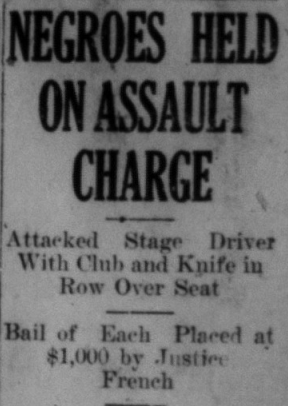
“The altercation which culminated in the attack on the stage driver is said to have arisen when the negroes started to enter the second seat against the wishes of the other passenger and the driver. When the passengers objected to the negroes sitting beside them, it is said that Grimes requested that the negroes sit in the back seat, in which there was ample seating space,” the above article states. “They refused and stated forcibly that unless the driver allowed them to sit where they chose that they would not allow the stage to depart on the trip to Los Angeles.”
After allegedly attacking Grimes, the two men fled and were later arrested. Both men pled not guilty, arguing that they acted in self-defense.
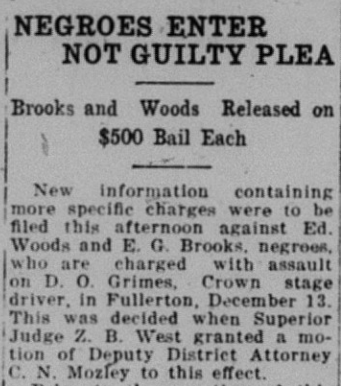
Before the case went to trial, the bus driver Grimes was arrested over a charge that, when he was an immigration official, he abused his power by appropriating liquor seized from an automobile (this was during Prohibition times). He had since been fired.
During the trial, Brooks and Woods said that Grimes “took a belligerent attitude which they interpreted as something of a prediction of physical force in keeping them from occupying a seat in the stage other than the rear one.”
Character witnesses were introduced for both men, among whom were S.E. Reed, Santa Fe Agent in Fullerton, F.C. Johnson, special officer for the Santa Fe, and Joe Murillo, Fullerton officer for the Santa Fe, all of whom were well-acquainted with Brooks through his period of employment as a Santa Fe porter.
This was also one of the first cases in Fullerton in which women served on the jury, having recently been granted that right.
Ultimately, the charges against Brooks and Woods were reduced to simple assault and they each paid a $100 fine.
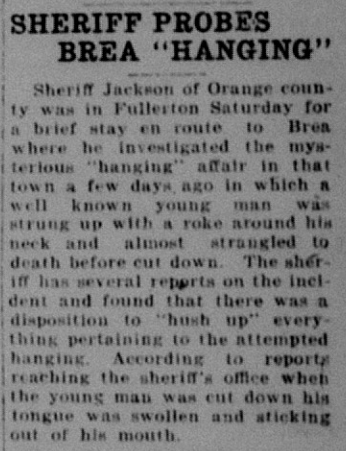
Another crime that went unsolved was the attempted hanging/lynching of a young man in Brea.
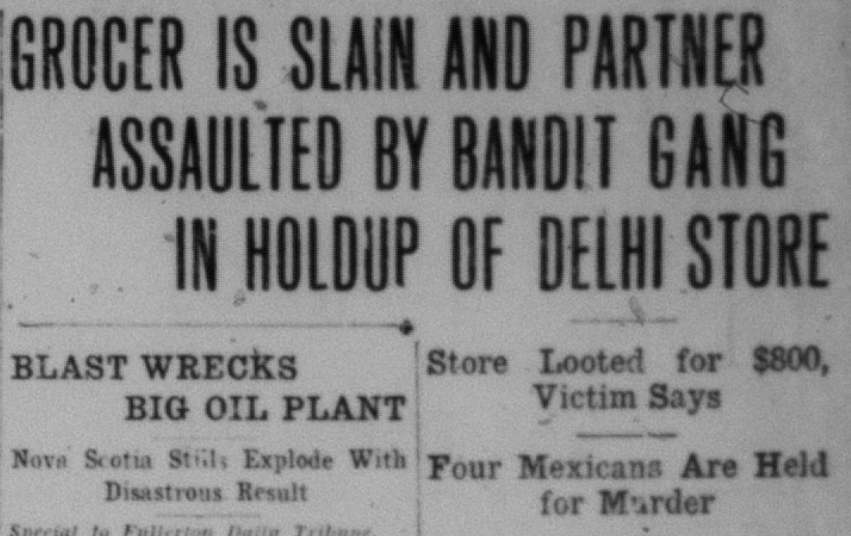
A Syrian grocer named John Khoury was shot and killed in a holdup by a “bandit gang.” Khoury’s uncle Isaac Matouk was seriously wounded in the crime. The men charged with the crime in the Delhi grocery were M. Carillo, Jean Garcia, Julian Castro, and E. Hinajos.
Fullerton’s First Gang
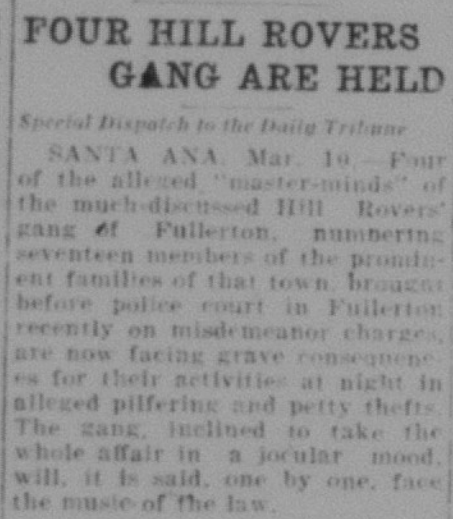
A group of local young men (sons of prominent families) formed a gang (Fullerton’s first gang) called the Hill Rovers. They made much mischief and committed crimes such as petty larceny, breaking and entering, and theft. OC District Attorney Alex Nelson investigated the group.
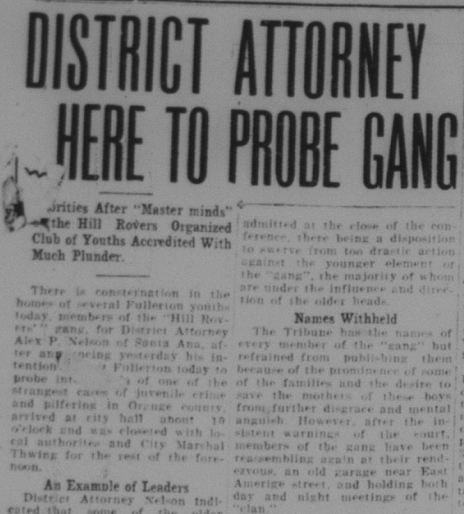
Because the boys were sons of prominent local families, the DA faced pushback about prosecuting them, or releasing their names.

Ultimately, four of the gang members were arrested, and two got five years for their crimes.
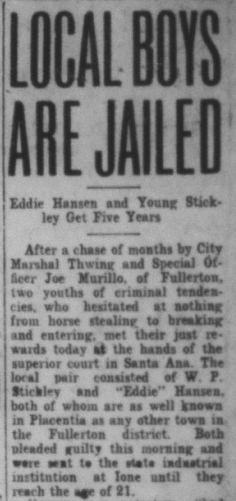
Around this time, town Marshal E.W. Thwing resigned and was replaced by “Monty” Jackson.

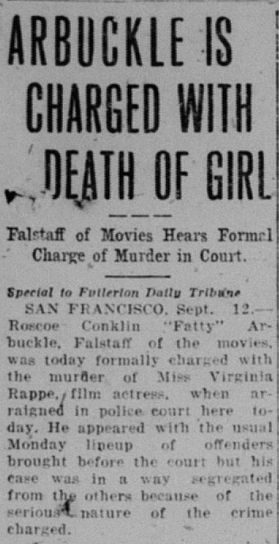
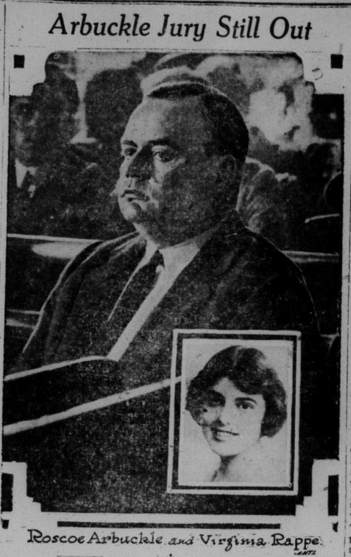
In celebrity crime news, movie star Roscoe “Fatty” Arbuckle was charged with the rape and manslaughter of actress Virginia Rappe. He was ultimately acquitted.
Prohibition
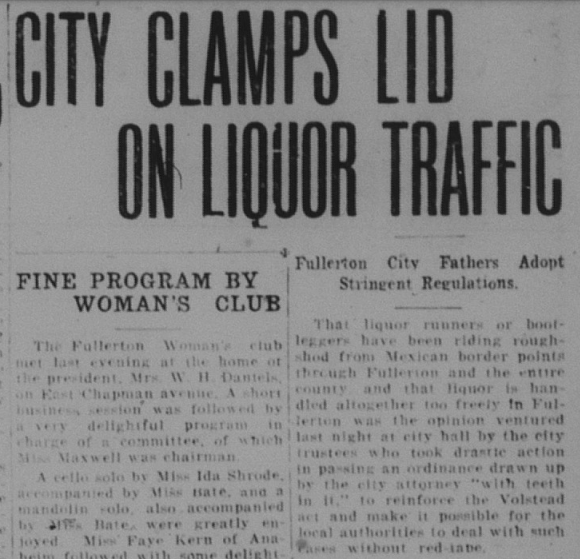
In 1919, Congress passed the 18th amendment to the U.S. Constitution (and the subsequent Volstead Act), banning alcohol. Locally, city council passed ordinances to help with enforcement of the Volstead Act and curb violations of the law.
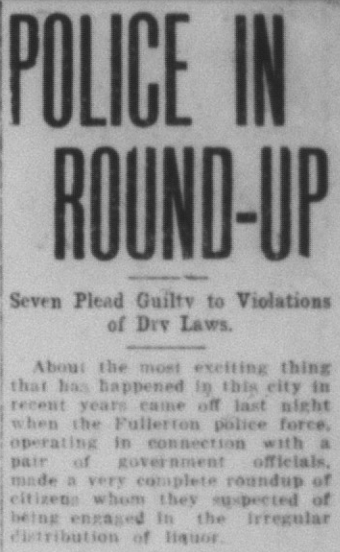
One way that people sought to get around prohibition was to have doctors prescribe them liquor for “medical” reasons. On more than one occasion, police rounded up and arrested such violators, as seen below.
Bootlegging was also fairly widespread, so raids and arrests were not uncommon.
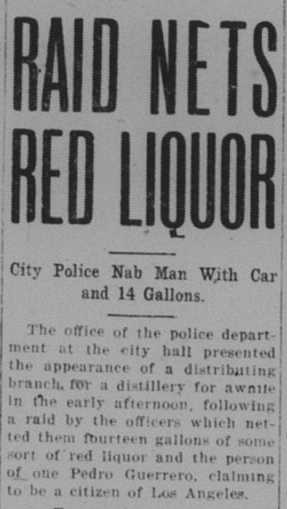
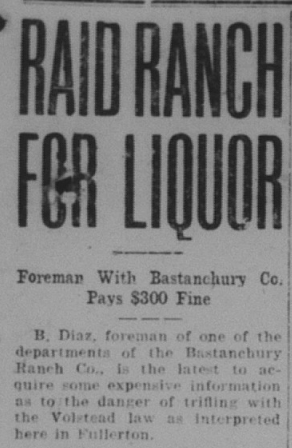
The noted Bastanchury family had made their own wine for years. They were raided and some charged with violating the dry law.
Education
As Fullerton grew, so did the need for new schools. Ford School was built in 1921. There were also additions to Fullerton Union High School throughout the 1920s.
Ford School, built in 1921, was later torn down to make way for senior apartments and Ford Park. 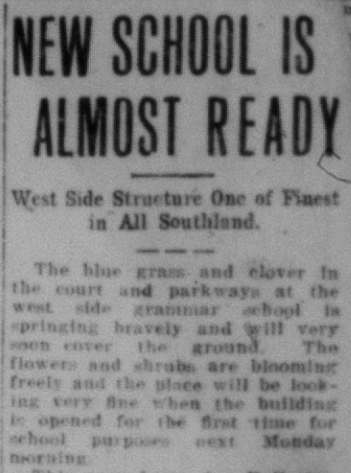
King Citrus
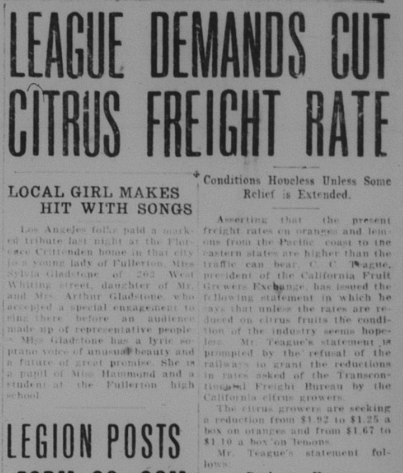
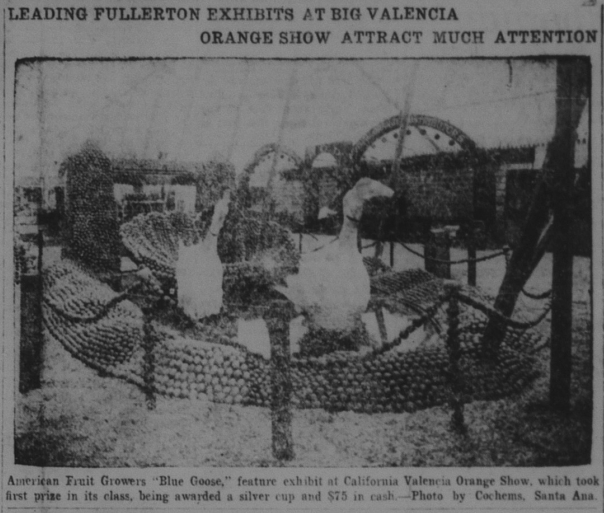
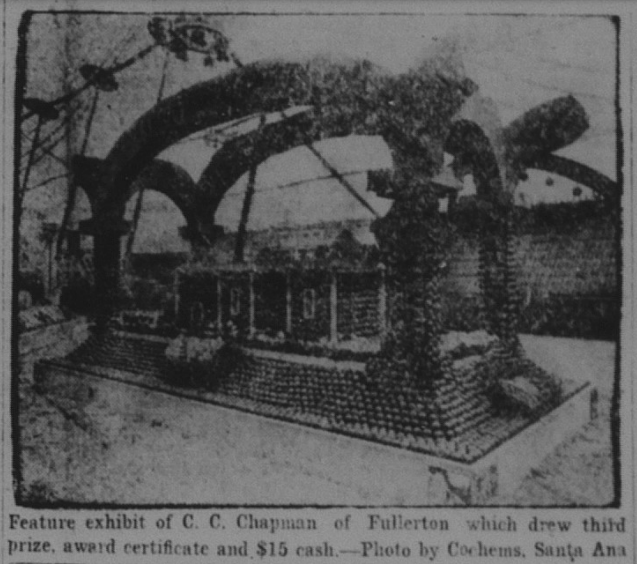
Despite the fact that housing and commercial development was increasing, Fullerton was still a major farming area, with citrus being king of the local crops. Many of the wealthiest local people were Orange ranchers, like Charles C. Chapman. Orange growers large and small often pooled their interests and influence with politicians to get favorable laws, such as tariffs on foreign oranges and lower freight rates.


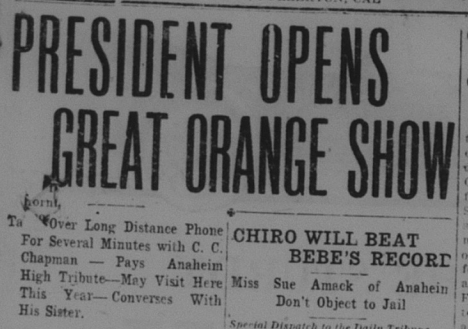
In 1921, local growers held a massive Valencia Orange Show in Anaheim, which featured elaborate exhibits of oranges. Heading up the proceedings was Charles C. Chapman. President Harding even phoned in to praise the Orange Show.
Oil!
Along with oranges, oil was Fullerton’s other main export in the 1920s, with very active fields in the hills north of town that regularly brought in gushers.

While it may be hard to imagine today, Orange County was second in the state of California for oil production.

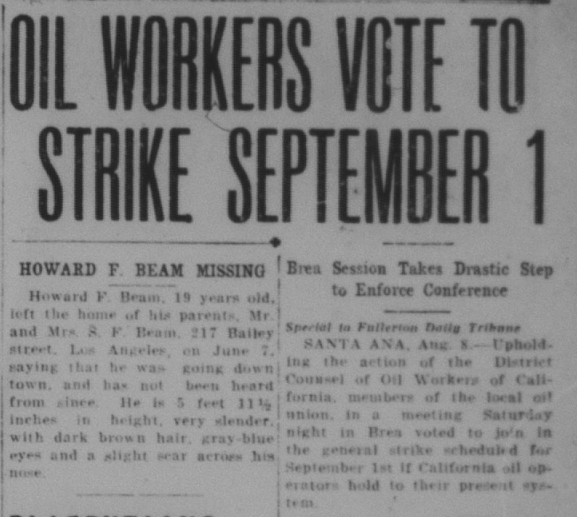
However, in 1921, all was not well in the local oil fields. Unhappy with wages and working conditions, Brea oil workers (who had recently unionized) voted to strike.
More Labor Strikes
Speaking of strikes, lots of those happened across the United States in the 1920s. Rail workers, coal miners, meat packers, and other workers sought to improve their lot through collective action.
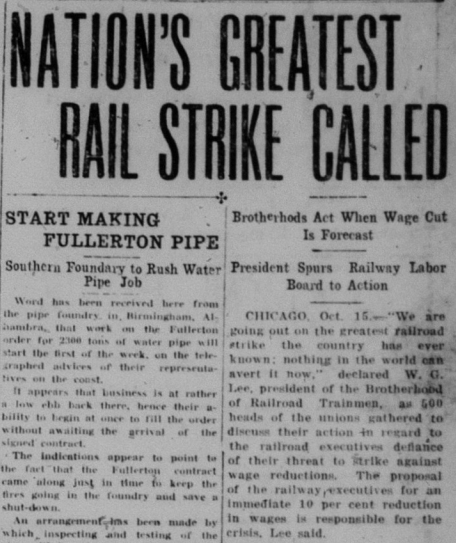

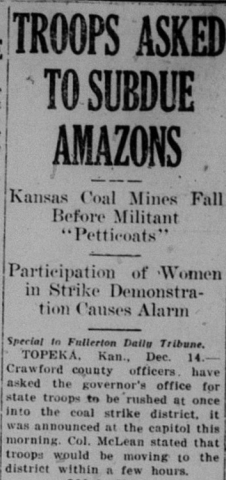
In Kansas, women took active part in the coal miners’ strike. They were called Amazons and Militant Petticoats. With the aid of federal agents and local militia, some were arrested, and some even deported.

Japanese Exclusion
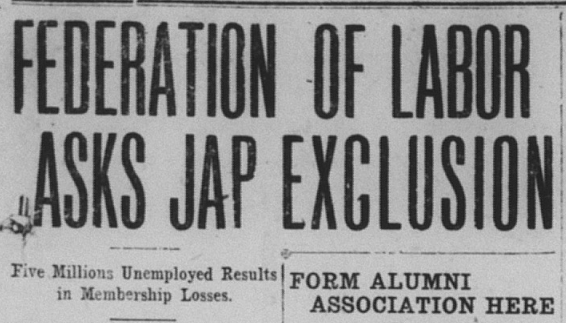
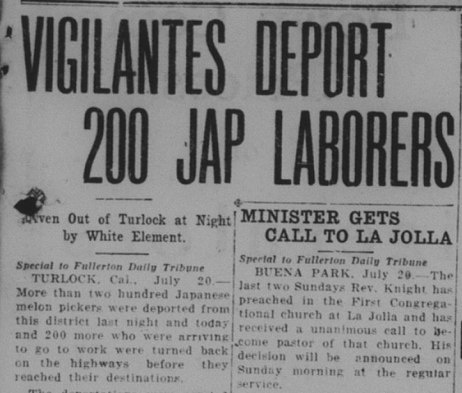
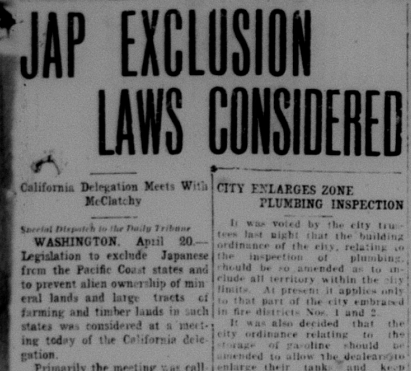
Another major issue in 1921 was Japanese exclusion. In 1913 and 1920, Califonia (along with several other states) passed its Alien Land Laws, which prevented Japanese people from owning or leasing property. Using the familiar mantra “they’re taking our jobs” the American Federal of Labor asked for federal Japanese exclusion.

Sports
In sports news, baseball was quite popular locally. The Indians mentioned below do not refer to the Fullerton High School Indians, but rather the Indians of the Sherman Indian School in Riverside, which still exists today.

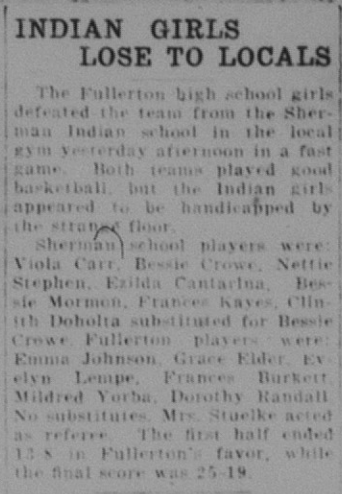
In addition to high school baseball, teams would play at the field on what is now Amerige Park.
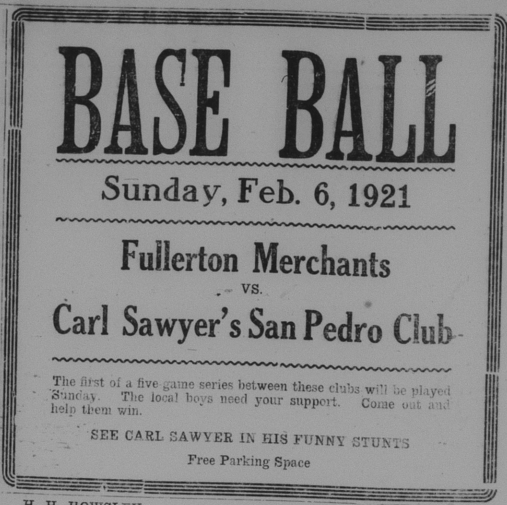
Culture and Entertainment
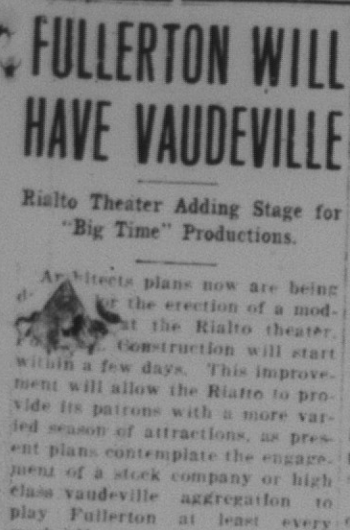
In 1921, the Fox Theater had not yet been built. Locals would go see movies and Vaudeville shows at the Rialto Theater downtown.
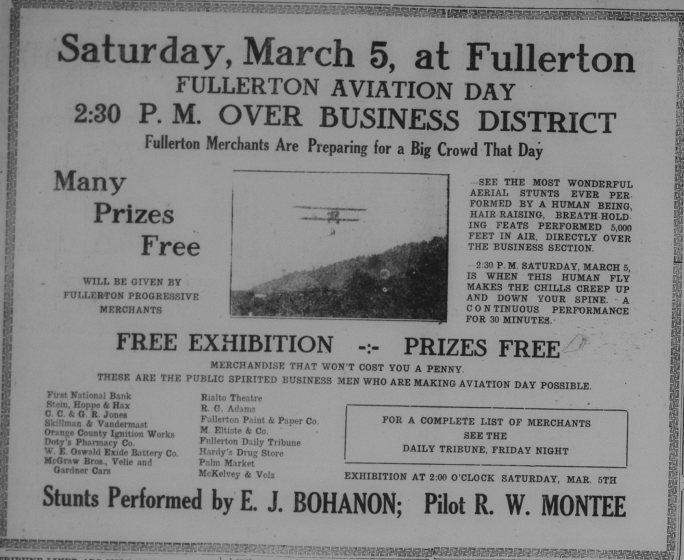
On March 5, Fullerton held an “aviation day.”

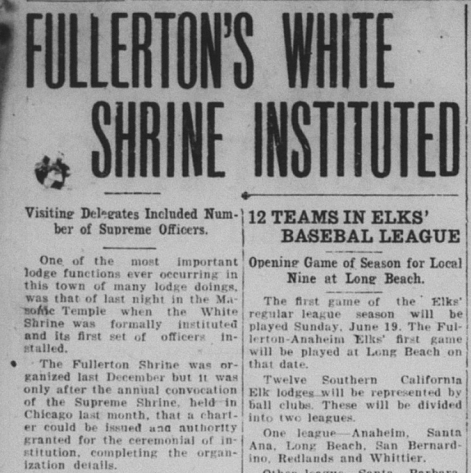
In 1921, Fullerton’s new Masonic Temple (now the Springfield Banquet Center) was formally inaugurated and its first officers chosen. In the early 20th century, fraternal organizations like the Masons and Odd Fellows were very popular.

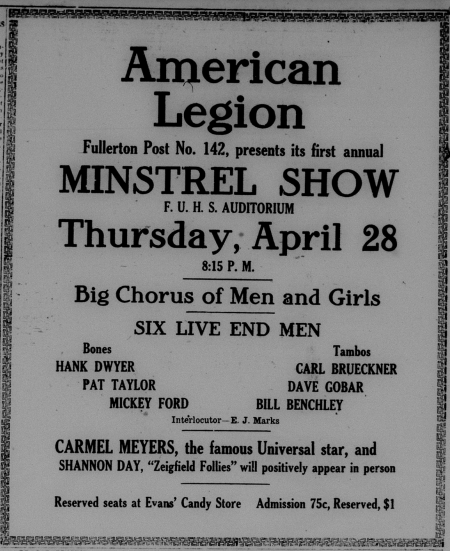
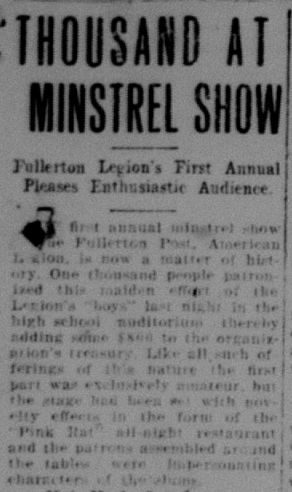
The local post of the American Legion held its annual Minstrel Show, which featured white performers in blackface. About a thousand people attended.
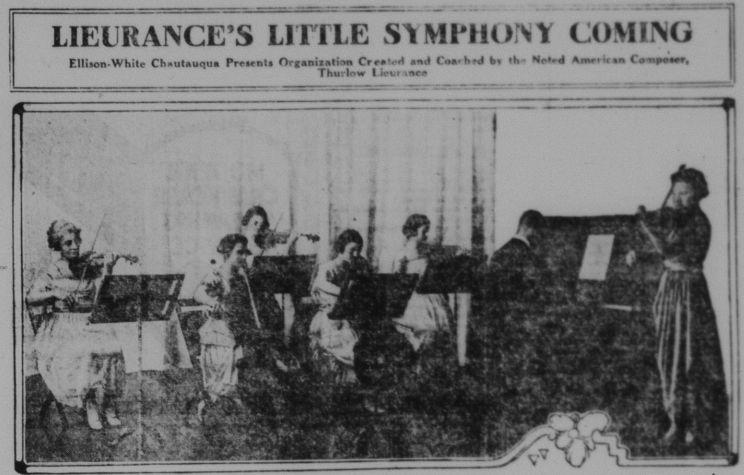
Another popular form of entertainment in the 1920s was the traveling Chautaqua show, which featured musical performances, speeches, and more. The show came through Fullerton every year.

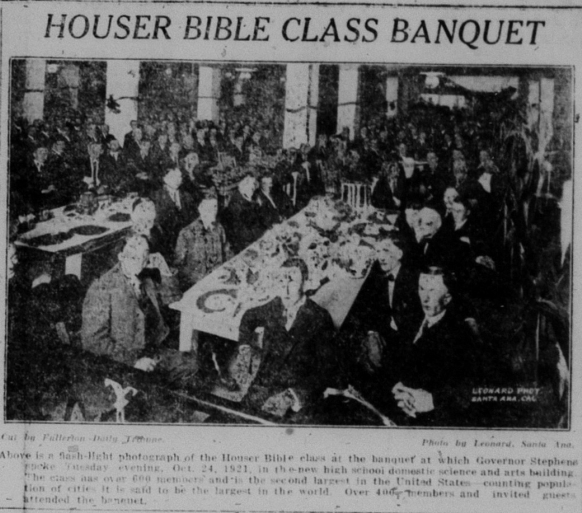
In 1921, a popular gathering place for men was the Houser Bible class, which brought in hundreds of members.

Medicine and Health
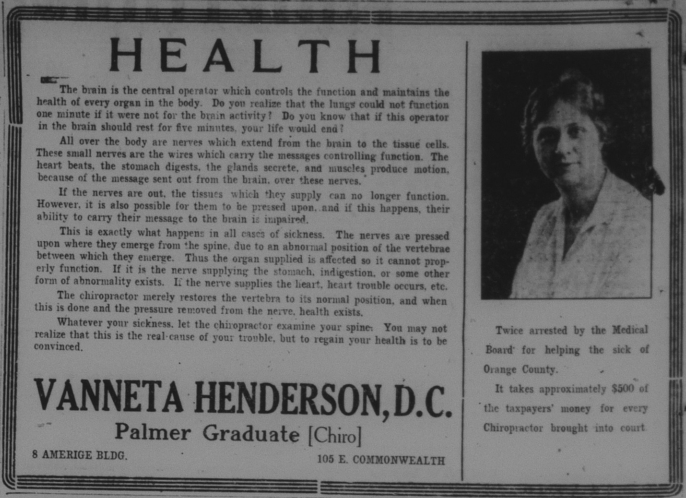
In medical news, local chiropractor Vanetta Henderson faced charges for violating the Medical Practices Act. At this time, chiropractors were viewed with skepticism. I guess not much has changed.


Ku Klux Klan
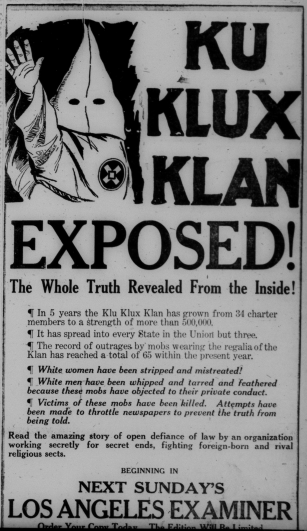
In the early 1920s, the Ku Klux Klan saw a massive resurgence, with a peak membership of around 5-6 million, with many in states outside the south. The Klan achieved real social and political power. It would ultimately make its way to Anaheim and Fullerton. Stay tuned for more on this.
Miscellaneous
Below are some miscellaneous stories that I could not fit into a category:
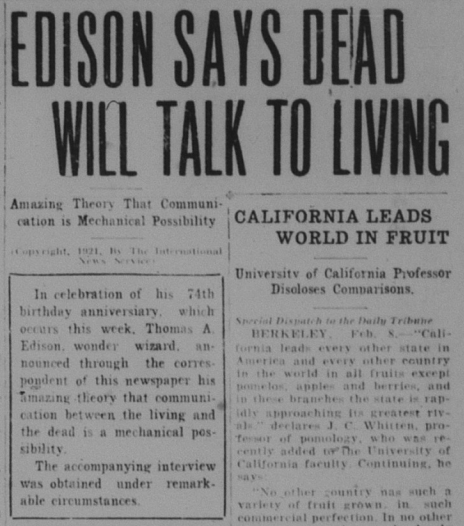
Inventor Thomas Edison made the crazy claim that he could use a machine to commune with the dead.
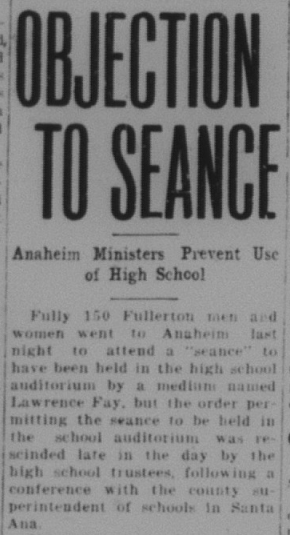
Speaking of communing with the dead, local ministers successfully blocked the use of Anaheim High School for a seance.
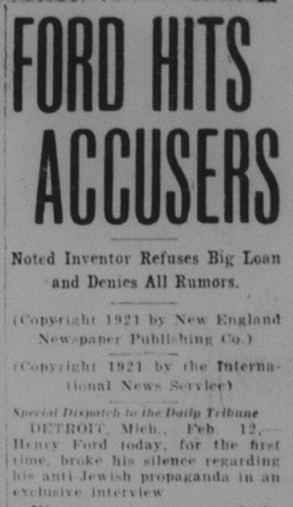
In 1921, Henry Ford was not just a successful car manufacturer. He was also a notorious anti-semite, regularly publishing such propaganda in his local newspaper and a series of pamphlets called “The International Jew: The World’s Problem.”
Walter L. Thales, leader of a vegetarian cult in Placentia, passed away.

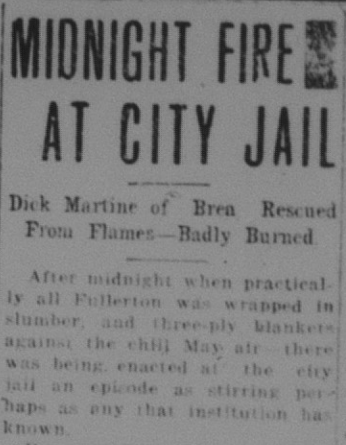
A midnight fire broke out in the city jail.
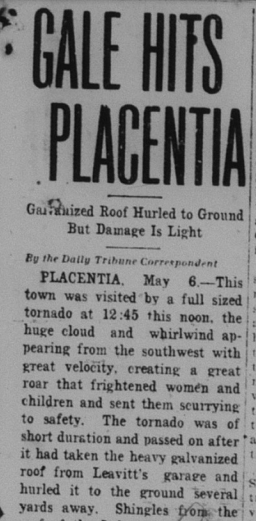
And a small tornado (very rare for these parts) hit Placentia.
National News
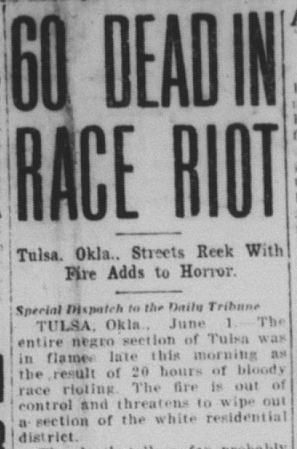
1921 was the year of the horrific Tulsa race massacre, a two-day-long white supremacist terrorist massacre that took place between May 31 and June 1, during which, according to Wikipedia, “mobs of white residents, some of whom had been appointed as deputies and armed by city government officials, attacked black residents and destroyed homes and businesses of the Greenwood District in Tulsa, Oklahoma. The event is considered one of the worst incidents of racial violence in American history. The attackers burned and destroyed more than 35 square blocks of the neighborhood—at the time one of the wealthiest black communities in the United States, colloquially known as Black Wall Street.”
International News
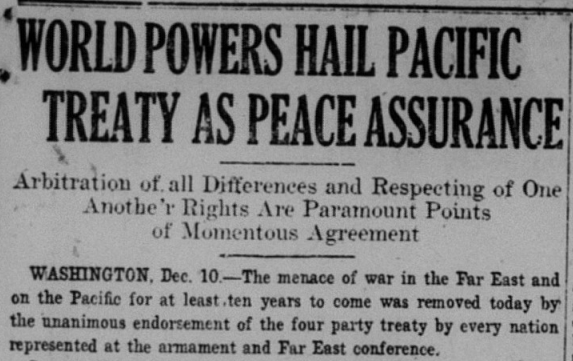
In an effort to prevent another World War, several nations signed a treaty to limit construction of warships. This became known as the Four-Power Treaty. Unfortunately, their efforts did not prevent another World War.
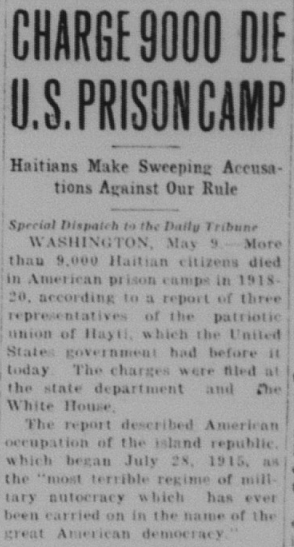
It was alleged that over 9,000 Haitians died in prison camps when that country was under U.S. rule.
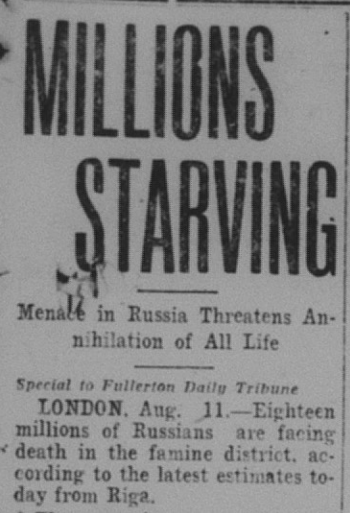
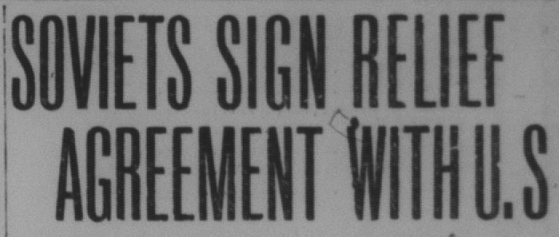
With Russia facing famine, the U.S. agreed to send food relief. This despite the two countries’ political differences.
Deaths
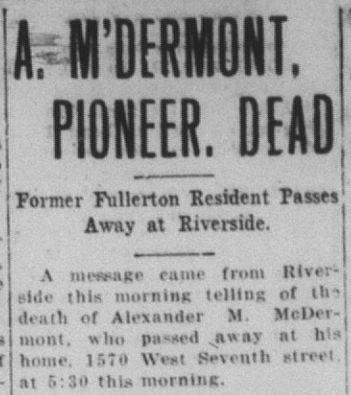
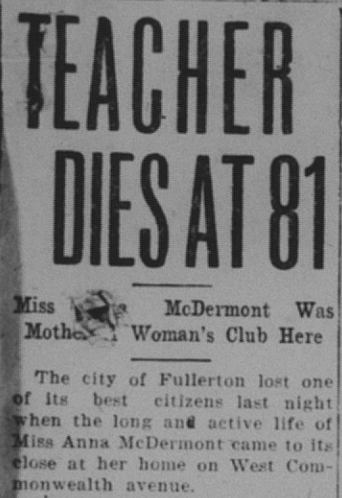
Fullerton pioneer Alex McDermont passed away, and shortly thereafter his sister Anna McDermont died as well. I plan to write more on this interesting and influential family in a future post.
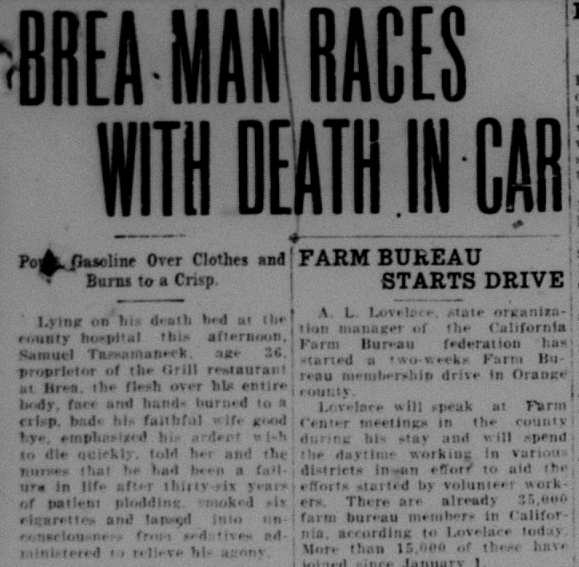
A Brea man named Samuel Tassamaneck committed suicide by dousing himself with gasoline and lighting himself on fire.
“Life with me has been just one continual struggle, an up-hill climb, with no success and no progress,” he said on his deathbed.
Stay tuned for more news stories from 1922!
-
News Headlines: 1920
The following is from a work-in-progress about the history of Fullerton. You can support my ongoing research and writing on Patreon.
The Local History Room of the Fullerton Public Library has microfilm from the Fullerton Tribune newspaper (which became the Orange County Tribune in 1908) stretching back to 1893. I am in the process of reading over the microfilm, year by year, to get a sense of what was happening in the town over the years, and creating a mini archive. Below are some news clippings from 1920.
According to the census, Fullerton’s population was 4,415, quite an increase from 2,690 in 1910. The 1920s would bring a population “boom” to the city as new subdivisions and business blocks were created.

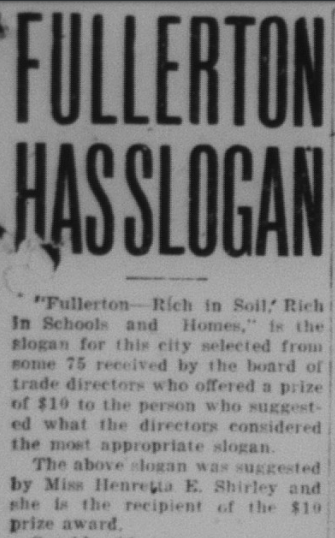
In 1920, Fullerton adopted the slogan, “Fullerton–Rich in Soil, Rich in Schools and Homes.” Having never heard this slogan, I assume it was later abandoned.
Local Politics
1920 was an election year and seven people ran for City Council. They were J.R. Carhart, Albert Sitton, L.P. Drake, Simon J. Oxarart, R.A. Mardsen, Arthur Marson, and W.F. Coulter.

The election resulted in a “landslide” victory for Coulter, Drake, and Mardsen.

Coulter was chosen among his council colleagues as the Mayor.

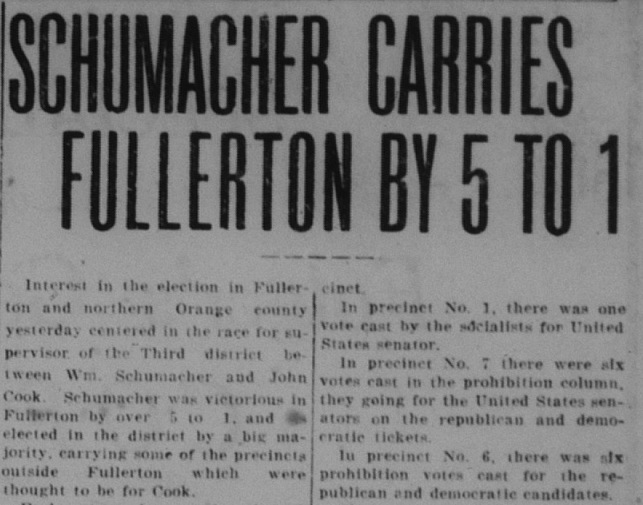
William Schumacher was elected to represent Fullerton on the Orange County Board of Supervisors.
Women’s Suffrage/Rights
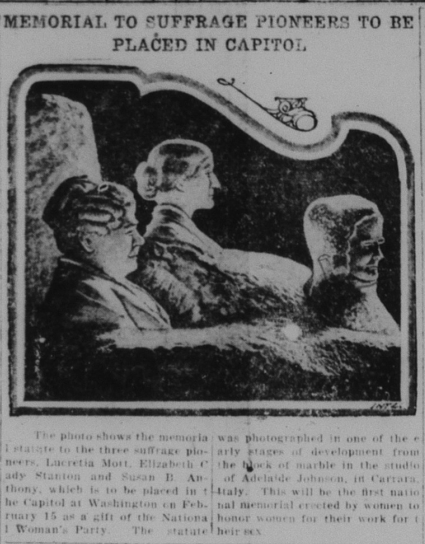
1920 was an important year for women, as that is when the 19th amendment to the U.S. Constitution took effect, granting women the right to vote. In California, this right had already been granted back in 1911.
Significantly, 1920 was the first year a woman was elected to public office in Fullerton. Belle J. Benchley was elected a grammar school trustee. Benchley would eventually move to San Diego, where she would become a noted zookeeper and author.

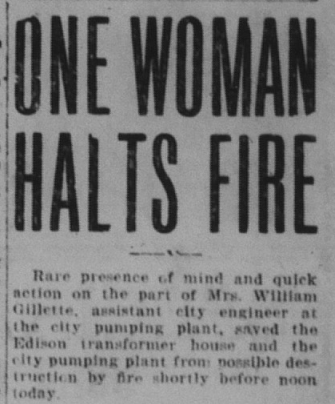
A Mrs. [no first name given] Gillette was hired as assistant city engineer.

Gillette heroically halted a fire that could have destroyed the city’s pumping plant and Edison transformer house.
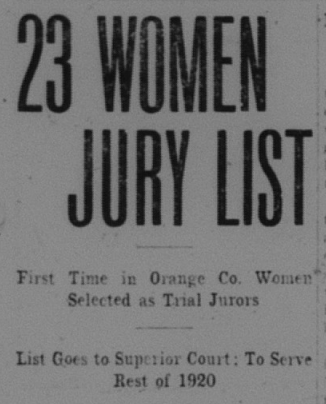
1920 was also the first year women were allowed to serve as trial jurors in Orange County.
The Town of Orangethorpe
Before the town of Fulleton was founded in 1887, some early ranchers settled in an area south of the town-to-be, an unincorporated community called Orangthorpe. In 1920, city leaders attempted to annex part of Orangethorpe so as to extend the city’s “sewer farm” which is now the Fullerton airport. The ranchers who lived around this area organized to fight this Annexation.
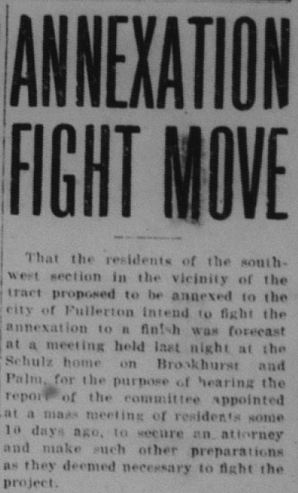
The ranchers were successful in blocking this annexation, and they even voted to incorporate as the town of Orangethorpe to protect the land from future annexation attempts.


New Housing Developments
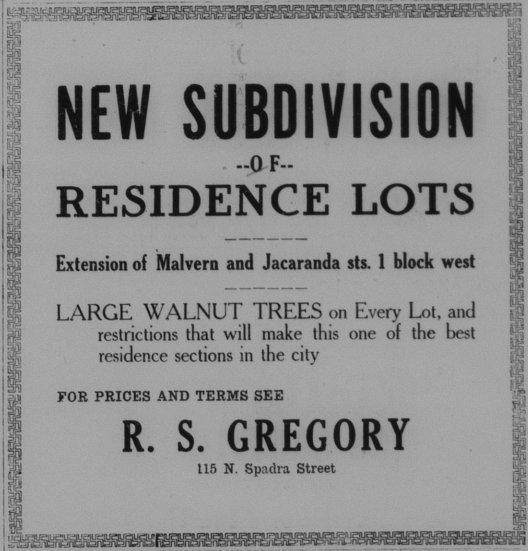
As I mentioned earlier, the 1920s would see a housing and business boom in Fullerton, as new subdivisions were created. In 1920, the Jacaranda tract was created near downtown.

New Business Developments
In addition to housing, new business blocks and buildings were added to downtown, such as the Gardiner Building, McKelvey & Volz Drug Store, the Sanitary Laundry Building, and more. I apologize for not including photos of these buildings. I will work on that for a future post.
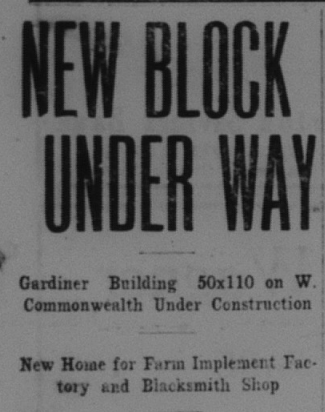


Unfortunately, part of this “progress” meant destroying old buildings, such as the Henderson Blacksmith shop, which was one of the oldest shops in town.

Oil!
Along with oranges and walnuts, oil continued to be a major industry in Fullerton, with lots of wells in the hills north of town.

The map below shows some of the local fields in La Habra, Brea, and north Fullerton.

Health Care
There was talk of making the Fullerton Hospital a municipal (city-owned?) one; however these plans were dashed when a man from Anaheim bought the hospital, which is now the Women’s Transitional Living Center.


Crime
By far, the biggest crime story of 1920 was the murder of local rancher Roy Trapp and the assault of his wife by a Black man named Mose Gibson, who fled town after the crime.
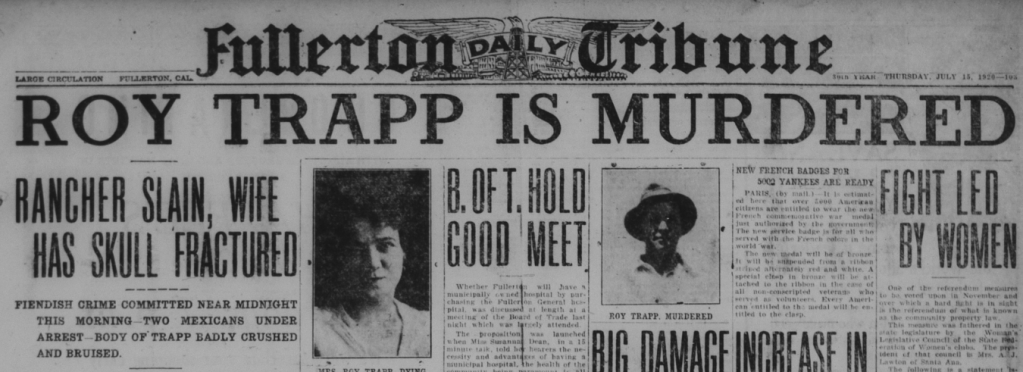
There was a manhunt for the murderer, who had given the false name of Henry Washington.

Because the murderer was Black, many local citizens wanted to lynch him when he was caught. This was the 1920s, when lynchings were not uncommon.

Eventually, Mose Gibson was captured near the Mexican border, and brought to the Los Angeles jail, where he confessed to the murder.


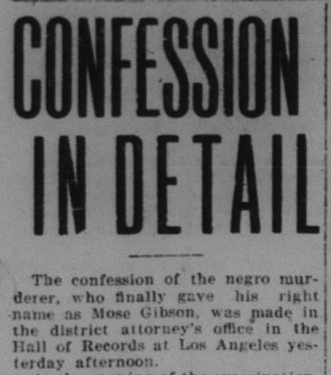
Gibson was tried and sentenced to death by hanging.

As reported by the Tribune, feeling in Fullerton regarding Gibson was “intense.”

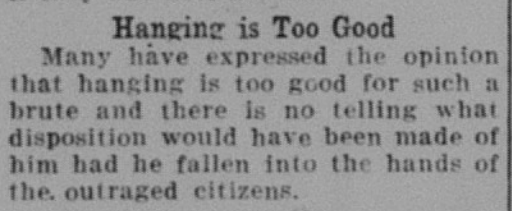
Tribune editor Edgar Johnson didn’t exactly help matters by calling Gibson “the lowest type of human beast.”

Prior to being hanged, Gibson also confessed to several other murders and crimes across the United States. One of the people he confessed to murdering was J.R. Revis of Louisiana. Unfortunately, a Black man named Brown, it turned out, had been wrongfully lynched for the murder.
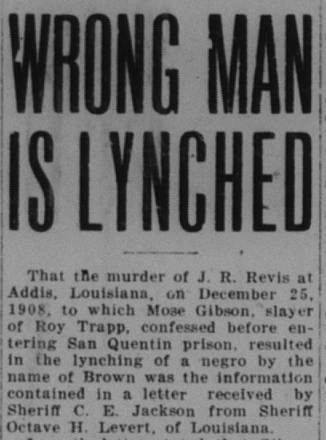
While Gibson was in San Quentin prison awaiting execution, a group called the Housewives Union sent a letter to the governor of California, pleading for the man’s life.
“We ask your attention to the case of Mose Gibson, condemned to suffer the death penalty, September 24,” the letter stated. “The fact that the man is a negro is likely of itself to prevent him fro having that consideration before the law which a white man in his humble position might receive. It seems that when a negro is the culprit, that the white man feels it his peculiar privilege to indulge in any amount of brutality.“

Alas, Gibson was hanged, nonetheless.

Anti-Japanese Racism
In 1920, anti-Japanese feeling in California was intense. In 1913, the state had passed the Alien Land law, which sought to prevent Japanese immigrants from owning or leasing land.
Tribune editor Johnson contributed to this hysteria by printing articles such as the following:

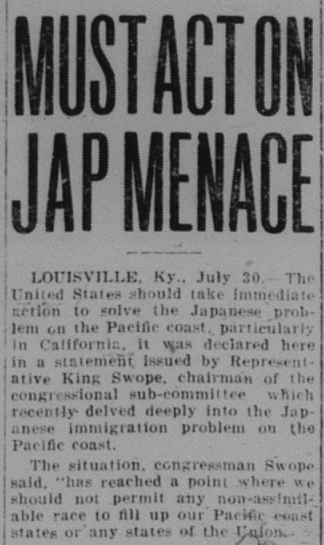
Apparently, it was politically advantageous to demonize Japanese immigrants. A Senator James D. Phelan came to Fullerton to speak on the “Japanese Menace.”

In 1920, Californians were asked to vote on a new Alien Land Law, which sought to close some loopholes of the 1913 law. Surprisingly, the Tribune published an ad urging voters to not to support the new law because, well, obviously.
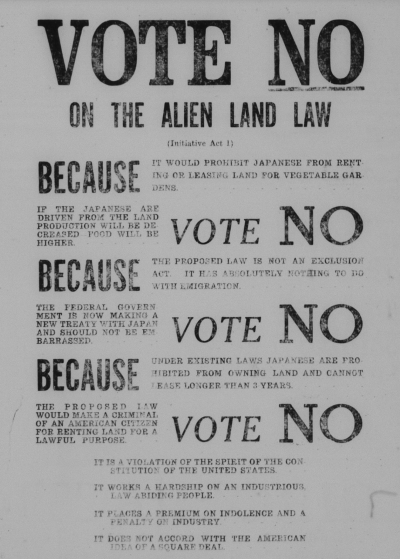
Unfortunately, the law passed by a large majority of voters, including a majority of Fullertonians.
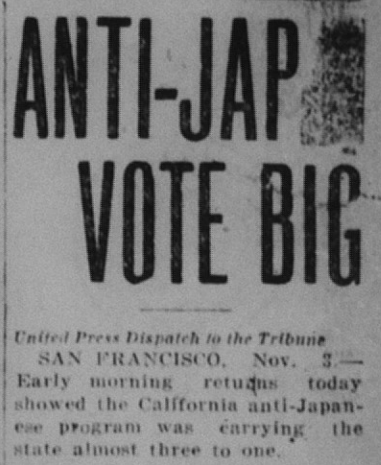
California was not the only state to pass an exclusionary law against the Japanese. Texas (of course) followed suit, a long with Arkansas, Florida, Minnesota, Nebraska, Oregon, Utah, Washington, and Wyoming.

Culture
For entertainment and culture, Fullertonians would see movies at the Rialto Theater, performances at the Fullerton High School auditorium, visit the Orange County Fair, or check out the annual traveling Chautauqua show.
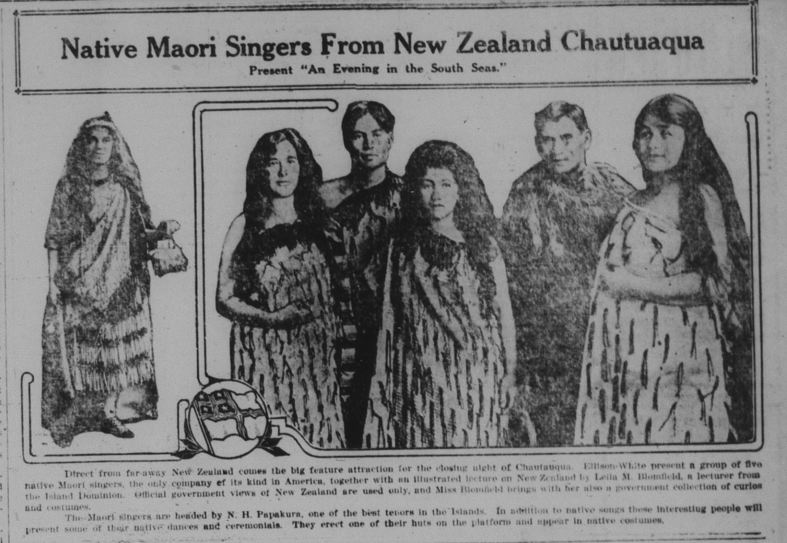

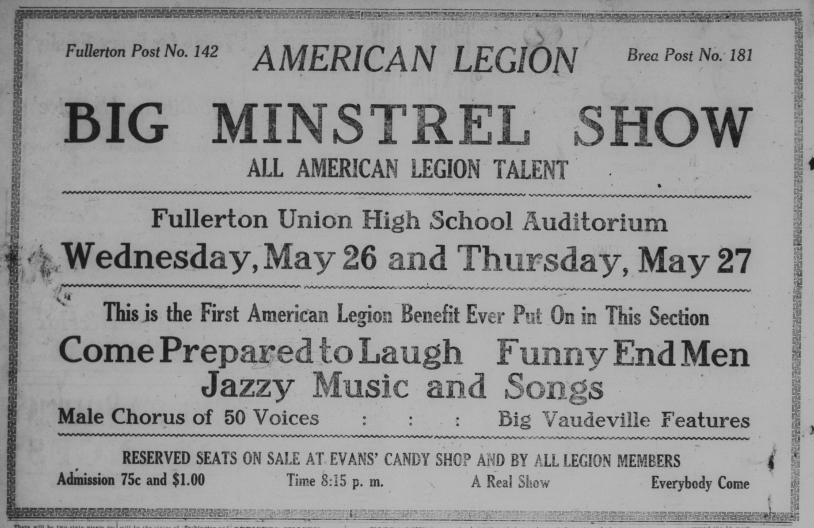
The local American Legion post sponsored a Big Minstrel Show, which presumably featured white performers in blackface.
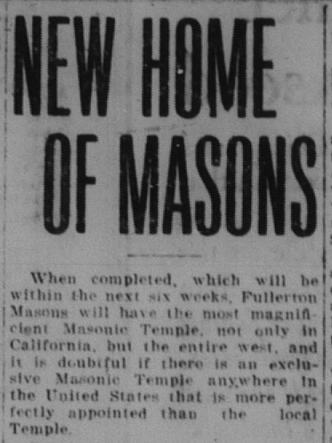
The local Masons built a huge new temple which is now the Springfield Banquet Center.
Sports
Fullerton opened a ball park at what is now Amerige Park, a popular venue for local teams to play, like the Fullerton Merchants.


International News
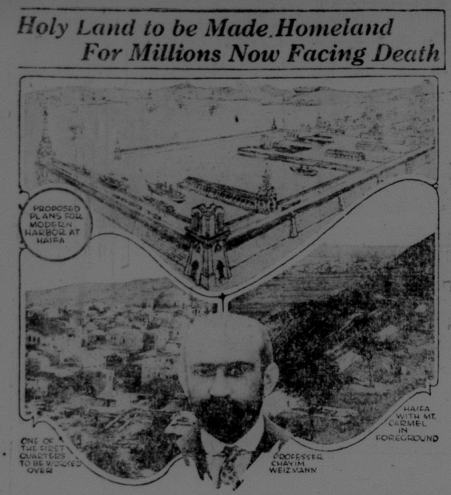
In international news that feels kind of relevant now, Zionist Jews began settling in Palestine, fleeing persecution in Eastern Europe.

The newly-formed League of Nations (a precursor to the United Nations) began to meet.

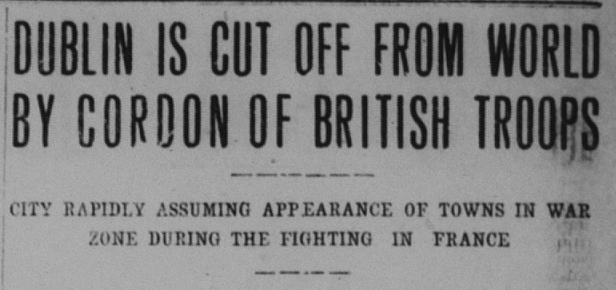
The war of Irish Independence raged.

The 1920 Presidential Election
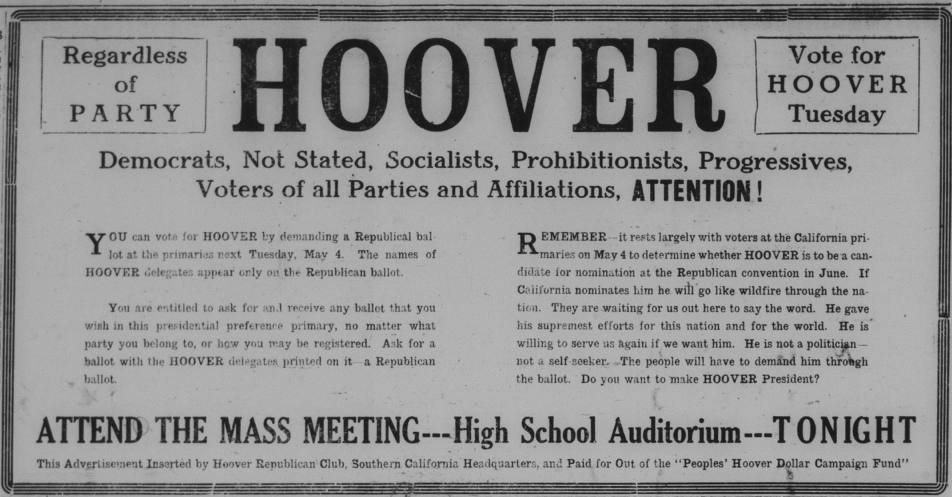
As I mentioned earlier, 1920 was an election year, and there was much local interest. During the California primary, there was support for Republican Herbert Hoover which took the form of a Fullerton Hoover Republican Club.

Seeking to cast a wide net, the Hoover Club sought members of all parties–Democrats, Not Stated, Socialists (yes, that was a somewhat popular party in 1920), Prohibitionists, Progressives, etc.
Another popular Republican hopeful was former California governor Hiram Johnson, who was a progressive Republican (yes, that was a thing).
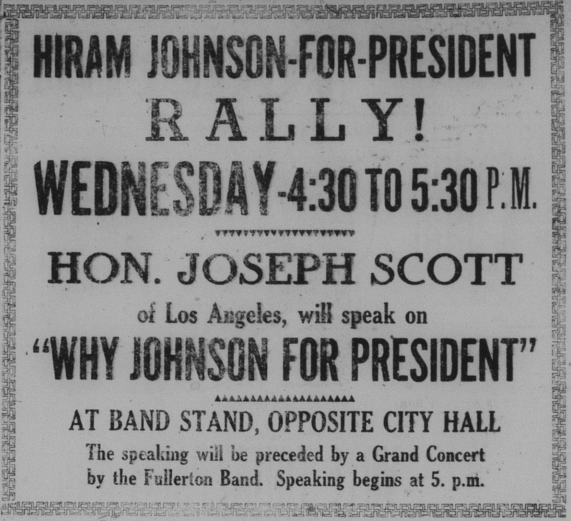
Ultimately, Hiram Johnson won the California primary over Hoover, although Hoover got more votes in Fullerton. This was back when California was a red state.


The 1920 socialist candidate for president was Eugene V. Debs, who ran from a prison cell because he objected to World War I.

Ultimately, however, Johnson wouldn’t get enough delegates to be the Republican candidate in the general election. That would go to Warren G. Harding, who would defeat democrat James M. Cox to become the 29th president of the United States, the first to be elected with women voting.
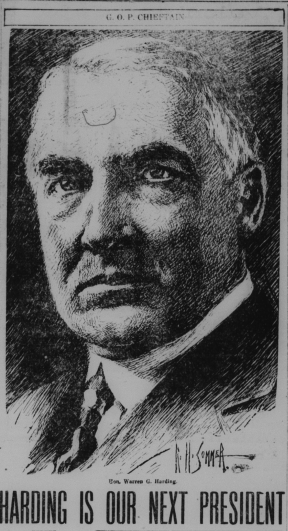
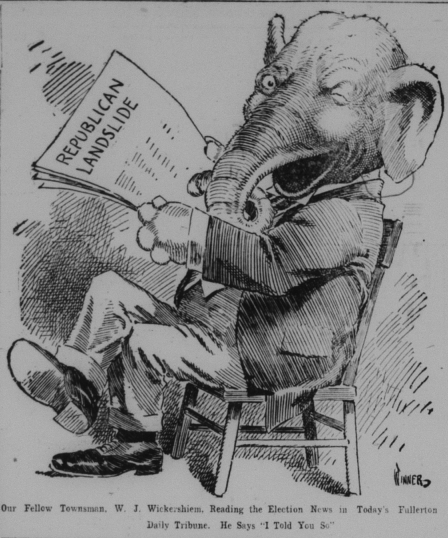
The 1920 election was a Republican landslide.
Deaths
As reported in the Tribune, the following prominent people died: W.B. Houston, former postmistress Gregg, Mrs. Alex Gardiner, Anna Stone, and Ira H. Dysinger.

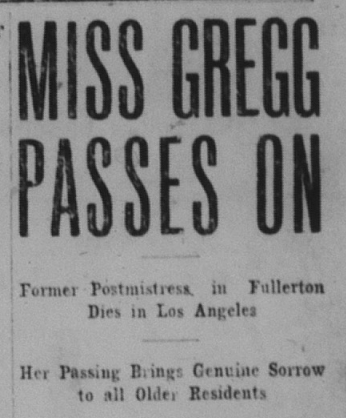
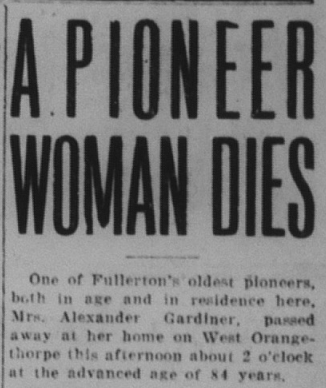

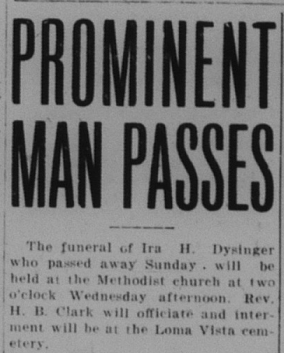
Stay tuned for more news stories from 1921!
-
Newspaper Headlines: 1919
The following is from a work-in-progress about the history of Fullerton. You can support my ongoing research and writing on Patreon.
The Local History Room of the Fullerton Public Library has microfilm from the Fullerton Tribune newspaper (which became the Orange County Tribune in 1908) stretching back to 1893. I am in the process of reading over the microfilm, year by year, to get a sense of what was happening in the town over the years, and creating a mini archive. Below are some news stories from 1919.
Housing
Fullerton’s population was growing, and there was a housing shortage, so there was much new construction. The 1920s would bring a big housing boom to Fullerton. The Board of Trade established a “housing fund” to finance construction of new housing.
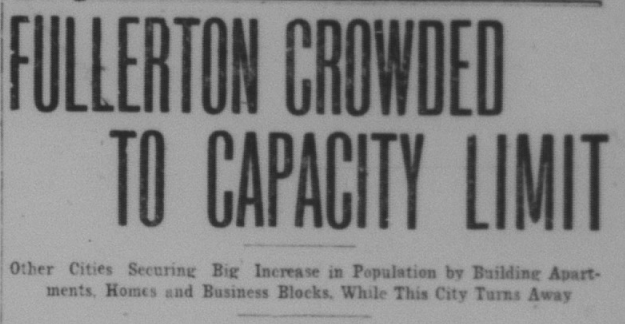

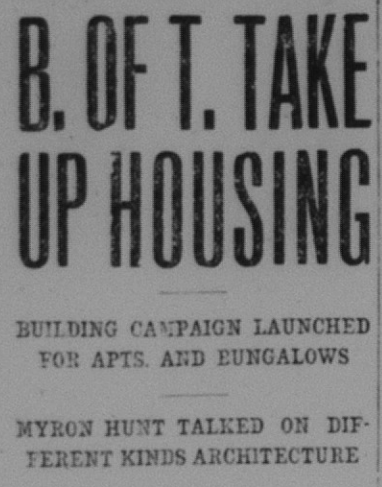
“The Housing proposition is the most important problem which confronts the city today. We not only need good houses but we need business blocks, as people who desire to engage in business here are turned away every day,” the Tribune reported.

Realtors R.S. Gregory and George A. Ruddock announced the opening of a new subdivision on six acres of walnuts and Valencias on the 200 block of West Whiting, next to downtown. Many of these houses still exit.
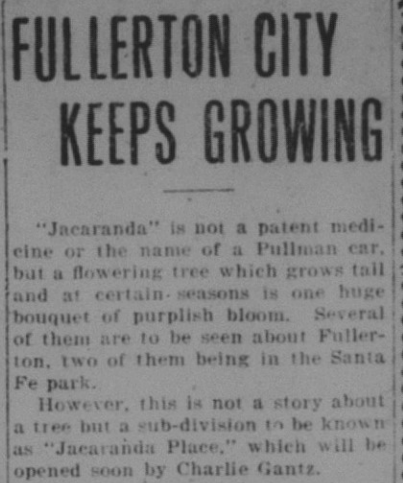
Another new subdivision was Jacaranda Pl., developed by Charlie Gantz. Many of these homes still stand today as well.
New Construction
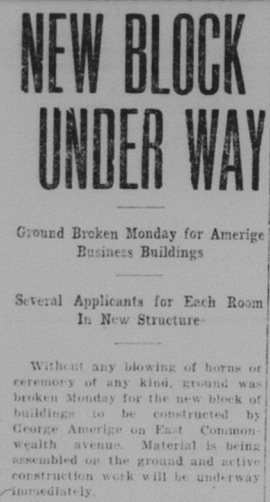
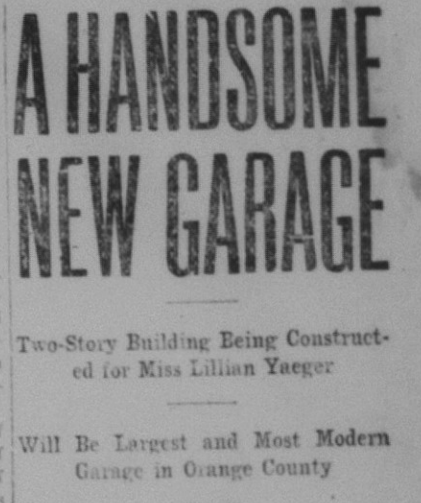
New construction downtown featured apartments and a bungalow court, plans for a new Masonic Temple, a new business block, and a new garage for Fullerton’s pioneering auto dealer Lillian Yeager.


Racism
While Fullerton was building new housing and businesses for its white residents, there was vocal opposition for the construction of housing for Mexican Americans.

“The first thunderbolt was in the form of a petition from 117 prominent citizens headed by former trustee August Hiltscher and backed up by William French, former city marshal and now justice of the peace and newly appointed city recorder. This petition was a protest to the building of a concrete structure by the Santa Fe at Highland and Santa Fe avenues for the housing of its Mexican employees,” the Tribune reports. “The petitioners asked if it would not be possible to prevent the erection at that point or at least the housing of the Mexican element in that locality. The matter was discussed from every angle but there seemed to be no relief from a legal standpoint, and finally a resolution was adopted by the board asking the company to abandon that site and erect its building near its section houses, and City Attorney Allen was delegated to present the resolution in person to Superintendent Hitchcock at San Bernardino. Mr. Allen left for San Bernardino this morning to carry out the mission.”
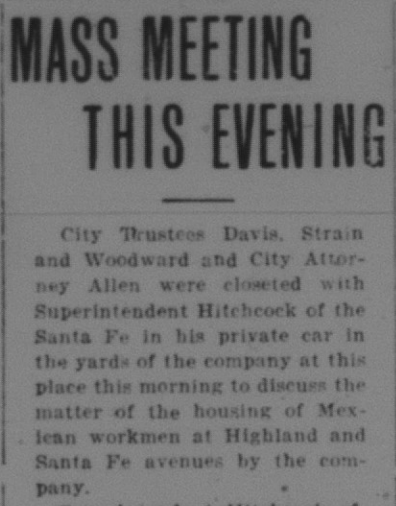
“City Trustees Davis, Strain, and Woodward and City Attorney Allen were closeted with Superintendent Hitchcock of Hitchcock of the Santa Fe in his private car in the yards of the company at this place this morning to discuss the matter of the housing of Mexican workers at Highland and Santa Fe avenues by the company,” the Tribune reported. “A mass meeting has been called for this evening at the city hall for taking action.”

Utlimately, the Santa Fe Railroad won, and got the housing built, much to the consternation of Fullerton residents, many of whom showed up at a “mass meeting” to protest the construction.
“The Santa Fe Railroad Company will continue its work and complete its building at the corner of Highland and Santa Fe avenues for the housing of its Mexican employees and will house them right there,” the Tribune reported. “This bald assertion is made because the mass meeting at the city hall Thursday evening to take steps to avert the menace simply went up in smoke, and went sky high. The council chambers was filled to the doors with property owners, principally from the “infected” district, and they talked and talked and talked, but never got anywhere.”
One of the protestants was heard to say, “Well, we don’t like it, but we’ve got to take it.”
Anti-Asian Sentiment
In other racism news, there was a statewide movement to prevent Japanese immigrants from living among whites and owning property.
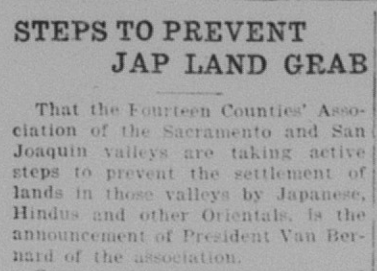
“That the Fourteen Counties’ Association of the Sacramento and San Joaquin Valleys are taking active steps to prevent the settlement of lands in those valleys by Japanese, Hindus, and other Orientals, is the announcement of President Van Bernard of the association,” the Tribune reported.
“Orange County should take similar steps to protect the lands of this county,” is the declaration of Garden Grove ranchers.
President Van Bernard issued the following statement at Sacramento:
“With the crystallized sentiment throughout California that the citizens of this state should encourage only such newcomers in their midst as they would permit to associate with their wives, daughters, and sons, we are prepared to make a fight to the finish against the present system of leasing lands to Orientals.
“There are Japanese babies in this state owning farms paid for with money earned by their mothers and fathers working 18 hours a day, and living according to a standard which means extinction for the white race. The blight is menacing, indeed. I will say that if in the struggle for existence the fittest to survive are those who can live in the most primitive surroundings, then the Japanese are the fittest to survive.
“We must have means to abrogate this state of affairs. If Orientals are within the law in acquiring land in this manner, we must change the law. Else the future of this state will resemble the Hawaiian Islands in their change from a fairly American community to one in which the Japanese have an immensely dominant interest, and where Buddhist temples out-number Christian churches.
“In making these remarks I am not, instigated by prejudice against Orientals. My contention is that the Oriental and the Caucasian are so absolutely opposed in every viewpoint and outlook of life that they cannot live harmoniously in close association or even on contiguous land.”

“Dangers which confront the residents of Orange County, such as forest fires and the Japanese question, were the principal features which were brought up and discussed by the Association of Commerce of Orange County at its regular monthly meeting, which was held at the…Round Table Women’s club house at Placentia Wednesday night,” the Tribune reported.
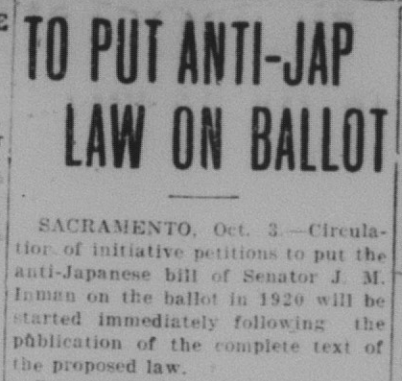
“Circulation of initiative petitions to put the anti-Japanese bill of Senator J.M. Inman on the ballot in 1920 will be started immediately following the publication of the complete text of the proposed law,” the Tribune reported. “Senator Inman who is president of the State Anti-Japanese association which will circulate the petitions, stated that the nine sections of the law will positively prohibit Japanese or other aliens ineligible to citizenship from owning or leasing agricultural land in California.”
These movements led to the passage of California’s Alien Land laws, which prevented many Asian immigrants from owning land in California.
The pages of the Tribune are filled with anti-Asian sentiment and racial slurs:


Race Riots
Anti-immigrant sentiment and racism was a growing problem throughout the United States, culminating in a series of actual race riots in cities across America. This became known as the “Red Summer.”
According to Wikipedia, “Red Summer was a period in mid-1919 during which white supremacist terrorism and racial riots occurred in more than three dozen cities across the United States, and in one rural county in Arkansas. The term “Red Summer” was coined by civil rights activist and author James Weldon Johnson, who had been employed as a field secretary by the National Association for the Advancement of Colored People (NAACP) since 1916. In 1919, he organized peaceful protests against the racial violence.”
The Tribune reported on these race riots.


Labor Strikes
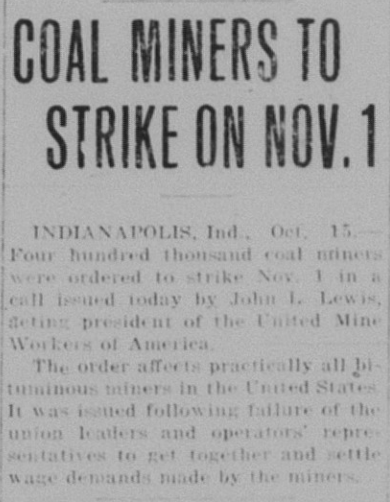
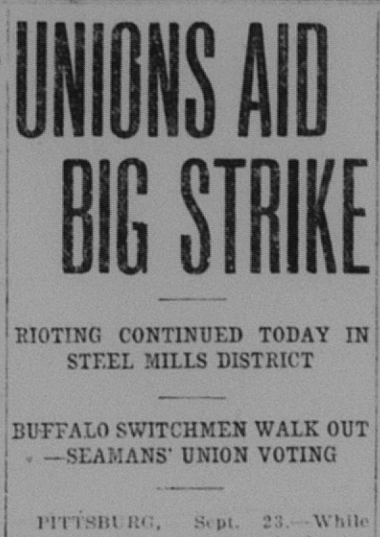
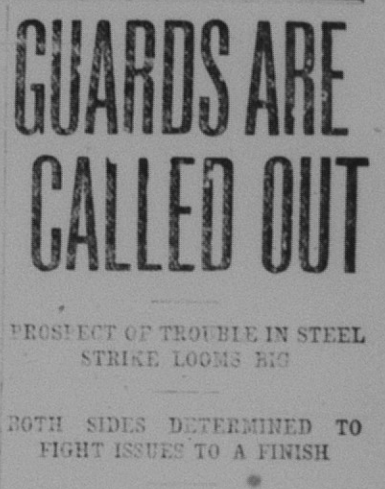
Adding to the racial unrest across the United States, there were many labor strikes, many of which turned violent.


Americanization

A popular movement seeking to prevent both racial and labor strife was called “Americanization” in which employers provided education to “Americanize” its foreign-born immigrant workforce. In contrast to today’s appreciation for diversity and cultural and linguistic difference, the Americanization movement sought to mold different ethnic identities into English-speaking Americans.

The Fourth District Congress of Mothers and parent-Teachers’ Associations met in all day conference in Santa Ana and a prominent theme was the “Americanization” of the foreign-born.
“Where no English is spoken disease breeds, because the immigrant cannot read the suggestions of the Board of Health. The I.W.W. [Industrial Workers of the World] breeds where no English is spoken,” the Tribune reported. “The country is awake to the danger of the alien population, and “Americanizing” must become the great national movement.”
Locally, citrus growers, in collaboration with educational leaders, established special schools in “Americanization” for their predominantly Mexican workforce.
Read more about Fullerton’s Americanization program HERE.
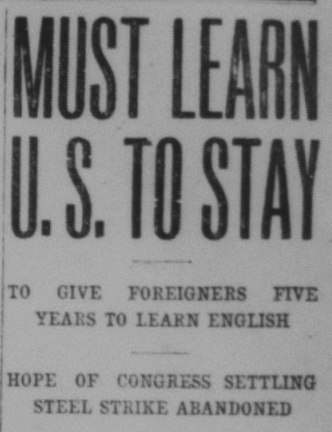
At the national level there was discussion of actually deporting immigrants who did not speak English.
“Deportation of immigrants after five years residence in the United States unless they learn to speak and read English will be considered by the Senate labor committee, following its investigation of the steel strike, Chairman Kenyon announced on his return from Pittsburg,” the Tribune reported. “Senators on the investigating committee declared Americanization of foreign-born persons must be undertaken at once if grave industrial trouble is to be averted.”
Infrastructure
As the population increased, there were movements locally and across the state to expand and improve infrastructure.
A massive bond was passed by voters to create Newport Harbor.

The national “Good Roads” movement led to the expenditure of much public funds for more and better roads, including a state highway from San Diego to San Francisco.


Transportation
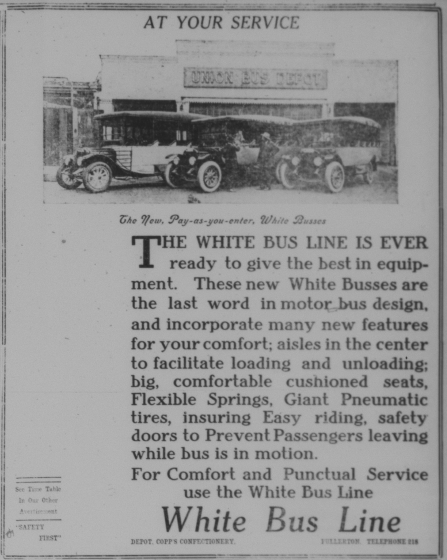
In transportation news, a new Bus Service was established that provided transportation to Fullertonians.
Oil!
In 1919, Fullerton’s two biggest industries were oranges and oil. Nearly every issue of the Tribune included articles about new wells and big gushers coming in the local fields.
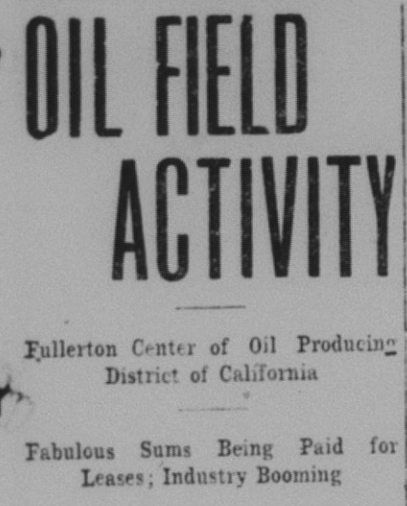
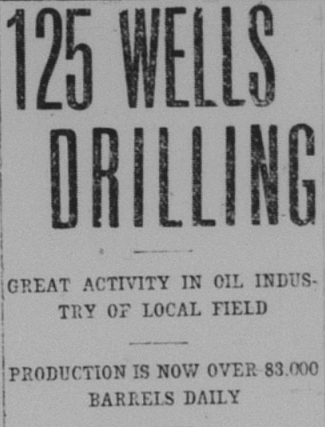
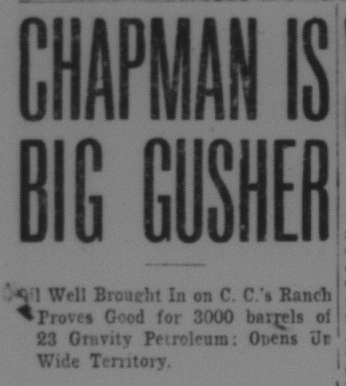
The oil industry provided an excellent source of taxes for schools and other public amenities in town. However, Standard Oil protested their tax burden for local schools.

Perhaps a part of the widespread labor unrest, some oil wells were bombed in the Fullerton fields.

“Believing that they have in custody one of the perpetrators of the recent bomb outrages in the Fullerton oil fields the police today detained a man describing himself as Antone-Kratchel, aged 35, an Austrian, who was arrested at First and Gless streets by Patrolmen H.R. Boehm and J.Y. Walton,” the Tribune reported.
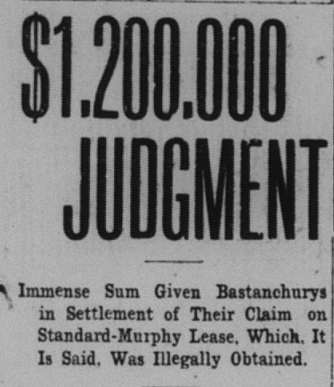
The Bastanchury family won a large $1,200,000 judgment against the Murphy Oil company, which had defrauded them out oil profits.
Culture and Society
Local culture and society took a few forms in 1919. For entertainment, folks would go see movies or vaudeville shows at the Rialto Theater.
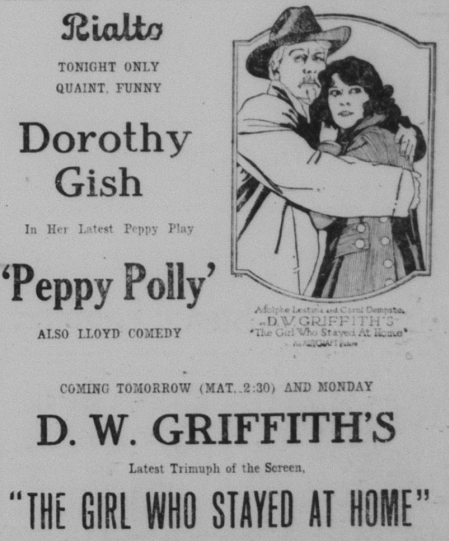
Another form of culture was the traveling Chautaqua show, which was kind of like a high-brow circus.


Crime
Here are some local crime stories:
The Des Granges daughters (Helen and Getrude) accuse dad (John) of defrauding them of land left to them by their late mother (Harriet).


Prohibition
Prohibition was a popular issue, both locally and nationally, in 1919. The US Senate had passed the 18th Amendment in 1917, but it would not be ratified by a majority of the states until 1919, and national prohibition did not take effect until 1920, with the passage of the Volstead Act. Prior to that the Wartime Prohibition Act took effect in 1919, which banned the sale of beverages having an alcohol content of greater than 1.28%.

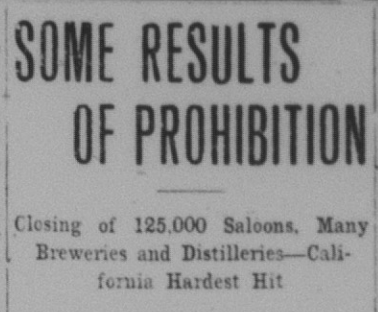
Both locally and nationally, the Women’s Christian Temperance Union had been an active proponent of Prohibition for many years.

International News
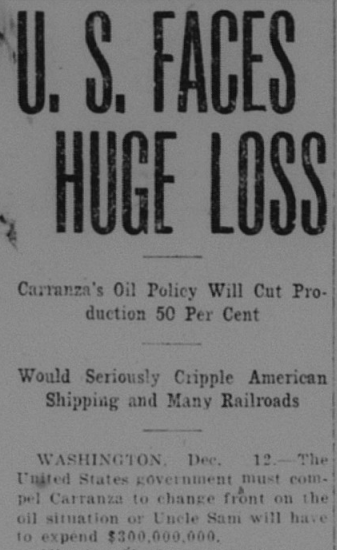
In international news, World War I was over, but the United States was seriously considering war with Mexico due to the destabilizing effects of the Mexican Revolution, president Carranza’s movement to confiscate oil lands owned by U.S. companies in Mexico, and the kidnapping of American industrialist William O. Jenkins by Mexican Revolutionary forces.

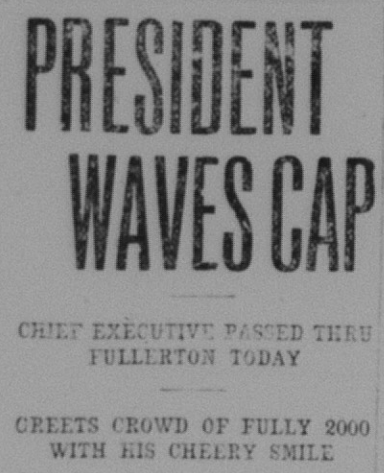
President Passes Through Town
Many Fullertonians gathered to watch president Woodrow Wilson’s train pass through town.
Stay tuned for news stories from 1920!
-
Photographs: Then and Now (Gem Pharmacy/Kentro)
The following is from a work-in-progress about the history of Fullerton. You can support my ongoing research and writing on Patreon.
For this series, I compare a historic photo of Fullerton with a contemporary one from approximately the same angle. Below are two photographs of the southeast 100 block of Harbor/Commonwealth–one of the Gem Pharmacy circa 1900, and one of Kentro, a Greek restaurant, in 2023.
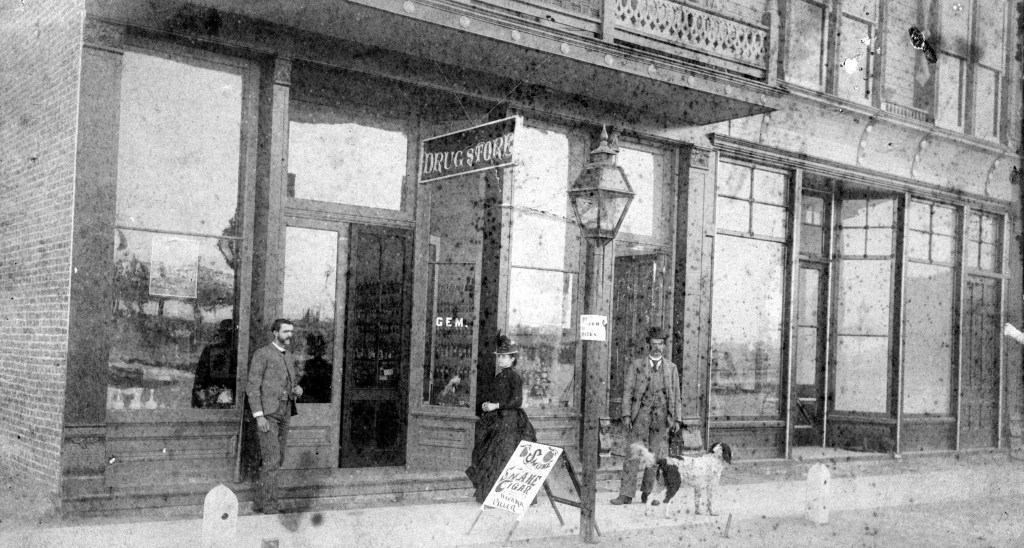
Gem Pharmacy, circa 1900. Photo courtesy of the Fullerton Public Library Local History Room. 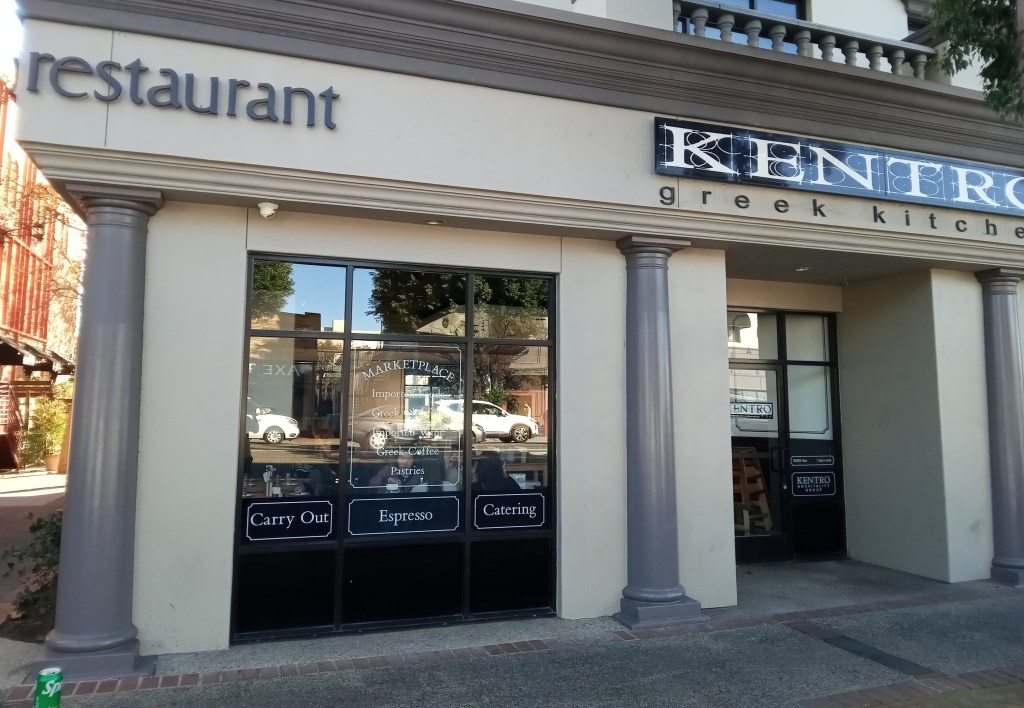
Kentro Greek Kitchen, 2024. Photo by the author. -
Photographs: Then and Now (Fender Factory)
The following is from a work-in-progress about the history of Fullerton. You can support my ongoing research and writing on Patreon.
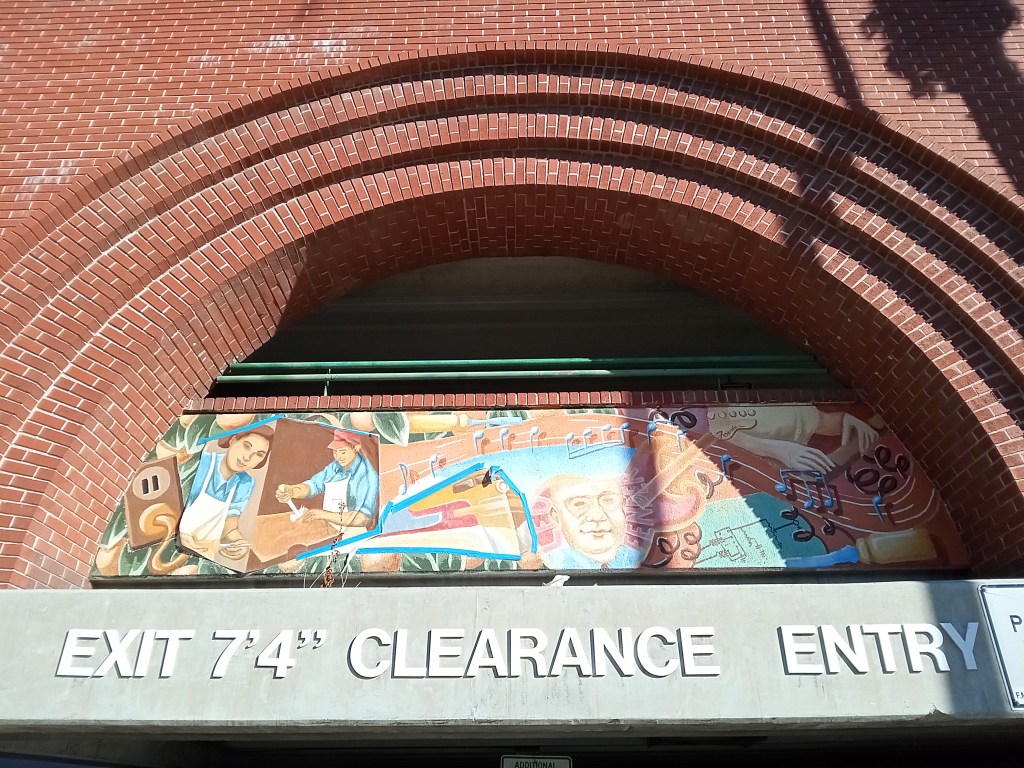
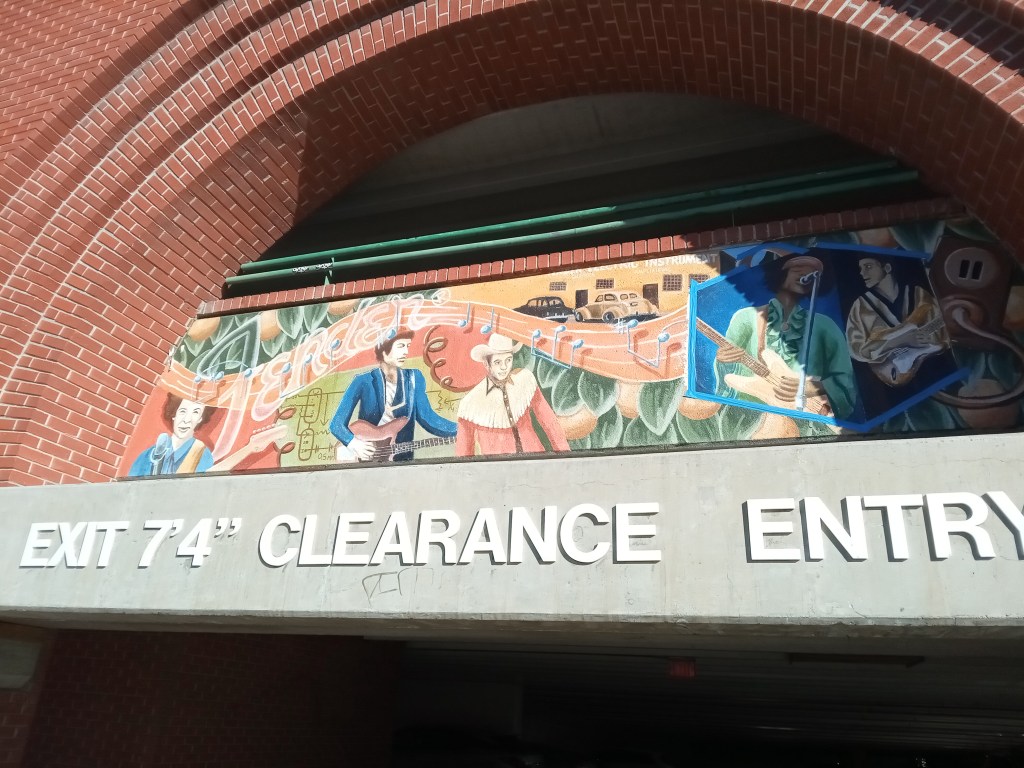
For this series, I compare a historic photo of Fullerton with a contemporary one from approximately the same angle. Below are two photographs of the northeast corner of Santa Fe and Pomona Avenues–one of the old Fender guitar factory, which has since been torn down, circa 1950, and one of a parking structure, from 2023.
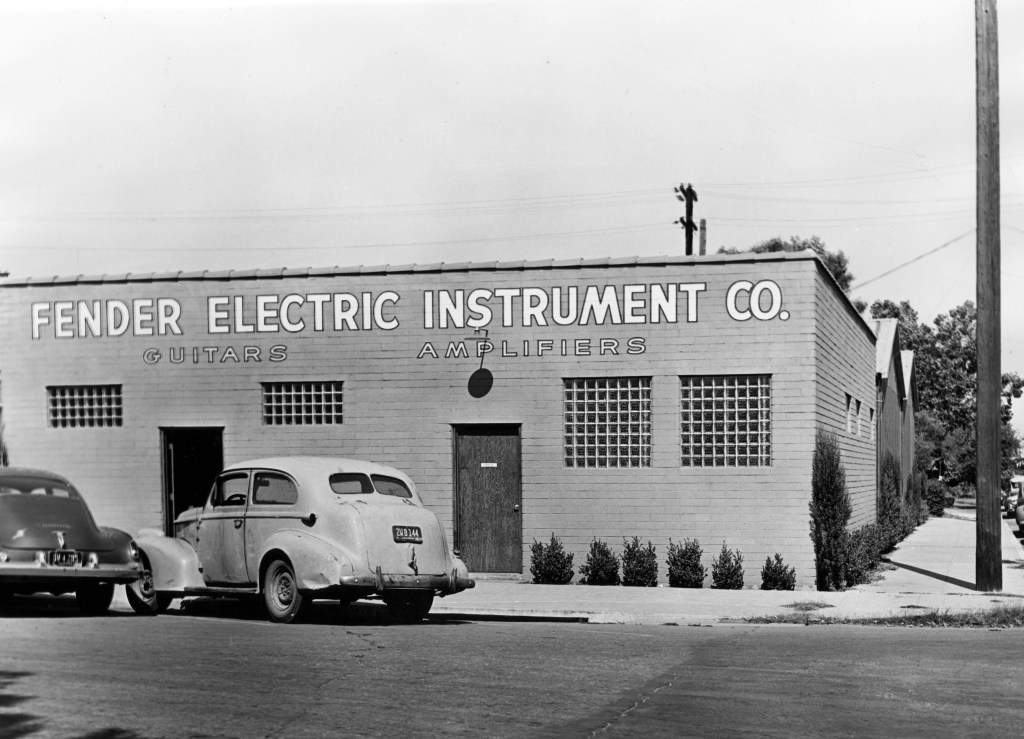
Fender Electric Instrument Co., circa 1950. Photo courtesy of the Fullerton Public Library Local History Room. 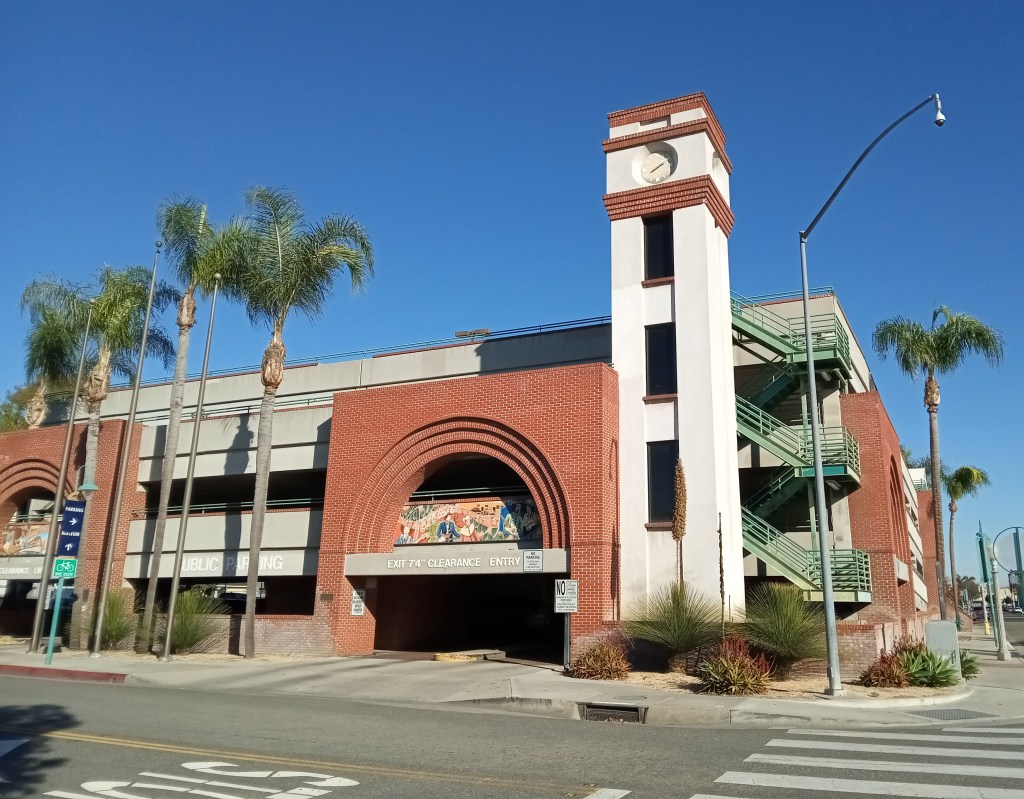
Parking structure at northeast corner of Santa Fe and Pomona Avenues, 2023. Photo by the author. The parking structure features a couple murals recognizing the legacy of Leo Fender and Fender Guitars, which started in Fullerton.
-
Subscribe
Subscribed
Have a WordPress.com account? Log in now.

