-
Early Settlers: Arthur Staley (Rancher/Banker)
The following is from a work-in-progress about the history of Fullerton. You can support my ongoing research and writing on Patreon.
Arthur Staley was born near Santa Rosa, California in 1870, a son of Theodore and Drusilla (Teague) Staley, the former a native of Missouri, and the latter of Indiana.
“Both parents were pioneers of California,” biographer Samuel Armor wrote in 1921. “Theodore Staley having crossed the plains with ox-teams in 1856, and Drusilla Teague was brought on the long overland journey by her parents in 1865, the wagons being drawn by horses, and some trouble with Indians was encountered by the young pioneers.”
Theodore Staley farmed in Sonoma County until 1881, when he moved to Orange, and then Placentia, growing grapes, oranges, and walnuts. He was active in county politics, serving on the Democratic County Central Committee and as a school trustee.
Theodore and Drusilla Staley had three children: Arthur, Myrtle, and Walter. Theodore died in 1903 in Placentia.
Arthur Staley attended grammar school in Placentia and was one of the first graduates of the newly-formed Fullerton high school. He graduated from Stanford University in 1900.
He worked various jobs in agriculture and banking. He was secretary of the Fullerton Walnut Growers Association, and the Placentia Orange Growers Association.
He worked for the Farmers and Merchants Bank of Fullerton, and also as a director of the Yorba Linda Water Company, and the Placentia National Bank.
His wife was Bessie Pendleton.
In addition to his other business interests, Arthur owned a 25-acre orange grove in Yorba Linda, which he planted in 1910.
He was active in the Fullerton Masonic Lodge.
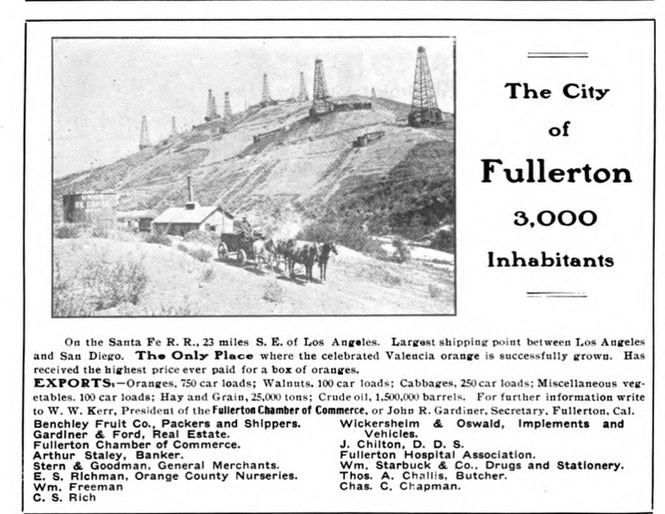
Here is a 1906 promotional advertisement for Fullerton that appeared in Out West magazine. Arthur Staley is listed as a local banker.
Source:
History of Orange County, California: with biographical sketches of the leading men and women of the county who have been identified with its earliest growth and development from the early days to the present by Samuel Armor. Los Angeles Historic Record Co, 1921.
-
Photographs Then & Now: McMahan’s Fire/Walk on Wilshire
The following is from a work-in-progress about the history of Fullerton. You can support my ongoing research and writing on Patreon.
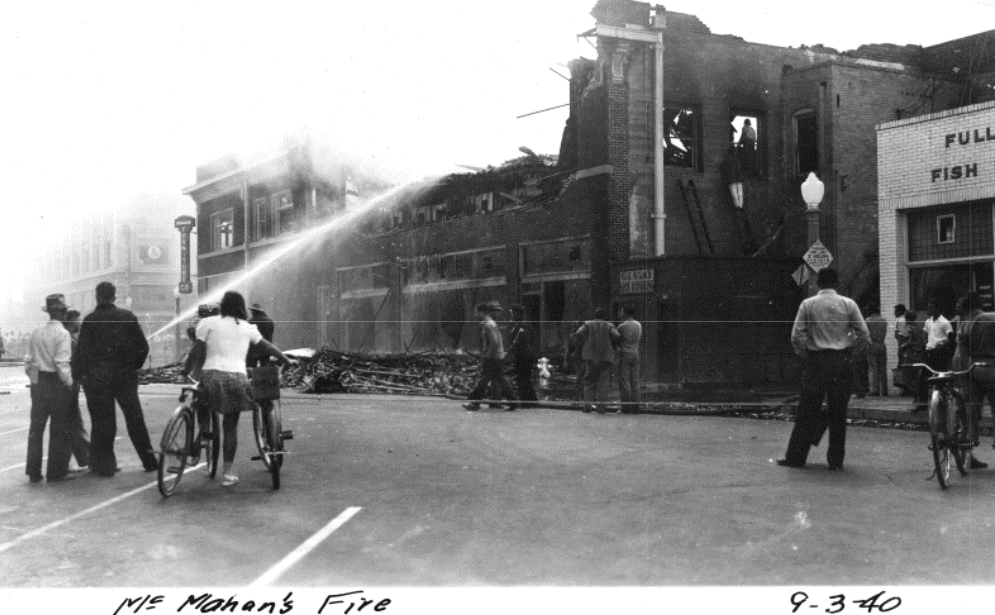
For this series, I compare a historic photo of Fullerton with a contemporary one from approximately the same angle. The first photo below is of a fire at the McMahon’s building on Wilshire Avenue in 1940. The second photo is of the Walk on Wilshire area today.

-
Photographs Then & Now: Fire Station/Half Off Books
The following is from a work-in-progress about the history of Fullerton. You can support my ongoing research and writing on Patreon.
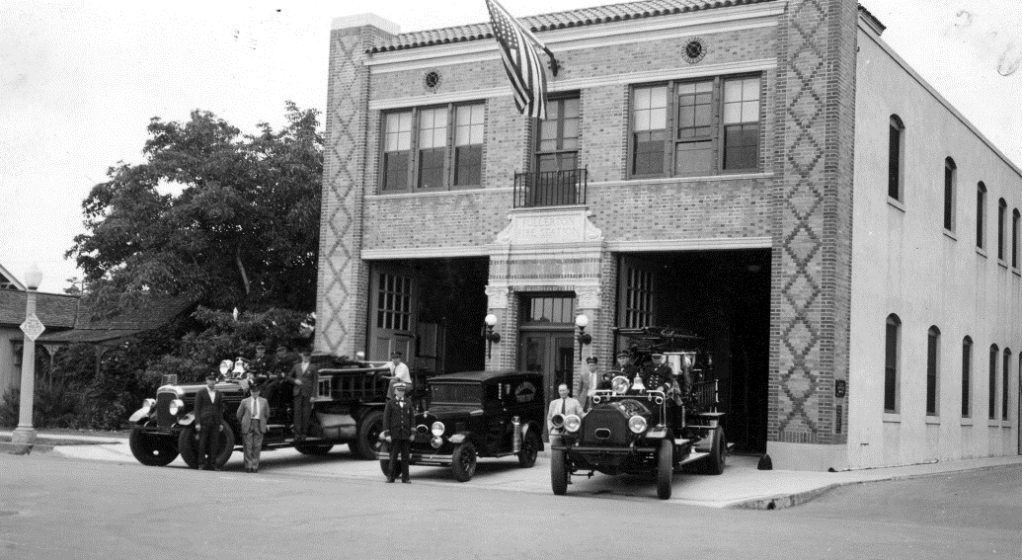
For this series, I compare a historic photo of Fullerton with a contemporary one from approximately the same angle. The first photo below is of the Fullerton Fire Station on Wilshire Avenue in 1937. The second photo is of Half Off Books in the Wilshire Promenade Building, which interestingly mirrors the design of the original building.

-
Photographs Then & Now: Chapman School/Fullerton College
The following is from a work-in-progress about the history of Fullerton. You can support my ongoing research and writing on Patreon.
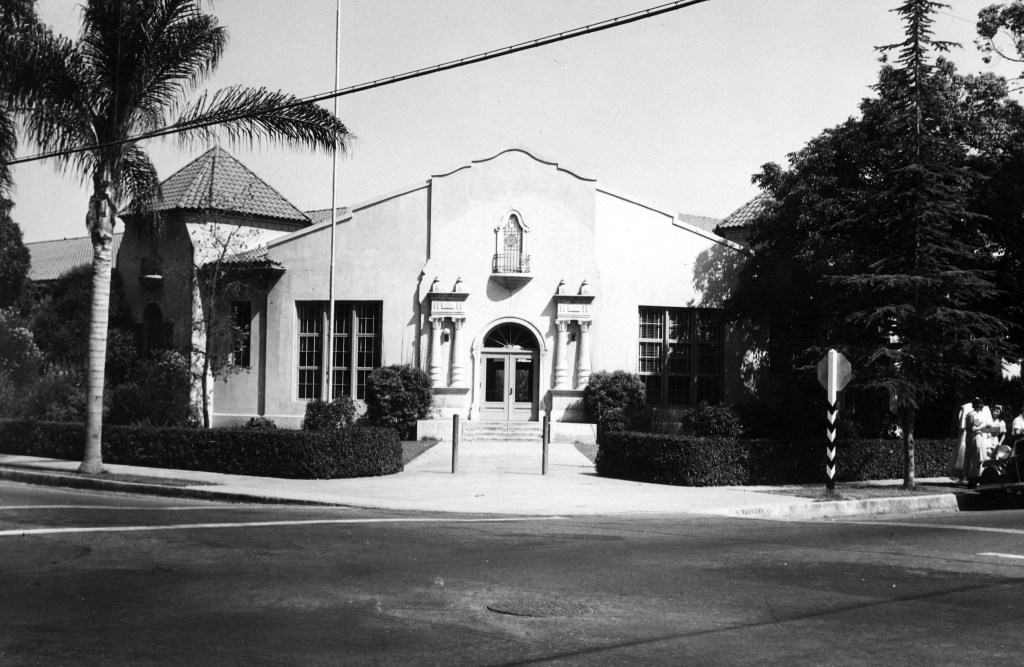
For this series, I compare a historic photo of Fullerton with a contemporary one from approximately the same angle. Below are two photographs of the southeast corner of Chapman and Lemon–the first is of the Chapman Grammar School in the early 1920s, and the second is what the corner looks like today.

-
Early Settlers: The Moore Brothers (cement manufacturers)
The following is from a work-in-progress about the history of Fullerton. You can support my ongoing research and writing on Patreon.
John A. Moore was born in Barton County, Missouri in 1884, three years before his brother James, but James was the first to come out to the west coast, at age 17.
In 1906, John joined his brother in Rialto, in San Bernardino County, where they worked for a year on ranches. Next they moved to Imperial Valley, where they bought land and developed an alfalfa ranch, which they later sold.
In 1911, James moved to Fullerton, soon followed by his brother, and they opened the first cement pipe-yard here, The Moore Bros. Company located on West Santa Fe Avenue.
The cement pipes they made were essential for irrigating the large fields of Fullerton and surrounding areas.
In 1918, during World War I, James enlisted and served in the Three Hundred Nineteenth Engineers, though he never was sent overseas. He was honorably discharged in 1919 and he returned to resume the cement business in Fullerton.
In 1919 James sold his interest in the West Santa Fe yard to his brother, E.W. Moore, and in the spring of 1920, with his brother John he again created a cement pipe business at 221 East Santa Fe Avenue. The firm not only manufactured cement pipes, but also installed them for irrigation.
They also did cement curbing, gutters, and foundations.
“The cement industry, carried on as it is today with the aid of scientific research, has come to mean a great deal in the development of new towns and their outlying neighborhoods,” biographer Samuel Armor wrote in 1921. “Orange County is to be congratulated on such an establishment as that of the Moore Bros. Company.”

Source:
History of Orange County, California: with biographical sketches of the leading men and women of the county who have been identified with its earliest growth and development from the early days to the present by Samuel Armor. Los Angeles Historic Record Co, 1921.
-
1925 News Headlines
The following is from a work-in-progress about the history of Fullerton. You can support my ongoing research and writing on Patreon.
The Local History Room of the Fullerton Public Library has microfilm from the Fullerton Tribune newspaper stretching back to 1893. I am in the process of reading over the microfilm, year by year, to get a sense of what was happening in the town over the years, and creating a mini archive. Below are some news stories from 1925.
In 1925, the United States’ population was 114,340,000. The Teapot Dome scandal was resulting in indictments of powerful political and business figures. In Tennessee, the Scopes Monkey trial was deciding whether schools could ban the teaching of evolution. A massive Navy airship called the Shenandoah was destroyed in flight (kind of like the more famous Hindenburg). The Ku Klux Klan, which was at the peak of its power, organized a massive march down Pennsylvania Avenue in Washington D.C. that drew at least 50,000 robed participants. Fascists under Benito Mussolini had come to power in Italy, and a massive earthquake centered in Santa Barbara leveled much of the city.
Chapman’s Theater (later called the Fox) Opens
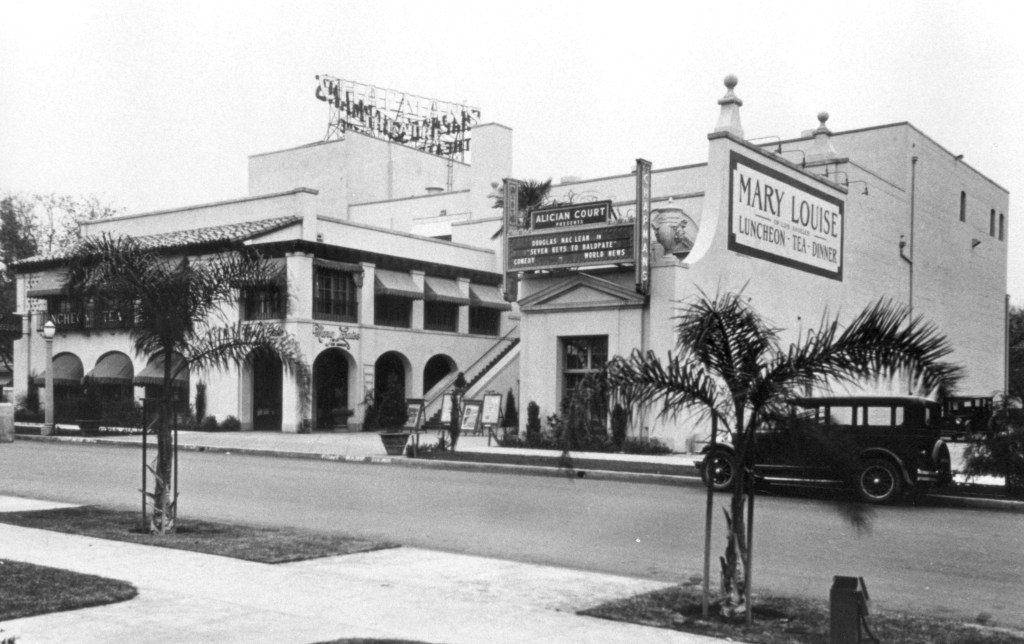
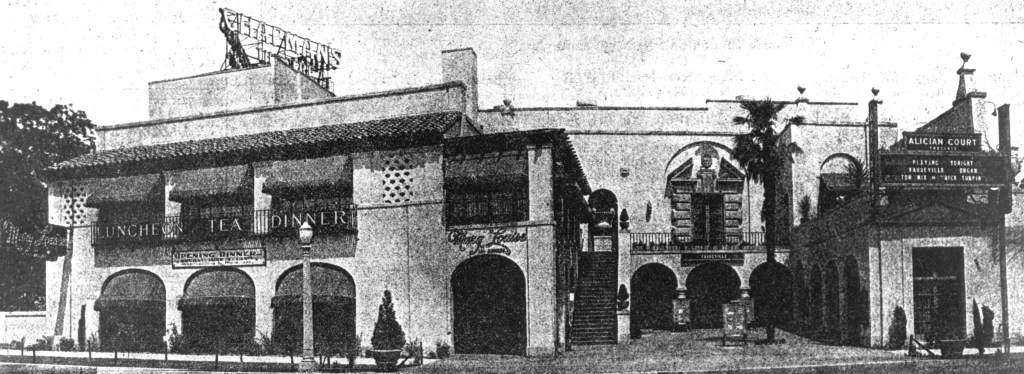
Probably the biggest news of 1925 for Fullerton was the opening of Chapman’s Alician Court Theater, which later became known as the Fox Theater, a classic old school movie palace. The theater was financed by C. Stanley Chapman, son of wealthy powerful orange grower Charles C. Chapman. The theater’s architect was Raymond M. Kennedy of the firm Meyer & Holler, which also designed Grauman’s Egyptian Theatre and the Chinese Theatre in Hollywood.
The theater opened with great fanfare with local and Hollywood notables in attendance, including Mary Pickford and her family.
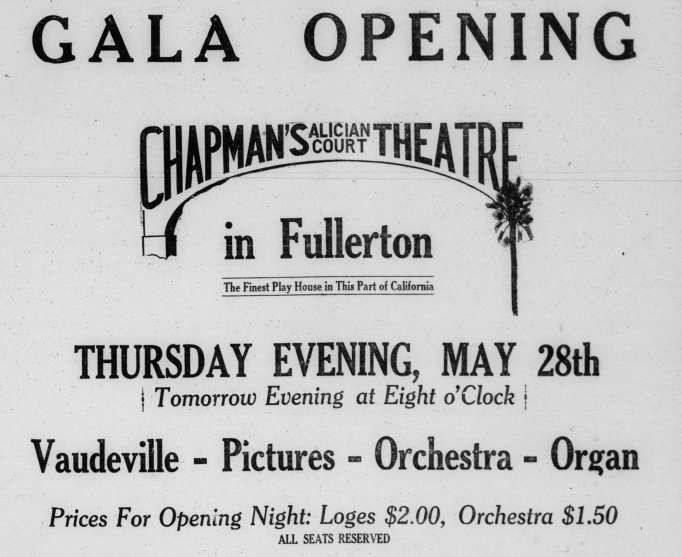
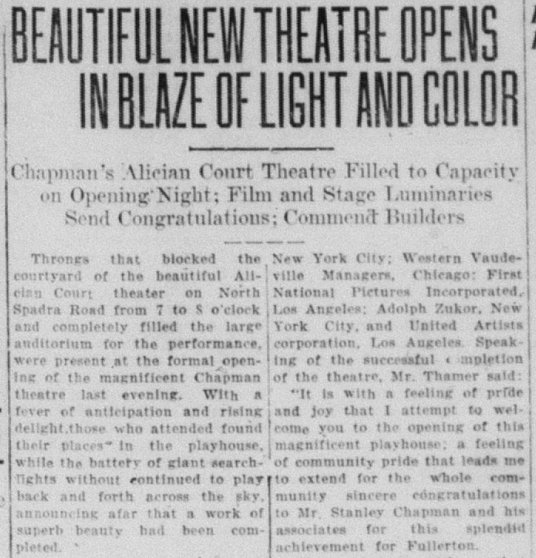
“Dainty usherettes in Italian peasant costume…directed the guests to their places. Among those seated in the loge section were many distinguished visitors including Mendell Meyer, architect for the structure members of the Chapman party, and well known residents of Hollywood Mrs. Pickford, Lottie Pickford Rupp and Mary Pickford’s small niece, Mary Pickford Rupp,” the Tribune reported.
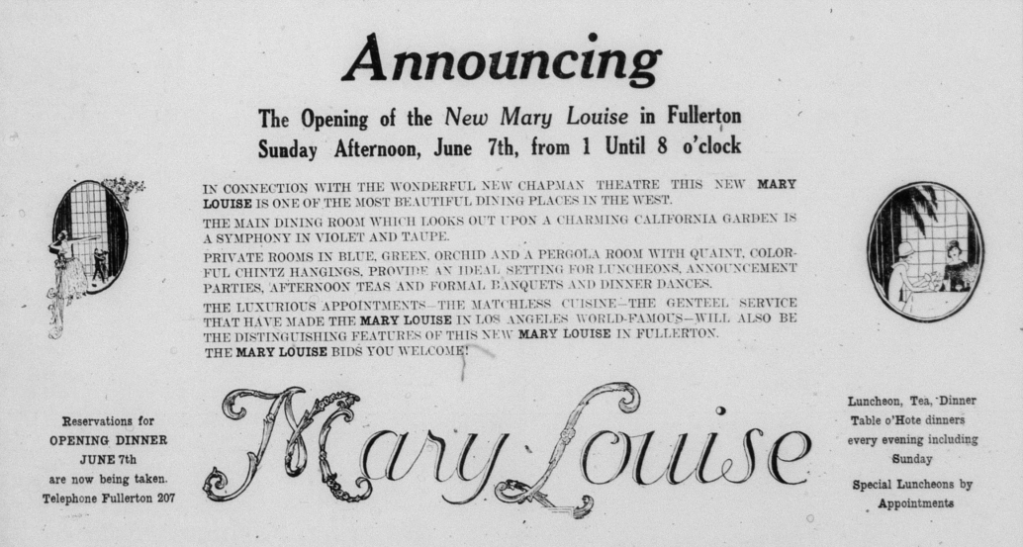
Attached to the theater was the fancy tea room known as the Mary Louise.
Here are a few early photos of the Fox that I obtained from the Local History Room:



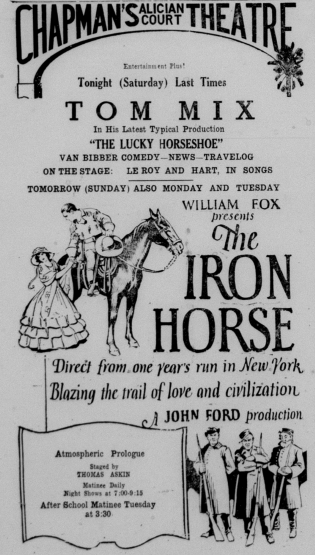
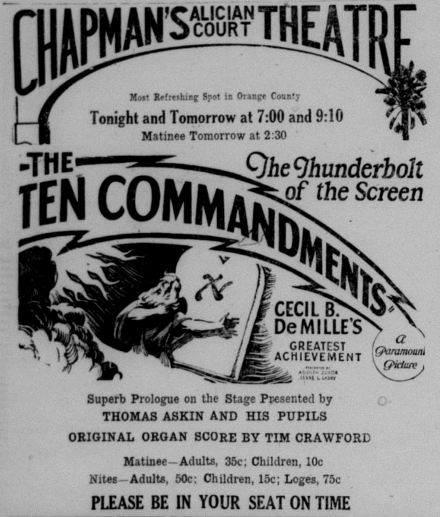
And here are some ads for movies and vaudeville shows at Chapman’s Theater:




Growth
Fullerton continued to experience relatively rapid growth throughout the 1920s, including a new industrial tract, new subdivisions opening, new sewer lines, and three new packing houses.


Education
In 1925, Fullerton was being considered as a possible location for the southern campus of the University of California–what would eventually become UCLA.
Gaston Bastanchury, owner and manager of the vast Bastanchury ranch in Fullerton, created a bound proposal with lots of photos, extolling the virtues of the proposed site.

Ultimately, the Fullerton proposal was rejected and UCLA was built at its present site in Los Angeles.

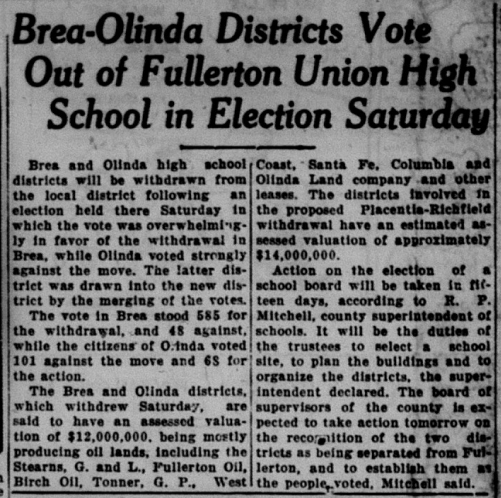
Residents of the oil towns of Brea and Olinda voted to leave the Fullerton Union High School District and form their own.
Fullerton High School built a new gym and swimming pool. This gym was torn down a few years ago and a new one built.
In 1925, many Mexican Americans in Fullerton lived in segregated work camps either on or near the orange groves. The Fullerton Union High School district created an “Americanization” program to teach certain classes to the Mexican workers.
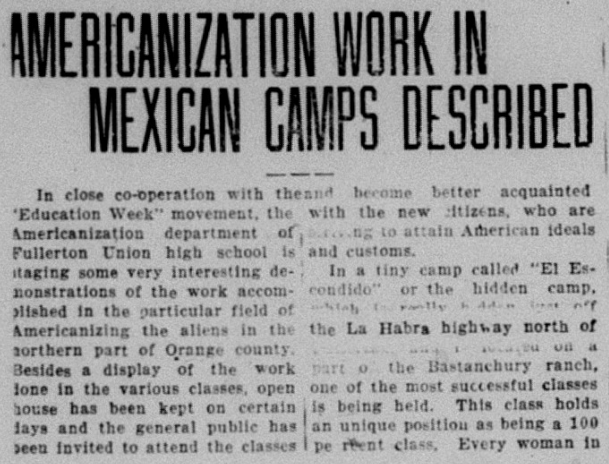
Here is some of the text of the article above:
The Americanization department of Fullerton Union high school is staging some very interesting demonstrations of the work accomplished in the particular field of Americanizing the aliens in the northern part of Orange County. Besides a display of the work done in the various classes, open house has been kept on certain days and the general public has been invited to attend the classes and become better acquainted with the new citizens, who are…to attain American ideals and customs.
In a tiny camp called “El Escondito” or the hidden camp…on a part of the Bastanchury ranch, one of the most successful classes is being held. This class holds an unique position as being a 100 percent class. Every woman in camp has attended each session since the school was opened and their enthusiastic cooperation with Mrs. Alma Tucker, their teacher, has produced some amazing results.
An outstanding example of this applied industry is that of Senora Guadaluope Rodarte, who has attended school eight weeks with only a two weeks absence when a new daughter arrived at the Rodarte home. With her new baby immaculately clean and in white pretty dresses, Guadalupe attends the classes each day. During the short time of her instruction she has acquired a vocabulary of about 200 words in the English language.
Dona Felipa Avilos, who has learned all the English she knows during a like period, can also converse in good English to the extent of a visit to a grocery store and the purchase of supplies.
Mrs. Tucker uses the Gonin method of teaching her pupils, but as adapted it to the local conditions, which add to its usefulness in teaching Mexicans. A new idea of using puppets to demonstrate a word or idea has been worked out by Mrs. Tucher which has proved very successful. The close cooperation and economy of the various departments of the Fullerton high school is demonstrated in this instance, for Miss Easton and Miss Bristol with their classes in art have prepared the puppets and the model houses and furniture, which Mrs. Tucker has found so useful. The class in the “Hidden Place” has a motto which is well understood and applied by the Mexican women and their teacher, and is written on the walls of the little dwelling, “Co-operation.”
In this instance the class is held at one of the Mexican homes, which although lacking many of the conveniences and sanitary additions of the American homes, is scrupulously clean with its board floor scrubbed white and pretty cretonne curtains at the windows. Flowers are in evidence both inside and outside the dwellings and in American flag is pinned to the walls of the room where the class meets.
The roll includes Gladalupe Rodarte, Marie Rodar, Isidra Avina, Rosario Gimenez, Felipa Avalos, Luciana Giminez, Maria Avila, Soledad Avalos, Maria Ramos, Aurelia Perez and Trinidad Rosales.
Ku Klux Klan
In 1924, at least four Ku Klux Klan members were elected to the Anaheim City Council. The next year, facing push back from the community, they were all recalled. In the mid-1920s, the Ku Klux Klan was a major political and social force in Orange County.

Fashion
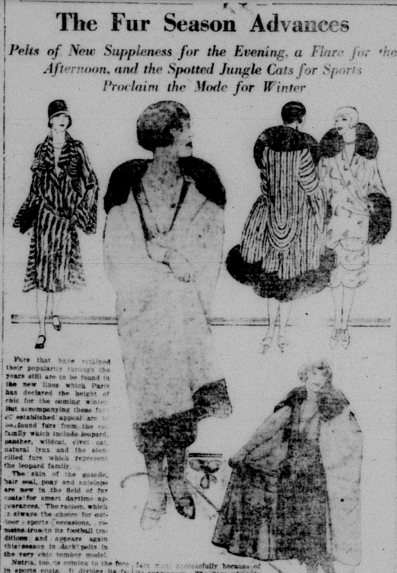
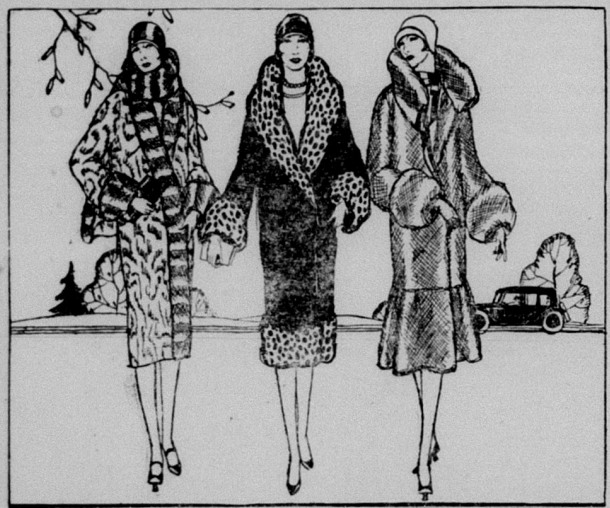
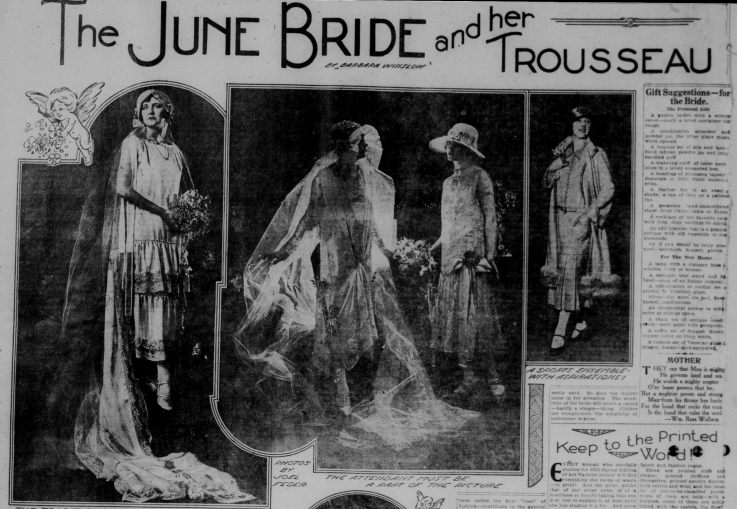
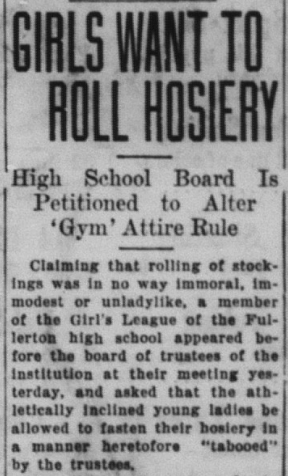
The 1920s were an exciting time for fashion, particularly women’s fashion, and the pages of the Tribune show many of these new fashions, available in stores in the growing downtown.



Miscellaneous
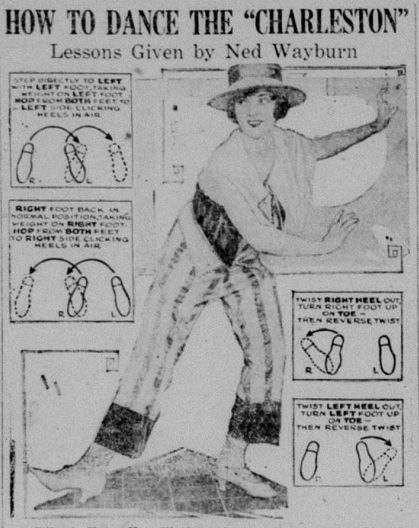
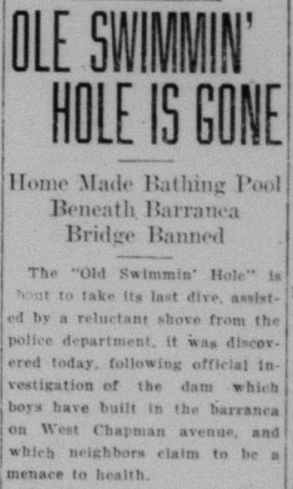
Here are a few random clippings from 1925.



Death
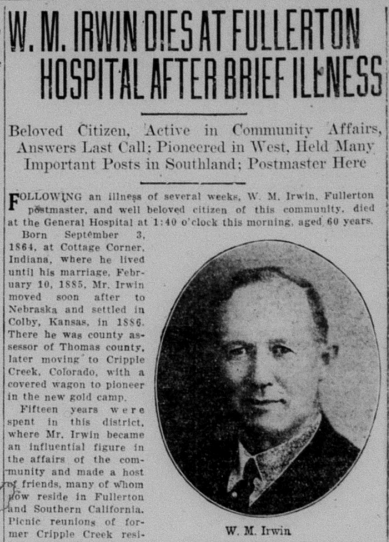
W.M. Irwin died. He had served as postmaster, the first president of the Rotary club, and other civic activities.
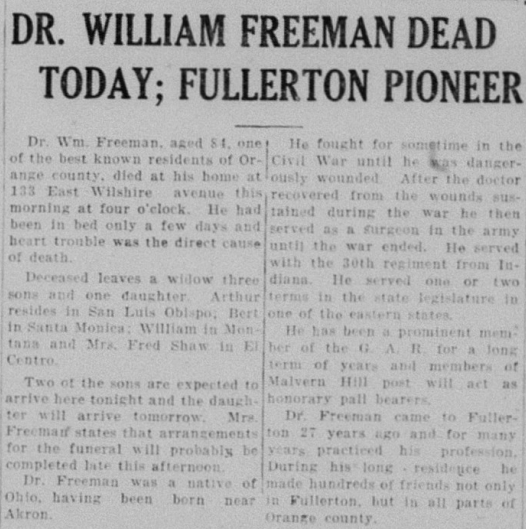
Dr. William Freeman, one of Fullerton’s first doctors, passed away.
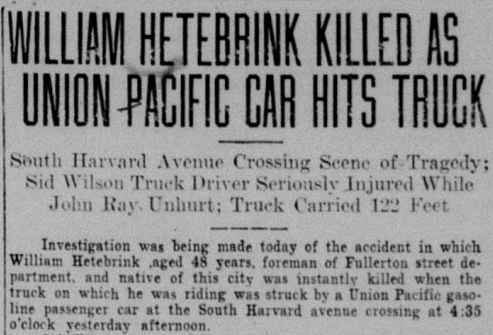
William Hetebrink, of the pioneer Hetebrink family, was killed in an accident. Many members of the Hetebrink would die in tragic accidents, almost as if the family was cursed.
The nude body of a boy was found hanging on an oil derrick near Olinda. Creepy.

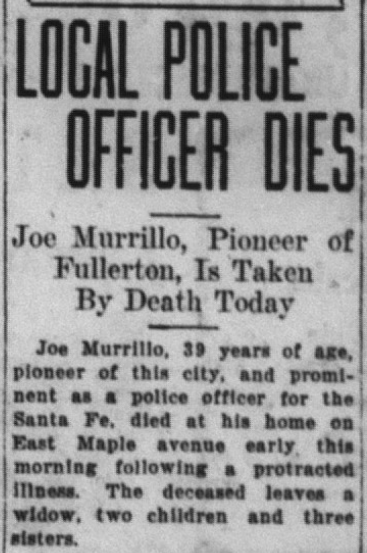
Local police officer Joe Murillo passed away.
Stay tuned for news headlines from 1926!
-
Early Settlers: William L. Hale
The following is from a work-in-progress about the history of Fullerton. You can support my ongoing research and writing on Patreon.
While browsing the archives of the Fullerton Public Library Local History Room, I recently came across a brief autobiography of William L. Hale, an important early businessman and politician of Fullerton. The bio is called “This is a Sketch of My Life” and was published by Mrs. Harold Hale (his daugher-in-law) in 1976. Here’s what I learned.
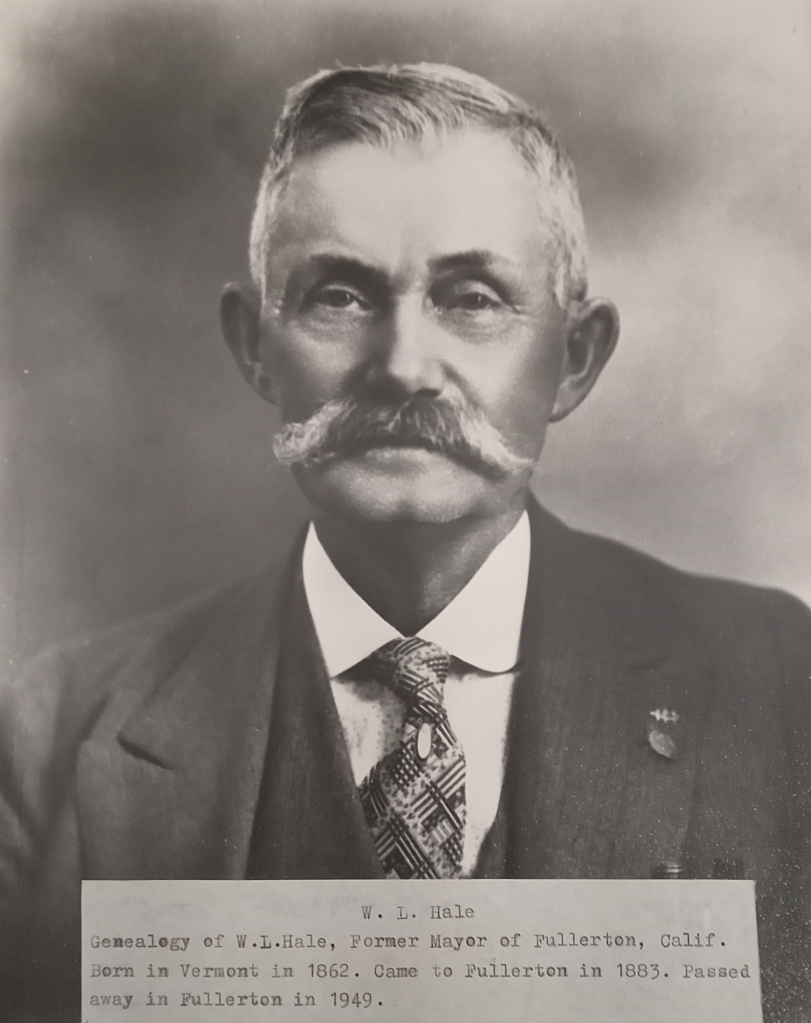
William L. Hale was born in West Windsor, Vermont on a maple sugar farm in 1862. When he was a young man he and his brother Harris bought a ticket to out west, in 1884. The photo above says he came to Fullerton in 1883, but his bio says 1886.
“It was against the wishes of my mother but we wanted to go west,” Hale writes.
After arriving in Kansas City, the brothers rode in an “immigrant car” on a freight train west. “It was the first I had ever seen real live Indians,” he recalls.
They finally reached California and ended up in Santa Ana. He got a job baling hay, and took other odd jobs.
In 1885 he got the contract to build a road in Ontario, California. For the job he hired Chinese labor because “it was cheap labor.”
Having made some money from this job he moved to the Fullerton area in 1886. He purchased a flock of sheep “and grazed them on the hills which are now called Brea and Yorba Linda.”
In 1887, the year Fullerton was founded, he sold his flock of sheep and went to work for W.F. Botsford, who had a winery and vineyard in what is now Fullerton. Hale became the foreman. After Botsford moved to Chicago, Hale bought the winery and land, in 1889.
In 1893 he met and married a German girl from Anaheim named Dora Bosche. They had two boys, Harold and Lee. Dora died in 1898.
He bought 20 acres in what is now Placentia, which he later sold to his brother Harris, who planted peaches there. He then bought 10 acres in Fullerton, on which he planted grapes for his winery.
Hale tells the story of having to fire one of the workers in his winery. The man got so mad that he set fire to the winery and it burned to the ground. He lost all his equipment and eight race horses that he used to race at the McNally racetrack in Buena Park.
After this, he went to Los Angeles to buy a car, and writes that he actually met Henry Ford, who sold him a race car. He claims to have raced this car at the Ascot Speedway in Los Angeles, where he won a number of races against top drivers of the day, such as Barney Oldfield. I could not confirm the accuracy of this.
Hale also took up boxing. Here he tells another “interesting” tale of a man coming into town from Chicago “to give me a whipping…I met him on the top steps of the old Shay Hotel…He said a few smart remarks to me so I hit him on the point of the chin and sent him tumbling down 20 steps to the bottom. He left for Chicago the next day without further trouble.”
Hale claims that he became sheriff of Orange County “about the time Fullerton came into being,” although I could not find historical records to confirm this either.
In 1906 he married Joan Nichols. They had two girls, Blanche and Gelene.
In 1907 he removed the bricks from his burned out winery and used them to build the house where he lived until he died.
Hale was extremely involved in local business, civic affairs, and politics.
He was elected to Fullerton City Council, and served for three terms, including two as mayor. While he was mayor, he was instrumental in Fullerton joining the Metropolitan Water District.
He was elected to the Fullerton High School Board of Trustees, serving four terms. He was one of the board members who voted for the formation of Fullerton College.
He served on the board of directors of a couple local banks, the Standard Bank of Fullerton, and the Fullerton Savings and Loan Association.
He was one of the directors who helped form the Placentia Orange Growers Association.
He was a Mason, and served as president of the board for 20 years.
“I have now retired from all this activity and live happily on my ranch,” Hale concludes his biography. “I enjoy my many friends and visitors who call to see me. Most of all I enjoy listening to the radio. I am happy to be living in what I think is the greatest place on earth.”
-
News Headlines: 1924
The following is from a work-in-progress about the history of Fullerton. You can support my ongoing research and writing on Patreon.
The Local History Room of the Fullerton Public Library has microfilm from the Fullerton Tribune newspaper stretching back to 1893. I am in the process of reading over the microfilm, year by year, to get a sense of what was happening in the town over the years, and creating a mini archive. Below are some news stories from 1924.
Calvin Coolidge was president of the United States. Revelations and indictments surrounding the Teapot Dome oil scandal were making headlines. Native Americans were finally given citizen status. Congress passed the Immigration Act of 1924 (the Johnson-Reed Act), a profoundly racist law (one of its authors, Albert Johnson, was a eugenics proponent) that barred immigrants from Asia and created quotas that severely limited immigration from countries that weren’t northern European (i.e. white). This law was widely supported by many Americans at the time.
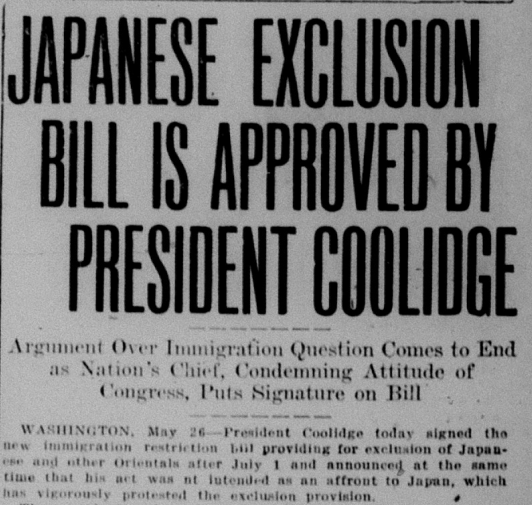
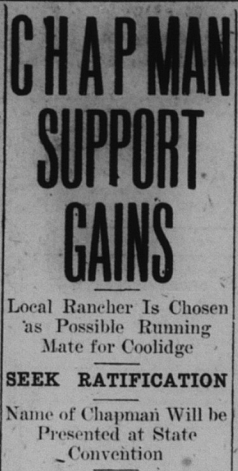
1924 was an election year, and Coolidge was running for re-election. There was a proposal for Fullerton rancher Charles C. Chapman to be Coolidge’s vice presidential running mate; however, he ultimately chose Charles G. Dawes.
Local Politics
In the 1924 Fullerton City Council election, Harry Crooke, O.M. Thompson, and W.J. Carmichael were elected.

Meanwhile, in Anaheim, the Ku Klux Klan claimed a city council victory, electing E.H. Metcalf, Emory F. Knipe, A.A. Slabach and Dean W. Hasson. In 1924, the Ku Klux Klan had around 5 million members and was a major force in politics.
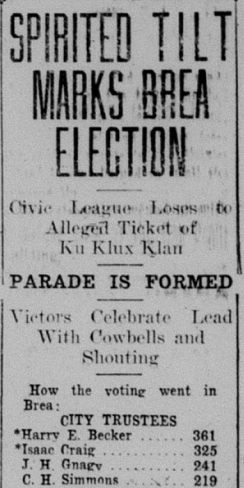
In Brea, Harry E. Becker and Isaac Carig were elected as city trustees. “Local gossip has it that the Ku Klux Klan played a prominent role in the election backing the successful candidates and defeating the nominees of the Brea Civic League.,” the Tribune reported.
Ku Klux Klan
As shown above, the Ku Klux Klan was very active in local politics. A cross was burned on a hill in north Fullerton on election day.
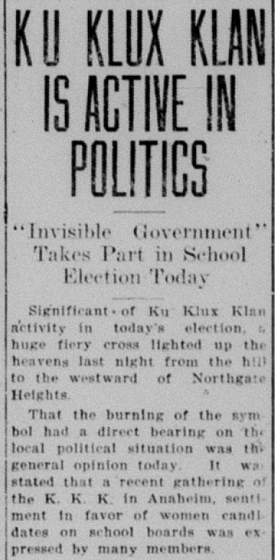
“Significant of Ku Klux Klan activity in today’s election, a huge fiery cross lighted up the heavens last night from the hill to the westward of Northgate Heights,” the Tribune reported. “That the burning of the symbol had a direct bearing on the local political situation was the general opinion today.”
According to the Tribune, “The claim was made today by a person in close touch with local Klan affairs that there is a membership of from 2500 to 3000 in this territory.”
Ku Klux Klan rallies drawing thousands took place throughout Orange County in 1924, including at least two large meetings at what is now Amerige Park, across the street from City Hall.

The Klan was so popular, in part, because it was presented as a patriotic organization. At the above advertised meeting, the speaker stressed the fact “That it is a white man’s organization, a gentile organization, a protestant organization and an American organization in which membership is restricted to native-born American citizens. That the KKK stands for white supremacy; for the enforcement of the law by the regularly constituted authorities; development of the highest standard of citizenship; rightful use of the ballot, and the worship of God.”
At another Klan meeting that drew around 5,000 attendees, the violence that lay beneath the rhetoric almost broke out.
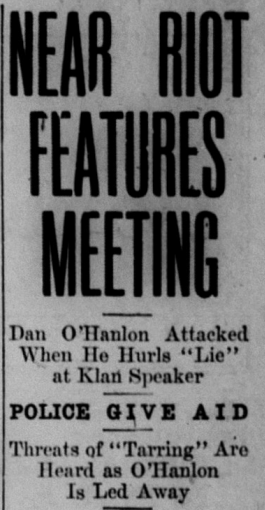
Local businessman Dan O’Hanlon, who was Irish Catholic, was unhappy with the Klan speaker’s denunciations of catholicism, so he shouted “Liar!” during the speech.
This led to cries of “get that guy,” “where is a tar bucket?” from different parts of the crowd. O’Hanlon was taken by police officers, for his own safety, and booked him briefly at the city jail. He was released later that night, and according to an oral history interview with O’Hanlon’s wife Margaret, a cross was burned on their lawn that night.
The Klan also made an appearance at a downtown city carnival.
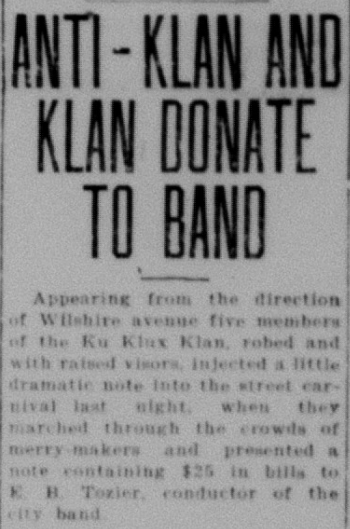
“Appearing from the direction of Wilshire avenue five members of the Ku Klux Klan, robed and with raised visors, injected a little dramatic note into the street carnival last night, when they marched through the crowds of merry-makers and presented a note containing $25 in bills to E.H. Tozier, conductor of the city band,” the Tribune reported.
Meanwhile, the Fullerton Rotary Club passed a resolution condemning the Ku Klux Klan.

“The action of the Rotary club today marks the first tangible, public recognition of the fact that the Ku Klux Klan has become an issue here in Fullerton as it has in Anaheim and in other parts of the county, state and country,” the Tribune reported. “Sentiment has been greatly inflamed here of late by the secret circulation of a list of names purporting to be that of local members of the order.”
The resolution read as follows:
Whereas, a situation has developed in our fair city by virtue of the teachings and activities of the Ku Kux Klan which has set neighbor against neighbor, causing suspicion, distrust and fear to fill the hearts of many; and
Whereas such teachings and activities impede the normal development of our beautiful city, interference with the happiness and contentment of our citizens, hold us up to ridicule before the outside world, and stamp us as being a narrow, factional, intolerant, un-American people; and
Whereas the objects of Rotary International are to promote fellowship and harmony among men of all nations, to make them better business men, better professional, better fathers and in fact better citizens of the country in which they live, having as its motto, “Service above self at all times,”
Be it resolved, that the Rotary club of Fullerton, unanimously deplores the existence of such conditions and is anxious to do all in its power to restore conditions to normal so that the right to the free exercise of our constitutional rights, together with tranquility and those blessings of liberty for which our constitution was ordained and established, be guaranteed to everyone, be it further
Resolved that we hereby publicly condemn the organization known as the Ku Klux Klan, which, by its teachings and actions, tends to develop racial hatred, religious intolerance or in any way denies full constitutional rights to any of our citizens no matter what his race, religion or political affiliations may be.
Local attorney Tom McFadden spoke at the above-mentioned Rotary Club meeting, suggesting that administrators of Fullerton High School were members of the Klan.
“We must keep out all forms of intolerance in our schools,” he declared. “We must keep it out of our high school here. No one has a right to hold a position of responsibility in that institution who holds and subscribes to intolerant beliefs. There are all shades of opinion and religion in our schools and Fullerton has attained a high standing by reason of its progressiveness and efficiency. It will sink from this position if intolerant views are allowed to interfere with its operation and administration.
“A community cannot grow and prosper when its citizenry is divided by mutual distrust and suspicion,” McFadden continued. “We must restore harmony and try to re-establish friendly relations. The Rotary Clubs of Anaheim and Fullerton can do much to foster the right spirit between the two cities and in their respective communities.
“A house divided against itself can accomplish nothing,” he said in closing.
The Tribune stated, “Although no direct mention of the KKK was made by name in McFadden;s talk, and no particular individuals were designated, he clearly indicated by innuendo that he was concentrating his attack on members of the local high school administration whose names are declared to be on the lists which are being circulated in this city.”
Although he didn’t name him by name, McFadden was likely referring to high school superintendent Louis E. Plummer. A 1979 UCLA doctoral dissertation entitled The Invisible Government and the Viable Community: The Ku Klux Klan in Orange County, California During the 1920s by Christopher Cocoltchos states, “Councilman W.A. Moore, Judge French, and Superintendent of Schools Plummer joined the Klan in the latter part of 1923…Civic leaders were especially eager to join. Seven of the eighteen councilmen who served on the council between 1918 and 1930 were Klansmen.”
The Rotary Club was not the only local group opposed to the Ku Klux Klan.

“Anti-Klan forces in Anaheim are going to make a determined effort to change the entire city administration. Recall petitions are to be circulated at once, it was announced at a mass meeting held under the auspices of the USA Club…last night,” the Tribune reported.
To read more about the Ku Klux Klan in Orange County, check out my brief history HERE.
Prohibition
Prohibition was in full effect in 1924 and local officials struggled to prevent bootlegging.
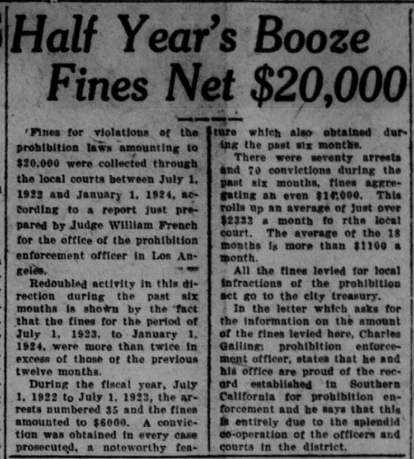
One way the Ku Klux Klan gained popularity was by adopting popular positions on hot-button issues. In addition to being opposed to racial minorities, Catholics, and Jews, they were also in favor of restricted immigration and prohibition.
According to a 2012 OC Weekly article on the 1920s Klan by Gustavo Arellano, in 1924 the Klan and their supporters worked with local and federal law enforcement to conduct a massive arrest of bootleggers.
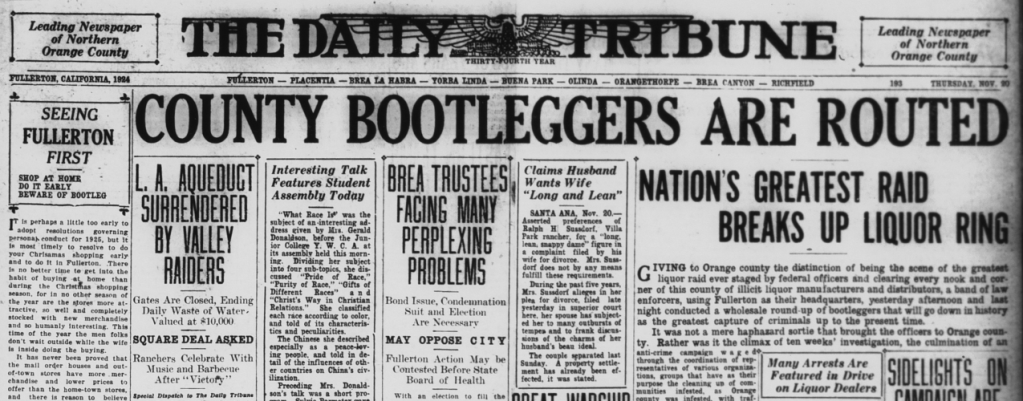
The headquarters of the massive raid was the ranch of Fullerton pharmacist William Starbuck.
In what proved to be a dumb move, these anti-bootleggers then presented a bill to Fullerton city council for $2,800 to cover the costs of the raids (they hadn’t bothered to inform city council of the raid in advance). City Council refused to pay, as did other local city councils who received similar bills.
Growth
Prior to the 1920s, Fullerton’s two main industries were oranges and oil. Starting in the 20s, the city created a 400-acre industrial zone where factories could locate.

These early factories included: Western Glass Company, Balboa Motor Corporation, Newton Process Company, Los Angeles Paving Company, Citrus Fruit Juice Company, and Orange County Brick and Tile Company.

In 1924, Fullerton had over 17 miles of paved roads. New housing subdivisions were being built with racially restrictive housing covenants that prevented non-whites from purchasing homes there.

Education
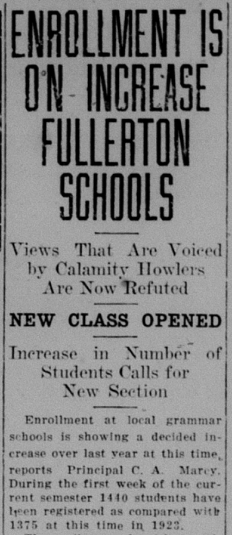
In 1924, to satisfy increasing enrollment, Maple School opened on the southside of Fullerton.

Maple School in 1924. Lottie Morse was elected to the School Board, one of the first women to hold elected office in Fullerton.

Here’s a panoramic photo of Fullerton Union High School in 1924:
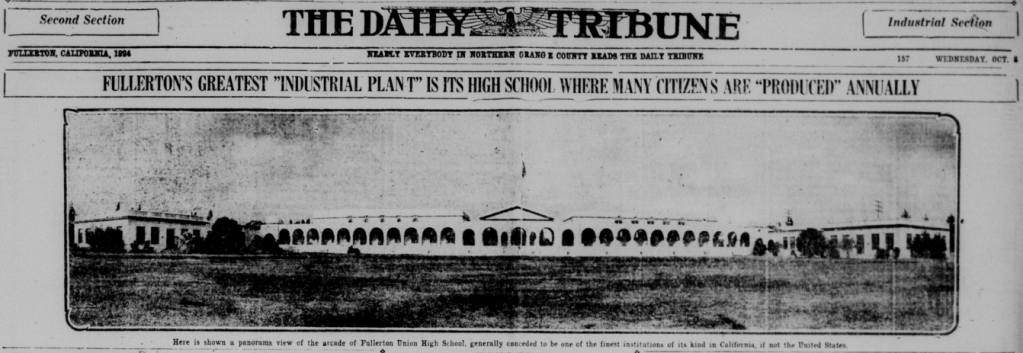
In high school news, a policy was adopted in which girls (but not boys) had to wear uniforms. This was likely a reaction to popular new clothing styles.

There was serious consideration of establishing a new University of California campus in Fullerton on land that was mostly owned by the Bastanchury family. Ultimately, these plans did not pan out.


The Foot and Mouth Disease Epidemic
In agriculture news, an outbreak of foot and mouth disease in California led to restrictions on some California crops and even restrictions on human gatherings and travel.

“Motor touring outside the county is to be further restricted, according to announcement made at the Rotary Club luncheon here this afternoon by A.A. Brock, county horticuturalist,” the Tribune reported. “Coupled with an urgent plea to the public to stay home and in this way help the authorities to cope with the menace of hoof and mouth disease. Mr. Brock made the statement that a general tightening up of the present quarantine regulations is to be put in effect at once.”
Culture and Entertainment
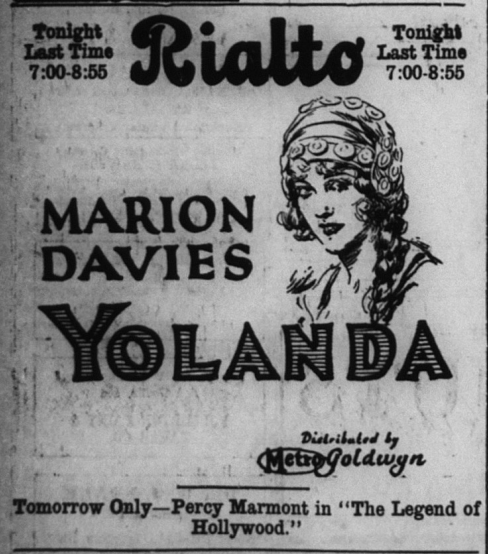
For culture and entertainment, Fullertonians went to see movies at the Rialto Theater downtown.
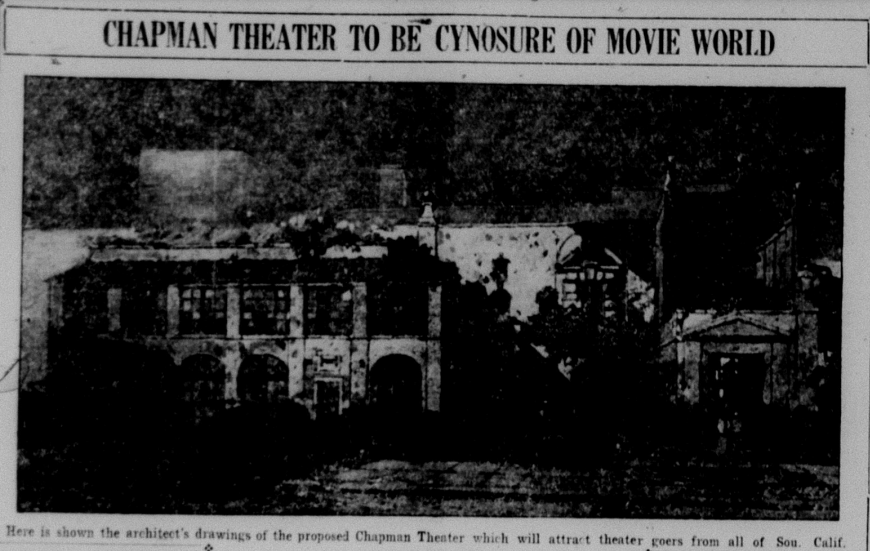
The Chapman Theater (later called the Fox Theater) was under construction, and would open in 1925.
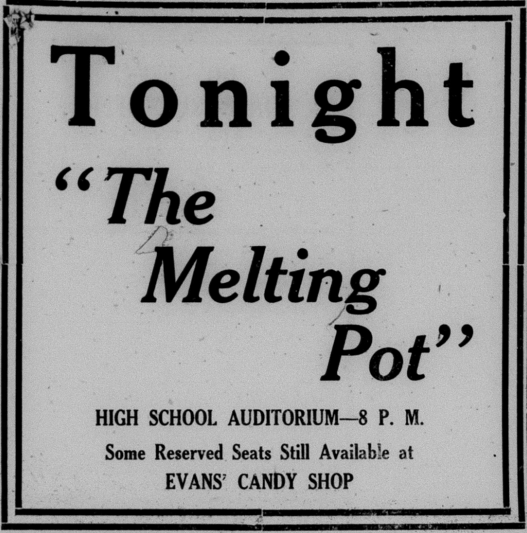
Local theatrical and musical productions also drew crowds to the High School Auditorium.
Fashion
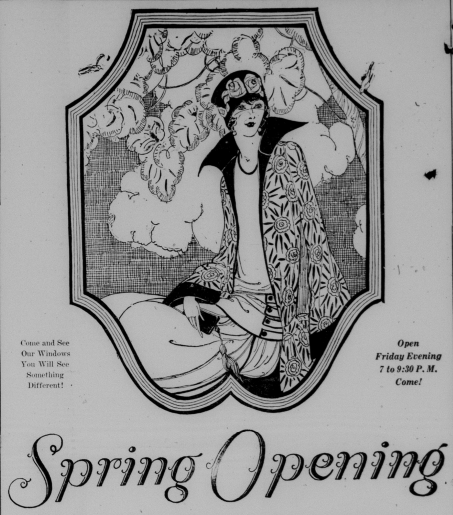
The 1920s were an interesting time for fashion. Here are a few clippings that show popular styles of 1924, which Fullertonians could get by shopping at stores in the growing downtown:


Sports
By far, the biggest local sporting event was a fundraising game featuring baseball legends Walter Johnson (who went to Fullerton High School), Babe Ruth, and other big-league players which drew around 15,000 spectators.

Local athlete Glenn Hartnraft placed second in the shot put at the 1924 Summer Olympics in Paris.

Miscellaneous
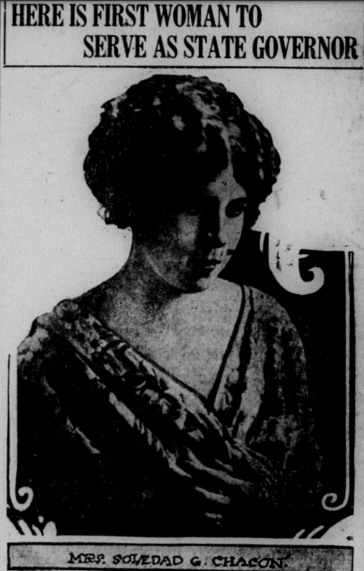
And here are some miscellaneous news items from 1924:




Deaths
Prominent local businessman E.K. Benchley passed away. Click HERE to read more about the Benchley family.

Local pioneer Stella Yaeger, mother of Fullerton auto dealer Lillian Yaeger, passed away. Yaeger was born in Anaheim in 1861. Her parents were German immigrants who joined the Anaheim colony. Her father, a Mr. Kuelp, started the first school in Anaheim and was the first justice of the peace there. Stella married to Jacob Yaeger of Anaheim in 1883. Later they moved to Fullerton and lived in a house on the present site of the California Hotel (now the Villa Del Sol).

Stay tuned for news stories from 1925!
-
News Headlines: 1923
The following is from a work-in-progress about the history of Fullerton. You can support my ongoing research and writing on Patreon.
The Local History Room of the Fullerton Public Library has microfilm from the Fullerton Tribune newspaper stretching back to 1893. I am in the process of reading over the microfilm, year by year, to get a sense of what was happening in the town over the years, and creating a mini archive. Below are some news stories from 1923.
President Warren G. Harding died unexpectedly and was succeeded by Calvin Coolidge. Republican Friend Richardson was inaugurated governor of California. Also, in 1923, Mae Nolan, California’s first female congressmember was elected.
Growth
Fullerton continued to experience a building and population boom in the 1920s, with an estimated population of 11,156.

Some of downtown Fullerton’s largest and most iconic buildings were built in 1923, including the California Hotel (now the Villa del Sol) and the Chapman Building.

The City Hall That Was Not (Yet) to Be
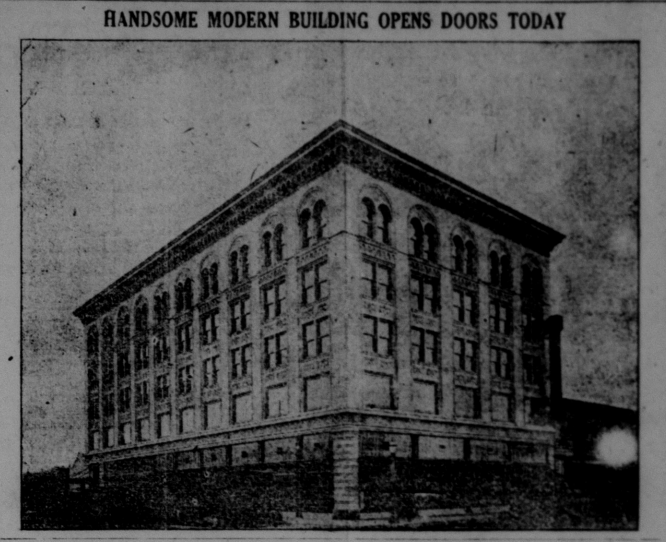
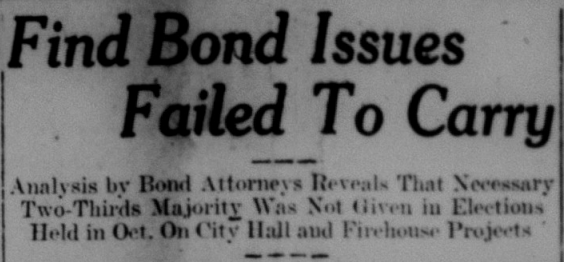
Even though Fullerton had been a town since 1887, there was still no City Hall in 1923. City business was conducted out of the fire station and a business building downtown. To remedy this, plans were drawn up and a site chosen for a large new City Hall building, to be built on an open lot next to the newly-built California Hotel (now the Villa del Sol) downtown. However, when a bond issue was put before voters to fund construction of City Hall, the voters voted it down. Fullerton’s City Hall would not be built until 1942.

Zoning
In 1923, Fullerton first adopted zoning–a city planning tool that establishes what can and can’t be built in certain areas. The idea is to create orderly development, with clearly-defined business, residential, and industrial areas.
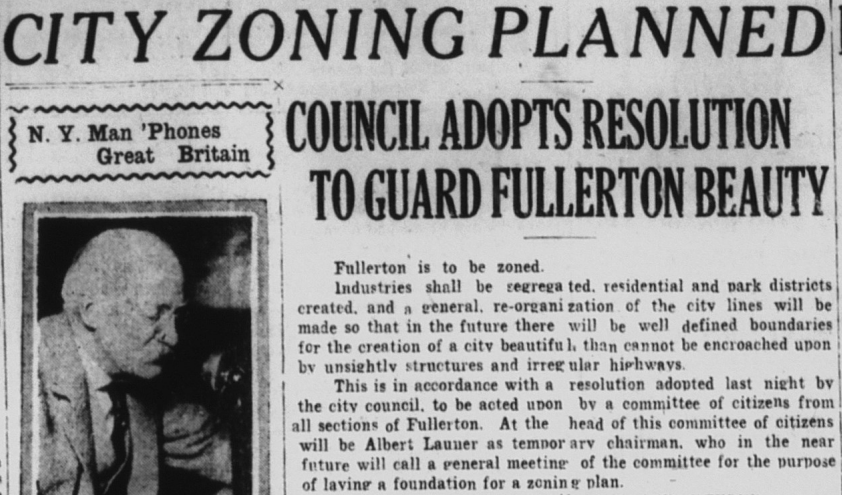
Although the main exports of Fullerton in the 1920s remained oranges and oil, zoning for industry allowed the first factories to be built in designated areas.

New Housing Subdivisions
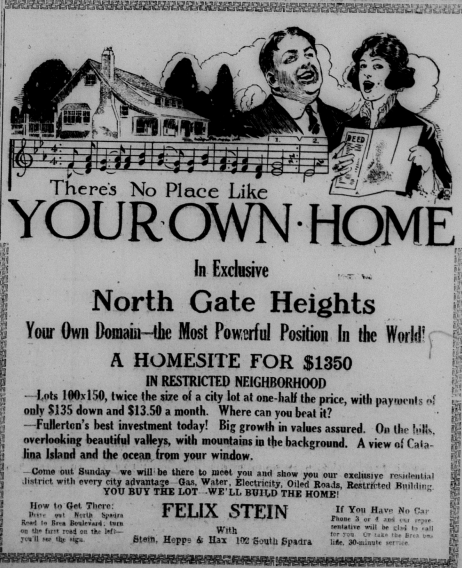
Throughout the 1920s, many new housing subdivisions were built, as the City grew. Spreading outward from the downtown area, orange and walnut groves were cleared for these new houses. Unfortunately, most of the subdivisions built in the 1920s had racially-restrictive housing covenants that prevented non-whites from purchasing these new houses. Virtually every issue of the Tribune had advertisements and articles about these new developments.
In a recent post on this topic, Fullerton Heritage wrote:
“By the 1920s, they [racial covenants] were quite common, particularly in what is now the historic areas of the city…Fullerton newspaper advertisements for new housing subdivisions often signaled whether a tract was limited to whites only. A few advertisements were direct, but most used a coded language that potential homebuyers would understand. Words or phrases, such as ‘rigidly restricted’, ‘exclusive tract’, ‘reserved for the finest’ indicated that minorities were excluded from a subdivision.”
Below is a sampling of some ads for the new housing subdivisions:


Ku Klux Klan
The Ku Klux Klan was on the rise both nationally and locally. The 1920s Ku Klux Klan, at the height of its popularity had around 5 million members all over the United States. The Tribune contains numerous articles about Klan activities around the country, in places like Atlanta, San Francisco, Portland, Oklahoma, Eureka (CA), and elsewhere.
And then, the Klan made themselves known in Anaheim.
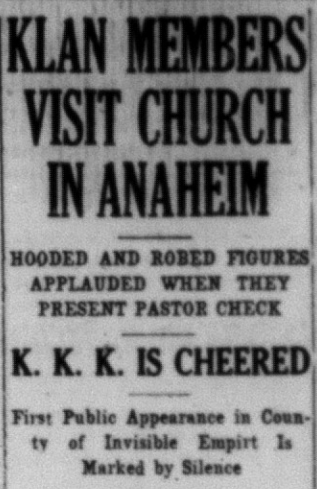
“The first public appearance in Orange county of members of the Invisible Empire, Knights of the Ku Klux Klan, in the First Christian church tabernacle, Anaheim, last night was marked by lusty cheers of the congregation, and unlike popular beliefs was not featured by bloodshed or riot,” the Tribune states. “While scores sat emotionless in their seats, petrified by mingled fear and amazement, what is estimated to have been more than a dozen of the white-robed and hooded figures silently entered the edifice, presented the partor, the Rev. C.L. Vawter, with a parcel and as silently departed.”
Fraternal Organizations
The 1920s Klan arose at a time when fraternal organizations were very popular throughout the United States. Not all of them were explicitly white supremacist, like the KKK. Others were fairly “normal” like the Masons and the Odd Fellows. An article in the Tribune gives a bit of history of Fullerton’s Masonic lodge.

Fullerton’s Masonic lodge was formed in 1900 and held its first meeting at the home of Edward K. Benchley, president of the Farmers and Merchants bank. Early meetings were then held on the top floor of the old grammar school. They built their first temple (now the Parker Building), and then they built an even larger temple in 1920, which still stands today–it is the Springfield Banquet Center.

The Fullerton Masonic Temple is now the Springfield Banquet Center. The leader of a lodge is called a “worshipful master” and this title was held by a number of prominent local men over the years, including William McFadden, Dr. G.C. Clark, Arthur Staley, C. George Porter, Charles E. Ruddock, J.R. Gardiner, and C. Stanley Chapman.
In 1923, membership in the Masons was 425.
Another popular fraternal organization at this time was the Independent Order of Odd Fellows (or just Odd Fellows). Another article in the Tribune gives a bit of this group’s history.

The Fullerton Lodge of Odd the Fellows was organized in 1901. Like the Masons, a number of prominent residents joined, including William Schumacher, August Hiltscher, George H. Amerige, R.H. Gilman, Joseph Hiltscher, D.S. Linebarger, and E.R. Amerige, Edgar Johnson, Bert Annin, and Angus McAulay.
The Odd Fellows met above two different banks downtown before building their own massive hall in 1928. This building still stands today.
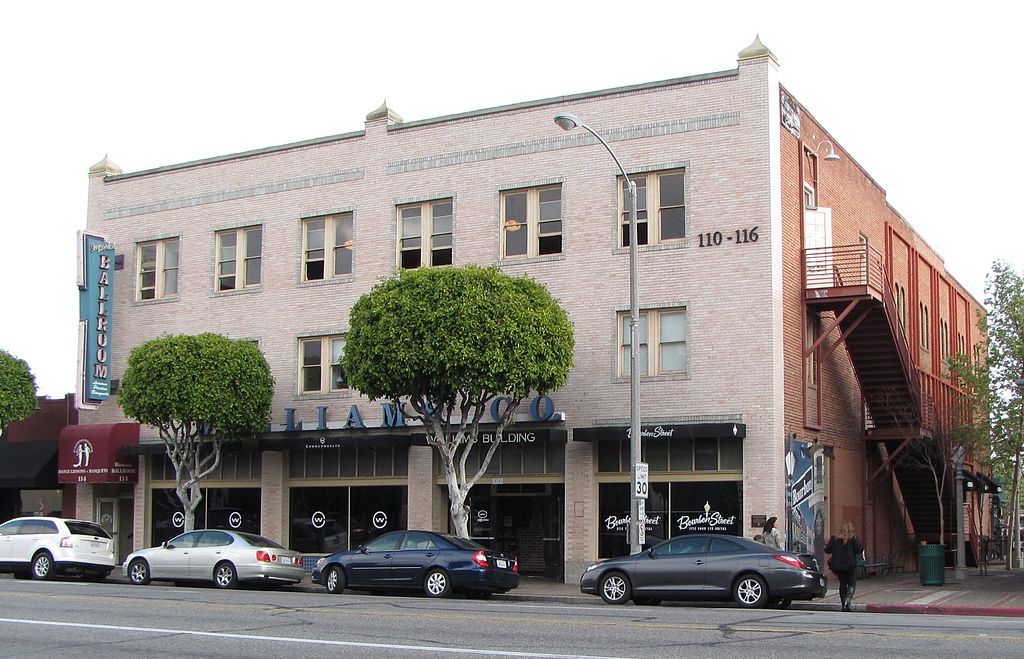
Odd Fellows Building on E. Commonwealth Ave. In 1923, the Odd Fellows membership was 162.
Another popular local group was the Kiwanis. At a meeting of the state Kiwanis clubs, a poem was printed in the Tribune, honoring the Fullerton club.
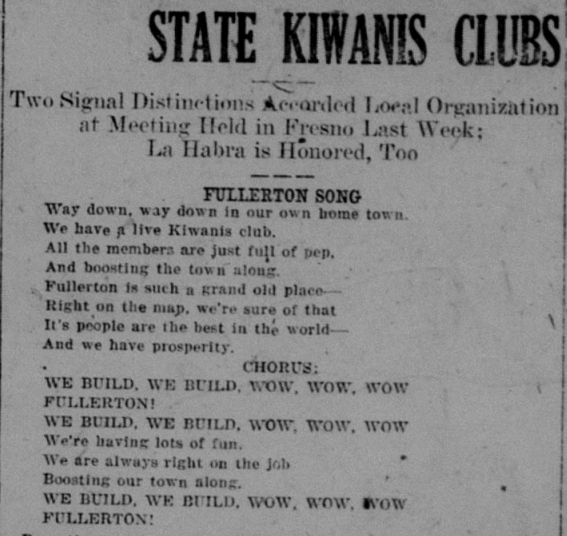
Prohibition
In 1923, Prohibition was in full effect, and local law enforcement struggled to keep up with all the bootlegging. Nearly every issue of the Tribune has a story about people being fined of arrested over illegal booze.

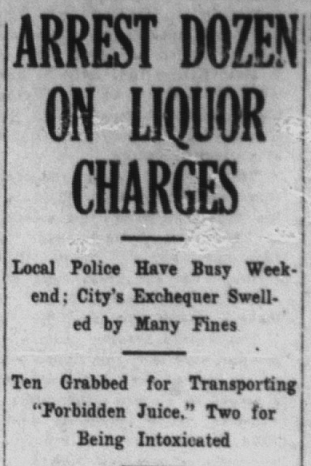
Although they had achieved their goal of national Prohibition, the Women’s Christian Temperance Union (WCTU) was still active, presumably because lots of people were still drinking.

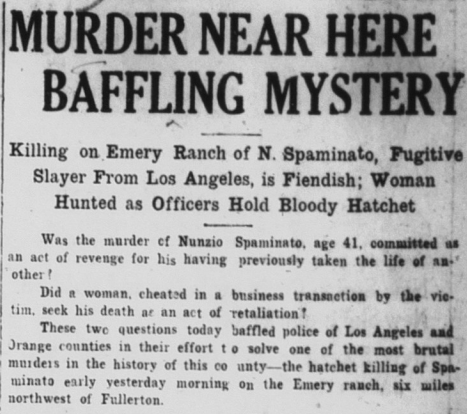
Other Crime News
Here are some other notable crimes in 1923:


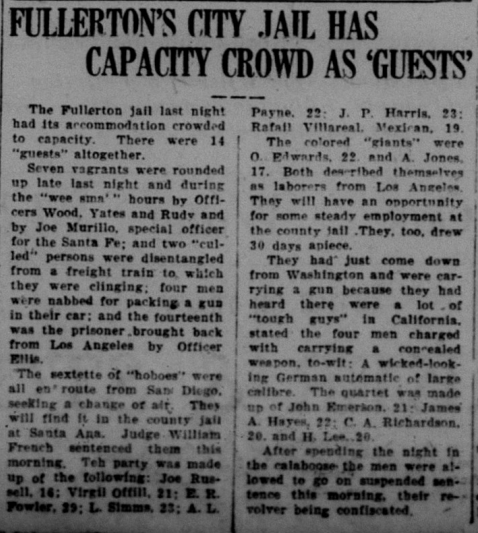

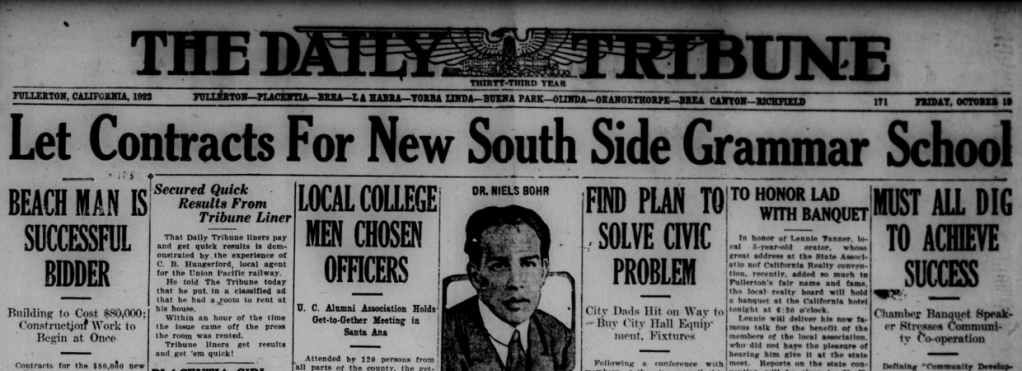
Education
In education news, plans were being made to build a new grammar school on the south side of Fullerton. Maple School would open in 1924.
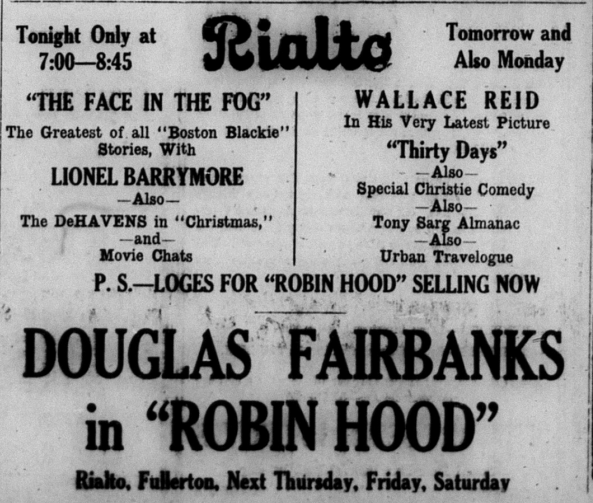
Culture and Entertainment
For entertainment, Fullertonians went to the Rialto Theater downtown to see movies.

Here are a few ads for movies showing in 1923:
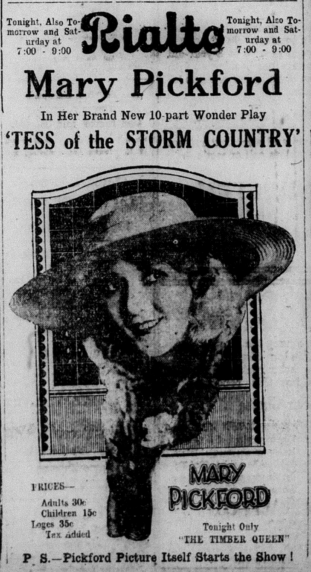
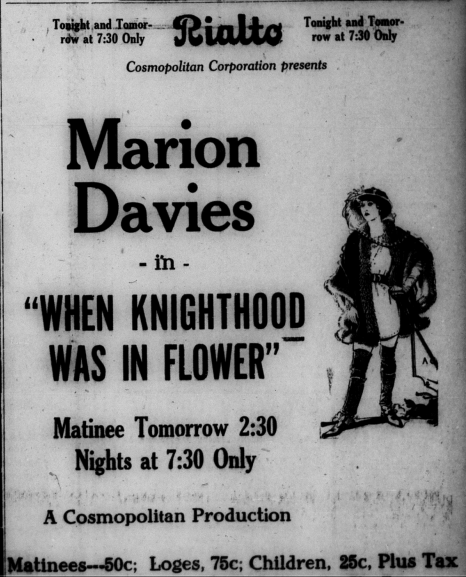
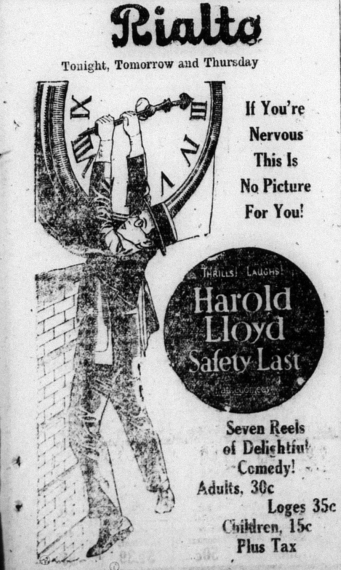
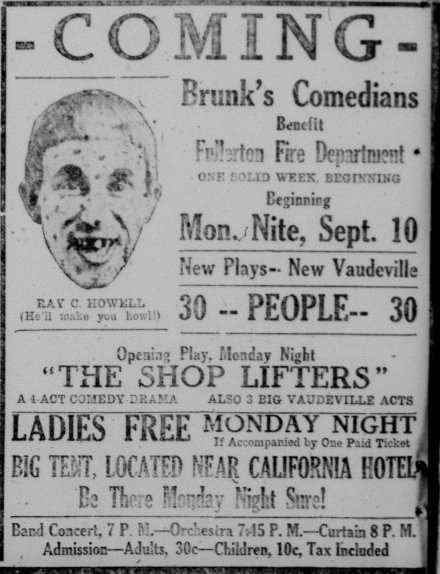
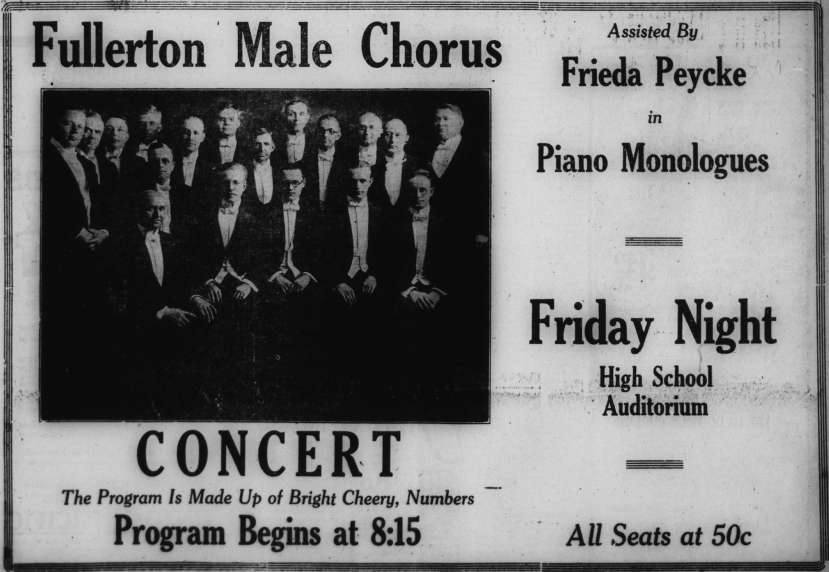
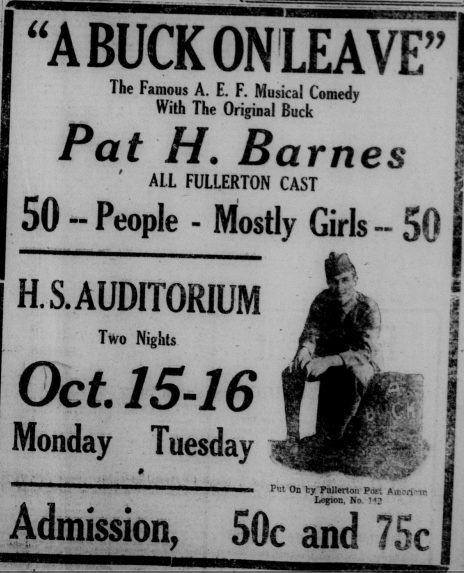
And here are a few other cultural/entertainment events advertised in the Tribune:
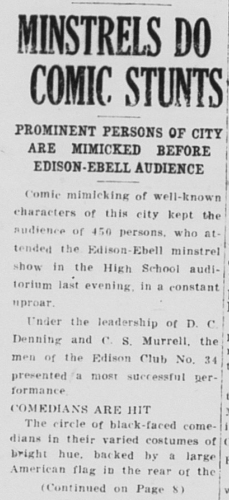
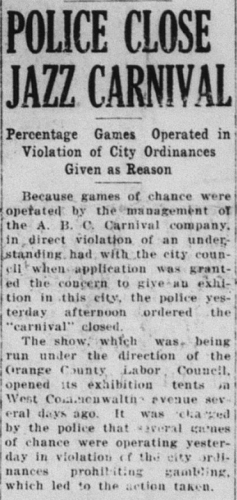

Oil!
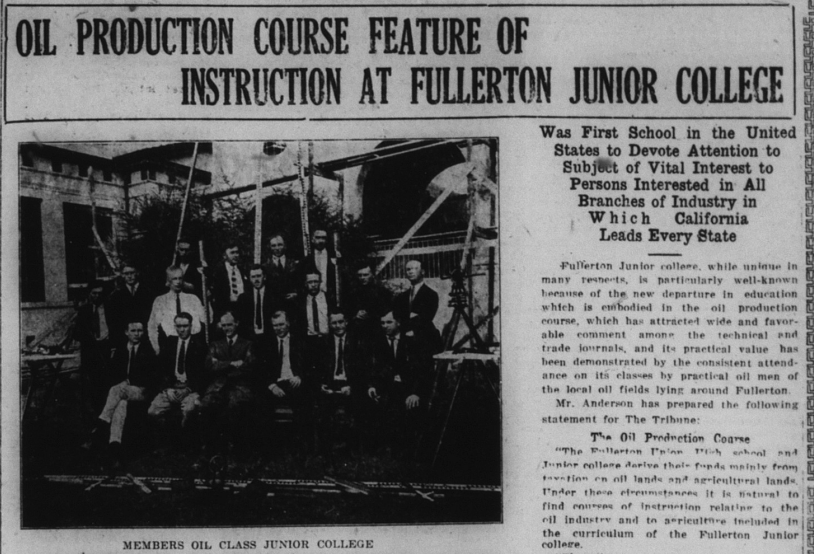
In 1923, oil was a major export of Fullerton.
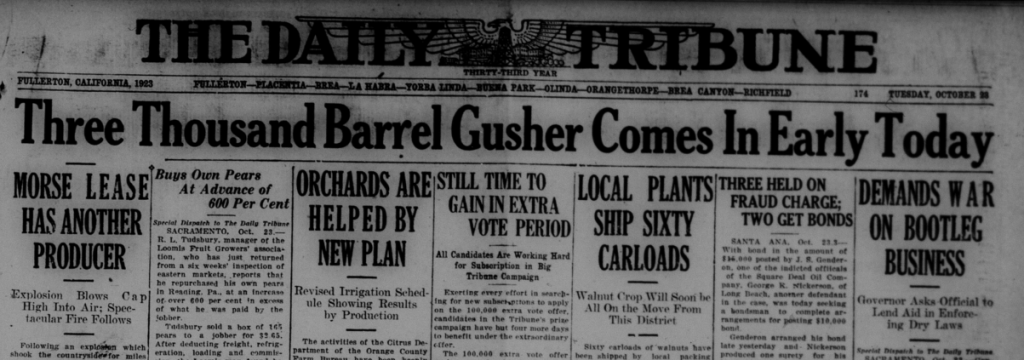
Fullerton College began to offer an oil production course.
Religion
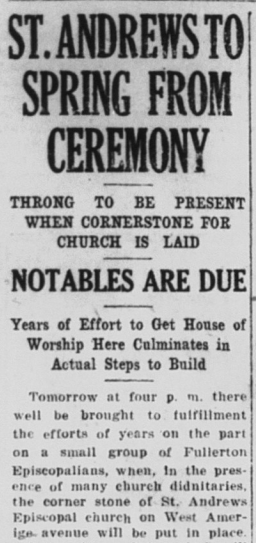
In religion news, new buildings were built for the Catholic, Methodist, and Episcopalian congregations. I apologize for not having pictures of these structures. I will work on that for a future post.

Hundreds gathered atop Hillcrest Park for an Easter church service.

Automobiles
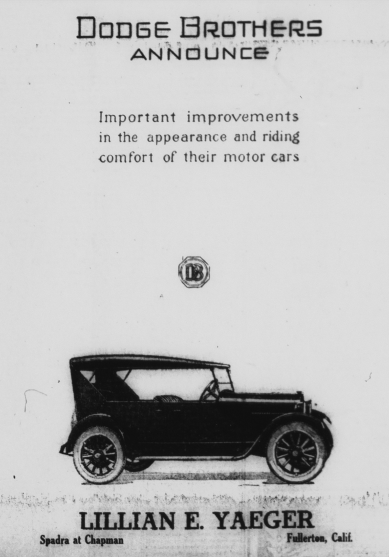
With the increasing prominence of automobiles, Fullerton had a few notable car dealerships. On Commonwealth, William Wickersheim constructed a large building for his Ford car dealership. Unfortunately, it burned down in the 1950s and was eventually replaced with the Ace Hardware.

Other dealerships included O.L. Smith’s Oakland dealership on West Amerige, Albert Sitton’s Willys-Knight dealership on West Commonwealth, Lillian Yeager’s Dodge dealership in Spadra (Harbor) and Chapman, and William Goodrum’s Buick dealership.



Miscellaneous
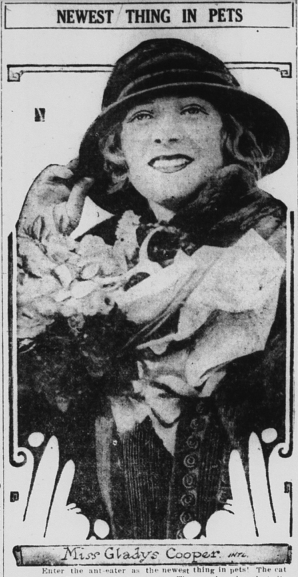
Here are a few miscellaneous news items:



Deaths
Local pioneer William Crowther passed away.

Crowther was a rancher and was active in local civic life, serving for many years as president of the Anaheim Union Water Company. He was a musician and organized the first municipal band in Fullerton.
Stay tuned for more news stories from 1924!
-
Photographs Then & Now: Concoran Paper Company/Metrolink Parking
The following is from a work-in-progress about the history of Fullerton. You can support my ongoing research and writing on Patreon.
For this series, I compare a historic photo of Fullerton with a contemporary one from approximately the same angle. Below are two photographs looking southeast from the far west end of the train station platform (near the bridge that crosses Harbor). The first shows a passenger train passing the Concoran Paper Company in 1923, with the Consolidated Ice Company (new brick building under construction) in the background. The second shows the view today of a freight train passing what is now Metrolink parking, and Cornerstone Church (the Ice Company building) in the background.


-
Subscribe
Subscribed
Have a WordPress.com account? Log in now.

