The following is from a work-in-progress about the history of Fullerton. You can support my ongoing research and writing on Patreon.
The Local History Room of the Fullerton Public Library has microfilm from the Fullerton Daily News-Tribune newspaper stretching back to 1893. I am in the process of reading over the microfilm, year by year, to get a sense of what was happening in the town over the years, and creating a mini archive. Below are some news stories from 1948.
Growth
In 1948 Fullerton had a population of 13,235, and its population would continue to grow in the coming decades.
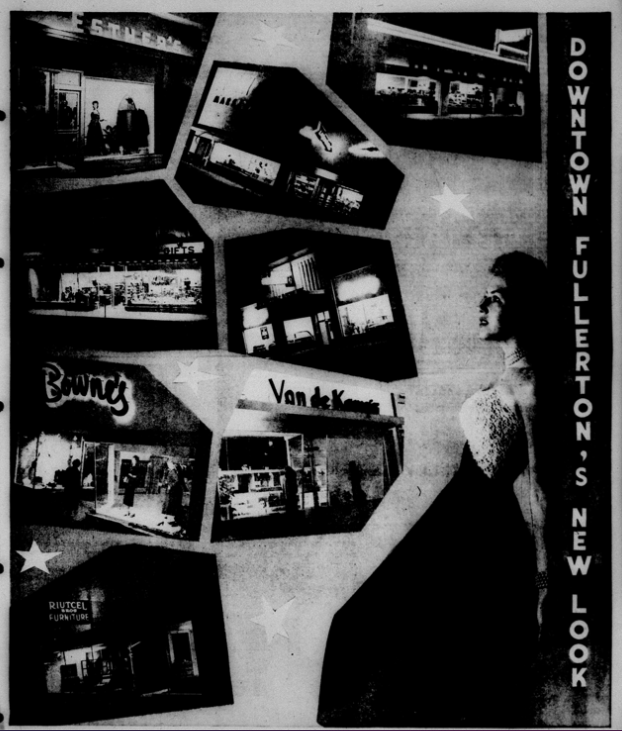
Following World War II, Fullerton experienced a period of rapid growth, as new housing subdivisions, schools, shopping centers, and industrial parks replaced orange groves.
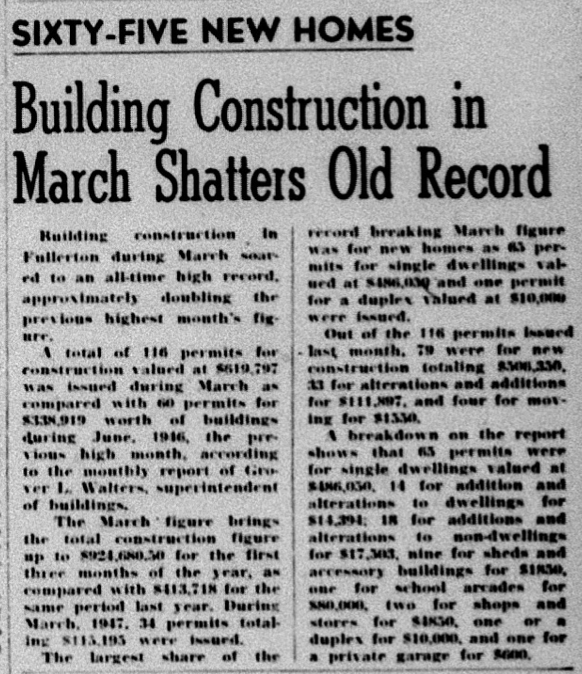

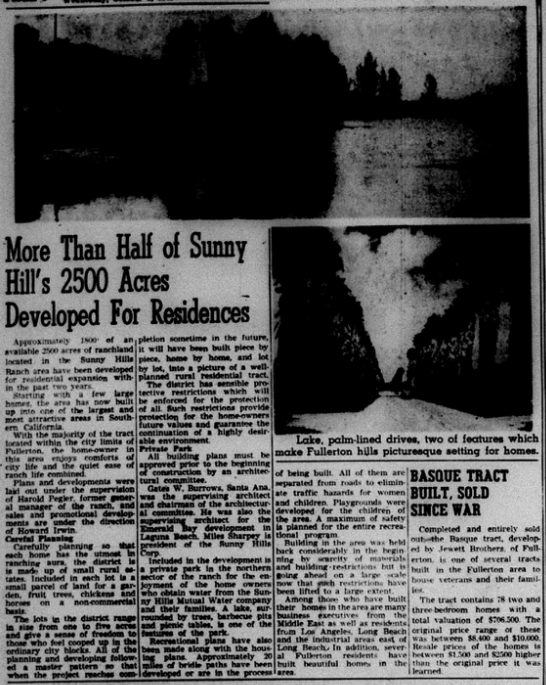
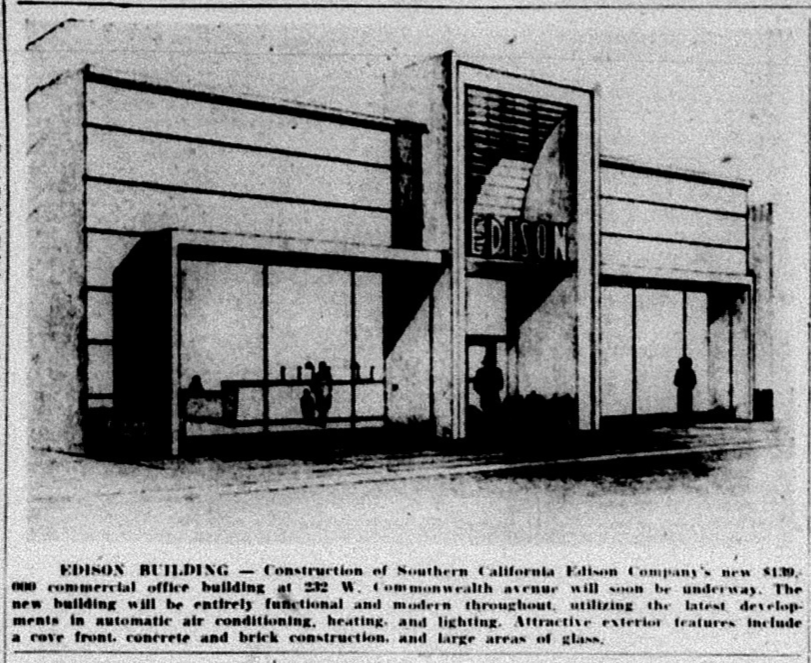
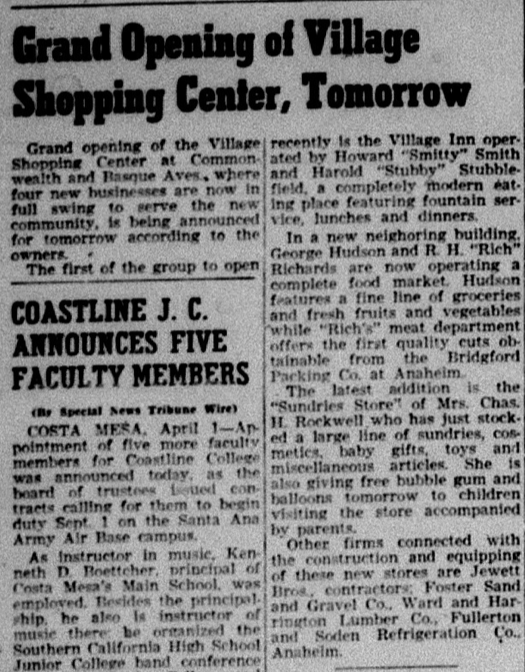
In addition to new housing subdivisions, new buildings popped up as well.
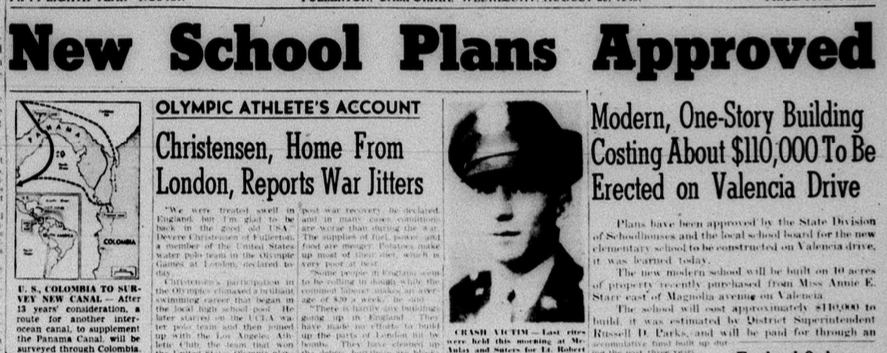
To accommodate the population influx, a new school (Valencia Park) was planned. This would be the first of many new schools built after World War II.
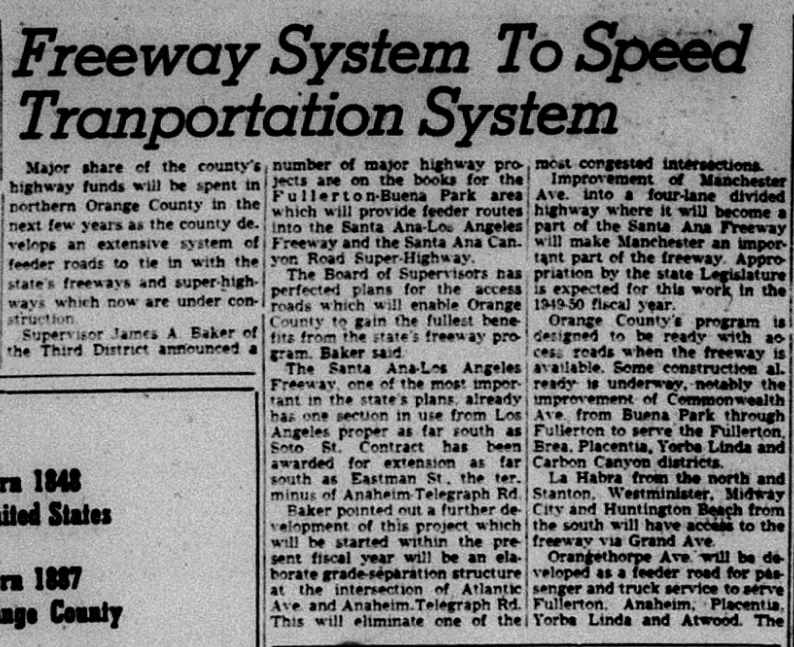
To accommodate the increased population, and traffic, freeways were constructed.
Businesses
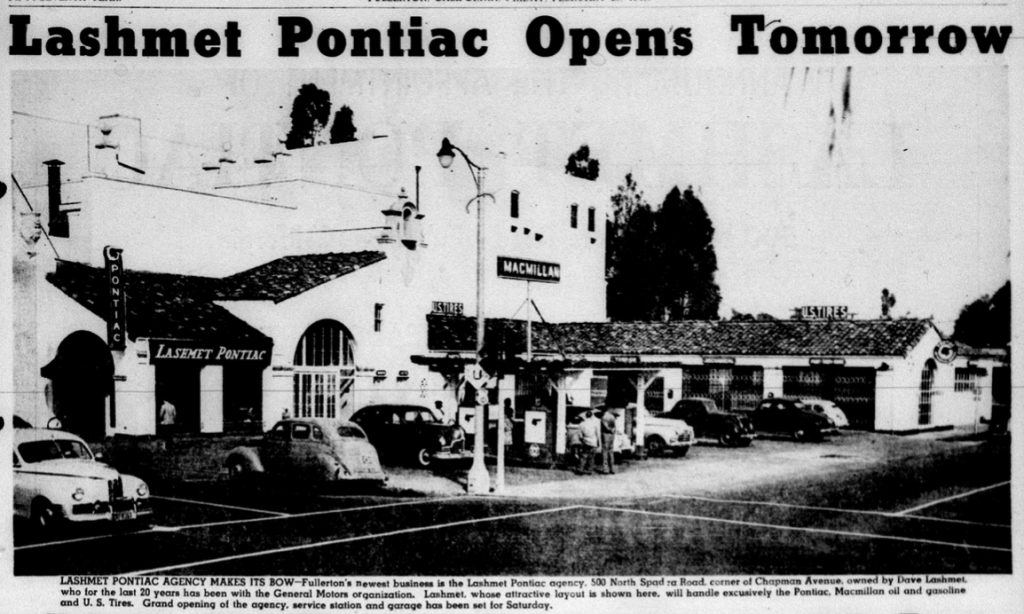
Here are some prominent businesses of Fullerton in 1948:

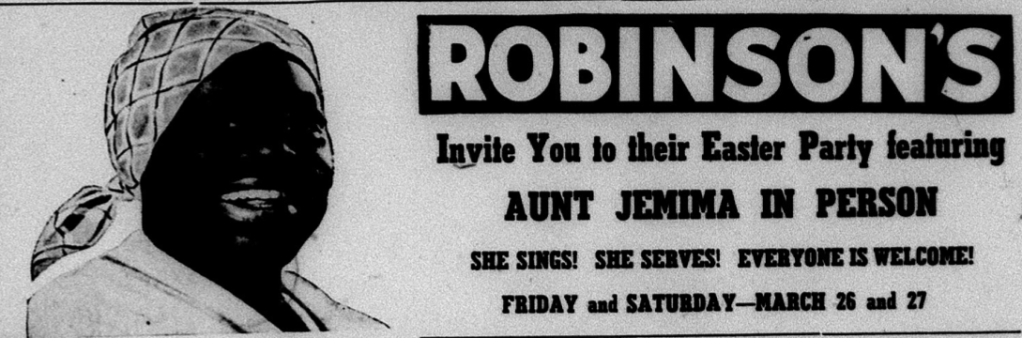

Hawaiian Punch was created in Fullerton!

Norton Simon’s Hunt Foods was a major local employer.

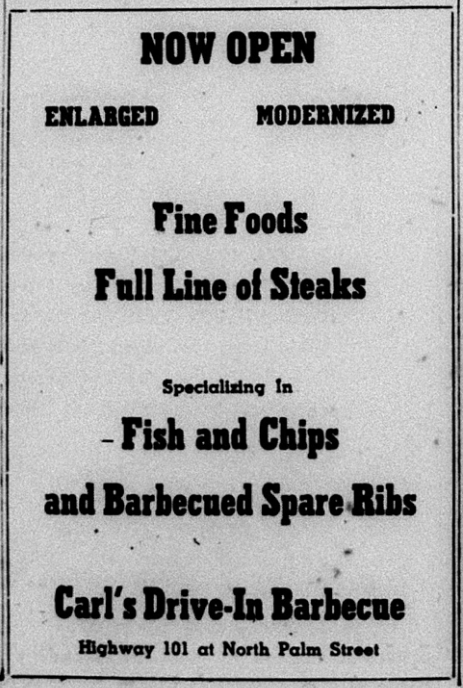
A fast food entrepreneur named Carl Karcher established his first permanent restaurant between Fullerton and Anaheim:
Annexation Fight with Anaheim
As both Fullerton and Anaheim grew, annexation fights began between the two cities to incorporate land between the two cities. The first salvo of this fight occurred when Anaheim city officials convened a special Saturday session to annex a 60-foot strip close to the south border of Fullerton.
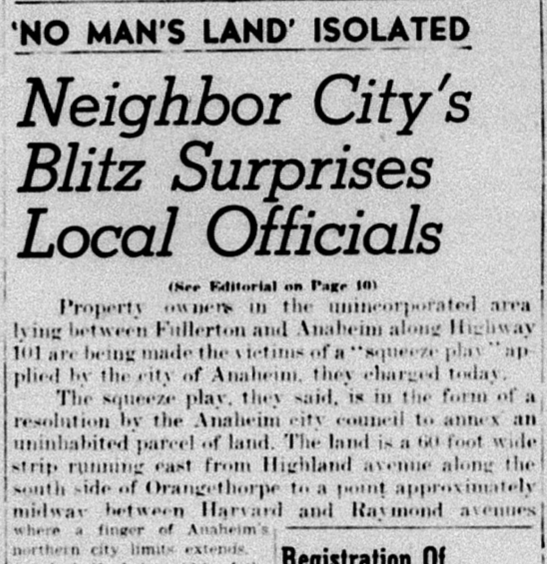
In an editorial called “Skulduggery in Anaheim,” the Fullerton News-Tribune reported:
“When a city council finds it necessary to meet in special session on a Saturday, it is either a case of dire emergency or some kind of skulduggery. Anaheim’s city council met in special session last Saturday.
The business before the council consisted of passing a resolution to annex a strip of land 60 feet wide along the south side of Orangethorpe from Highland avenue to a point approximately midway between Harvard [Lemon] and Raymond avenue where a finger of Anaheim’s north city limits extends.
That a city council would hold a special session to pass a resolution to annex a piece of land which seemingly has no immediate bearing o the welfare of Anaheim, such action can hardly be called a “dire emergency.” That leaves only one category under which it can fall: skulduggery!
One need only to study a few of the facts behind the action by the Anaheim council to understand why it went to the trouble of a special Saturday session.
The area along Highway 101 between Fullerton and Anaheim is unincorporated. Its growth and development in recent years have made it obvious that it will some day become a part of some municipality, which would mean either Fullerton or Anaheim. An area of this nature needs the advantages that any city offers: fire and police protection, trash and garbage collection, sewer and water facilities.
Sentiment for becoming part of a municipality has run high in recent years, and especially more since a Metropolitan Water District edict forbids any new users outside the city limits. This ruling checks and futurity development of property in this unincorporated area until it becomes. Part of one city or another.
On September 11 of this year property owners took legal steps for becoming part of Fullerton by filing a notice of intention to circulate a petition relative to annexation of the territory. With enough signatures to the petition the matter could be put to the vote of the people of the area concerned. The people could choose between remaining unincorporated (with a chance of later joining Anaheim) or joining with Fullerton. Property owners who are working to initiate the petition say that the vote would be overwhelmingly for Fullerton.
It is no secret that Anaheim has coveted this territory. It would stand to lose by letting the people express their desires at the ballot box. With the handwriting on the wall, there was only one course for Anaheim to follow: throw up a legal roadblock between the territory and the Fullerton city limits by annexing a piece of land between the two.
It is reminiscent of Hitler’s tactics in instituting his famous “JA” and “neon” ballots during European plebiscites.
Fullerton officials sought to head-off this land-grab by meeting with Anaheim officials, but their efforts came to naught.

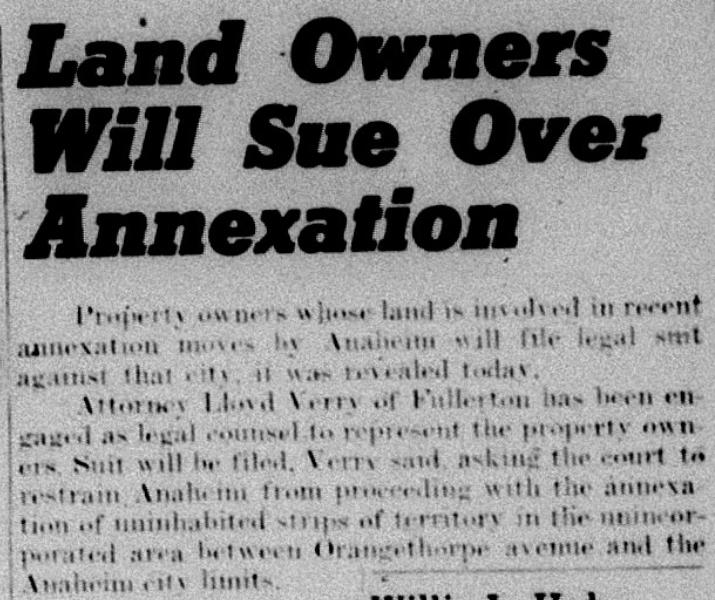
It would fall to property owners to sue Anaheim over the annexation move, which they won. But the fight was not over.

Politics
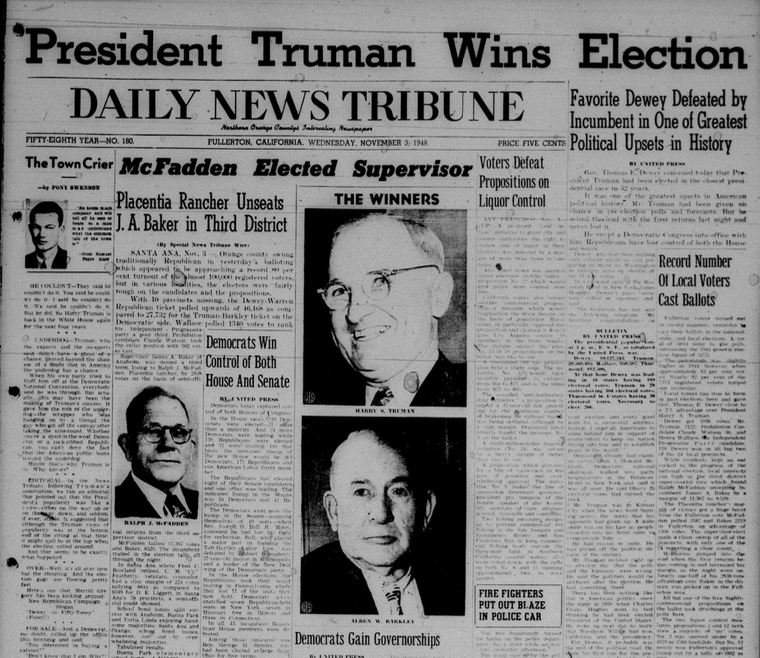
Harry S. Truman, a Democrat, won the 1948 presidential election.
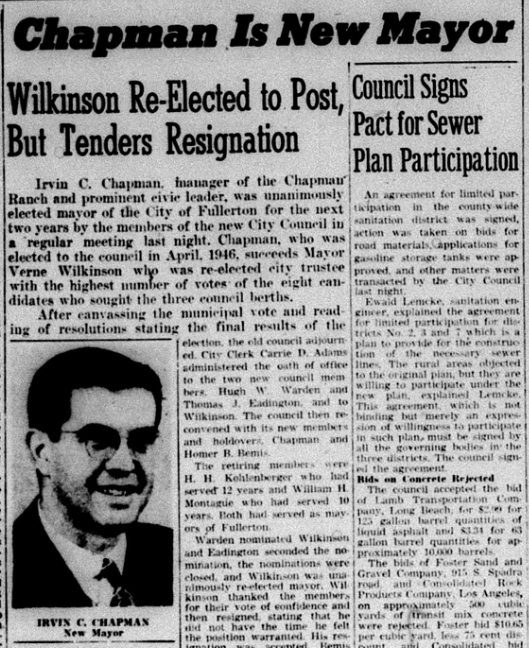
Locally, Verne Wilkinson, Hugh Warden, and Thomas Eadington were elected to City Council.

Irvin “Ernie” Chapman, son of Fullerton’s first mayor Charles C. Chapman, was chosen as mayor.
Here are some other local officials who were elected:

A young Republican congressman from Yorba Linda named Richard Nixon (who attended Fullerton High School) was making a name for himself by fanning the flames of anti-communism.

“Disclosure of Communist infiltration in high places in the administration in Washington will be made by Congressman Richard M. Nixon, “working” member of the Thomas Committee which unearthed the national intrigue, at a dinner meeting Oct. 13 at 7pm in Santa Ana Masonic Temple,” the News-Tribune reported. “The committee will resume hearings in Washington later and its probe will be largely on the findings Nixon makes. It will mark the first public appearance at which Capt. Nixon has talked in Orange County, although he was guest Oct. 1 of the Chamber of Commerce at Yorba Linda, his home town, where he attended school as a boy. The meeting is to be under the sponsorship of the Orange County Republican Assembly, now headed by Roscoe G. Hewitt of Santa Ana, who recently succeeded Hilmer Lodge of Fullerton as president.”
Agriculture & Immigration
Although Fullerton was in the process of transformation from agriculture to housing and industry, the citrus industry was still alive and well in 1948.

Most of the citrus workers were Mexican, many of whom were recruited to work in local fields by the Bracero Program. The large presence of of Mexicans in Fullerton was sometimes protested by white residents.
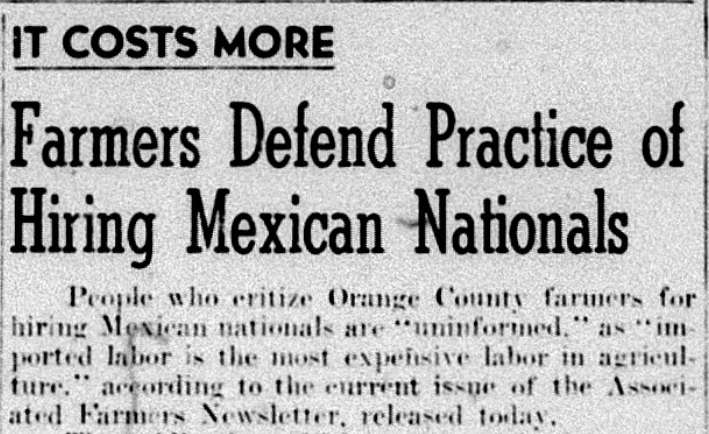
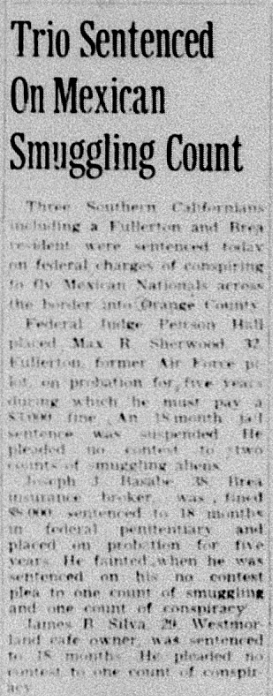
During the Bracero Program, some citrus growers sought to supplement their workforce with undocumented immigrants.
Sports
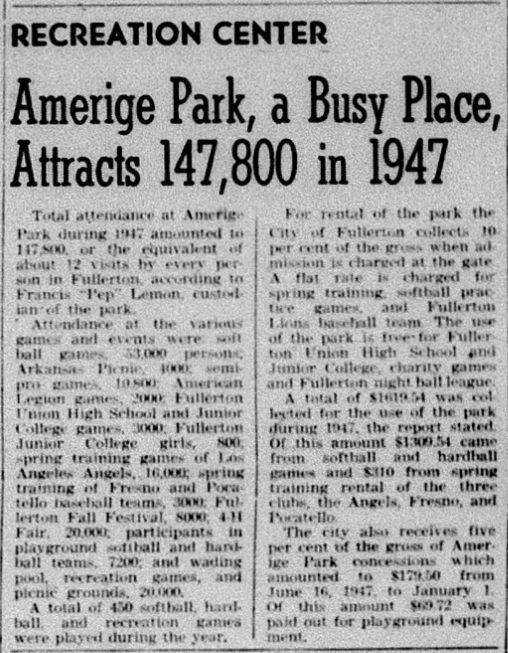
In sports news, local professional and amateur baseball teams played games at Amerige Park.
Culture and Entertainment
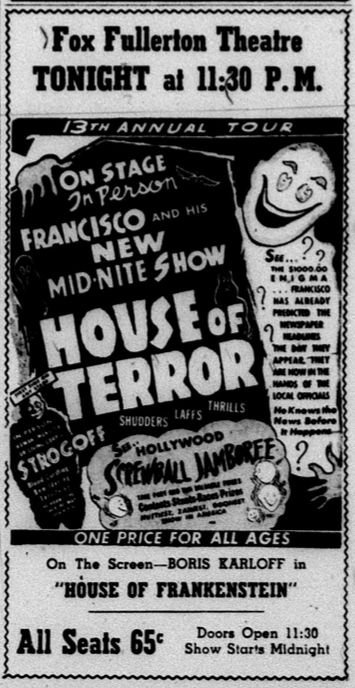
For culture and entertainment, Fullertonians went to movies at the Fox Theater and the newly-built Wilshire Theater.
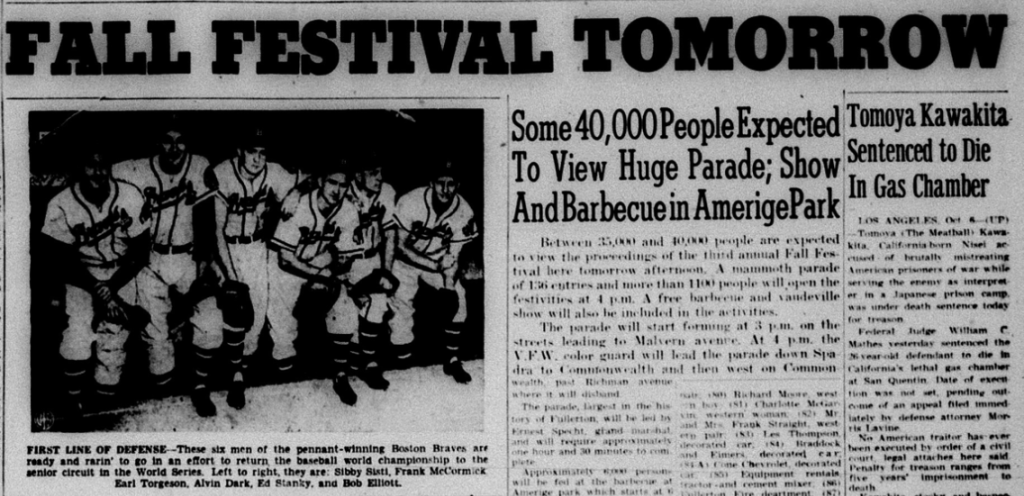
Fullerton also hosted a Fall Festival that drew thousands.
War Memorial
After voting down a bond measure to build a large War Memorial community center next to Amerige Park, Fullertonians decided to honor the war dead in a more modest gesture, a memorial listing the 54 names of those who died at Hillcrest Park, inscribed on a huge sequoia tree cross section.

Crime
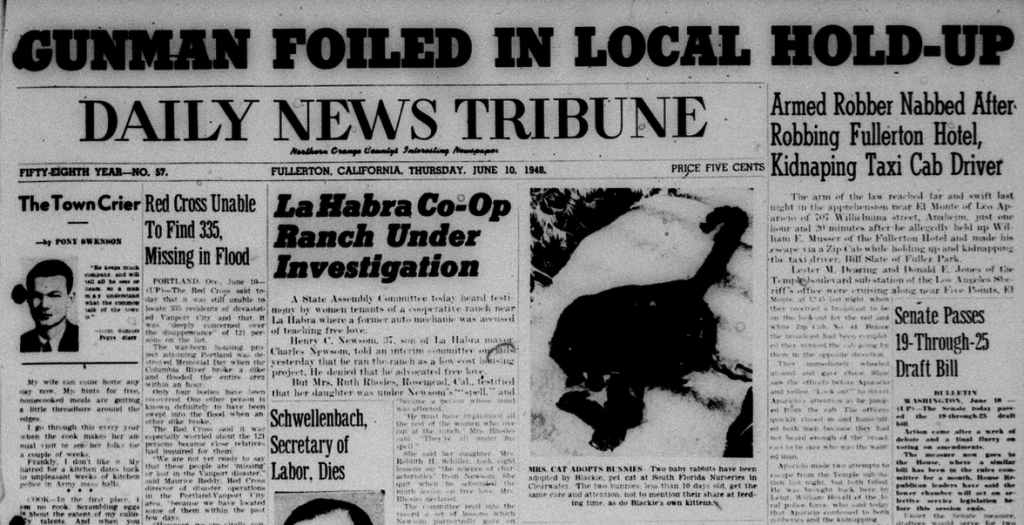
In crime news, a gunman was arrested following a holdup downtown.
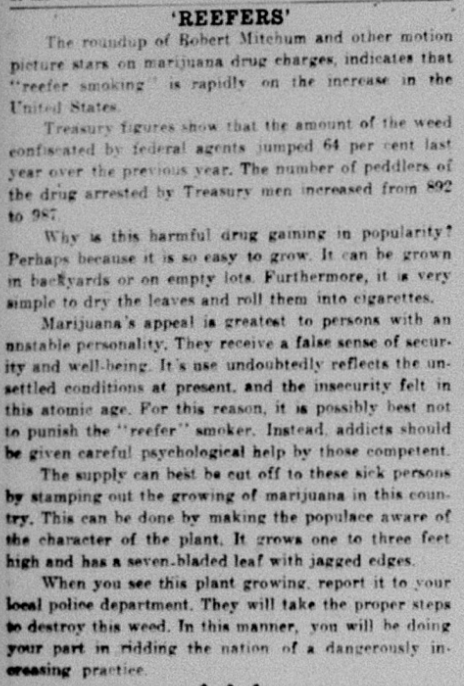
And a “new” drug called Marijuana (aka cannabis) was becoming popular.

Talk of the Town
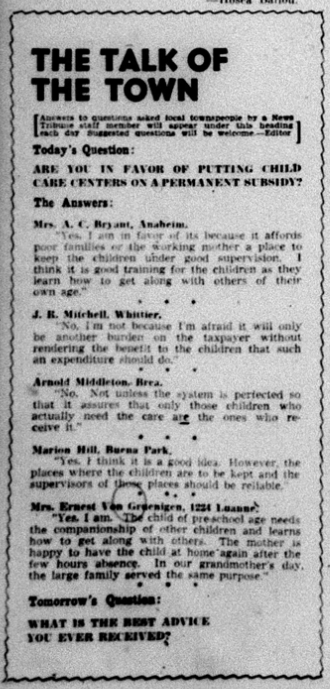
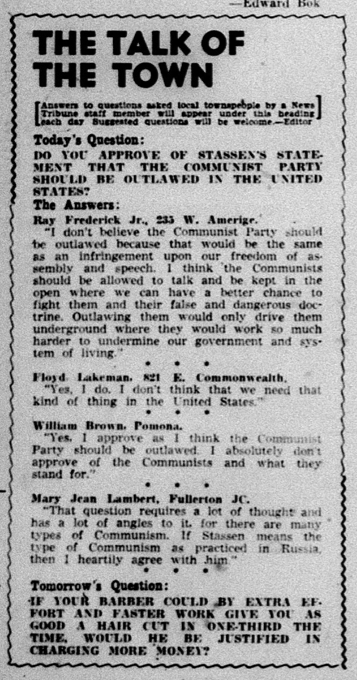
The Fullerton News-Tribune had a section called “Talk of the Town” in which local residents were asked to give their opinions on a variety of social issues. Here is a sampling:

Celebrating European Conquest
An annual event celebrating the expedition of Gaspar de Portola was held annually in Southern California.

“Entry of the first white man, Gaspar de Portola, into this area will be portrayed at a joint Anaheim-Fullerton ceremony to welcome 54 horsemen who are riding from San Diego to San Francisco along the same trail the famous Spaniard followed in 1760,” the News-Tribune reported.
Deaths
The following people died in 1948:
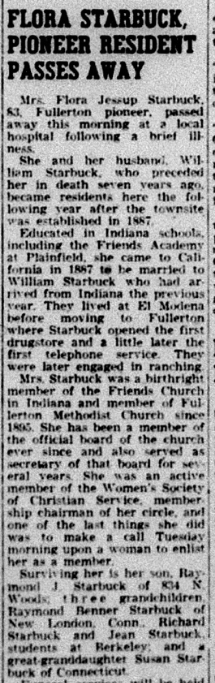
Flora Starbuck, wife of pioneer druggist William Starbuck.
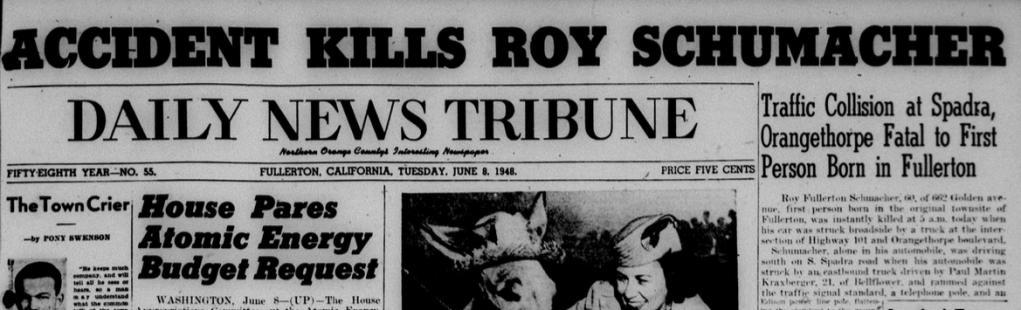
Roy Schumacher, the first child to be born in Fullerton.
Dr. George C. Clark, Fullerton’s first doctor.

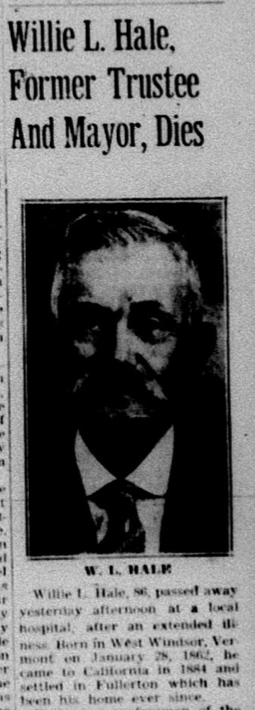
William Hale, early City Councilmember.
Stay tuned for more stories from 1949!
 Fullerton History