The following is from a work-in-progress about the history of Fullerton. You can support my ongoing research and writing on Patreon.
The area which the Kizh (Fullerton’s first inhabitants) inhabited was vast (encompassing the LA basin and North Orange County), and there is archaeological evidence of their habitation and presence in Fullerton.
In Fullerton: a Pictorial History, Bob Ziebell writes: “On November 7, 1939, while excavating for the new City Hall (now the police building at the northwest corner of Commonwealth and Highland) workers were startled to uncover human skeletal remains. The remains–dubbed ‘Fullerton Man’ by the Fullerton Daily News-Tribune–were those of an Indian and were at least a thousand years old, according to John W. Winterbourne, who was then the archaeologist in charge of a museum being developed at Fullerton College. The remains were given to the college for preservation–except for an arm bone, which, in 1941, was placed, along with other artifacts and documents, in the cornerstone of the building.”
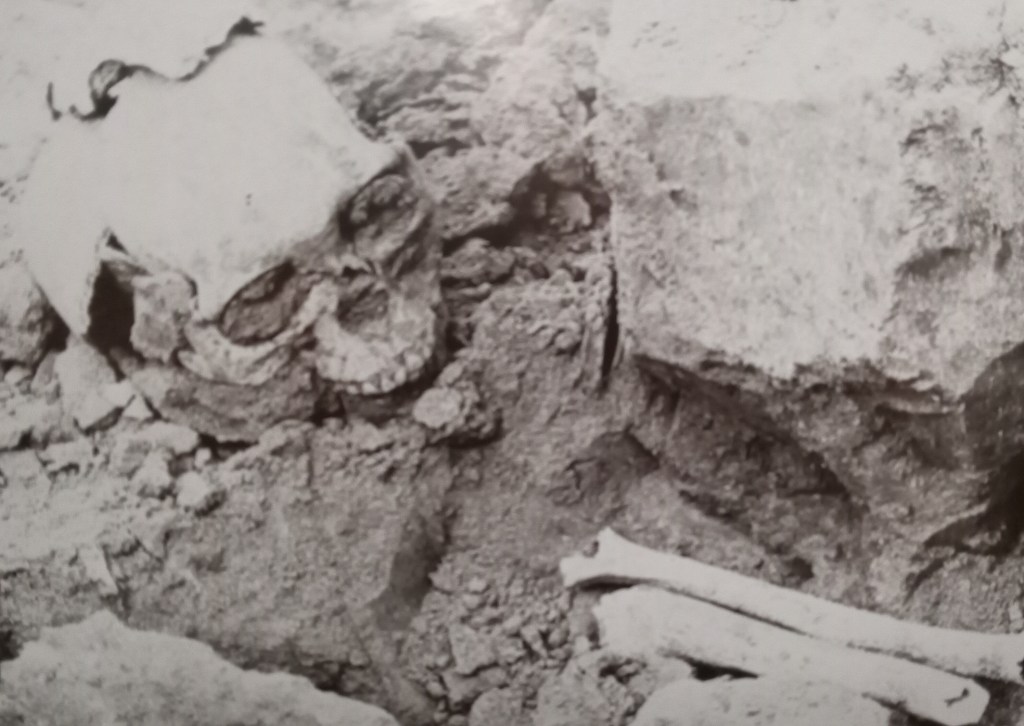
In 1939, the United States Works Progress Administration (WPA) sponsored an archaeological dig of a village site in Fullerton on what was then the Sunny Hills Ranch (a vast Orange Ranch owned by the Bastanchury family). Fullerton College and Fullerton High School jointly participated in the excavation.
The site was just north and west of the present Bastanchury Road–Malvern Avenue intersection. Here’s a map from the study, showing the site area, which is called “Sunny Hills Site No. 1”:
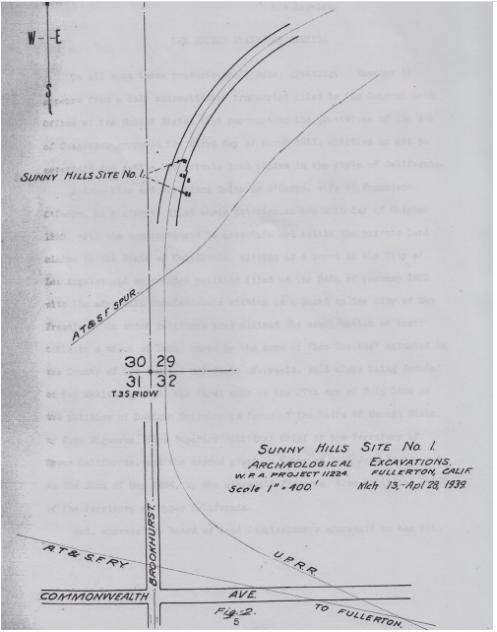
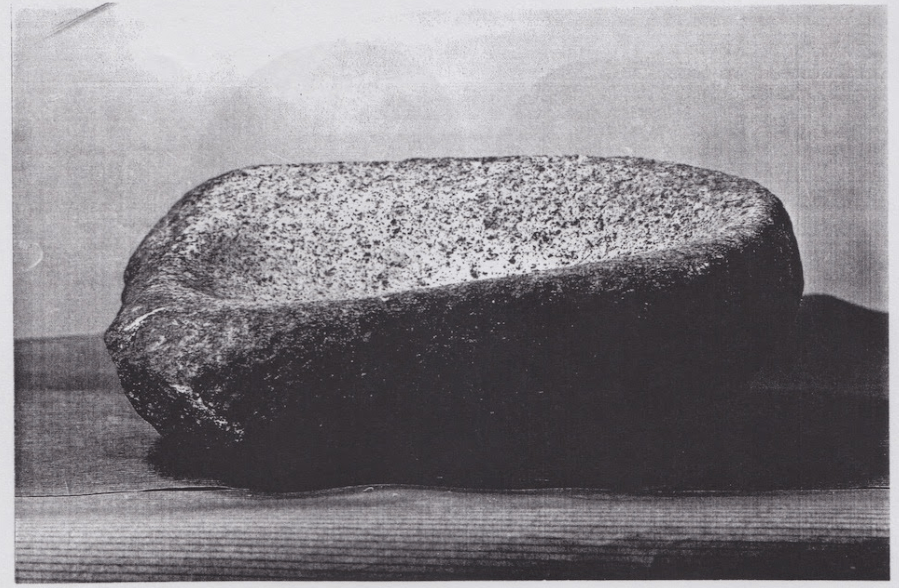
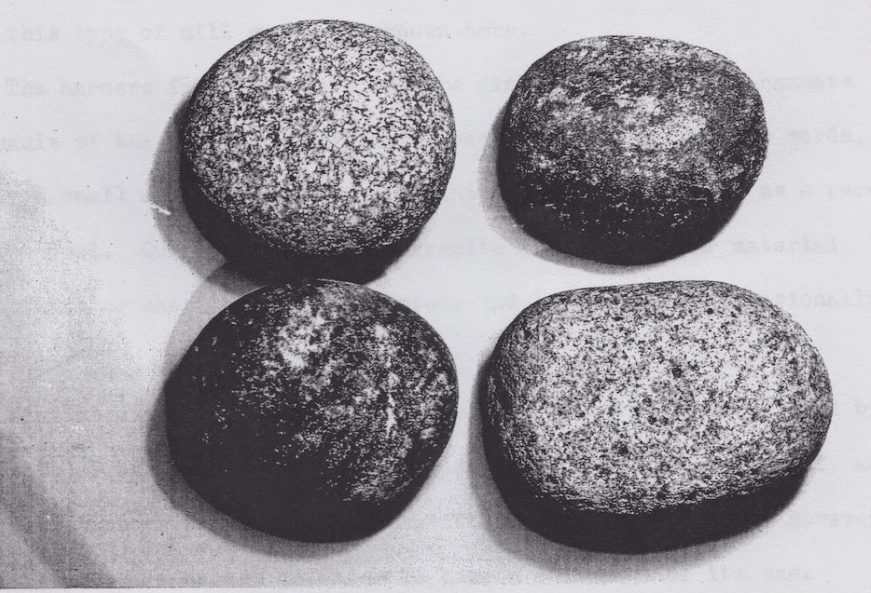
According to Ziebell, “A short time before the excavation began, a Bastanchury Water Company employee had taken soil from the site for use at the Water Plant garden and had removed three skeletons…Debris and fill from the roadbed of a Union Pacific Railroad spur line (still there) had covered a major portion of the camp. Nonetheless, a report on the “dig”–written by Louis Plummer, superintendent of schools, and the same John Winterbourne mentioned in the City Hall find–said a considerable number of stonework artifacts were found, such as manos, metates, and pestles–mill and grinding tools used in the preparation of food.”
Here are workers on the dig site:

During the dig, they uncovered many native American artifacts belonging to the local tribe known as the Kizh (they are often erroneously called Gabrielino or Tongva). Louis Plummer compiled the findings of the study into a book, which is available for view in the Launer Local History room of the Fullerton Public Library. Here are some of the artifacts uncovered in this study:

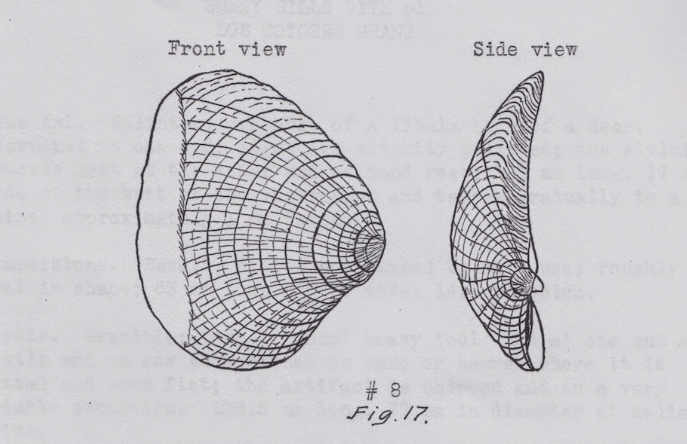
Somewhat disturbingly, the archeologists also uncovered a single object of Spanish origin, a metal spear point:
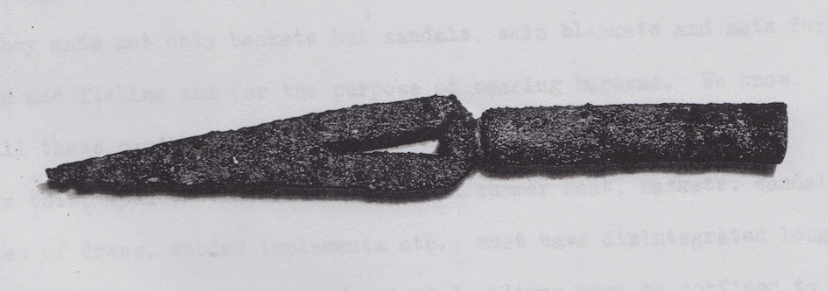
This is disturbing because it was Spain who first began to colonize California, and to force Native Americans to abandon thousands of years of living sustainably, and to instead live as quasi slaves in the Missions.
Another camp was identified to the north and east of the Malvern-Bastanchury site, but the excavators said the land, then part of the Emery Land Company, was planted to a young lemon grove and “cannot be investigated.”
Years later, in 1992, “a construction worker uncovered a skeleton while digging under a sidewalk on Commonwealth Avenue near the municipal airport,” Ziebell writes. “Judy Suchey, forensic anthropologist from California State University, Fullerton, aided in recovering about 95 percent of the skeleton and said it was that of a woman about four feet ten inches tall who was at least eighteen years of age when she died. The remains, she said, were at least four hundred and perhaps a thousand years old. The old Indian’s Gabrielino [Kizh] descendents later reburied the bones near where they had been found.”


Leave a Reply