The following is from a work-in-progress about the history of Fullerton. You can support my ongoing research and writing on Patreon.
The Local History Room of the Fullerton Public Library has microfilm from the Fullerton News-Tribune newspaper stretching back to 1893. I am in the process of digitizing and reading over the microfilm, year by year, to get a sense of what was happening in the town over the years, and creating a mini archive. Below are some news stories from 1959.
Growth
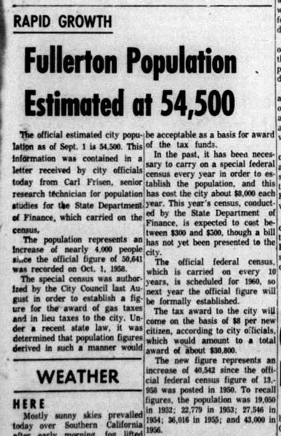
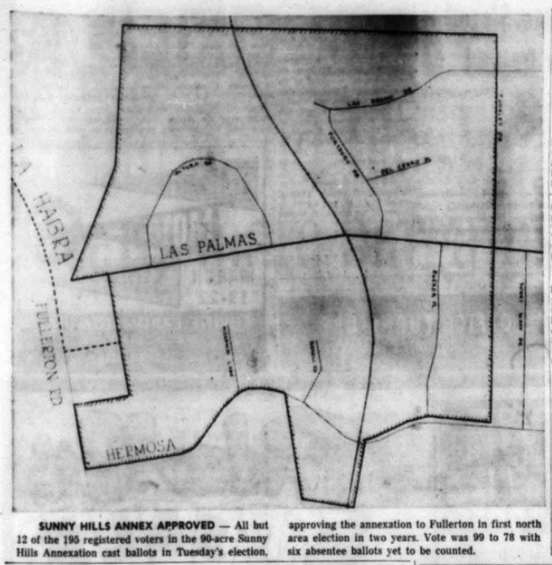
Fullerton continued to grow both in population and in acreage, as the city annexed new lands.
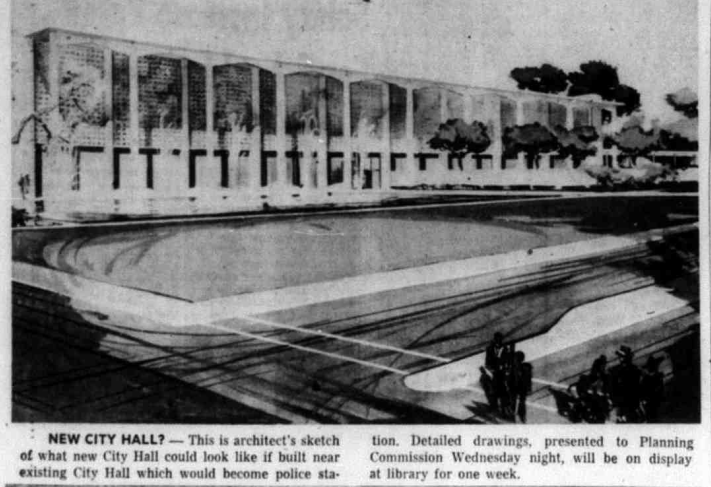
There were plans in the works for a new Civic Center and a new City Hall, although it would be a few years before these came to fruition.
Government and Politics
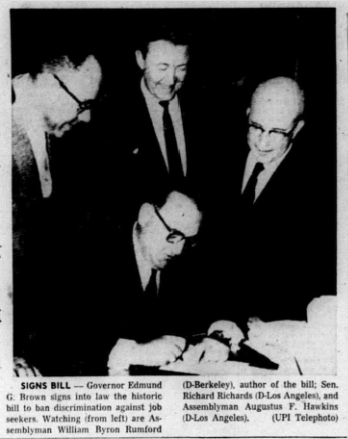
California experienced a political “blue wave” as Democrat Pat Brown was elected governor. For the first time in 70 years, Democrats dominated the state government.
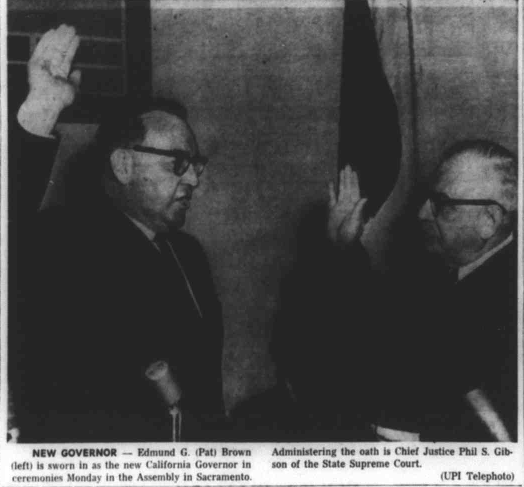
Although Republicans criticized Brown, his ambitious legislative agenda had a profound impact on California’s infrastructure and governance. Under his leadership, the California Aqueduct was built, the Master Plan for Higher Education (which envisioned tuition-free college) was established, the Fair Employment Practices Act passed, and the Rumford Fair Housing Act passed.
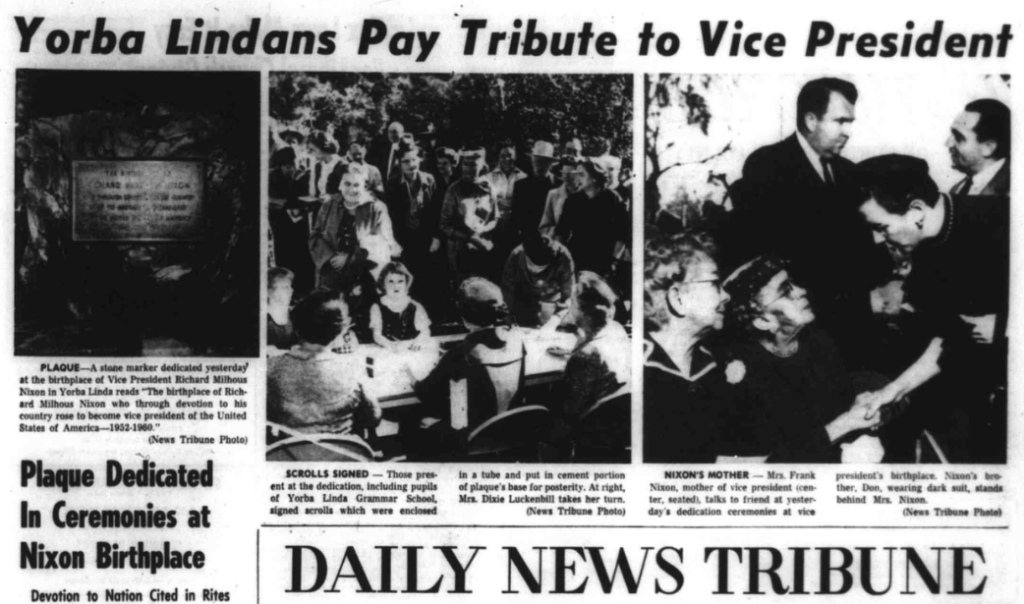
Gearing up for his 1960 presidential run, local boy Richard Nixon toured the area of his birth–Yorba Linda, Orange County.
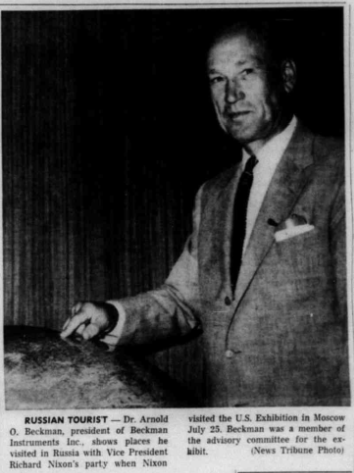
One notable local supporter of Nixon was Arnold Beckman, owner of Beckman Instruments in Fullerton. As a businessman with deep pockets, Beckman got special access to Nixon, even accompanying the Vice President on his visit to Russia. Beckman, along with other conservative businessmen from Orange County, founded the Lincoln Club–a powerful Republican fundraising organization that still exists today.
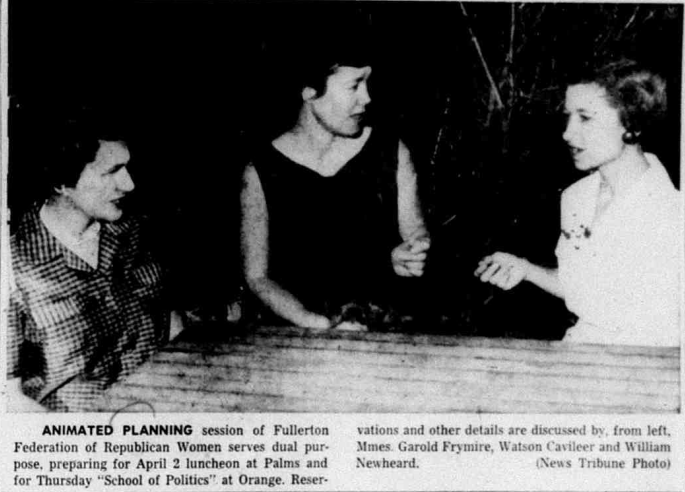
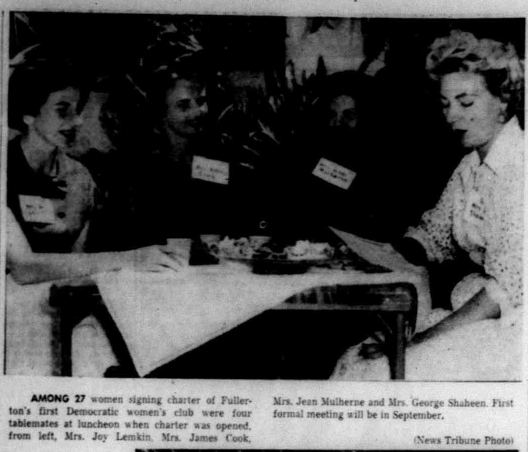
Although Fullerton in this era had a well-deserved reputation for being majority conservative/Republican, both political parties were represented by local groups. While men held most of the positions of power in those days, women did a lot of the organizing and grassroots fundraising.
Cold War
In world news, the Cold War (including the Space Race and the Nuclear Arms race) was in full swing in 1959!
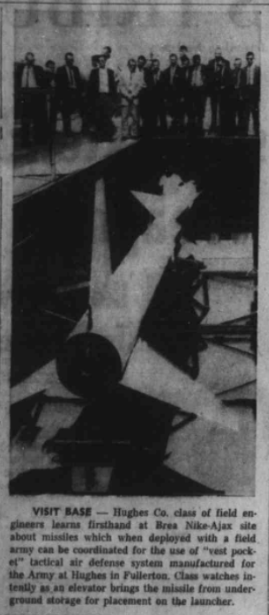
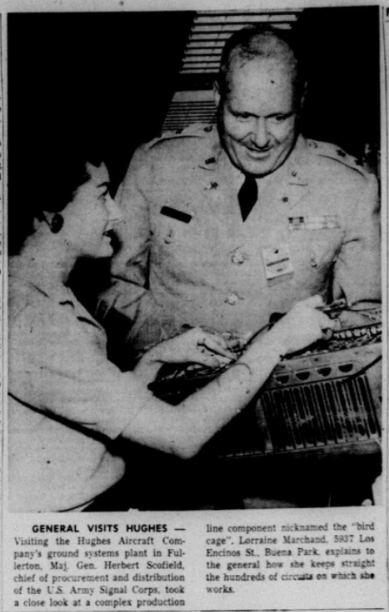
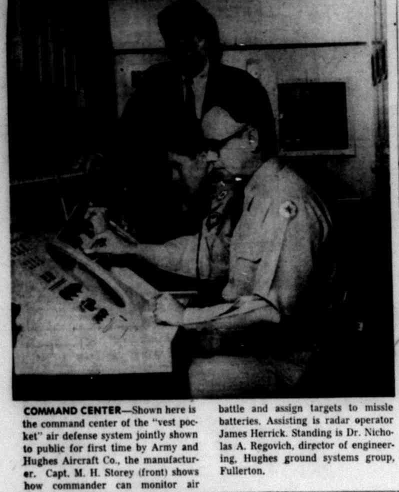
Locally, this took the form of a Nike missile base in the hills of Brea, as well as a number of local industries (like Hughes and Beckman) that were developing technology to give the US the advantage over the Soviet Union.
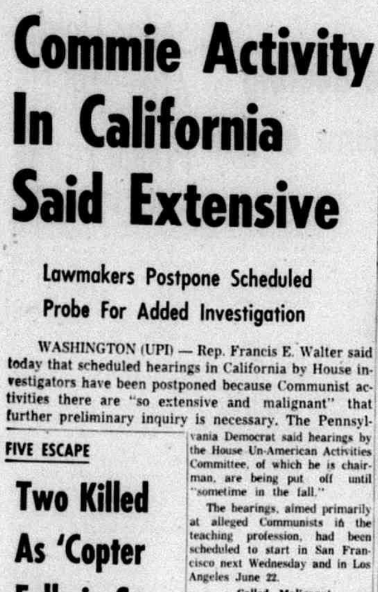
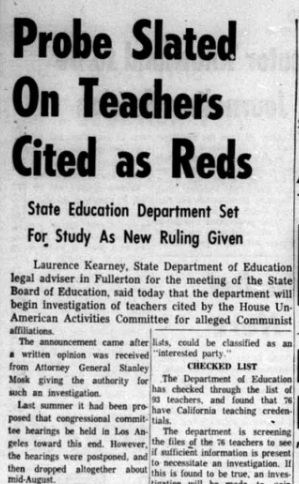
A close cousin to the Cold War was the Red Scare–a sometimes irrational and paranoid fear of communists in America.
Culture and Social Life
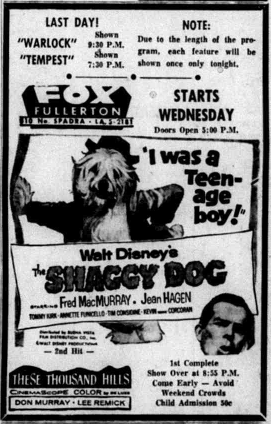
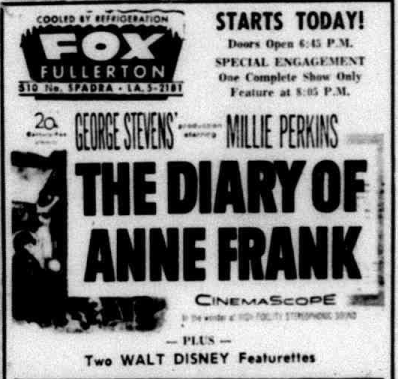
Fullertonians went to see movies at the Fox Theater.
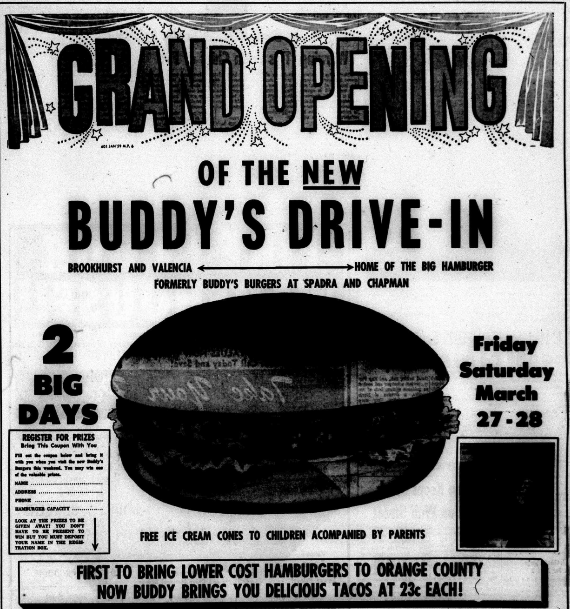
And at a new Drive-In Theater called Buddy’s.
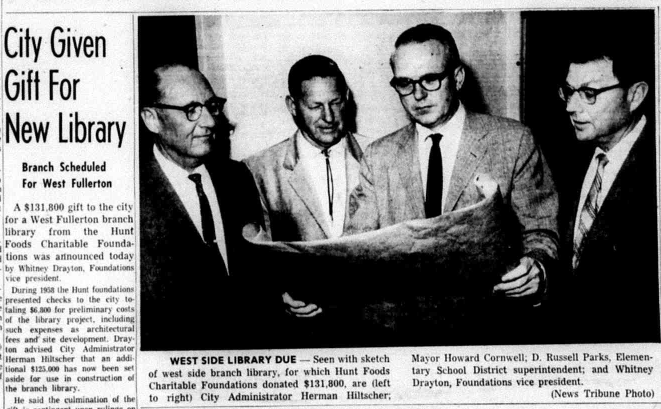
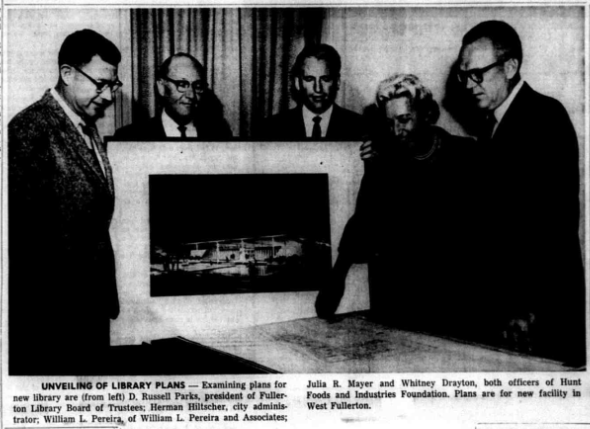
Norton Simon’s Hunt Foods donated a brand new library to be built on the west side of town, which would become the Hunt Branch Library.
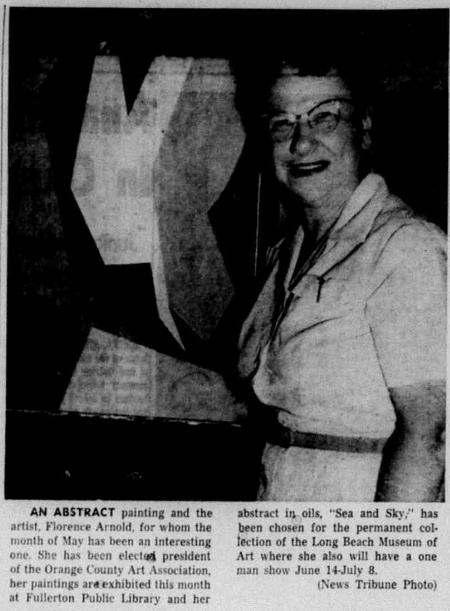
Fullerton artist Florence Arnold was honored for her work.
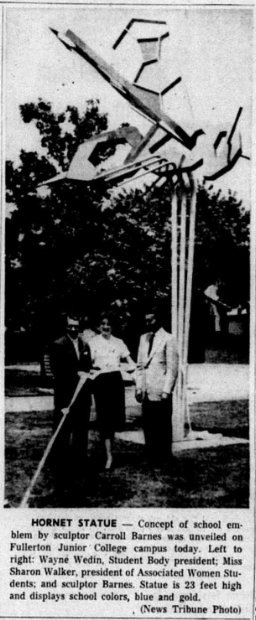
A sculptor created a large metal hornet for Fullerton College.
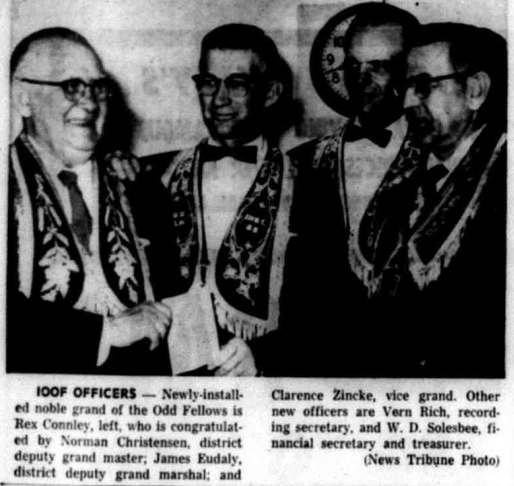
In the 1950s, Fullerton had a number of old school fraternal organizations that were quite active, such as the Odd Fellows, the Masons, the Elks, and the Lions.
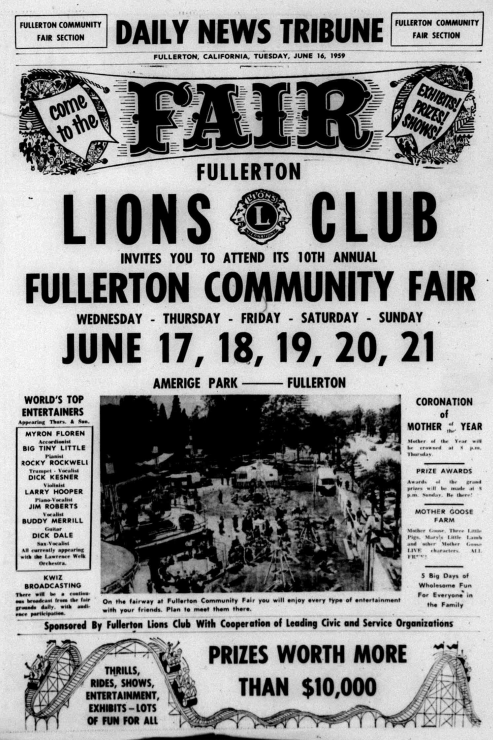
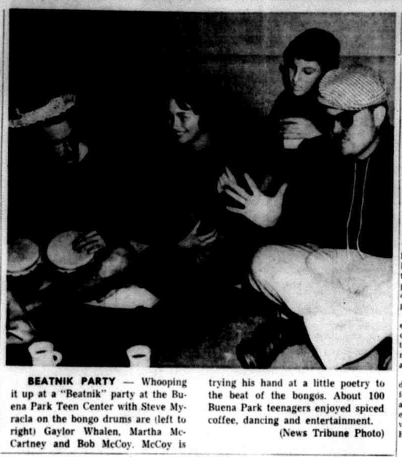
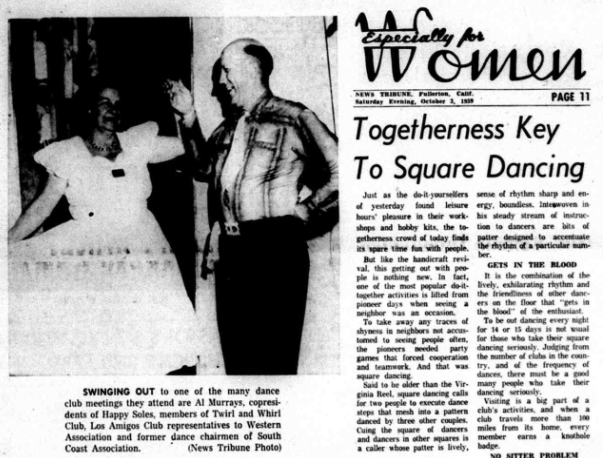
Sometimes these groups held fundraisers or special events that were a lot of fun for the community, like a fair or a square dance, or a party where everyone dressed up as Beatniks.
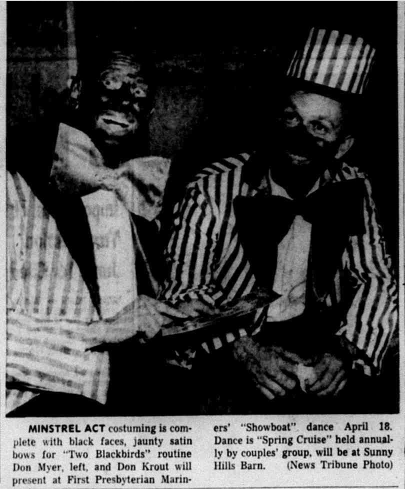
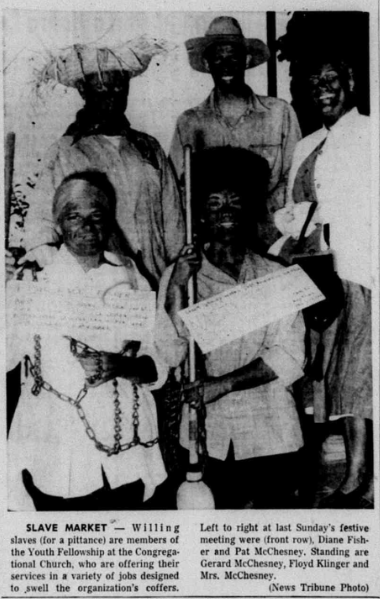
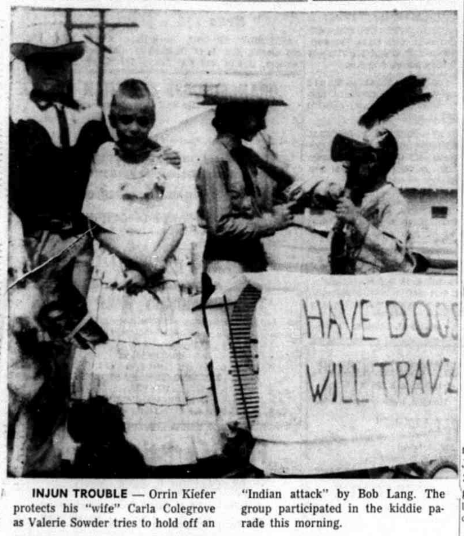
Other times, they hosted events that were super racist, such as the following:
Civil Rights
Yes, much progress remained regarding Civil Rights. The League of United Latin American Citizens (LULAC), the oldest Mexican American civil rights group, sought to improve things for Mexican Americans in Fullerton and Orange County.
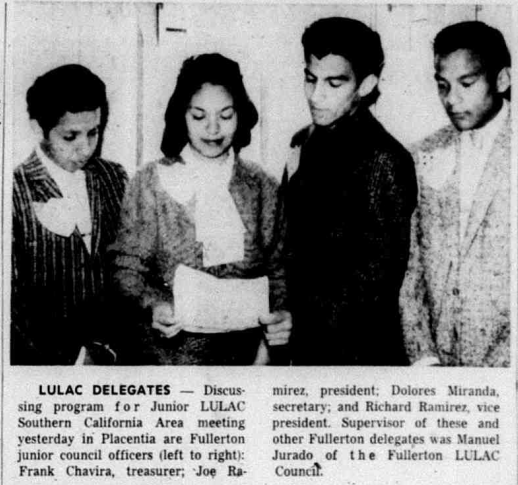
In his recently-published book Breaking Down the Walls of Segregation: Mexican American Grassroots Politics and Civil Rights in Orange County, California historian David-James Gonzalez describes how LULAC and other local Mexican-American groups worked to end residential and school segregation, perhaps best represented by the landmark Mendez et al v. Westminster.
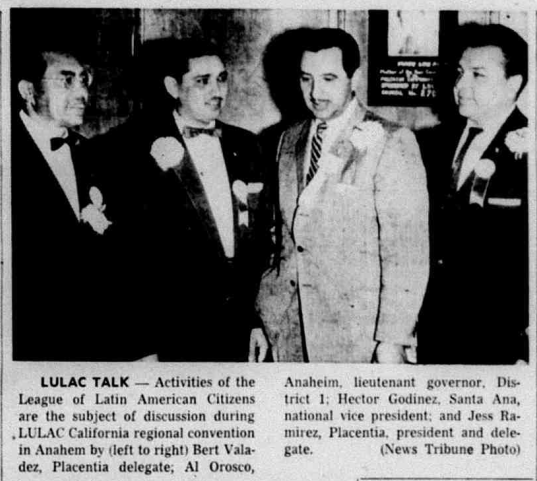
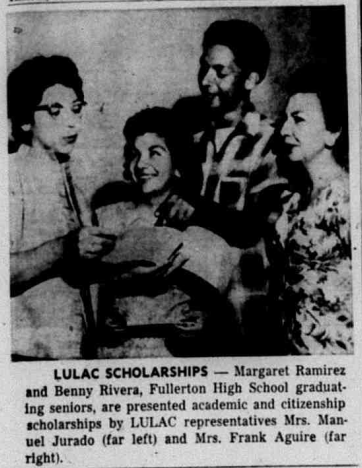
“Together, Mexican American men, women, and youth ran LULAC meetings and conferences, held fundraisers and social gatherings, awarded scholarships, sponsored youth activities and sports programs, operated heath clinics, and participated in local politics and all manner of civil affairs,” Gonzalez writes.
Education
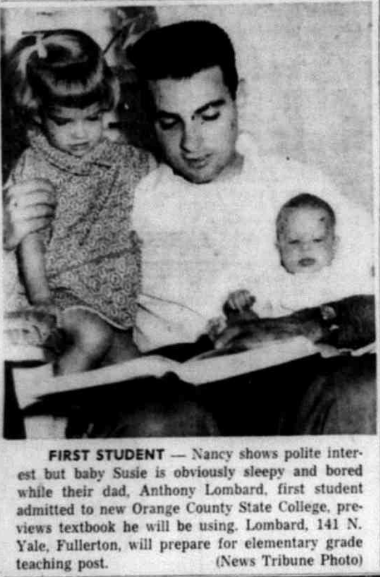
The newly-created Orange County State College (later to become Cal State University, Fullerton) named its first president (William Langsdorf) and began enrolling students for its first semester in 1960.
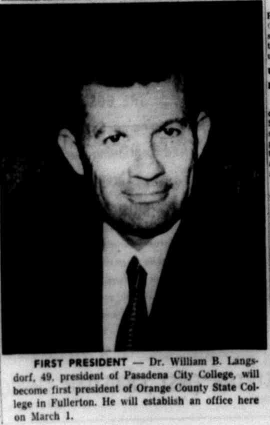
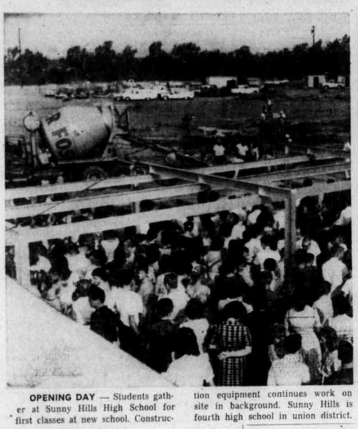
The first college “campus” was a building at the newly-built Sunny Hills High School, on the other side of town. It was here, in 1959, that the college offered its first classes. Later that year, faculty and administrative offices moved to an old farmhouse (the Mahr house) on the site of what would become CSUF.
The newly-built Sunny Hills High School opened its doors to students.
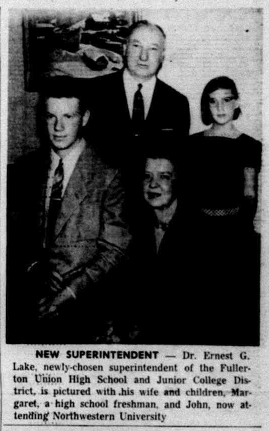
The Fullerton High School District named a new superintendent, Ernest Lake.
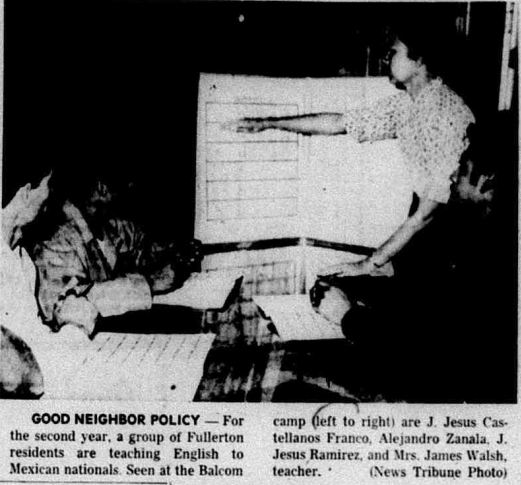
In 1959, the citrus industry was still a thing and there were still some camps for Mexican American citrus workers. Some classes were offered on these camps.
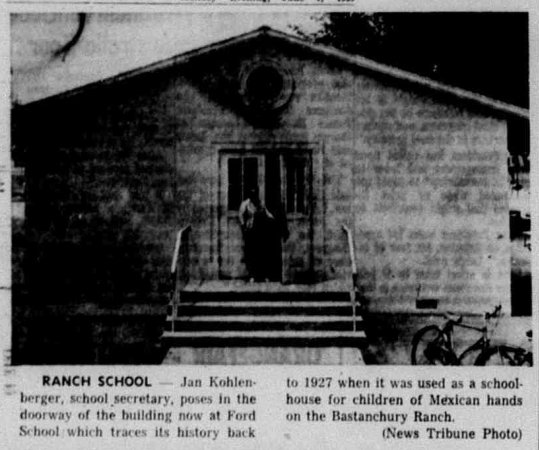
The News-Tribune includes an article about the old “ranch school” for Mexican workers on the Bastanchury Ranch, which closed in 1933.
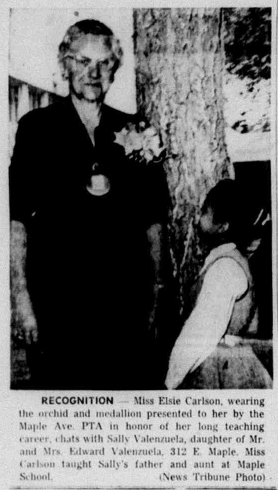
Elsie Carlson, who had worked at the Bastanchury Ranch school, and then at Maple School, retired.
“The school, which was in the Fullerton Elementary District…was built primarily for children in two large camps on the ranch,” the News-Tribune reported. “There was the Tijuana Camp of some 500 families and the Mexicali Camp of 100 families.”
Of her experience at the Ranch School, Miss Carlson said, “I felt like a missionary. The entrance to the Ranch was about where Valencia Mesa is now–over a dirt road, down the hill, across a ravine, then a quarter-mile to the school.”
Students at the old one-room school “were all Mexicans whose fathers were employed on the ranch.”
Carlson recalled “that there was no bus service to the school but a few children lived nearby in crudely-constructed homes, some with dirt floors, all poorly-ventilated.”
Carlson and other teachers like Mrs. Arletta Kelly were part of the high school’s “Americanization” program.
Carlson recalls how, during the Great Depression, all of the Mexican families on the ranch were repatriated to Mexico.
“The Mexicans had to go back to Mexico through Tijuana because they weren’t citizens,” Carlson recalled.
“Watching the families pack their belongings and leave the camps which had become their homes over the years was ‘one of the saddest sights I’ve ever seen,’ Mrs. Juantia Ferraris remembered.
After the clearing of the ranch and the closure of the school, it was moved to the Ford Ave. School grounds where it was used for a lunch room.
“After the closing of the Ranch School, Miss Carlson, who began her teaching in Orange County from 1920 to 1924 in rural schools, went to Chapman School where she taught Mexican children in the first, second, and third grades,” the News-Tribune reports. “She first came to Maple Ave. School in 1934, where her long tenure has given her a wide circle of acquaintences in the neighborhood.”
Maple School, which I have written about elsewhere, was Fullerton’s de facto segregated school for Mexican-American and African American children.
Law and Order
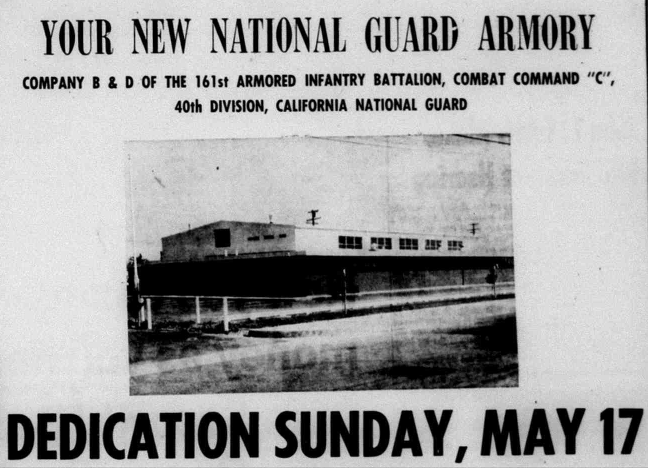
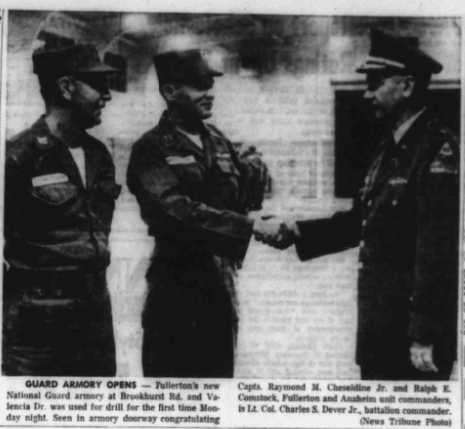
Fullerton’s National Guard Armory, on the west side of town, began operations.
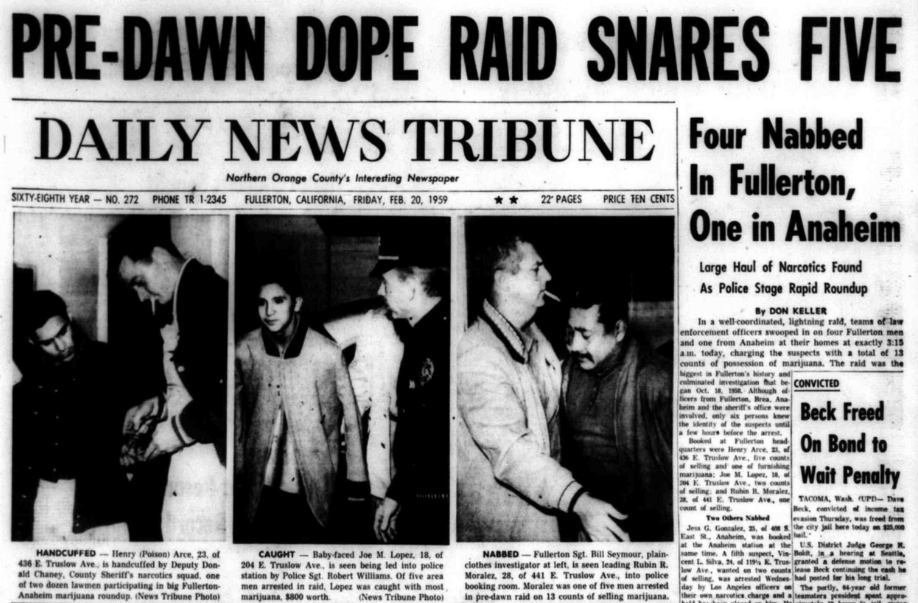
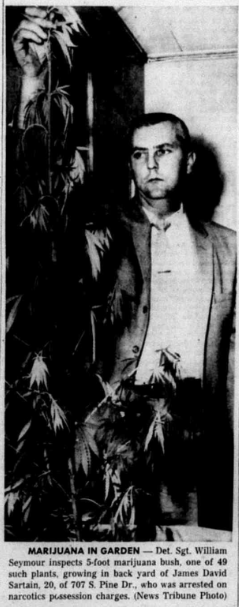
In 1959, drug busts (mostly for marijuana) were increasingly common crimes.
Housing
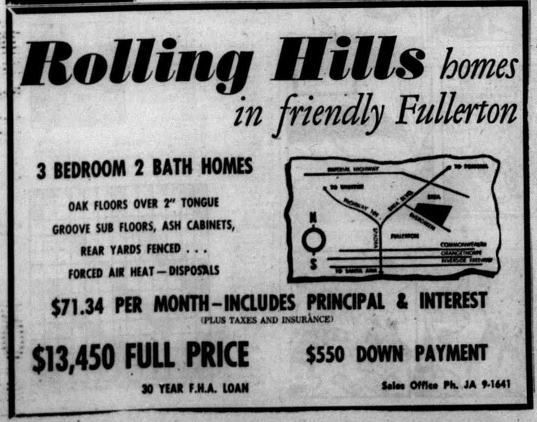
The post-war housing boom continued, with new subdivisions being built, including the Rolling Hills are, where I grew up in the 80s and 90s. Below is a 1959 ad from the News-Tribune for homes in the Rolling Hills area of Fullerton. Houses cost $13,450. Adjusted for inflation, that would be about $155,000 in today’s dollars. But houses in the Rolling Hills neighborhood are going for around $1 million today. Purchasing a home was a much more achievable goal in the 1950s than it is today.
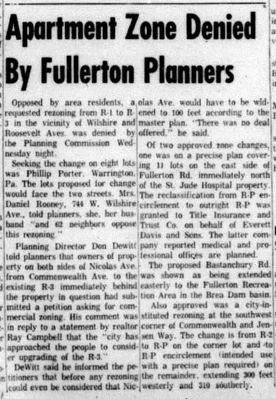
Fullerton homeowners and civil leaders generally preferred single family homes to apartments. Sometimes the Planning Commission or neighborhood groups would oppose proposed apartment developments.
Water
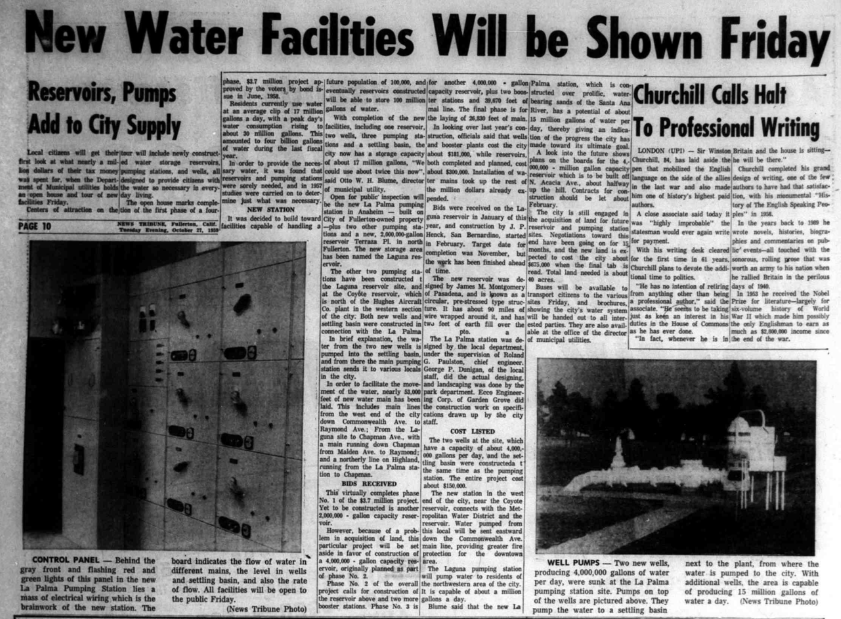
As Fullerton and Orange County continued to grow, it became necessary to secure enough water for the region.
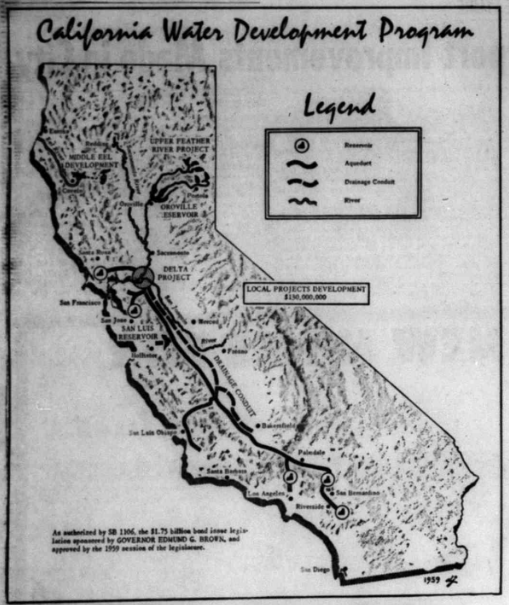
The battle to build the California Aqueduct pitted northern against southern California.
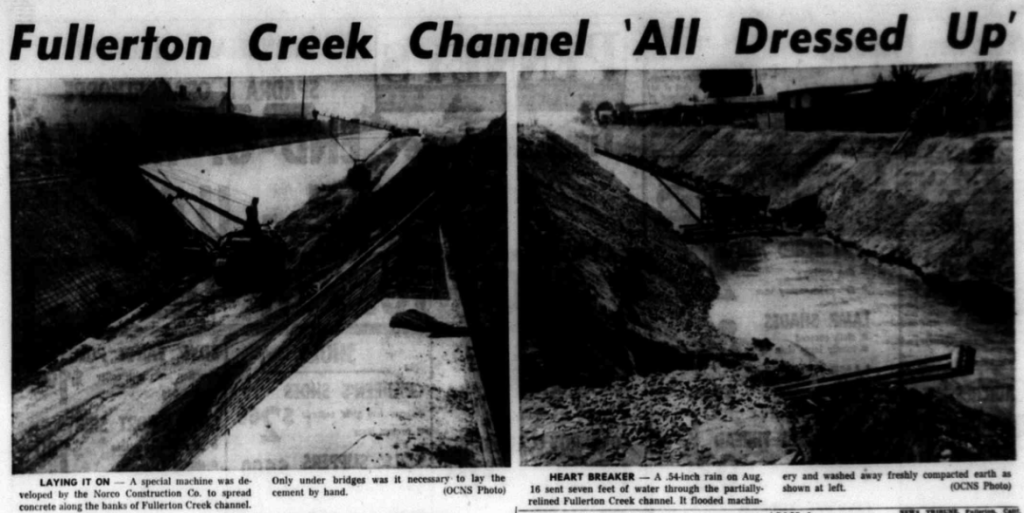
Fullerton also improved its water facilities and flood control measures.
Industry
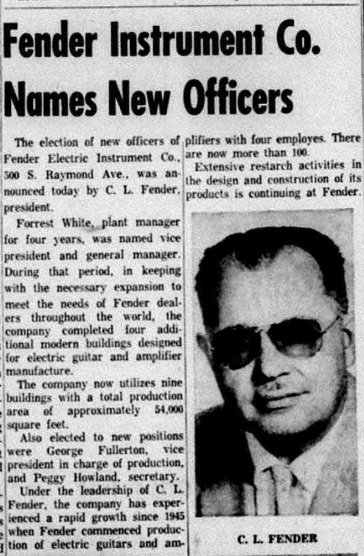
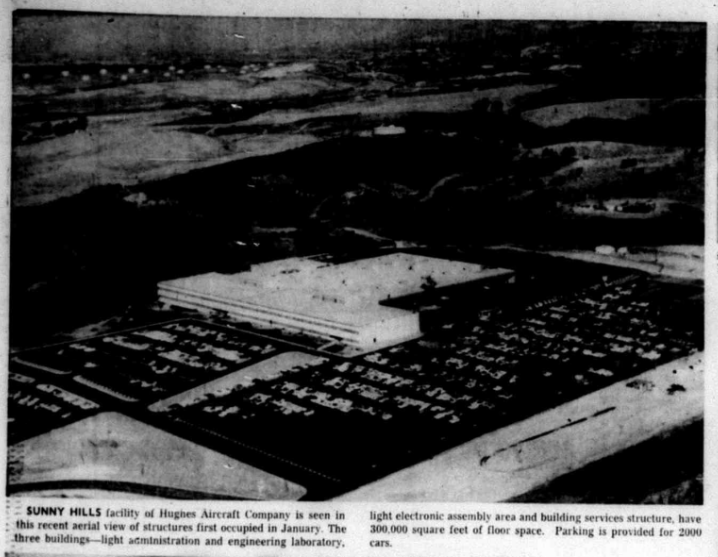
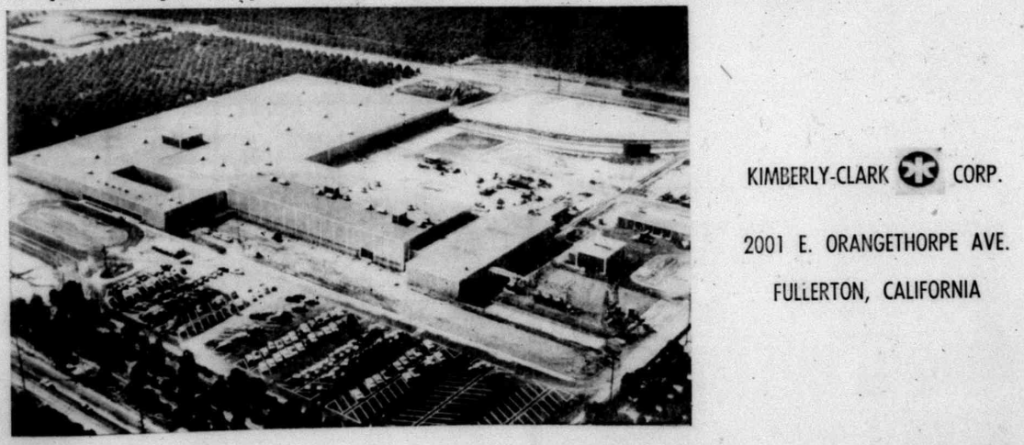
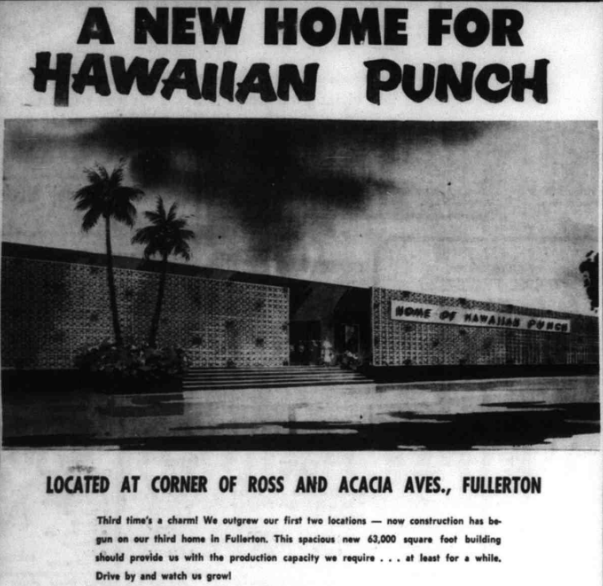
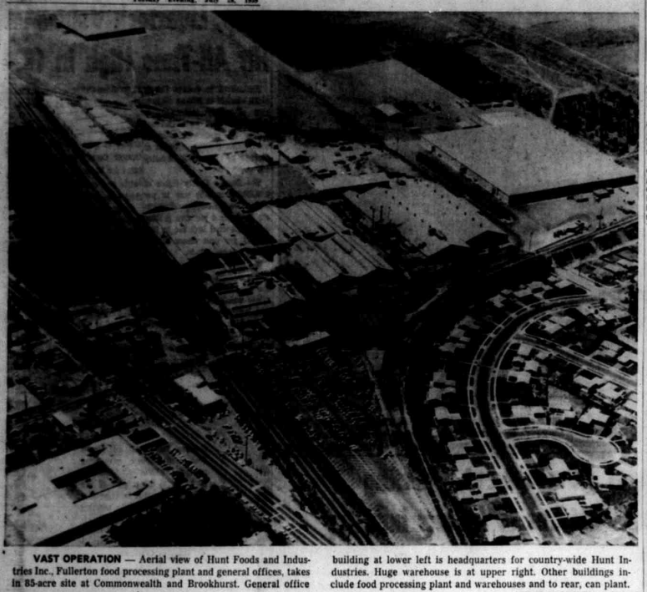
The 1950s were a period of industrial growth for Fullerton as new factories were built in industrial zones and existing businesses expanded their operations.
Below are a few clippings about industrial activity in Fullerton in 1959 from such notable industries as Fender Instruments, Hughes, SoCal Gas, Ador, Beckman Instruments, Rheem, Kimberly Clark, F.E. Olds, Hawaiian Punch, and Hunt Foods:
Pollution
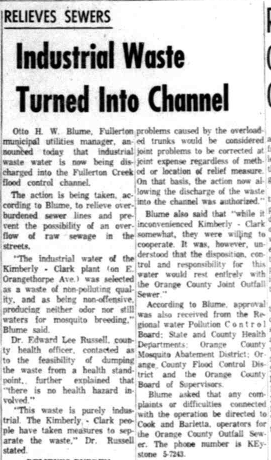
One unfortunate by-product of all this industrial activity was pollution, which was not well-regulated in the 1950s. The Environmental Protection Agency (EPA) was not created until 1970. Meanwhile, Fullerton’s big industries were doing things like this:
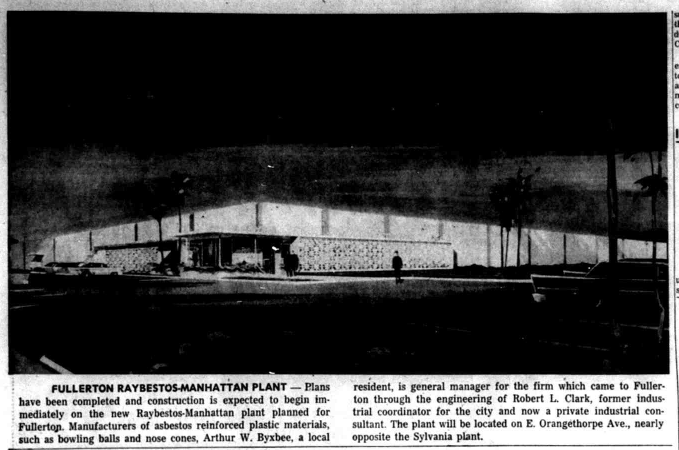
Perhaps one of the more egregious polluters in Fullerton was Raybestos Manhattan, which made “asbestos-reinforced plastics,” Teflon, and Kel-F. Teflon contained PFAS, which is now widely established as a toxin that is in the blood of virtually every human being on the planet.
Thanks to all this industrial activity, Fullerton today has two Superfund sites–the McColl dump site, and the North Basin Groundwater contamination.
Transportation
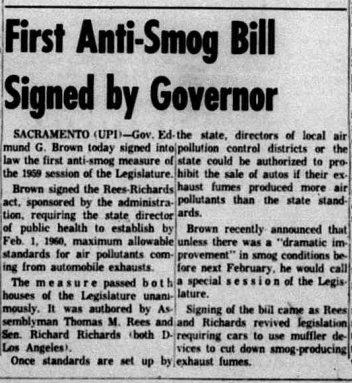
In other pollution news, the California state legislature passed its first anti-smog bill.
Fullerton City Council voted to change the name of the road that runs through downtown from Spadra to Harbor Blvd.
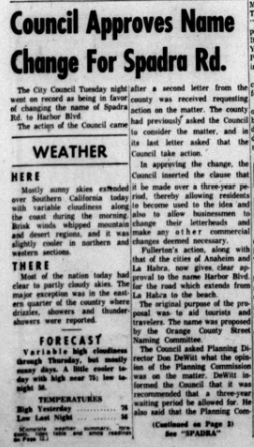
The News-Tribune contains an article which tells the history of the old Spadra Road.
The name comes from a settlement established by William (Uncle Billy) Rubottom around 1855 near present day Pomona. The Spadra settlement was on the old Butterfield Stage route and “was an important stop for freighting teams between Wilmington and Anaheim Landing and interior parts.”
“Spadra Road began near the center of Anaheim and ran along the present Spadra Road of Fullerton, many years before Fullerton was thought of,” the News-Tribune reported. “Perhaps about the only buildings were Jonathan Kraemer’s Feed Yard and barn and an adobe building, partly used as a stopping place, where the California Hotel now stands. There were some farm houses. Spadra road probably ran about where Brea is now located. It passed close to where the Brea (old tar) pits used to be, from which the town got its name. It went up brea canyon but turned left of Rodeo Canyon until it dropped down a steep hill and connected with what afterward became valley Boulevard and a few miles to Spadra.”
Farm Labor
Despite all the new development, Fullerton still had sizeable farm acreage.
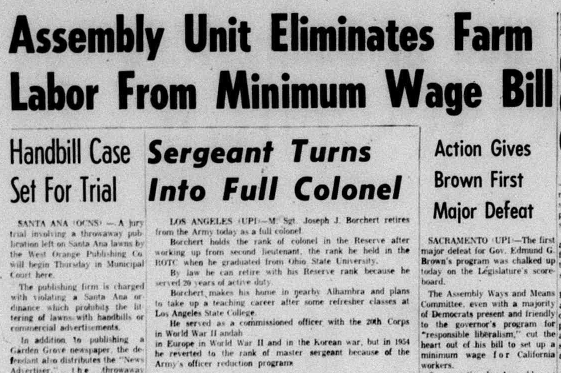
Among his other reform bills, Governor Pat Brown sought to pass a minimum wage increase bill; however the powerful farm interests in the state managed to kill it.
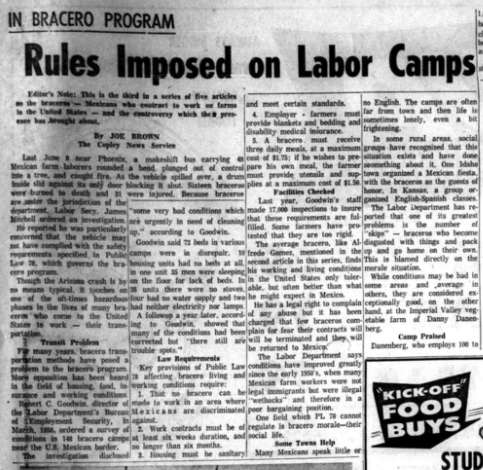
The News-Tribune includes a series of articles about the Bracero Program, which was a guest worker program for Mexican immigrants, many of whom worked on farms between 1942 and 1964.
The Bracero Program faced criticism for its unfair treatment of workers as well as poor housing conditions for workers, many of whom lived in specially constructed labor camps.
Sports
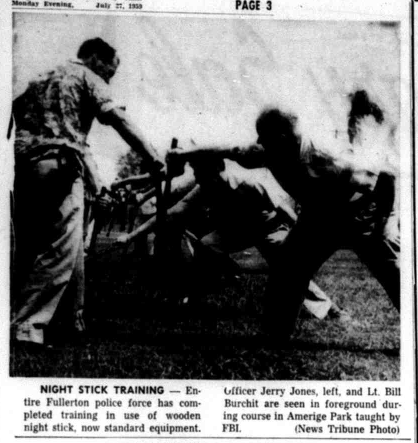
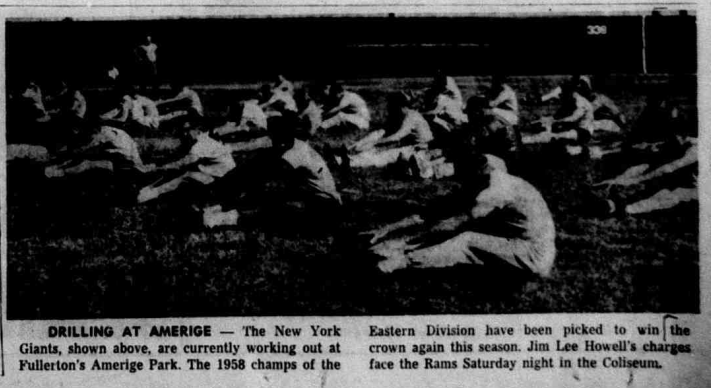
In sports news, the New York Giants professional football team used Amerige Park for practice. Why, I am not sure.
Deaths
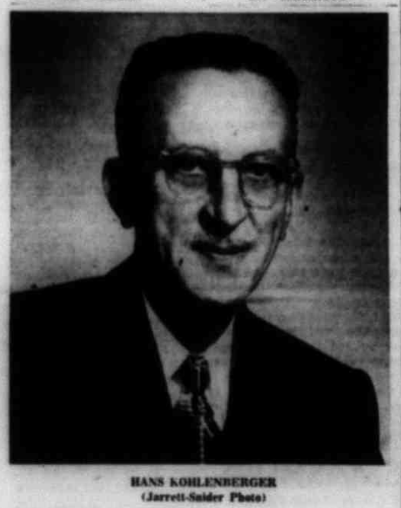
Former Fullerton mayor and business owner Hans Kohlenberger died.
In one of the biggest mysteries of Orange County history, Myford (Mike) Irvine, scion of the powerful Irvine family, was found dead of gunshot wounds in his head and chest.
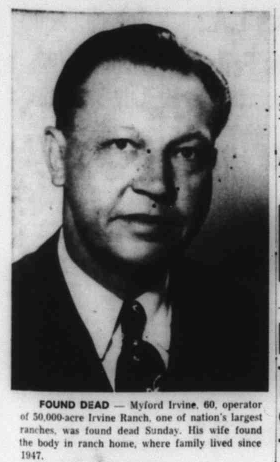
The enormous Irvine estate was left to his widow and siblings. Investigators ruled the death a suicide, but rumors persisted that he was in fact murdered.
Stay tuned for top news stories from 1960!

