The following is from a work-in-progress about the history of Fullerton. You can support my ongoing research and writing on Patreon.
The Local History Room of the Fullerton Public Library has microfilm from the Fullerton News-Tribune newspaper stretching back to 1893. I am in the process of digitizing and reading over the microfilm, year by year, to get a sense of what was happening in the town over the years, and creating a mini archive. Below are some news stories from 1958.
Growth
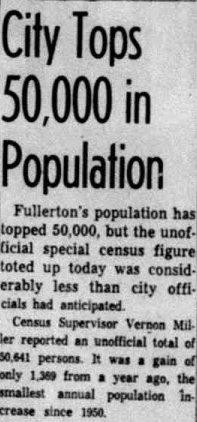
Despite a nationwide recession in 1958, Fullerton’s overall trend of postwar growth would continue for several years. The city’s population reached over 50,000.
Cold War
Tension continued to escalate between the United States and the Soviet Union. Both the space race and the nuclear arms race were in full swing.
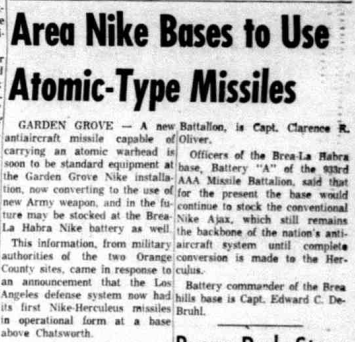
Locally, this took the form of a series of Nike missile bases, including one in the hills of Brea.
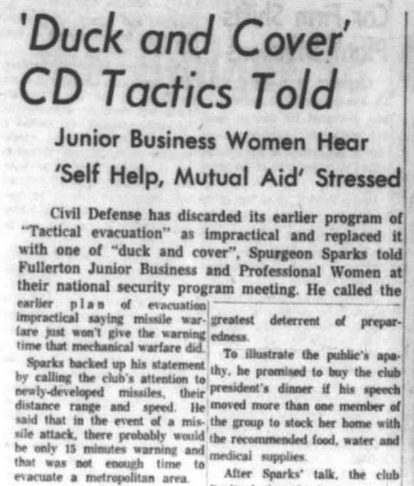
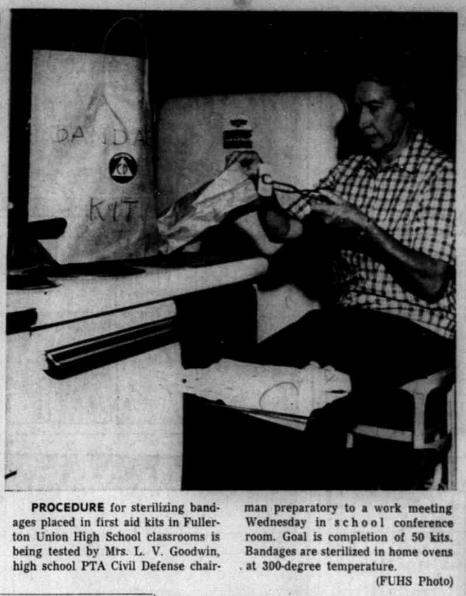
Communities across America, including Fullerton, developed Civil Defense programs. This included the infamous “Duck and Cover” drills schoolchildren had to do, as well as construction of bomb shelters and the stockpiling of supplies–should a nuclear war occur.
A bizarre incident, sparked by Cold War paranoia, resulted in the death of four people, including a Fullerton man who worked for the Orange County sheriff’s department.
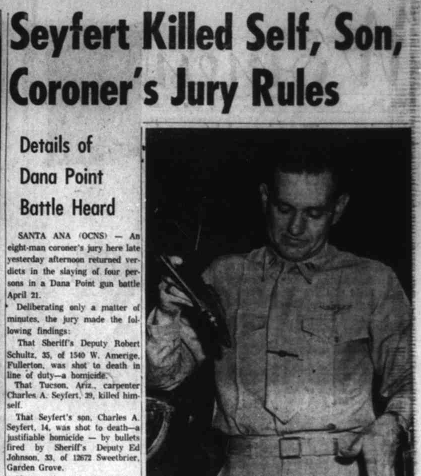
Charles Seyfert, who lived in Tucson, Arizona, became convinced that a nuclear war and the Biblical end times were imminent.
He decided suddenly to move his family of five to Alaska, where they might survive the coming apocalypse. He loaded his wife and three children into a yellow bus and started northwest.
As they passed through Dana Point, the bus was stopped by sheriff’s deputies Robert Schultz (Fullerton) and Ed Johnson (Garden Grove). A shootout ensued during which Schultz was killed, and Johnson wounded.
Seyfert ended up killing both himself and his youngest son. His other son was shot and killed by the sheriffs. His wife and daughter managed to flee the bus and survived the tragedy.
According to Seyfert’s wife, he had “read a series of 12 articles in the Tucson paper…He got the idea it was a foretelling of the end of the world. Seems like that was all he could think about and talk about. He wanted to get out of Tucson and go to Alaska…He associated the articles on atom bombs to the Book of Revelations where it says something about 144,000 shall be saved…He had a lot of time on his hands.”
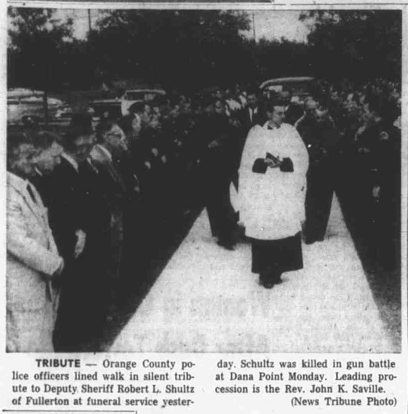
A tribute funeral service was held for Schultz in Fullerton.
Civil Rights
1958 was a significant year in the struggle for civil rights in America. Although the 1954 Brown v. Board of Education Supreme Court ruling had declared school segregation unconstitutional, many communities in the South refused to de-segregate their schools. In Little Rock, Arkansas local leaders’ refusal to desegregate escalated into a standoff that resulted in President Eisenhower sending in federal troops to allow nine African American students to attend Central High School.
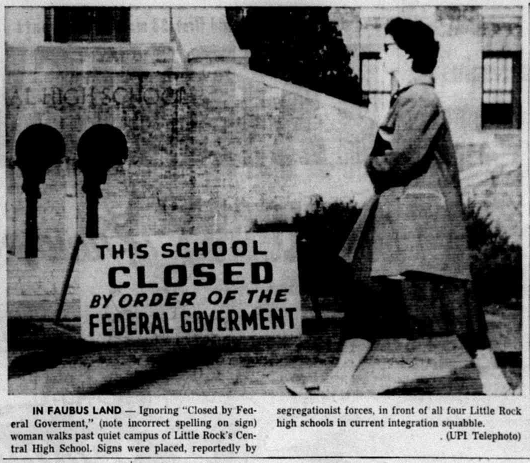
There were bombings of Black schools and churches across the South. The backlash against Brown v. Board was real and powerful.
While the attention of America was focused on Civil Rights clashes in the South, the truth is that quieter civil rights struggles were playing out all across America, including in Fullerton.
In 1958, “Representatives of various Christian churches and groups in Fullerton met…at the First Methodist Church to explore the problem of housing for minority groups in the community,” the News-Tribune reported.
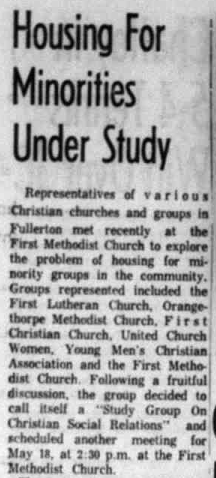
“The discussion revealed that a serious problem does indeed exist in the city as it is very difficult if not impossible for members of minority groups, especially Negroes, to find opportunities to buy or rent in Fullerton,” the News-Tribune reported. “It was also the conviction of the group that from the Christian standpoint something should be done about the matter.”
The group decided to write up a statement of principles and to study the matter in further community meetings.
In 1958, Fullerton (like many cities in America, even outside of the south) was a highly segregated city. This situation was created and enforced by racially restrictive housing covenants that prevented non-white people from purchasing or renting property outside of a certain neighborhood “south of the tracks”–the Truslow/Valencia neighborhood.
Although a local Mexican-American family (Alex and Esther Bernal) had won a significant case against restrictive housing covenants in 1947, the practice was still widespread and the ethnic makeup of Fullerton neighborhoods was largely unchanged in 1958.
To read more about civil rights struggles in Orange County in the 1950s and 1960s, I recommend the book A Different Shade of Orange: Voices of Orange County, California Black Pioneers.
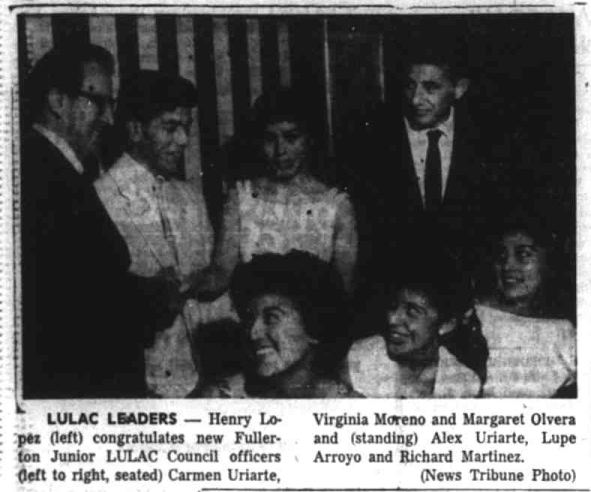
In Fullerton, the largest minority group was Mexican-Americans. There was an active local chapter of LULAC, the oldest Latino civil rights group in America.
Culture and Social Life
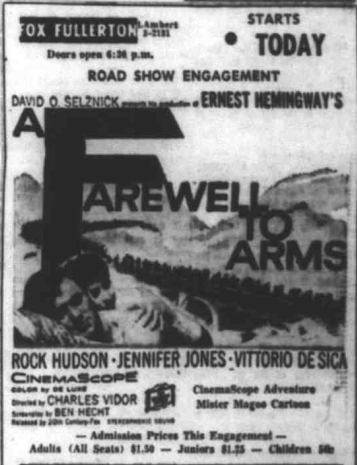
For culture and entertainment, Fullertonians went to movies at the Fox Theater.
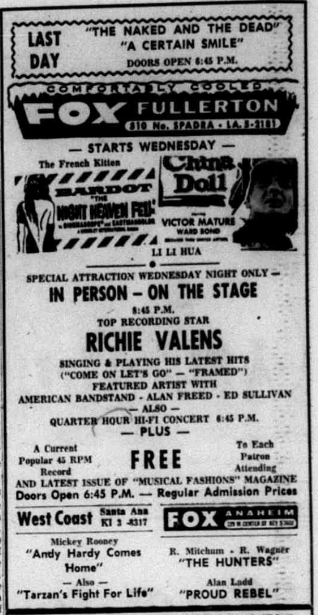
Mexican-American rocker Richie Valens came to the Fox!
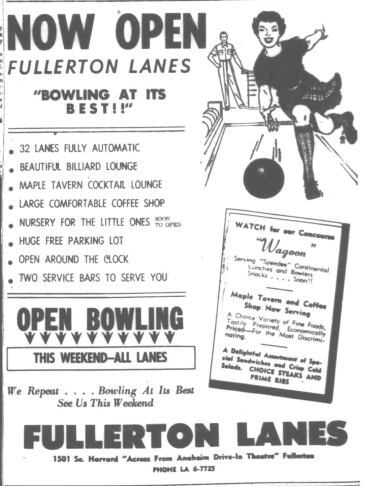
Other popular social activities included bowling.
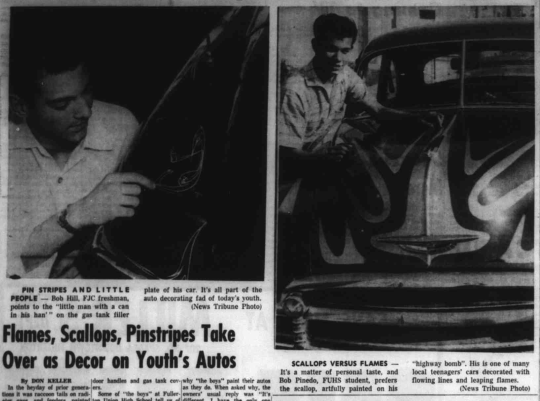
Young people customized their cars.
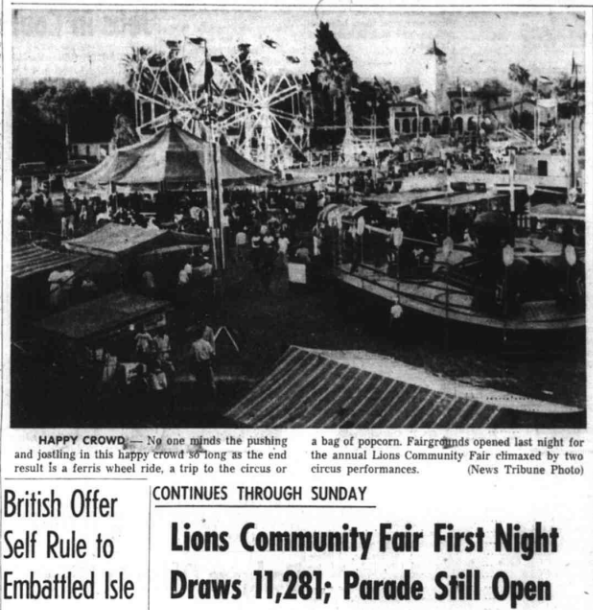
And the Lions Club hosted a very well-attended Community Fair.
Industry and Labor
In industrial news, Hughes Aircraft opened its new plant in Fullerton, employing thousands. For a few decades, Hughes was the largest employer in town. The plant closed in 1994 and is now the Amerige Heights area of West Fullerton.
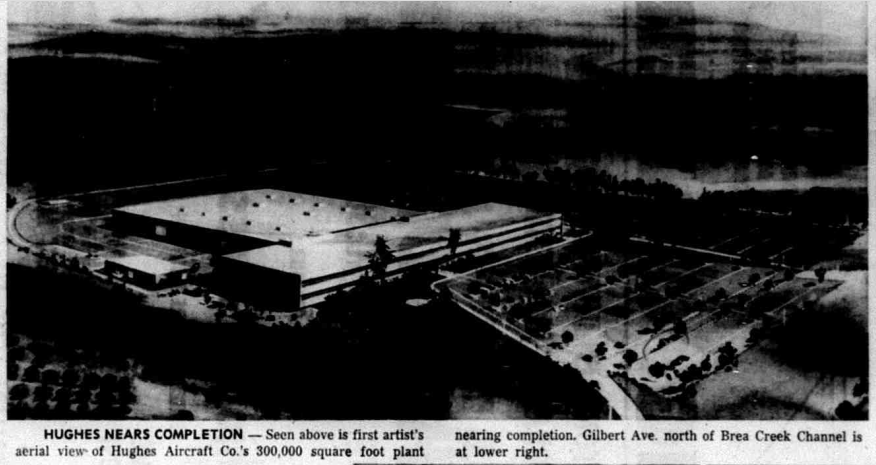
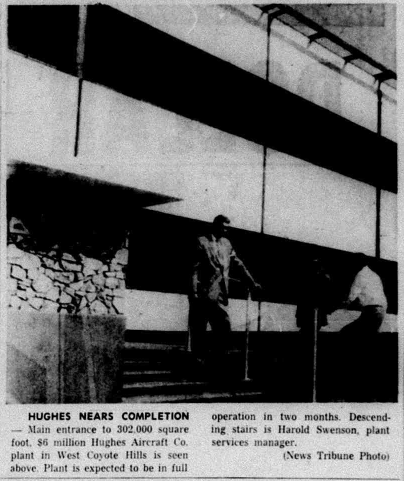
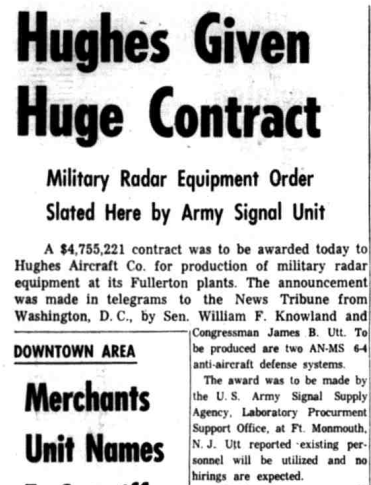
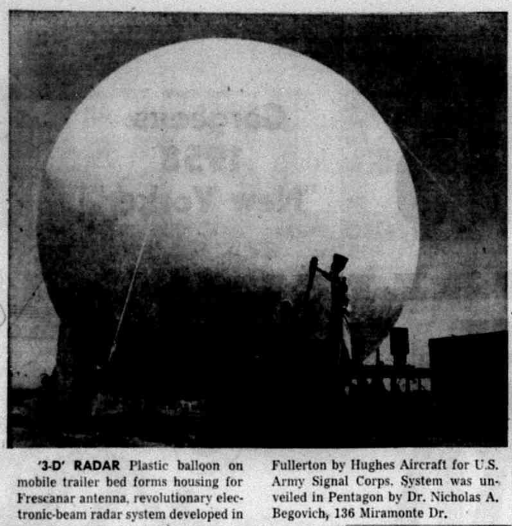
This particular Hughes plant focused on designing and manufacturing radar systems, such as an innovative 3D radar seen below. Hughes’ main customer for these products was the United States government, which was funded (of course) by American taxpayers.
Other notable industries in Fullerton included Beckman Instruments, Hawaiian Punch, and Hunt Foods.
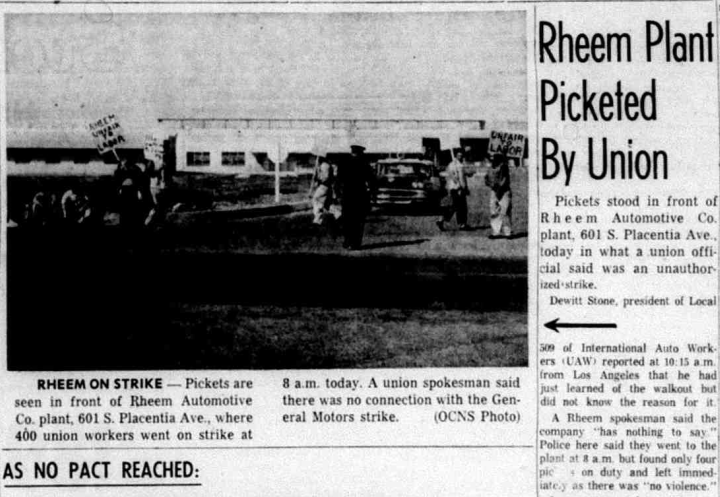
Labor strikes impacted some Fullerton industries, including Rheem Manufacturing, and the F.E. Olds Company.
In other labor news, the investigation into the bombing of a local coat factory in 1957 continued.
“A Fullerton coat manufacturer has been called next Tuesday to give details of the April 14, 1957, bombing of his southeast industrial area plant as a witness before the Assembly subcommittee investigating alleged garment industry racketeering,” the News-Tribune reported.
Lloyd Harris, chief investigator, said, “Our investigation hasn’t indicated that D’Amico has had dealings with suspected racketeers that some other manufacturers have had. There was a union attempt to organize the plant prior to the bombing, however.”
Politics
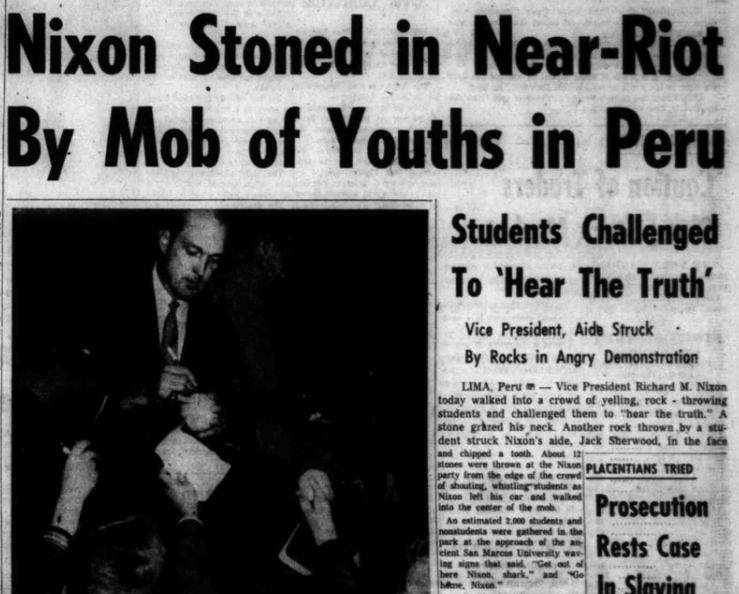
Richard Nixon, who grew up in Yorba Linda and attended Fullerton Union High School, was Vice President of the United States. A number of stories in 1958 are about Nixon visiting various foreign countries and being met with jeers, protests, and rocks. Why did these other countries hate Nixon? In some cases, it was because the United States had interfered in the business and politics of their nations, sometimes even helping to overthrow democratically elected leaders, such as Mohammad Mosaddegh of Iran and Jacobo Arbenz of Guatemala.
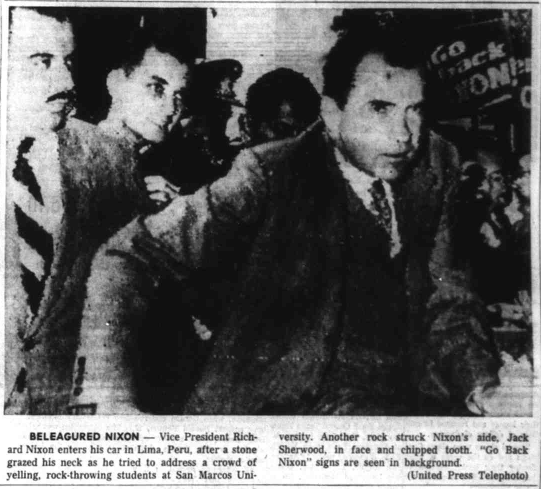
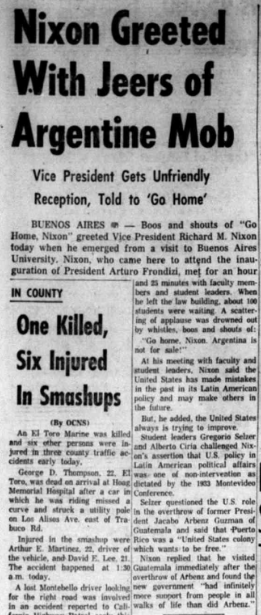
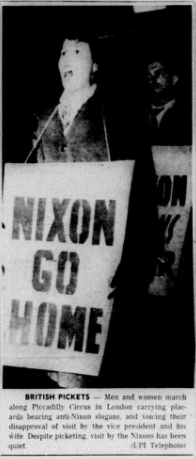
Meanwhile, dictators whom the United States helped to install, like the Shah of Iran, were more friendly to Nixon.
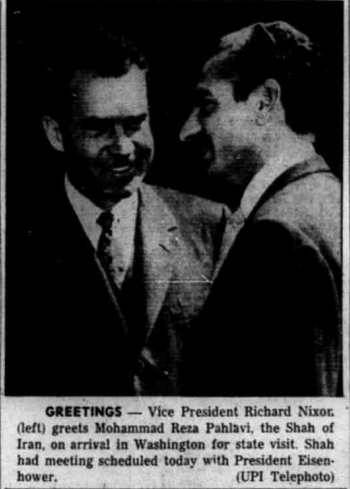
1958 was a midterm election year. Democrats did quite well in California. Pat Brown, father of Jerry Brown, was elected Governor.
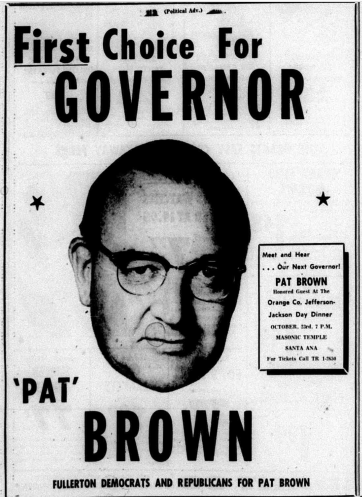
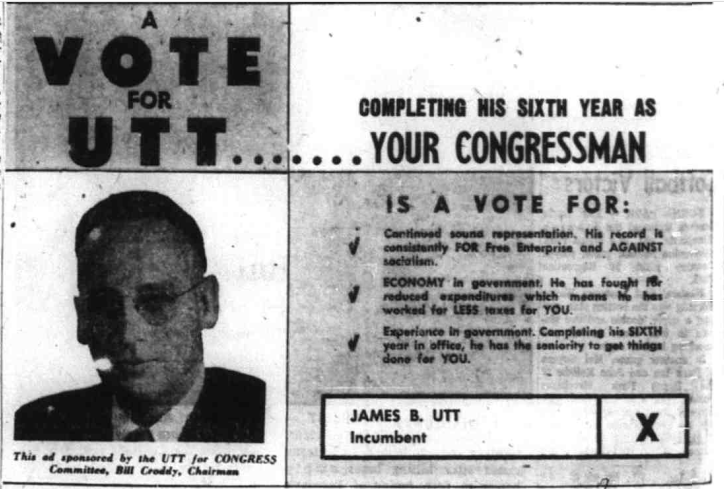
Richard T. Hanna, a Democrat, was elected to represent Fullerton’s district in the State Assembly. Republican James Utt was elected to represent Fullerton’s district in Congress.
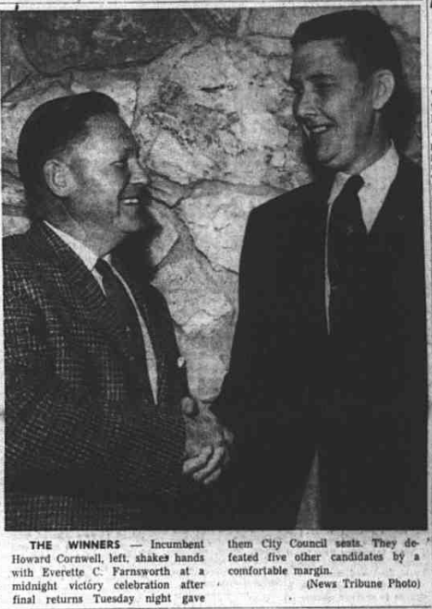
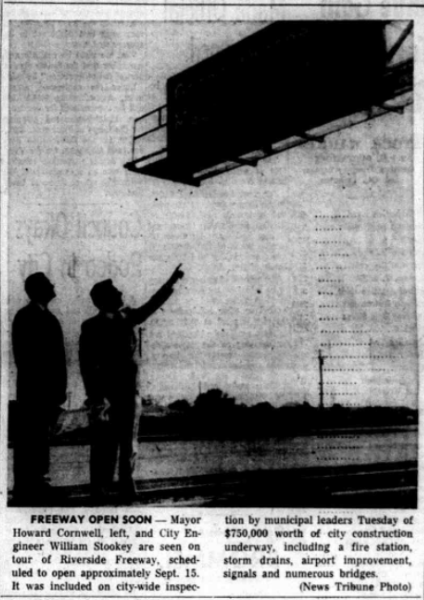
Citrus rancher/service station owner Howard Cornwell was elected to Fullerton City Council, along with Everette Farnsworth, proprietor of the Brothers Chuckhouse Restaurant.
Education
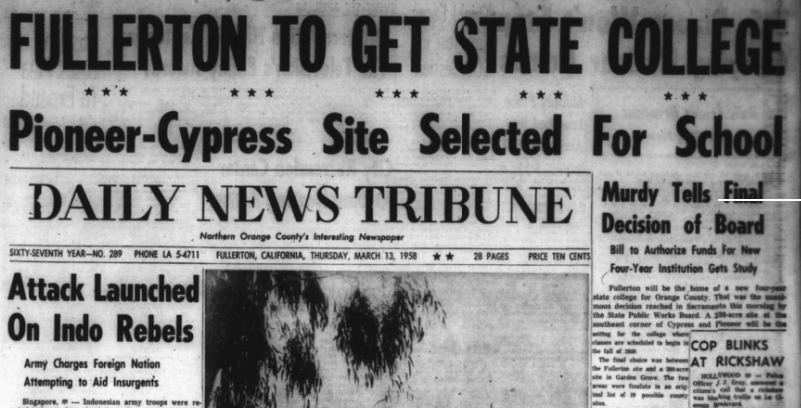
1958 was a big year for education in Fullerton. It was decided that the city would be the location for a new State College–what would become CSUF.
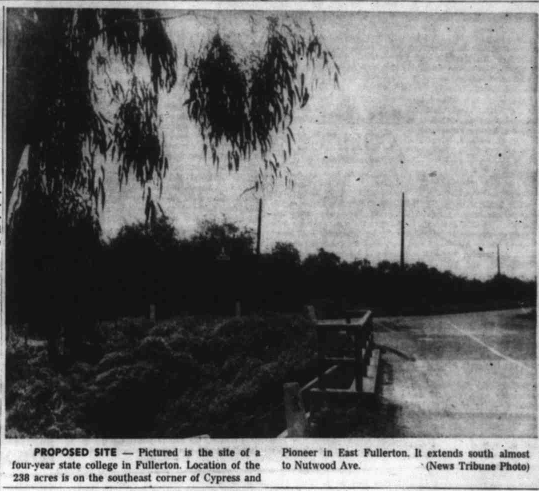
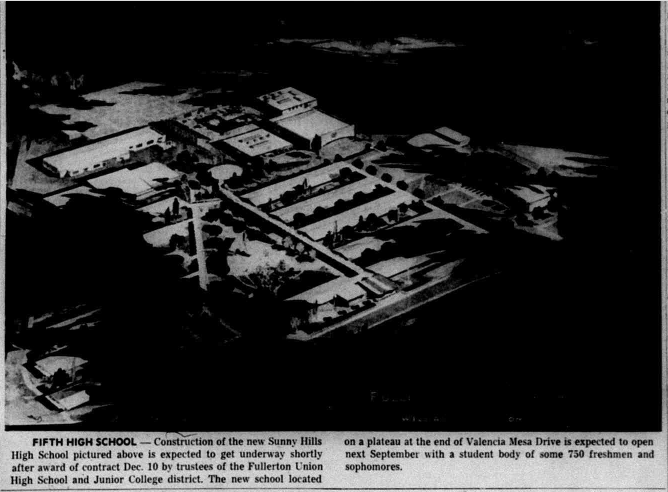
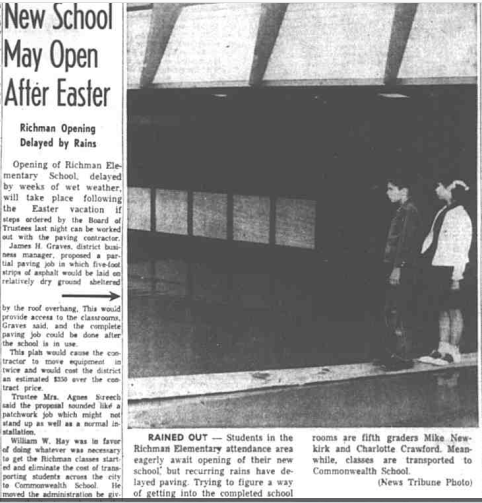
Other new schools were being built to accommodate Fullerton’s growing population, like Sunny Hills High School and Richman Elementary School.
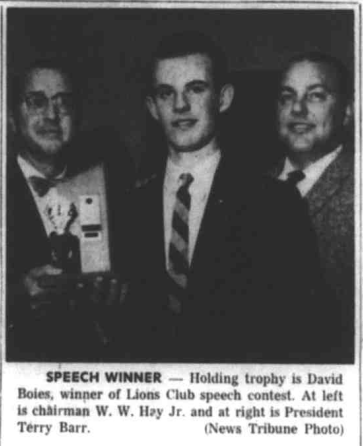
One notable local high school student was David Boies, who won a Lions Club speech contest. Boies would go on to become a very prominent American lawyer, arguing in such notable cases as Bush v. Gore and Perry v. Brown, the case that overturned Prop 8, California’s ban on same-sex marriage.
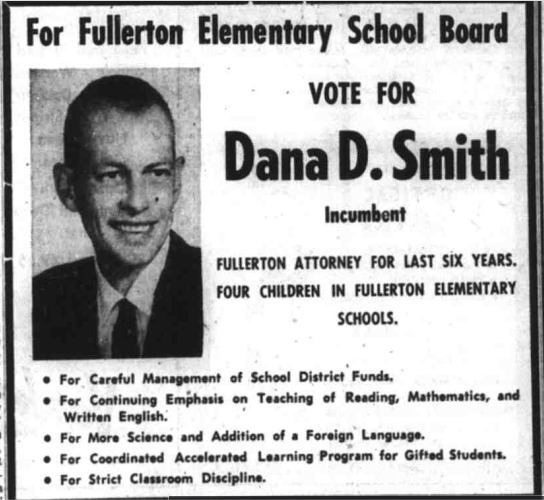
Among those elected to the Fullerton School District Board of Trustees was Dana Smith, a man who was sort of infamous for his involvement in Richard Nixon’s 1952 campaign fund scandal that almost ended his Vice Presidency bid. This scandal is most famous for prompting Nixon’s “Checkers Speech.”
Law and Order
The Fullerton Police Department hired its first ever female policewoman, Geraldine Gregory.
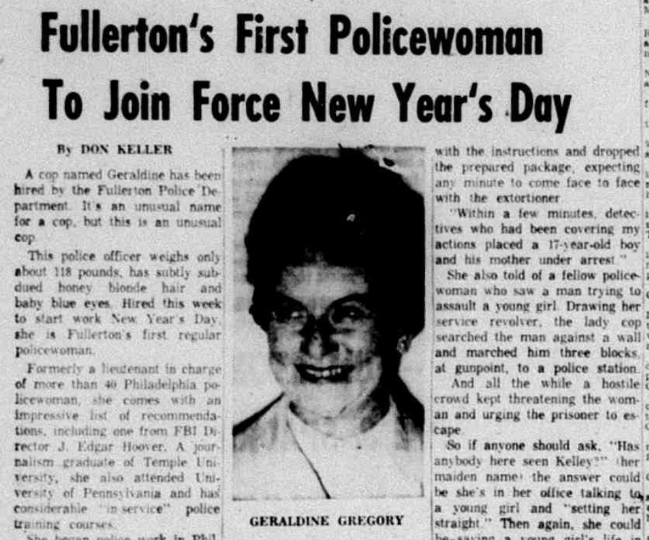
Formerly a lieutenant in the Philadelphia police force and an FBI agent, she came with a recommendation from FBI director J. Edgar Hoover. She was assigned to the juvenile bureau of the investigative division of the FPD.
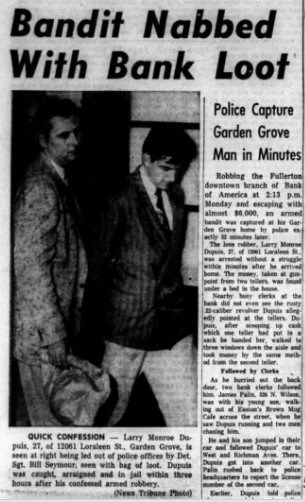
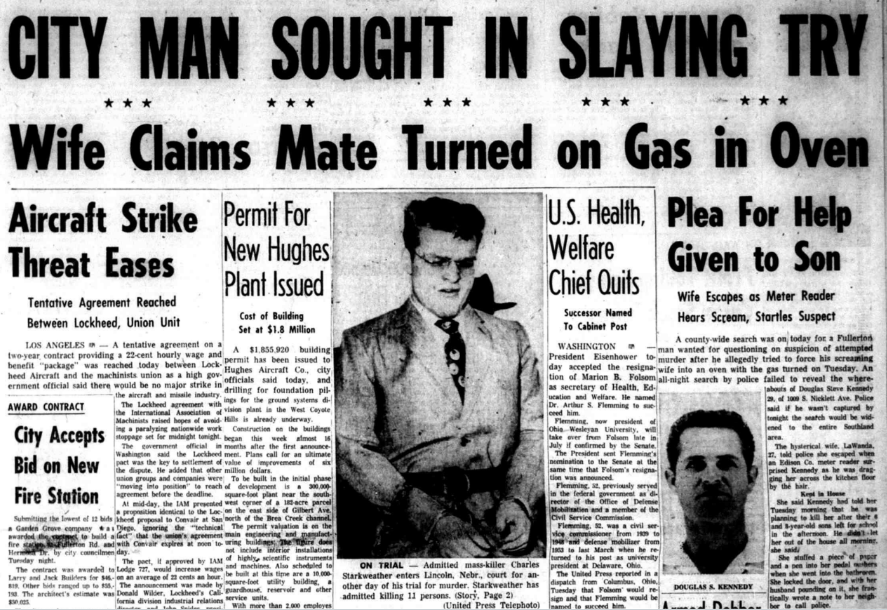
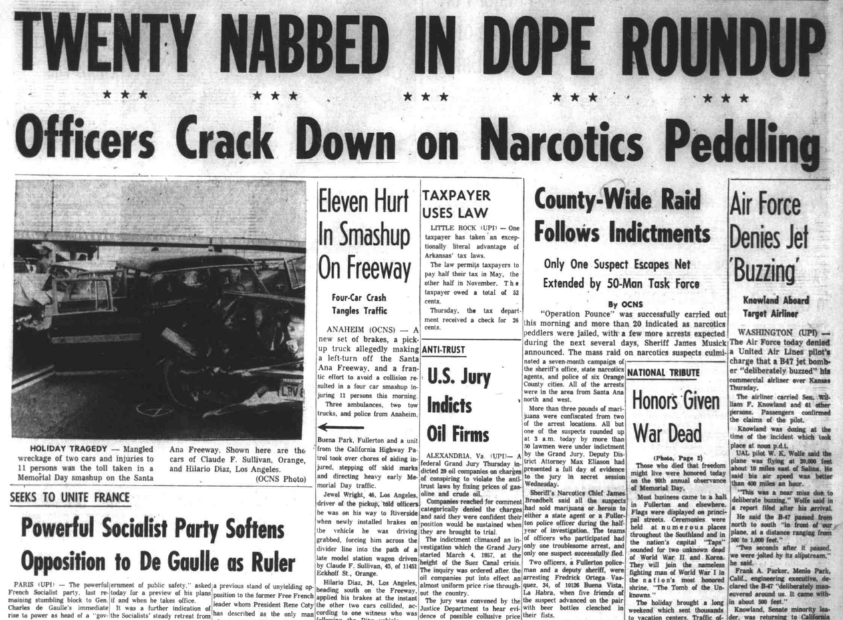
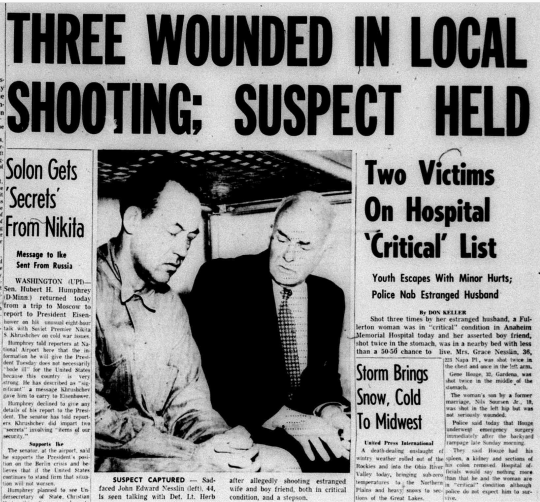
Here are some high-profile crimes that occurred in Fullerton in 1958:
Weather and Climate
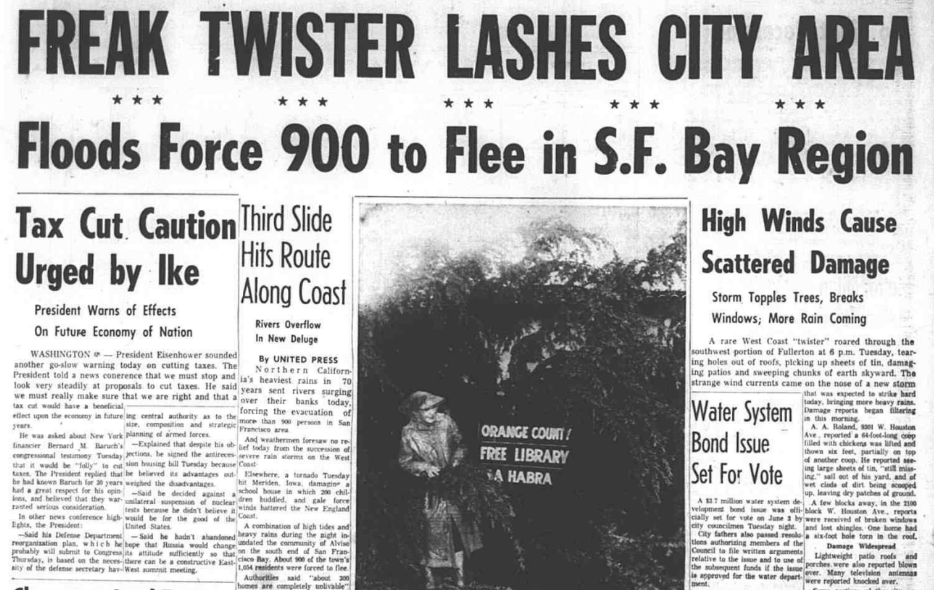
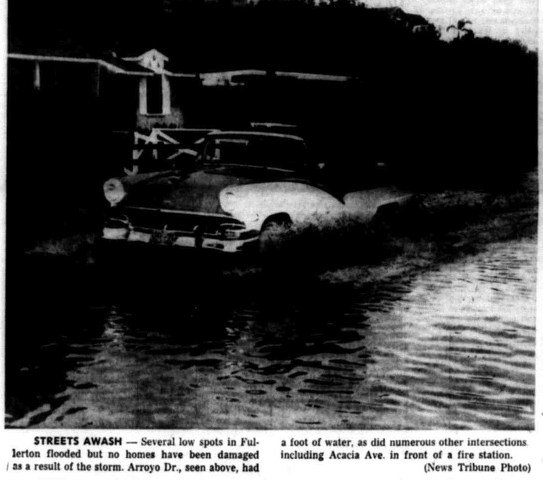
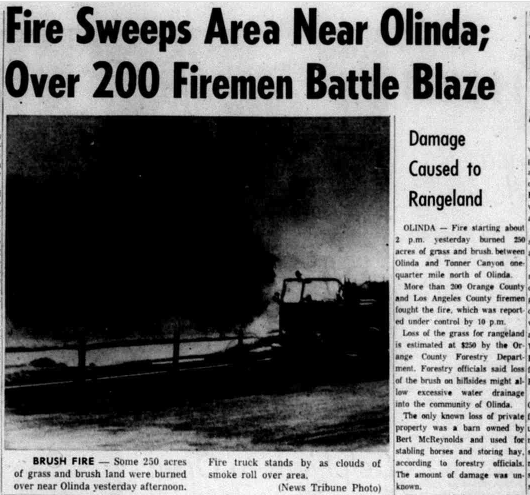
Fullerton and surrounding areas experienced a twister, a flood, and wildfires.
Transportation
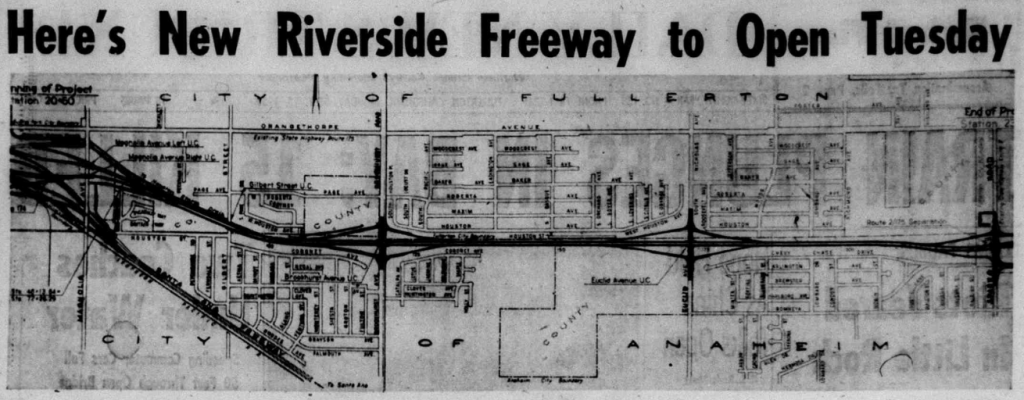
The Riverside Freeway (91) was completed.
Deaths
Some notable Fullertonians died in 1958, including Louis Plummer.
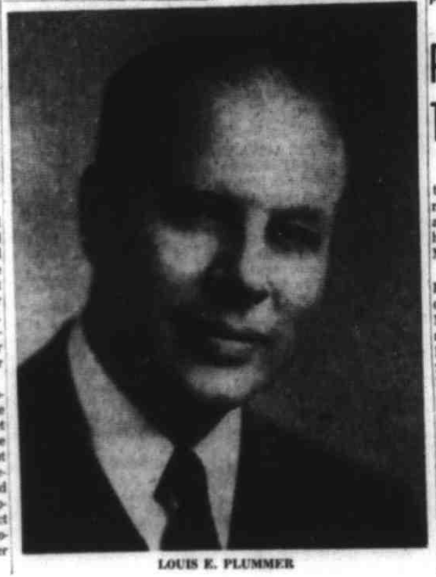
Plummer was Superintendent of Fullerton’s high school and junior college from 1919 to 1941. He was president of the American Association of Junior Colleges in 1924.
Fullerton Junior College, founded during the time he was in Fullerton, experienced its greatest growth during his administration as superintendent.
Fullerton High School’s Auditorium was named for Plummer for many years. The name was removed in 2020 following revelations that he was likely a member of the Ku Klux Klan in the 1920s, along with a number of local leaders.
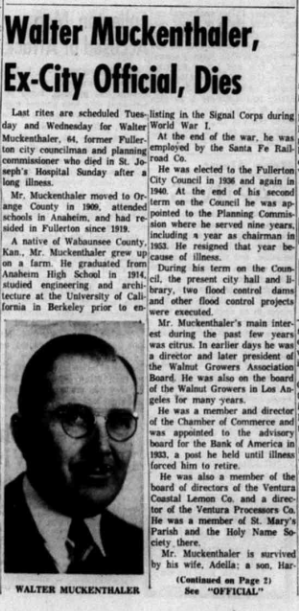
Walter Muckenthaler died. A local rancher, he served on Fullerton City Council in the 1930s and 1940s. The Muckenthaler Cultural Center is his former home.
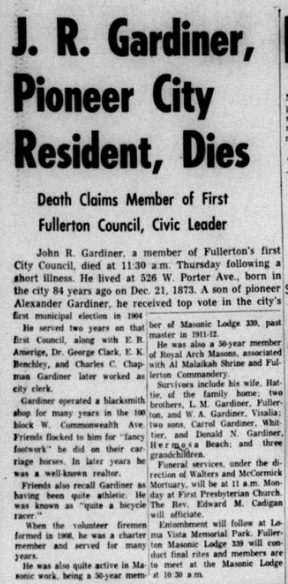
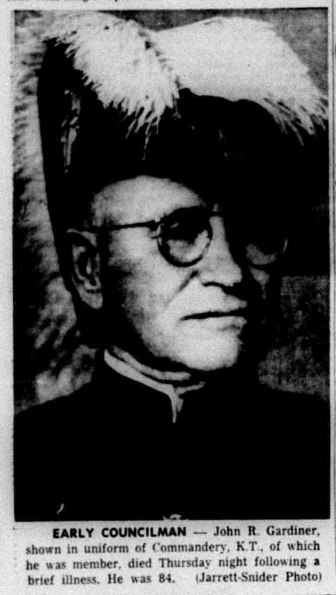
John R. Gardiner, who served on Fullerton’s first City Council, died.
Richard S. Gregory died.
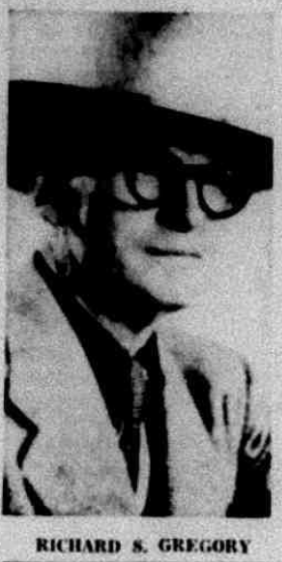
He was a a resident since 1893, and a councilman from 1912 to 1916. He was instrumental in getting the first sewers and paved streets and in building the city’s water works system. He was a rancher, developer, postmaster, and banker.
Stay tuned for top stories from 1959.

