The following is from a work-in-progress about the history of Fullerton. You can support my ongoing research and writing on Patreon.
The Local History Room of the Fullerton Public Library has microfilm from the Fullerton Daily News-Tribune newspaper stretching back to 1893. I am in the process of reading over the microfilm, year by year, to get a sense of what was happening in the town over the years, and creating a mini archive. Below are some news stories from 1957.
Growth
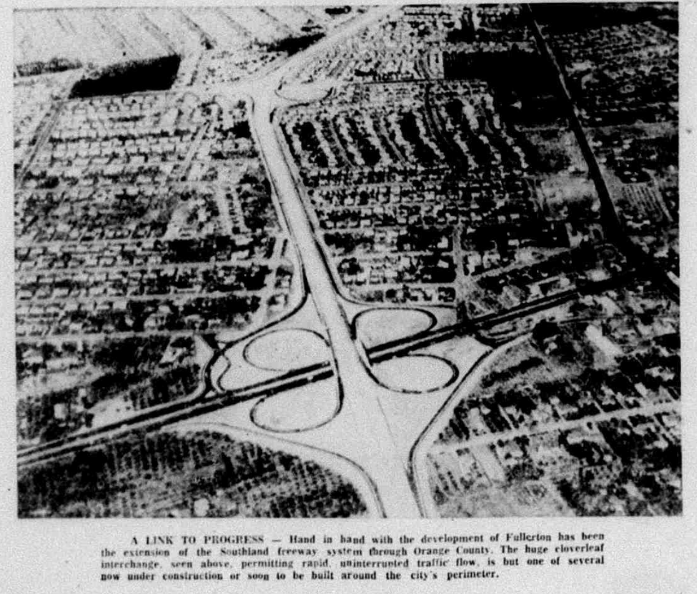
In 1957, Fullerton was experiencing a period of rapid growth, with a population approaching 50,000. To accommodate the growth, new freeways were built.
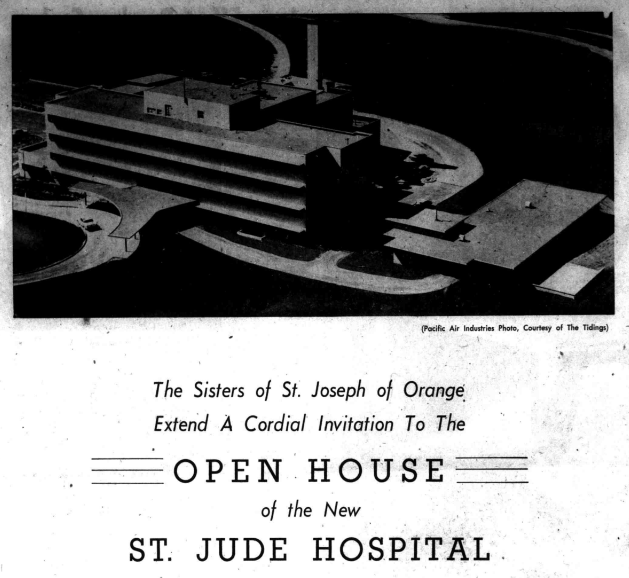
St. Jude hospital opened with much larger facilities than the previous old hospital downtown.
Housing
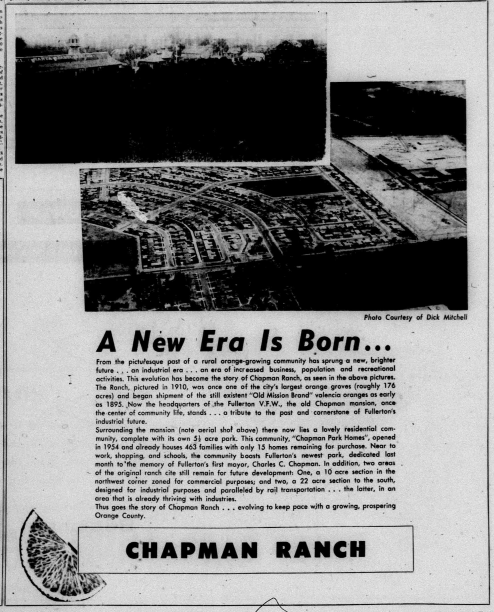
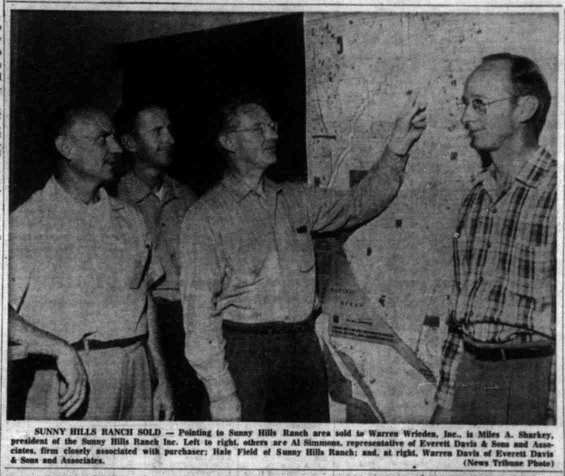
Orange groves, like the Chapman and Sunny Hills ranches were giving way to new housing subdivisions.
Industry
New industries were entering Fullerton.
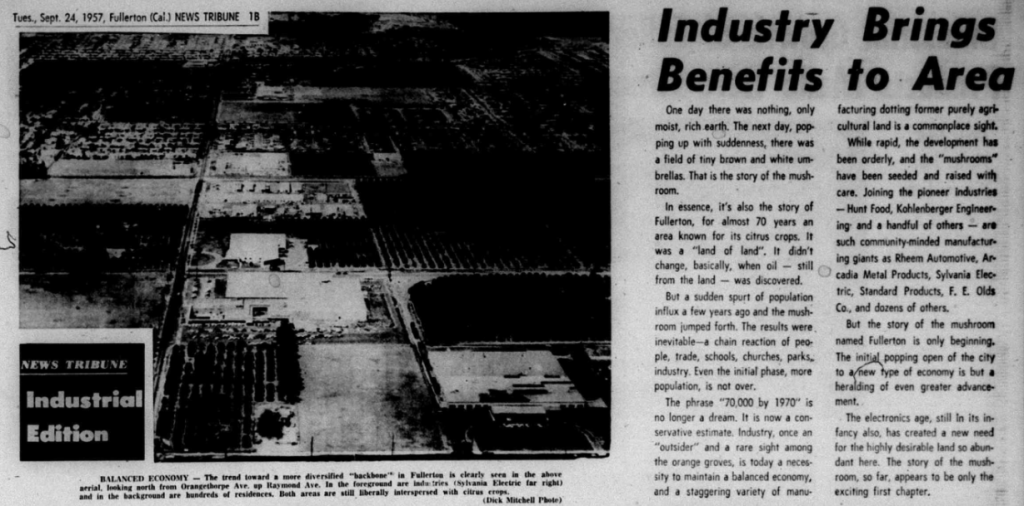
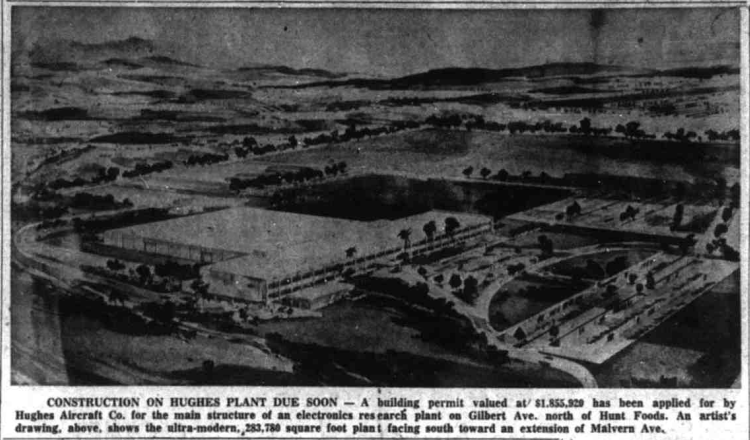
Hughes Aircraft was building a huge new plant–it would eventually become Fullerton’s largest employer.
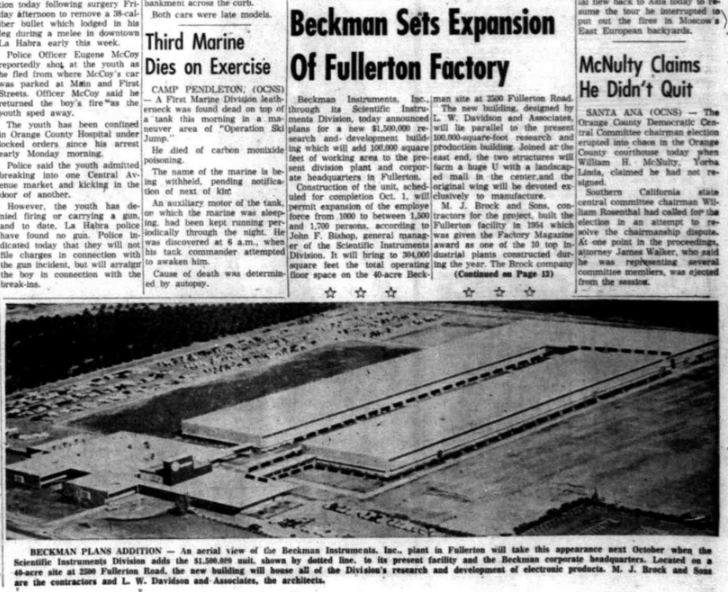
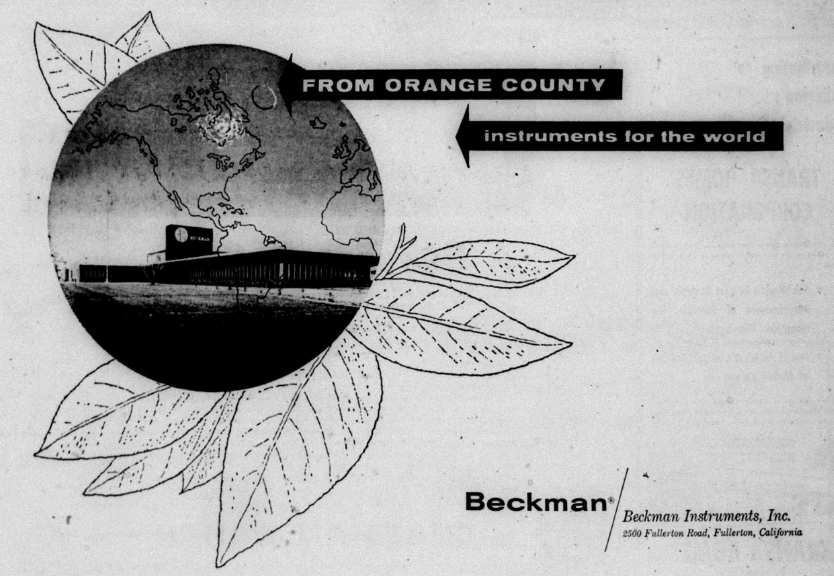
Beckman Instruments expanded their facility in north Fullerton.
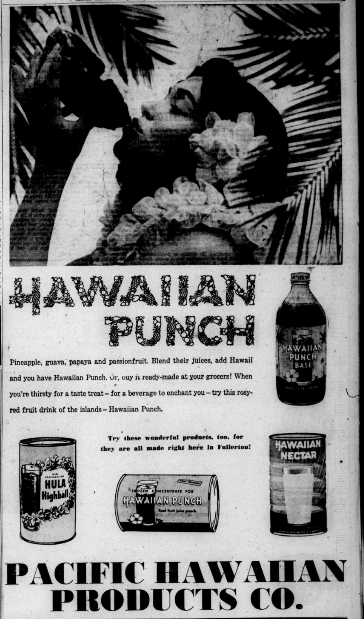
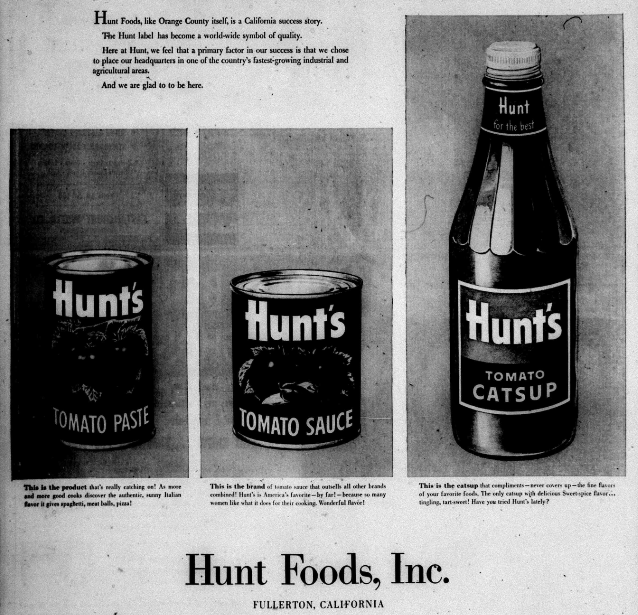
Other longstanding Fullerton industries were also growing, like Hawaiian Punch and Hunt Foods.
Labor
New construction and industry brought its share of labor disputes, such as a large-scale construction worker strike throughout Southern California.
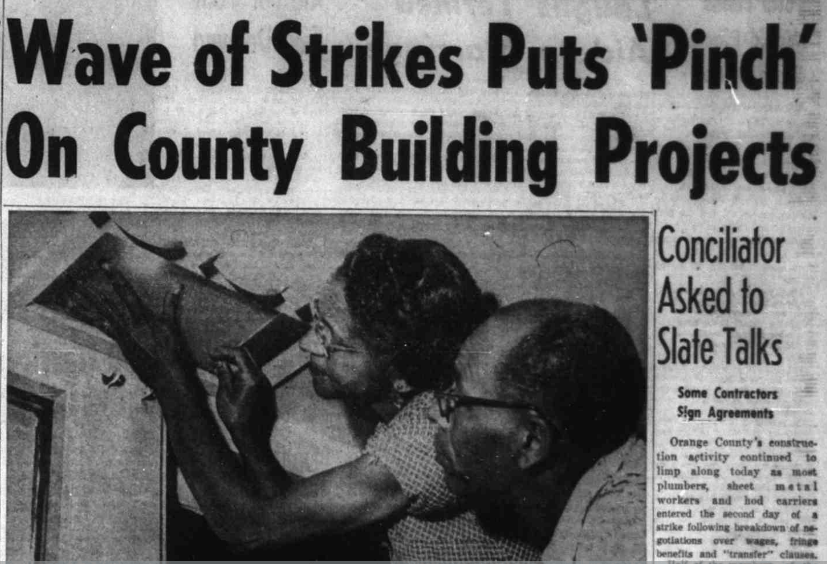
In 1957, a larger segment of US workers were part of a union. The strike included 25,000 construction workers. Ultimately the strike ended with the workers gaining pay increases and other benefits.
In an extreme example of labor unrest, there was a bombing of a coat manufacturing plant.
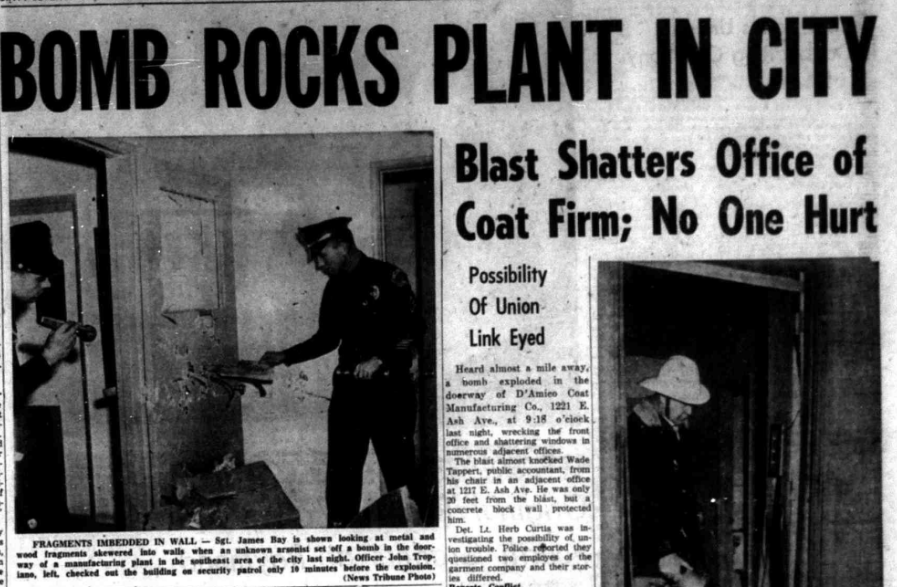
“Heard almost a mile away, a bomb exploded in the doorway of D’ Amico Coat Manufacturing Co, 1221 E. Ash Ave at 9:18 o’clock last night, wrecking the front office and shattering windows in numerous adjacent offices,” the News-Tribune reported. No one was injured.
The FBI got involved in the investigation, although it doesn’t appear the perpetrators were found.
Education
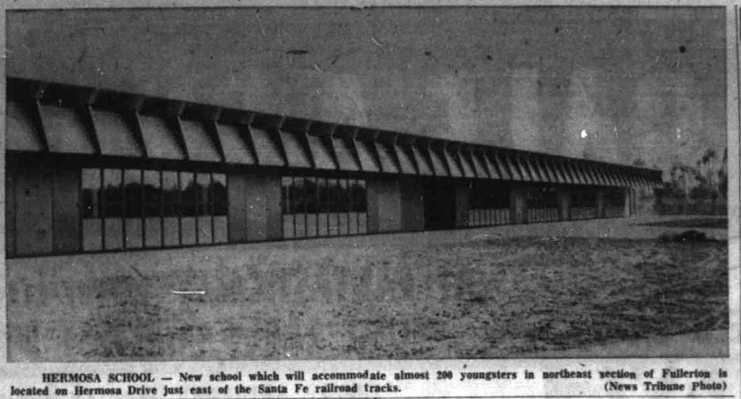
Population growth brought new educational facilities. New elementary schools were built, including Hermosa, Pacific Drive, and Acacia.
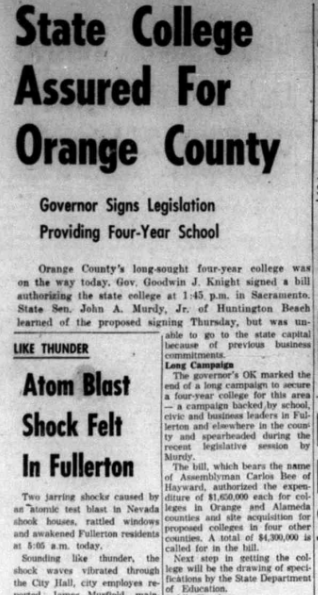
Plans were in the works to build what would become California State University, Fullerton.
Water
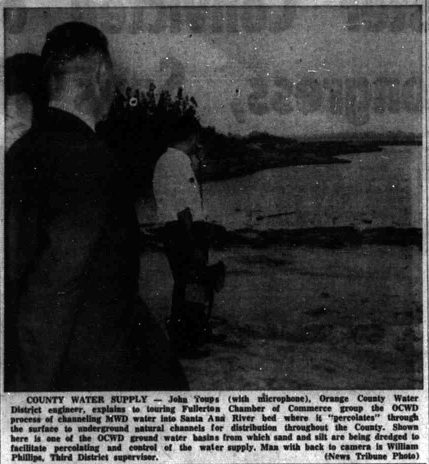
As the area became more developed and populated, the need for water increased, and concerns were being raised about California’s dwindling underground supply.
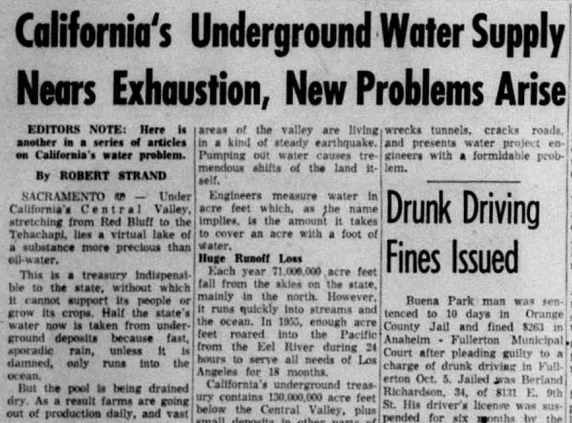
“Orange County’s future as a thriving residential and industrial center may be only as bright as its prospects for curing its biggest headache–its water problem,” the News-Tribune reported. “The county must, according to water experts, import two thirds of its supply by 1970. Barring that, it could become an area of shortages and rationing.”
In 1957, Orange County was importing about half of its water from distant sources like the Colorado River.
Cold War
The Cold War was in full effect with both the United States and the Soviet Union building and testing increasingly powerful nuclear weapons. Many nuclear tests were done in Nevada. Some of them could be felt here in Fullerton.
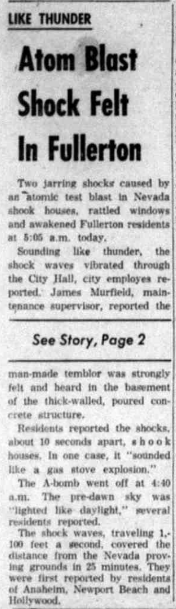
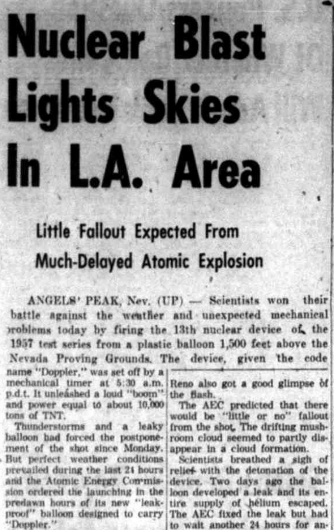
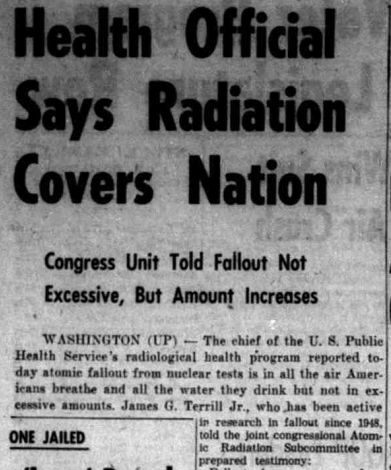
Of course, all this testing exposed millions of Americans to radiation.
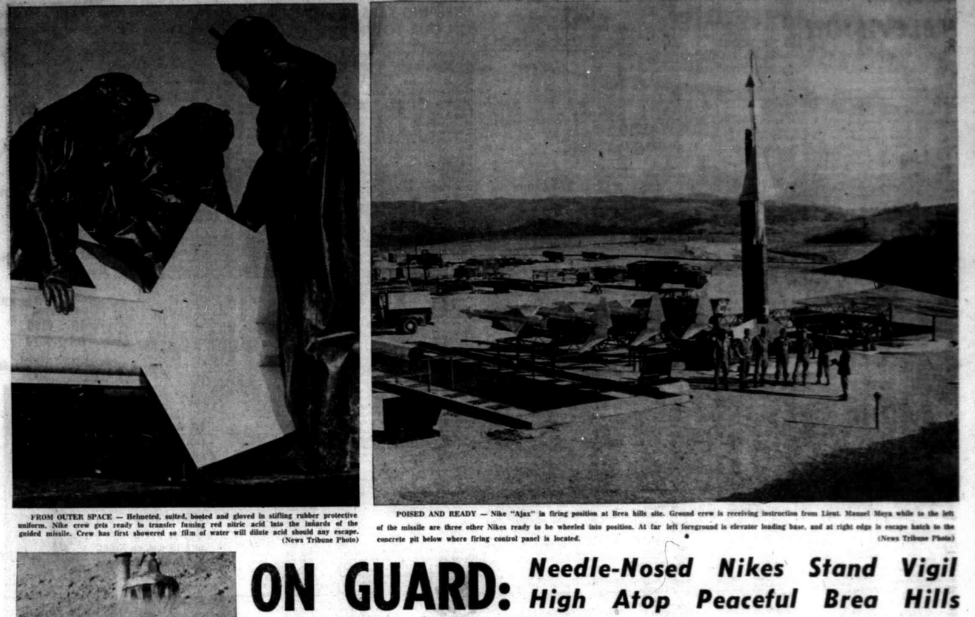
Closer to home, in Brea, there was an installation of Nike missiles should the west coast ever be attacked.
Crime and Punishment
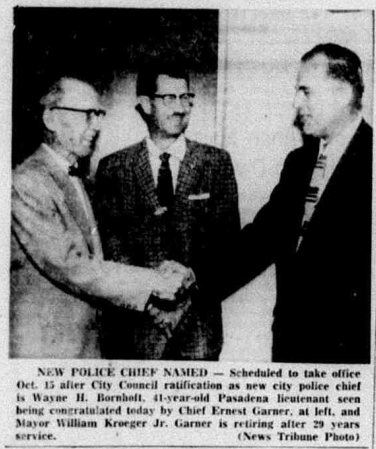
Fullerton’s long-time police chief Ernest Garner retired and was replaced by Wayne Bornhoft.
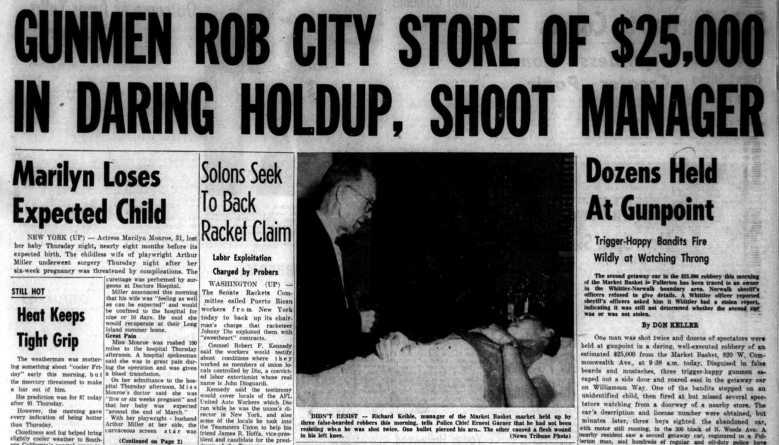
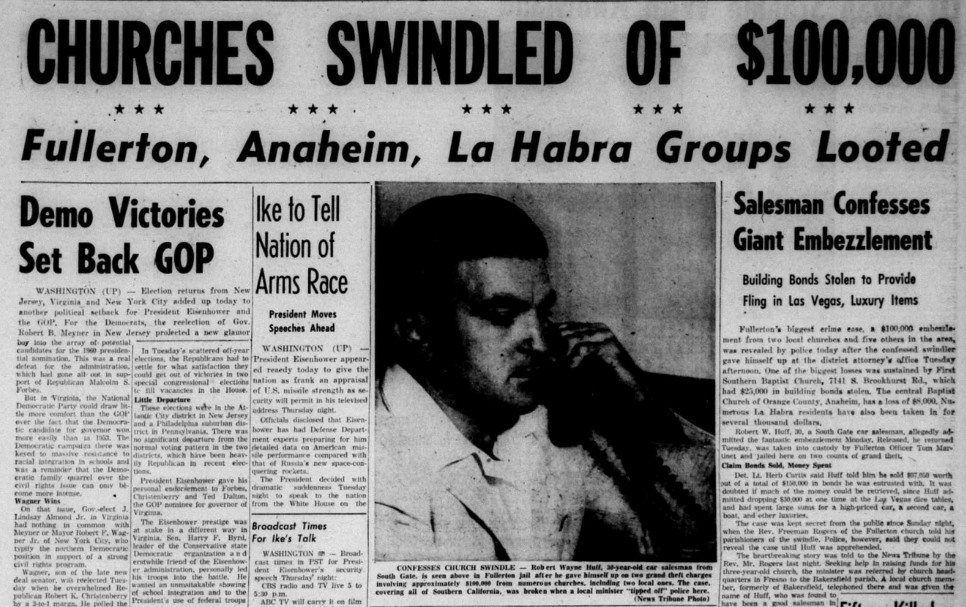
Notable crimes included assaults, robberies, and scams.
Social and Cultural Life
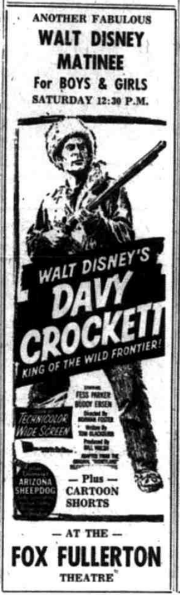
For entertainment, Fullertonians went to movies at the Fox Theater.
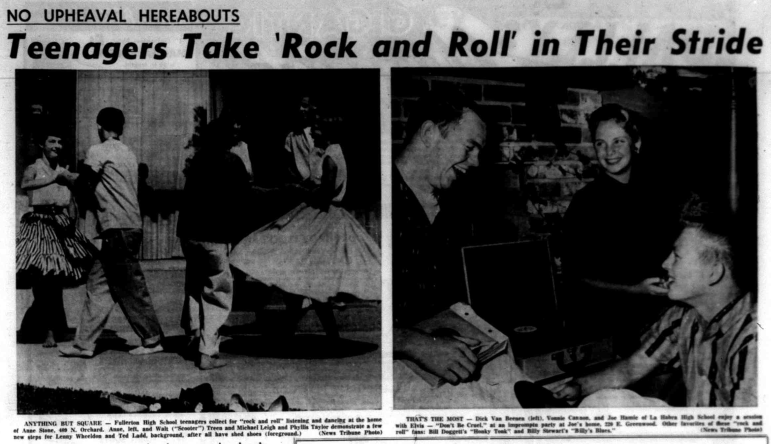
Teenagers listened to rock and roll.
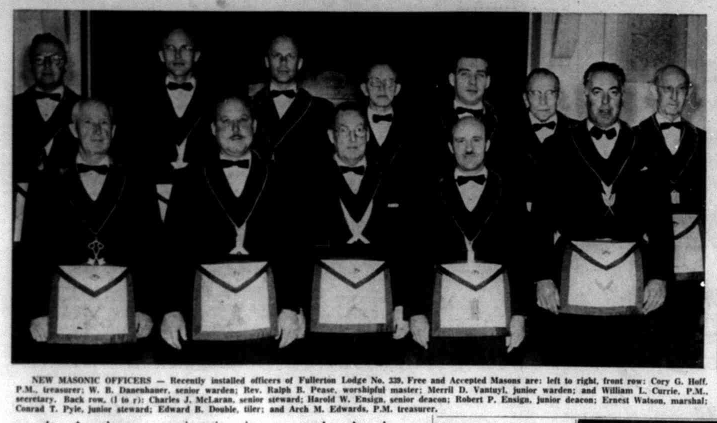
Older adults participated in social clubs and other community events.
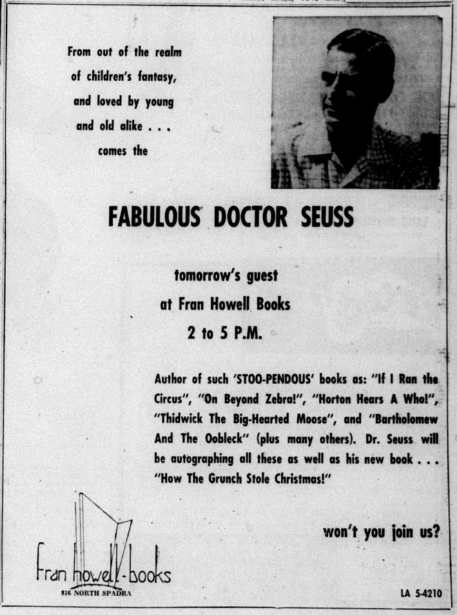
And Dr. Seuss came to town!
Stay tuned for top stories and clippings from 1958!

