The following is from a work-in-progress about the history of Fullerton. You can support my ongoing research and writing on Patreon.
The Fullerton Observer newspaper was formed in 1978 by Ralph and Natalie Kennedy and friends to provide a more progressive counterbalance to the more conservative Fullerton News-Tribune and Orange County Register. Back then, Orange County (including Fullerton) was dominated by Republicans, and the Observer crew were definitely in the minority. The Fullerton Public Library has digital archives of the Observer stretching back to 1979. I am in the process of reading over these archives and creating a year-by-year summary of top stories. Here are some top stories from 2005.
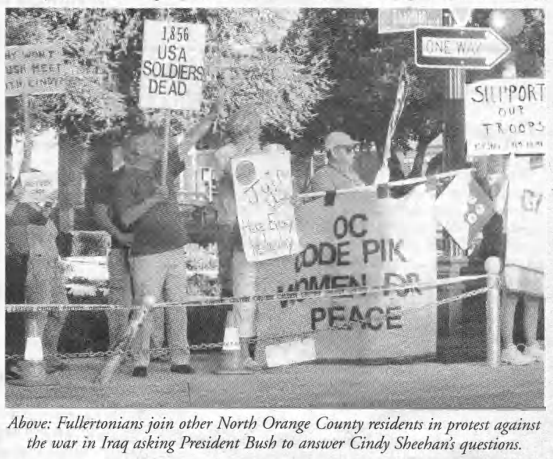
The Iraq War
In national and international news, the Iraq War continued, costing thousands of lives and American dollars. Some local residents protested the war. Many others supported it.
In 2004, the revelations that American military members had tortured and humiliated Iraqi prisoners at Abu Ghraib shocked the conscience of the world.
A lesser-known instance of similar behavior was the case of twelve National Guard troops from Fullerton’s A-Company of the 1st Battalion of the 184th Infantry who were “charged with misconduct in the abuse of Iraqi civilians rainging from extortion of Iraqi owned businesses to failing to stop the abuse of others to actual torture of detainees including use of a stun gun on the genitals and a gunshot near the head of a detainee,” the Observer reported.
“Three of the soldiers have received prison sentences, four were sentenced to hard labor, others received a reduction in rank, and another case is pending,” according to the Observer. “Battalion commander Lt. Col Patrick Frey was replaced and reassigned. The abuse was discovered after an uninvolved soldier handed a video over to his commander.”
Technology
In 2005, Fullerton experimented with free downtown wi-fi service covering a 24-block area.
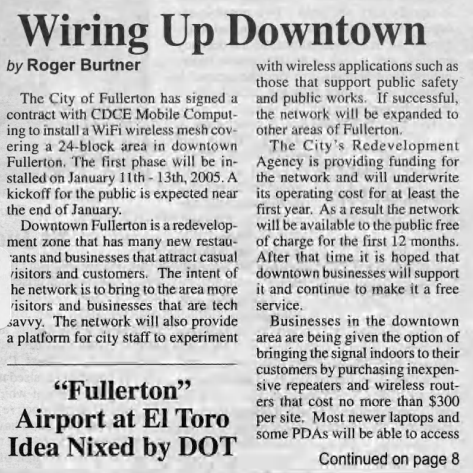
“The intent of the network is to bring to the area more visitors and businesses that are tech savvy,” the Observer reported. “The City’s Redevelopment Agency is providing funding for the network and will underwrite its operating cost for at least the first year.”
Living downtown at the time, I remember the free wi-fi. Alas, it did not last.
Pollution
In 2005, the City of Fullerton was dealing with the cleanup of at least three sites of former industrial pollution.
The first was a “plume” of contaminants around the border of Fullerton and Anaheim that would eventually become the North Basin Superfund site.
In 2005, the Orange County Water District sued several companies to try to get them to clean up their waste. Companies listed in the suit included some big names in manufacturing like Northrop Grumman. Cleanup of this plume would be delayed for decades by litigation.
Another site of pollution was the former Hughes Aircraft plant, which had been developed into what is now Amerige Heights, with housing, an elementary school, and a shopping center.
And the third site of pollution was the newly-constructed Union Pacific Park which, it was found, was contaminated with toxins from a former manufactured Gas Plant owned by Sempra Energy.
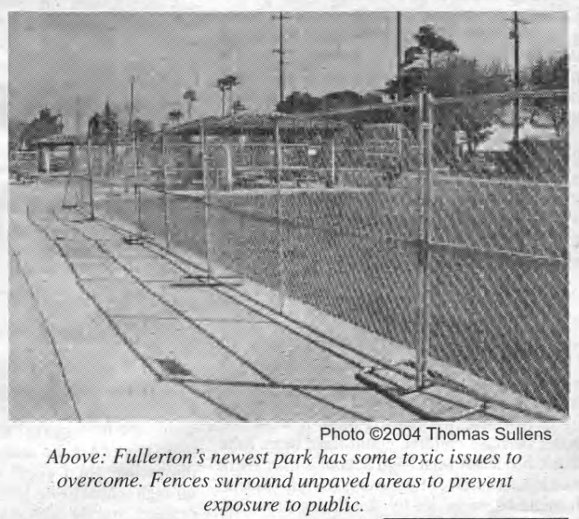
In 2005, Fullerton sued Sempra to clean up the site, but they were denying responsibility for the pollution. As is often the case, cleanup would be delayed by expensive and drawn-out litigation.
Public Input? Keep it Short!
In 2005, Fullerton City Council shortened the amount of time that individual residents could speak on agenda items from 10 minutes to 5 minutes. Today, the time allotted is 3 minutes, and sometimes 2, depending on the meeting.
“If the Council is interested in increasing participation, this decision sends the wrong signal,” Observer political commentator Vince Buck wrote. “Telling citizens that they talk too much does not send a message that public input into city decision making is valued.”
Arts & Culture
In 2004, the historic Fox Theater downtown was saved from the wrecking ball by an 11th hour anonymous donation of $1 million.
After the Fox was saved came the long process of renovating the theater, so that the public could enjoy it. This process has taken 22 years…and counting.
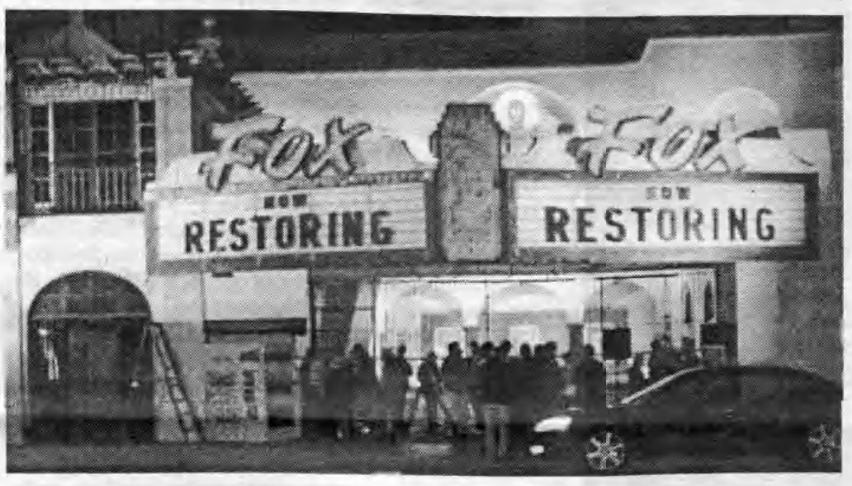
But in 2005, hopes were high and residents were encouraged to volunteer to clean up the neglected theater.
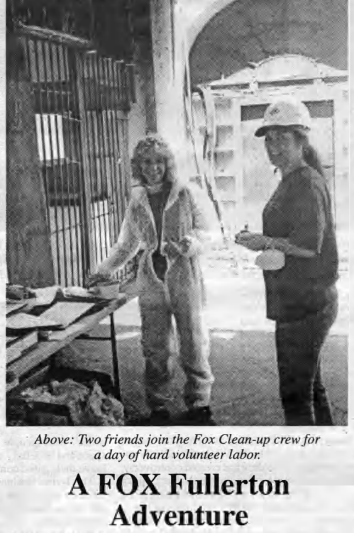
Renovations, it was reported, were “ahead of schedule.”
The Fox Theater Foundation began hosting fundraising events like the annual “Hollywood in Fullerton” and outdoor movie screenings on the back of the theater. I remember attending some of these–they often drew a large turnout.
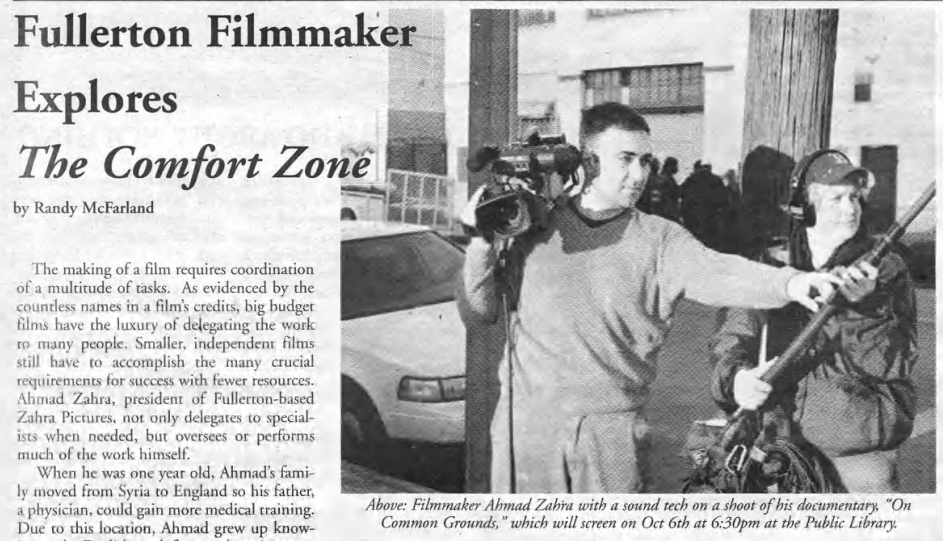
In other film news, a young Fullerton filmmaker named Ahmad Zahra (who is now on city council) held some local screenings of his film “On Common Grounds” which is a documentary about three different faith groups (one Christian, one Jewish, and one Muslim) working together to build a house for a poor family in Mexico.
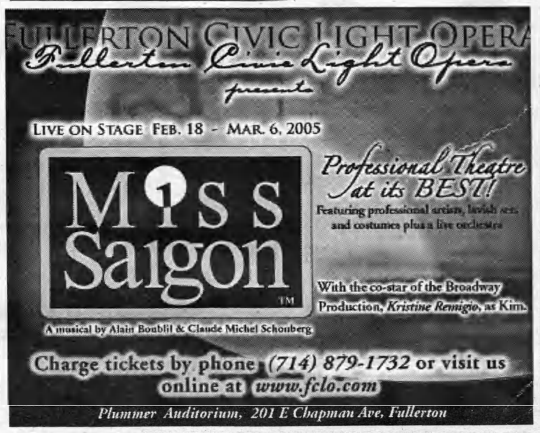
For many years, Fullerton had a theater group called Fullerton Civic Light Opera that staged plays and musicals at the High School Auditorium. Sadly, they are no more, and their former headquarters is now a pet food store.
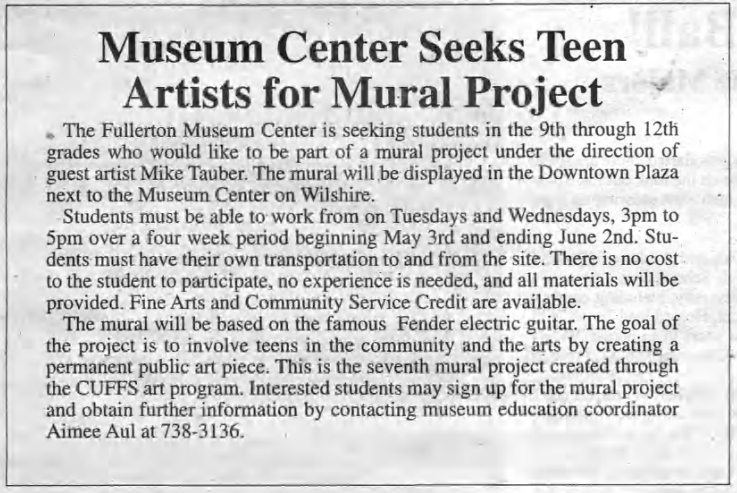
In art news, the Fullerton Museum Center was looking for young artists to help with a mural on the parking structure that sits on the former Fender Instruments Factory. The mural depicts Leo Fender and his musical legacy.
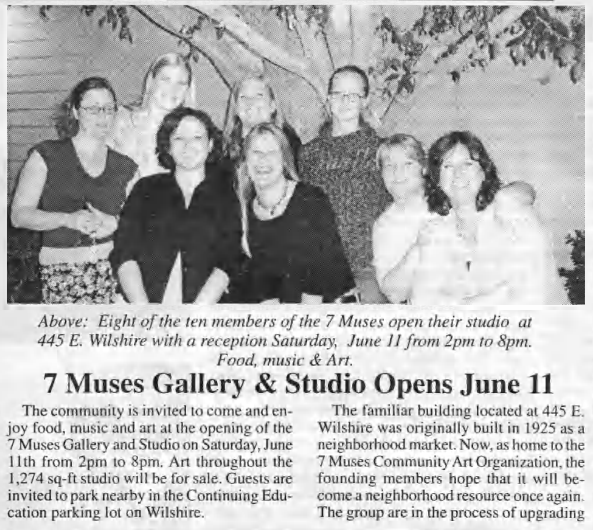
A new art gallery called 7 Muses opened downtown.
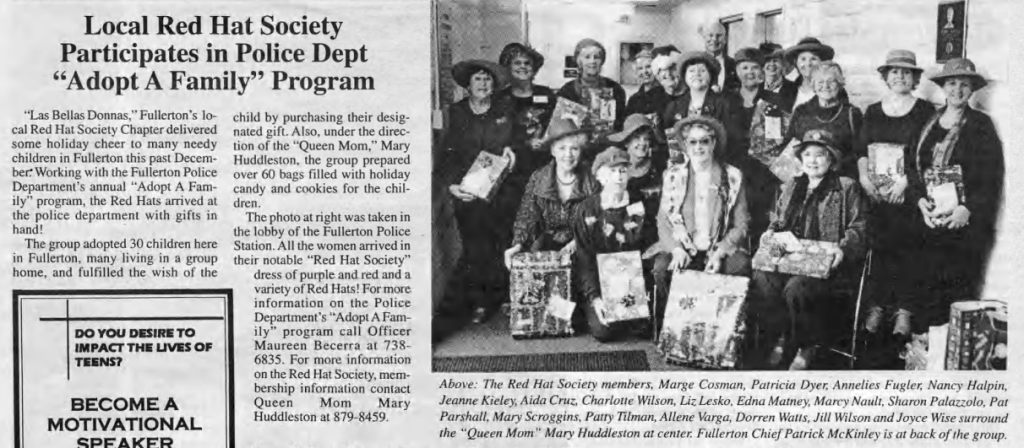
And a quirky group of older women called the Red Hat Society had a storefront and hosted events around town.
Housing: To Build or Not to Build
Fullerton, being a largely suburban community consisting of many single-family home neighborhoods, has experienced a similar development pattern to other Southern California cities.
Following World War II, with a massive population influx, housing construction soared, with an explosion in construction of relatively affordable single-family homes. Farmland gave way to suburbs, schools, industrial parks, and shopping centers. Cities throughout the southland built “out” instead of “up”–creating enormous suburban sprawl.
As time went on, cities like Fullerton became largely “built out” with these types of single-family neighborhoods. People continued moving to Southern California for the same reasons previous generations had (climate, jobs, culture, family), but housing production slowed, and (given the basic economic law of supply and demand) housing prices began to rise, as more people competed for fewer housing units.
Those who lived in those single-family neighborhoods often organized through homeowners associations or community groups to prevent higher-density development to accommodate the newcomers. In Fullerton, this has played out in countless examples of neighbor opposition to new, higher density development.
Back in the 80s, 90s, and 00s both conservatives and liberals alike in suburban communities often opposed higher-density development, whether to protect “neighborhood character” or for environmental reasons.
Over time, the net effect of this neighbor opposition to new housing has resulted in fewer units being built and the current housing affordability crisis that the younger generation faces.
Today, there is widespread recognition that opposing new housing construction keeps housing prices high and harms the economic possibilities of those who can barely afford housing.
But in 2005, opposition to high density housing, like the proposed SunnyCrest Development, was very popular.
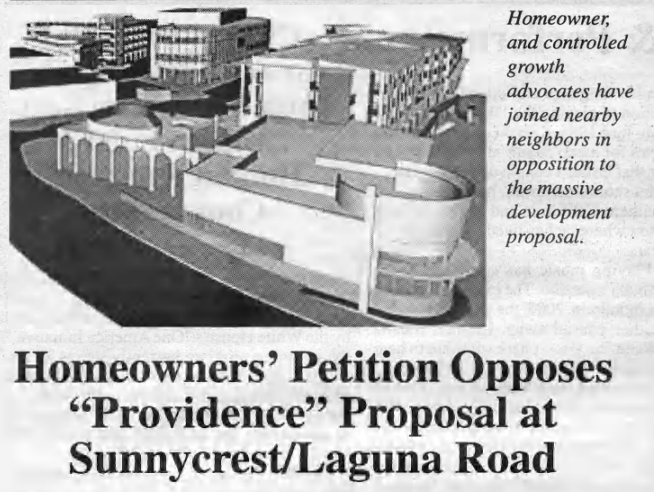
“Emotions were running high when my husband and I joined more than 100 citizens attending a developer-sponsored meeting January 11 at the Ebell Club,” a local resident wrote. “Concerned neighbors pointed out that the project was too dense and totally inconsistent with the semi-rural nature of the surrounding community…Time and again, speakers said that this and other anticipated development projects will ultimately change Fullerton from a family-centered, suburban city to an urban center.”
Local homeowners probably thought that, by opposing developments like this, they were “doing their part” to fight the big bad developer. What they often failed to realize was that, by keeping the housing supply low, they were also making it much harder for their children and grandchildren to be able to afford homes in the future.
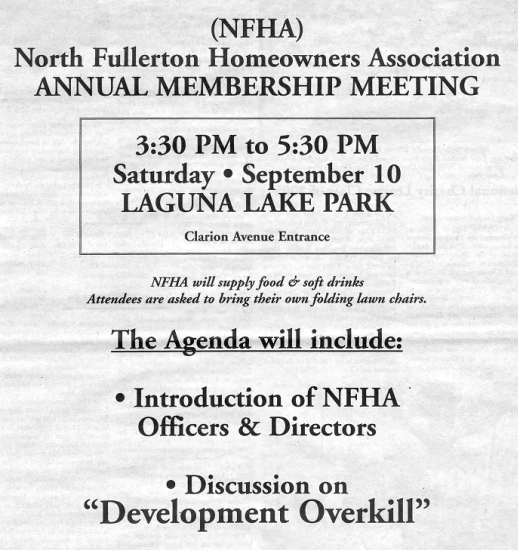
“Overdevelopment is a problem facing the entire city and, before it is too late, citizens should let appointed and elected officials know they are concerned with the direction the city seems to be taking,” stated representatives from North Fullerton Homeowners Association, Fullerton Citizens for Smart Growth and Residents Against Providence Development.
Compounding the affordability problem were proposed cuts to federal housing programs. Then, as now, the stated reason for these cuts was to reduce the federal deficit. But then, as now, these cuts were offset by tax cuts and an expensive foreign war, so the deficit actually worsened.
At the local level, Fullerton was considering cuts to its Housing Rehabilitation Program at the same time it was systematically targeting the largely Latino Maple neighborhood for city code violations. Fullerton also reduced the hours of a Community Took Bank, which provided low-income residents with the tools to get their properties up to code.
“It doesn’t make sense to write a lot of code violations in a low income area of the City and then cut the Tool Bank that would help residents to conform to the requirements, but that is exactly what Council did, in a 4 to 1 vote to hire another code enforcement officer instead,” the Observer stated.
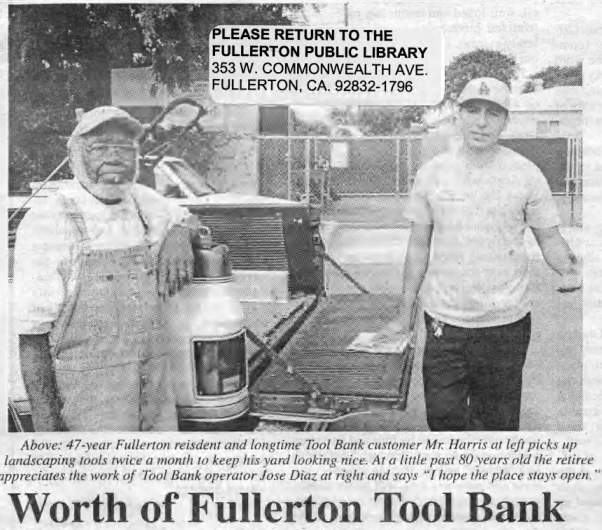
Facing pushback from Maple neighborhood residents, Council then voted to put a moratorium on permit fees in the area being targeted by the aggressive code enforcement.
“Code Enforcement is, by its very nature, arrogant and oppressive and a tool the ‘haves’ use to control the ‘have nots,’ wrote Allen Baldwin, Executive Director Orange County Community Housing Corporation. “Those most adversely oppressed are those without resources who oftentimes break under the pressure of not being able to afford to correct the code violation.”
In 2005, rent was pretty damn high. According to one report, a family in Orange County had to make $25.69 per hour to afford a modest two-bedroom apartment, while the mean wage earned by renters was just $15 per hour. Things are, of course, worse today.
“The housing crisis is getting worse, not better,” said Scott Darrell, executive director of the Kennedy Commission, an advocate group for affordable housing in Orange County. “We need to both raise the minimum wage and expand housing subsidies.”
And Fullerton was not without its slumlords.
A group of renters at the Parkin Garden Apartments on Gilbert started working with the City to demand cleanup of unsafe conditions including rats, cockroaches, hot water problems, leaks and fire hazards. The group was supported by groups like Fair Housing of Orange County and Latino Health Access.
“We are tired of putting our kids through living here and getting no response from the owner or management,” said Lori Ciraulo, a longtime resident.
One area where opposition to new housing was, in my opinion, justified was Coyote Hills.
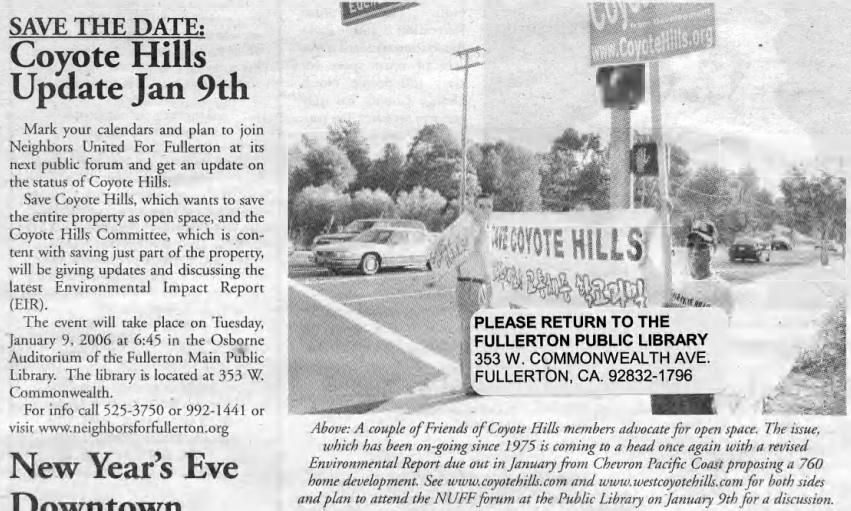
“At the border of Orange and Los Angeles counties, it is in an area where little native open space remains,” the Observer reported. “This densely populated, middle class area has a desperate need for open space and an even more desperate need for natural open space for education, recreation, and the unique ecological values of this disappearing ecosystem.”
For decades now, the Friends of Coyote Hills has been working to preserve this 510-acre space from development by its owner, Chevron.
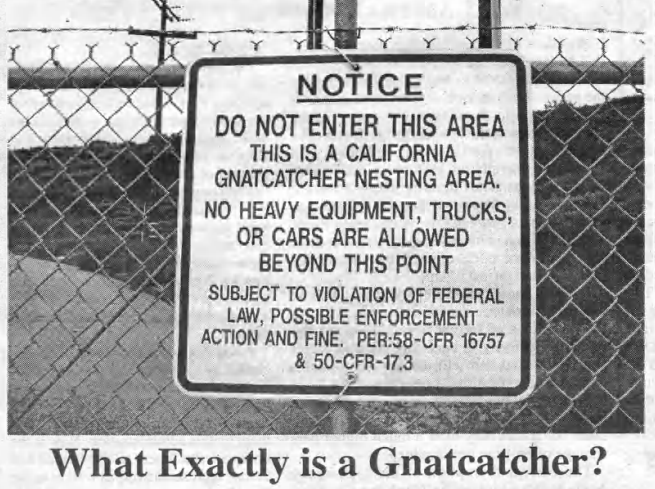
One important resident of Coyote Hills was the California gnatcatcher, a federally threatened bird that nested there.
“There are approximately 500 pairs of gnatcatchers in Orange County, and 46 pairs in Coyote Hills,” the Observer reported. “Their numbers are decreasing rapidly due to the loss of their natural habitat.”
Other birds of Coyote hills include the Song Sparrow, Cactus Wren, Bewick’s Wren, Loggerhead Shrike, Red Tailed Hawk, White Tailed Kite, Northern Harrier, Coopers Hawk, California Quail, Great Horned and Burrowing Owl.
The Demise of the Light Rail Idea
In 1990, Orange County residents voted to pass Measure M, a half cent sales tax for transportation improvements. The envisioned transportation improvements included “urban rail,” bus transportation, improvements to freeways and interchanges, roads and city streets.
Freeways like the I-5, 405 and 55 were improved with additional traffic lanes and interchanges.
The Metrolink rail system was inaugurated in 1994 and was successful.
In 1997, the Orange County Transportation Administration (OCTA) began plans for a light rail project called CenterLine. The first proposed segment was a 28-mile stretch from Irvine to Fullerton. The plan was to ultimately expand the Light Rail to 87 miles and connect it with the Los Angeles Metro system.
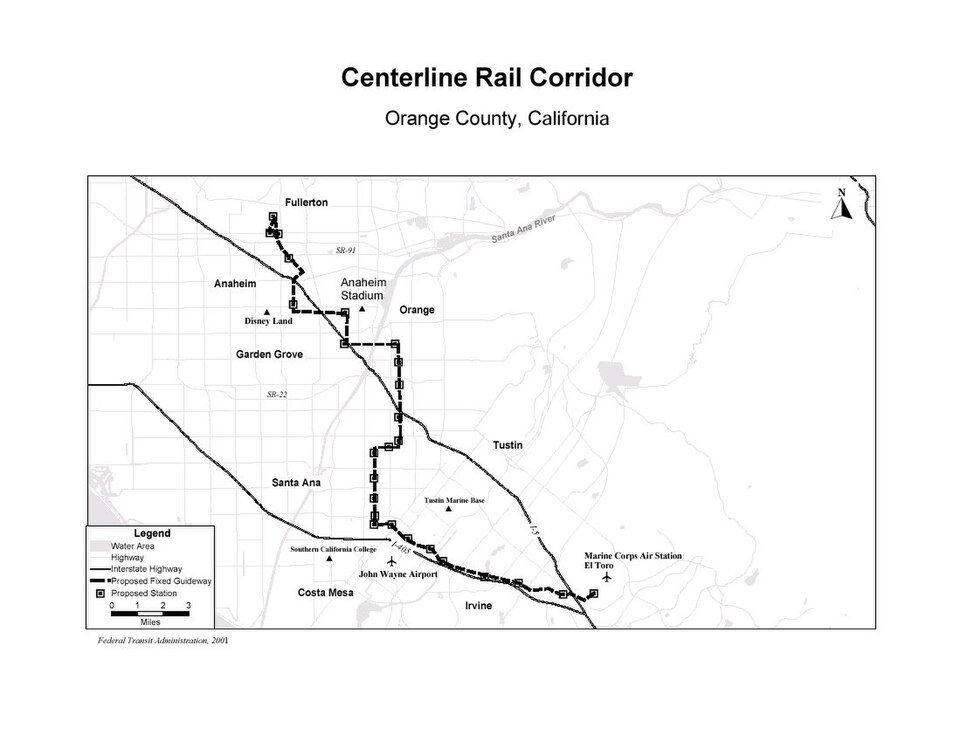
However, the Centerline encountered a well-organized opposition.
Facing opposition from cities like Irvine and Anaheim, the Centerline idea was shortened to just 9 miles. Then, when federal matching funds failed to materialize, the whole project was scrapped.
“OCTA committee members, who voted 7-0 to drop the $ 1.2-billion rail line, instead favor a $900-million dedicated Bus Rapid Transit (BRT) system,” the Observer reported.
This despite the fact that a CSUF survey showed that a majority of Orange County voters were favorable to a light rail system.
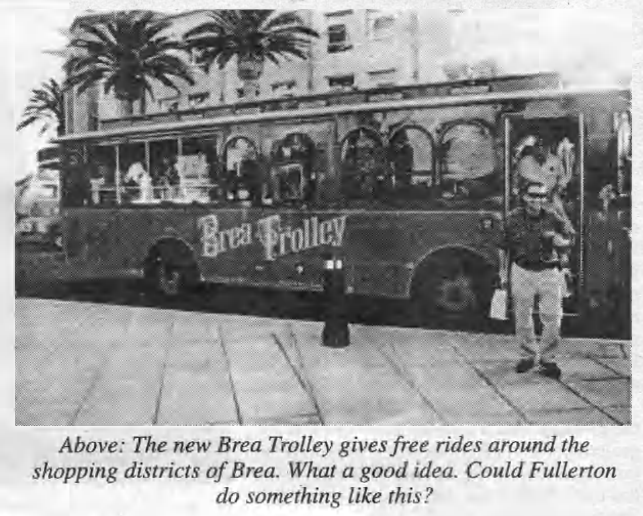
In (somewhat) positive news, a new Brea Trolley offered free rides to Birch Street. It wasn’t really a trolley, but a bus made to look like a trolley, and it didn’t last long.
Free Speech at Troy
School administrators at Troy High School removed Ann Long, co-editor of the school newspaper from her position “after she published an article about two bisexual students and one gay student in an effort to raise awareness on campus,” the Observer reported.
The article “dealt with the struggles that gay, lesbian, and bisexual individuals go through when they come out to their loved ones.”
The reason given for her suspension was that Long did not obtain the students’ parents’ permission before publishing the article.
Free speech advocates like the American Civil Liberties Union and the California Safe Schools Coalition, sent a letter to George Giokaris, superintendent of the Fullerton Joint Union High School District calling for Long’s reinstatement as editor-in-chief.
A petition circulated among Troy High students, calling for the school to reverse its decision, generated 276 signatures.
“By forcing Ms. Long to step down from her position, district and school officials are indirectly endorsing censorship of student press,” the petition stated. “Ms. Long’s article was unfairly discriminated against for its content regarding sexuality. If she is forced to resign, it will set a precedent for stifled freedom of the press for all Californian student journalists.”
It’s unclear from the reporting whether Long was reinstated in the editor position. Stay tuned for stories from 2006.
In 2005, the ACLU got involved in another Fullerton education issue involving laptops being provided to students at the new Fisler Elementary School with a fee of $1500. Laptops were also provided at three other schools.
Not providing all students in the district with laptops and charging for them raised questions of fairness and equity.
“The Fullerton School District received a letter from the Orange County ACLU’s Director Hector Villagra [who] challenged the constitutionality of the laptop program citing the court case Hartzell v. Connell which indicates a school that conditions a student’s participation in educational activities upon the payment of a fee is not a free school,” the Observer reported.
Again, stay tuned for my report on 2006 to see how this issue was resolved.
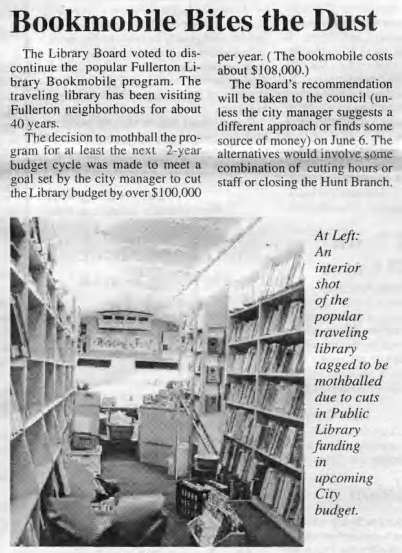
In other sad education news, the Library Bookmobile was decommissioned.
Police Misconduct
Two Fullerton Police officers, John Cross and Gregg Nowling, were placed on paid administrative leave after a video of their mistreatment of a Black man showed them spouting racial slurs and other abusive language in the booking room. An eyewitness alleged the man was also physically assaulted. The victim was stopped for playing his car radio “too loud.”
The man later accused the officer of stopping him because he was black. According to the police report, the man was arrested for giving a false identity, resisting arrest, and making threats to police officers.
“The man said that all of his actions were in direct response to being mistreated by the officer,” the Observer reported. “He admitted to giving a false identity because he was afraid there was something wrong with his license (though when the officer ran the mans correct identification it indicated he had a valid license and no previous record or warrants).”
The case was referred to the Orange County District Attorney’s office, who declined to prosecute. The officers were both reinstated, but one (later identified as Gregg Nowling), resigned after it was discovered that he lied to his supervisor.
By resigning instead of being fired the officer may have been able to keep his pension and get hired by a different department. Hopefully, that was not the case.
Deaths
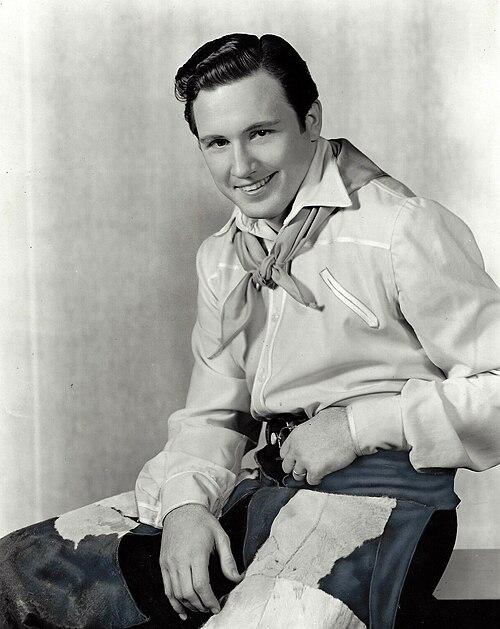
Famous Broadway and film star John Raitt, who attended Fullerton High School, died. He was the father of pop singer Bonnie Raitt.
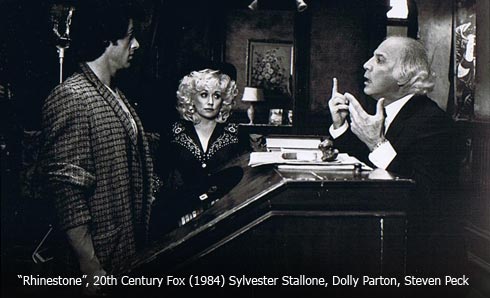
Dancer, choreographer, actor, and co-owner of Angelo’s & Vinci’s Ristorante Steven Peck died.
Stay tuned for top news stories from 2006!

