The following is from a work-in-progress about the history of Fullerton. You can support my ongoing research and writing on Patreon.
The Local History Room of the Fullerton Public Library has microfilm from the Fullerton Daily News-Tribune newspaper stretching back to 1893. I am in the process of reading over the microfilm, year by year, to get a sense of what was happening in the town over the years, and creating a mini archive. Below are some news stories from 1955.
The Cold War
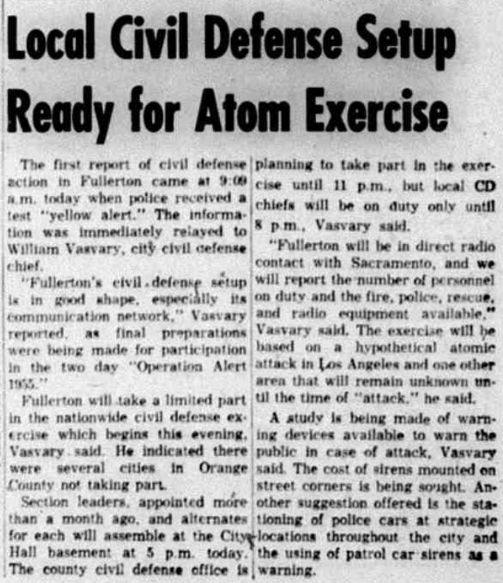
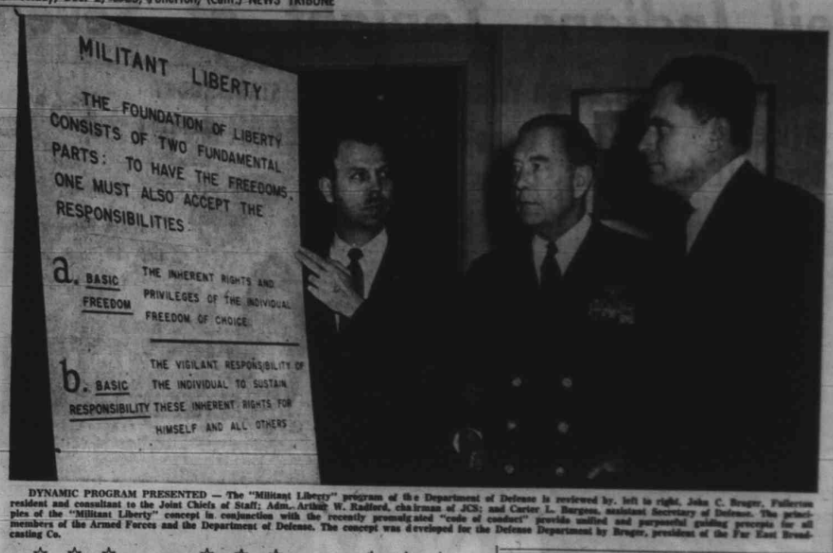
In international news, the most persistent story had to do with the escalating Cold War between the United States and the Soviet Union.
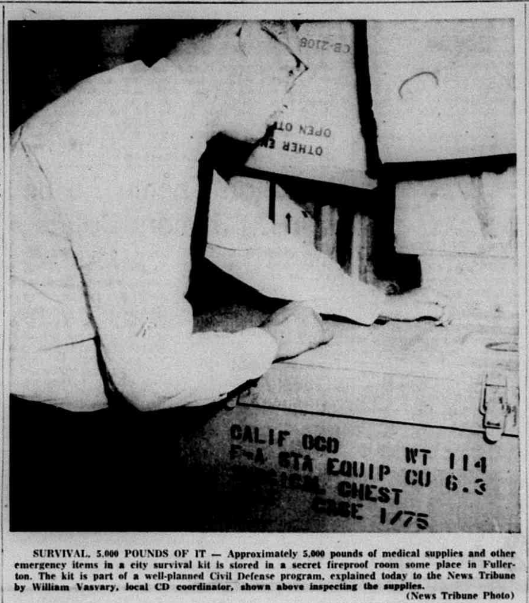
The fear of atomic war prompted local governments to establish “civil defense” programs, “duck and cover” atomic drills in schools, and even construction of some bomb shelters.
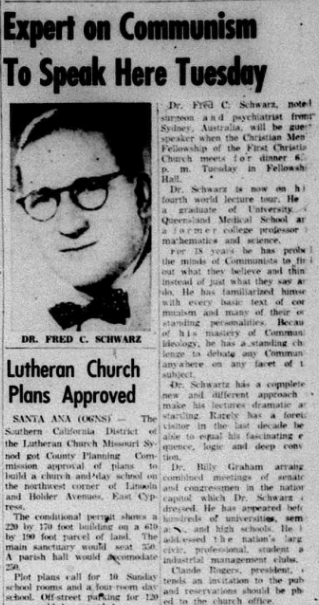
Local schools and other organizations would sometimes host speakers on “Anti-Communism” including Fred Schwarz.
Public Health
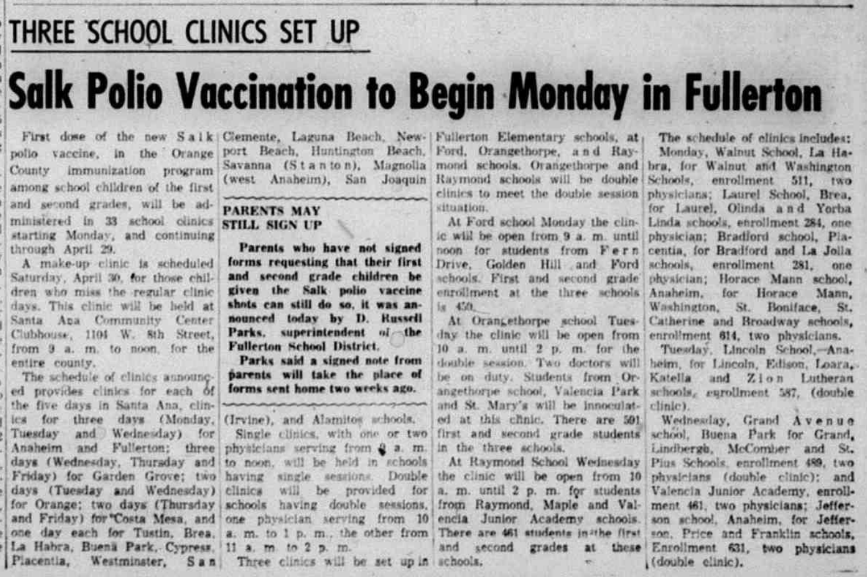
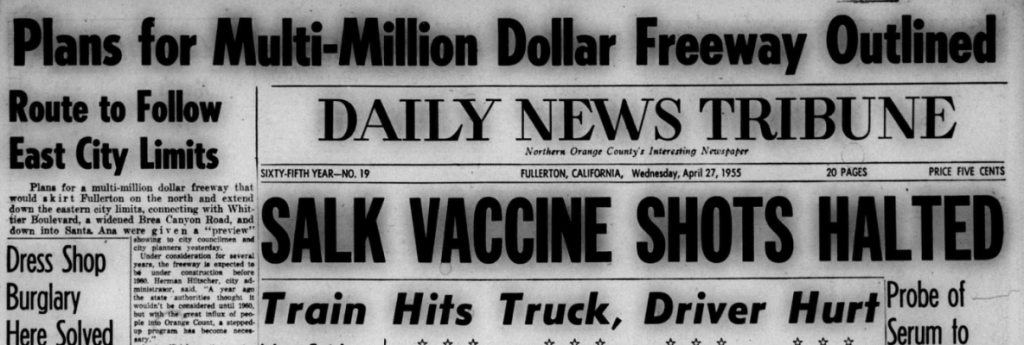
In the early to mid-1950s, polio was a major public health concern. Americans were relieved when it was announced that a scientist named Jonas Salk had developed a vaccine for this childhood disease.
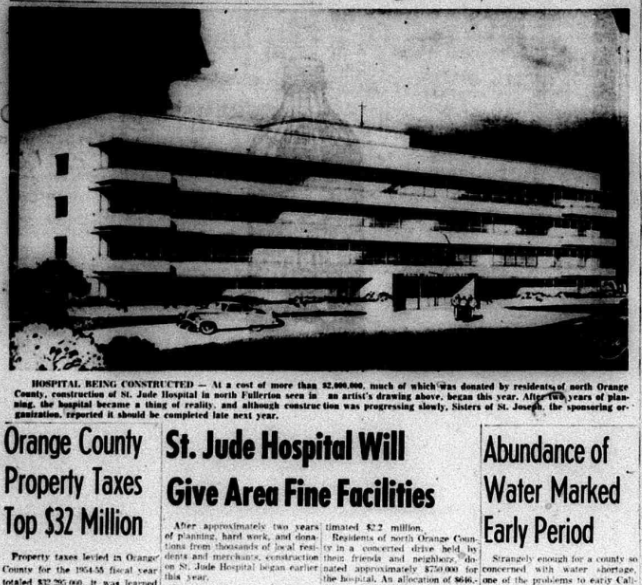
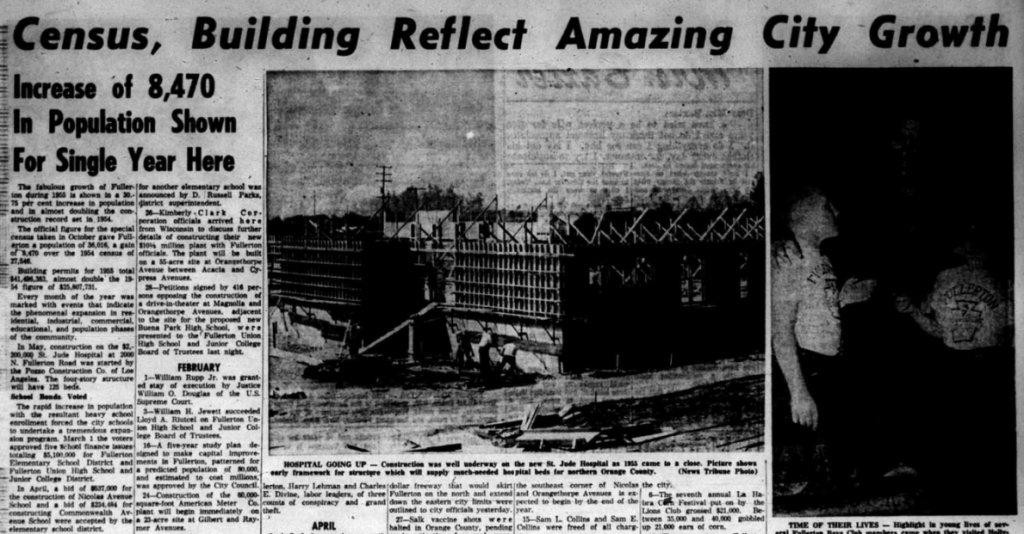
In other health news, the long-awaited construction of St. Jude hospital began–a much larger facility than Fullerton’s older hospitals.
Growth
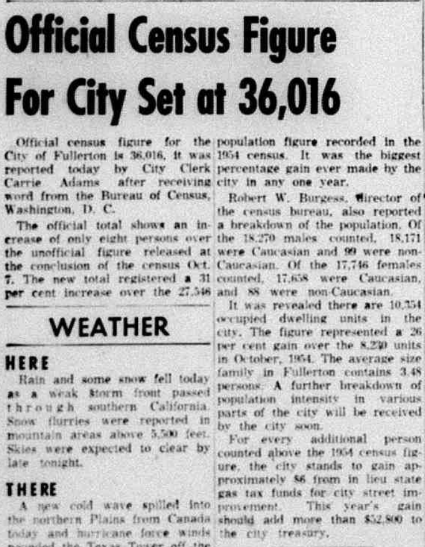
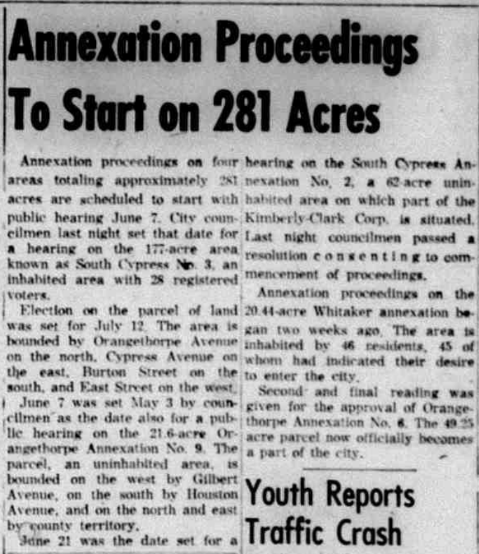
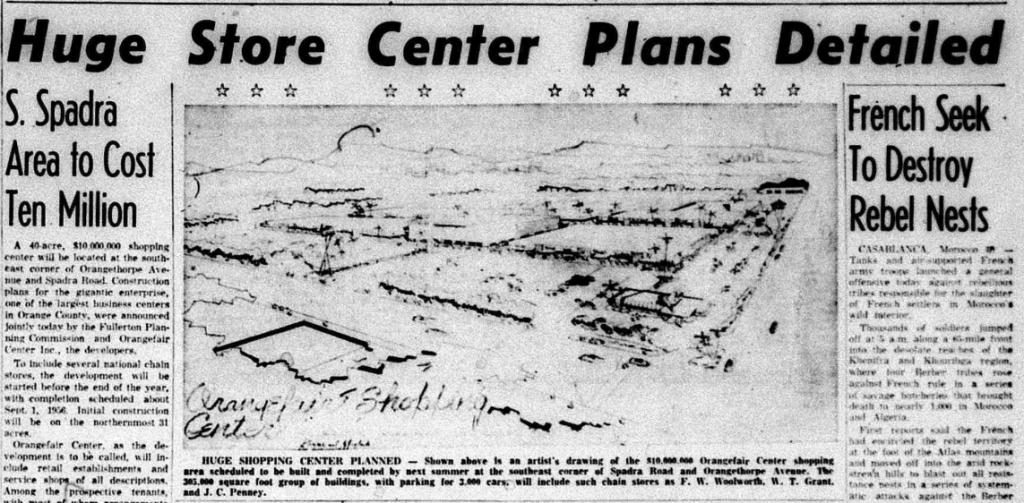
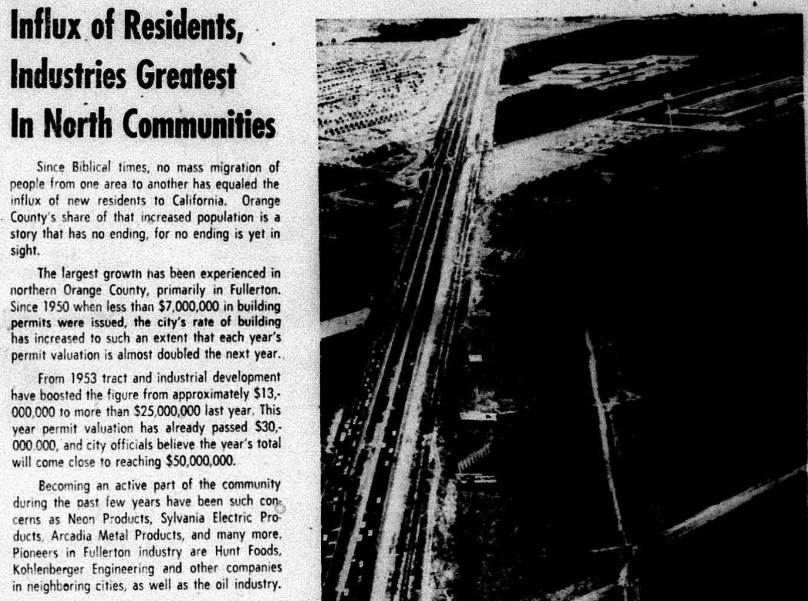
Throughout the 1950s, Fullerton experienced phenomenal growth and hundreds of acres of orange groves were plowed under and replaced by housing tracts, shopping centers, and industrial parks. Fullerton also annexed hundreds of acres of surrounding unincorporated land.
Housing
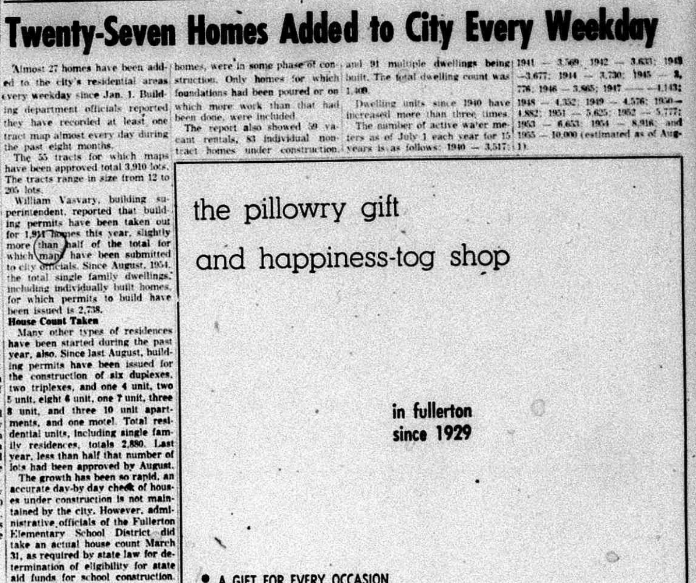
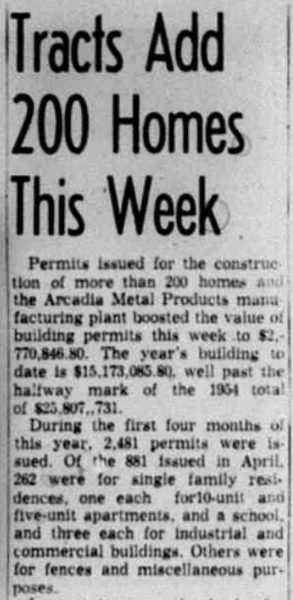
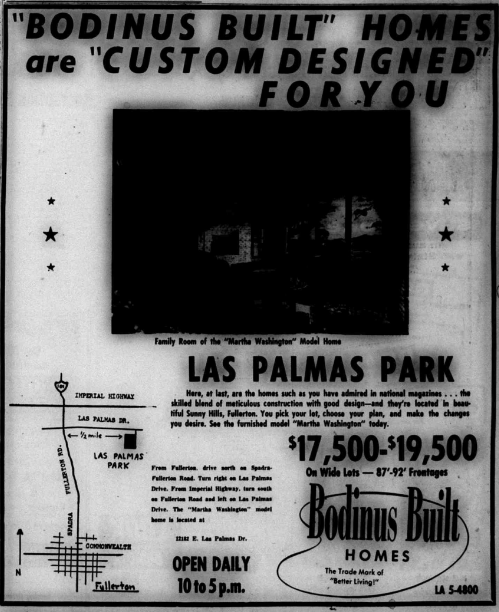
Many new housing subdivisions were built. According to one news report, 27 homes were being built each weekday in 1955.
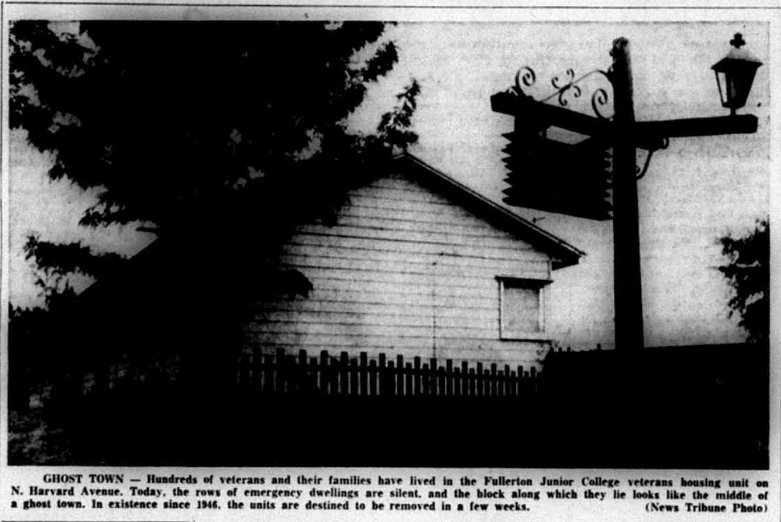
Meanwhile, some housing was being torn down, such as a veteran’s community near Fullerton College.
Housing was also a contentious issue on the civil rights front. Back in 1947, Fullerton residents Alex and Esther Bernal had successfully defended their rights to purchase a home in a subdivision with racially restrictive covenants.
In nearby Garden Grove, a former olympian and doctor named Sammy Lee was refused purchase of a home due to racial restrictions.
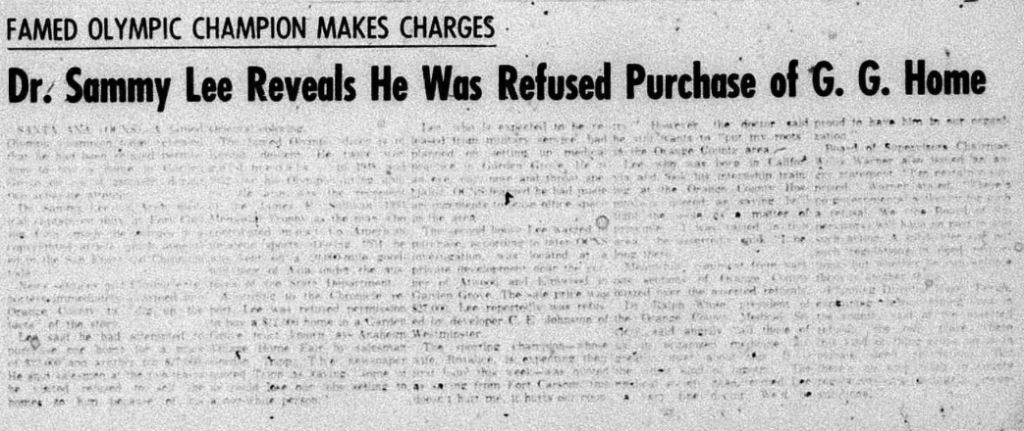
After support from some notable community members, he was ultimately able to purchase the home.
Industry
In addition to housing, Fullerton was also experiencing rapid growth in its industrial zones, with new factories being built in 1955 by companies such as Arcadia Metal Products, Neon Products, Kimberly-Clark, American Electronics, Ador Corp, Rheem Automotive, and more.
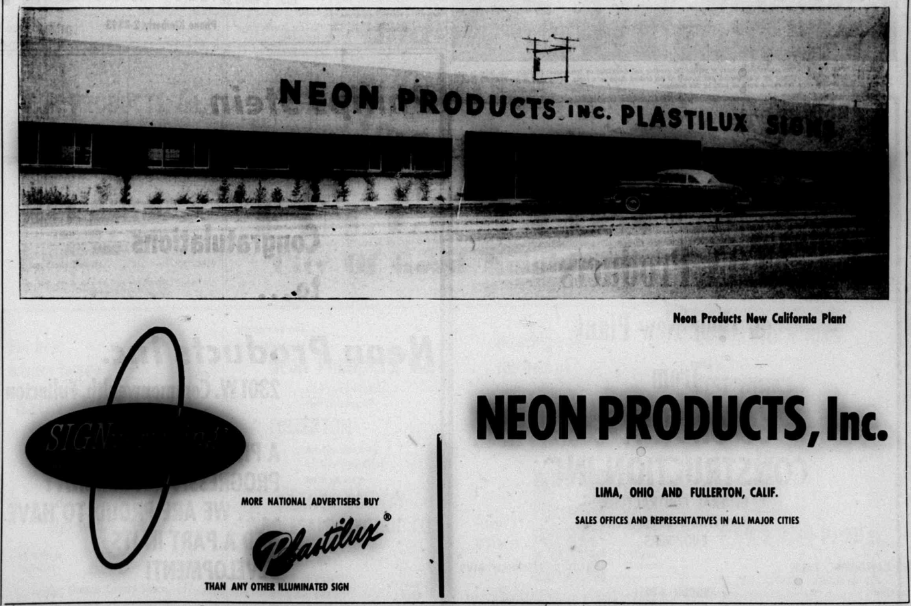
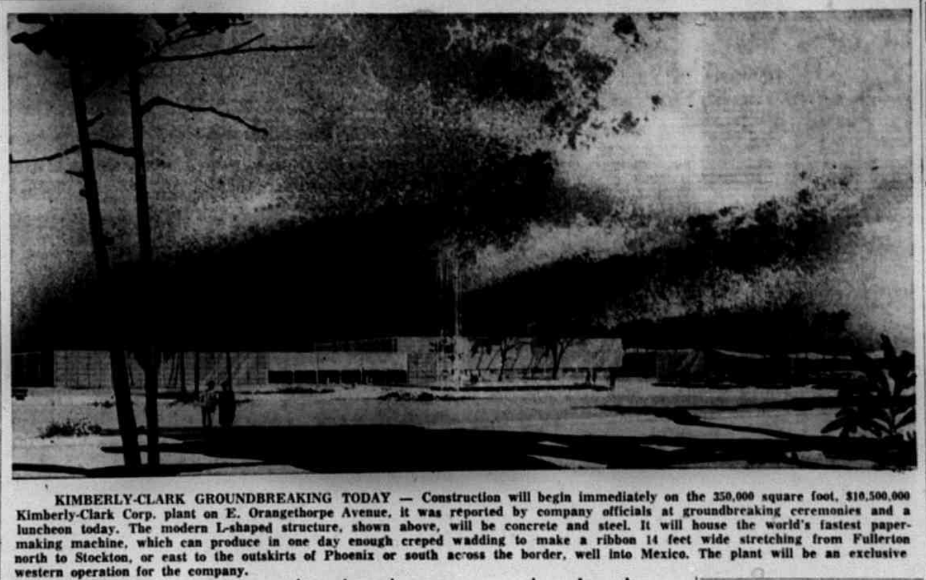
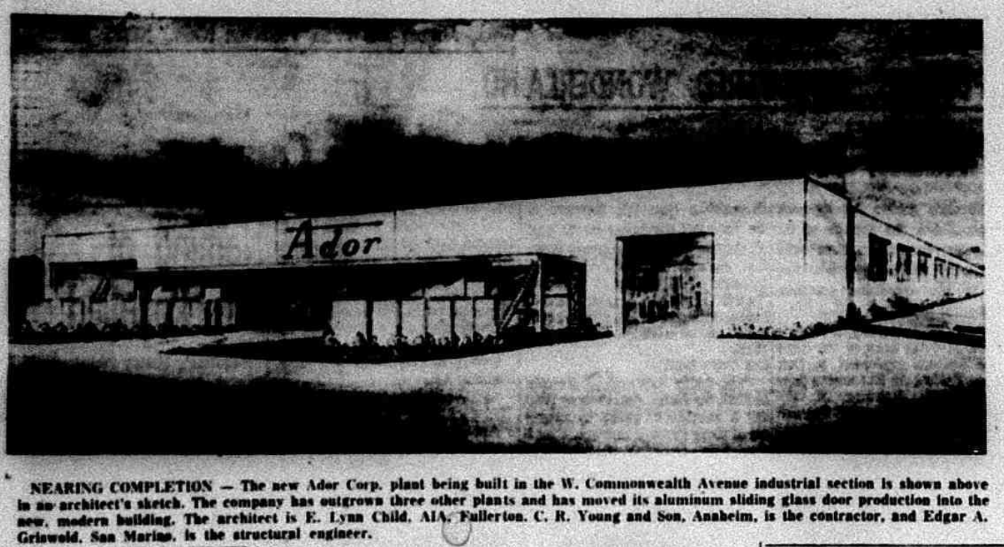
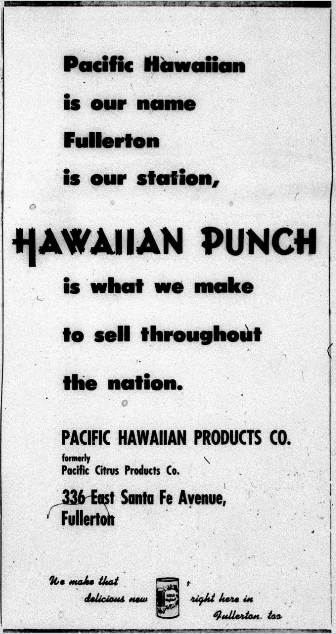
Large industries that already existed in Fullerton expanded their facilities, like Hunt Foods, Pacific Hawaiian Products, and others.
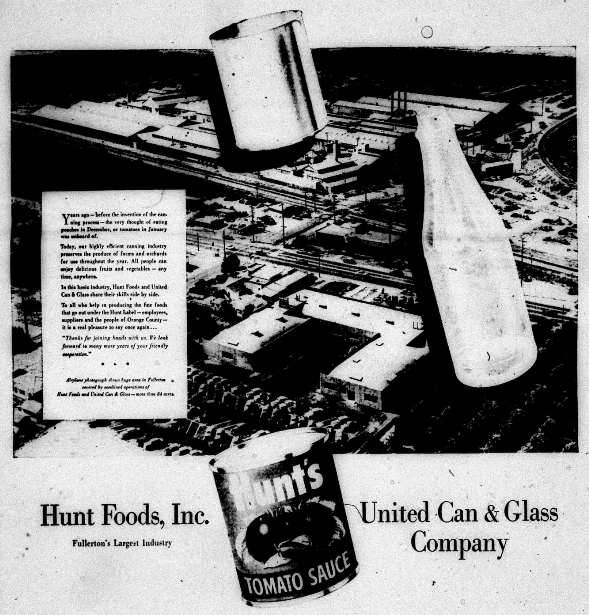
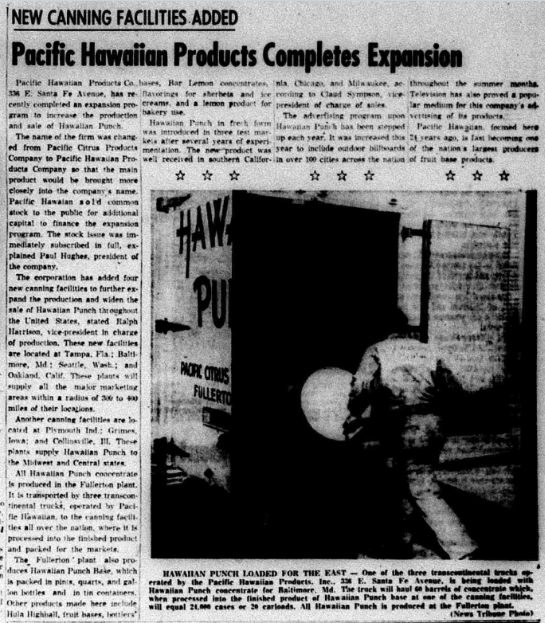
One unfortunate legacy of all this industrial development was pollution. It appears that was not on the radar of the businesses and local leaders at the time.
The authors of the book Fullerton: The Boom Years write, “While the air and space industry and other manufacturing industries were a driving force in the extraordinary postwar economic expansion of Fullerton, these companies left the city with a legacy of pollution, including the contamination of groundwater with toxic chemicals, heavy metals and persistent carcinogens, as well as soil degradation.”
This legacy lives with us today, for example, in the form of the North Basin Superfund Site.
Education
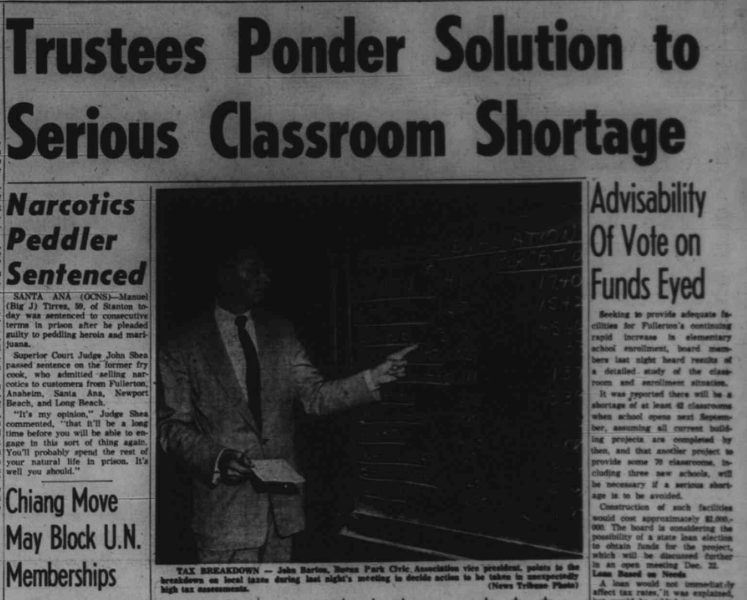
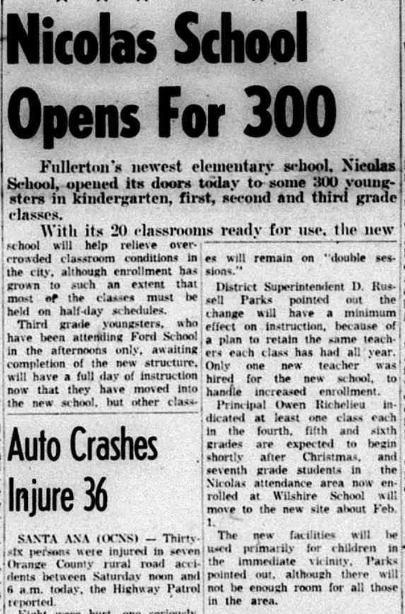
As Fullerton’s population grew, so did the need for more classrooms. Nicolas School opened, and Fullerton College expanded its footprint.
Transportation
The population increase prompted the need for increased transportation infrastructure. New freeways were planned and constructed, including the 91 freeway.
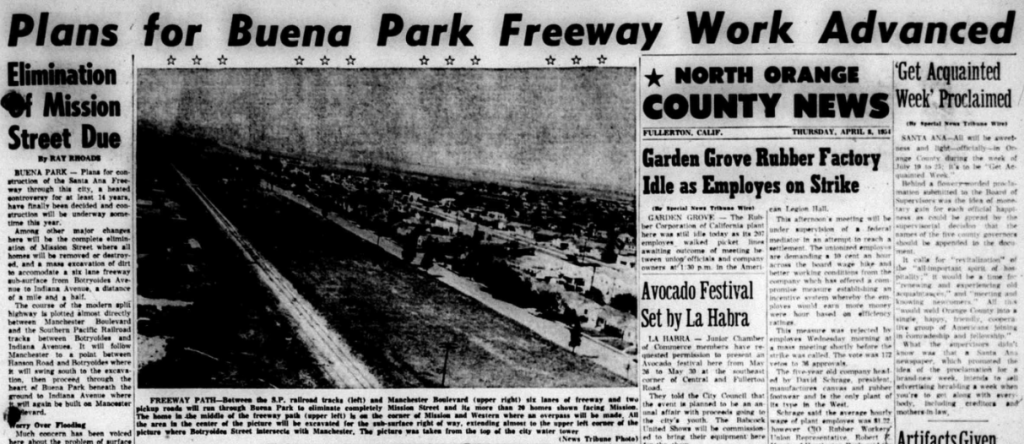
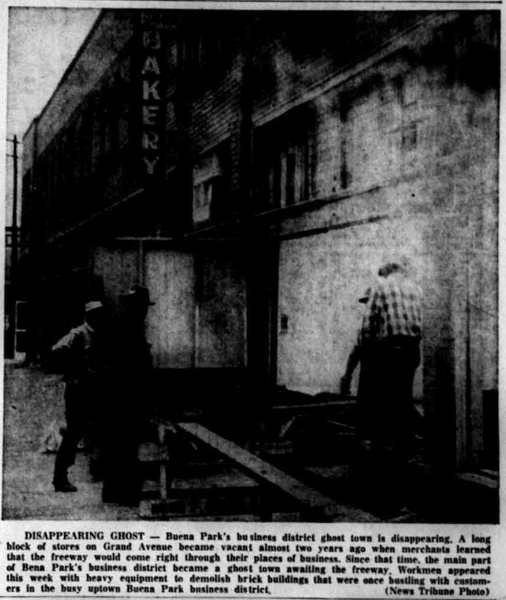
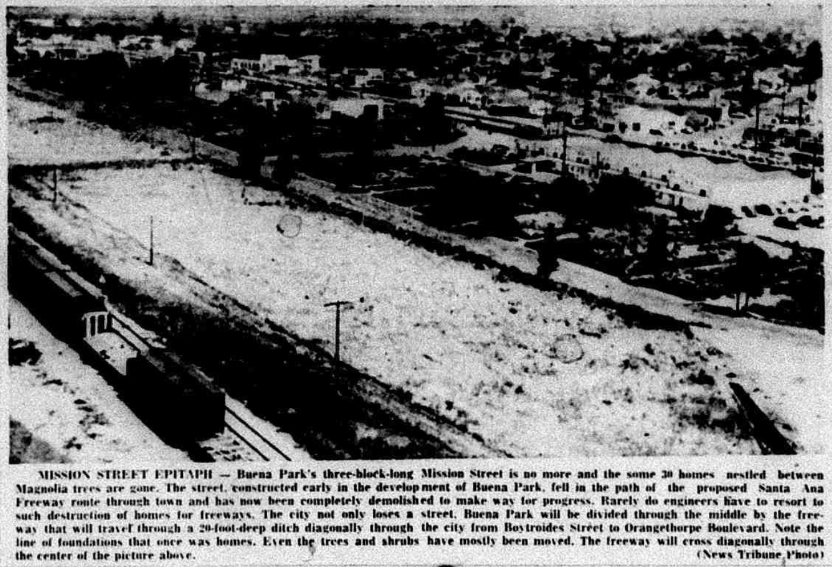
One unfortunate effect of this was the abandonment and destruction of Buena Park’s historic downtown.
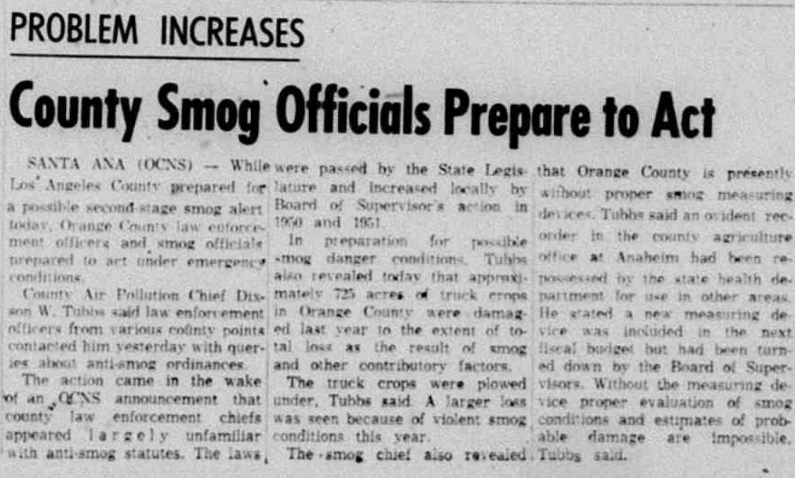
As with the rise in industry, the increase in automobiles caused pollution in the form of smog.
Water
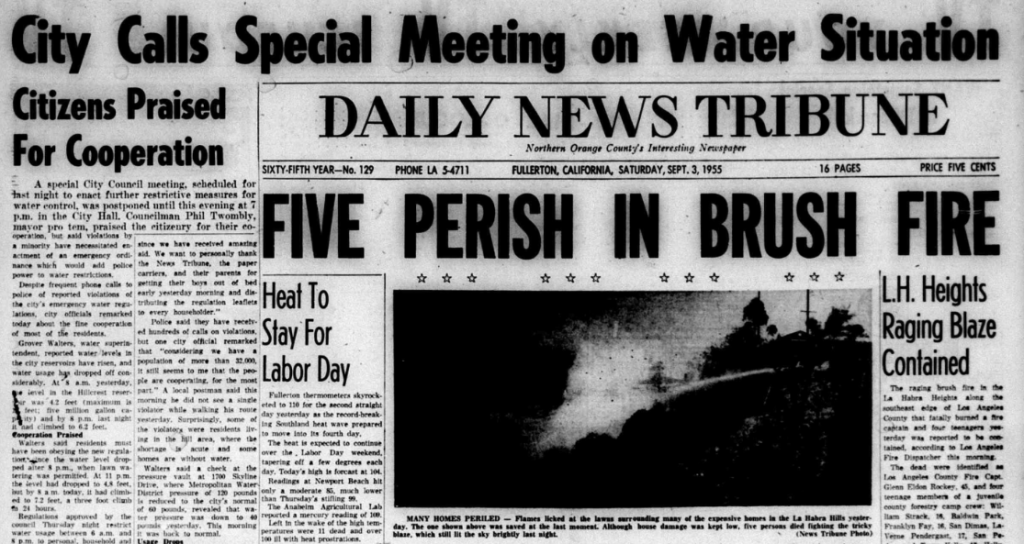
As Fullerton grew, so did its demand for water, which sometimes created problems.
Culture and Entertainment
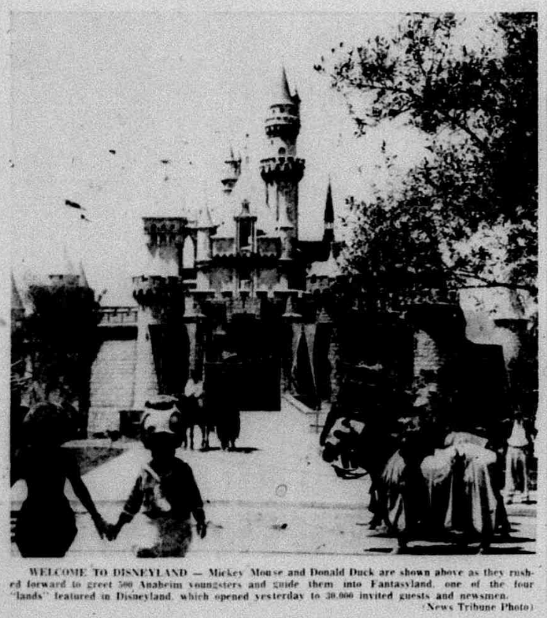
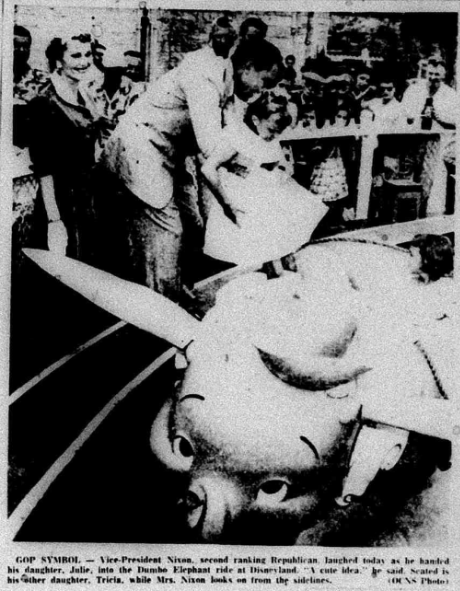
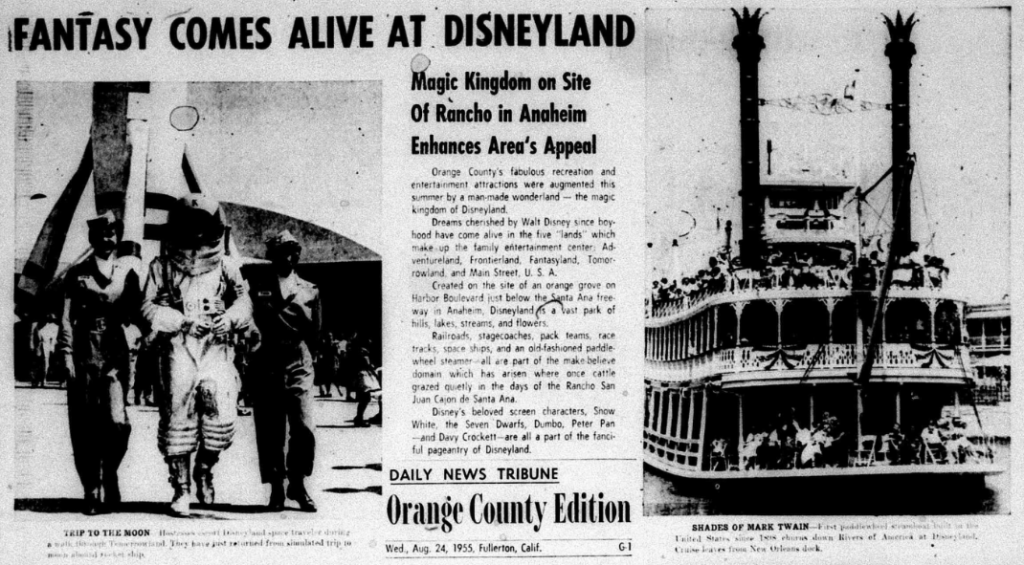
By far, the biggest entertainment news was the completion of Disneyland in nearby Anaheim.
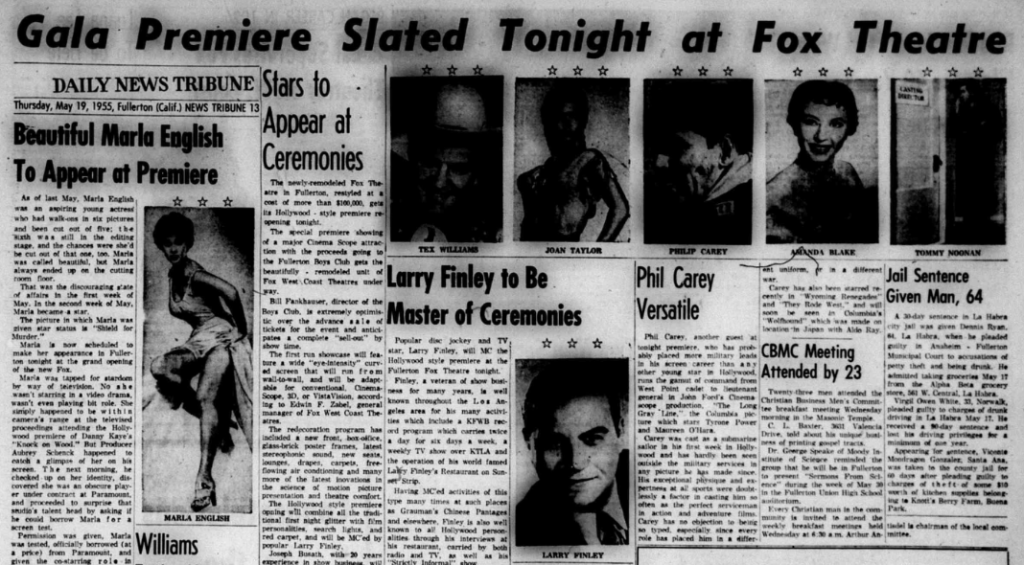
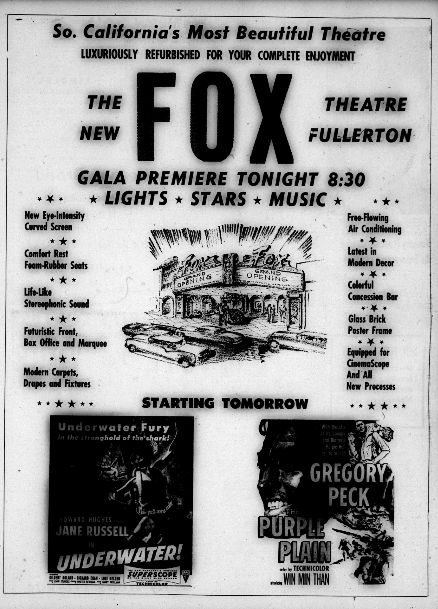
The Fox Theater in Fullerton got a new owner and a facelift. It re-opened with a gala premiere featuring some Hollywood stars.
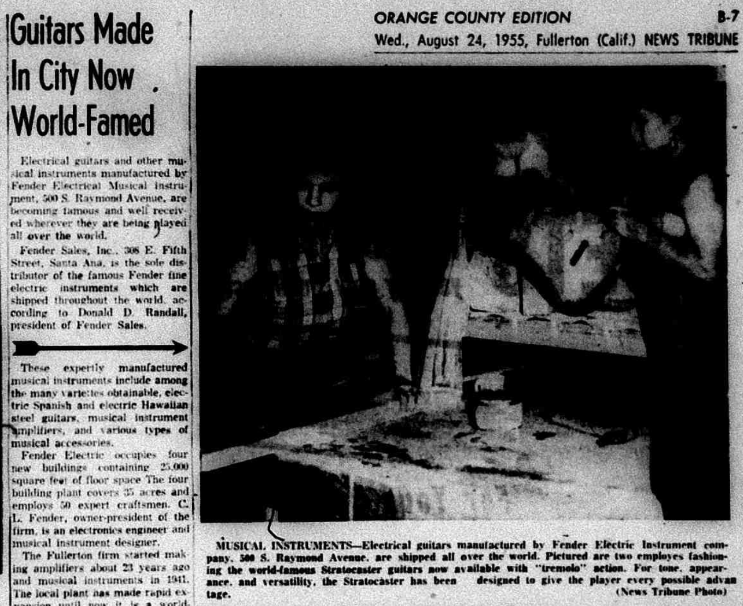
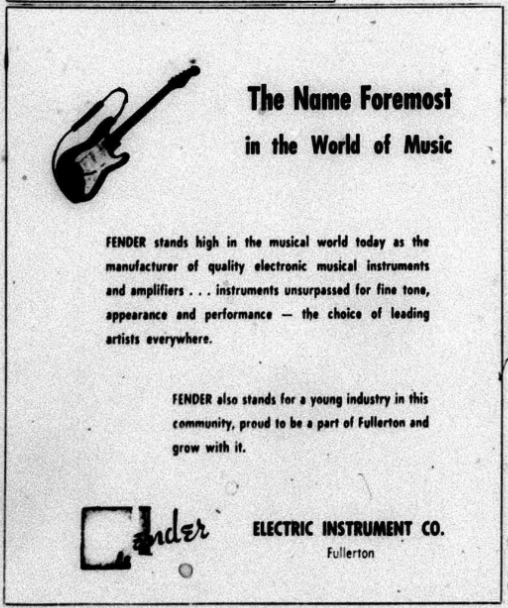
In the world of popular music, Fender Guitars was putting Fullerton the map with its factory on Raymond Ave. creating the instruments that would come to define rock and roll.
Religion
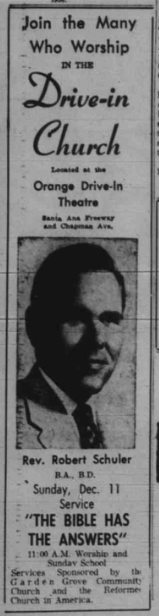
Fullerton (and Orange County in general) was a hotbed in the rise of evangelical Christianity in the 1950s. Robert Schuler, who would go on to establish the Crystal Cathedral started his “Drive-In Church”.
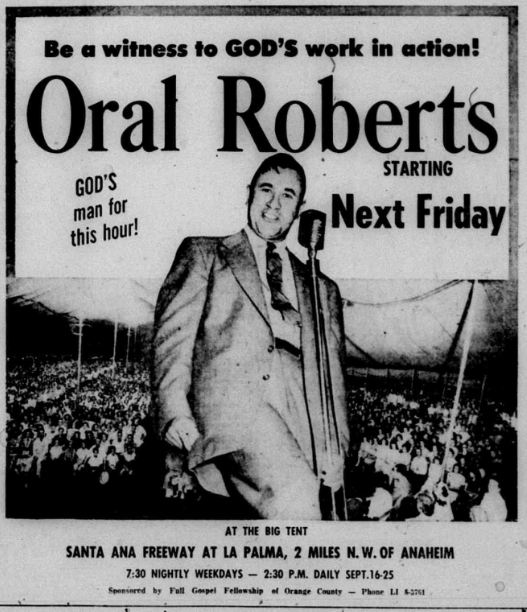
And notable evangelists like Oral Roberts came to preach here to large crowds.
Local Notables
Here are a few local notable people who lived in Fullerton, as highlighted by the News-Tribune:
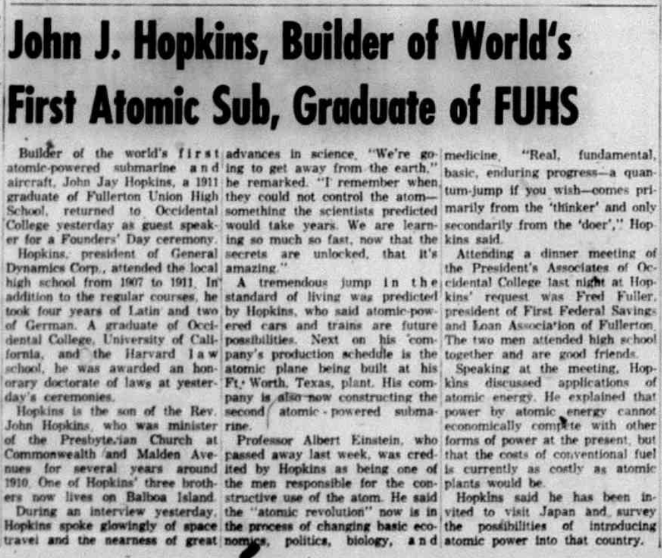
John J. Hopkins, builder of the world’s first atomic sub.
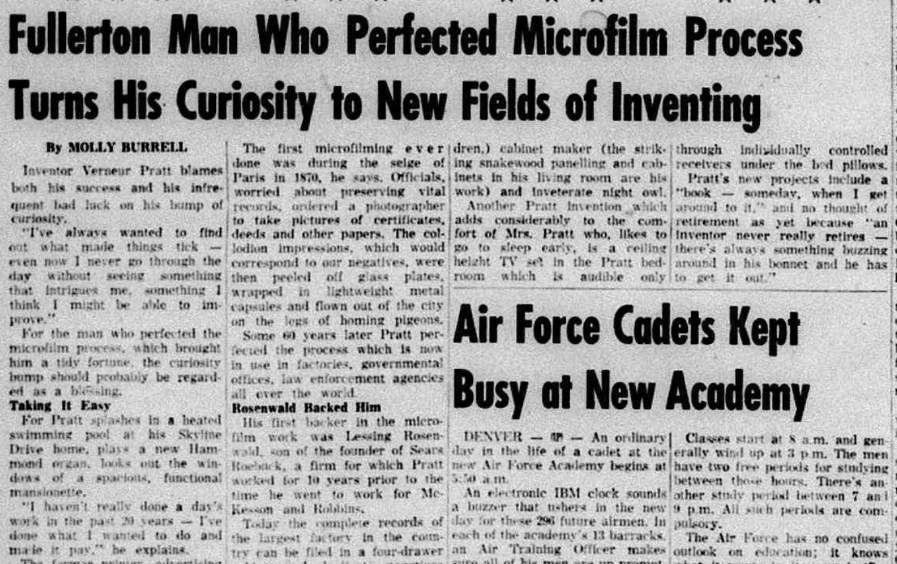
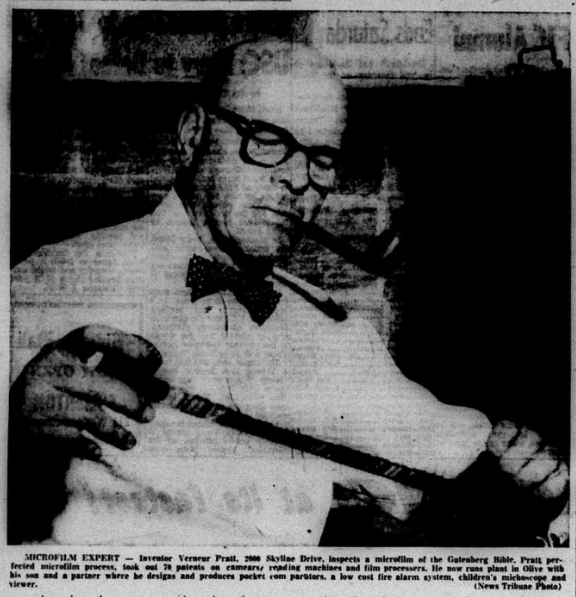
Verneur Pratt, who perfected a microfilm process.
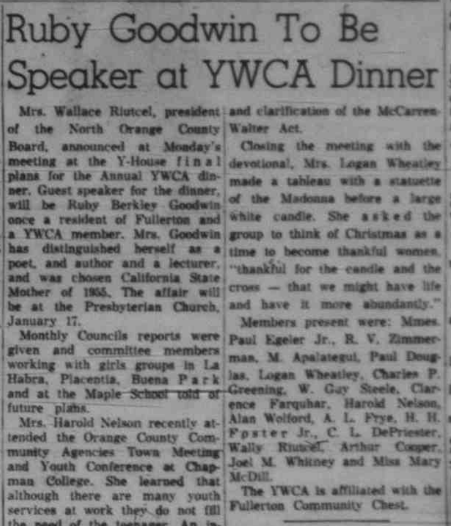
African-American poet Ruby Berkeley-Goodwin.
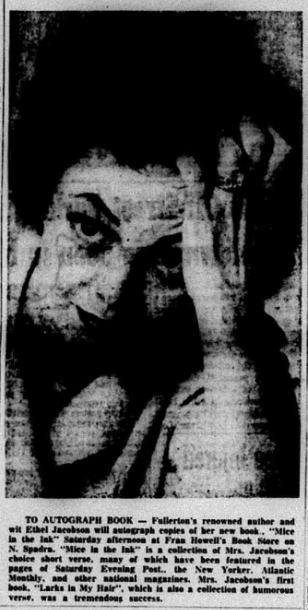
Poet Ethel Jacobson.
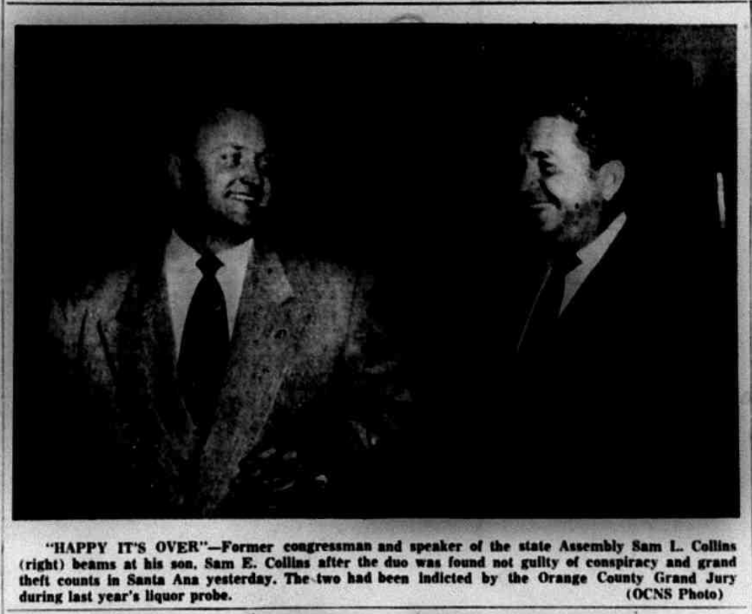
Former Fullerton State Assembly member Sam Collins was acquitted of bribery charges after a much publicized trial.
Sports
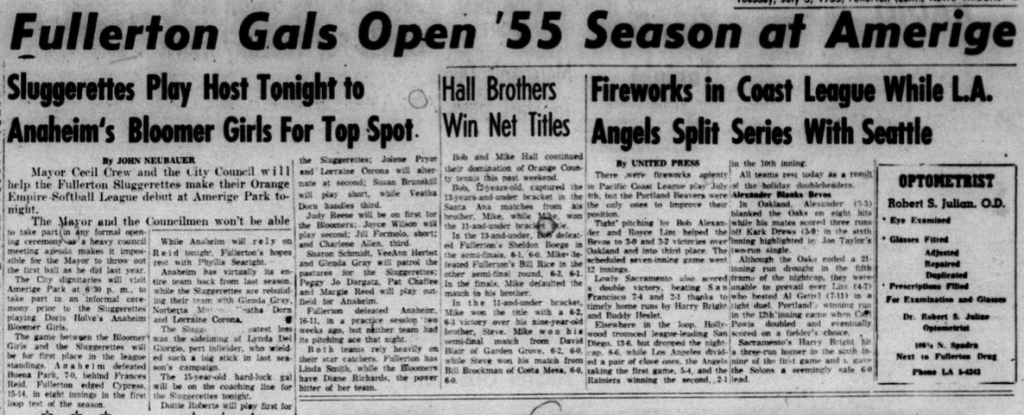
Baseball games at Amerige Park were popular.
Deaths
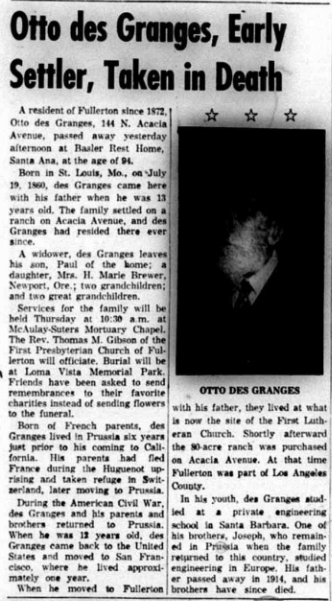
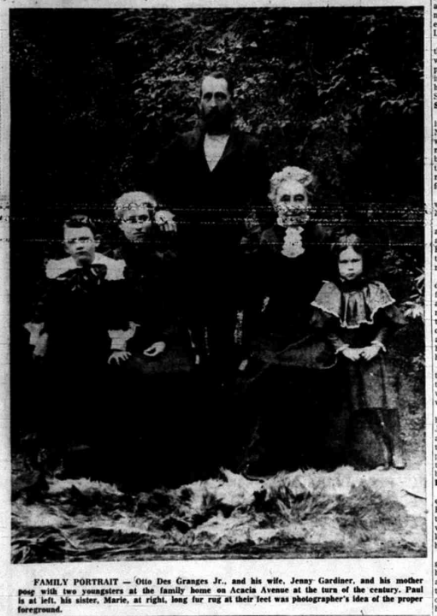
Fullerton pioneer Otto Des Granges died.
Stay tuned for more stories from 1956!
 Fullerton History