The following is from a work-in-progress about the history of Fullerton. You can support my ongoing research and writing on Patreon.
The Local History Room of the Fullerton Public Library has microfilm from the Fullerton Daily News-Tribune newspaper stretching back to 1893. I am in the process of reading over the microfilm, year by year, to get a sense of what was happening in the town over the years, and creating a mini archive. Below are some news stories from 1954.
National and International News
In national and international news, the Cold War arms race was escalating, with America testing increasingly devastating nuclear weapons, like the Hydrogen bomb.
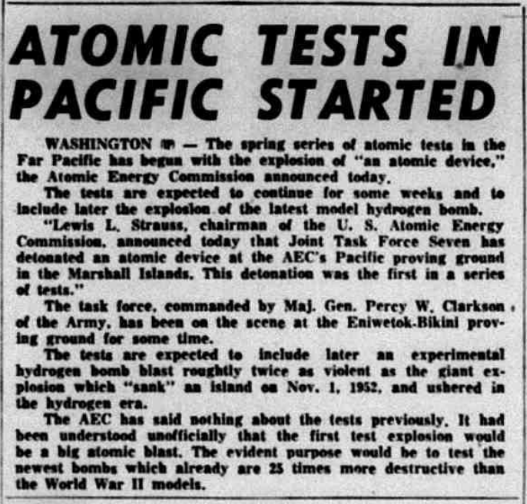
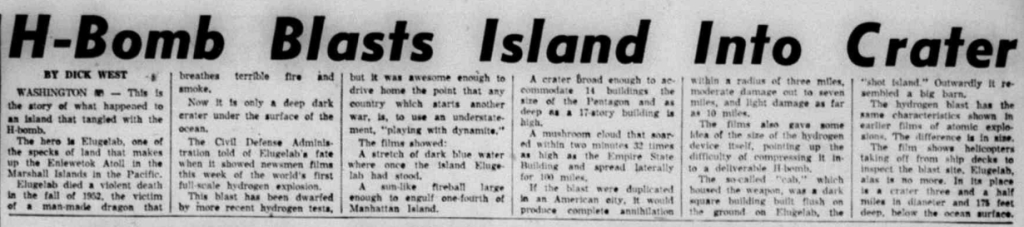
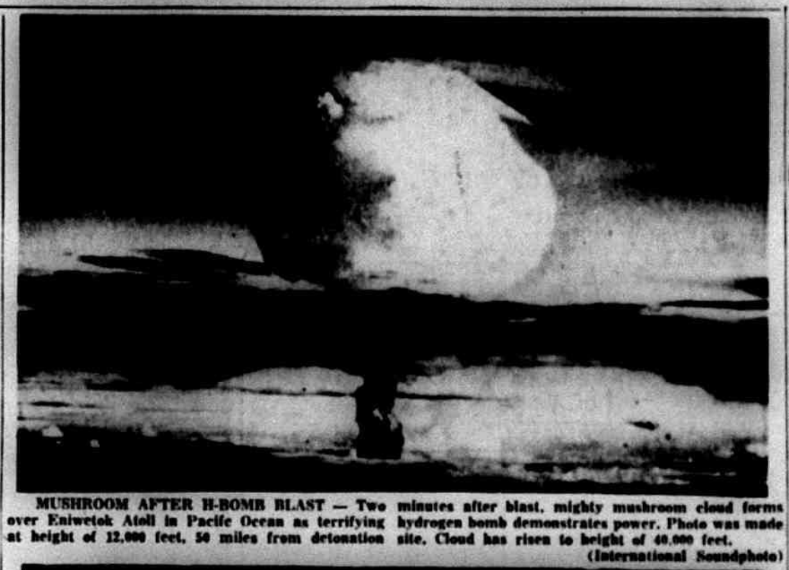
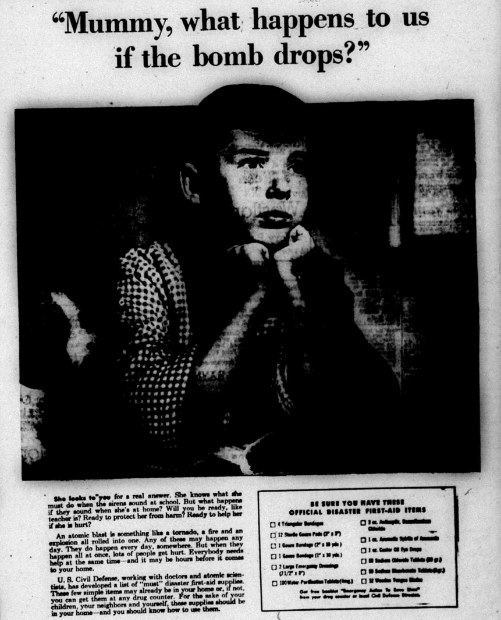
This prompted a national fear of/preparation for atomic war.
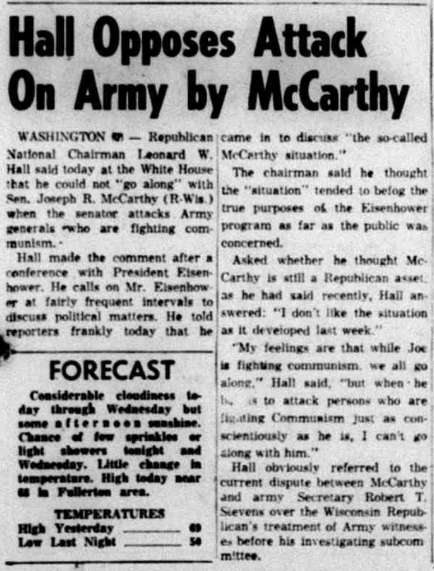
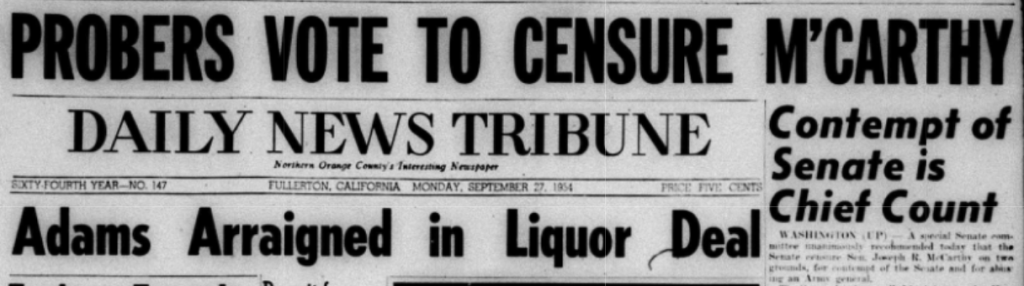
Senator Joseph McCarthy’s Red Scare campaign, accusing many people of being secret communists, encountered its first major pushback after McCarthy started going after U.S. Army officials. The Army-McCarthy hearings signaled the end of McCarthy’s popularity and influence.
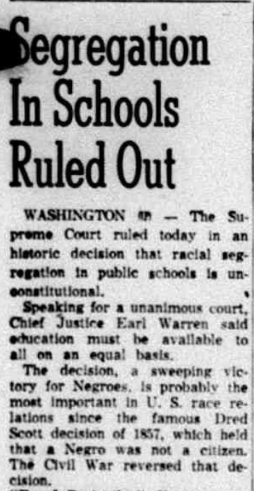
In 1954, the U.S. Supreme Court decided the famous Brown v. Board of Education case, declaring school segregation unconstitutional.
Immigration
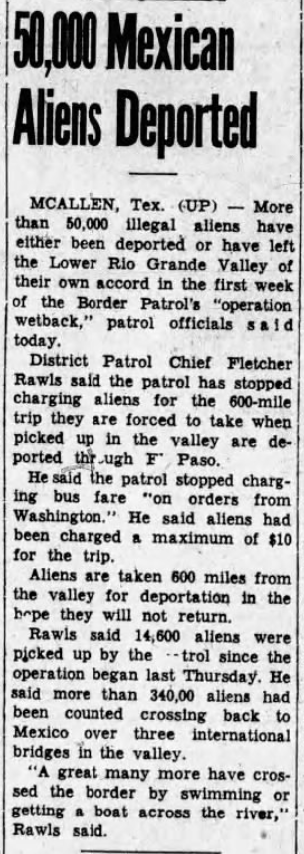
In 1954, the Eisenhower administration undertook a massive deportation program called Operation Wetback. This took place throughout the Southwest, including here in Fullerton. At that time, the Fullerton Police department often cooperated directly with federal immigration officials.
Throughout 1954, the Fullerton News-Tribune contained numerous articles about immigration raids and arrests. Back then, even the newspapers used the racial slur “wetback” to refer to undocumented immigrants. Below are a few such clippings from the News-Tribune.
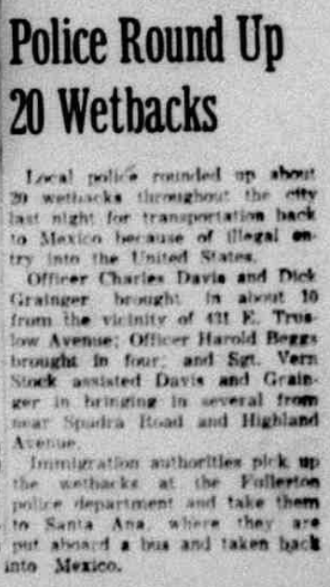
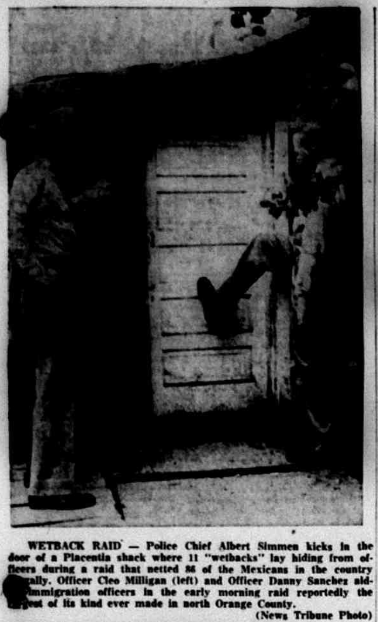
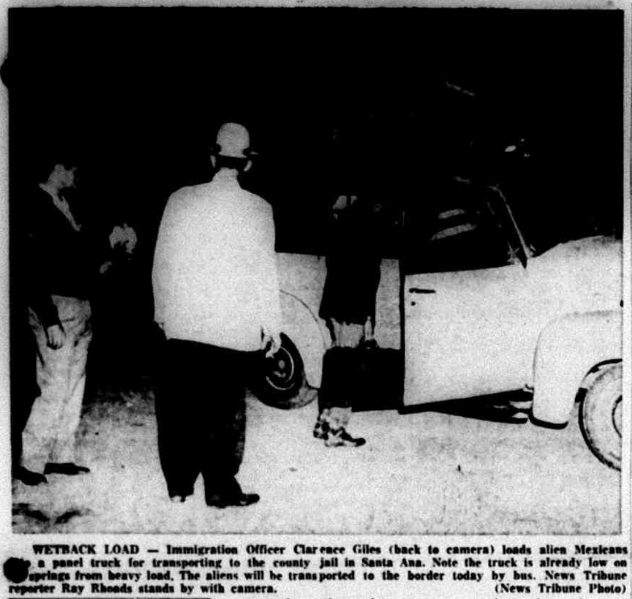
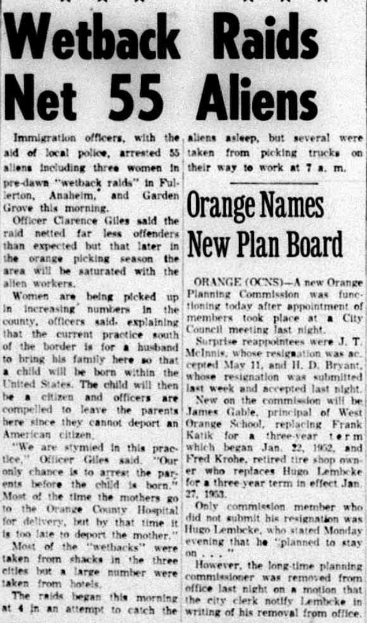
Operation Wetback was officially launched in June, 1954. Unfortunately, the microfilm archives are missing the months of June, July, and August of that year. So, I decided to pay a visit to the Anaheim Heritage Center to look at microfilm from their newspaper of record from that era, the Anaheim Bulletin. Here are a few articles I found there:
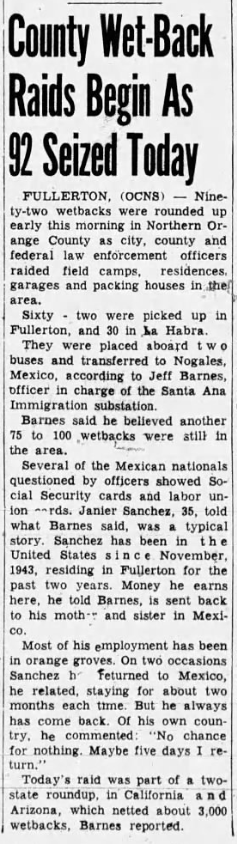
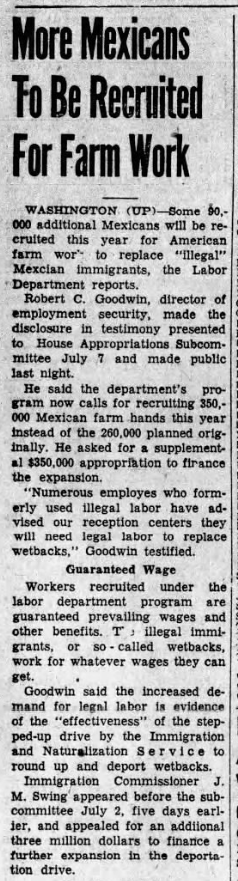
The Anaheim Bulletin contains an article entitled “More Mexicans to be Recruited for Farm Work” which tells of a plan to recruit “legal” immigrants to replace the “illegal” ones. The truth is that there was already a widespread farm labor recruitment program in place at this time (the Bracero Program), and the majority of growers preferred to hire illegal workers because there were no legal protections for such workers. Nevertheless, the full brunt of punishment fell on the workers, not the growers, for a highly problematic immigration system.
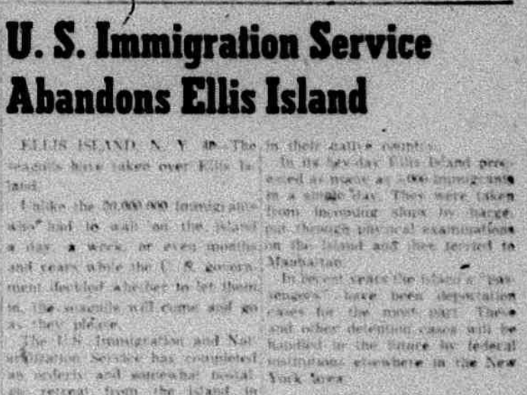
In a move symbolic of the times, US Immigration Service abandoned Ellis Island.
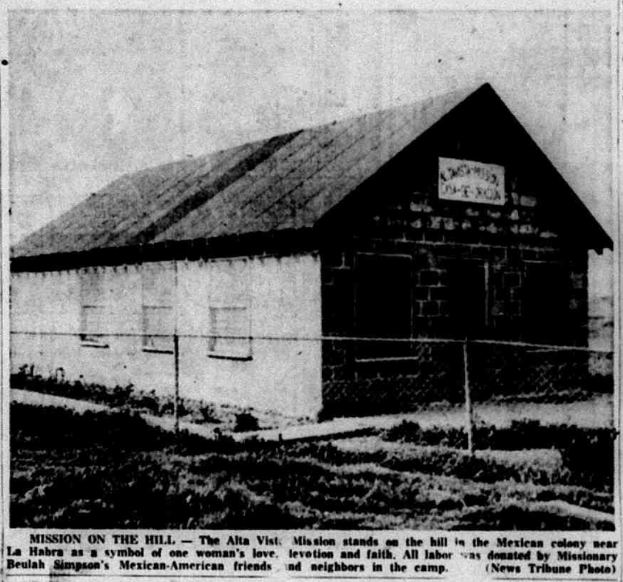
At this time, many Mexican-Americans in Orange County lived in segregated barrios or “colonias” (labor camps). The News-Tribune features an article about a woman who had started a small church in a Mexican camp on Imperial Highway.
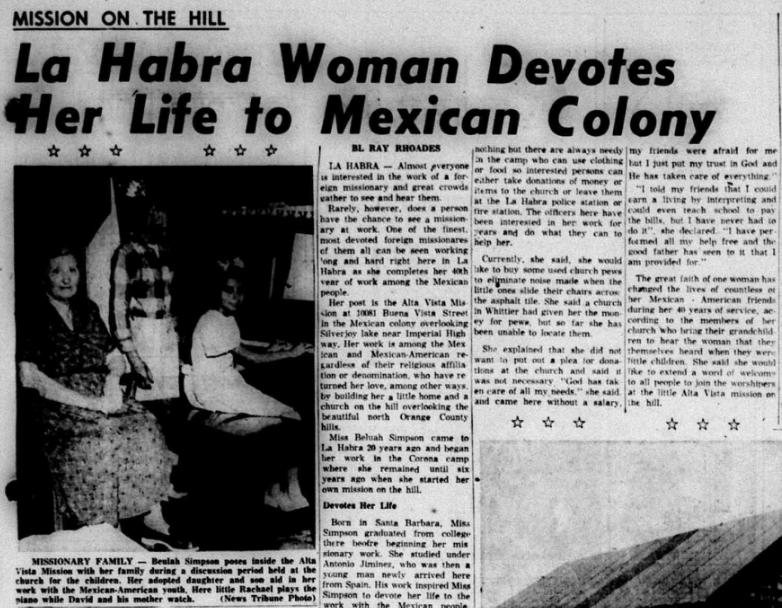
“Her post is the Alta Vista Mission at 10081 Buena Vista Street in the Mexican colony overlooking Silverjoy lake near Imperial Highway. Her work is among the Mexican and Mexican-American regardless of their religious affiliation denomination, who have returned her love, among other ways, by building her a little home and a church on the hill overlooking the beautiful north Orange County hills,” the News-Tribune reported. “Miss Beluah Simpson came to La Habra 20 years ago and began her work in the Corona camp where she remained until six years ago when she started her own mission on the hill.”
Government and Politics
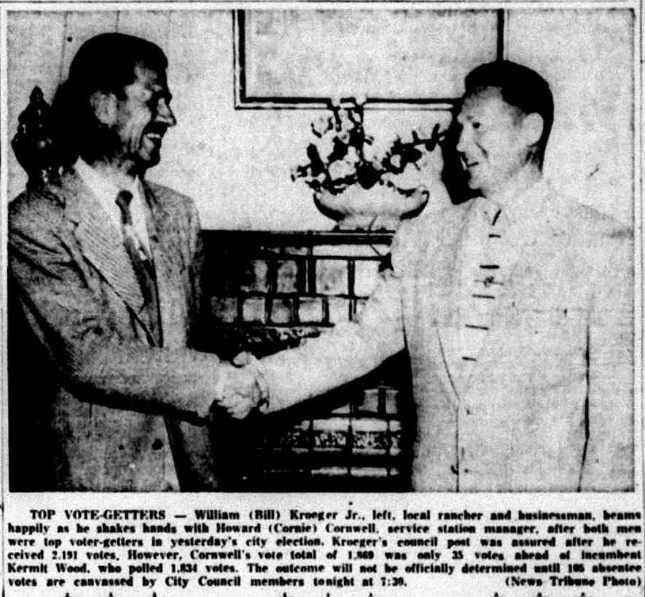
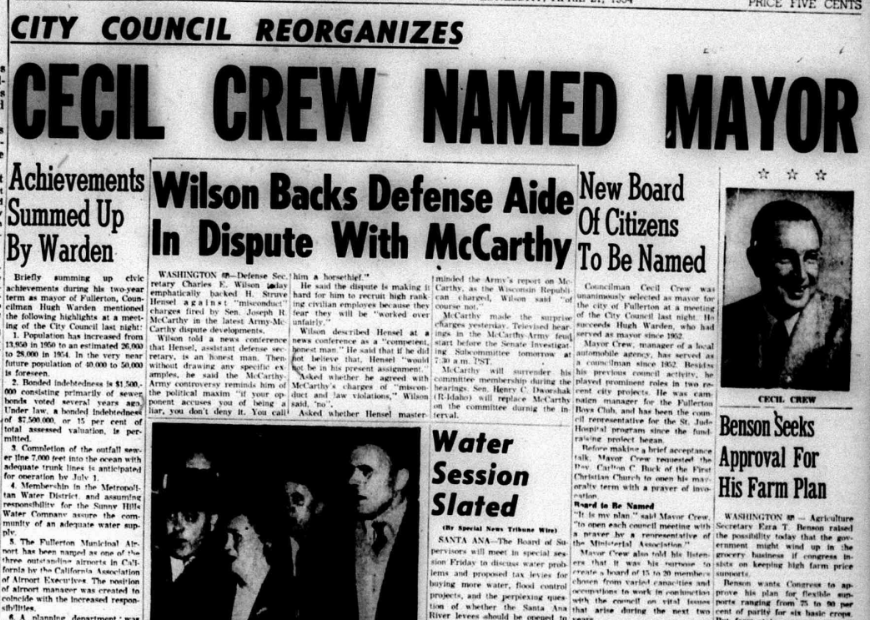
In 1954, Fullerton City Council was Howard Cornwell, Cecil Crew (mayor), William Kroeger, Phillip Twombly, and Hugh Warden.
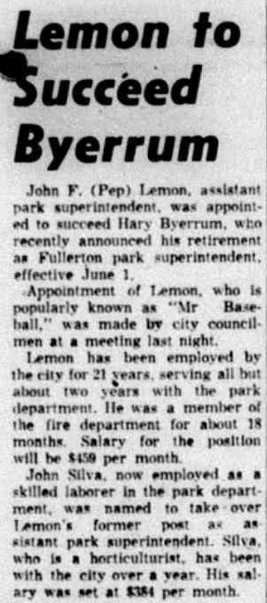
Fullerton Park Superintendent (and alleged former Klansman) Harry Byerrum retired and was replaced by “Pep” Lemon. There is a park in Fullerton named after Byerrum.
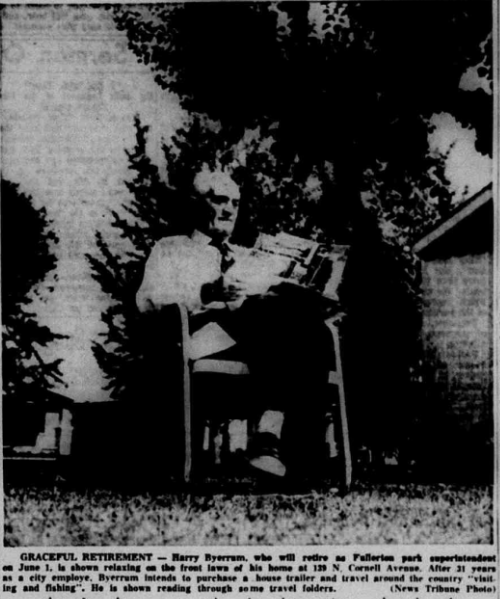
“What consisted of a four-acre Commonwealth Park (now Amerige Park) back in 1923, when Byerrum was hired as a laborer, is now a municipal network of 14 parks covering an area of about 100 acres. What once consisted of two employees, has grown to a park department staff of 18 persons,” the News-Tribune reported.
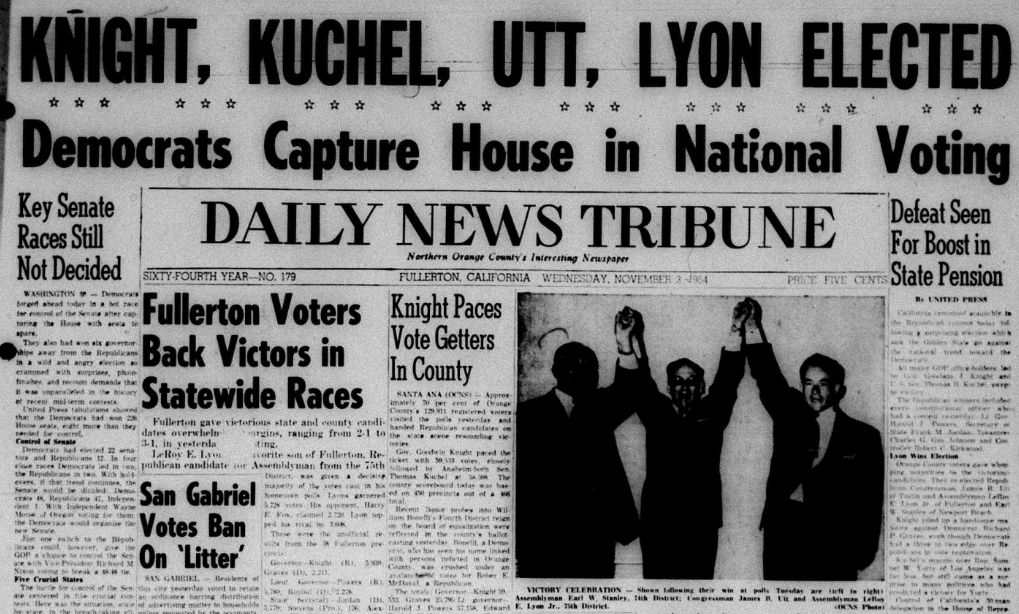
And here are some other local politicians elected to office in 1954.
Sam Collins on Trial for Corruption
Former California State Assemblymember Sam Collins, a Republican from Fullerton, was indicted and stood trial for allegedly accepting bribes to get his friend a liquor license in Buena Park. His son (also named Sam Collins) was also indicted.
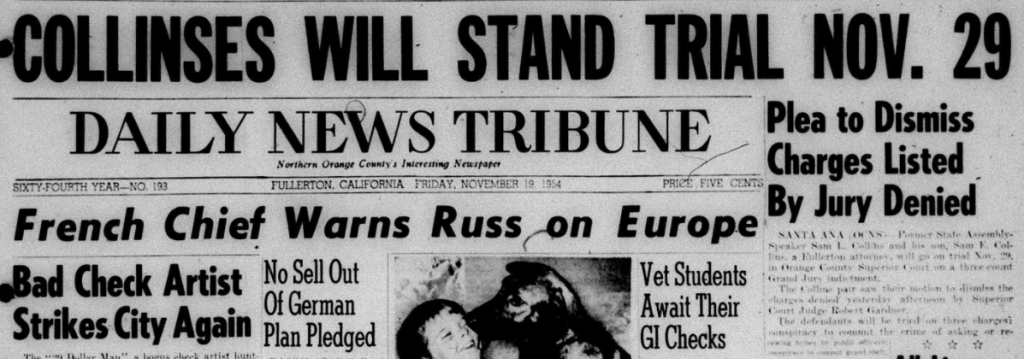
The Collinses were tried on three charges: conspiracy to commit the crime of asking of receiving bribes by public officers, conspiracy to commit grand theft, and grand theft. They were accused of taking $7,500 from George Underwood of Buena Park in order to acquire a liquor license.
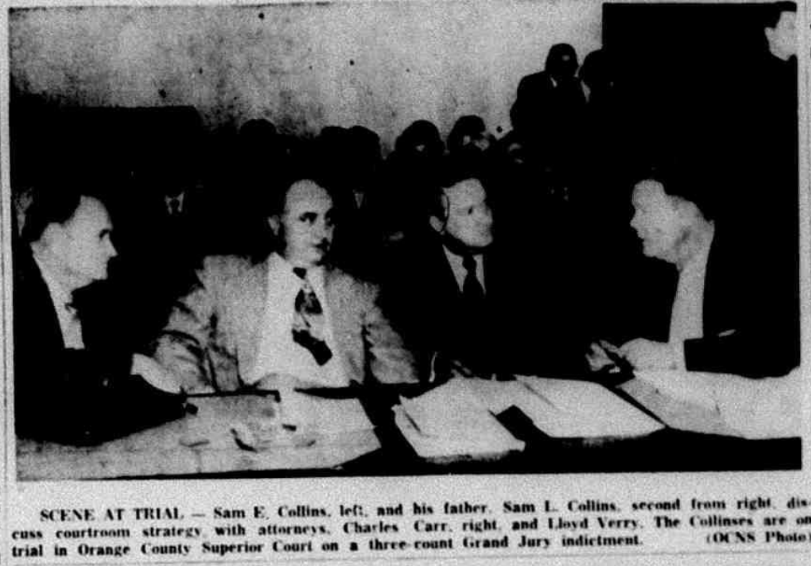
The first Collins trial ended with a hung jury.
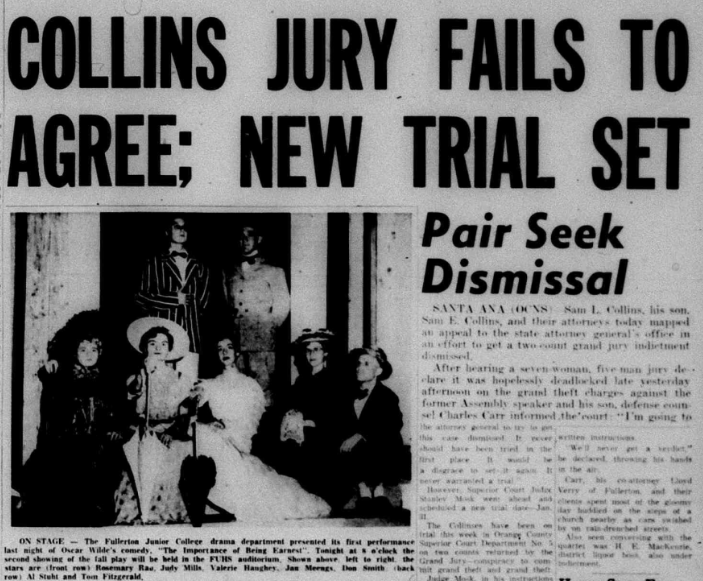
It was possible they may not have to stand for another trial. Stay tuned!
Growth
Throughout the 1950s, Fullerton was experiencing dramatic growth. In 1954, the city’s population was over 27,000.
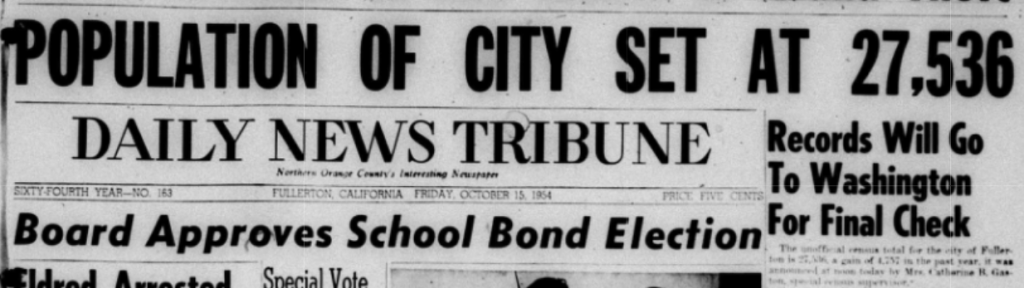
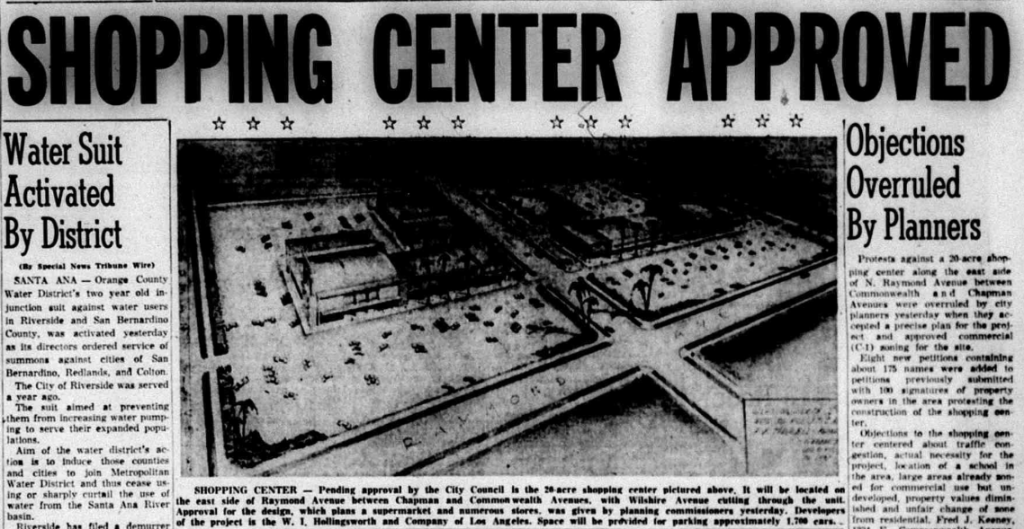
New shopping centers were approved and constructed.
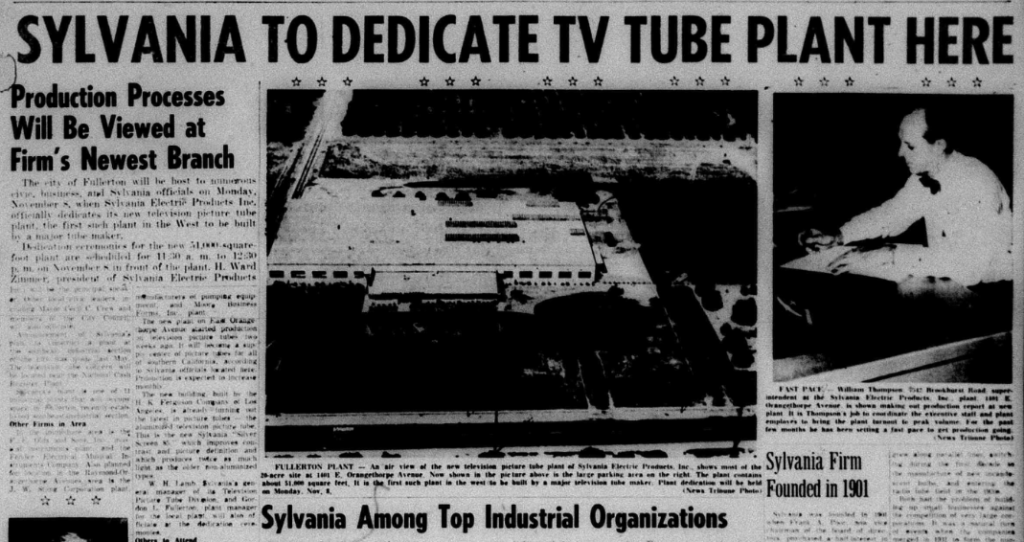
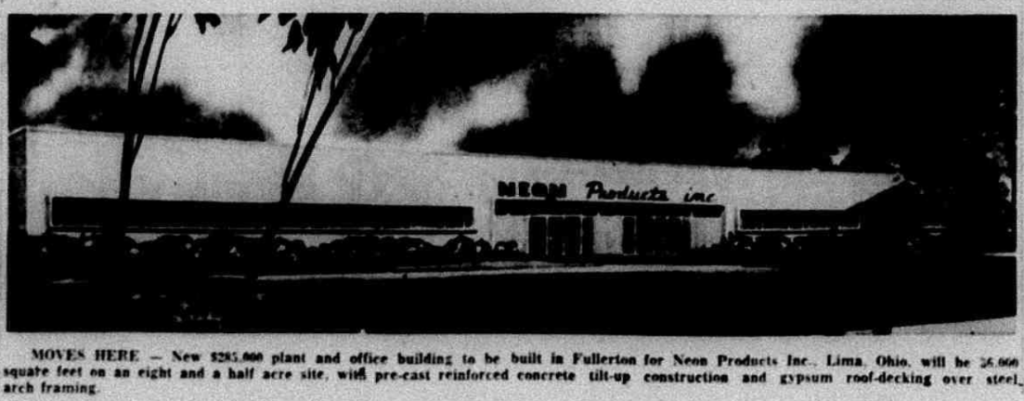
New industrial plants opened up shop in specially zoned areas–mostly on the south side of town, with the major exception of the large Beckman Instruments plant on the north side near the La Habra border.
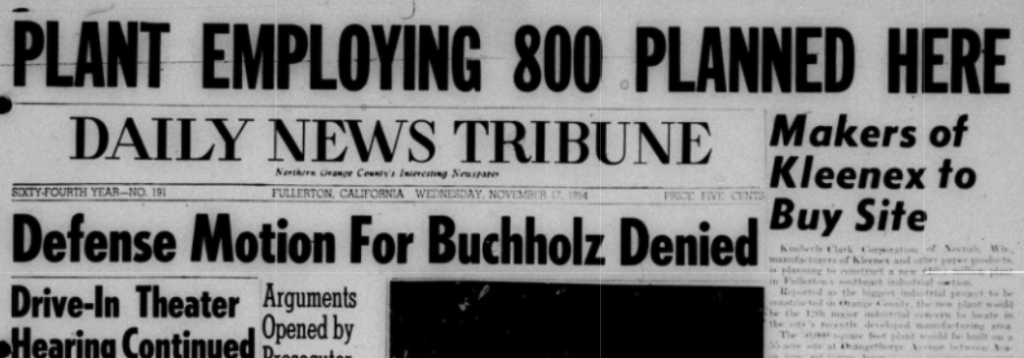
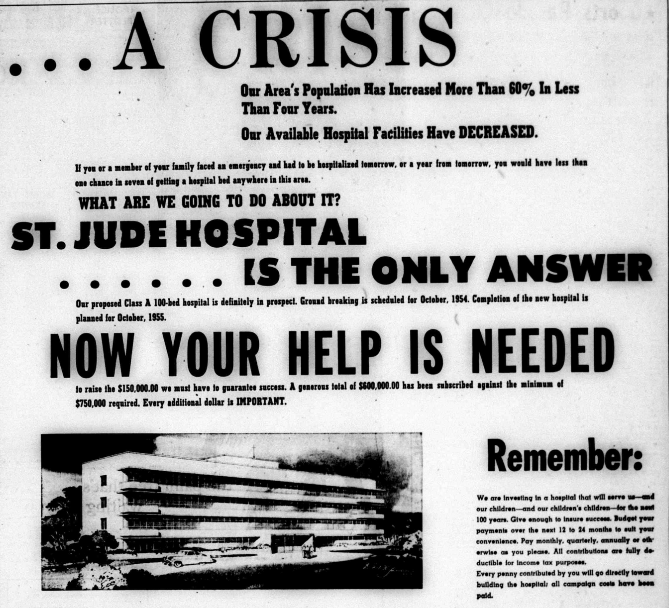
As the population grew, so did the need for a larger hospital. Fundraising efforts were underway for St. Jude.
One unfortunate by-product of growth in southern California was smog.
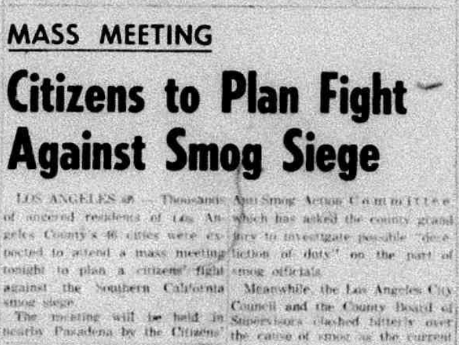
Governor Goodwin Knight asked the oil companies to close their refineries as the state grappled with the smog problem.
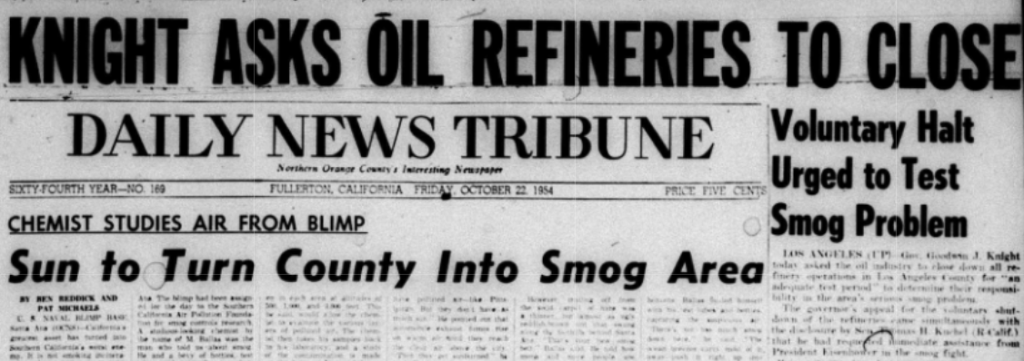
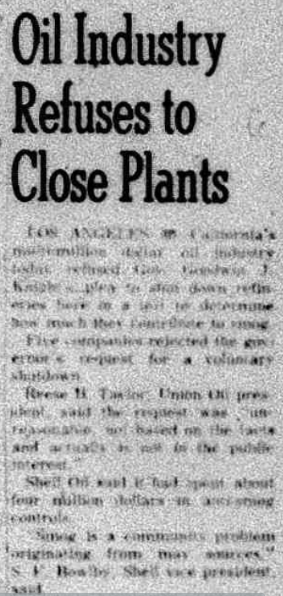
The oil companies said, “No.”
Housing
Throughout the 1950s, thousands of acres of orange groves were plowed under to make way for shopping centers, industrial plants, and sprawling housing subdivisions.
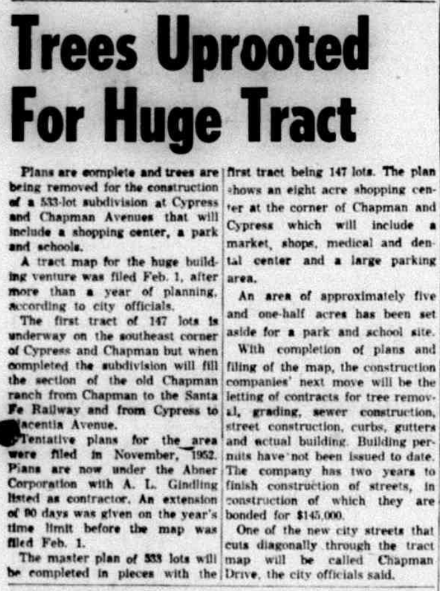
Perhaps most symbolic of this transformation was the subdivision of the Chapman Ranch.
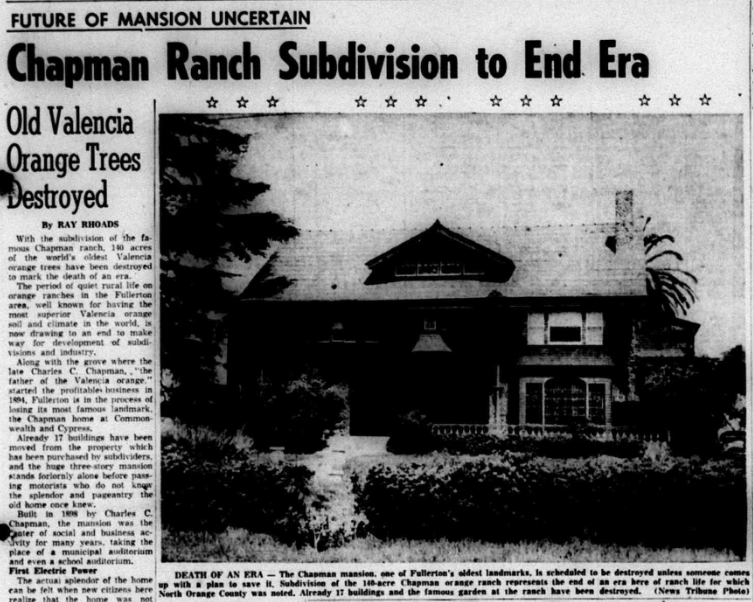
“With the subdivision of the famous Chapman ranch, 150 acres of the world’s oldest Valencia orange trees have been destroyed to mark the death of an era,” the News-Tribune reported. “The period of quiet rural life on orange ranches in the Fullerton area, well known for having the most superior Valencia orange soil and climate in the world, is now drawing to an end to make way for development of subdivisions and industry.”
Charles C. Chapman, “the father of the Valencia orange” and Fullerton’s first mayor, got into the orange business in 1894 and became one of the wealthiest and most successful local growers.
There was a question of what would happen to the stately Chapman mansion, built in 1898–once a center for social and cultural gatherings.
“Even though the death of the old landmark stirs deep regret in all long-time citizens here, so far all attempts to keep the house intact have failed. No one can find an answer to the question, “What to do with an 11-bedroom mansion?” Suggestions of turning it into a museum and park have been looked on with favor, but the question has arisen: who would finance such a venture?” the News-Tribune asked.
Famous mid-century modernist architect Joseph Eichler contributed to post-war Fullerton suburbanization.
On their web site, Fullerton Heritage writes:
“In 1955, Eichler, a merchandising wizard, convinced his two principal architects, A. Quincy Jones and Frederick E. Emmons, to appear on the “House That Home Built” segment of the NBC Home television show that came on daily after the Today Show from 1954 to 1957. On the nationally syndicated show, co-hosted by Hugh Downs and Arlene Francis, Jones and Emmons offered to create house plans for any developer who could come up with $200. The plans were designs that Jones and Emmons had created earlier for Eichler. The local building firm of Pardee-Phillips took up the challenge and constructed over 300 Eichler homes, naming the tracts the Fullerton Grove development. Advertised as the “Forever House” model, the aluminum, glass, steel, and masonry dwellings sold from $12,950 to $19,500 for the deluxe model, requiring a $1,250 to $2,000 down payment (with little or no down payment for veterans).
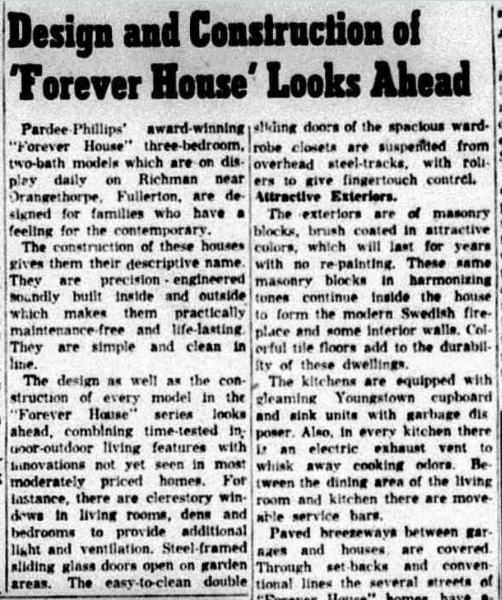
The architects offered seven floor plans for the three- and four-bedroom, two-bath homes that featured floor-to-ceiling fireplaces and glass walls, color coordinated kitchens and bathrooms, birch cabinets, sliding glass doors, and an electronic weather control system. Advertising extolled the “Dream Kitchen of Tomorrow” that contained 14 major built-in items. The homes were noted for their simple, plain façades, few windows, flat roofs, and carports situated front and center. A unique touch was orange trees in the front and backyards, a tribute to Fullerton’s agricultural past. The Fullerton Grove development quickly sold out.
Fullerton was not the only city to benefit from the television offer of Jones and Emmons. Local builders in the cities of Cleveland, Chicago, Denver, San Francisco, and Kansas City also constructed similarly styled Eichler homes.”
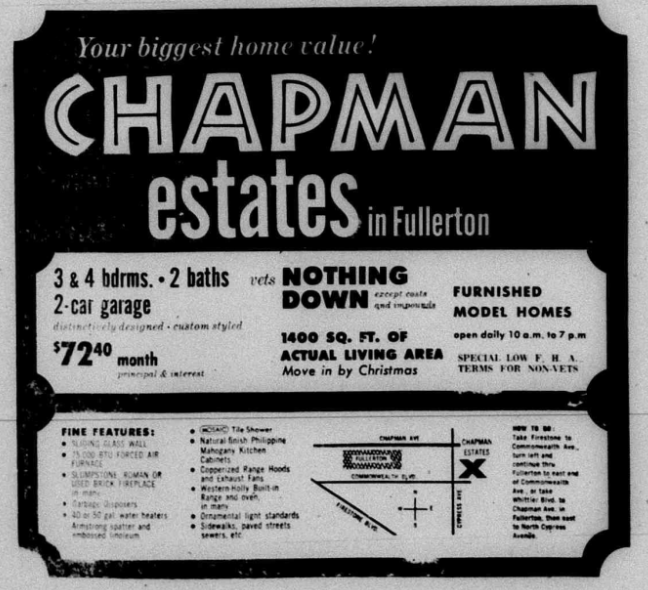
Numerous advertisements appear in the Fullerton News-Tribune for homes in newly-built subdivisions. What strikes me is how affordable these homes were. This was partly because of federally-backed loans and “no money” down offers for veterans.
Culture and Entertainment
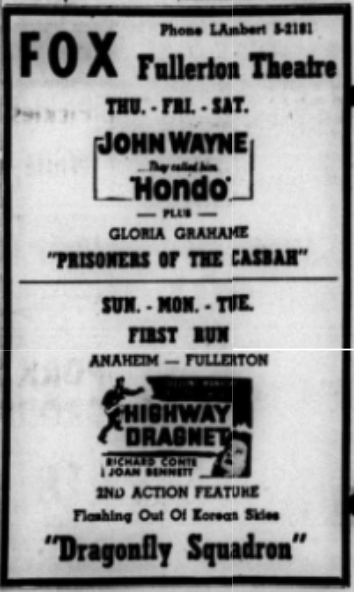
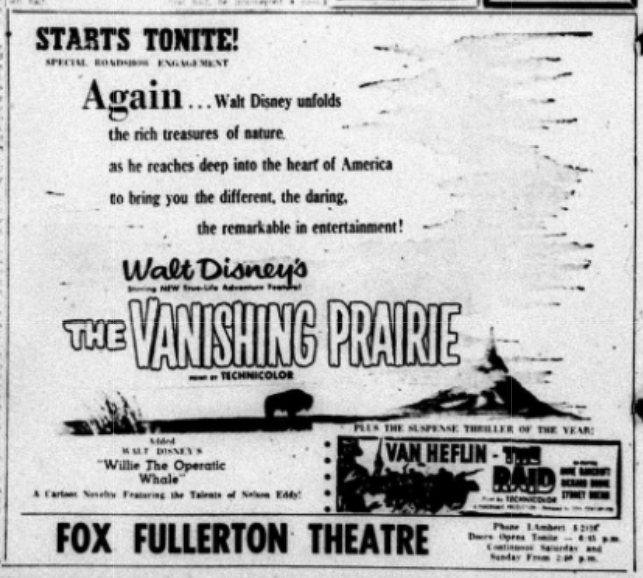
For culture and entertainment, Fullertonians went to movies at the Fox Theater. Westerns were quite popular, often presenting a sanitized vision of American westward expansion that valorized white settlers, stereotyped Native Americans, and ignored or downplayed the genocide that was the endgame of Manifest Destiny.
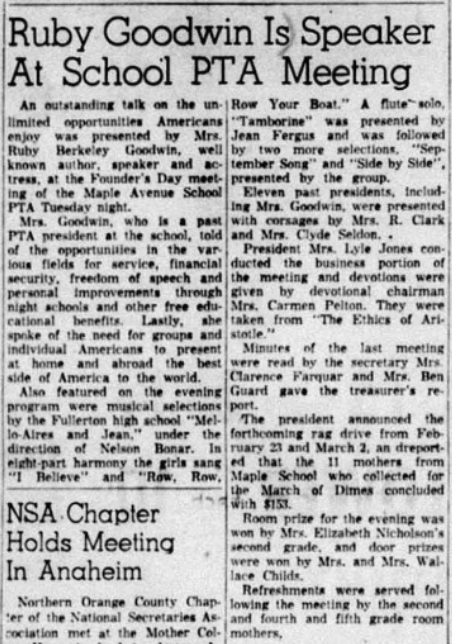
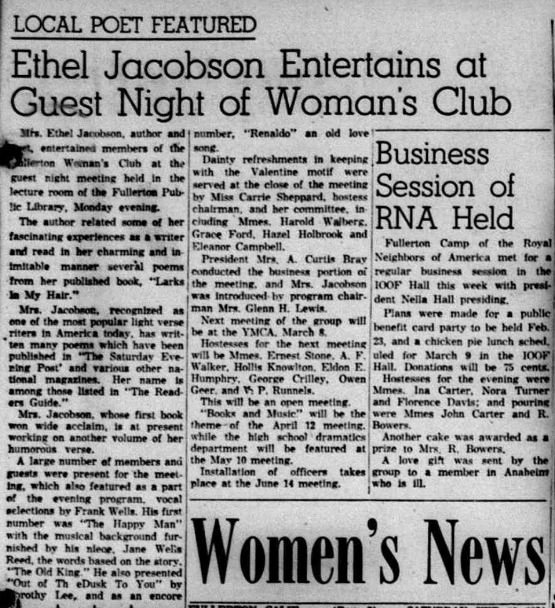
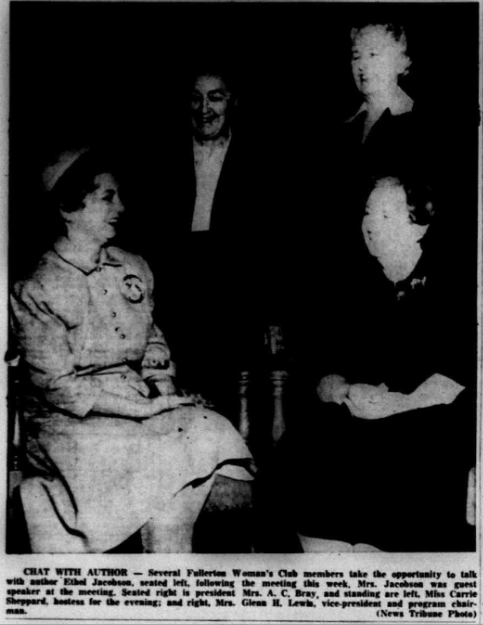
Fullerton was home to at least two famous female authors: Ruby Berkeley Goodwin and Ethel Jacobsen, who would sometimes share their works at local gatherings.
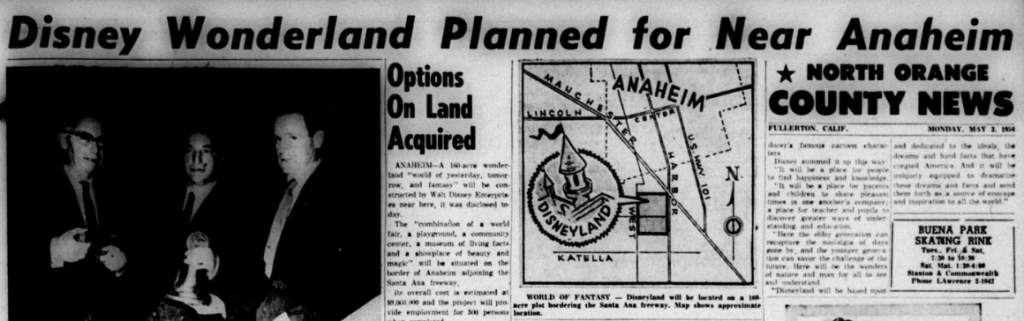
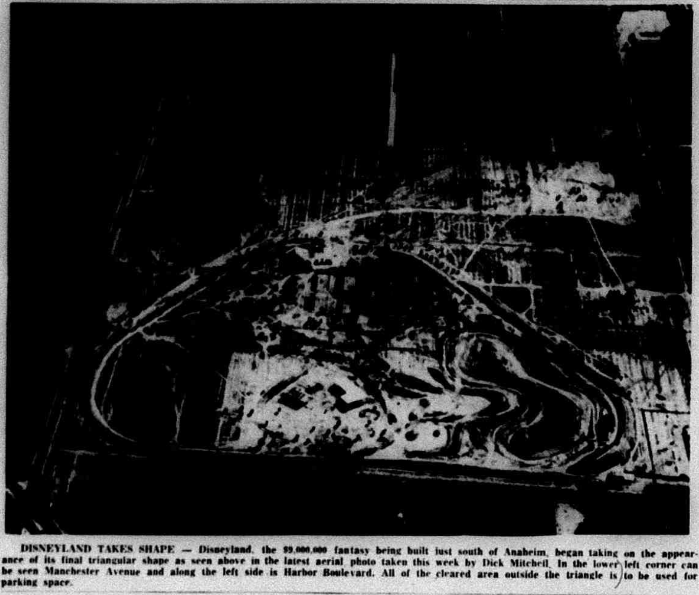
Something new and exciting was coming to Anaheim next door: Disneyland!
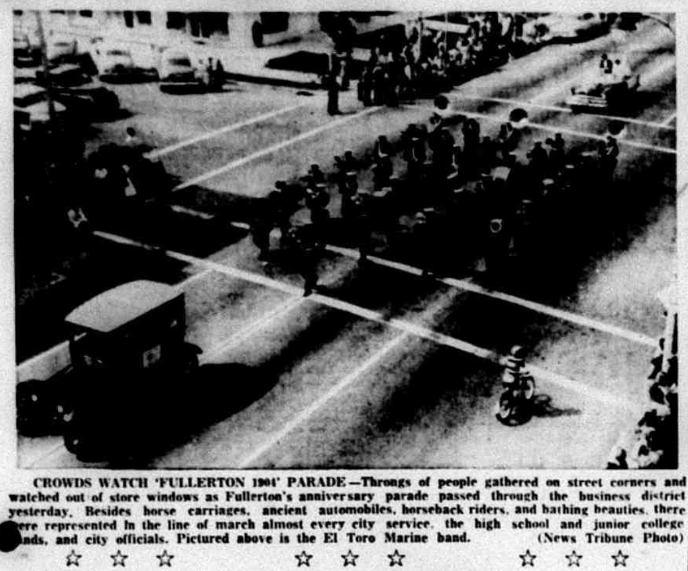
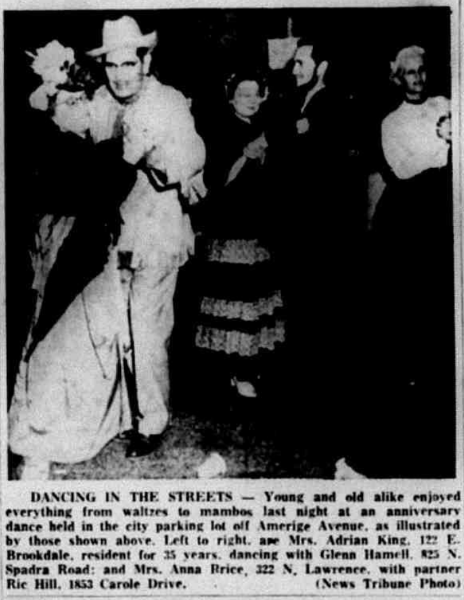
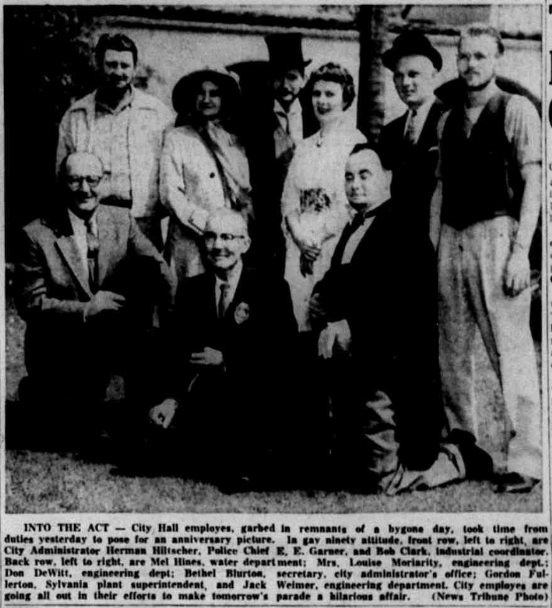
Fullerton celebrated the 50th anniversary of its incorporation as a city with a Community Parade and other events which focused on what life was like in 1904.
Some Businesses
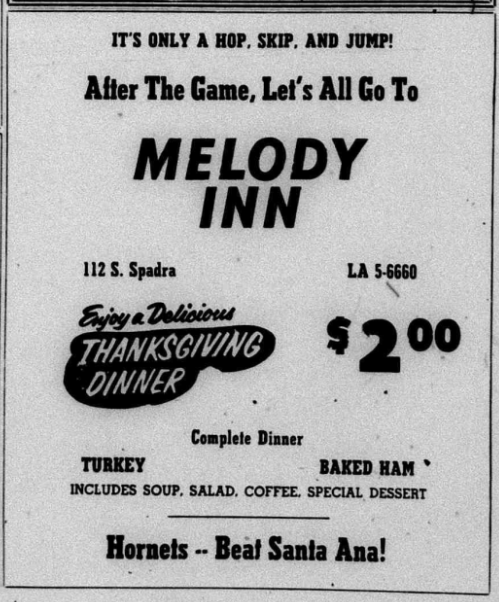
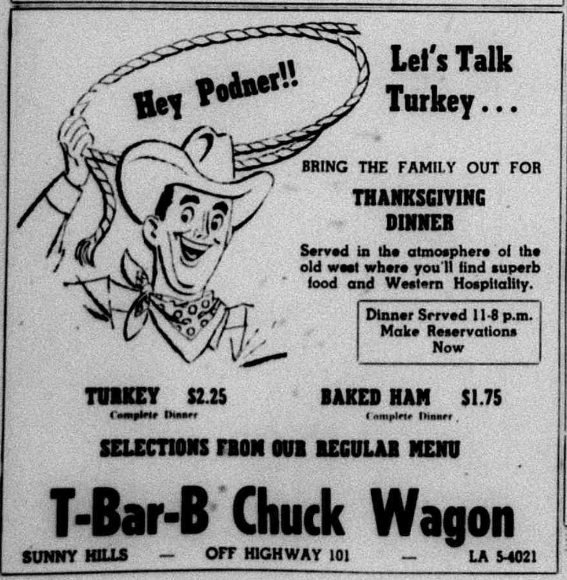
Here are advertisements for some of the businesses that existed in Fullerton in 1954, with a particular focus on restaurants.
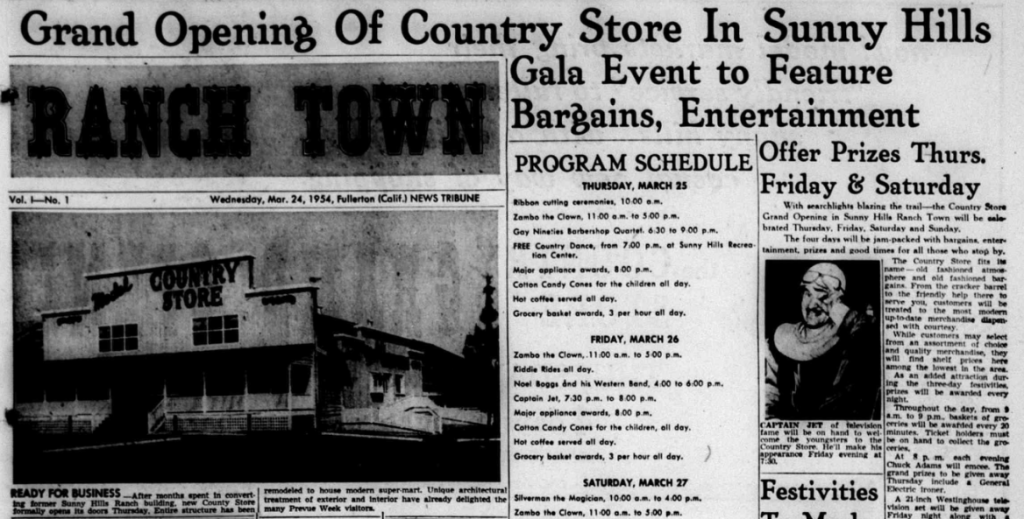
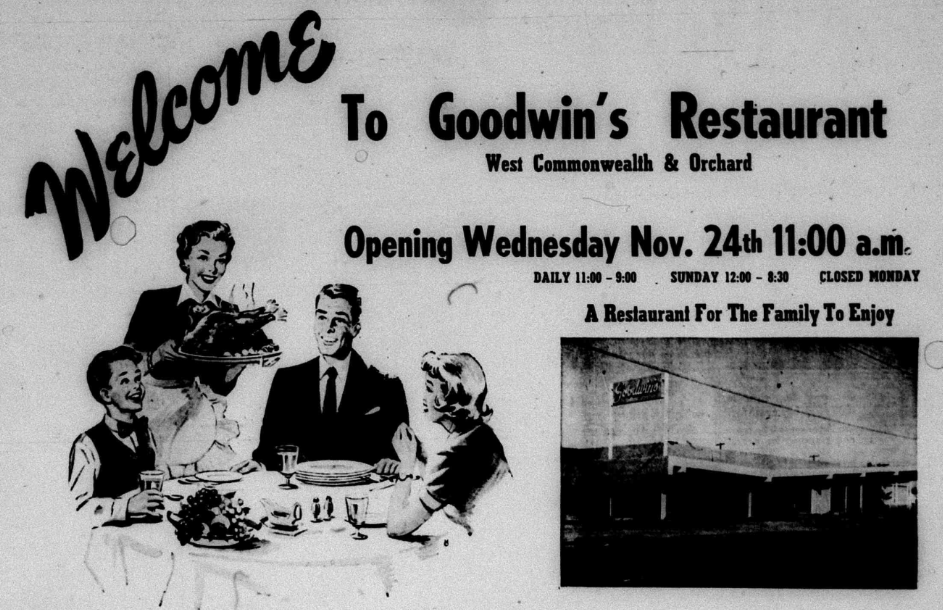
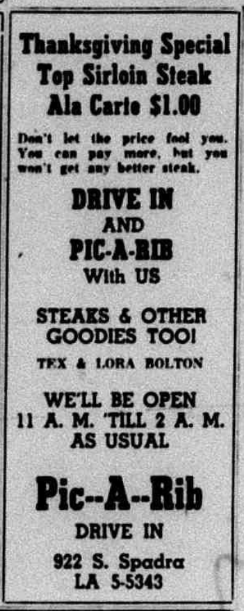
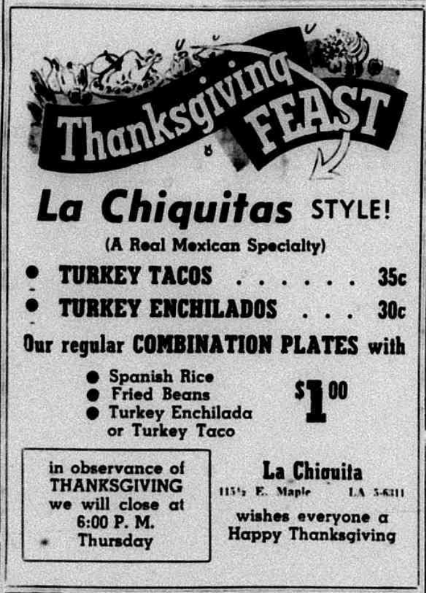
Sports
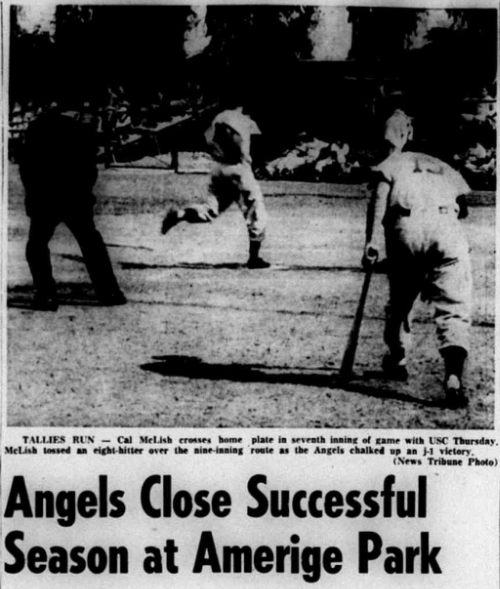
In the 1950s, the minor league baseball team the Los Angeles Angels played games at Amerige Park in Fullerton.
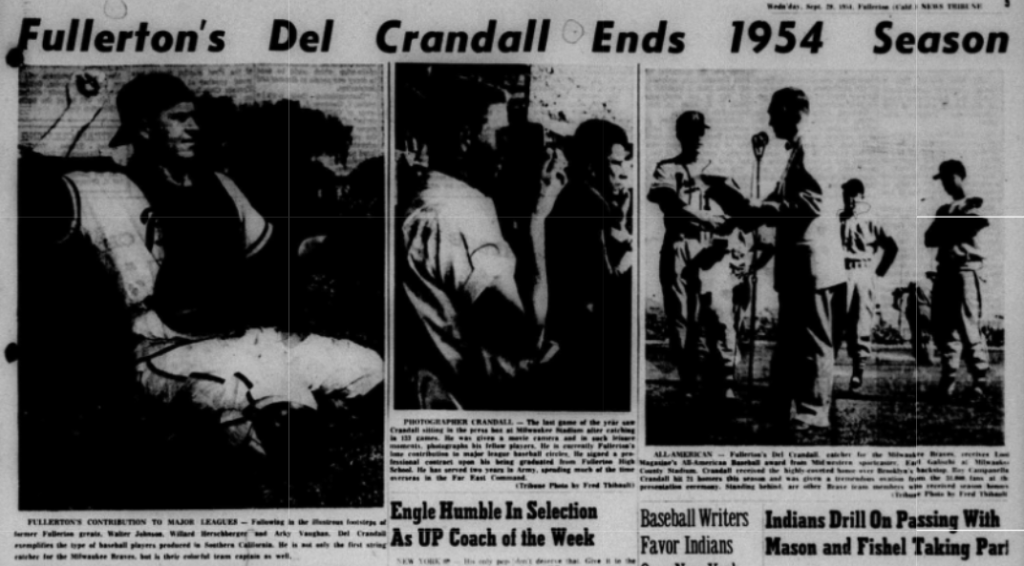
Hometown hero Del Crandall was making Fullertonians proud as catcher for the Milwaukee Braves.
Annexation
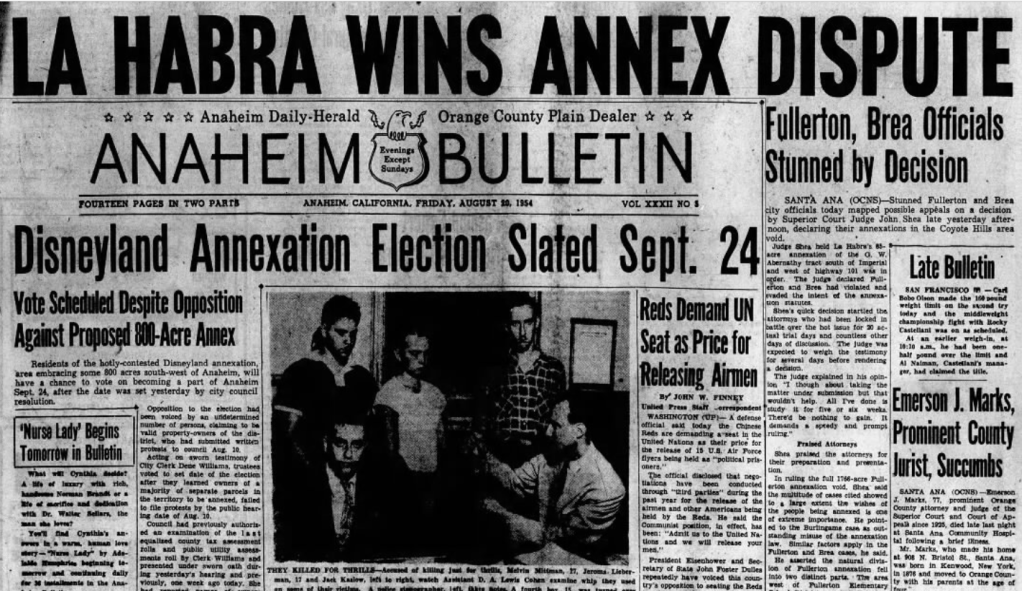
In the early 1950s, there were several disputes between Fullerton and surrounding cities over annexation of unincorporated land. In 1954, a judge ruled in favor of La Habra’s claim against Fullerton and Brea for a large stretch of land north of Fullerton. Below is another clipping from the Anaheim Bulletin:
Fire
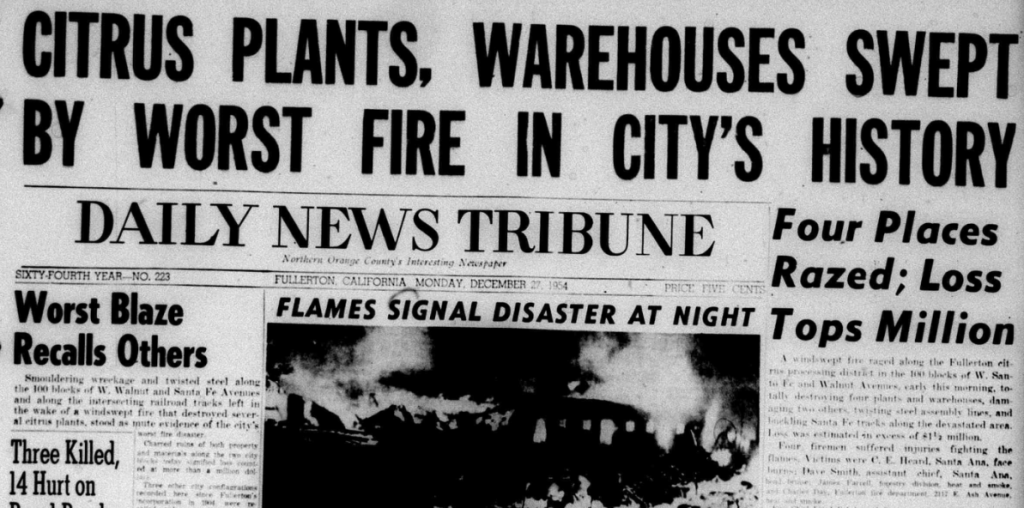
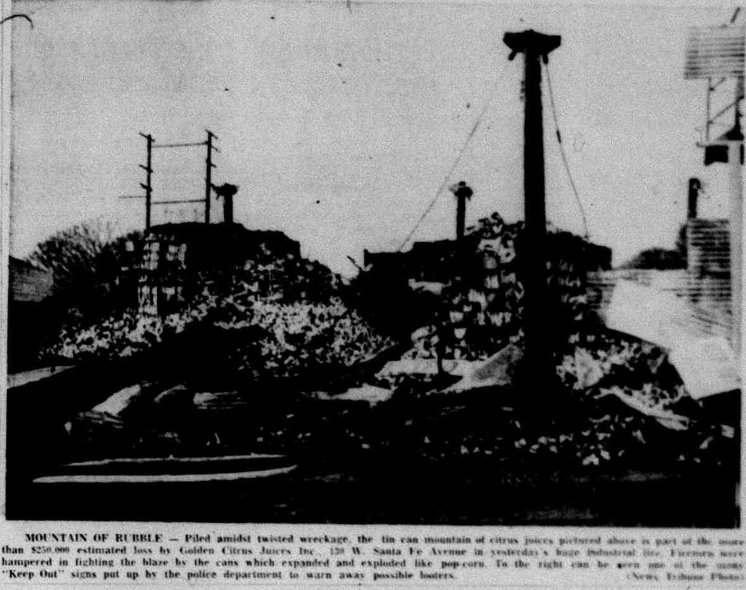
Fullerton suffered the worst fire in its history as a mighty blaze destroyed several packinghouses along the railroad tracks.
History
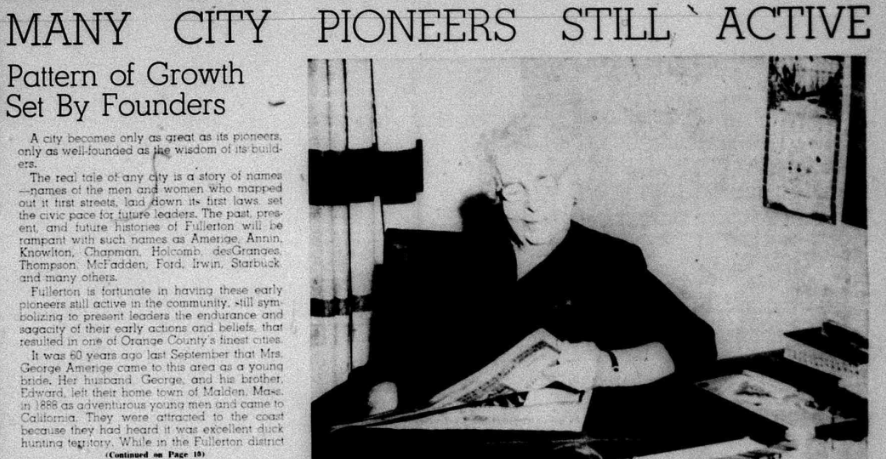
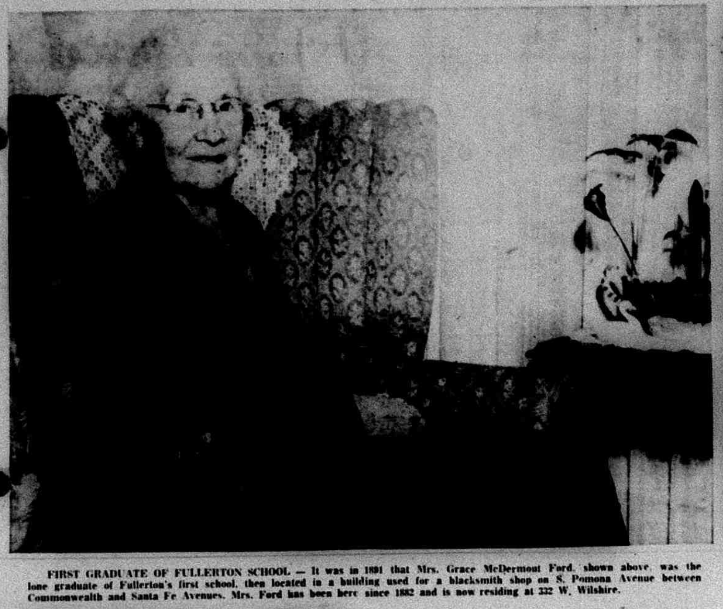
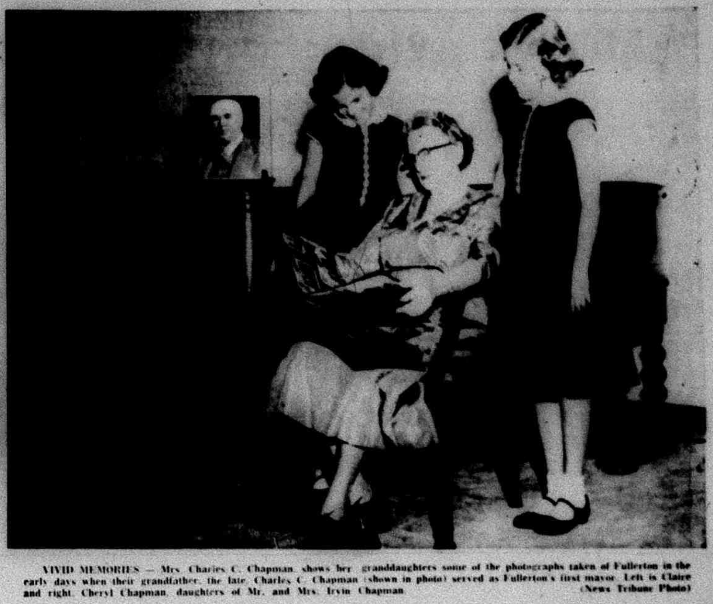
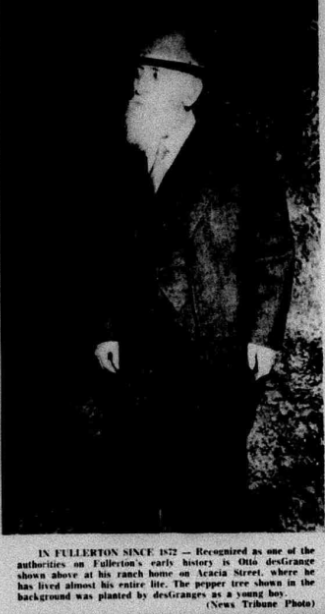
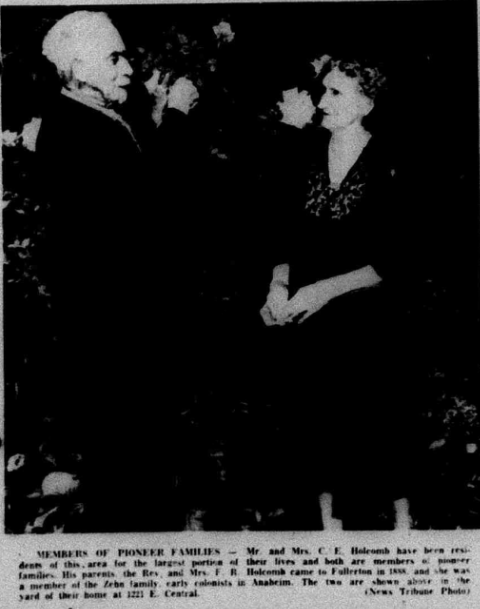
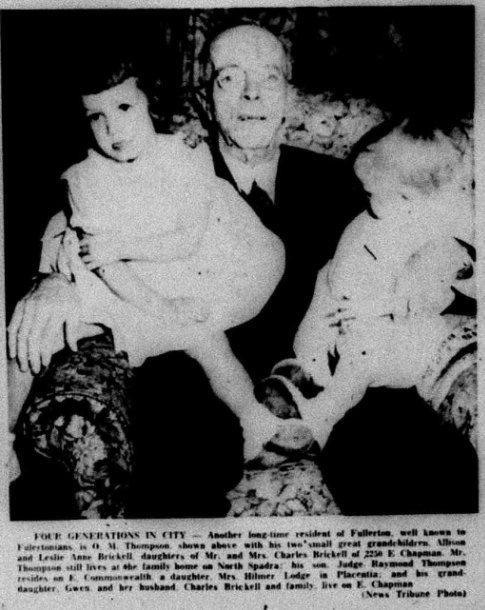
An anniversary issue of the News-Tribune contained photos of some notable long-time Fullerton residents who were still alive like Grace McDermont Ford, Mrs. Chapman, Otto Des Granges, Annette Amerige, C.E. Holcomb, and O.M. Thompson,
Stay tuned for top stories from 1955!
 Fullerton History