The following is from a work-in-progress about the history of Fullerton. You can support my ongoing research and writing on Patreon.
The Local History Room of the Fullerton Public Library has microfilm from the Fullerton Daily News-Tribune newspaper stretching back to 1893. I am in the process of reading over the microfilm, year by year, to get a sense of what was happening in the town over the years, and creating a mini archive. Below are some news stories from 1951.
The Korean War
In international news, the Korean War raged. This was both a civil war between north and south and a proxy war between the capitalist west and communist east. The tragedy of the Korean War was that the line separating north and south (the 38th parallel) remained unchanged before and after the war. Millions died for a line that never moved. Thankfully, the United States learned the lesson of the Korean War, and never got into another unwinnable war based on Cold War ideology. Just kidding. We did the Vietnam War.

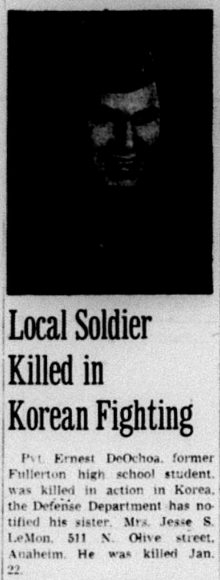
Some young men from Fullerton fought, and died, in the Korean War.
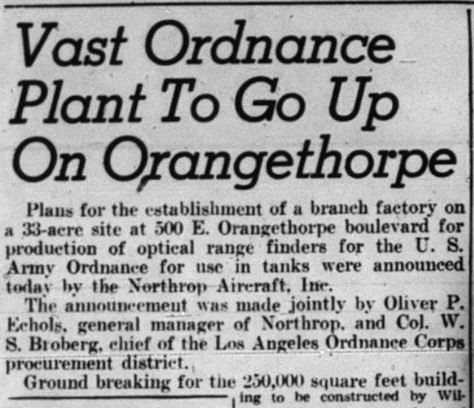
A new business plant was established in Fullerton that made tank ordinances. This would be one of a number of defense industries that sprung up in Fullerton and surrounding areas during and after World War II. President Eisenhower would later call this the Military Industrial Complex.
The Cold War
Cold War tensions escalated between the United States and the Soviet Union, leading to fears of atomic war.
The Atomic Energy Commission began conducting bomb tests in the Nevada desert.
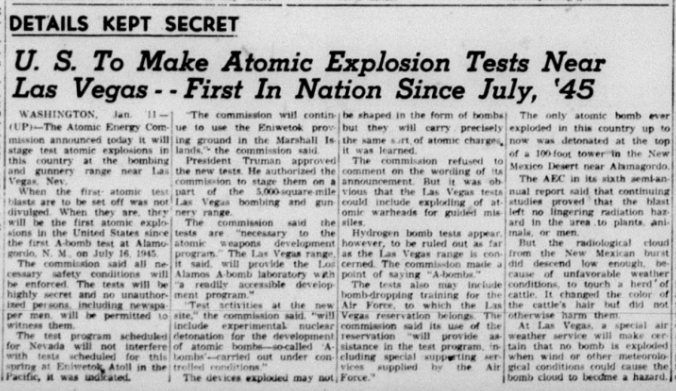
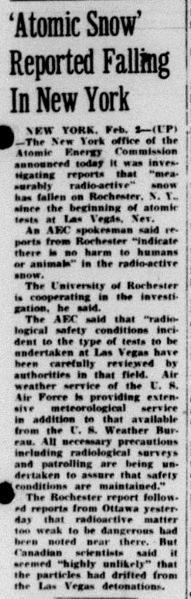
These atomic tests, unfortunately, spread fallout to communities “downwind” of the blasts in Nevada and surrounding areas, and as far away as New York–leading to increased cancer rates across huge swaths of America and the world. We never experienced atomic war, but we felt the impact of testing fallout. This is explored in the 2023 documentary Downwind. Thankfully, we have learned the lessons of history, and political leaders today are committed to a ban on nuclear testing. Just kidding. President Trump recently announced that he wants to resume nuclear testing.
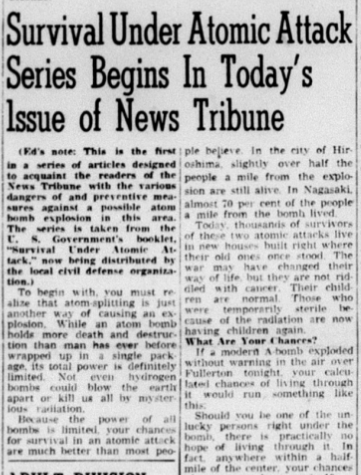
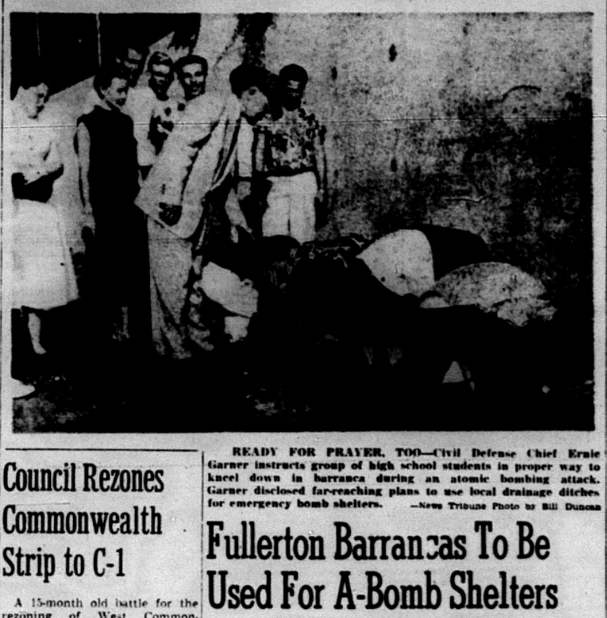
Here in Fullerton, fears of atomic war led to the establishment of a Civil Defense, as well as the construction of bomb shelters and “duck and cover” drills for local students.
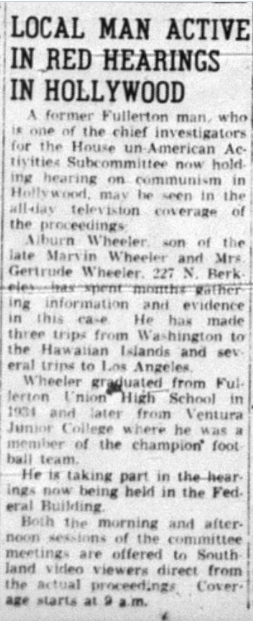
The Cold War also led to a heightened fear of communists and communist thought in America, which manifested in the “Red Scare.” Thankfully, we have learned the lesson of history, and American political leaders no longer engage in “Red Scare” tactics. Just kidding. Republicans recently lost their minds over Zohran Mamdani, mayor-elect of New York.
Growth
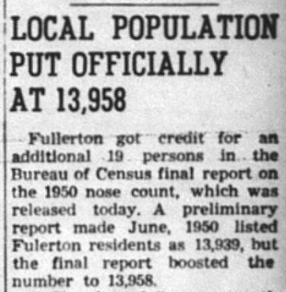
On a somewhat more positive note, Fullerton continued to experience extraordinary growth following World War II. This was a time when the U.S. government invested heavily in home ownership and growing the middle class, in the form of FHA loans and no-down payment options for veterans. Thankfully, the U.S. government is just as committed today to making home ownership accessible to all Americans. Just kidding. The average home in Fullerton today costs over a million dollars.

New subdivisions sprang up like mushrooms on former orange groves.
“Primarily an agriculture and residential area, Fullerton and its surrounding territories have undergone one of the greatest building splurges in the history of Southern California,” the News-Tribune reported. “While not in the same class with the Lakewood district of Long Beach, the area has seen a tripling of population figures since 1940 with a corresponding leap in the number of homes…A total of 1226 dwelling permits were issued in Fullerton alone during the banner year [1950], 713 of which were for single family residences, both in tracts and for individuals.”
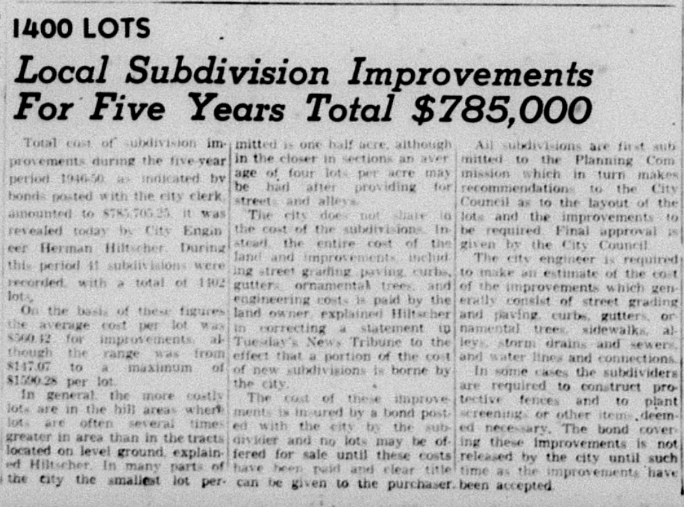
New shopping centers and businesses sprung up to serve the growing population.

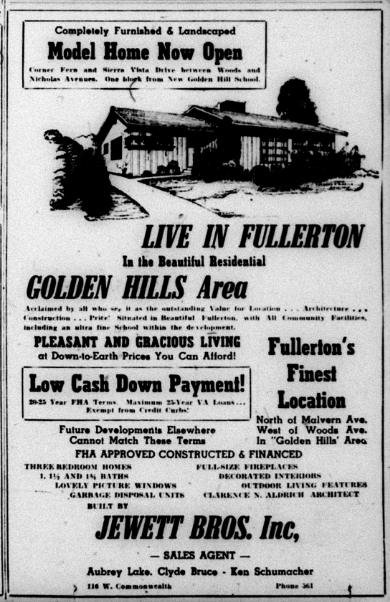
New developments were advertised in the pages of the Fullerton News-Tribune.
Education
As Fullerton added hundreds of new homes and families, new schools were built to accommodate the children of the new arrivals.
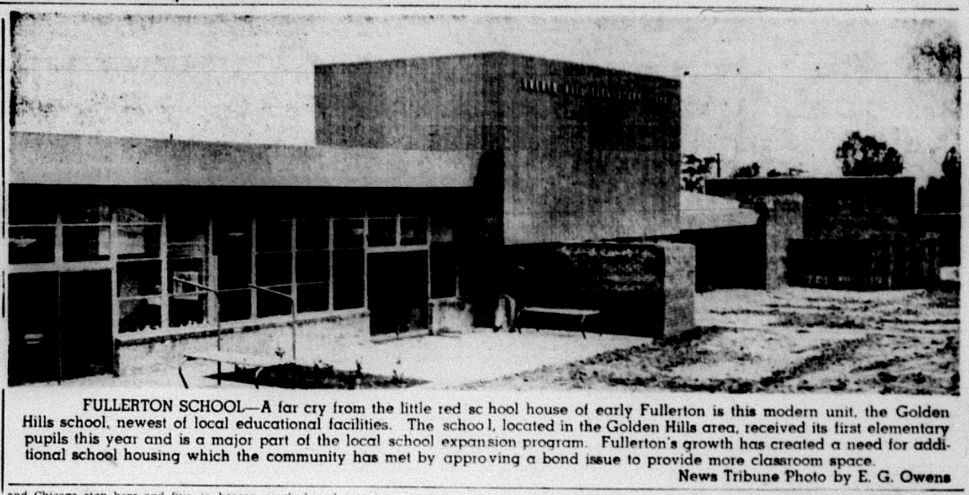
Fullerton High School was expanded with new buildings.

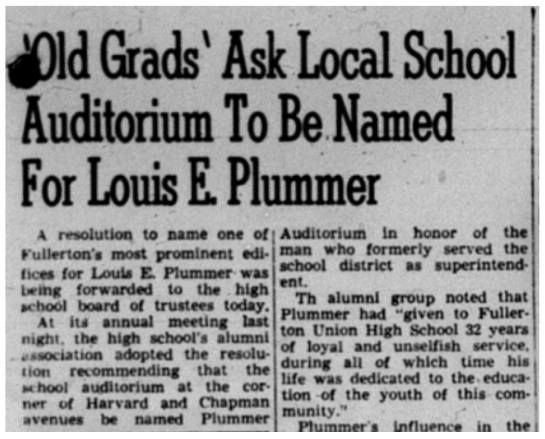
There was talk of naming the high school auditorium (built in 1930) after former principal/superintendent Louis Plummer, who was allegedly a member of the Ku Klux Klan in the 1920s, as were many local leaders.
While the elementary and high schools were growing, Fullerton College suffered a drop in enrollment due to the Korean War.

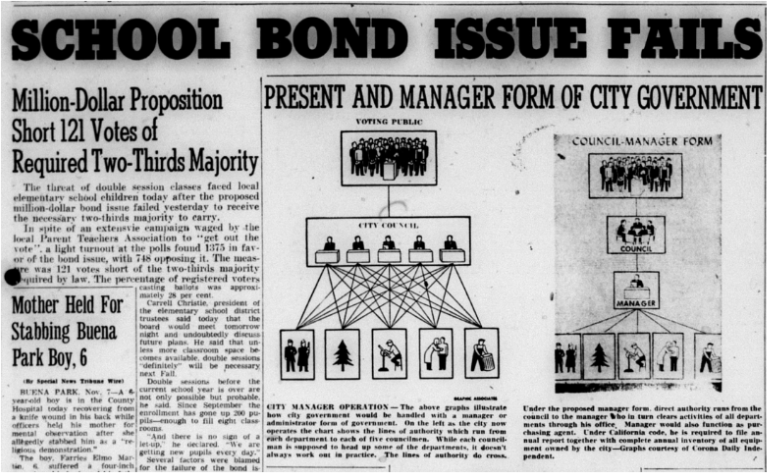
A million dollar school bond issue failed. New residents wanted new schools, but not an increased tax burden.
Annexation Fight with Anaheim
As both Fullerton and Anaheim grew, there was an annexation fight between the two cities over a strip of land in south Fullerton and north Anaheim. Fullerton ultimately won the fight.

Law and Order
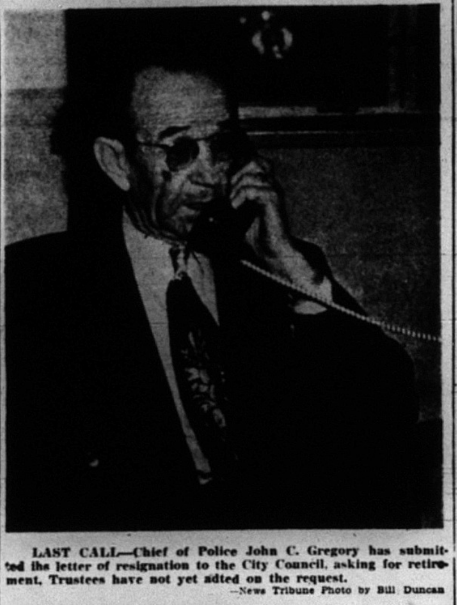
Fullerton police chief John C. Gregory retired after 25 years with the force.

He was replaced by Ernie Garner.

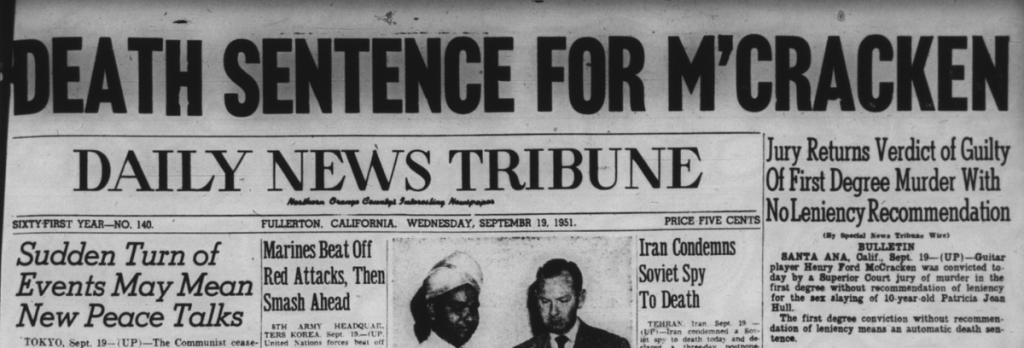
The biggest local crime was the kidnapping, sexual assault, and murder of 10-year-old Patricia Hull by country singer Henry Ford McCracken in Buena Park. The crime and trial captured the attention of Orange County and beyond.
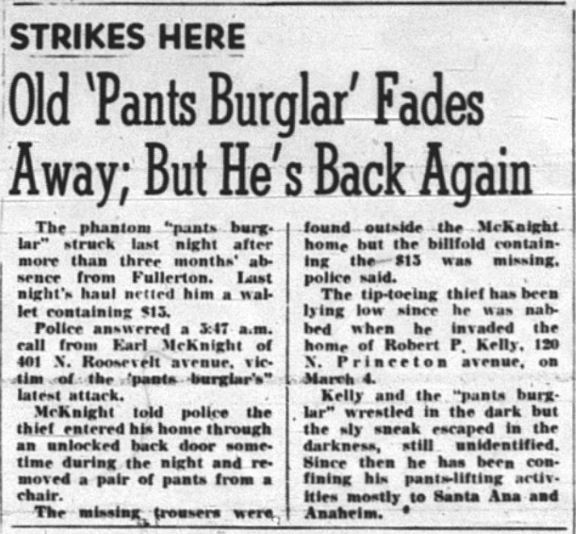
A less grisly, and more comical, criminal in 1951 was the so-called “pants burglar.”
In the 1950s, narcotics were becoming more of a national and local issue.

Local Residents Protest Mexican Citrus Work Camp
While many orange groves were being plowed under for housing development, the citrus industry was still a major aspect off the local economy in 1951. These two things (housing and the citrus industry) came into conflict when a labor camp was proposed to house 1000 Mexican citrus workers.
“Although several residents of Fullerton have filed protests with the city after learning of the plan, there is actually nothing that can be done by the city to prevent the move, City Engineer Herman Hiltscher said today, since the area is zoned for industry,” the News-Tribune reported.
A representative of the local orange growers association said that the county’s citrus ranchers face a “very definite crisis” in the matter of getting enough labor for their Valencia harvest, scheduled to begin within five or six weeks.
“He pointed out the 12 labor camps now in use, including the largest one near Anaheim, house only 2000 men and said that “this isn’t enough for the job.” The organization was denied use of a 17-acre parcel near the Orange County hospital by a 4-3 vote of the county supervisors recently,” the News-Tribune reported.
Local residents proposed to file an injunction against the construction of the camp.
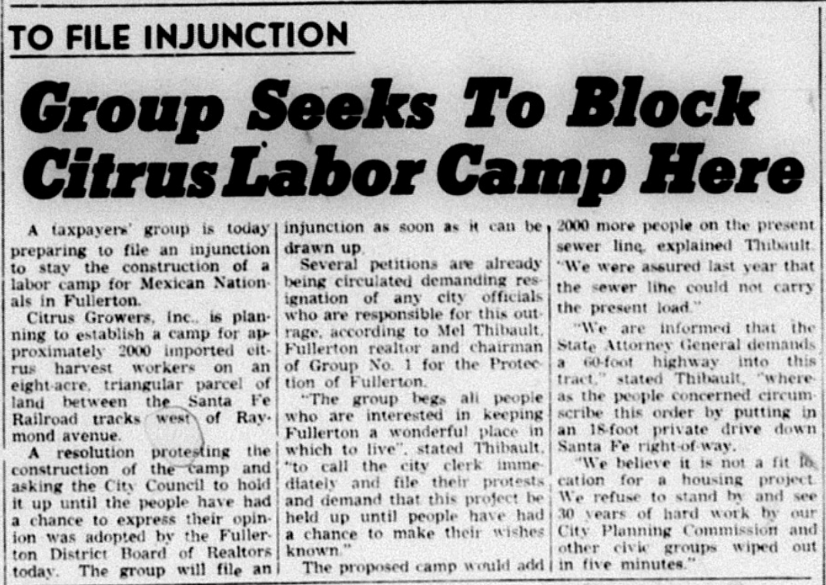
“Citrus Growers already have 12 camps in Orange County. Two camps for workers are in Fullerton, one on E. Truslow avenue for 75 persons and one on S. Balcom for 150 workers,” the News-Tribune reported.
In a series of public meetings, some local residents spoke against the citrus camp.

“I came here from the East seven years ago and after considering many fine suburbs of Los Angeles chose Fullerton in which to buy a home and plant my roots because it was free of riff raff and seemed to take pride in its beautiful streets and homes,” Anne Hoyal said.
“We do not want to live within a stone throw of such a place, no matter how ultra modern their buildings and facilities are. Imagine directing some friend to our brand new home–”Oh–it’s just over there by the labor camp.” Why don’t some of the people, who are in favor of it, build it near their lovely ranch house,” Mrs. Warren T. Johnson said.
Mel Thibault, leader of the recall campaign, said that he had 2,000 signatures to a petition asking the City Council to halt the construction of the camp until the citizens could be heard.
“I didn’t say that I didn’t like Mexicans,” Mel Thibault said. “On the contrary, I said I loved them. I stated that I didn’t want the labor camp here because it would possibly bring an undesirable class of people into the City of Fullerton.”
A local group paid for ads in the News-Tribune against the proposed camp. The issue of the proposed camp pitted the old guard of citrus growers against the newer moneyed interests in the form of housing developers and property owners.

Ultimately, council approved the camp, having no legal ability to block its construction. After approving the citrus camp, three city council members faced a potential recall.
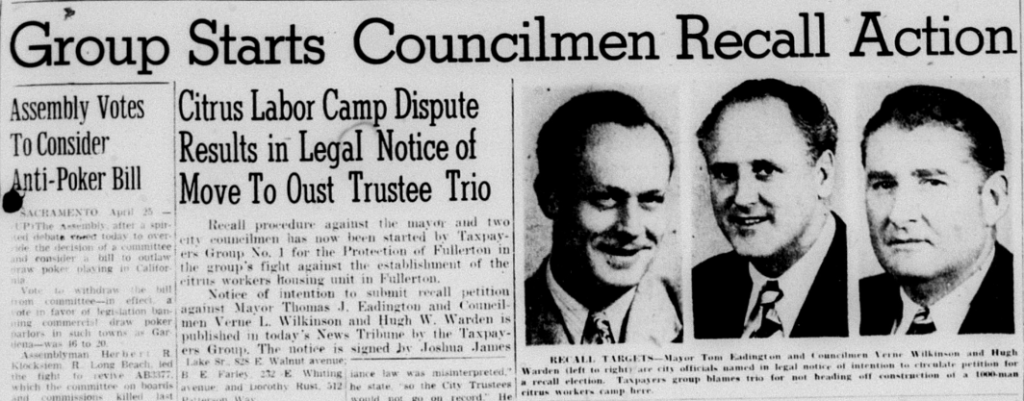
“Motion to circulate a petition for the recall of the mayor and two councilmen was approved by the taxpayers Group which held a protest meeting in the Civic Auditorium last night just prior to appearing before the City Council,” the News-Tribune reported. “The recall petition will be against Mayor Thomas J. Eadington and Councilmen High W. Warden and Verne L. Wilkinson. Thibault charged the trio with “apparent negligence and inefficiency” in permitting the labor camp to be located in Fullerton. Jack Adams and Kermit Wood protested the location of the camp here in a meeting.”
For all the talk about protecting taxpayers, at the root of opposition to the citrus camp was (at least in part) pervasive racism against Mexicans in the 1950s. The following strange article appeared in the News-Tribune:
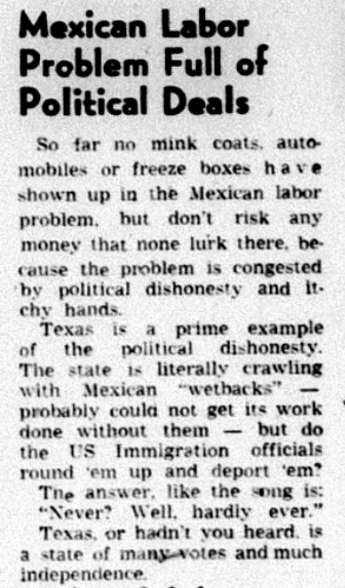
“The social slobsisters–pardon us, sobsisters–who weep over the “wetbacks” could render a real service if they would stand for official energy and honesty in deporting “Wetbacks” from both factories and farms and support the legal commonsense plan of bringing Mexican workers in under contract, and sending them back home when their contracts expire,” an article in the News-Tribune stated.
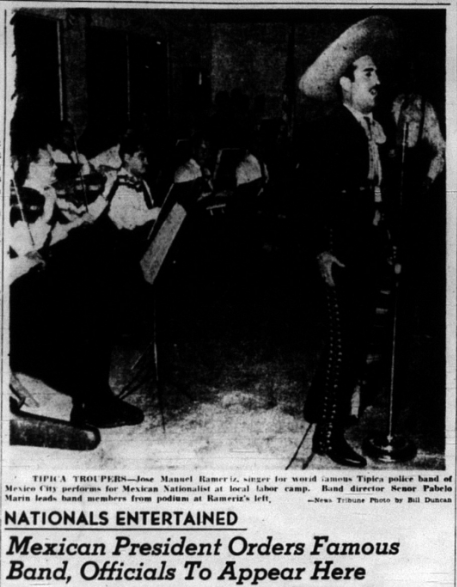
Meanwhile, the camp was built. The president of Mexico actually sent some famous musicians and officials to entertain and encourage the workers, who undoubtedly did not feel welcome in Fullerton.
Thankfully, racism and scapegoating of Mexican immigrants is a thing of the past in America. Just kidding. It is, tragically, alive and well.
Businesses
Here are a few of the major businesses that existed in Fullerton in 1951, including Harris Drug Store, Red Reinhardt Service Station, Robinson’s Market, Fender Electrical Musical Instruments Co, McCoy Mills Ford, McMahan’s Furniture, Pacific Citrus Products (which made Hawaiian Punch), and Sears & Roebuck.

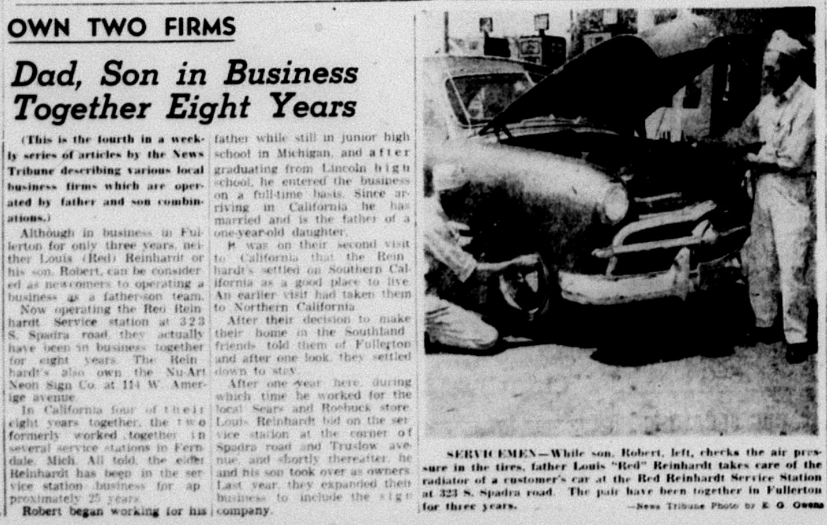

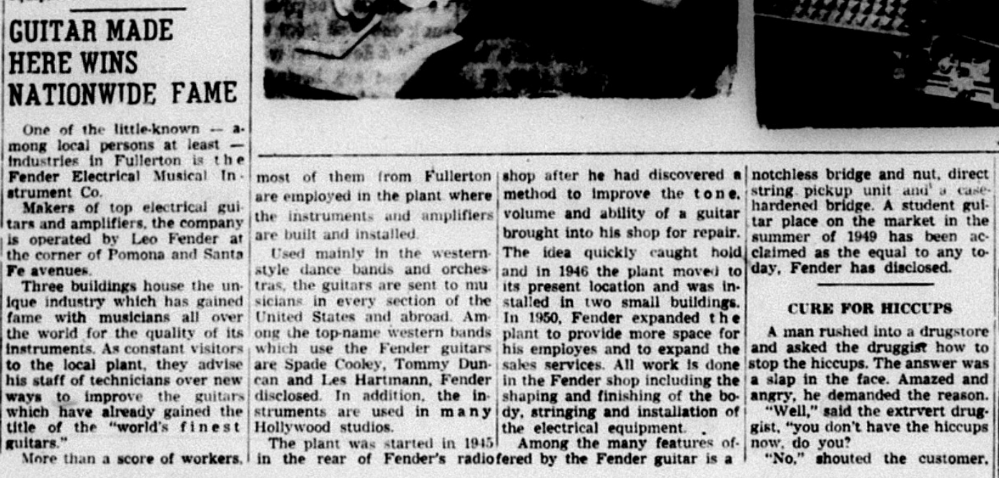
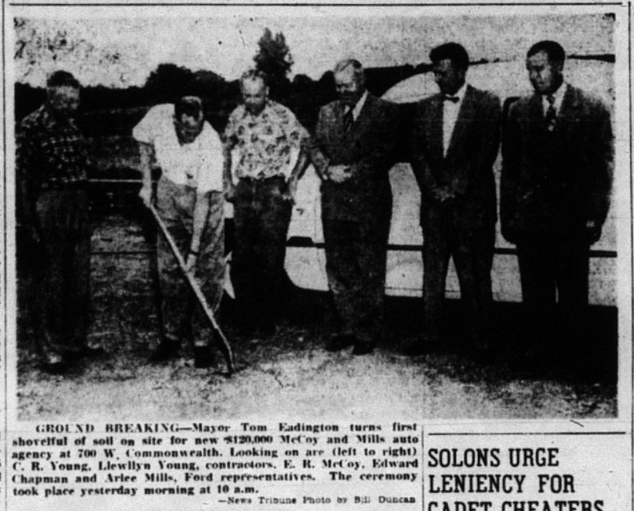

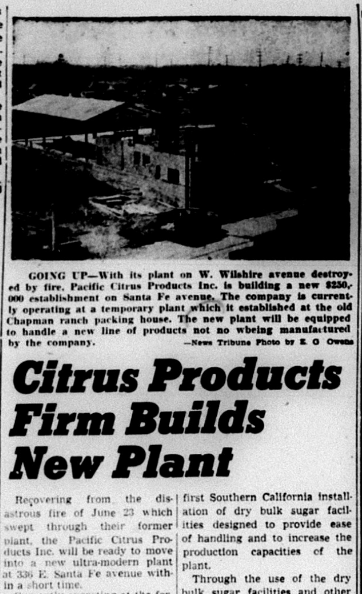

Sadly, the town’s old lumber mill was torn down. Progress, I suppose.

Culture and Entertainment
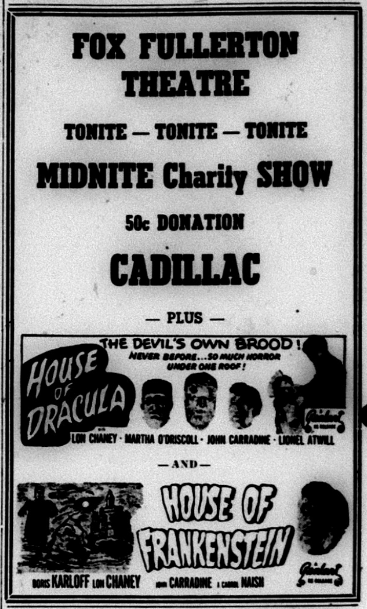
For culture and entertainment, Fullertonians went to see movies at the Fox Theater and the Wilshire Theater.
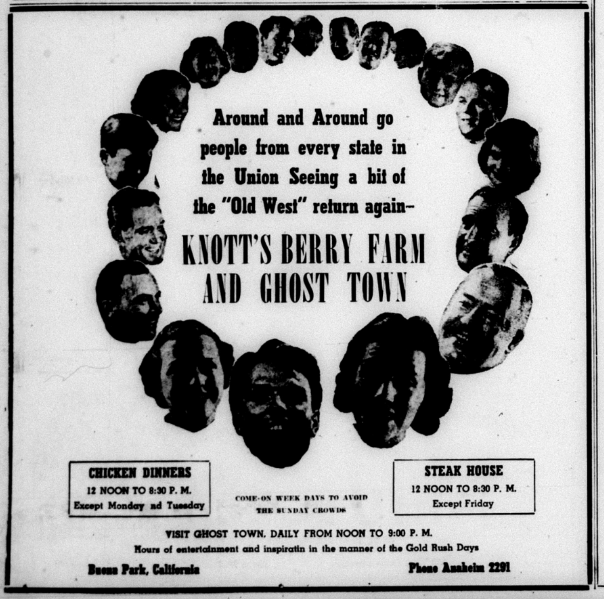
Just down the road in Buena Park, Knott’s Berry Farm was attracting visitors to its old west Ghost Town.
Fullerton hosted a huge Community Fair.
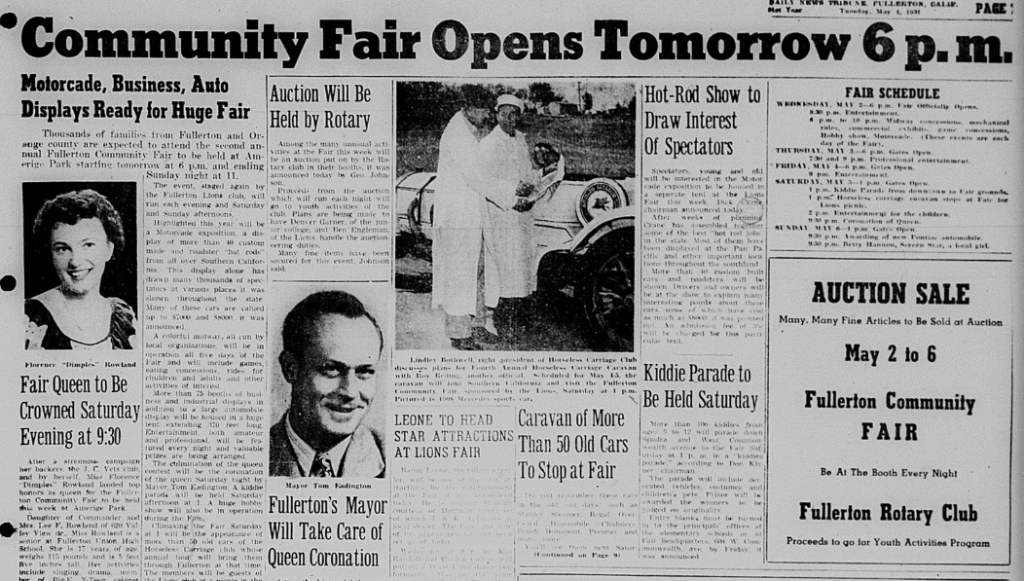
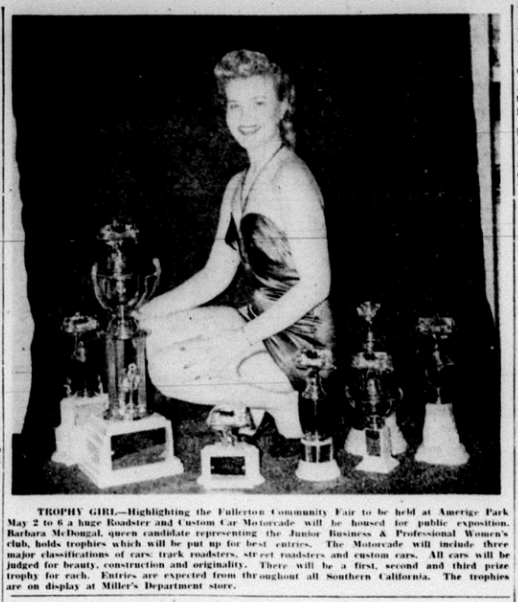
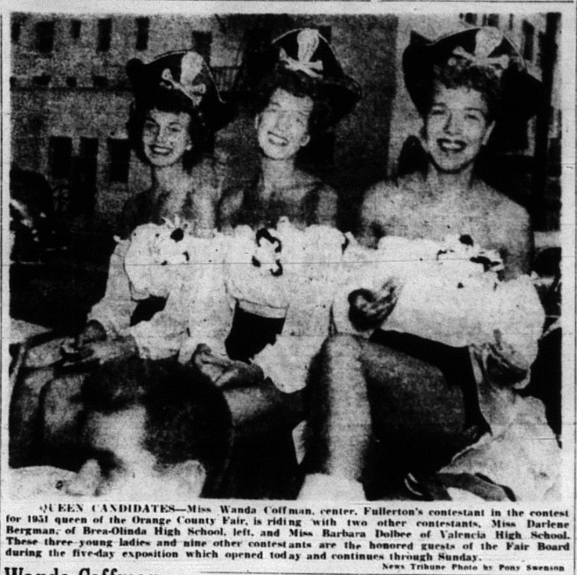
One popular aspect of local culture in the 1950s was the crowning of “Queens” for various events–the community fair, Homecoming, etc.

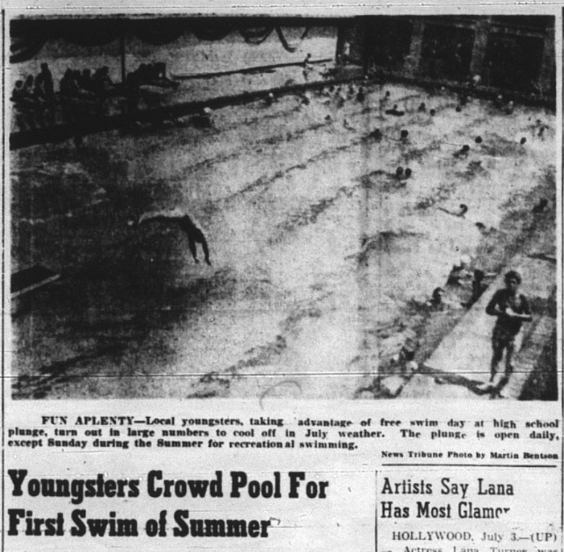
A popular swimming spot was the “plunge” at Fullerton High School.
Residents of the Princeton Circle area set up elaborate Christmas decorations. They still do this today in the form of the “Sparkle Ball” neighborhood.

Deaths
Justice of the Peace Halsey Spence died.

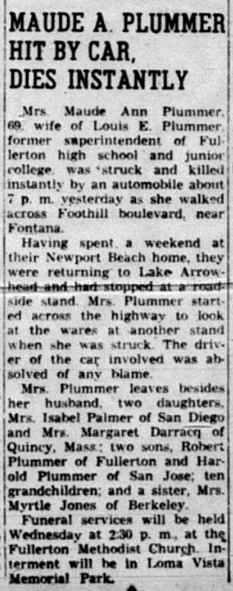
And Maude Plummer, wife of former high school superintendent Louis Plummer, was killed.
Stay tuned for top news stories from 1952!
 Fullerton History