The following is from a work-in-progress about the history of Fullerton. You can support my ongoing research and writing on Patreon.
This year, the Muckenthaler Cultural Center is celebrating its centennial. Exactly 100 years ago, in 1925, Walter and Adella Muckenthaler built their dream mansion atop a hill in north Fullerton. Forty years later, in 1965, the family gifted their stately home and the grounds around it to the city of Fullerton to be used as a Cultural Center. And since then, the Muckenthaler Cultural Center has been offering the public art exhibits, musical performances, classes, plays, and more.
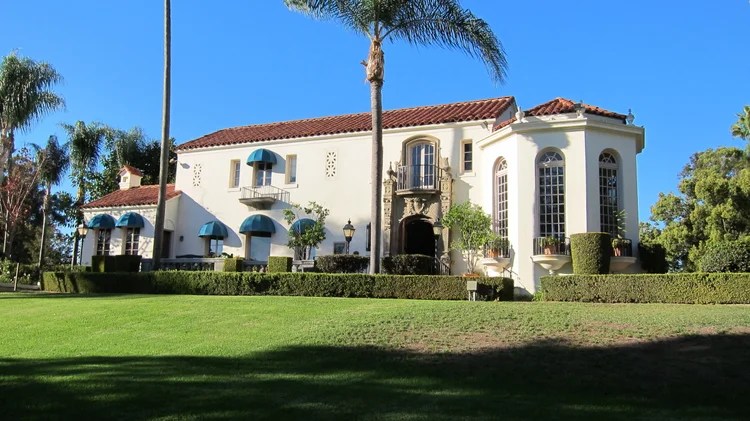
As part of the centennial, the Electric Company Theater will be offering a unique immersive theatrical experience which utilizes the whole interior of the Muckenthaler Mansion and brings guests into the world of mid-1920s Fullerton, complete with real local historical figures, including Walter and Adella Muckenthaler.
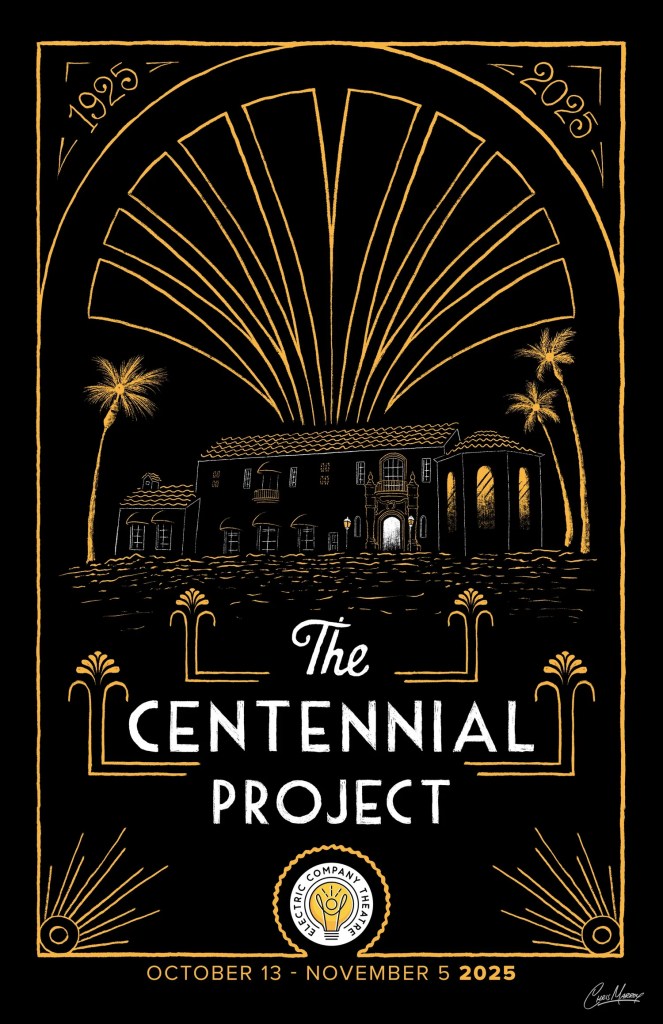
Last week, the directors of the Electric Company Theater invited me to give a brief talk about what Fullerton was like in the mid-1920s, to get their patrons excited about the centennial production.
The whole experience has made me curious to learn more about the Muckenthaler family, and so I was delighted to discover in the local history room of the Fullerton Public Library a biography of Walter, which was written by Keith Terry. Because the family commissioned the biography, it is perhaps a bit of a hagiography. Nonetheless, it provides a fascinating window into this local family–their history and legacy.
I present here a book report on some things I learned from Walter’s biography.
The German Muggenthalers
Walter’s grandparents, Martin and Elizabeth Muggenthaler, immigrated from Germany to the United States in 1854. Their name was changed to Muckenthaler by a port official in Belgium.
“They must have heard of the tempting offers of land that American railroads promoted all over Europe at that time,” Terry writes. “Undoubtedly, Martin’s desire for cheap land in the American Midwest tugged at this imagination and motivated his immigration to the new frontier.”
After landing in New York, Martin and Elizabeth took a train west to Minnesota, where they acquired land and farmed for 17 years.
Walter’s father Albert was born in 1862, during the Civil War. He was Martin and Elizabeth’s sixth child.
After the Civil War, the US government opened up more lands out west for homesteaders. This was, of course, former Native American land. The Muckenthalers took their family to Kansas where they purchased 400 acres from a railroad company, near the famous Oregon Trail.
Martin and some fellow Germans laid out the town of Newbury, Kansas. He helped build the first schoolhouse, the Sacred Heart Chapel, and donated land for the town cemetery.
Albert Goes West
When he was 20 years old, Albert Muckenthaler wanted to try his fortune out west, so he and a friend traveled by train to the German town of Anaheim, California.
At that time, in the mid-1800s, Anaheim was a grape-growing area, so Albert and his friend worked in the vineyards, then as carpenters helping to expand the Planters Hotel.
Albert and his friend explored the California coast, from San Diego to San Francisco before returning to their families in Kansas.
Back in Kansas, Albert married Augusta Ebert in 1889. They purchased a farm in the town of Paxico, where they raised wheat, pigs, cattle, and chickens.
Albert and Augusta had a son, Walter Muckenthaler in 1894.
“Walter lived the rich, full life of a typical Kansas farm boy,” Terry writes.
Eventually, Albert felt the desire to return to Anaheim, so in 1909 the family headed west.
The Anaheim they encountered in 1909 was quite different from the one Albert had visited as a young man. A blight had wiped out the grape vineyards. Following a period of economic disaster, the local farms had shifted to growing walnuts and oranges.
Albert bought ten acres where he planted a small orange grove and built a large house for the family. In addition to growing oranges, they raised a small herd of cows and started selling milk and butter to the community.
Walter Comes of Age
Walter attended Anaheim high school on Lincoln Avenue. He took an interest in the arts and drama, acting in school plays.
Walter’s parents bought the Boston Bakery in downtown, where Walter worked while in school.
After graduation in 1916, Walter had saved enough money to attend the University of California at Berkeley, where he planned to study architecture. Unfortunately, he lacked the money to stay more than one year. So he returned to Anaheim just as the US was entering World War I.
He enlisted in the Navy, but was discharged because of a heart murmur. After working in the family bakery for a while, Walter got a job as a civil engineer for the Santa Fe Railroad.
Walter and Adella
In 1918, Walter married Adella Kraemer, whom he had known since high school.
Adella came from money. Her father, Samuel Kraemer, owned much of what is now Placentia. His vast lands included citrus and walnut groves, as well as cattle and oil wells. Her mother was Agelina Yorba whose grandfather Bernardo Yorba was a Spanish “don” whose large land grant included the present city of Yorba Linda.
“Both Walter and Adella enjoyed frequenting the popular night spots, cafes and restaurants where they always hoped to catch a glimpse of some famous silent film idol. They especially liked to go to Nat Goodwin’s Cafe on the Santa Monica Pier,” Terry writes. “On different occasions, Walter and Adella saw Charlie Chaplin, Douglas Fairbanks, Herbert Marshall, the two Barrymore brothers, Gloria Swanson, Anita Stewart, the Talmade sisters, and many others.”
Walter and Adella moved into a small apartment in Fullerton.
Walter’s job as an engineer for the Santa Fe railroad kept him away from home for weeks at a time. So his wealthy and influential father-in-law Samuel Kraemer put in a good word with Fullerton’s city engineer Herman Hiltscher, and landed Walter a job as a city surveyor.
In 1922, Walter and Adella had their only child, Harold.
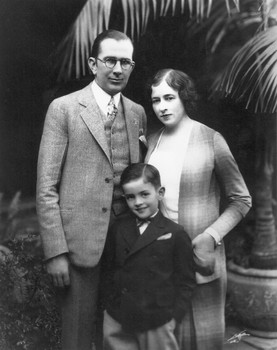
The young couple’s fortunes changed dramatically when Samuel Kraemer’s land yielded a number of oil gushers, which he had leased to Standard Oil.
“Samuel Kraemer leased out his mineral rights to Standard Oil of California, then watched in fascination the thousands of barrels of oil his land yielded up that first year,” Terry writes. “He decided to share his newly discovered wealth with all his children. Each one received interest in the oil leases and Walter and Adella began receiving regular royalties from their inherited leases.”
It was these oil royalties that provided the capital for Walter and Adella to purchase eighty acres of land along Euclid, between Commonwealth and Malvern. There they got into the Valencia orange business and it was there, atop a hill, that they built their stately mansion in 1925.
The Muckenthaler Home
Walter hired local architect Frank K. Benchley to design their stately home, built in the Mediterranean style. Benchley had designed a number of iconic Fullerton buildings, including the California Hotel (now the Villa Del Sol).\
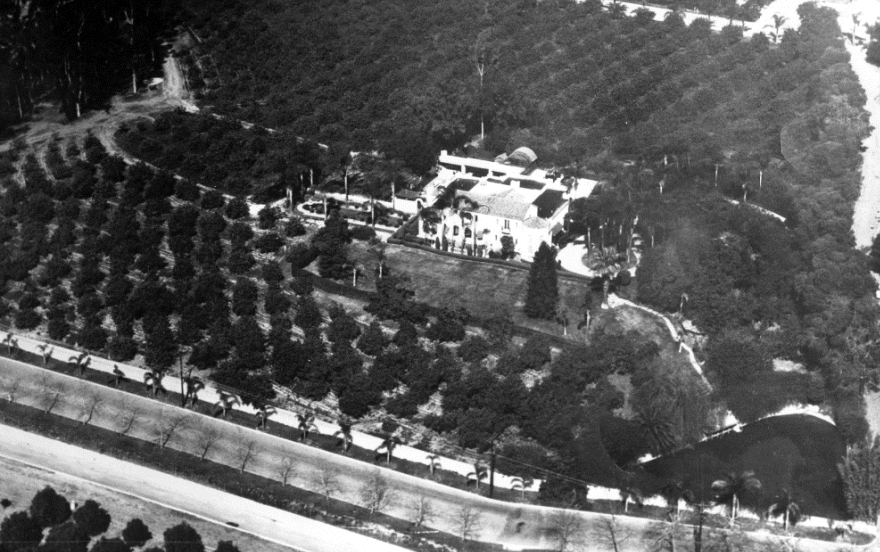
The Muckenthaler mansion took six months to complete at a cost of $34,000 (which is approximately $630,000 in 2025 dollars, not enough to purchase a modest single family home today).
“Standing on the cast stone balcony off the upstairs bedroom, Walter and Adella could see, on a clear day, all the way to Catalina island,” Terry writes.
Walter’s friend Clark B. Lutschg designed the architectural landscaping around the mansion.
Fullerton City Councilman
At the urging of his fellow orange rancher friend Tommy Gowen, Walter ran for city council in 1936.
At first, the local elite were skeptical of Walter because he was Catholic in a (mostly) Protestant town. But Gowen went to bat for Walter and he was the first catholic elected to Fullerton city council.

“At that time, council met in the upstairs room of the makeshift city hall–located just off the main street behind the California Hotel on Wilshire,” Terry writes. “The building served as a combination police station, fire house, city clerk’s office and water works office.”
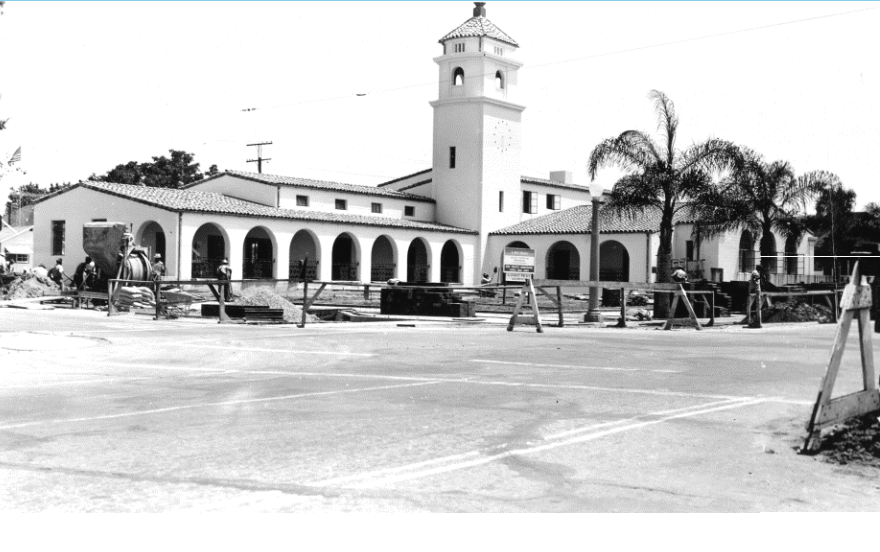
It was during Walter’s tenure on City Coucil that the City obtained WPA (New Deal) funds to build the City Hall on Highland and Commonwealth avenues (which is now the police station), built in 1940.
The 1938 flood hit Fullerton during Walter’s tenure on council.
“The small dams located at the top of Santa Ana Canyon gave and disaster struck with a mighty torrent of water that rushed through the mouth of the canyon and spread out over the towns and farms of Orange County sweeping everything in its wake,” Terry writes. “At Atwood, located in present day Placentia, the little homes were lifted off their foundations and carried downstream like small boats. In Fullerton the dams burst making Harbor into an asphalt riverbed.”
After the flood “Walter was determined that Fullerton should never have to suffer again the terrible deluge it had just experienced.”
Walter helped obtain federal funding to create a cement lined barranca and construct a new dam above Harbor.
The War Years
In 1942, America entered World War II. That year, Walter decided not to run again for city council, and instead got himself appointed to the Planning Commission.
In the late 1930s Walter hired a Japanese gardener. In 1942, this gardener was arrested by federal agents who claimed he was a foreign agent and taken to an internment camp.
Harold Muckenthaler joined the Navy and served during the War.
After the war, Harold and his wife Shirley had two daughters.
In the 1940s, “Walter had expanded his interests to include citrus farms in both Ventura and Home Gardens near Corona,” Terry writes. “He bought a four story business building on Fourth and Broadway in Santa Ana.”
The Declining Years
In the early 50s, Walter’s health began to decline, and he was diagnosed with leukemia. He transferred most of his affairs to his son Harold.
“There were the numerous boards of director to transfer and the ranches and holdings Walter had acquired through the years,” Terry writes. “Harold and been well trained by his father and knew many of the prominent men who served with his father on large corporations.”
During the 1950s, according to Harvard historian Lisa McGirr, the Muckenthaler family were associated with the right wing John Birch Society.
Walter died in 1958. Seven years later, Adella and Harold would donate the Mucketnaler mansion to the city of Fullerton to be used as a cultural center.
 Fullerton History