The following is from a work-in-progress about the history of Fullerton. You can support my ongoing research and writing on Patreon.
The Local History Room of the Fullerton Public Library has microfilm from the Fullerton Daily News-Tribune newspaper stretching back to 1893. I am in the process of reading over the microfilm, year by year, to get a sense of what was happening in the town over the years, and creating a mini archive. Below are some news stories from 1947.
In 1947, Fullerton celebrated its 60th anniversary.

But before getting into what was happening locally, here’s a bit of context about what was happening in the world in 1947, with clippings from the Fullerton Daily News-Tribune, and how these larger events trickled down to affect things here.
Rebuilding Europe
During World War II, much of Europe had been devastated by bombing and other forms of death and destruction. In 1947, the US was developing aid plans for European countries that would ultimately culminate in the 1948 Marshall Plan.

While beneficial to Europe, the Marshall Plan also helped to establish US economic and military hegemony after the war—with lots of US. bases around the world and trade deals that were favorable to the US. I’m currently reading an excellent book called How to Hide an Empire: A History of the Greater Untied States by Daniel Immerwahr, which goes into this in greater detail.
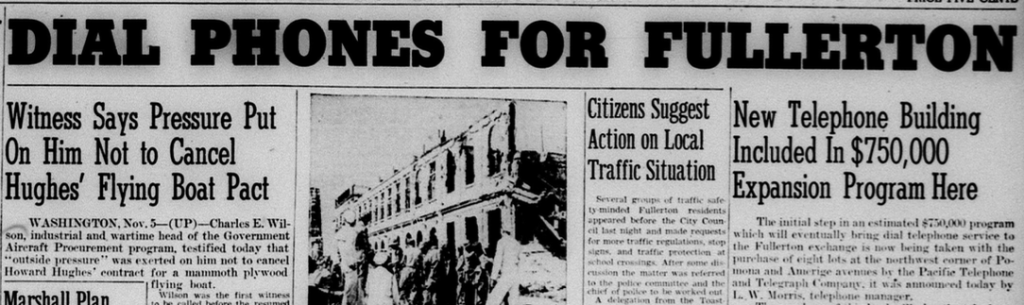
The increasingly globalized trade and US military presence after World War II would benefit a number of local companies, including Hughes Aircraft (which opened a plant in Fullerton in 1957 and was for a time the city’s largest employer).
The Military-Industrial Complex
World War II saw a massive mobilization and expansion of the American war industry. Thousands and thousands of airplanes, bombs, jeeps, tanks, ships, and more were built by private, for-profit companies, and paid for with American tax dollars. When the war ended, it seemed like the days of huge government contracts were over.
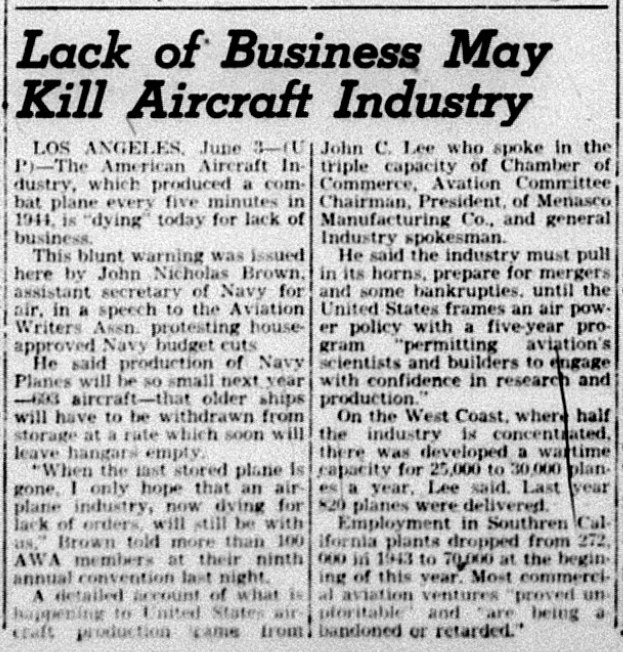
Thankfully, the escalating Cold War would allow these contracts to continue.
Industrialists Howard Hughes and Henry Kaiser were accused of using questionable means to acquire large government contracts.

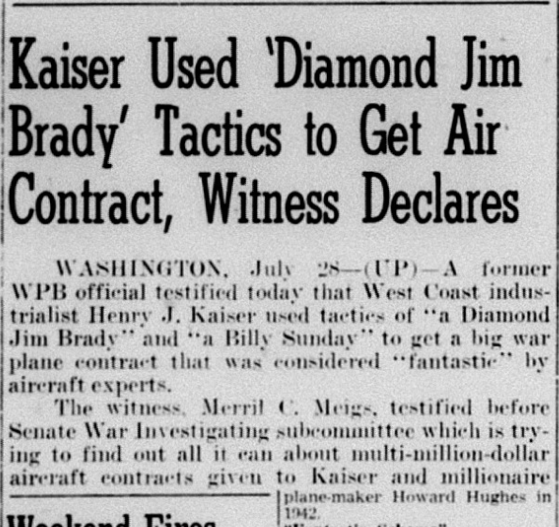
This cozy relationship between war profiteers and the government would be given a name by outgoing president Dwight D. Eisenhower…the military-industrial complex. In his farewell address, he said:
“We have been compelled to create a permanent armaments industry of vast proportions. . . . This conjunction of an immense military establishment and a large arms industry is new in the American experience. . . .Yet we must not fail to comprehend its grave implications. . . . In the councils of government, we must guard against the acquisition of unwarranted influence, whether sought or unsought, by the military-industrial complex. The potential for the disastrous rise of misplaced power exists and will persist.”
Red Scare
During World War II, Russia was a US ally. Without Stalin’s Red Army, Hitler might not have been defeated. Many more Russian troops died fighting Nazis on the eastern front than American troops on the western front.
After the war, relations between communist Russia and capitalist United States began to sour. The countries clashed in the United Nations, and on various foreign policy matters. These clashes would ultimately lead to the Cold War and a sometimes paranoid “anti-Communist” push both within the United States and in US foreign policy. This would culminate in the Truman Doctrine abroad and the Red Scare at home.

One of the folks who really fanned the anti-communist flames was FBI director J. Edgar Hoover.


Closer to home, there were hearings regarding so-called communists in Hollywood.
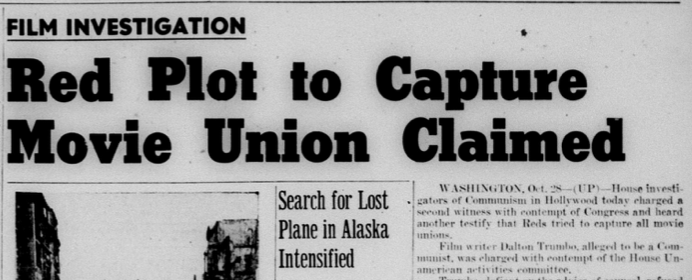
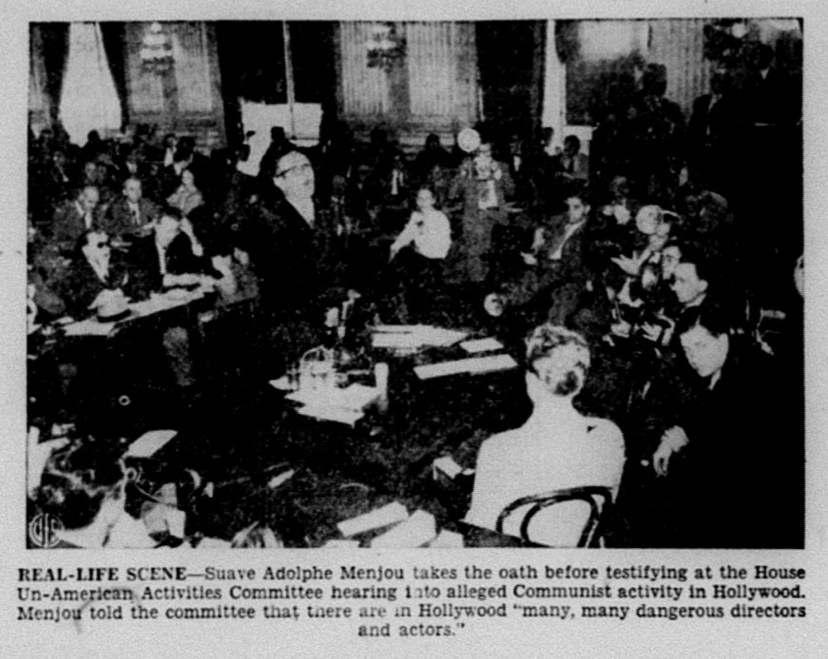
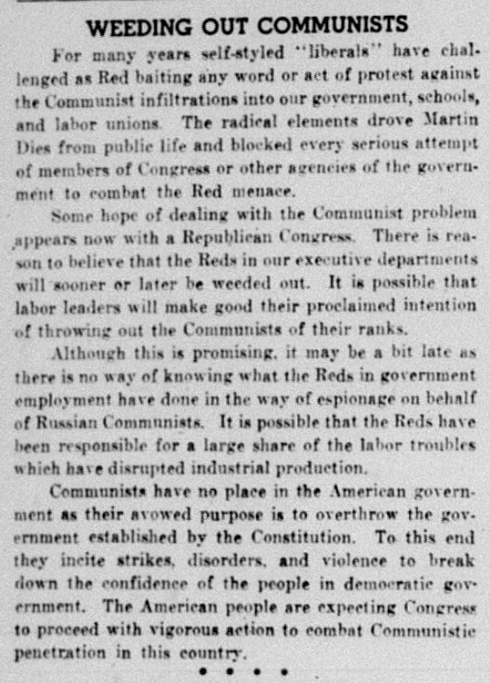
Fullertonians at this time, being a pretty conservative group, tended to fear communists. Here’s a little editorial by the editor of the Fullerton Daily News-Tribune published in 1947.
Also in the News…Palestine
After the war, nationalist movements in former European colonies led to independence in places like India. In 1947, the country that would become Israel was called Palestine and it was controlled by Britain in a quasi-colonial “mandate” system. At this time, the Zionist (nationalist) movement was in full force, trying to establish the state of Israel, which would be accomplished in 1948, at great cost to Arab Palestinians. In 1947, the British left the Palestine matter to the newly-formed United Nations, which created a Special Committee on Palestine.
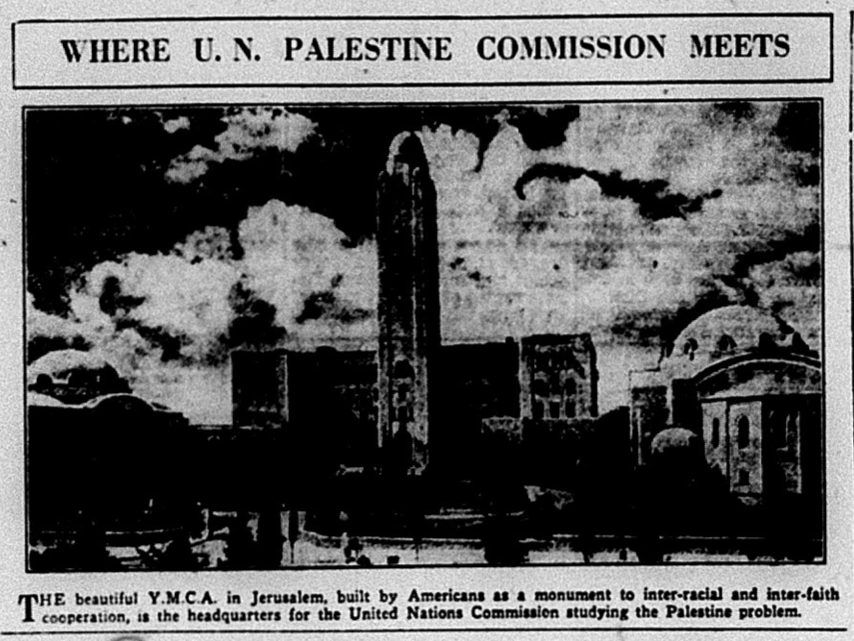
“In August 1947 the committee issued both a majority and a minority report. The majority report called for the termination of the mandate and the partition of Palestine between Arab and Jewish communities with the stipulation that the two communities be united in an economic union,” James L. Gelvin writes in The Israel Palestine Conflict: a History.
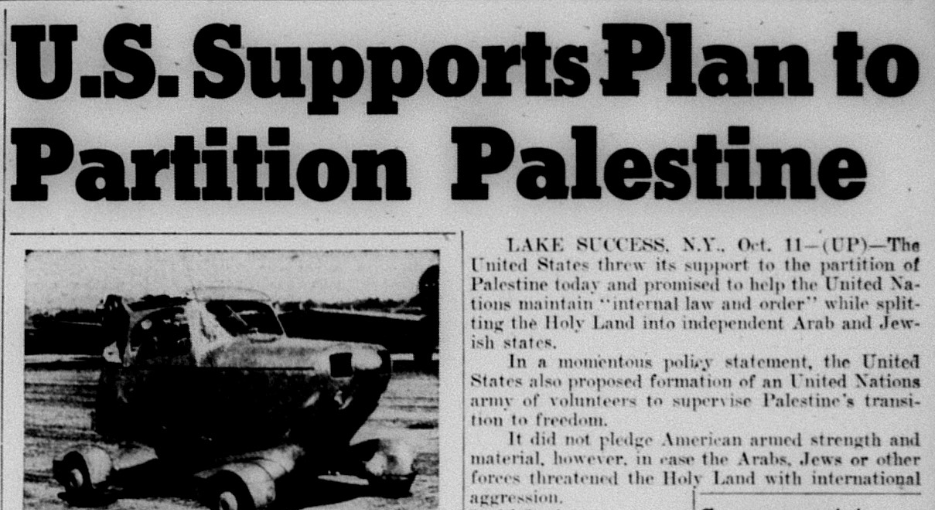
The US supported the partition plan, much to the chagrin of Palestinians, who were not keen on losing big swaths of their country.
War was on the horizon. Stay tuned for more on this in my 1948 post. In the meantime, check out my brief history of the Israel-Palestine conflict HERE.
Housing
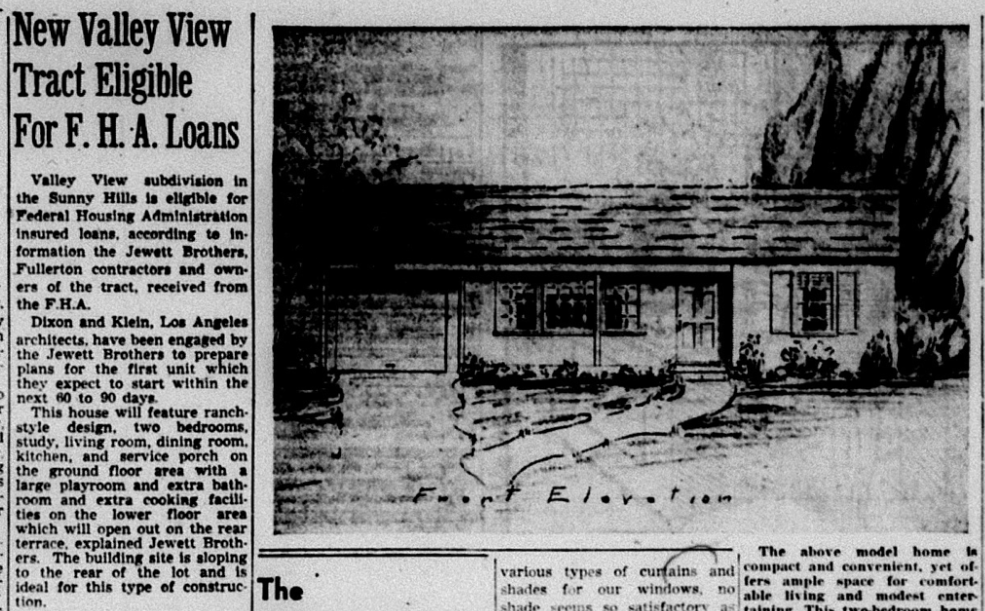
I recently posted a report on the book Fullerton: The Boom Years, which is about the City’s extraordinary growth after World War II. That book details how, after the war, orange groves were replaced by new housing subdivisions, schools, shopping centers, and industry.

Culture and Entertainment
For culture and entertainment, Fullertonians went to movies at the Fox Theater.

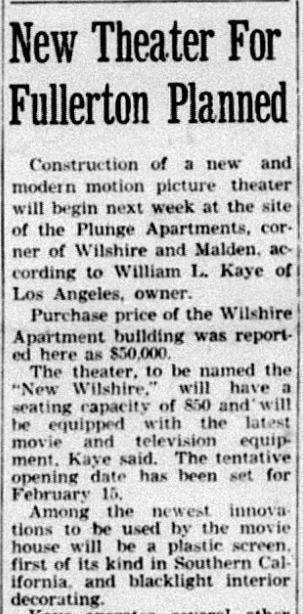
And a new theater was built—the Wilshire Theater, which has its own interesting history. This eventually was replaced by apartments.
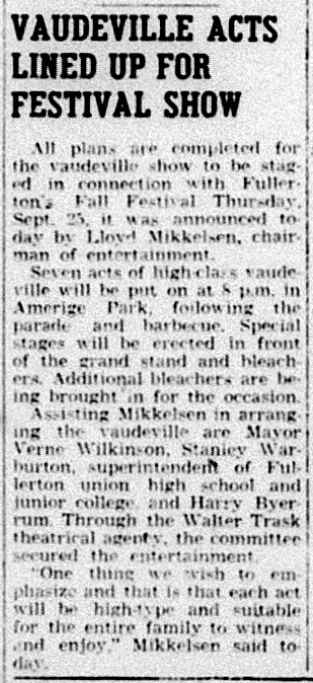
Fullerton celebrated a Fall Festival, which drew thousands.

Leo Fender, who had a popular radio repair shop in town, was beginning to design and manufacture electric Fender guitars, although his ads in the local newspaper focused on radios and records.

Sports
In the 1940s, Major League Baseball teams would sometimes play games at Amerige Park in Fullerton, drawing huge crowds.


Infrastructure
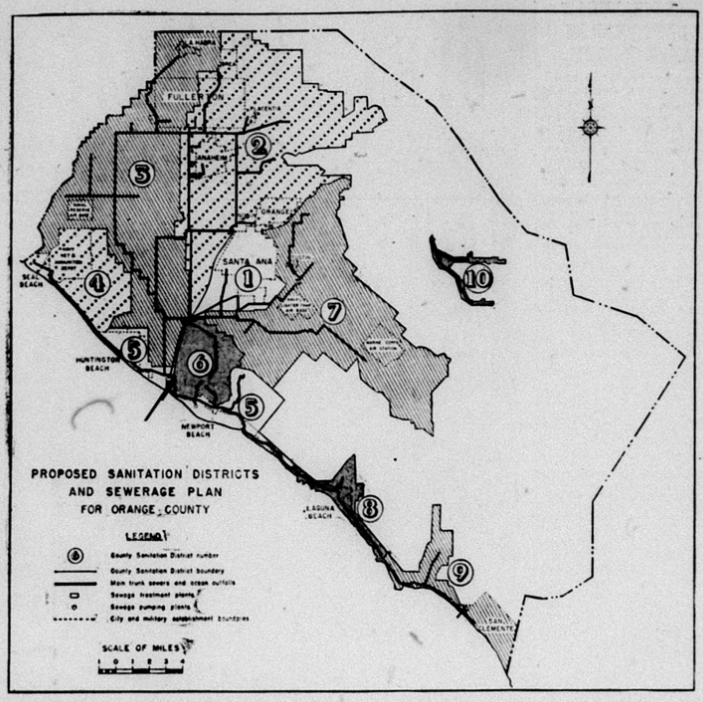
As Southern California grew after the War, new infrastructure was needed, including increased sewer capacity.
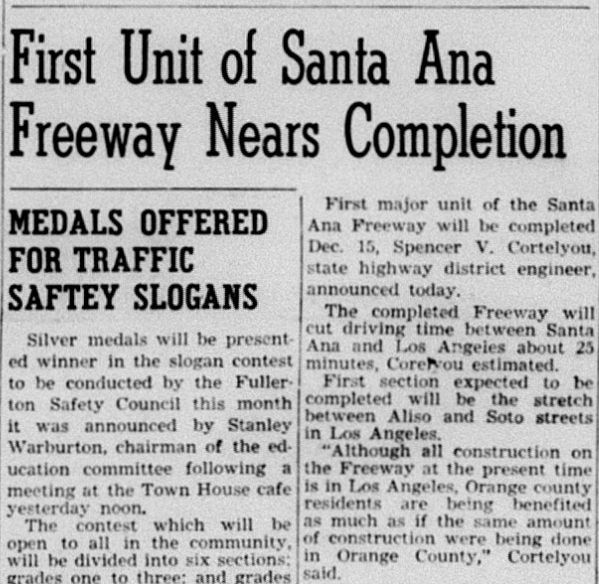
And something new was born after the War which would become an iconic part of the Southern California landscape—freeways!
Technological advancement saw old “crank” telephones replaced by dial phones.
Politics
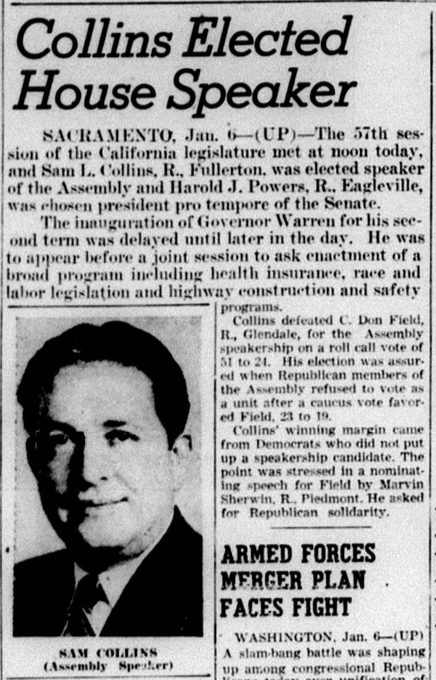
Sam Collins (from Fullerton) was chosen to be Speaker of the California State Assembly. Collins was a very influential politician in Sacramento. He remains the longest-serving Republican Speaker in history.
Fullerton Gets National Guard Armory
A National Guard Armory was established in Fullerton in 1947. Eventually, this building would be used as a cold-weather shelter for the homeless.

Flying Saucers!
1947 was the year of the famous Roswell Incident in New Mexico. It turns out that there were many flying saucer sightings that year.

Deaths
Fullerton co-founder George Amerige died.

Local pioneer Edmund Beasley also died.

The bodies of some soldiers killed in the War were returned home to be buried in Fullerton.

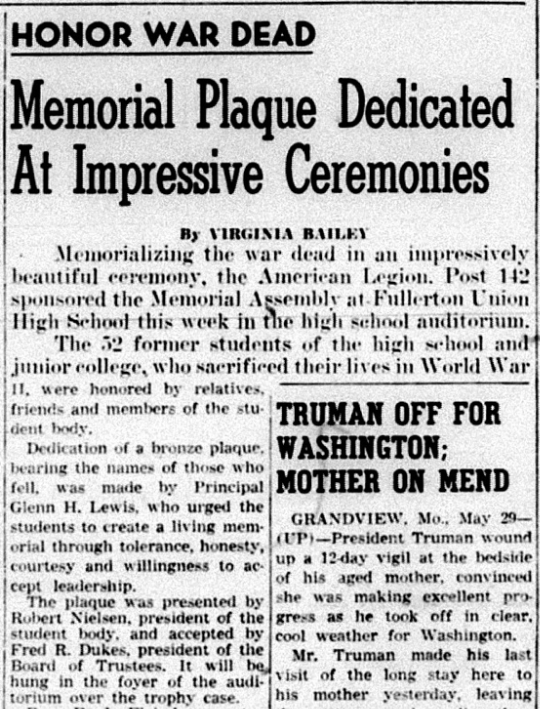
A memorial plaque, honoring former students who died in the War, was dedicated in the high school auditorium.
Stay tuned for top stories from 1948!
 Fullerton History