The following is from a work-in-progress about the history of Fullerton. You can support my ongoing research and writing on Patreon.
The Local History Room of the Fullerton Public Library has microfilm from the Fullerton Daily News-Tribune newspaper stretching back to 1893. I am in the process of reading over the microfilm, year by year, to get a sense of what was happening in the town over the years, and creating a mini archive. Below are some news stories from 1943.
World War II
World War II raged across the world, and Fullerton was contributing its share of soldiers to the Allied effort.
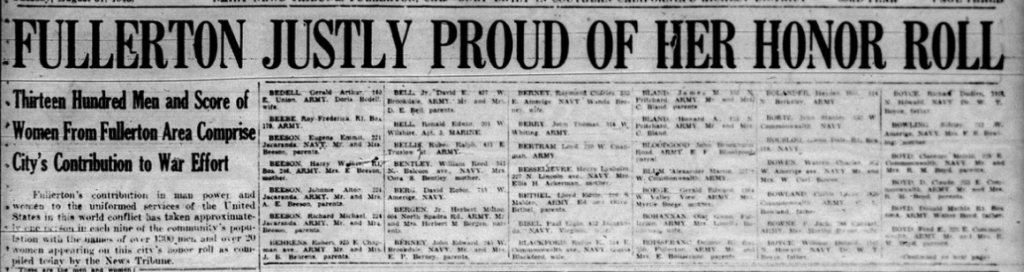
The War at Home
In addition to soldiers, Fullertonians were also pitching in by working in local war industries like the Douglas Aircraft plant in Long Beach.

Douglas also opened a “feeder” shop in Fullerton for local workers to assemble airplane and other parts.


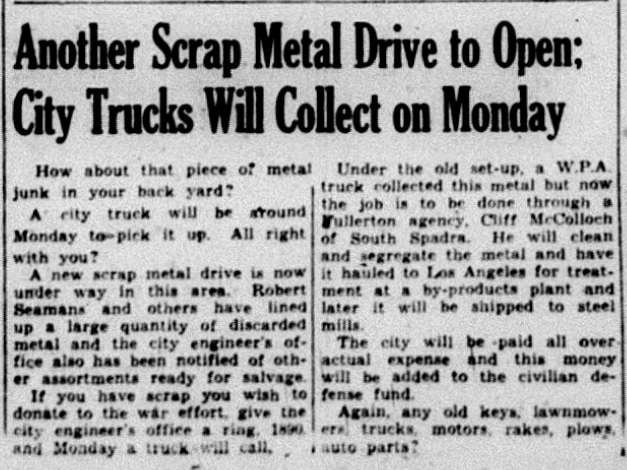
In addition to defense work, Fullertonians pitched in by buying War bonds and stamps, by rationing the use of many goods, and by contributing to scrap drives.

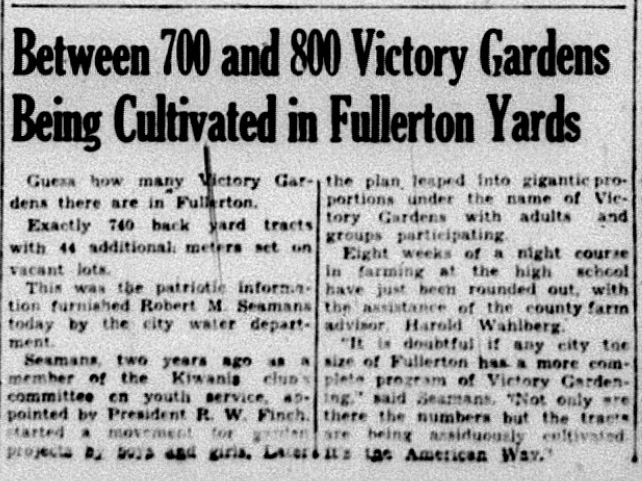
Another way to contribute to the war effort was by growing your own food in a “Victory Garden,” so more foodstuffs could be sent overseas.
Women at War
World War II opened up many new opportunities for women, who were recruited to work in local war industries, and to serve in WAVES (Women Accepted for Volunteer Emergency Service) as a women’s branch of the Naval Reserve.


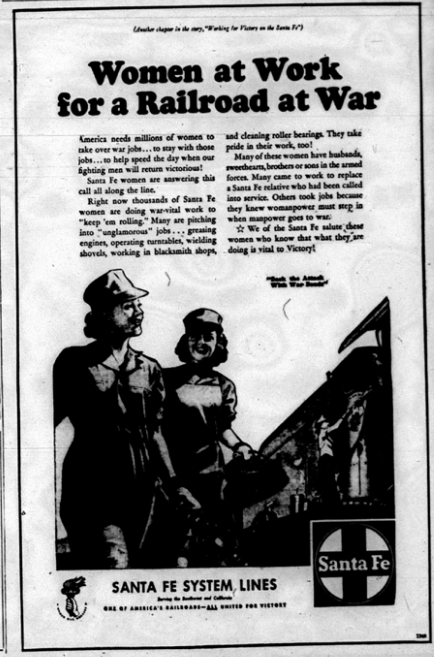

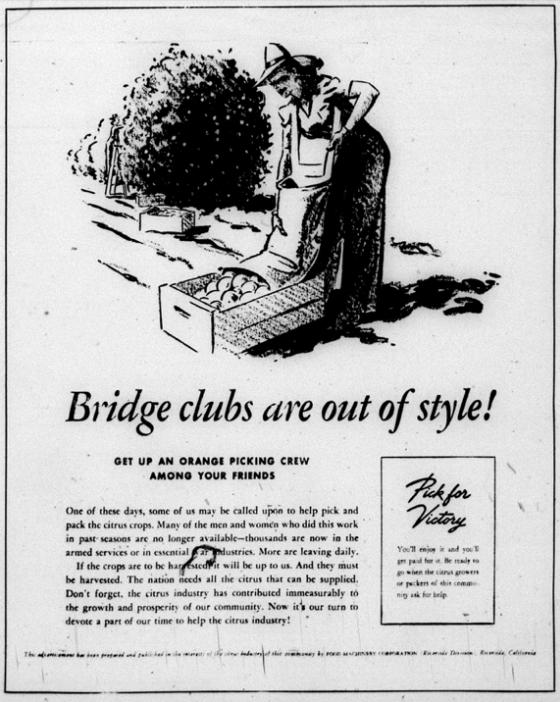
The following article gives a good sense of the changing ideas about gender roles that World War II brought about.

The thing that surprises everyone is that Fullerton residents who never before have done any such kind of work are building intricate wiring assemblies for Flying Fortresses and C-47 transport planes. And they are doing the work well!
Naturally, the average housewife looks puzzled when, for the first time in her life, she faces the problem of using a soldering iron.
“Why I’ll never be able to learn how to use that thing,” she usually says.
There’s an answer that has yet to fail. The plant instructor smiles at the perplexed pupil and replies:
“If our boys from Fullerton can learn to fire machine guns and jump in parachutes, surely we can learn to run this little old soldering iron.”
And within a week or so, the new pupil has taken a place on the production line, doing vitally needed work which boosts America’s war efforts.
Agriculture/Farm Labor
World War II brought about a labor shortage in agriculture, and so efforts were made to recruit more workers.

When these local efforts proved inadequate, growers worked with the federal government to recruit thousands of Mexican nationals as “guest workers.” This became known as the Bracero program.
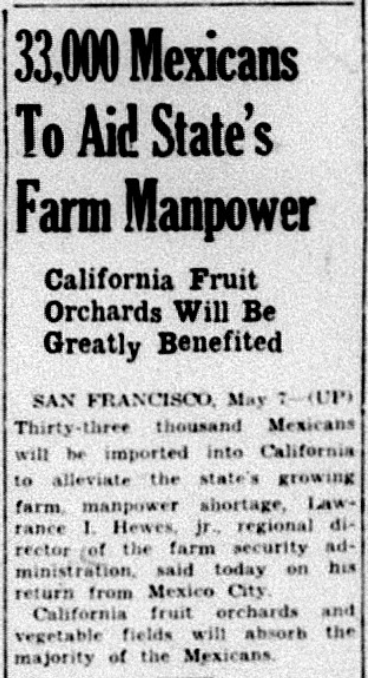

Most of the Mexican men who came to pick oranges and other crops in Orange County lived in segregated camps that were built for them. One of the camps was located near downtown Fullerton, at Balcom and Commonwealth avenues. This became known as Campo Pomona.

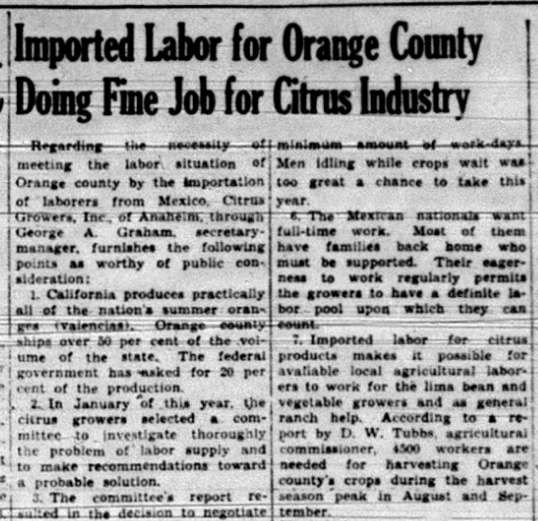
“The Mexican nationals are in America as essential war workers and deserve to be treated as such. They may be recognized by the white badges they wear, with large black numbers below the letters “C.G.” These men are here to work and are inclined to cause no trouble,” the News-Tribune reported. “It is to the men’s advantage to live in the camps which have been provided for them. In fact, the county health department rightly insists upon this.”
An article in the News-Tribune expressed local concerns about the new arrivals: “Will the Mexican nationals remain in Orange county permanently? No! They are here by special contract and will return to Mexico at the expiration of that contract.”
The following article gives a good summation of the Bracero Program in Orange County:

Mexico’s contribution to the war effort in Orange County is now in full sway with the arrival of over 2,000 Mexican national “war workers” to aid in the harvesting of the county’s huge citrus crop.
This information was learned at a luncheon held at the new Mexican camp on S. Balcom St., in Fullerton yesterday when city and county officials and representatives of service clubs and growers gathered as guests of the Placentia Orange Growers Association to obtain facts regarding the new Mexican labor and for a tour of the camps in northern Orange county.
Realizing that the draft and the defense plants had taken a large portion of the available labor formerly employed in the harvesting of over 35,000 carloads of fruit in the county, the industry looked to the Mexican government for help. Under a contract entered into between the Citrus Growers Inc, representing 99 percent of the industry of the county, and federal agency handling the importation of Mexican nationals arrangements were completed early this-year to bring the 2,000 Mexican workers into the county.
Housed in seven camps in strategic sections of the county, these Mexicans are assigned to various packinghouses for the picking of the fruit. The largest of the camps, which were visited bv the group yesterday, are the Imperial camp, located south of La Habra, where 450 are housed and the camp south of Anaheim where 435 are being cared for.
The other camps in the northern section of the county are the Fullerton camp, accommodating 100 men and the Atwood school (in Placentia) where 25 are being housed.
Japanese Incarceration
In 1943, all Americans of Japanese descent had been rounded up and forced into internment/incarceration/concentration camps, where they would live for the duration of the war.
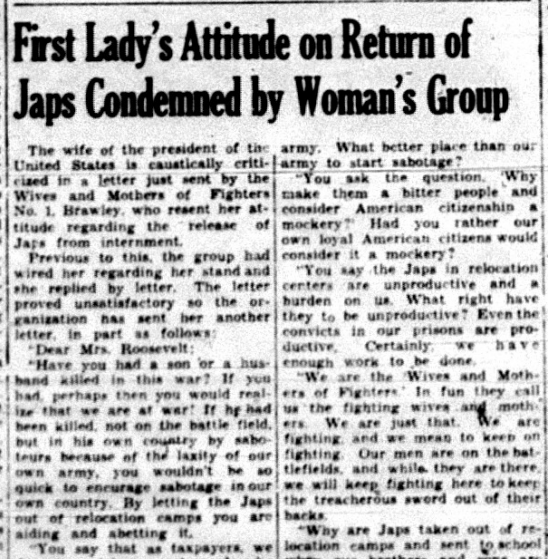
There was occasional talk of allowing some Japanese Americans to return to their homes and farms, but these proposals were met with the same fear/hysteria that led to incarceration in the first place.
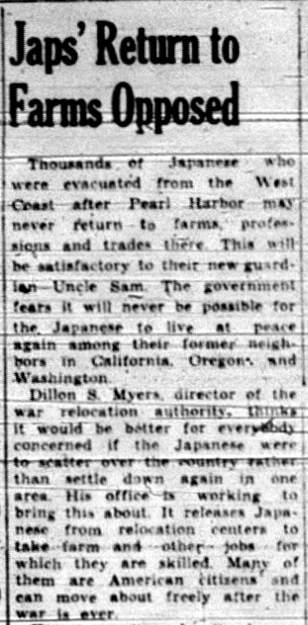

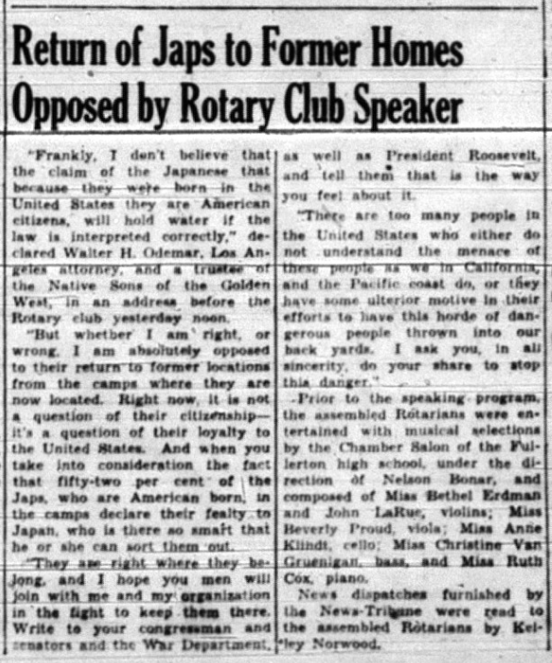
When first lady Eleanor Roosevelt (famous for her progressive views) expressed support for allowing some Japanese citizens to return to their homes, she was harshly criticized.
Meanwhile, President Franklin Roosevelt asked congress to repeal the 1882 Chinese Exclusion Act.

Below are a few excerpts from the above article:
President Roosevelt today asked congress to repeal the Chinese exclusion laws, in order to “correct a historic mistake” of the United States and “silence the distorted Japanese propaganda.” Mr. Roosevelt endorsed a pending bill that would permit the immigration of Chinese into this country and allow Chinese residents here to become American citizens. The bill, approved by the house foreign affairs committee, would provide an annual quota of 105 for the Chinese. “Nations, like individuals, make mistakes,” the president said, referring to the exclusion laws dating back to 1882. “We must be big enough to acknowledge our mistakes of the past and to correct them.”
Mr. Rooseveit took occasion to explain that China “understood” that the strategy of victory in this war first required the concentration of the greater part of Allied strength on the European front.
She knows that substantial aid will be forthcoming as soon as possible, the president said, “aid not only in the form of weapons and supplies, but also in carrying out plans already made for offensive, effective action. We and our Allies will aim our forces at the heart of Japan-in ever-increasing strength until the common enemy is driven from China’s soil.”
Roosevelt’s reasoning is fascinating here. He was talking about correcting a mistake of the past, while over 120,000 Americans of Japanese descent were in camps.
It’s also interesting that repealing the Chinese Exclusion Act seems more as a diplomatic than a humanitarian move, as China was our ally against Japan in the War. And the quota number of 105 Chinese immigrants per year makes this really a token gesture, at best.
Also, there were 170,000 Prisoners of war in the US.

Sports
Baseball games at Amerige Park were big local entertainment, and even attracted some big stars.
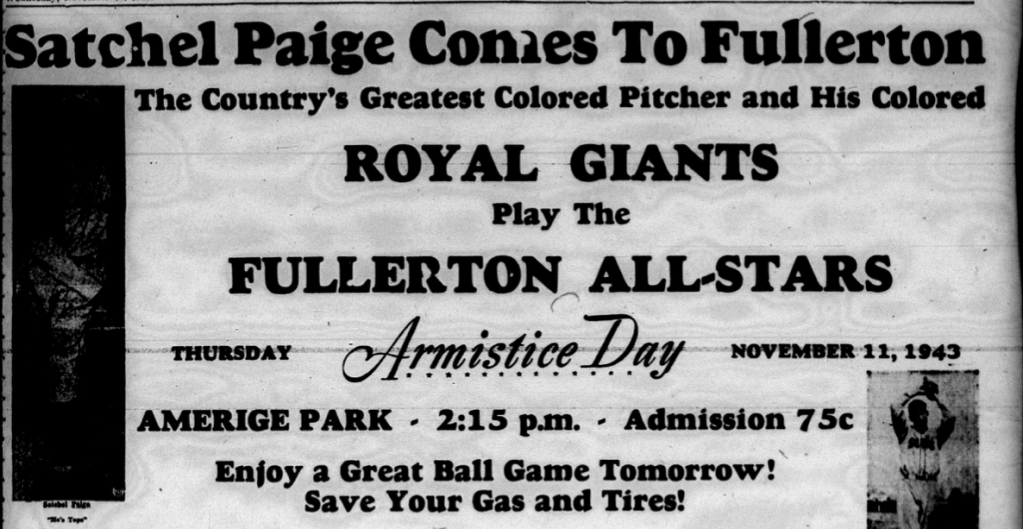
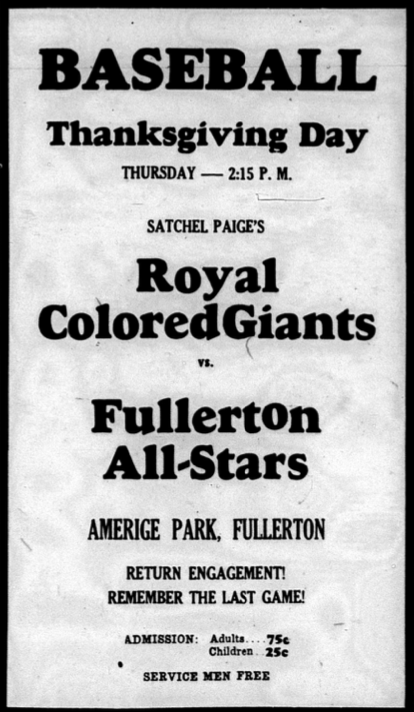
Tragically, Fullerton’s star shortstop Bill Jones was killed in action in the War.

Education
Fullerton Union High School and Fullerton Junior College Superintendent Frederick Chemberlen, who had been hired to replace Louis Plummer, resigned and was replaced by William T. Boyce.


Fullerton College administrator Samuel H. Cortez left to serve in the Navy.

And special night classes for Mexican “braceros” was approved.

Zoot Suit Riots
In 1943, the infamous Zoot Suit Riots occurred in Los Angeles when conflict erupted between white servicemen and zoot-suit clad Mexican American youths. Local news reports portrayed the Zoot-Suiters as “hoodlums” but the truth was that the servicemen often attacked youths and stripped them of their baggy clothes, which were seen as “unpatriotic” because of wartime clothing rationing.
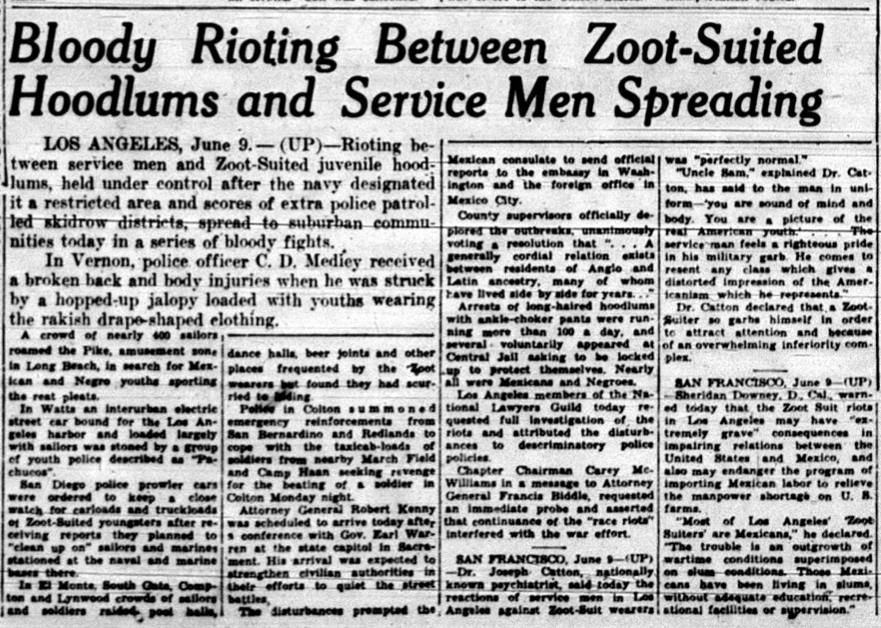
The conflict reached Orange County, causing a minor panic over the clothing styles of Mexican-American and African-American youths.
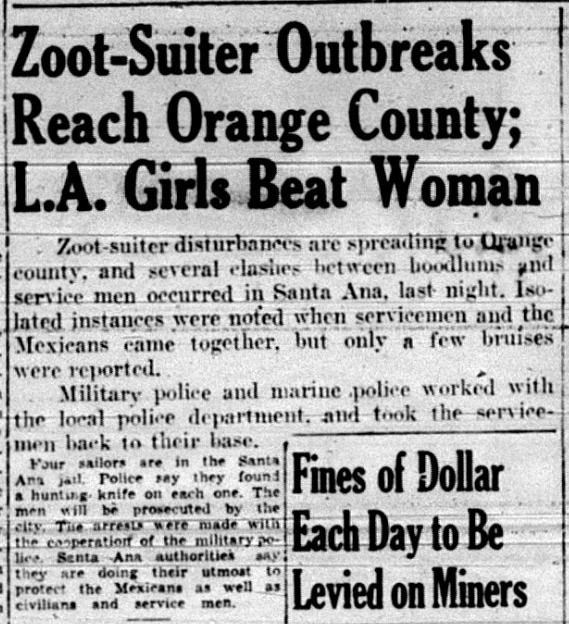

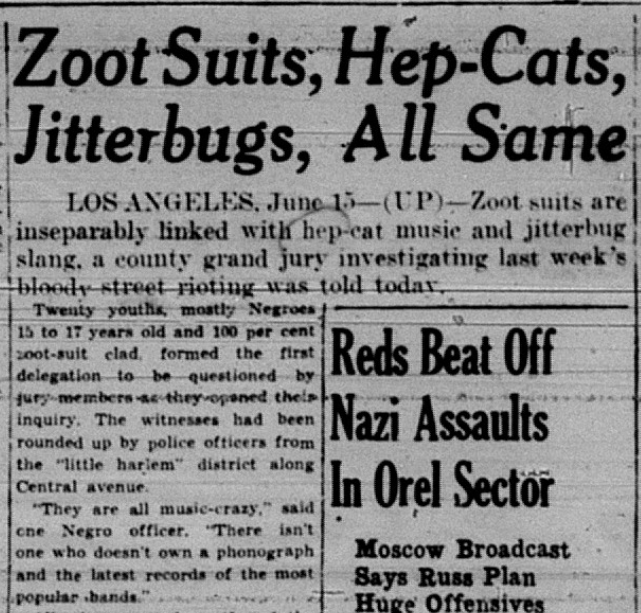
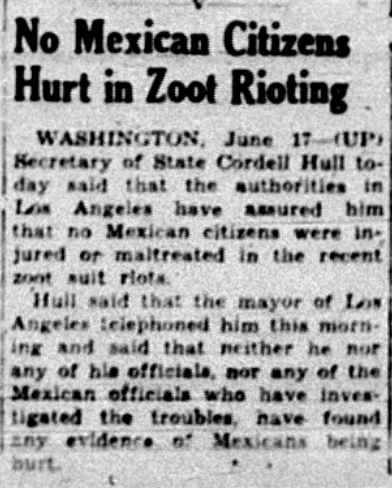
Although the News-Tribune reported that no Mexican citizens were hurt during the “riots,” this was not true. Many Mexican-American youths were attacked and stripped of their clothing.
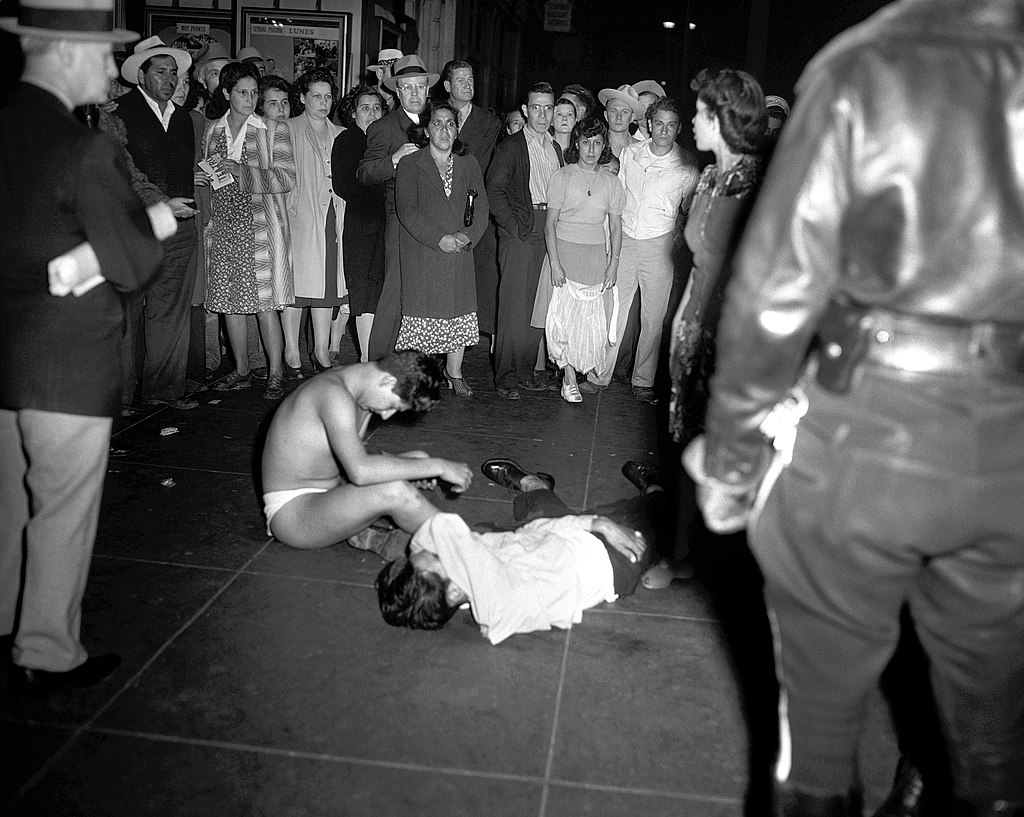
Today, the store El Pachuco in Fullerton sells custom-made Zoot Suits.
Culture and Entertainment
For culture and entertainment, Fullertonians went to movies at the Fox Theater or would catch performances at the High School Auditorium.


Deaths
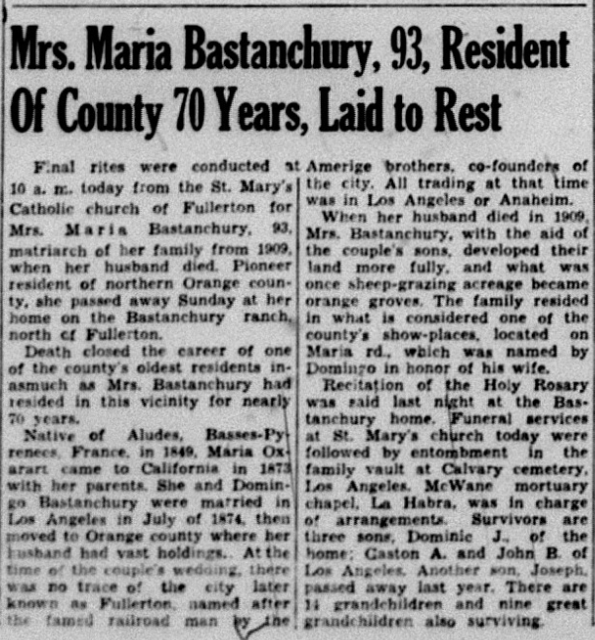
Maria Bastanchury, wife of pioneer rancher Domingo Bastanchury, passed away.
Abe Prichard, pioneer resident of Fullerton, died.

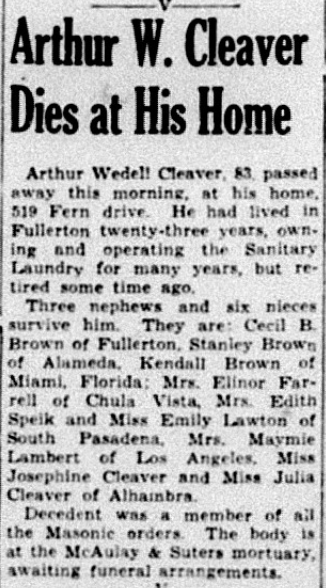
Arthur W. Cleaver, who built the Sanitary Laundry Building (later home to the Magoski Arts Colony), died.
Stay tuned for top news stories from 1944!
 Fullerton History