The following is from a work-in-progress about the history of Fullerton. You can support my ongoing research and writing on Patreon.
The Local History Room of the Fullerton Public Library has microfilm from the Fullerton Daily News-Tribune newspaper stretching back to 1893. I am in the process of reading over the microfilm, year by year, to get a sense of what was happening in the town over the years, and creating a mini archive. Below are some news stories from 1942.
World War II Rages Across the Globe
World War II was raging across the globe and the U.S. had finally joined the fight.


The Home Front
The homefront in Fullerton, like the rest of America, mobilized to support the war effort.
“Many tears rolled down the cheeks of proud mothers and fathers who saw their sons and other relatives off to induction stations,” the News-Tribune reported. “Fullerton citizens quickly adjusted themselves to the war…every phase of Civilian Defense was organized quickly here…Red Cross activities boomed…War bonds sales went over with a smashing success, the quota being topped every month in Fullerton…Tire rationing, food stamp, auto use stamp and other new regulations brought on by the war were met without confusion here…’Let’s Knock Out the Axis’ seemed to be the the theme of the city’s efforts throughout the year.”
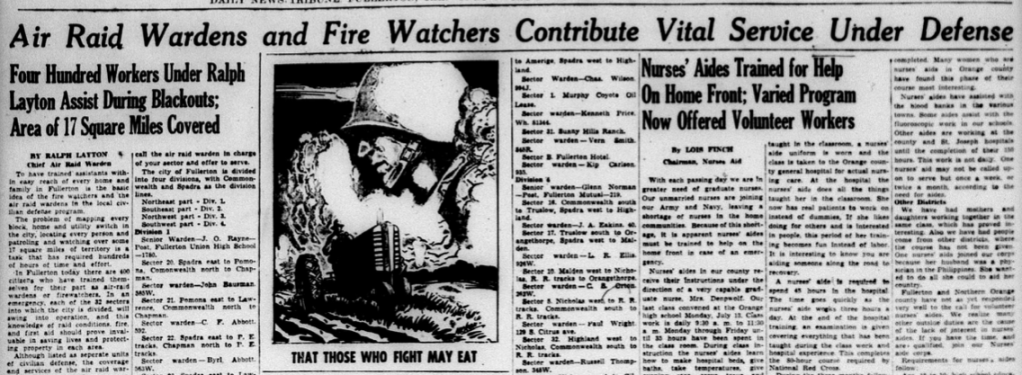
There were air raid tests, should the Japanese or Germans attack the west coast.
A big scare occurred when “unidentified aircraft were reported over the Los Angeles area” early one morning “causing heavy anti-aircraft firing from widely separated batteries and a five-hour blackout here and in other Southern California coast cities.”

Ultimately, the whole thing turned out to be a false alarm.
Prior to World War II, the United States didn’t have nearly the big military it does today, so people had to pitch in by buying war bonds and participating in salvage drives to beef up the war machine.


Everyone had a job, from air raid wardens, to a home guard, to a civilian defense council, to auxiliary police, and more.

“Deep in the sub-basement of the city hall, surrounded by heavy reinforced concrete, in what is generally conceded the most adequate bomb-proof shelter in Fullerton, the control center of the civilian defense council meets each week,” the News-Tribune reported.
Just as World War II was the catalyst for greatly increasing the size of the U.S. military, the war also prompted a huge increase in war-related industries like aerospace, shipbuilding, and weapons manufacture. Many of these new defense industries were located in California.
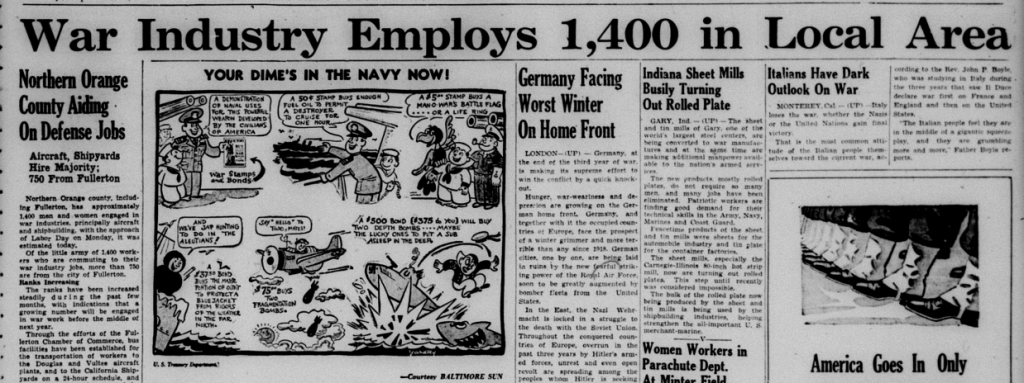
“Northern Orange county, including Fullerton, has approximately 1.400 men and women engaged in war industries, principally aircraft and shipbuilding,” the News-Tribune reported. “Of the little army of 1,400 workers who are commuting to their war industry jobs, more than 750 are from the city of Fullerton.”

Fullerton High School’s school Adult Education Department began offering national defense courses.
Val Vita Food Products in Fullerton had a contract to supply the military with canned goods.
‘Alien Enemies’ Incarceration
While United States servicemen were fighting abroad, Japanese Americans living on the west coast faced their own domestic battle. By executive order, President Roosevelt ordered all “enemy aliens” to be removed from their homes and ultimately sent to incarceration/concentration camps for the duration of the war.
Ostensibly, this included German-Americans, Italian-Americans, and Japanese-Americans; however, Japanese-Americans were targeted much more systematically. Over 180,000 Americans of Japanese ancestry, many of whom were American citizens, were detained and removed without due process, merely because they looked like the “enemy” we were fighting. It was one of the most shameful episodes in modern American history.
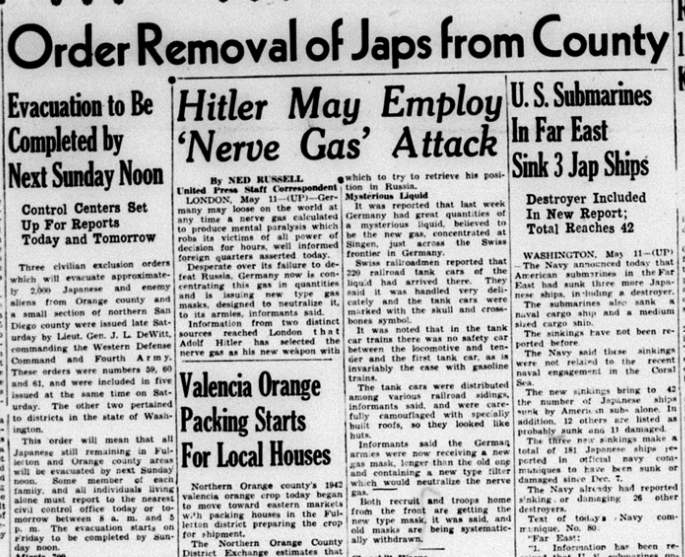
“Three civilian exclusion orders which will evacuate Japanese and enemy aliens from Orange county and a small section of northern San Diego county were issued late Saturday by Lieut Gen. J.L. DeWitt,” the News-Tribune reported. “This order will mean that all Japanese still remaining in Fullerton and Orange county areas will be evacuated by next Sunday noon.”
This local order affected about 700 people, including some living in Fullerton. Formal placards containing the notices were posted throughout the area by soldiers.
Ultimately, over 1,300 Japanese Americans were taken away from their homes in Orange County.

While direct blame for this injustice is usually placed at the feet of President Roosevelt, it’s important to note that Japanese exclusion/incarceration was a very popular idea and was merely the outward manifestation of long-standing racism against Japanese-Americans. Here are a few quotes from the News-Tribune showing how state and local leaders and organizations supported Japanese incarceration:
“Gov. Culbert Olson [a progressive Democrat] authorized the state department of agriculture to revoke food products licenses of enemy aliens and announced he would seek federal approval or an order to revoke their business and professional licenses.”
“The League of California Cities asked President Roosevelt to order immediate evacuation of all Japanese, American-born as well as alien from the western combat zone.”
“Federal, state and county authorities in Los Angeles began an investigation which may result in seizure of Japanese-owned property.”
“California congressmen and other public officials have advocated removal of all aliens from the state, instead of merely moving them back from the defense zone.”
“The Orange County grand jury recommended to the board of supervisors today that all Japanese, German, and Italian aliens and their children be removed from Orange County.”
“For weeks the West Coast, through city councils and city officials, patriotic organizations and civic groups, has been demanding all Japanese be removed from the coast as a safeguard against fifth column sabotage and invasion threats.”
Sometimes people were given warning, other times they were just rounded up without notice.
“The FBI without warning started removing alien Japanese fishermen from Terminal Island, Los Angeles harbor, where there is a large Japanese fishing colony,” the News-Tribune reported. “One agent said “nearly all” of the 523 alien men on the island were being removed.”

The closest Japanese incarceration camp in California was Manzanar, built in the Owens Valley, but this not the only one.
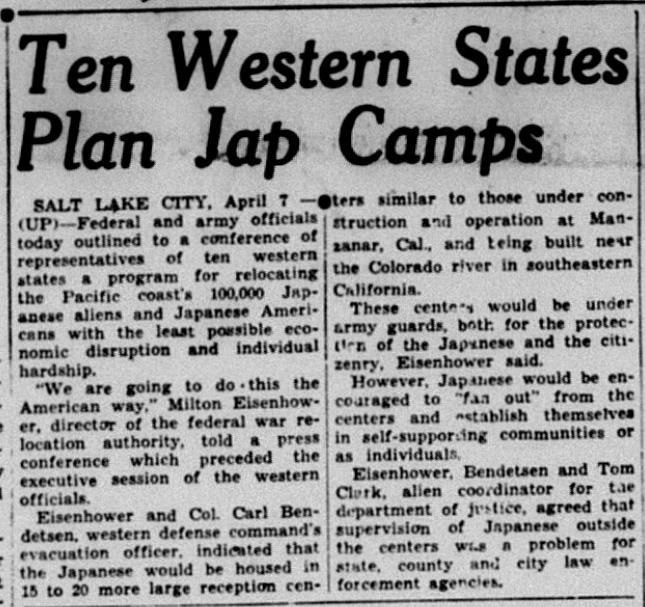
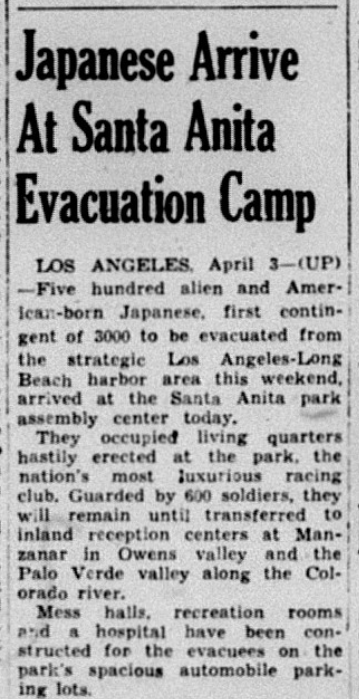
Prior to being sent to these camps, some local Japanese Americans were sent to the Santa Anita race track, which was converted into a temporary relocation center.
“A proclamation issued last night by Lieut. Gen. John L. DeWitt of the western defense command ordered Japanese aliens and citizens moved to an assembly center at the Santa Anita race track next Friday, Saturday, and Sunday, at the rate of 1000 a day,” the News-Tribune reported. “They occupied living quarters hastily erected at the park, the nation’s most luxurious racing club. Guarded by 600 soldiers, they will remain until transferred to inland reception centers at Manzanar in Owens valley and the Palo Verde valley along the Colorado river.”
New Public Buildings
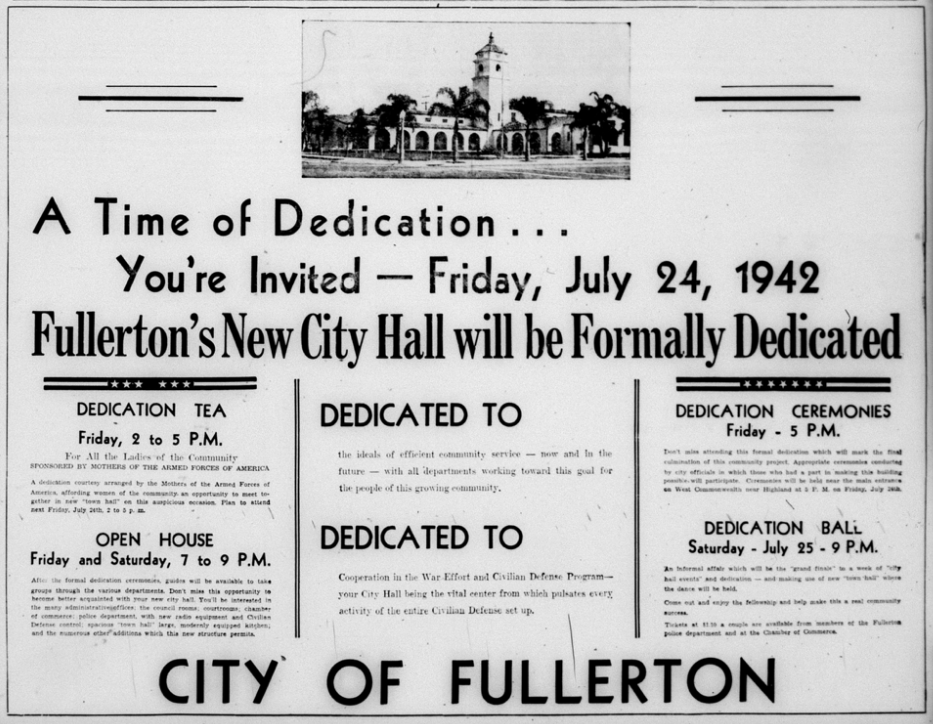
In more positive news, Fullerton dedicated its new city hall (now the police station) and new public library (now the Fullerton Museum Center), with both structures financed by the Public Works Administration (a New Deal program) with the aid of city funds.
Politics
In 1942, Fullerton City Council was Alfred Beazley, Carl Bowen, Hans Kohlenberger (mayor), William Montague, and Walter Muckenthaler. Both Kohlenberger and Muckenthaler were of German ancestry. Apparently, they were unaffected by the “alien enemy” removals.
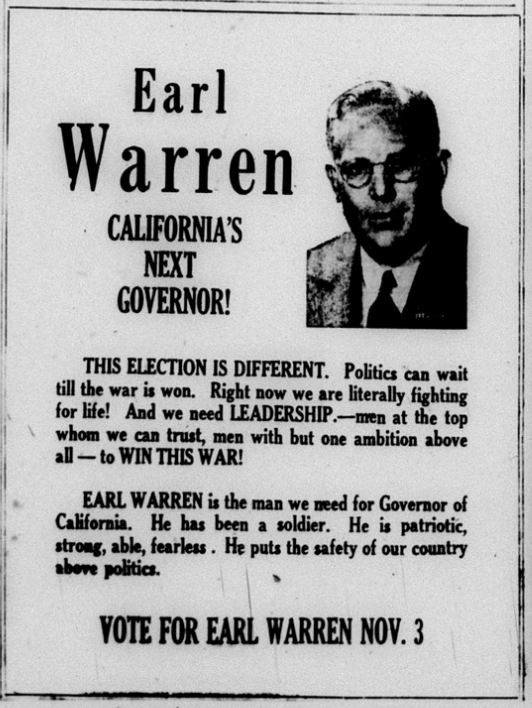
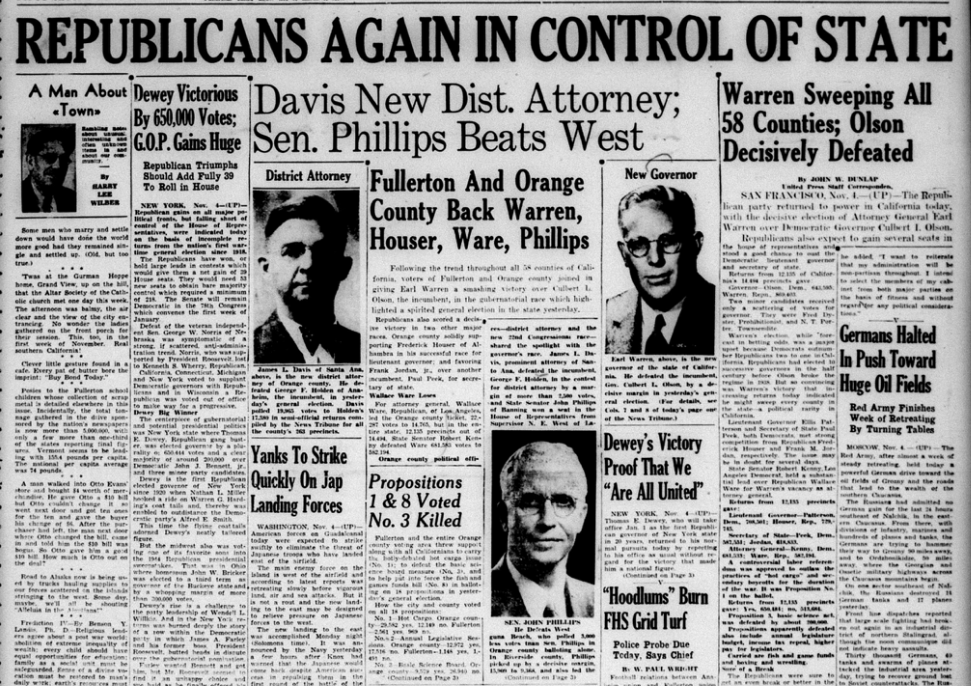
Republican Earl Warren was elected as governor, and Republicans took control of state government.
Culture and Social Life
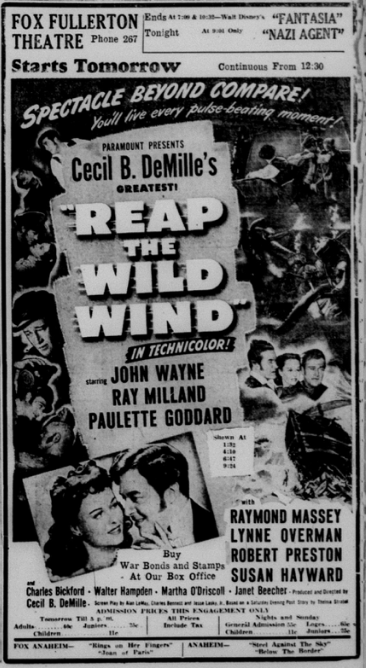
For entertainment, Fulletonians went to see movies at the Fox Theater.
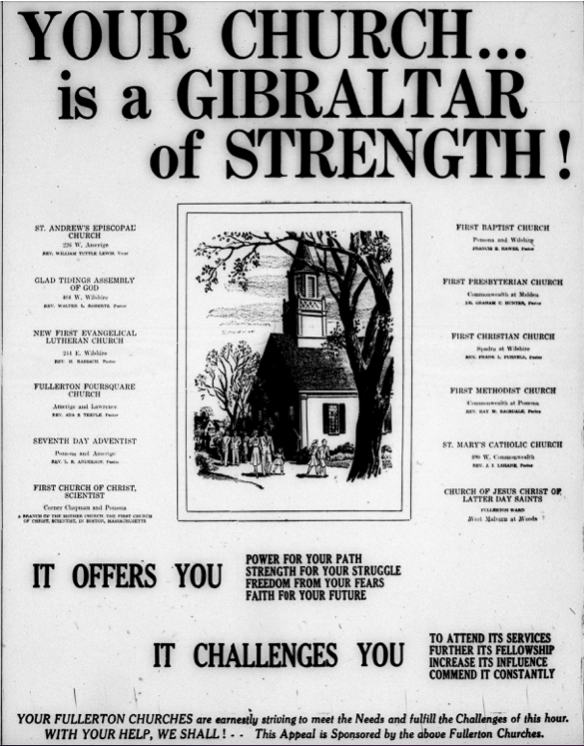
Churches were an important aspect of social life in the mid-20th century.
Occasionally, a speaker would address locals in the high school auditorium.

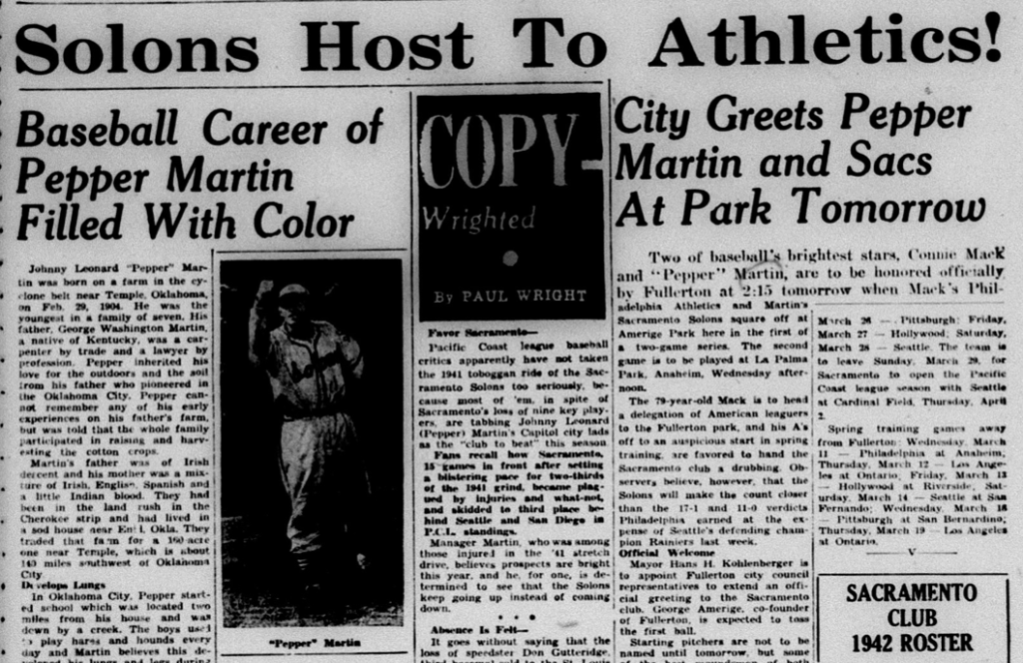
Baseball games at Amerige Park were popular, with some professional teams coming through.
Labor
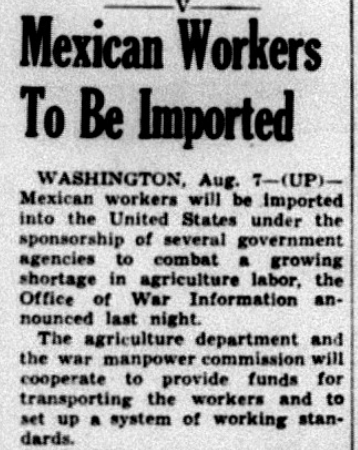
The war created a shortage of farm labor. This led to the establishment of the Bracero Program, in which thousands of Mexican men were recruited to work in agriculture and other vital industries.
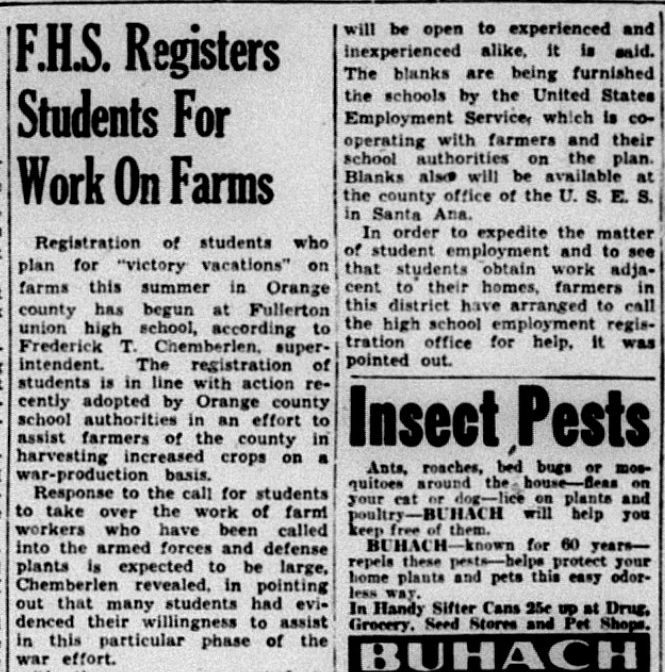
Local high school students were also enlisted to work in local agriculture.
Housing
Housing production slowed somewhat during the war years, although it would boom in the decades after.
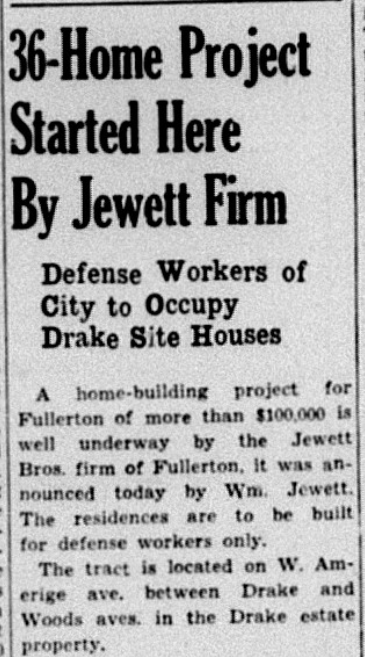
During the war, rent control was established at the federal level to stabilize housing affordability.

Deaths
Citrus pioneer Richard Hall Gilman died at age 97.

Gilman was “known as the father of the Valencia orange and a citrus and irrigation pioneer of the Fullerton-Placentia district.”
He came to Southern California in 1872, purchasing a tract of 110 acres on Placentia ave. He was instrumental in forming the Cajon Canal company, which combined with other small irrigation companies in 1884 to form the Anaheim Union Water company.
A bronze marker on the Cal State Fullerton campus shows the site of the first Valencia orchard in Southern California, planted by Gilman.
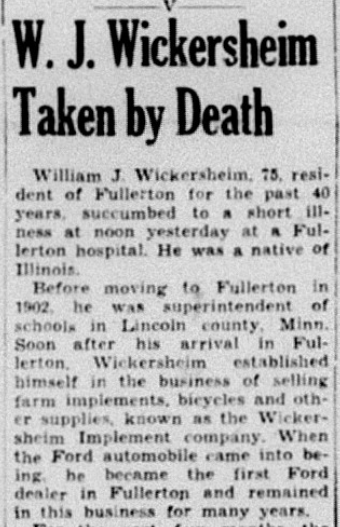
Fullerton businessman William J. Wickersheim also died.
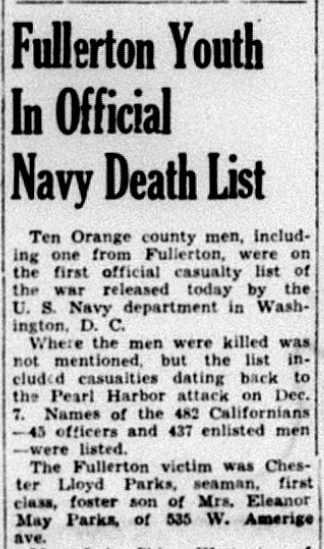
The first reported WWII death of a local young man was Chester Lloyd Parks.
War Propaganda
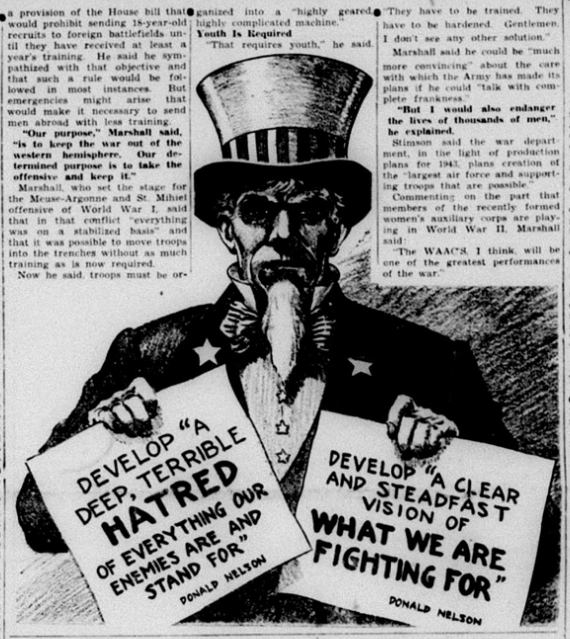
While I understand the need for the country to get behind the war effort, some of the propaganda posters and advertising in the News-Tribune were a little disturbing, like these ones:

Stay tuned for top news stories from 1943!
 Fullerton History