The following is from a work-in-progress about the history of Fullerton. You can support my ongoing research and writing on Patreon.
The Local History Room of the Fullerton Public Library has microfilm from the Fullerton Daily News-Tribune newspaper stretching back to 1893. I am in the process of reading over the microfilm, year by year, to get a sense of what was happening in the town over the years, and creating a mini archive. Below are some news stories from 1938.
Fascism Abroad, and at Home
Fascist dictator Adolf Hitler had firmly consolidated power in Germany, and he was starting to embark on a campaign of military conquest that would soon engulf all of Europe. He began by invading and then annexing the neighboring country of Austria, and then part of Czechoslovakia.
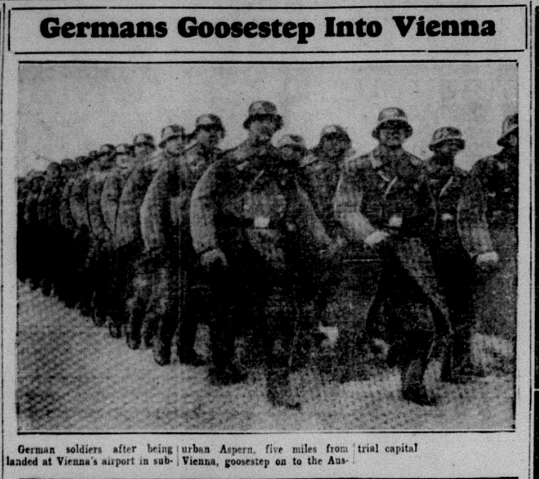
The Nazis brought their vicious brand of antisemitism and persecution of Jews to the countries they invaded.

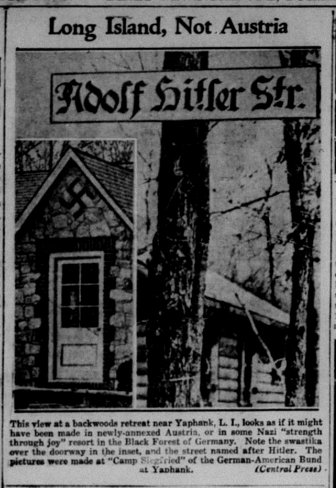
Here at home, there were American fascists who sympathized with Nazi Germany. They were called the German American Bund.
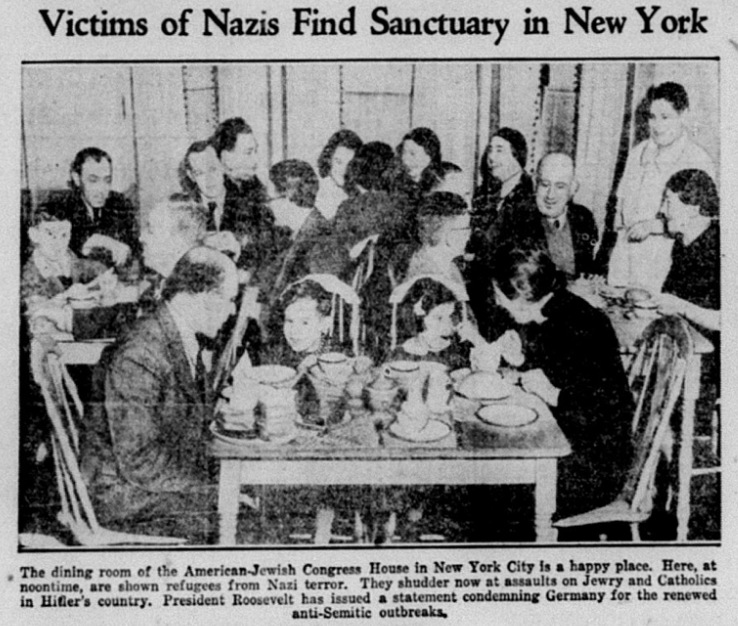
Some Jews who managed to escape Nazi Germany took refuge in other countries, including the United States. However, U.S. immigration law made it difficult for many Jews to come to America.
The Flood of 1938
By far, the most significant local event of 1938 was a massive flood. Following severe rainstorms, the Santa Ana river overflowed its banks and caused widespread damage, killing over 50 people.

“Water extended over an area of 30,000 square miles in Southern California’s rich agricultural districts today after the worst rainstorm and flood in a quarter of a century,” the News-Tribune reported.
Property damage was estimated at $10,000,000, and thousands were marooned by flood waters.
“Tragedy and desolation followed in the wake of an eight foot wall of water which swept through the banks of the Santa Ana river at the Yorba bridge to submerge Atwood [Placentia], La Jolla Camp, Anaheim and the south side of Fullerton,” the News-Tribune reported. “Water which swept houses, oil tanks and all obstructions aside swept down on Atwood and down Orangethorpe ave. forcing residents in many sections to take to their rooftops in a cold early morning rain while rescuers fought to save them from their dangerous quarters.”
The flood waters extended all the way to downtown Fullerton.
Local relief efforts were spearheaded by the Red Cross, local police and firefighters, and the American Legion. Shelters were set up in Hillcrest Park and St. Mary’s church for flood refugees.
Tragically, many of the victims of the flood were Mexican Americans living in citrus camps of south Fullerton, north Anaheim, and Placentia.
“Seven bodies were reported recovered at Atwood this morning. according to Chief of Police Gus Barnes at Placentia,” the News-Tribune reported. “Rescue workers with motorboats, rowboats and lifelines attempted to cross the river to the shattered cottages in which several hundred Mexican agricultural workers made their homes.”
The floods damaged or destroyed hundreds of homes, bridges, barrancas, and other infrastructure.
Flood Control
The 1938 flood was particularly tragic because county residents had twice voted down flood control bonds that might have minimized the damage. In 1937, following a smaller flood, voters approved the bond, but it was too late.
“Last year’s floods undoubtedly were a strong factor in the large vote given fro the Orange county flood control bonds. If there were any doubts as to the wisdom of the verdict, the floods of the past few days would resolve it,” the News-Tribune editorialized.
State and Local Politics
Olie Cole and Carl Bowen were elected to Fullerton City Council.
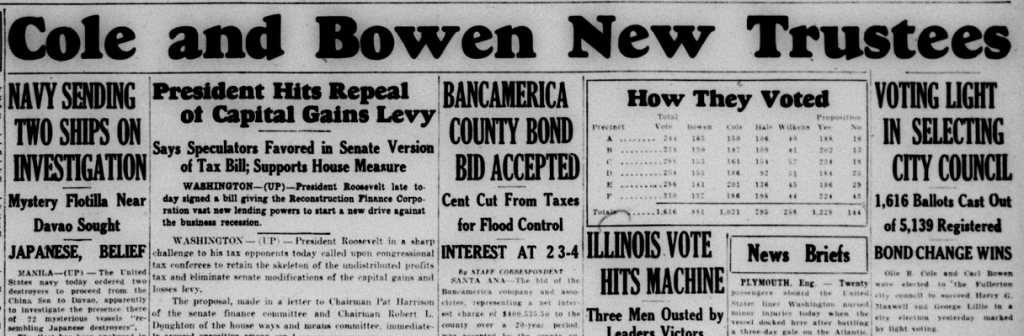
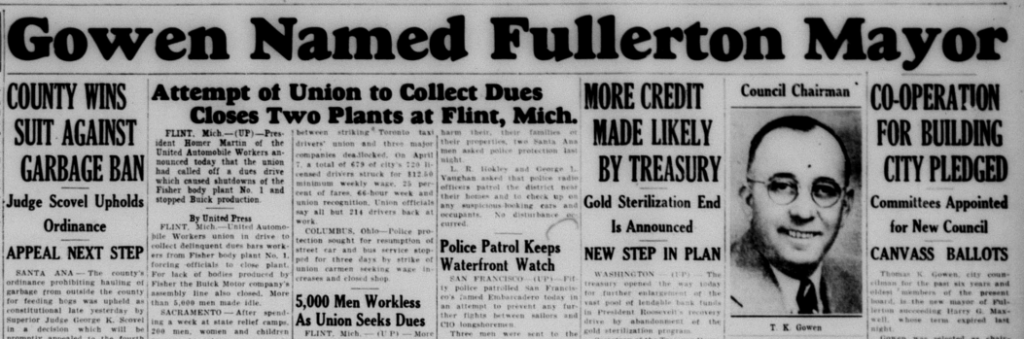
Thomas Gowen was named Fullerton’s mayor for 1938.
In state politics, Democrat Colbert Olson was elected governor. This was significant because he was the first Democrat governor of California in decades. He rode the wave of Roosevelt New Deal politics, which were increasingly popular during the Great Depression.

Sports
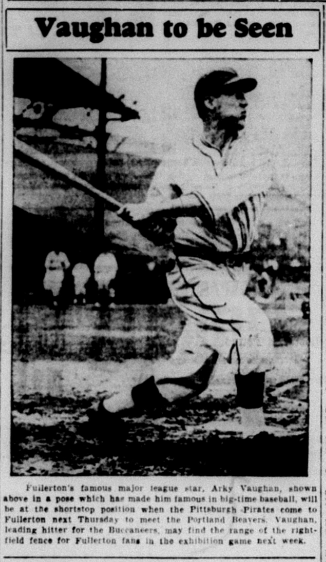
Hometown hero Arky Vaughn, a professional baseball player, played a special benefit game at Amerige Park. He hit a home run!
New Deal Projects
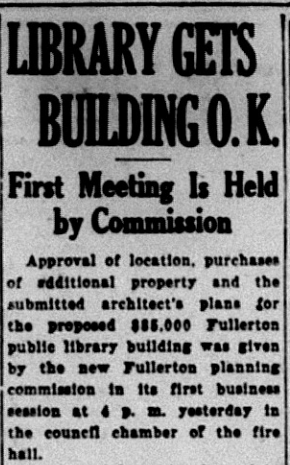
The Great Depression was still in full effect, and the federal Works Progress Administration continued to provide funding for public works projects in Fullerton (built by local unemployed men), including a new building at Fullerton College and a new library, to replace the old Carnegie Library (now the Fullerton Museum Center).
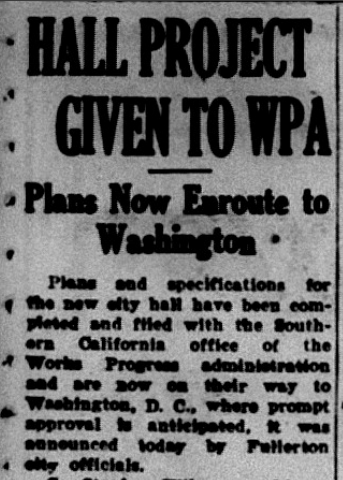
Building an official City Hall was a contentious issue, with plans made and then scrapped to build it next to the California Hotel (now Villa Del Sol), and at Amerige Park.
However, the project got renewed energy with WPA funding, and a new plan to build it on the northeast corner of Highland and Commonwealth avenues (the Fullerton Police Station today).
Some local residents still sought to block the project, even circulating a petition to prevent it.

However, ultimately, the petition failed to gather enough signatures.
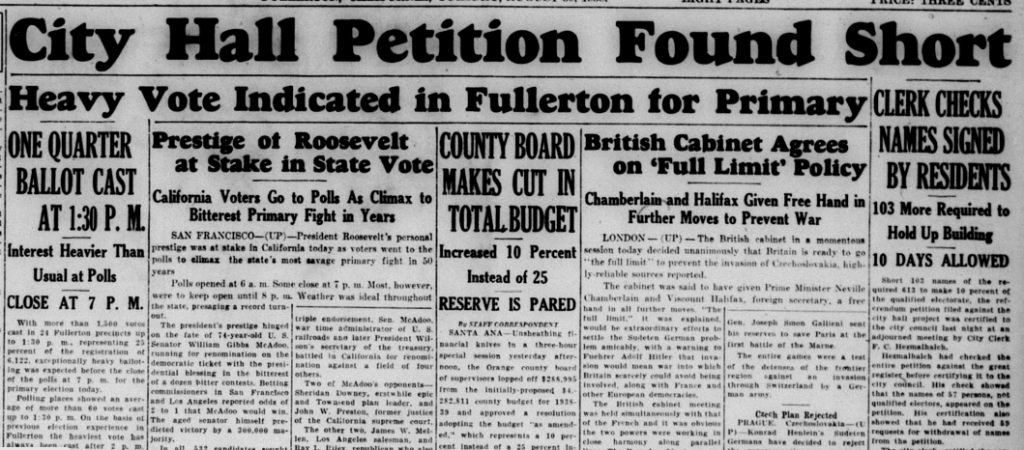
The City Hall project was finally moving forward.
Deaths
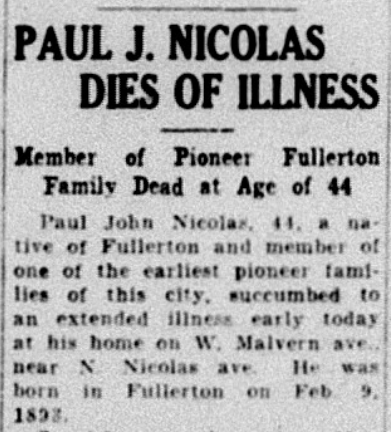
Paul J. Nicolas, son of pioneer rancher Pierre Nicolas, died.
Former mayor Bert Annin died.

In addition to his activities as a veteran citrus grower of Fullerton, Annin was a director of the First National Trust and Savings bank, a director of the Anaheim Union Water Company, and had served as a city councilman and for two years as mayor of the city of Fullerton. He was an active member of Fullerton Odd Fellows lodge and of Fullerton Rebekah lodge.
Miscellaneous
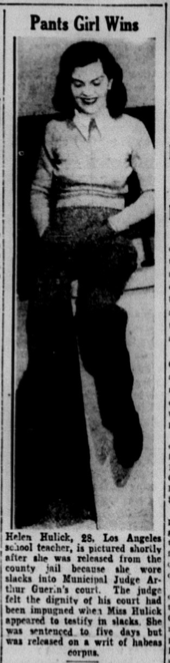
And here are a couple of fun miscellaneous articles from 1938:

Stay tuned for more stories from 1939!
 Fullerton History