The following is from a work-in-progress about the history of Fullerton. You can support my ongoing research and writing on Patreon.
The Local History Room of the Fullerton Public Library has microfilm from the Fullerton Daily News-Tribune newspaper stretching back to 1893. I am in the process of reading over the microfilm, year by year, to get a sense of what was happening in the town over the years, and creating a mini archive. Below are some news stories from 1935.
Fullerton Benefits from the New Deal
While Fullertonians were struggling through The Great Depression, President Franklin D. Roosevelt’s New Deal programs were giving local unemployed folks jobs and a chance to build up the City’s public works infrastructure.
In 1935, both state and federal relief money was being used to improve Hillcrest and Commonwealth parks, the Fullerton Airport, streets, bridges, schools, and local water courses.
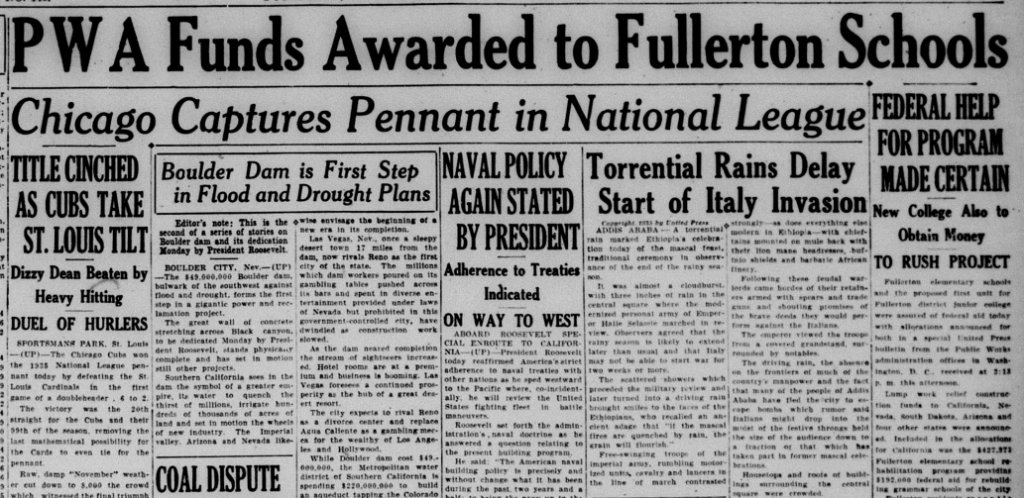
Federal funds were used to build the first Fullerton College buildings, Wilshire Junior High (now the School of Continuing Education), and to remodel and expand Maple School.
Flood Control
Over six million dollars of federal funds (around $138 million today) were planned for a large scale Orange County flood control plan–to build the Prado Dam, as well as channelize much of the Santa Ana river.

These federal dollars were contingent on local voters approving a bond measure to supplement the federal relief funds.
A well-funded opposition campaign which called the bonds a waste of taxpayer dollars resulted in the bond issue, and therefore the federal relief dollars, being lost.
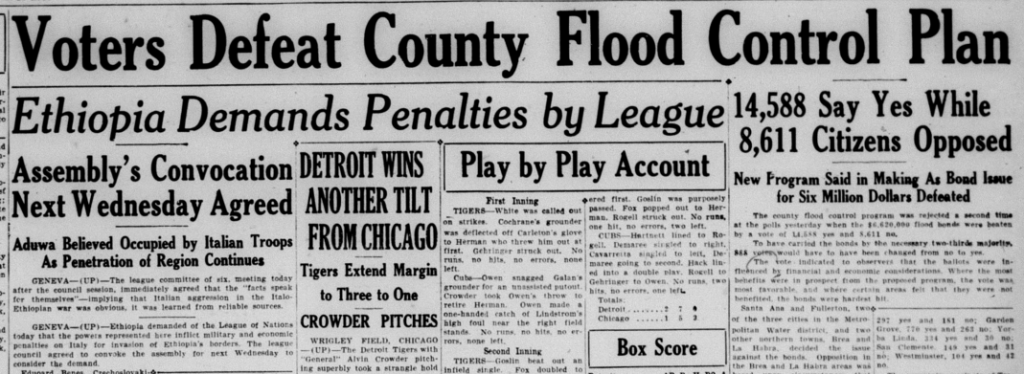
Voters actually had two chances to approve the bonds, but they voted them down twice.
Unfortunately, because the flood control measures were not passed, a few years later the 1938 flood would devastate local communities. It would take a natural disaster for people to understand the need to invest in this infrastructure.
King Citrus
In 1935, oranges were the main industry of Fullerton.
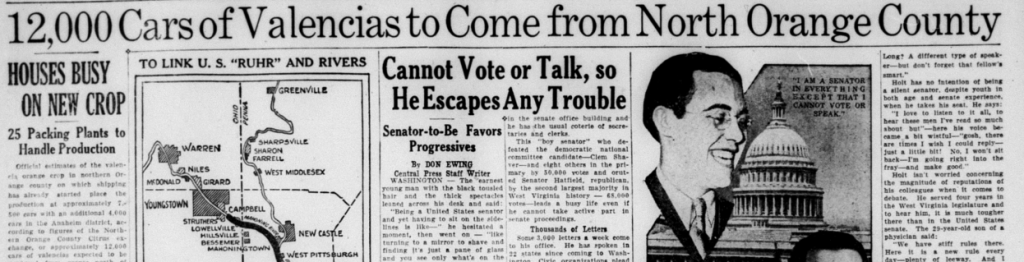
Locals celebrated the orange industry with a big Valencia Orange Festival that drew around 30,000 people.

In 1932, as part of a larger mass deportation effort, nine trainloads of Mexican workers and their families were deported from the Bastanchury Ranch in Fullerton. These mass deportations led to predictable scarcity of labor.

There was talk of strike among the remaining Mexican workers, to improve pay and working conditions.

Ricardo G. Hill, Mexican consul at Los Angeles, addressed a crowd of 2,500 Mexican workers in Anaheim, urging them not to strike, and to wait until next picking season to attempt to form a union. Earlier in the day, Hill had met with local packinghouse managers who “said they would not recognize the rights of the Mexican pickers to organize and demand a minimum wage of $2.25 a day and that managers threatened to import Filipino workers to Orange County to do the work, if necessary.”
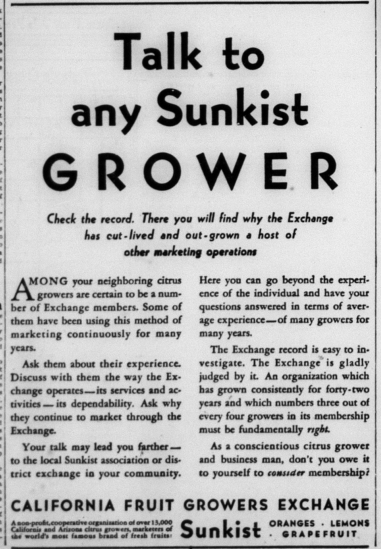
It’s ironic, though not surprising, that growers and packinghouse managers opposed worker efforts to organize for better wages and working conditions because organizing for a better return was exactly what the growers and packinghouses did. They pooled their resources in the form of the California Fruit Growers Exchange (or Sunkist) to fix prices and make the most money.
Meanwhile, plans were made by workers for a countywide organization effort in 1936. Stay tuned.
Dr. Coltrin and the Illegal Abortion
In 1935 abortion was illegal. Those seeking reproductive care had to either resort to “back room” abortions or to find a doctor who would risk being charged for a crime.
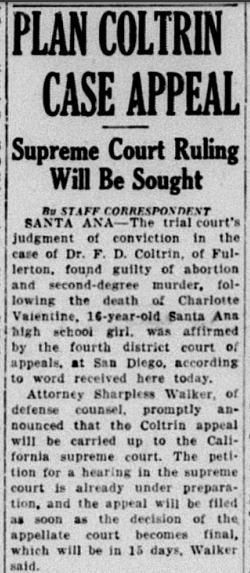
Fullerton doctor Francis Coltrin was arrested and charged with second degree murder and for performing an abortion after a 16 year-old girl named Charlotte Valentine died during a failed abortion.
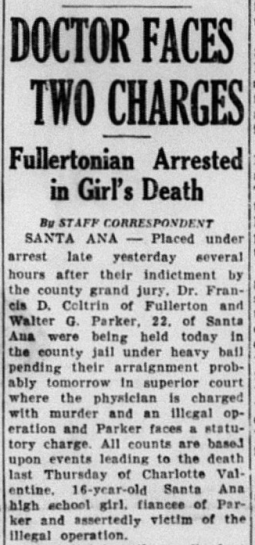
Coltrin was tried and found guilty at a jury trial of both charges. He appealed his case, and it went all the way to the California Supreme Court, where the conviction was upheld.
Culture and Entertainment
Locals got some excitement when the baseball movie “Alibi Ike” starring Joe E. Brown was filmed at Commonwealth Park.

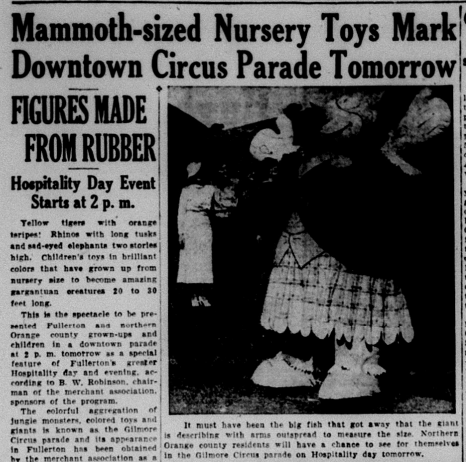
Another big, entertaining event was a Hospitality Day parade, featuring large, oversized toys, kind of like the Macy’s Day parade.
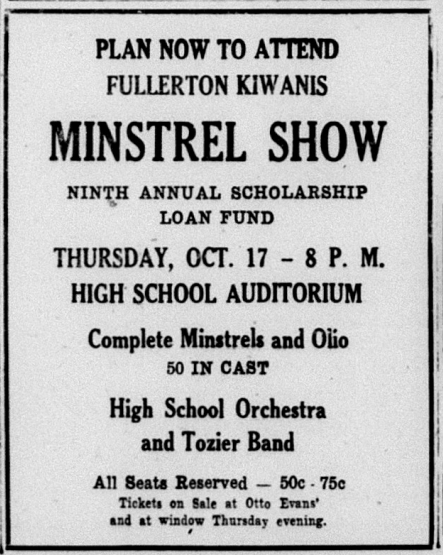
Unfortunately, a popular form of entertainment in the 1930s was the minstrel show, featuring white performers in blackface perpetuating harmful stereotypes of African Americans. Some of these took place locally.
Sports
Commonwealth Park hosted regular minor league baseball games that drew lots of fans. Fullerton baseball star Arky Vaughn won the award for best hitter in the major leagues.

Housing
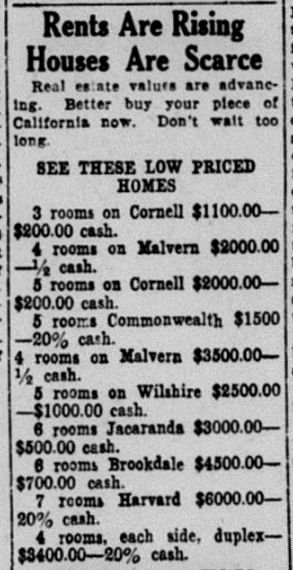
During the Depression, construction of new housing slowed, creating a housing shortage, which led to higher rents and home prices.
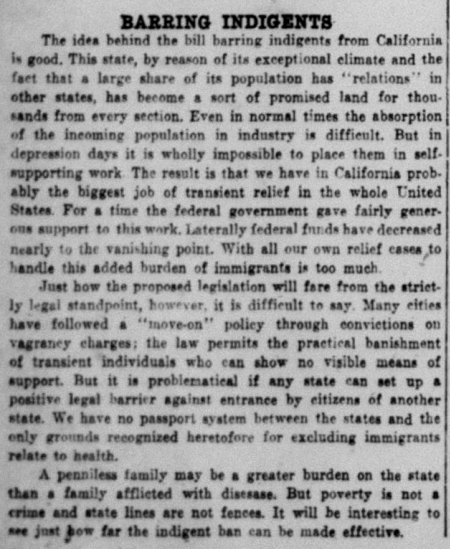
Hard economic times also led to an increase in homelessness. Some Californians sought to “solve” this problem by actually barring poor people from California.
Belle Benchley, Pioneering Woman Zookeeper
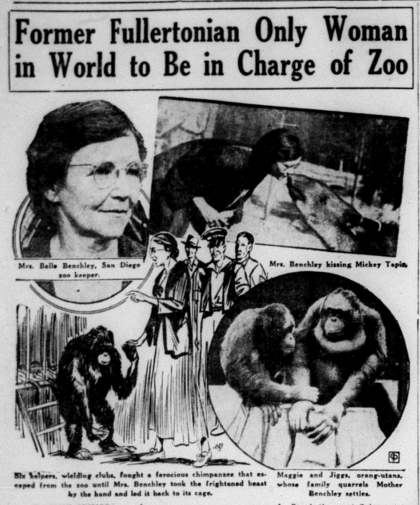
Former Fullertonian Belle Benchley got a shout-out for being a pioneering zookeeper in San Diego.
Santa Ana Winds Bring Wildfires
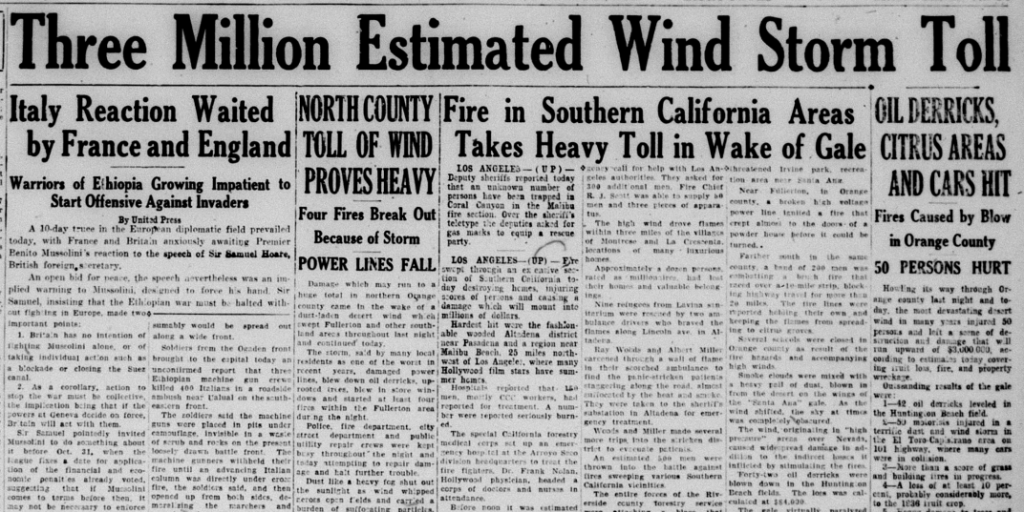
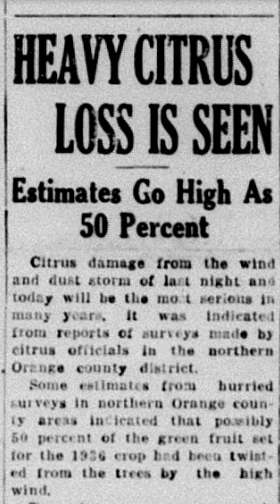
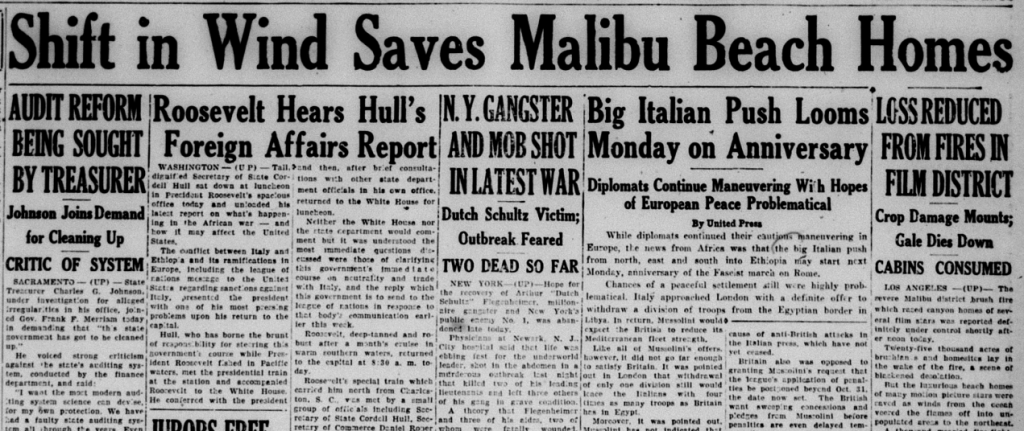
Powerful Santa Ana winds wrought heavy damage and sparked wildfires.
Deaths
A prisoner hung himself in the Fullerton jail.

Edgar Johnson, who founded the Fullerton News-Tribune, died.

He died of heart disease in his room at the California hotel.
Born in Ashville, N.C. in 1868, “Johnson came to California in 1887 and first started in the newspaper business in Santa Ana, later going to Westminster and from there to Fullerton about 1894 where he remained as publisher of The News-Tribune until its sale to the present publishers in 1929,” the Tribune reported.
In Anaheim, another pioneer newspaper editor, Henry Kuchel (founder of the Anaheim Gazette) passed away.

Stay tuned for headlines from 1936!
 Fullerton History