The following is from a work-in-progress about the history of Fullerton. You can support my ongoing research and writing on Patreon.
The Local History Room of the Fullerton Public Library has microfilm from the Fullerton Daily News-Tribune newspaper stretching back to 1893. I am in the process of reading over the microfilm, year by year, to get a sense of what was happening in the town over the years, and creating a mini archive. Below are some news stories from 1931.
Fascism on the Rise in Europe
Before getting into what was happening locally, I’d like to give a bit of context of what was happening internationally, as overseas developments would eventually involve the United States.
Perhaps most ominously, fascism was on the rise in Europe, with Mussolini having taken power in Italy, and Hitler consolidating power in Germany. The post-World War I economic devastation faced by Germany led directly to the rise of extremist political movements, like fascism.
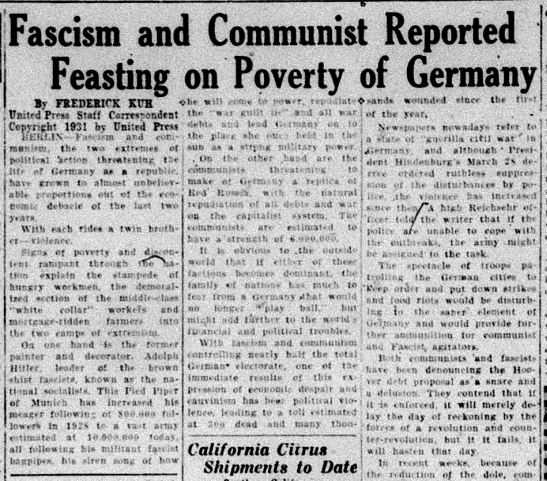

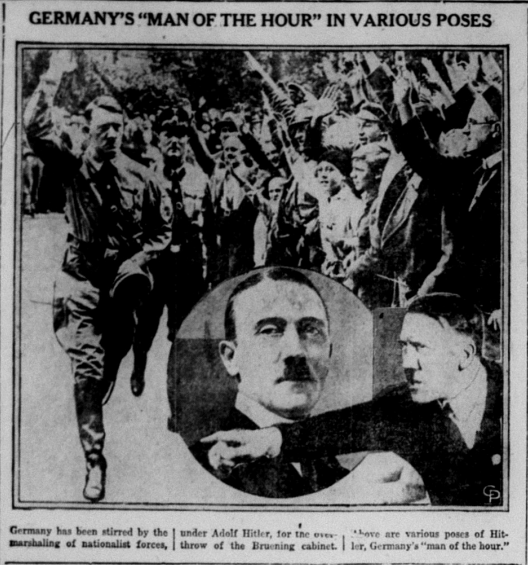
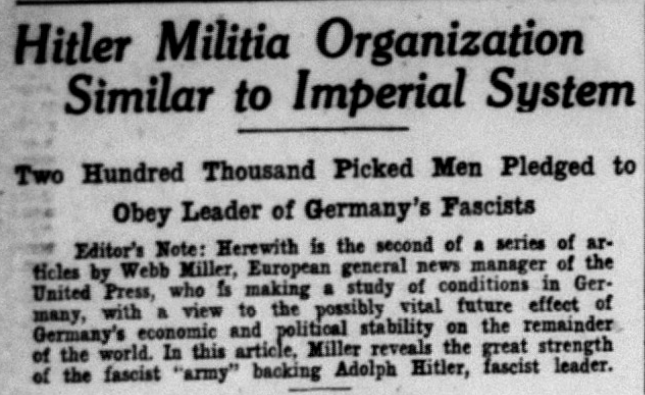
It’s interesting to note that, prior to World War II (when Italy and Germany were adversaries of the United States), not all Americans saw fascism as a bad thing. This is illustrated in a talk given to a Women’s Club in Brea.
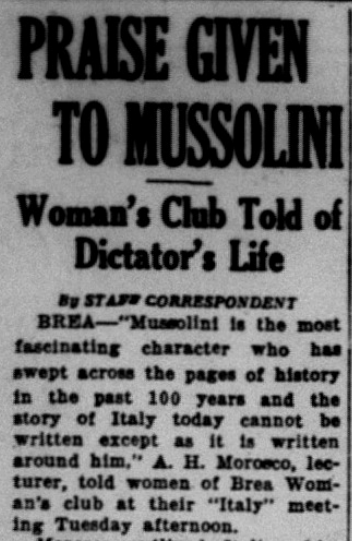
“Mussolini is an absolute dictator, a benevolent despot, which is pronounced by many to be the best form of government in the world,” the speaker concluded.
On the other end of the political spectrum, communism had taken hold in Soviet Russia.

US Intervention in Central and South America
Following the Spanish-American War in 1898, the United States entered a phase of imperial expansion into countries like the Philippines and throughout Latin America. Backed by the U.S. military, the United States intervened in countries like Nicaragua, Honduras, Cuba, and Panama, largely to protect American business interests, although that was not usually the reason given by politicians and the press.
Read more about the U.S. intervention in Honduras, Nicaragua, Cuba, and Panama during the “Banana Wars” HERE.


Smedley Butler, a Marine who involved himself in many of these interventions, later became an outspoken critic, writing in his book War is a Racket:
“I spent 33 years and four months in active military service and during that period I spent most of my time as a high class muscle man for Big Business, for Wall Street and the bankers. In short, I was a racketeer, a gangster for capitalism. I helped make Mexico and especially Tampico safe for American oil interests in 1914. I helped make Haiti and Cuba a decent place for the National City Bank boys to collect revenues in. I helped in the raping of half a dozen Central American republics for the benefit of Wall Street. I helped purify Nicaragua for the International Banking House of Brown Brothers in 1902-1912. I brought light to the Dominican Republic for the American sugar interests in 1916. I helped make Honduras right for the American fruit companies in 1903. In China in 1927 I helped see to it that Standard Oil went on its way unmolested. Looking back on it, I might have given Al Capone a few hints. The best he could do was to operate his racket in three districts. I operated on three continents.”
I’ve recently been reading a book entitled Gangsters of Capitalism: Smedley Butler, the Marines, and the Making and Breaking of America’s Empire by Jonathan M. Katz, which describes the age of American imperialism and its lingering effects today. For example, some of the migration crisis stemming from Latin America today has its roots directly in US intervention.
Great Depression/Unemployment
Back at home, the most significant problem facing Fullerton in 1931 was the Great Depression.

Republican Herbert Hoover was president, and so the New Deal programs created under Franklin D. Roosevelt did not yet exist. FDR would be elected in 1932.


With little or no help from the federal government, local communities were forced to create their own solutions to the poverty, hunger, and unemployment caused by the Depression.
This took the form of both large and small-scale efforts, like city workers and teachers donating some of their pay to help the unemployed, food and clothing drives, church efforts, soup kitchens, and more.
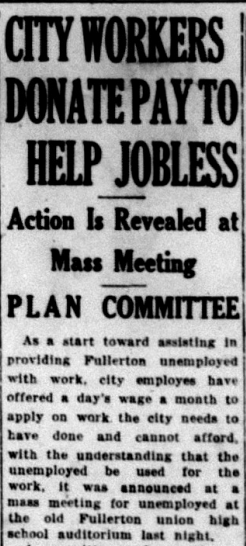


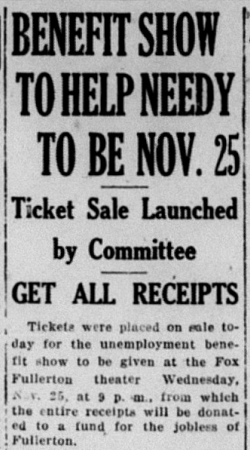

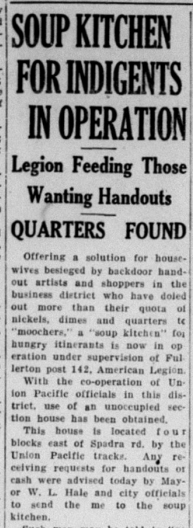
City Council placed a bond issue on the ballot that would authorize funds to pay unemployed locals to do work on city parks.
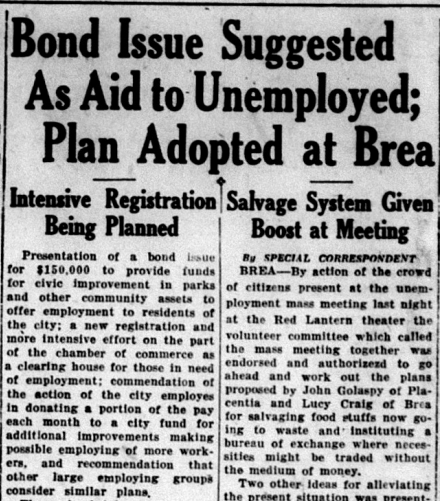
This issue would be on the ballot in early 1932.
Meanwhile, others sought larger-scale changes.

Culture and Entertainment
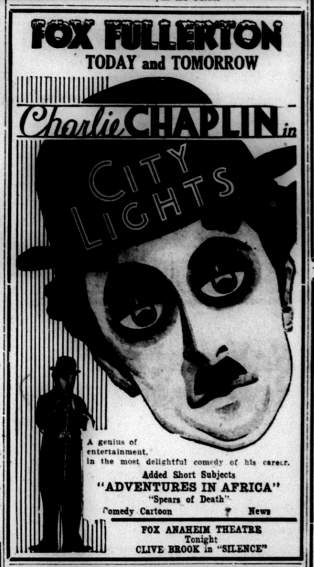
To escape the troubles of life, folks went to movies at the Fox Theater:

Fullerton’s First Jacaranda Festival
In 1931, Fullerton hosted its first Jacaranda Festival, showing off the purple flowers of the trees that still line Jacaranda Dr. and other streets.

The Festival included a pageant at the high school with a cast of 300.
King Citrus
Due to over-expansion in the 1920s followed by the Great Depression, the Bastanchury Ranch (called the largest orange grove in the world), couldn’t pay its debts and went into receivership.
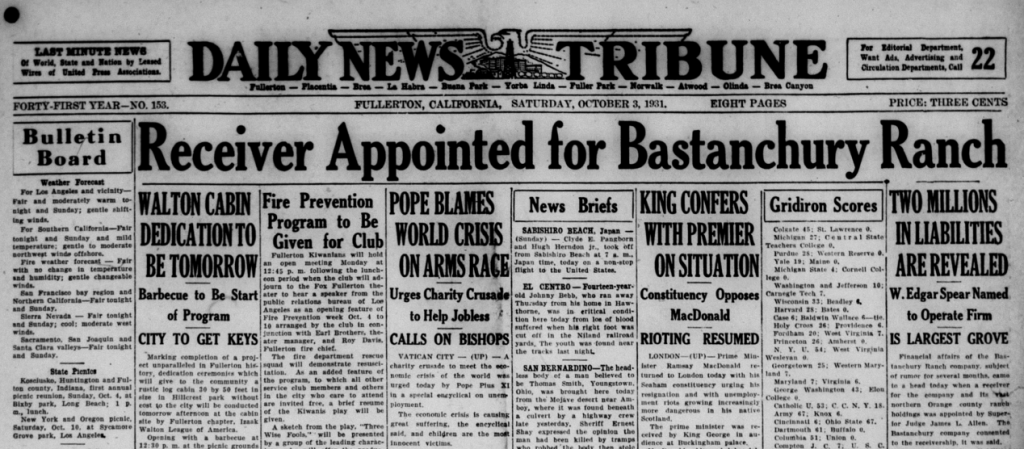
“It was revealed that liabilities of nearly $2,00,000 rest against the 2,600-acre ranch. W. Edgar Spear of Los Angeles was appointed receiver upon complaint of the Consolidated Securities company of that city,” the News-Tribune reported.
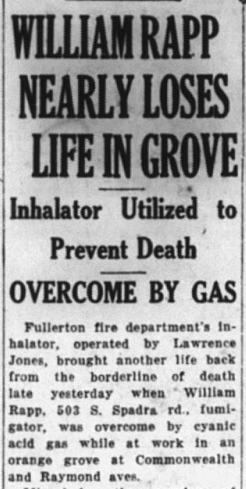
Aside from a slumping market, another problem facing growers was a disease called red scale. A common method to kill the disease was to fumigate trees with cyanide gas, a dangerous process that sometimes killed workers.

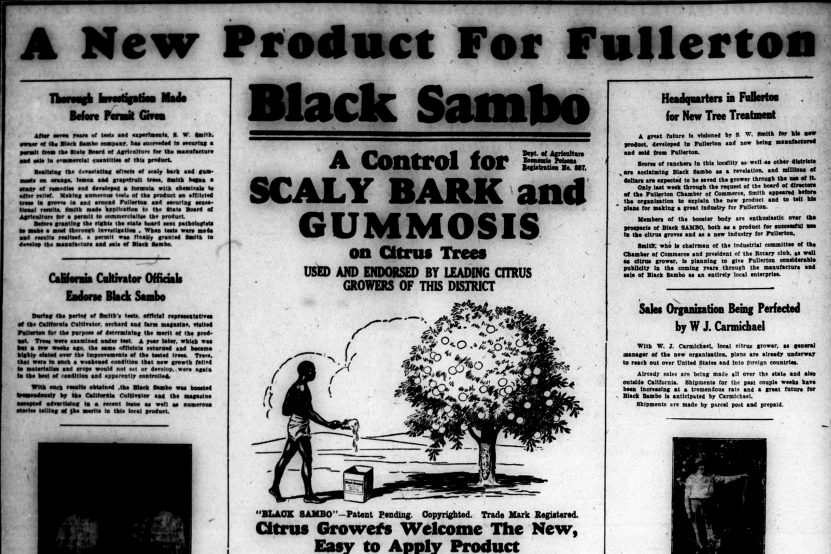
Thankfully, a new (perhaps safer) product was created with the unfortunate name Black Sambo.
Immigration
With unemployment on the rise, immigrants (as always) made a convenient scapegoat and there were calls to restrict immigration.

In 1931, the Mexican immigrant population of Fullerton lived mostly in segregated work camps or neighborhoods and sent their children to segregated “Americanization” schools.

Water
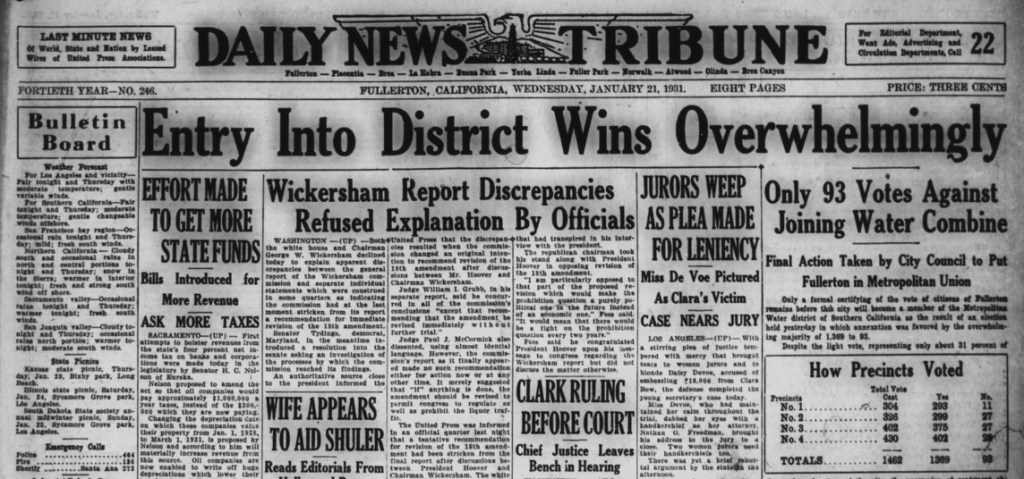
Fullerton residents voted to enter the Metropolitan Water District, which would give the city access to water from the Colorado River via aqueduct.
Crime
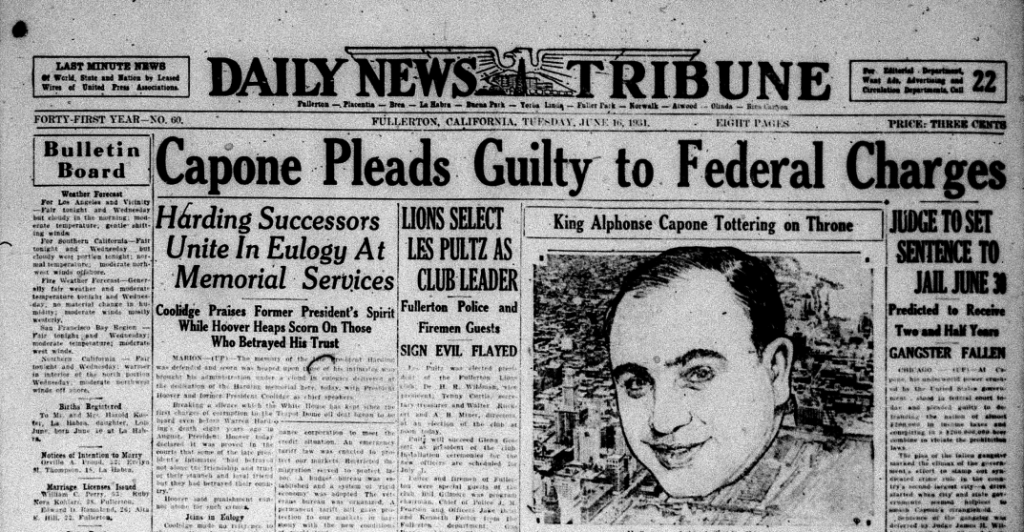
In national crime news, gangster Al Capone pleaded guilty to federal charges.
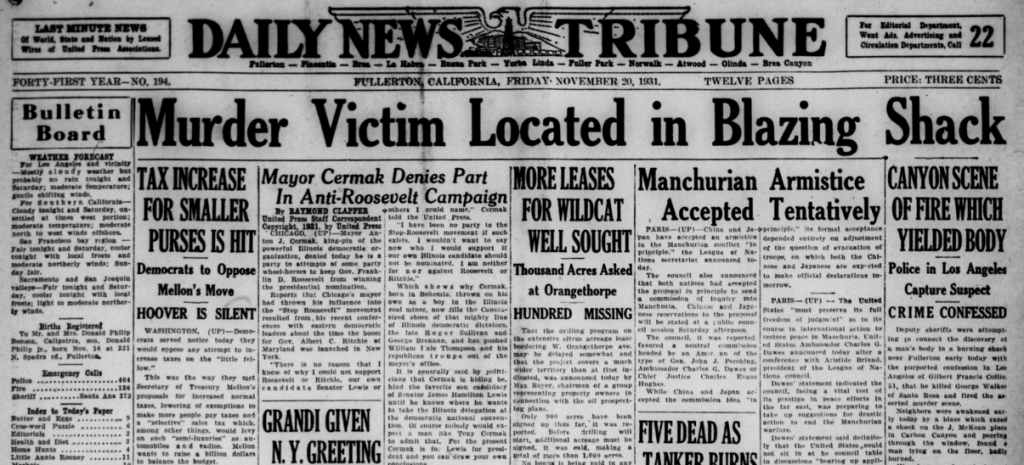
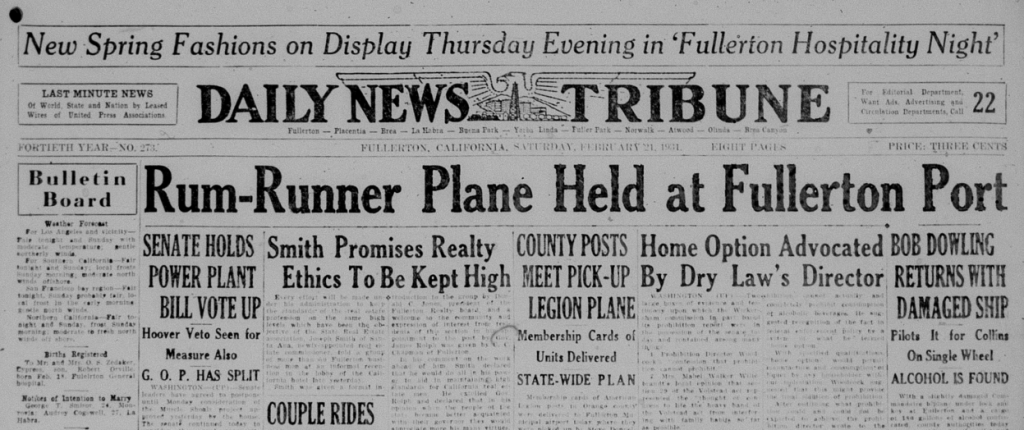
Locally, a Brea bank was robbed, a man was murdered, and a rum-runner airplane was held at the Fullerton Airport.

Transportation
The Airport also hosted a big air meet.

Thousands turned out to celebrate the widening of Spadra (now Harbor) Blvd.

Deaths
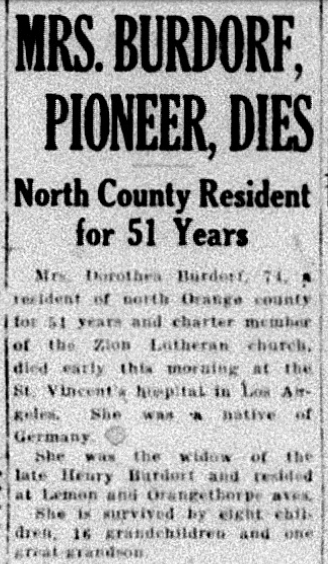
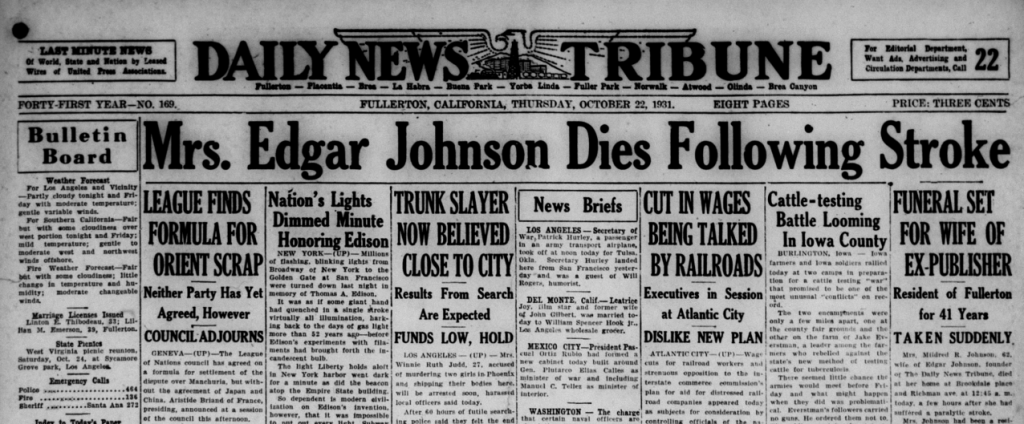
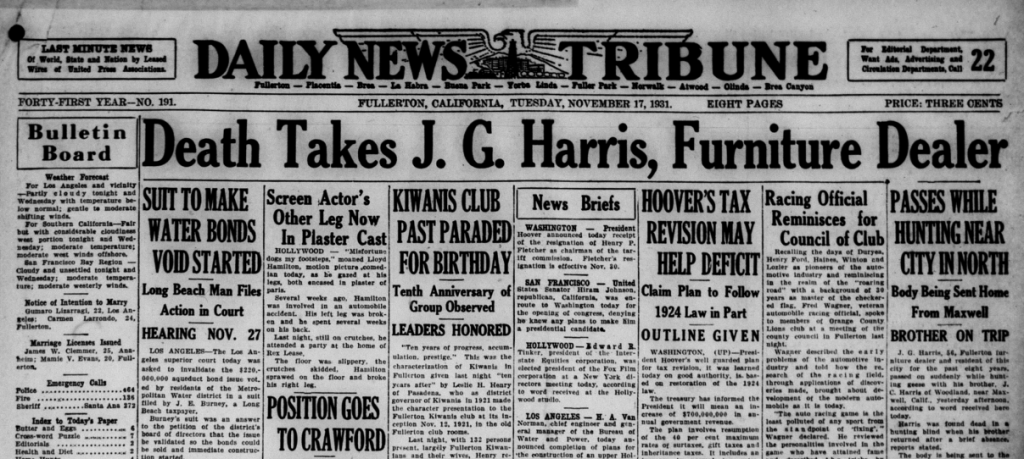
The following local people died: Dorothea Burdorf, City Councilman Oscar Adelbert Kreighbaum, Mildred Johnson (the wife of Fullerton News-Tribune founder Edgar Johnson), furniture store owner J.G. Harris, and drug store owner G.W. Finch.


Stay tuned for top news stories from 1932!
 Fullerton History