The following is from a work-in-progress about the history of Fullerton. You can support my ongoing research and writing on Patreon.
The Local History Room of the Fullerton Public Library has microfilm from the Fullerton Daily News-Tribune newspaper stretching back to 1893. I am in the process of reading over the microfilm, year by year, to get a sense of what was happening in the town over the years, and creating a mini archive. Below are some news stories from 1930.
According to census figures, Fullerton’s population in 1930 was 10,860.
Impacts of The Great Depression
In 1929, the U.S. stock market crashed, sparking the Great Depression. Impacts could be seen locally, with a visibly increasing number of unemployed and homeless people, with some even seeking to sleep in jail.
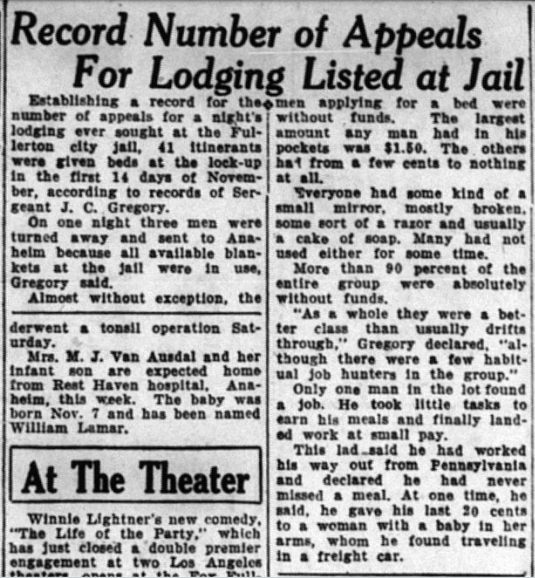
In 1930, there was no such thing as unemployment insurance, and Franklin Delano Roosevelt would not be elected for another two years, so the New Deal programs did not exist.
Local communities were thus forced to fend for themselves. In Fullerton, the Chamber of Commerce sought (with limited success) to help get people jobs.
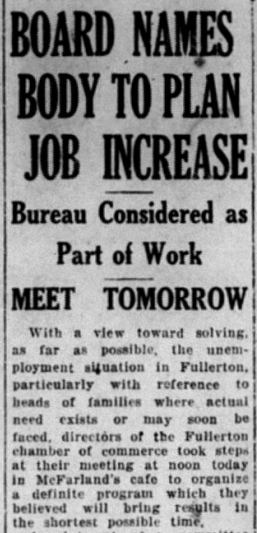
And ads in the newspaper encouraged people to buy more stuff (with what money?) as a solution to unemployment.

Then, as now, there was a serious stigma on being unemployed. A local pastor sought to diminish this by explaining that there were larger, structural reasons for unemployment. It wasn’t just a matter of personal laziness.

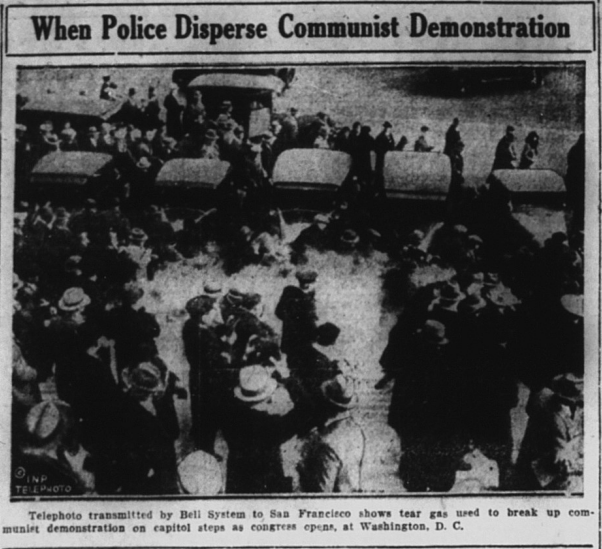
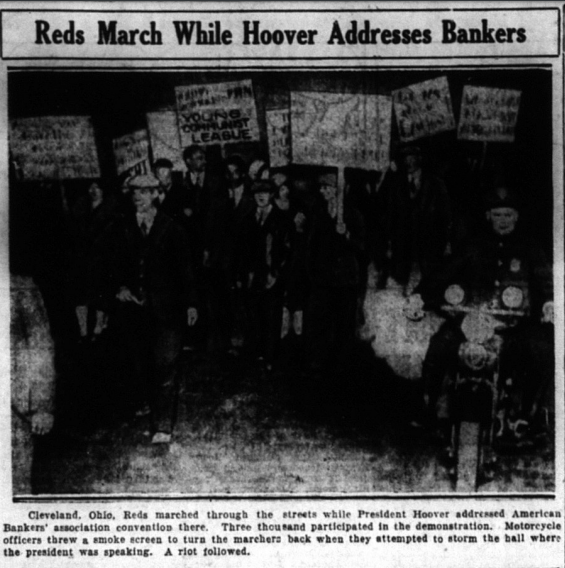
As the Depression worsened, there were increasingly radical and widespread labor strikes and demonstrations, both locally and across the nation. Some [though certainly not all] of these strikes and demonstrations were organized by socialists and communists. Some Americans saw the Depression as a failure of capitalism, and sought to try different economic systems.
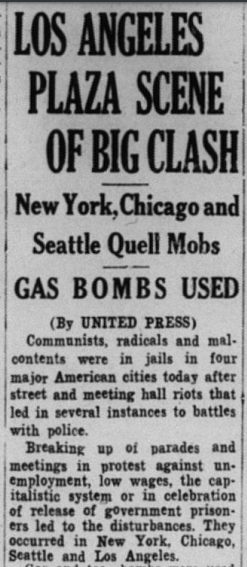
Law enforcement often responded to these labor strikes with [sometimes lethal] violence.

President Herbert Hoover, a Republican, doubled down on capitalism as the solution. He thought stimulating business, not providing directly for human need, was the answer.

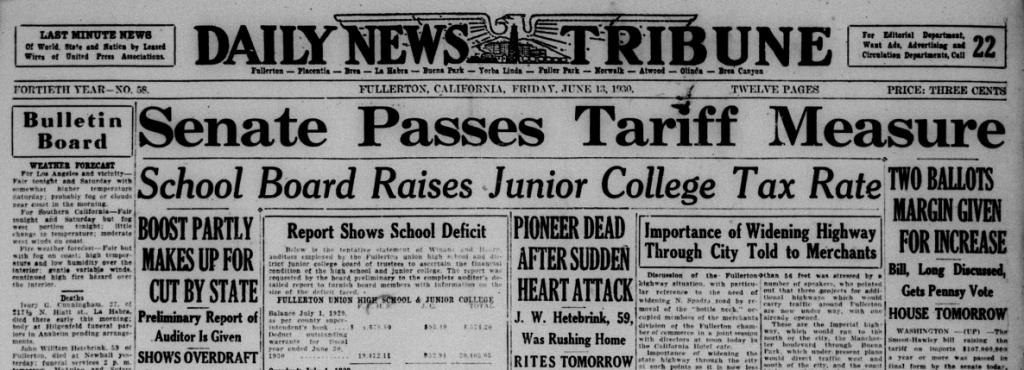
He signed a protectionist tariff, The Smoot-Hawley Bill, which (predictably) sparked retaliation from other countries and actually worsened the Depression, causing prices to rise on many goods.
In the midterm election of 1930, Democrats gained a number of seats in congress.
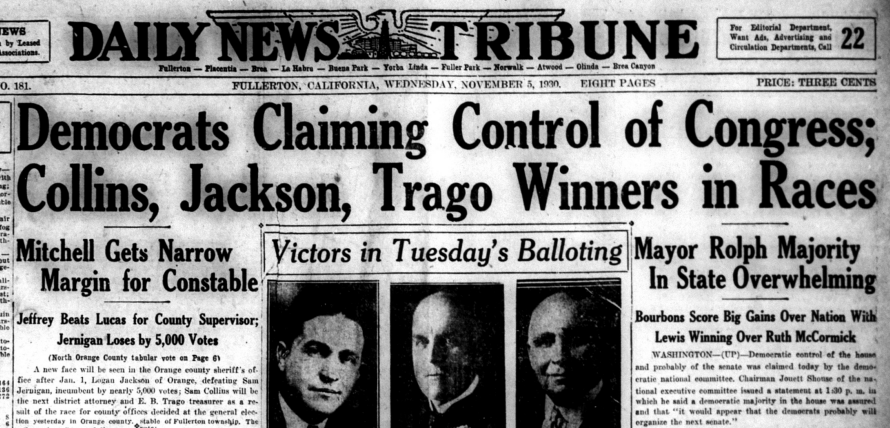
And a third, more left-wing, party [the Farmer Labor Party] gained some support.

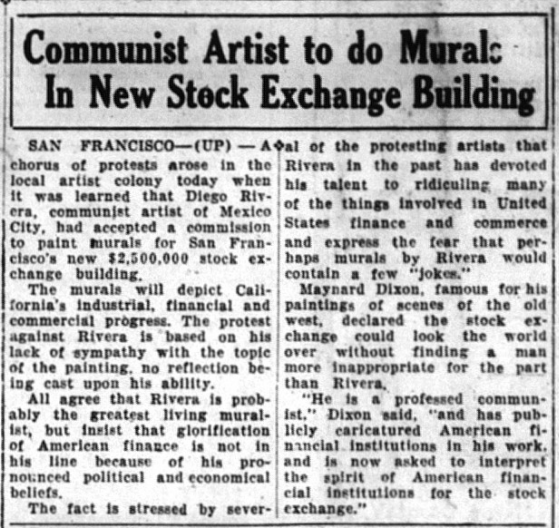
In a fairly perfect expression of the spirit of the times, Mexican artist Diego Rivera (a communist) was hired to paint a large mural in the San Francisco stock exchange building. Is his mural a condemnation or celebration of industrial capitalism? You decide.

Anti-Immigrant Sentiment Rising
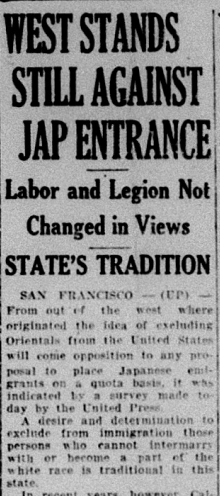
Throughout U.S. history, tough economic times have sparked strong anti-immigrant movements that have sometimes had devastating consequences. This happened during the Great Depression, with increasing calls to prioritize “white” over “foreign-born” labor.

“Petitions were circulated in Fullerton Saturday afternoon protesting employment of unnaturalized foreign-born workers on any public improvement project while white labor is available,” the Tribune reported. “The petitions, circulated by R. J. Simpson of Costa Mesa, president of the Orange County labor association, will be presented to the board of supervisors and to the city councils of all the cities in the county.”
“Contractors have tended to employ unnaturalized Mexican labor to the exclusion of white labor, according to the petitions. This is because they will work cheaper and stand more, Simpson says. A mass meeting of working men will be held Friday night at Birch park in Santa Ana, Simpson said, to formulate further protests,” the Tribune continued.
Politicians got on the anti-immigration train and supported measures to restrict it.

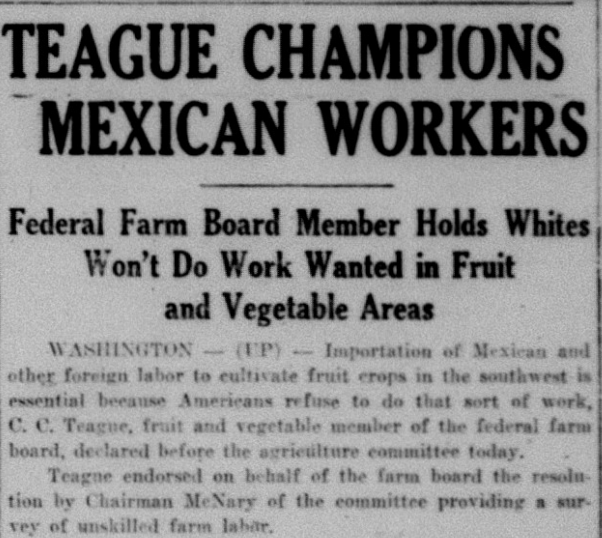
Some large agricultural interests opposed immigration restriction, and supported allowing Mexican immigrants to continue working in the fields.
The anti-immigrant voices would grow louder as the Depression wore on, leading to one of the largest mass deportations in American history, primarily of Mexican-Americans, many of whom were actually citizens. This sad chapter of local and national history is chronicled in the book Decade of Betrayal: Mexican Repatriation in the 1930s by Francisco E. Balderrama and Raymond Rodriguez.
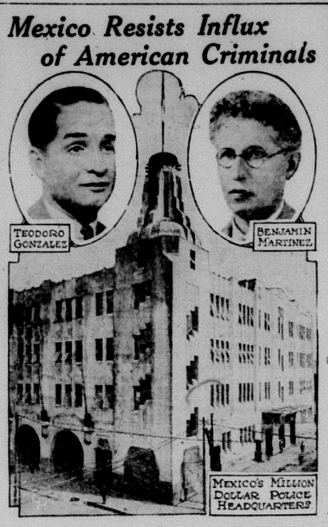
Meanwhile, in a kind of funny inversion of the current immigration discourse, Mexico was concerned about American criminals coming into their country.
Fascism Rising
If the domestic situation was tense, the international scene was worse. Perhaps most ominously, fascism was on the rise in Germany under the leadership of Adolph Hitler. Mussolini had already taken power in Italy.

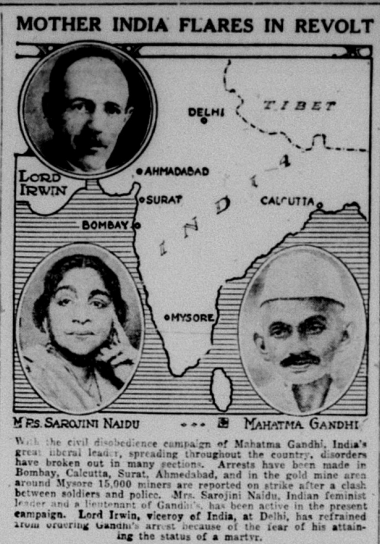
And in the old colonies of Europe, the global south, revolt was brewing.
Race Relations
Back at home, African Americans continued to live under conditions of racism and terror. The pages of the Tribune document numerous lynchings (none of them local, thankfully). 1930 was squarely in the middle of the Jim Crow era, when African Americans were systematically segregated from white people in housing, education, public facilities, and more.

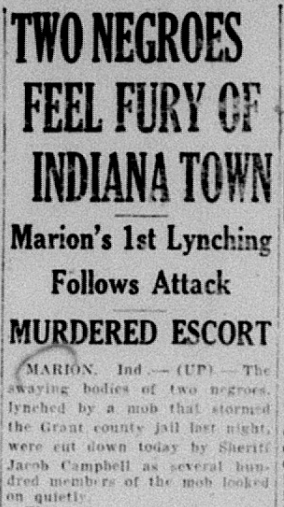
Although there weren’t very many African Americans living in Fullerton, they were barred from renting or purchasing homes in most neighborhoods by racially restrictive housing covenants.
And yet, in the pages of the Tribune, a couple articles appear describing programs at the local Methodist church whose goal was to improve race relations.

The above article describes a dinner program at the church which featured a speech by E. Leslie Banks, African American editor of Flask magazine, entitled “Come, Let us Reason Together.” The program also featured dramatic readings.
Another article describes a second meeting at the Methodist church of the Fullerton International Relations council with featured speaker W.T. Boyce of Fullerton College.

“He [Boyce] said the meeting last night was one of friendship with the idea of creating more harmonious relations between the negro race and the white race.”
The program also featured dramatic readings, singing of Negro spirituals, and another talk by Leslie Banks with the topic “Peace on Earth, Goodwill Toward Men.”
In Fullerton, by far the main ethnic minority were Mexicans, who worked in the citrus fields and packinghouses. These workers lived under a kind of paternalistic system that provided housing and limited education in segregated communities.
Druzilla Mackey, a teacher in the “Americanization” program that brought educational programs to the Mexican work camps, would occasionally give a talk about the progress of her work.

New Construction
Although the Great Depression would severely slow down the housing boom of the 1920s, the 1930s did see the construction of many significant public and business buildings.
The impressive new high school auditorium was completed.
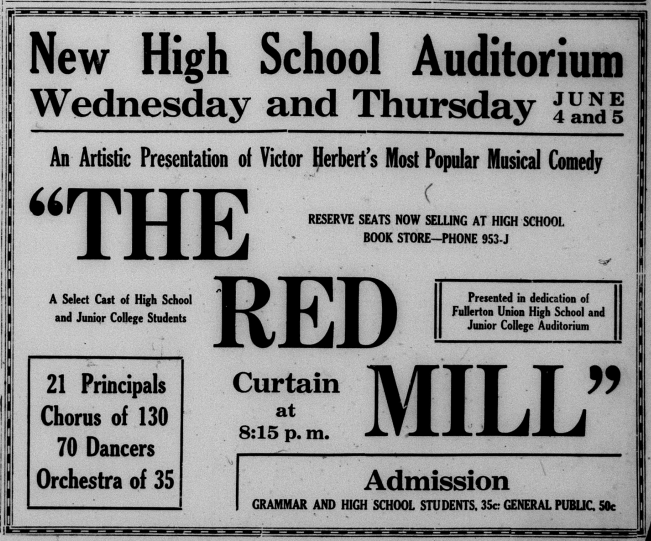
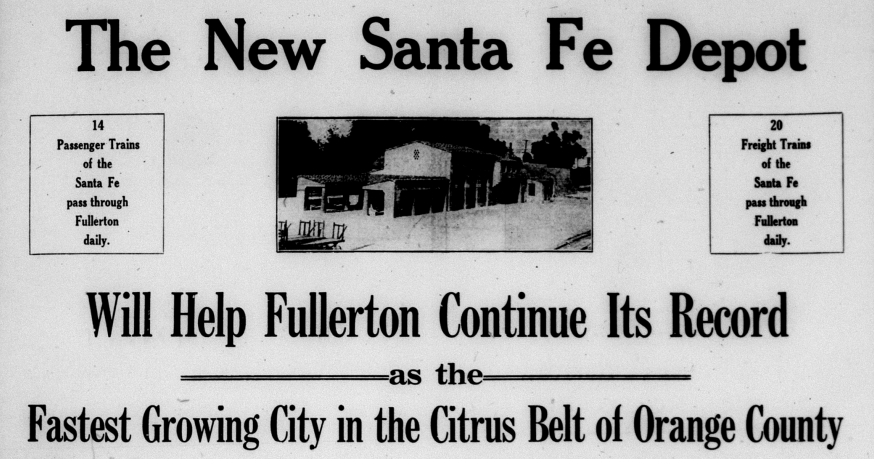
The old Santa Fe train depot was torn down and replaced with a much larger and more modern one–which still exists today and is on the National Register of Historic Places.

A new service station opened at Spadra (Harbor) and Whiting. Today, it is a Citibank.

And plans were in the works for a “Mexican” church on E. Santa Fe, between Pomona and Harvard (now Lemon).

Local Politics
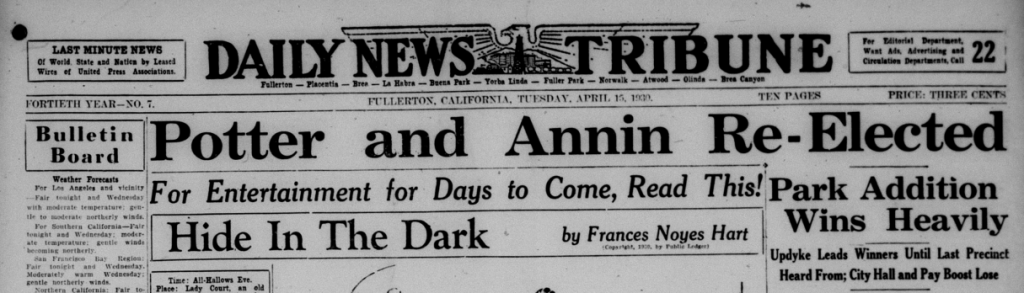
1930 was a midterm election year. William Potter and Bert Annin were re-elected to city council. Billy Hale was chosen as Mayor.

Below are photos of each Fullerton City Councilmember in 1930 (taken from a variety of sources including the Fullerton Public Library Local History Room and clippings from the Tribune).
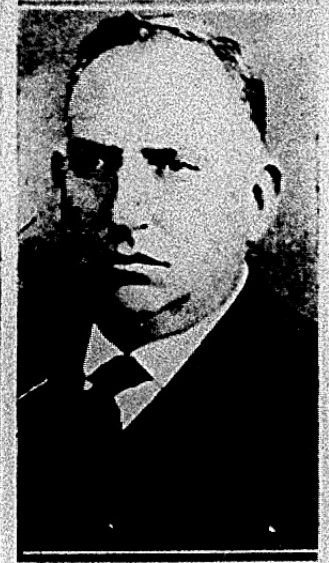


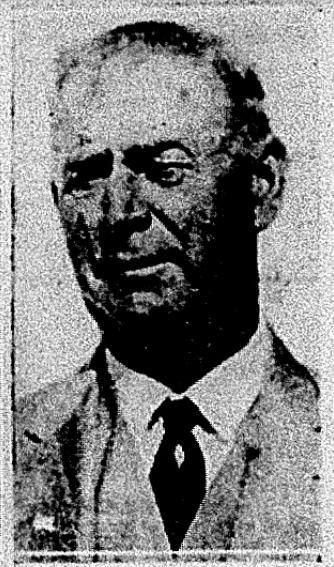
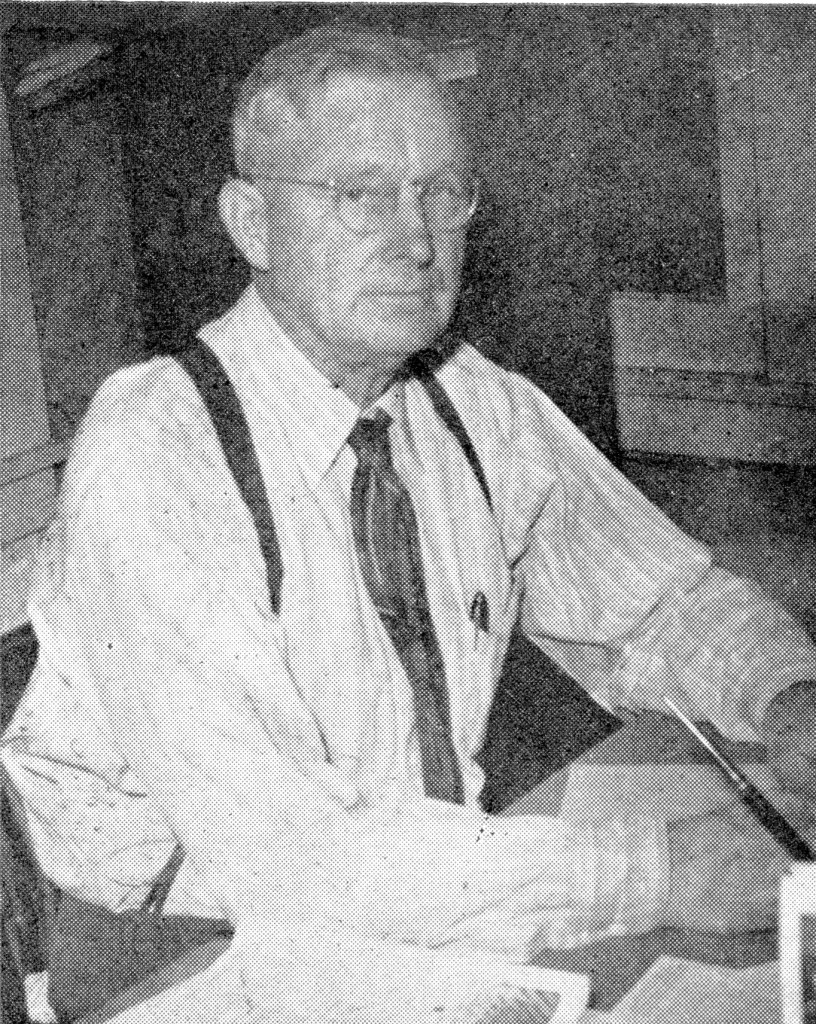
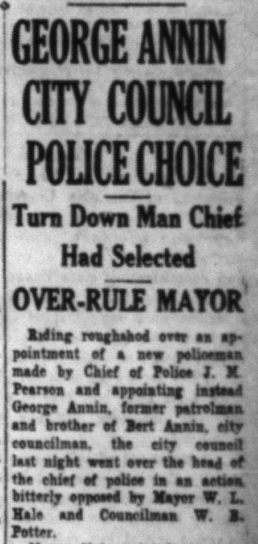
In a bit of nepotism that probably wouldn’t fly today, Bert Annin’s brother George was chosen as police chief.
Logan Jackson was elected county sheriff.

Republican James Rolph was elected governor of California.
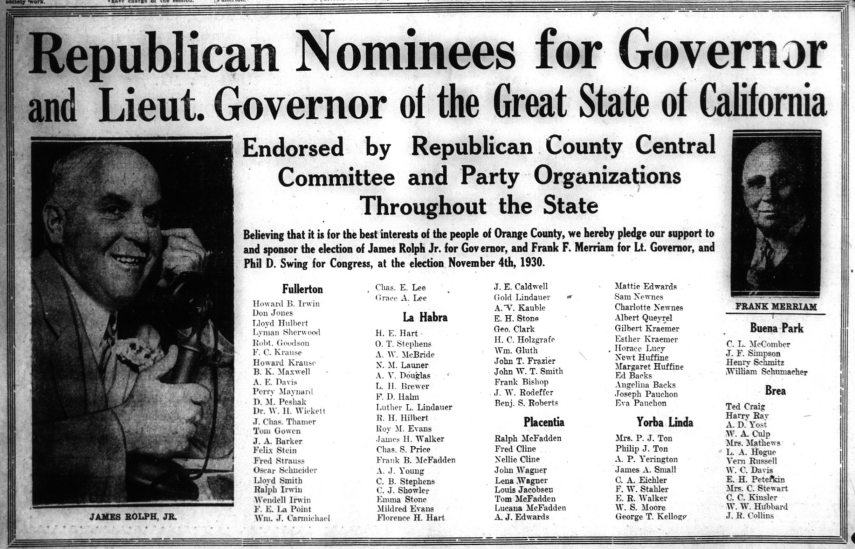
At this time, Fullerton had a solid Republican majority. This would change as the Depression worsened and Democrat Franklin Delano Roosevelt offered hope for a New Deal.
Culture and Entertainment
Sadly, in 1930, the Rialto Theater (Fullerton’s first movie theater) closed, and was replaced by the First National Trust and Savings Bank.
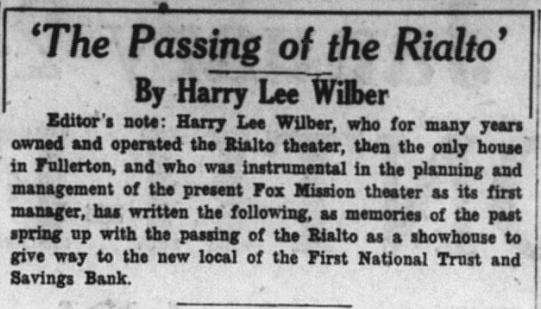

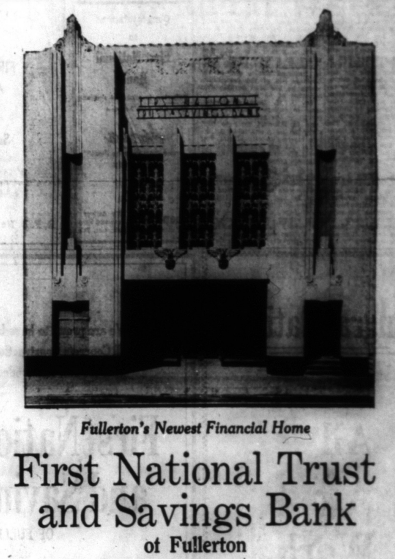
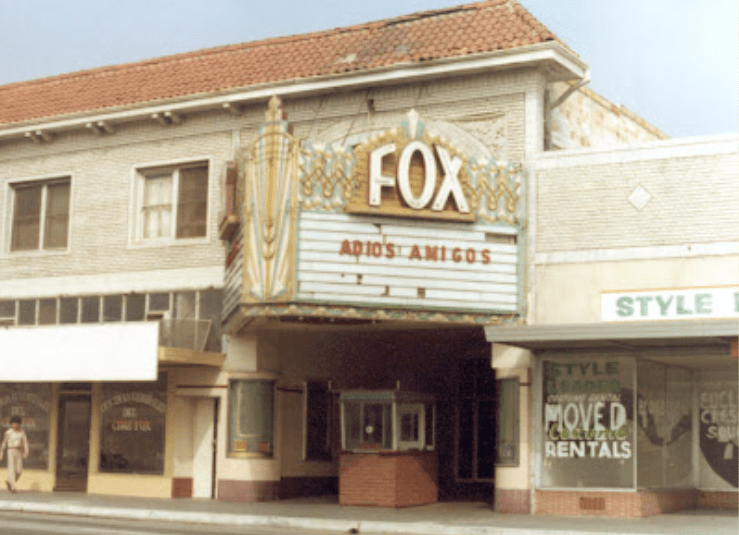
Thankfully, the Fox Theater was there to provide locals with cinematic entertainment. It even got a remodel.

Unfortunately, minstrelsy and blackface remained popular in 1930 in films like Al Jolson’s “Big Boy” and the white actors known as Two Black Crows.


In 1930, there was a Fox Theater in Fullerton and one in Anaheim. They would advertise their films in the News-Tribune.

While the Fox Theater in Fullerton still stands, the Anaheim Fox Theater was unfortunately torn down in 1979 along with many of that city’s other historic buildings. This was called “redevelopment.”

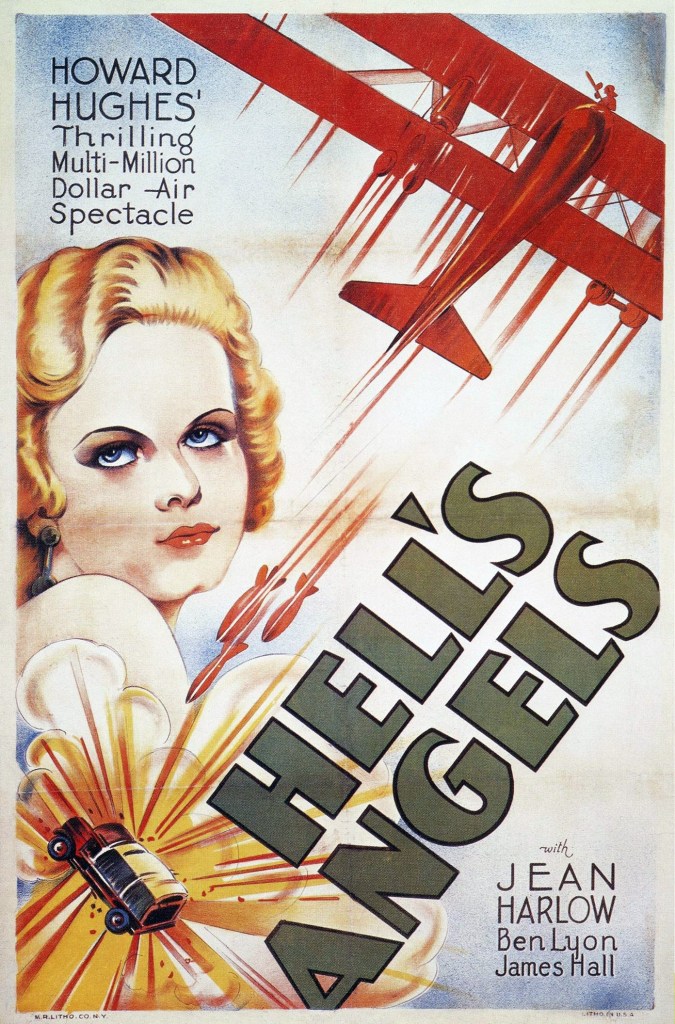
The film “Hells Angels” featuring daring airplane stunts and produced by Howard Hughes, was filmed at the Fullerton Airport.

In true Footloose fashion, the High School Board of Trustees denied dancing at a high school event.

Here are some other cultural events that took place in Fullerton in 1930:
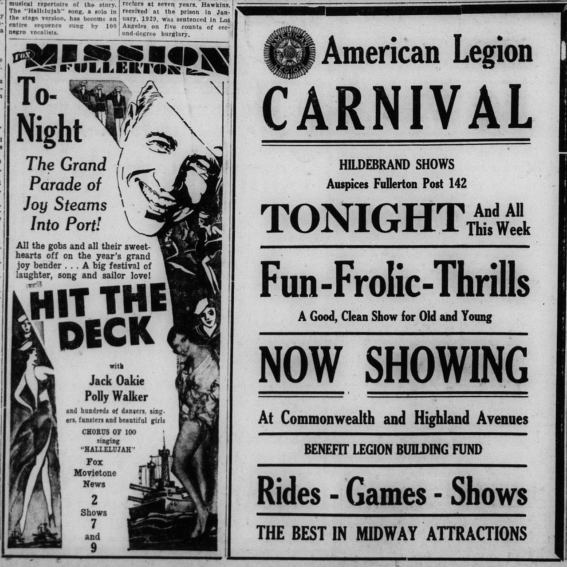

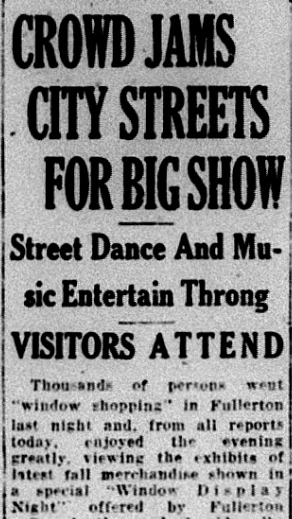
In 1930 television did not exist, so the preferred in-home entertainment was radio. And record players.

Famous ceramicist Glenn Lukens taught at Fullerton Union High School.

Sports
There was a night time baseball league which played games at what is now Ford park.

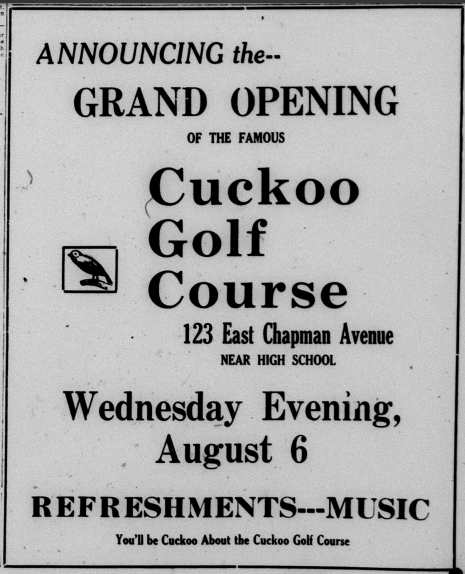
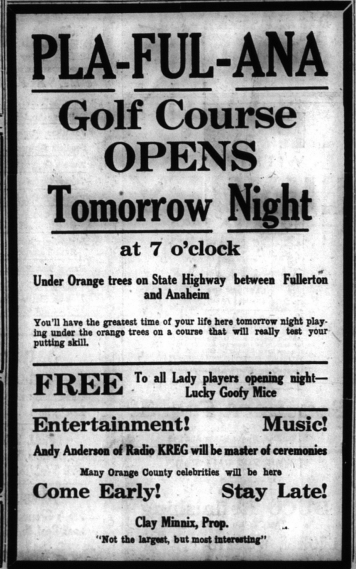
Golfing, both regular and miniature was popular locally, with the following courses:
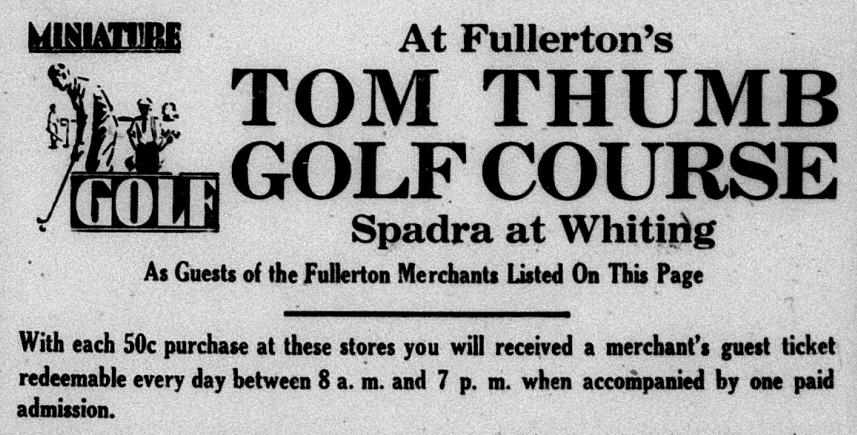
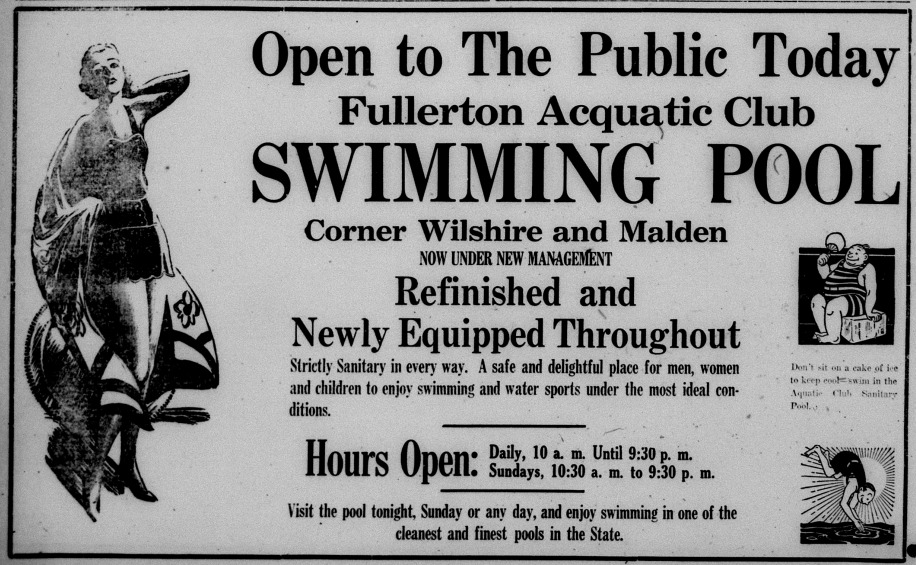
Swimming, both recreational and competitive, was also popular.

And for Thanksgiving, the area was still rural enough to host a turkey shoot.

Agriculture
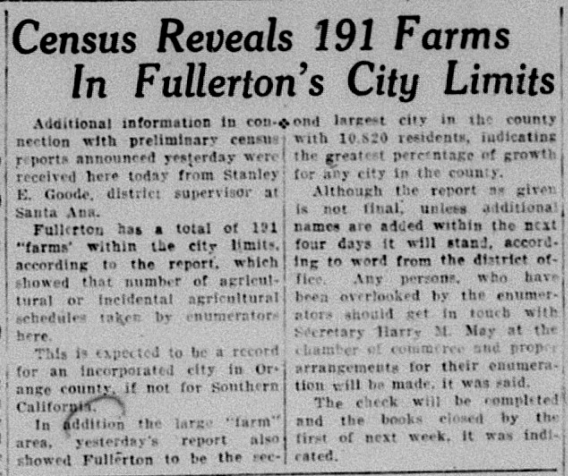
Speaking of rural, Fullerton had a lot of farmland in 1930.
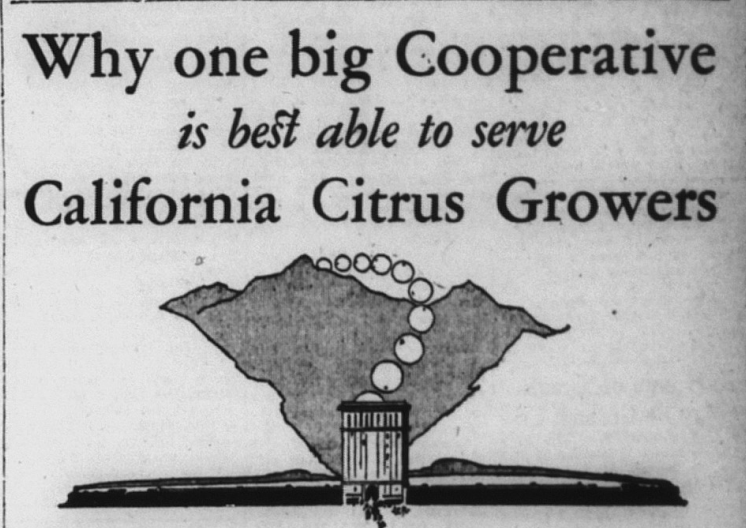
Most of the citrus growers in the area sold and marketed their fruit through Sunkist, a co-operative fruit growers exchange.
Water
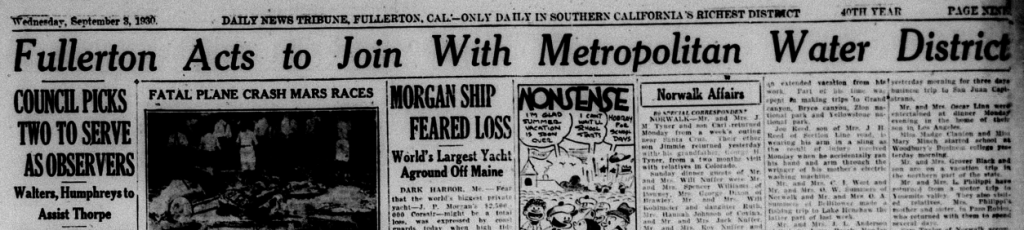
In a semi-arid climate like Fullerton, ensuring a regular supply of water for crops, businesses, and residents, was important. Fullerton joined the Metropolitan Water District, which brought water from the Colorado River here.

In 1929, residents voted down a bond issue to build dams along the Santa Ana River to recharge the local aquifer and to prevent flooding. However, the issue wasn’t going away.

Oil!
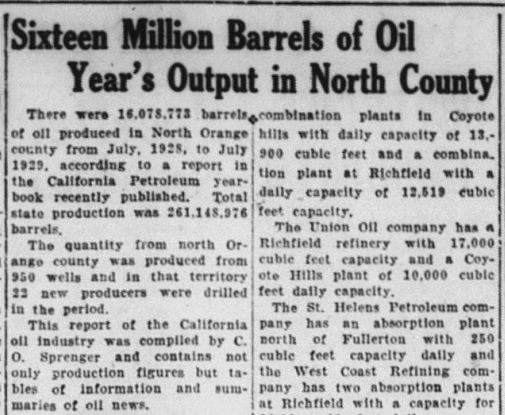
In addition to citrus, oil remained a major industry in the area. The hills of north Fullerton, extending to Brea were once covered with oil derricks pumping away.
Leaded Gasoline
From the 1920s to as late as the 1990s, a lead compound called tetraethyllead (TEC) was added to gasoline to improve performance. Unfortunately, the exhaust from all this lead would poison the environment for decades.

Bad Advertising
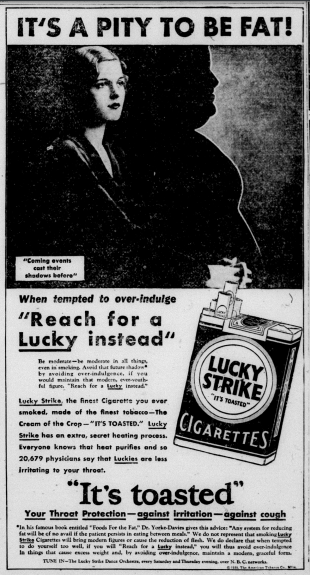
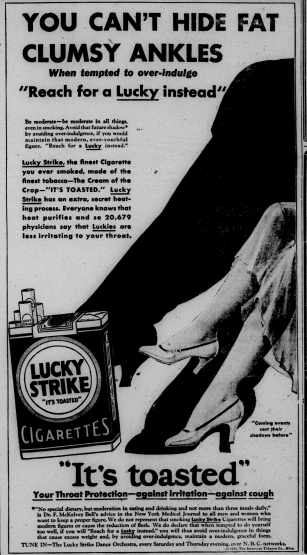
Speaking of poison, each issue of the News-Tribune contained large advertisements for cigarettes. Some of these ads were targeted at women, suggesting that smoking was a good way to avoid becoming fat.
Deaths
Reverend Reuben Francis Holcomb, who moved to Fullerton one year after it was founded (1888) and established the first Methodist church in town, died.

Here’s a bit from his obituary:
Coming to Fullerton in 1888, an ordained minister of the Methodist Episcopa church, Rev. Holcomb preached in Fullerton, Anaheim and Garden Grove. He was the organizer of the first Methodist church in Fullerton.
In addition to his active church and religious work, Rev. Holcomb has been connected with the development of the citrus industry and has been active in financial affairs of the city as a director of the First National Bank and the Fullerton Savings Bank of Fullerton for many years. When these two banks were merged into what is now the Security-First National Bank of Los Angeles, he served on the advisory board of directors until about two years ago.
Rev. Holcomb was born in 1841 in Windham, Ohio. He was the son of Chester Rueben Holcomb and Adeline Spencer Holcomb, natives of Connecticut. One sister, Mrs. Addie B. Jarvis of Burlington, Iowa, survives.
Moving with his parents to Muscatine, Iowa in 1844, he lived there until 1879 when he entered the ministry of the Methodist Episcopal church. He was a member of the Iowa conference of the M.E. church until 1888 when he moved to Fullerton, where he made his home from that time.
In 1866, Rev. Holcomb married Annie Love Johnson at Bellevue, Michigan. Three children were born, all of whom survive. They are C.E. Holcomb of Fullerton, Mrs. Mary Case of Orange and Mrs. Annie Gardiner of Roscoe, California. His first wife died in 1876.
In 1877 he was married to Mrs. Elizabeth A, Shepard at Muscatine, Iowa, who died in Fullerton in 1926.
Rev. Holcomb made his home on a ranch on W. Commonwealth Ave, until about 16 years ago whe he moved to 202 E. Commonwealth ave, where he has lived since.
Holcomb is buried at Loma Vista cemetery.
Pioneer rancher John Hetebrink also died.

Stay tuned for headlines from 1931!
 Fullerton History