The following is from a work-in-progress about the history of Fullerton. You can support my ongoing research and writing on Patreon.
The Local History Room of the Fullerton Public Library has microfilm from the Fullerton Tribune newspaper stretching back to 1893. I am in the process of reading over the microfilm, year by year, to get a sense of what was happening in the town over the years, and creating a mini archive. Below are some news stories from 1927.
In international news, civil wars rocked the countries of Mexico, Nicaragua, and China, which the United States involved itself in to protect its economic interests, including a total occupation of Nicaragua. Benito Mussolini and his fascists were in power in Italy. Germany was admitted into the League of Nations.
In national news, aviator Charles Lindberg became an American hero by making the first nonstop flight from New York to Paris. He was greeted by adoring throngs after his return home. Protests erupted in New York against the execution of Italian anarchists Nicola Sacco and Bartolomeo Vanzetti for murders they may not have committed.
Growth
Throughout the 1920s, Fullerton experienced a building and population boom. According to the Tribune, Fullerton’s population was around 11,250.

The Odd Fellows Temple was constructed, which remains an impressive building downtown.

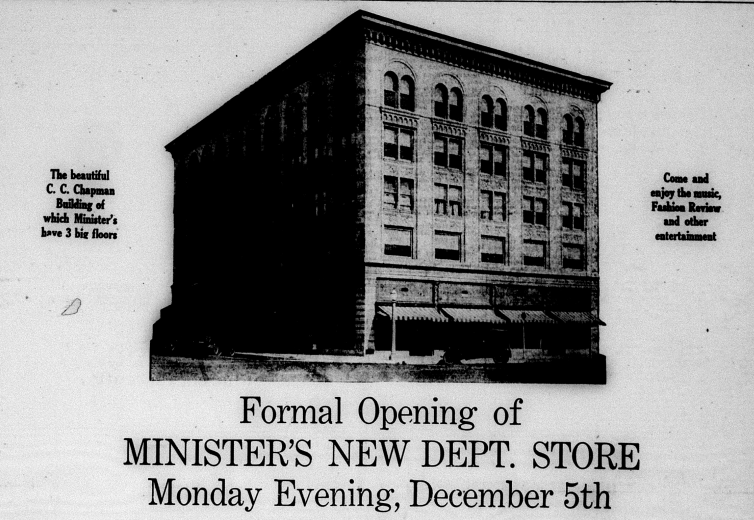
Amid great fanfare, the Chapman Building (the tallest building in town) received a new tenant, Ministers Department Store.
Housing
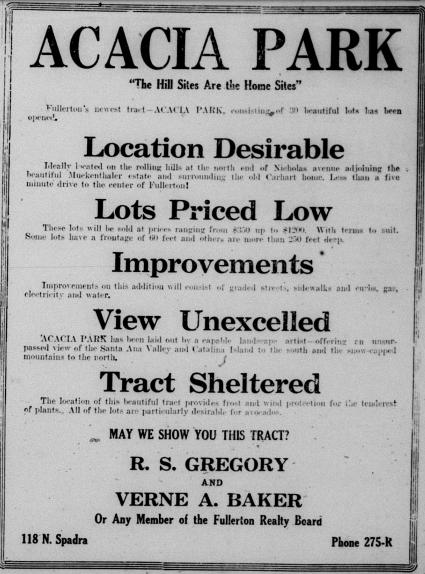
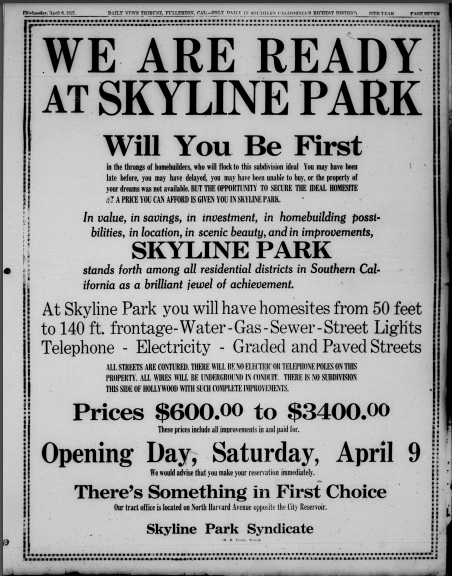
New subdivisions were being built, mostly radiating outward from downtown. Unfortunately, many of these had racially restrictive housing covenants that prevented non-white people from purchasing or renting property in these neighborhoods.

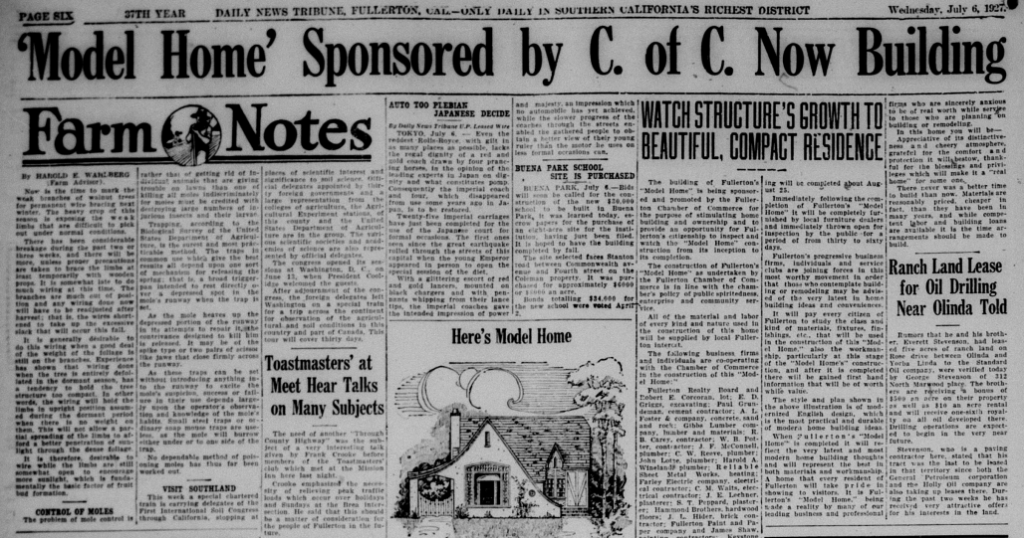
The Chamber of Commerce sponsored construction of a “model house” that would serve as inspiration for new home builders.
Segregation
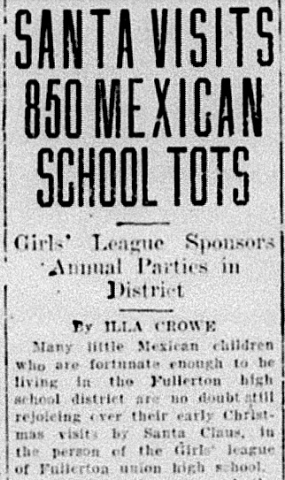
In addition to the racially restrictive housing covenants, another form of institutional racism involved the segregation of the town’s Mexican migrant farm workers and their families–many of whom lived in housing and went to schools that were segregated from the larger community.

Agriculture
Although new buildings and housing subdivisions were going up downtown, Fullerton in the 1920s was still a largely “rural” city, with vast acres of citrus and other crops.
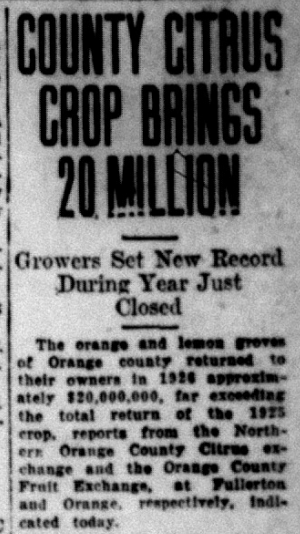
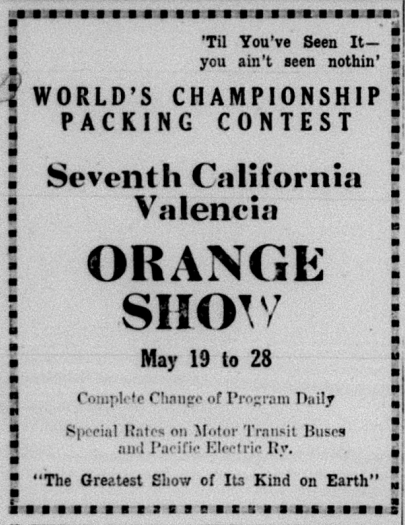
Fullerton was in what was called the “citrus belt” of California. Large regional orange shows celebrated the area’s most profitable crop:
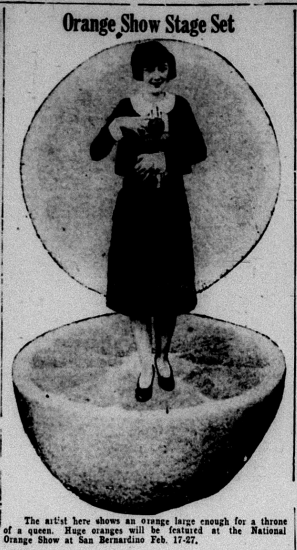
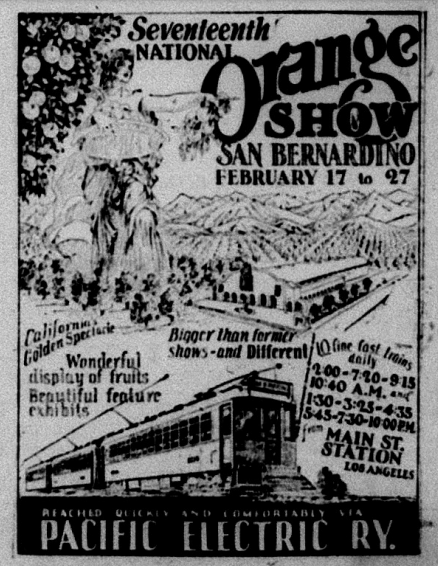

At one orange show, citrus workers competed in a “World’s Championship Packing Contest” and a girl from Fullerton won!

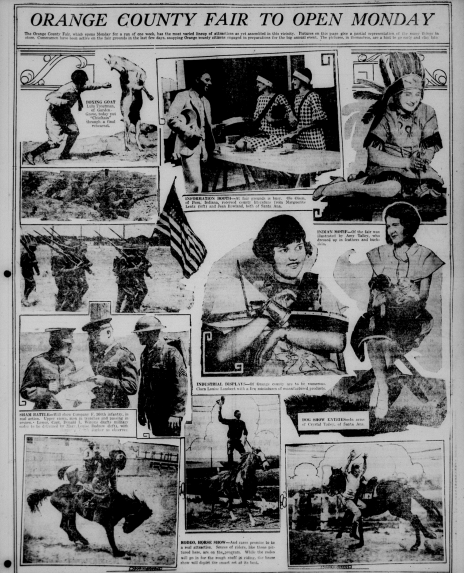
The Orange County Fair, which still happens annually, is a testament to Orange County’s agricultural past, even though those days are long gone, having given way to urbanization and development.
Oil!
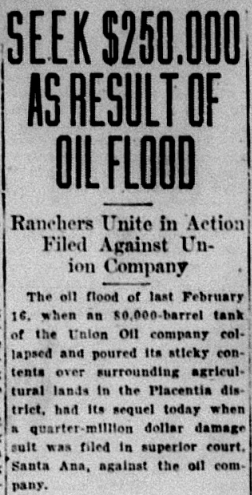
In addition to agriculture, the other big industry in Fullerton in 1927 was oil, a commodity that was central to industrial America, and Fullerton’s oil fields were contributing more than their fair share.
Unfortunately, industrialization came with a cost in the form of pollution and (as folks would later understand), climate change.

Culture and Entertainment
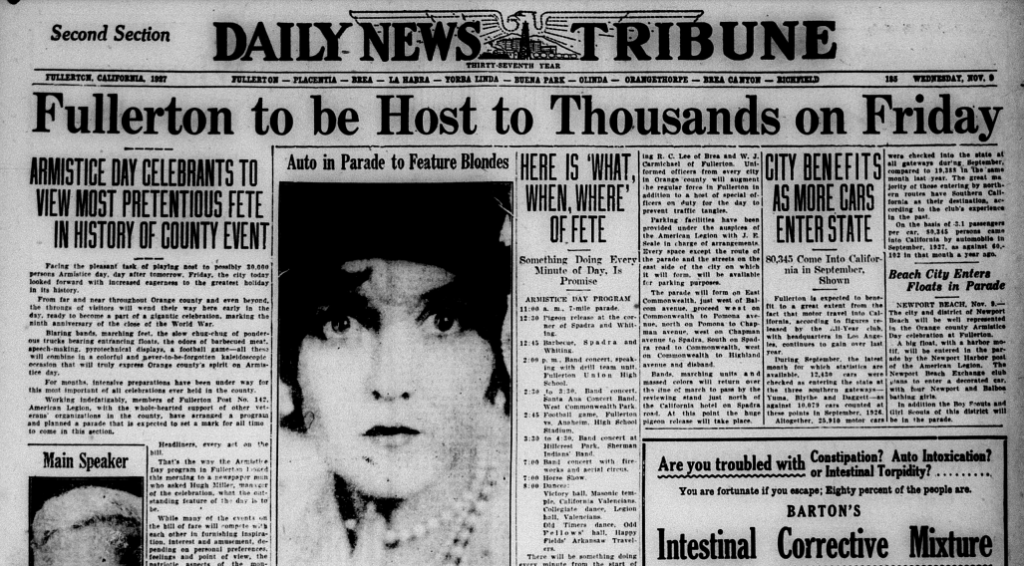
As a testament to its status as a growing city, Fullerton hosted a massive regional Armistice Day parade that drew thousands.

The Mission Court Theater (later called the Fox Theater) had been built in 1925, and became a big draw for movie goers and fans of live vaudeville shows.


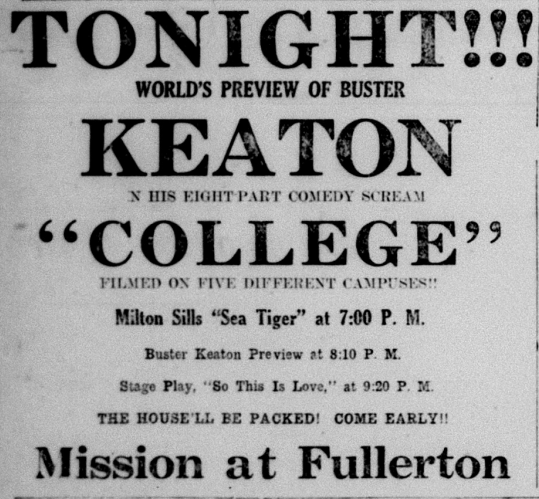
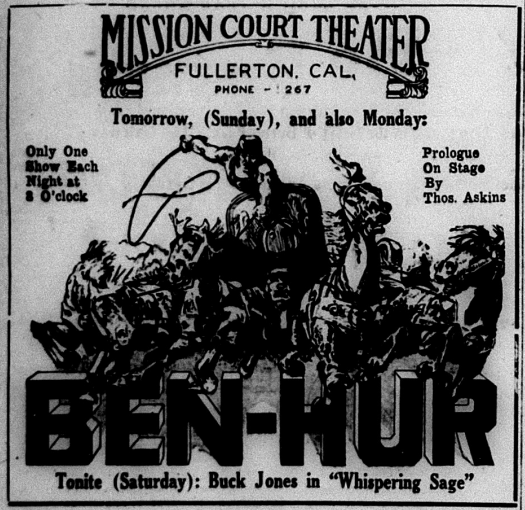
Not only was Fullerton home to a first class movie palace, it was also home to a significant movie director named Lois Weber.

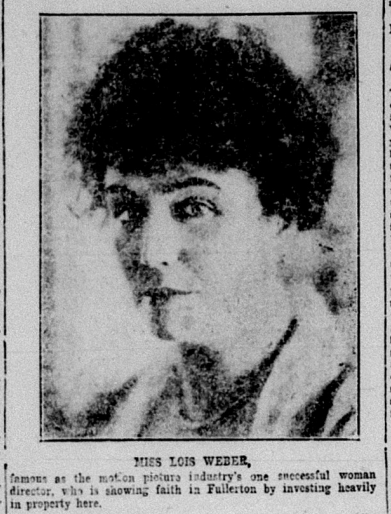
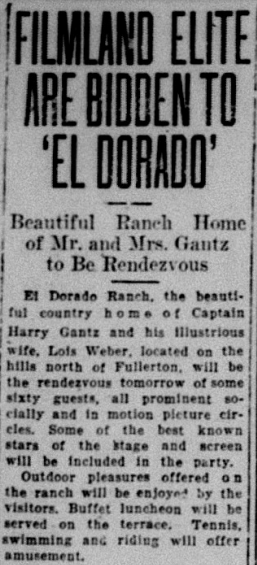
Occasionally Weber and her husband Harry Gantz would host parties at their El Dorado ranch in Fullerton, and invite top Hollywood figures.
Crime
An article published in early 1927 gives some crime stats from the previous year. The majority of the arrests were for booze [this was during Prohibition] or “vagrancy” (homelessness?).
The report lists three suicides, three auto fatalities, 22 arrested for disturbing the peace, four for battery, four for disorderly conduct, 21 for drunkenness, one for operating a still, 21 for possession of intoxicating liquor. 198 car accidents, 47 arrested for vagrancy.
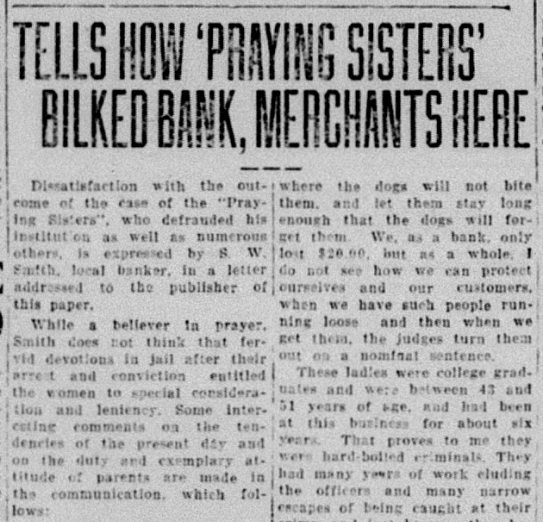
Sometimes the perpetrators of crimes would be given names by the media, such as the Praying Sisters (bank fraudsters who sought a more lenient sentence by showing their piety), the Chloroform Burglar (who knocked people out with chloroform before burglarizing their houses), and The Fox (a murderer who killed a girl in Los Angeles and went on the run, sparking a massive manhunt).

In 1927, a county Grand Jury probe raised ethical and legal questions about top law enforcement officials. Some were accused of being in cahoots with bootleggers. A big rally at what is now Amerige Park in Fullerton called for a recall of OC Sheriff Sam Jernigan for his alleged improprieties.
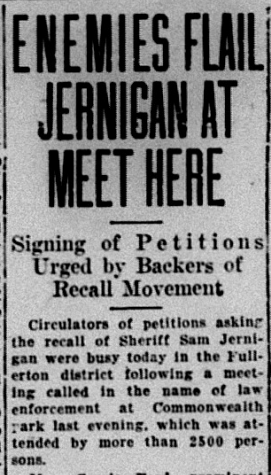
The meeting was presided over by Carrie Ford, a prominent leader in the Women’s Christian Temperance Union (WCTU).
Because, at this time, the Ku Klux Klan was a big supporter of Prohibition, some felt that the effort to oust Jernigan was a KKK plot. This rumor was dispelled by “attendees [who] said it was not a KKK plot.”
According to the Tribune, one attendee “challenged any members of the Ku Klux Klan to stand up and show themselves. About 20 men arose in response. The speaker then pointed out that more that 90 percent of the persons are the meeting were not of the Klan.”
This is fascinating to me because it shows that the KKK was still a conspicuous presence in local affairs, even after its popularity began to wane after 1925.
Natural Disasters
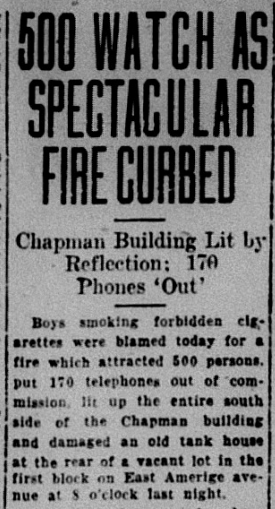
In 1927 a big fire broke out on the back of the Chapman building, drawing hundreds of spectators. Thankfully, the building survived.
A much more damaging natural disaster occurred when heavy rains caused the Santa Ana River to flood its banks.

The flood disproportionately affected the homes of Mexican Americans who lived on the south side of town.
“The houses of many Mexican families on the south side between Spadra road and Lawrence avenues, were reported to be under water and uninhabitable and arrangements were being made by Mrs. Mae Reeve, city treasurer, for their accommodation. She will welcome offers of help,” the Tribune reported. “As a matter of precaution, the Placentia Growers’ association today moved about forty Mexicans form its camp on Balcom avenue, to the packing houses where they have been made comfortable.”

This prompted local efforts to deal with the flood and its aftermath.

The flooding also caused oil to pour onto farmlands.

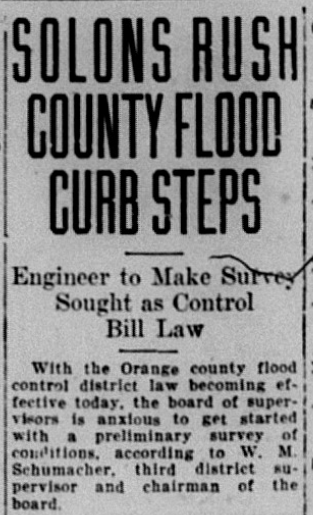
At the regional level, plans were discussed to curb future floods by damming and channelizing the Santa Ana River.

Meanwhile, wealthy residents were encouraged to “Buy a Lot Today, High Above the Flood.”

Water Wars
Those familiar with the movie “Chinatown” may be familiar with the California Water Wars that broke out when LA officials used dishonest means to buy up land in the Owens Valley and then build an aqueduct that drew water from those farmers to the growing metropolis of Los Angeles.
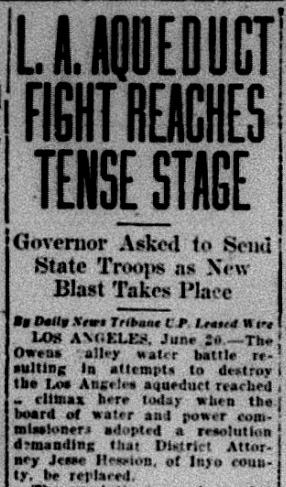
“A state of virtual warfare existed in the hills bordering Owens valley today while officials here debated measures to curb dynamite attacks upon the Los Angeles aqueduct by bands of armed marauders in Inyo county,” the Tribune reported. “Along the 265-mile waterway stretching from the mountain lakes to the city of Los Angeles, through desert wastes and across barren foothills, powerful army flashlights gleamed last night. Meanwhile, the aqueduct guard had been strengthened by the addition of a squad of ex-service men, armed with machine guns and orders to shoot to kill in an effort to prevent another destructive sortie against the city’s main water supply, built at a cost of $44,000,000.”
Meanwhile state growers and politicians were pushing for the creation of Boulder Dam (now called Hoover Dam) which would bring additional waters from the Colorado River.

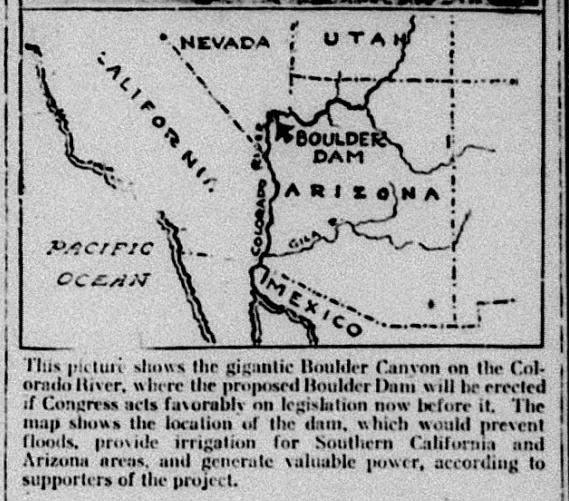
This is of interest to Fullerton because our city was one of the founding members of the Metropolitan Water District (created in 1928), so (to this day) some of our water comes from the Colorado River, although a larger portion comes from local groundwater sources managed by the Orange County Water District, which would be created in 1933.
Sports
Sporting events were popular forms of entertainment and local pride. High School football and baseball games were often well-attended. Fullerton Union High School’s mascot was (and remains) the Indian, although the Tribune often used even more offensive names for the team.
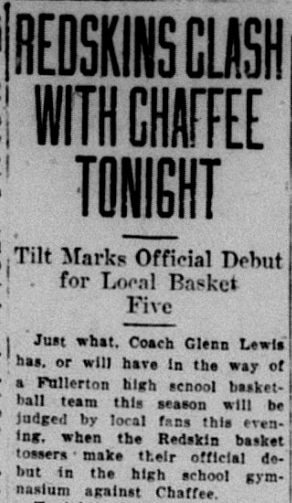

A popular City baseball league played on the field next to Ford School.

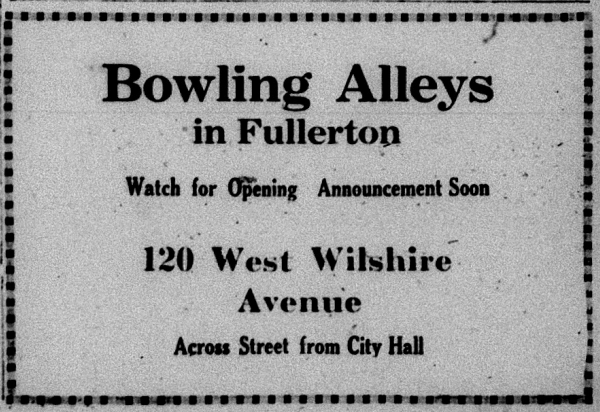
Bowling was a popular sport at the bowling alley downtown.
The high school pool (or plunge) was a popular swimming spot during summers.

Transportation
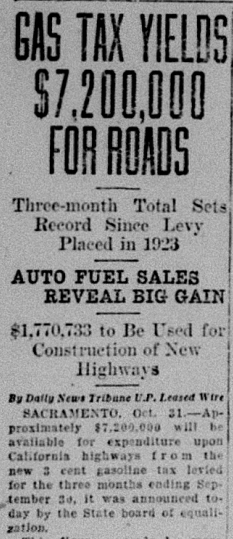
In 1927, automobiles were becoming increasingly popular, and more roads were being built and paved. Some of the funding came from a state gas tax.
However, rail travel infrastructure was vast. The sprawling Pacific Electric (“Red Cars”) rail network was called the largest interurban rail system in the world.

Airport
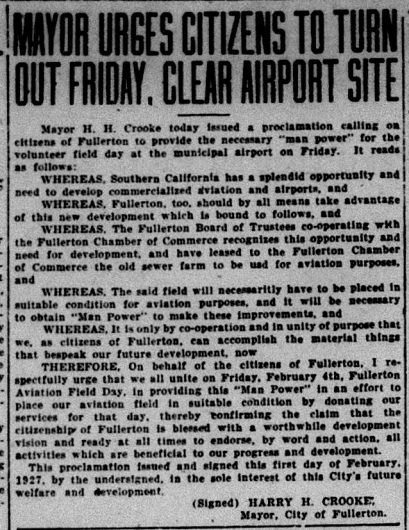
Formerly a “sewer farm,” the Fullerton Airport began to take shape in 1927, with locals volunteering to help clear the land.

County News
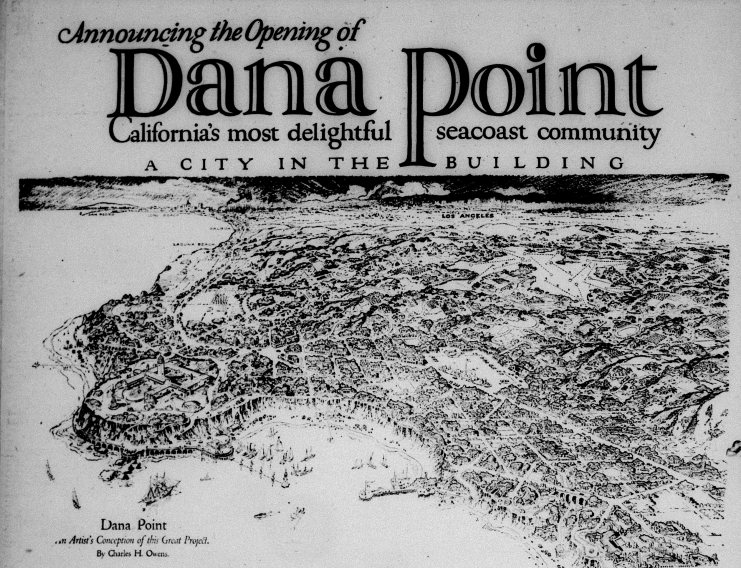
Orange County was growing, with the establishment of Dana Point and San Clemente.

Fashion
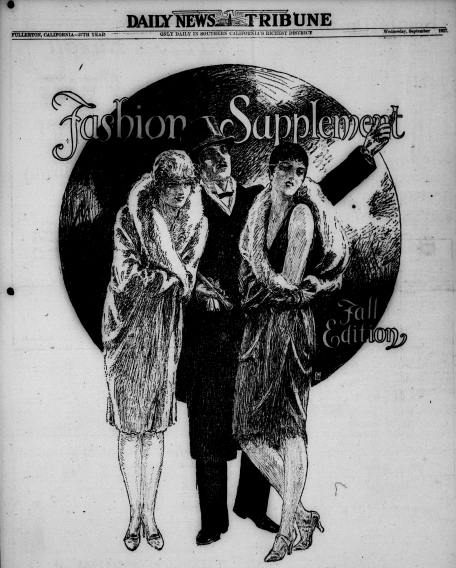
The 1920s were an exciting time for fashion. Here are a few clippings of clothing that women could purchase in downtown stores.

Gender
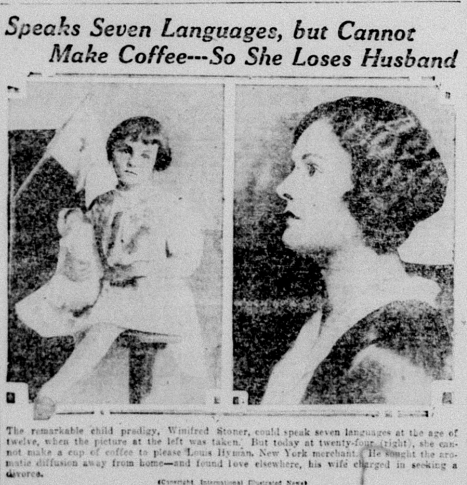
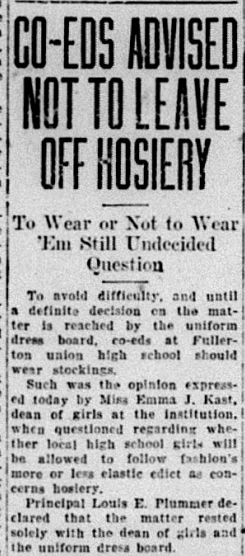
In the 1920s, real strides were made for womens’ rights, with the passage of the 19th Amendment (granting women the right to vote), and “Jazz Age” fads challenged some traditional gender roles. However, some clippings from the 1927 Tribune suggest the presence of more conservative ideas about what is (and is not) acceptable for women.

Eugenics
In the first decades of the 20th century, the pseudoscience called eugenics was very popular among thought leaders. This theory held that, because there was a hierarchy of races and people, only those with “good genes” (basically of northern European stock) ought to be encouraged to reproduce. An article called “Birth Control Foe of Beauty is Claim” expressed eugenic ideas:
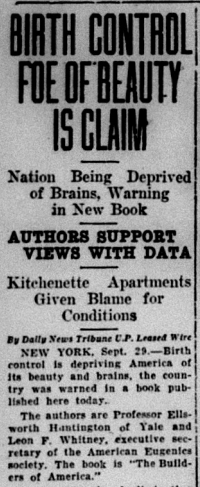
“To balance the large families of so-called inferior groups and the small families among the so-called better classes, the authors recommended that control of birth be legalized to keep down the numbers in the former group,” the article states.
“Such is Life” Cartoons
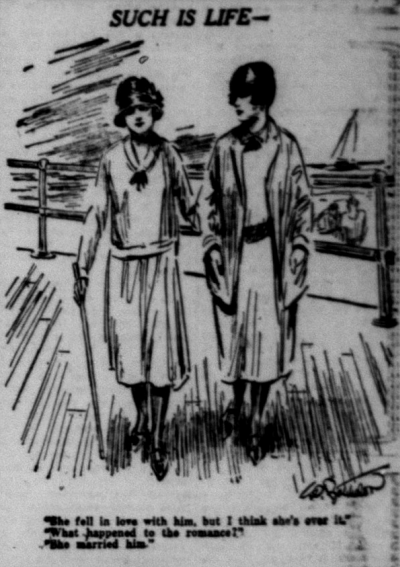
In 1927, the Tribune ran a cartoon called “Such is Life” which sometimes had a darkly funny tone.

Deaths
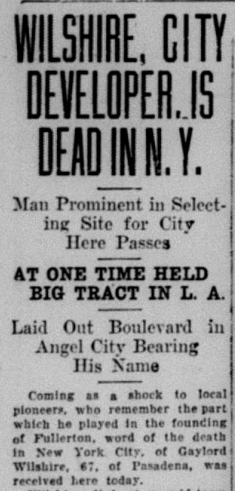
Notable 1927 deaths include rail magnate Henry Huntington and early Fullerton developer H. Gaylord Wilshire, among others.


Stay tuned for headlines from 1928!
 Fullerton History