The following is from a work-in-progress about the history of Fullerton. You can support my ongoing research and writing on Patreon.
The Fullerton Observer newspaper was formed in 1978 by Ralph and Natalie Kennedy and friends to provide a more progressive counterbalance to the more conservative Fullerton News-Tribune and Orange County Register. The Fullerton Public Library has digital archives of the Observer stretching back to 1979. I am in the process of reading over each year and creating a mini-archive. Here are some top news stories from 1992.
Politics
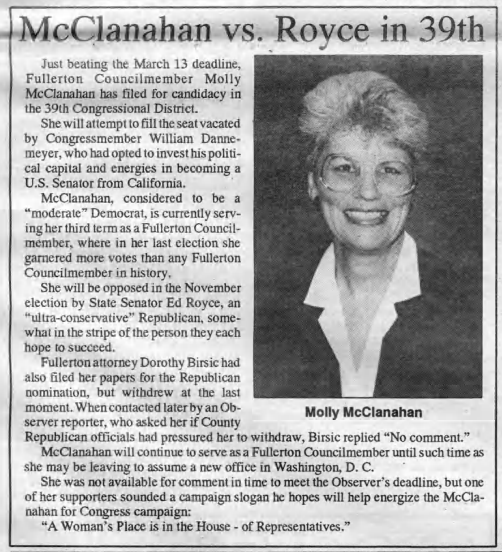
1992 was an election year. Democrat Bill Clinton defeated Republican George Bush and independent Ross Perot. Locally, Republican Ed Royce defeated Democrat city councilmember Molly McClanahan for congress.
Several candidates ran for three open seats on Fullerton City Council. The Observer endorsed Jan Flory, Don Bankhead, and Chris Norby.
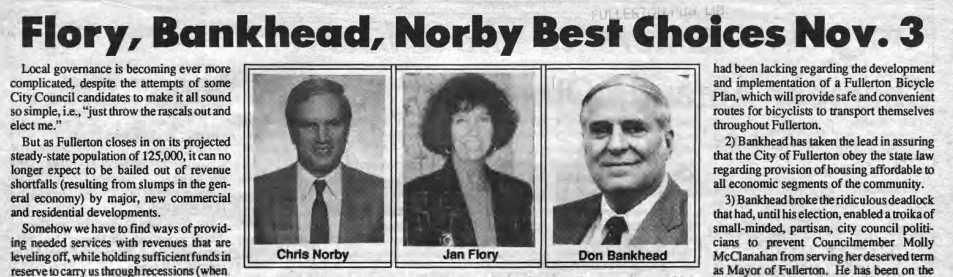
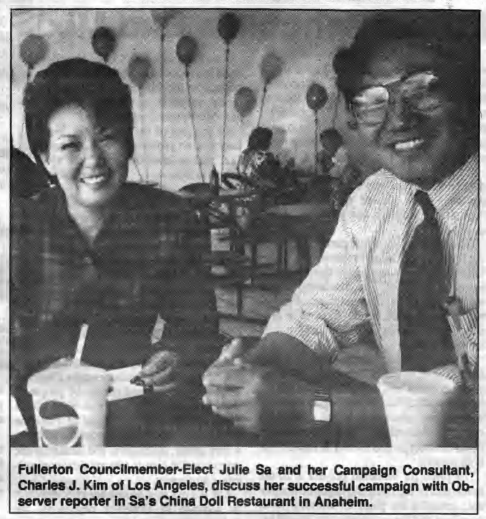
Norby and Bankhead were elected, but Julie Sa defeated Flory.

Sa was the first Asian American to serve on City Council. She was born in Korea of Chinese parents, and had lived in Fullerton for the past 17 years. She was a business owner and a member of the Chamber of Commerce.
Culture
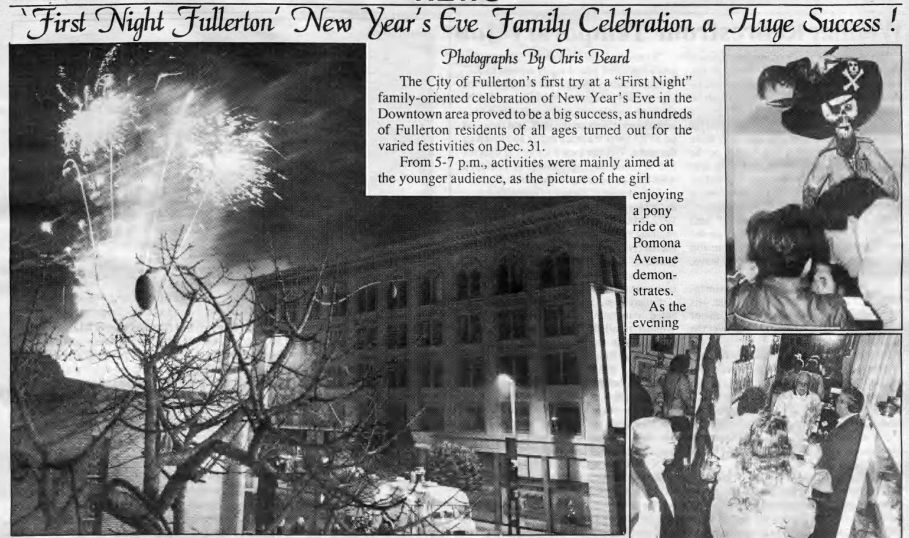
Cultural events included the citywide arts event “A Night in Fullerton” and the New Years celebration “First Night Fullerton.”

The Downtown Fullerton Market opened along Wilshire Avenue by the Fullerton Museum Center.
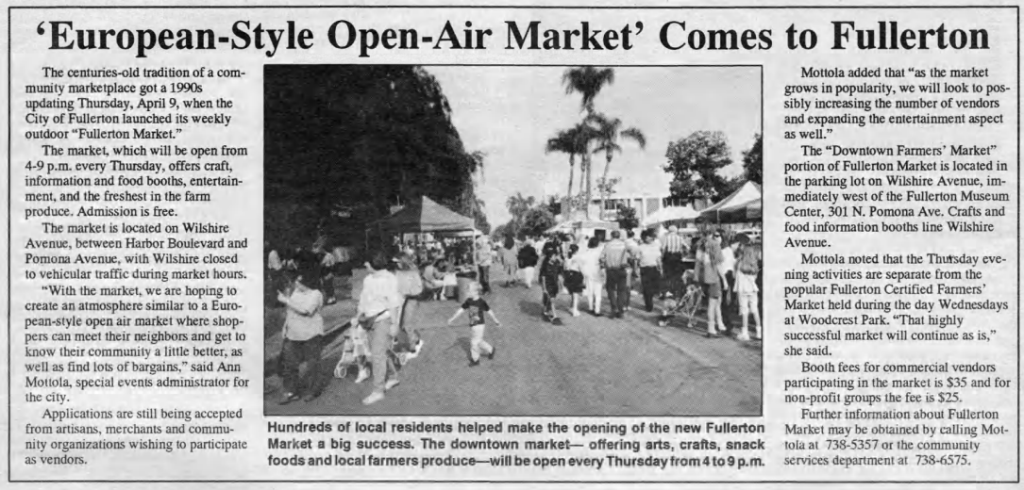
The Downtown Plaza had not yet been created, but it was envisioned.

“The combination of a thriving Thursday Market and a reopened Fox Fullerton Theatre will help each other and the rest of Downtown Fullerton, and would be nicely complemented by a Gazebo/band stand as depicted by Observer artist Claudia Rae in the drawing on this page,” the Observer reported. “It would be another way o f bringing the community together, an objective that now more than ever is one worth pursuing with diligence.”
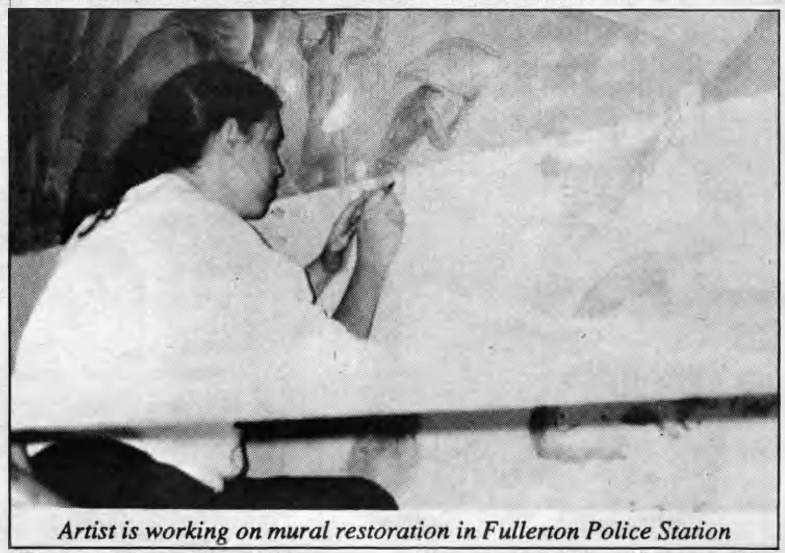
The City had contracted with an art conservation company to restore the WPA-era mural “The History of California” in the “mural” room of the Fullerton Police Station, which was originally City Hall.

The mural was painted by Helen Lundeberg in 1942, when the police station building opened. The large, three-wall mural depicts “major Spanish, Mexican and U.S. heroes of California history,” Observer local historian Warren Bowen writes. “Cabrillo is there, Serra, Portola, Stockton, Fremont, and assorted native Americans. Mission activities, exploration, agricultural and industrial development are there, even a glimpse of the movie industry.”
In other historic restoration news, plans were underway to restore the Spanish colonial revival style Santa Fe Depot train depot, to be done by the Bushala Brothers, Inc.

“City Council, acting also as city redevelopment agency, gave the green light to the Bushalas to add a jazz club to the plans for the refurbished station,” the Observer reported.
Unfortunately, to my knowledge, the jazz club/restaurant never materialized.
Environment
In the ongoing saga of the McColl toxic waste Superfund site, the EPA was nearing its decision on what to do about the waste, and it looked like this would include either cleaning up or capping the waste.
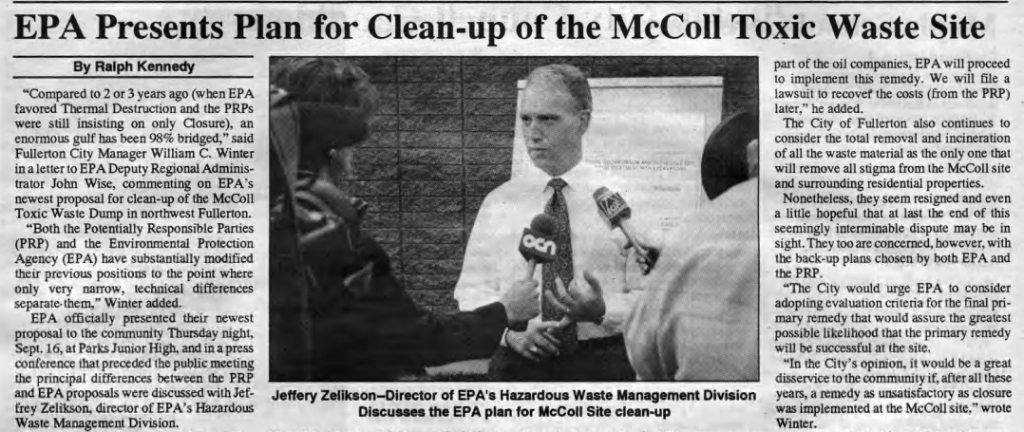
“Both groups now are advocating on-site, in-place treatment of the waste, but they differ on how total and complicated that treatment should be,” the Observer reported.
“We know that the public has become frustrated and disillusioned with the repeated starts and stops that have plagued the cleanup of this site,” said an EPA representative. “This is why, in addition to our new primary system, we have also proposed the cap contingency plan.”
Meanwhile, the City of Fullerton preferred EPA’s original plan of “removal and incineration of all the waste material as the only one that will remove all stigma from the McColl site and surrounding residential properties.”
The EPA would ultimately cap the waste, leaving it on site. But that would not happen for another six years.
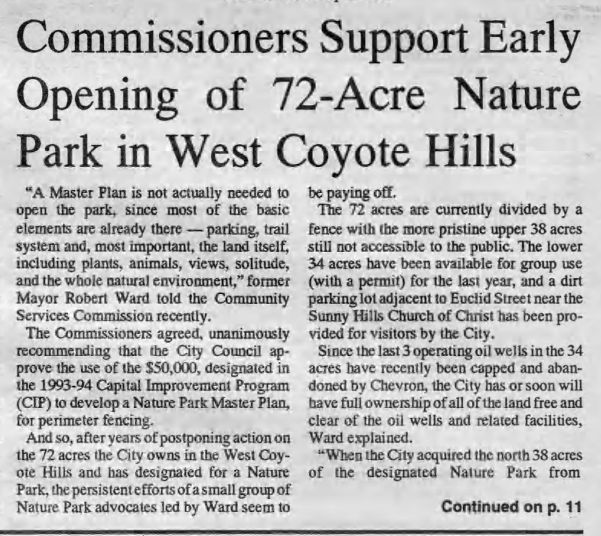
On a more positive note, the Planning Commission recommended that the City use $50,000 to develop a Nature Park Master Plan, for perimeter fencing of what is now the Robert Ward Nature Preserve in Coyote Hills. This area would not fully open until 2023–about 30 years later.
Housing
Throughout the 1980s and 90s, the Observer reported on how the City of Fullerton failed to provide adequate affordable housing.

“In terms of the quantity of affordable housing produced, Fullerton ranks in the lowest quartile of all California communities. In the last 10 years the city has done nothing to facilitate development of affordable rental units to very low income households,” the Observer reported.
Two local residents took it upon themselves to sue the city because it had failed to allocate resources toward affordable housing.

“A suit filed by two Fullerton homeowners, Nadene Ivens and Roy Kobayashi, challenging the validity of the Plan for Redevelopment Area 4 has been settled, and promises to result in expenditures for low and moderate income housing of $14,662,000 by fiscal year 1998-99,” the Observer reported. “Perhaps the most significant feature of the stipulated agreement was the targeting of 50% of the assisted units for households whose incomes are below 45% of median income (approximately $23,500).”
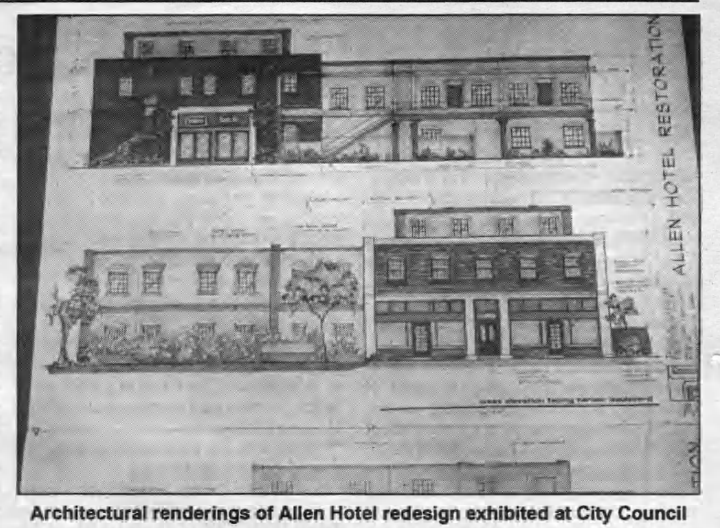
On a potentially more positive note, the City had approved the conversion of the historic Allen Hotel into a 16-unit low income housing project.
Hughes Aircraft, at one time one of the largest employers in Fullerton, was downsizing and planned to convert some of its surplus property into housing.

“NIMBYism is alive and well in Fullerton, as evidenced by the comments of citizens who attended an August 6 meeting called by Hughes Electronics Inc. at which they introduced to the community their preliminary plans for the development of about 150 acres of their (now surplus) industrial land in northwest Fullerton,” the Observer reported. “Other hostile comments were directed against the 10 acres set aside for apartments: Hughes Planning Consultant Mike Russell was asked if the City had mandated any “low & moderate income housing” for the area; to which the answer was “No.” A follow up comment indicated that “apartments are not appropriate in this part of the city. They should be confined to the downtown area.” The audience signified some approval o f this kind o f NIMBYism with scattered applause.”
Homelessness
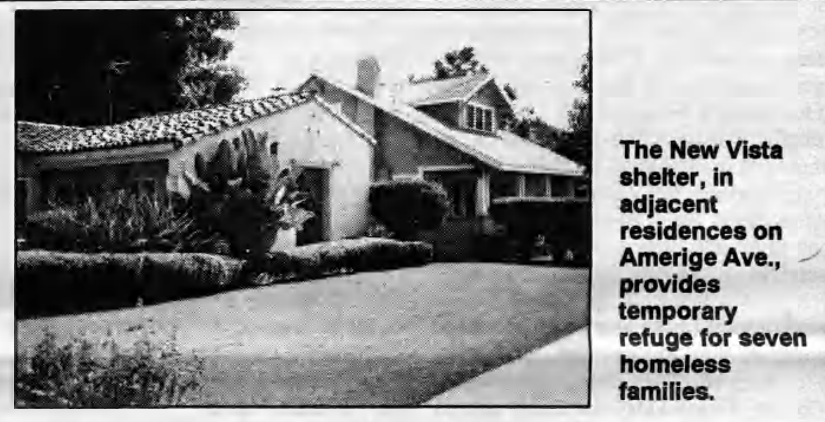
An obvious result of a lack of affordable housing was homelessness. Fullerton had one year-round shelter for families, run by Fullerton Interfaith Emergency Services (now Pathways of Hope), and during cold months, the National Guard Armory served as a shelter as well.

In 1992, Fullerton passed an ordinance which prohibited camping “in any public area.”
“Fullerton City Ordinance 2808 will make life a lot harder for some Fullerton residents,” the Observer reported.
This anti-camping ordinance was briefly halted in 2018 by the Martin v. Boise court case, but that was overturned by a recent Supreme Court decision, City of Grants Pass v. Johnson.
Education
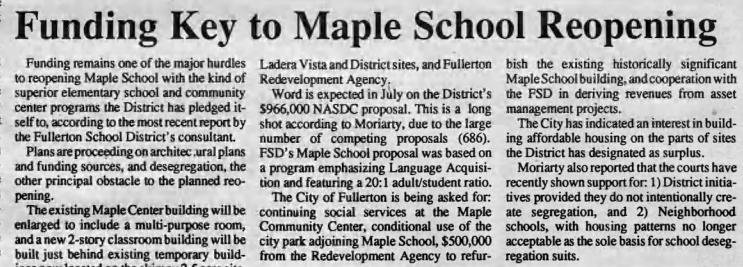
Plans were in the works to re-open Maple Elementary School, which had been closed in 1972 for being a de facto segregated school.
“Pointing out the irony the Board was considering reopening Maple as a segregated campus on the eve of Martin Luther King’s birthday, Fred Mason urged the Trustees to reconsider this possibility and to obey the law,” the Observer reported. “Mason quoted Maple Area resident Gil Perkins, who had served with him on the Maple Task Force, ‘Segregation was wrong in 1954; segregation was wrong in 1971; and segregation is wrong today.’”
Another hurdle to re-opening Maple was funding.
Transportation
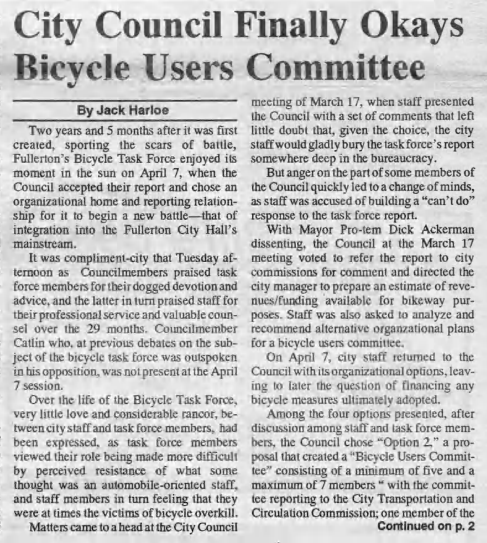
In transportation news, City Council finally approved a Bicycle Users Subcommittee, tasked with advocating for the needs of bicyclists.
Miscellaneous
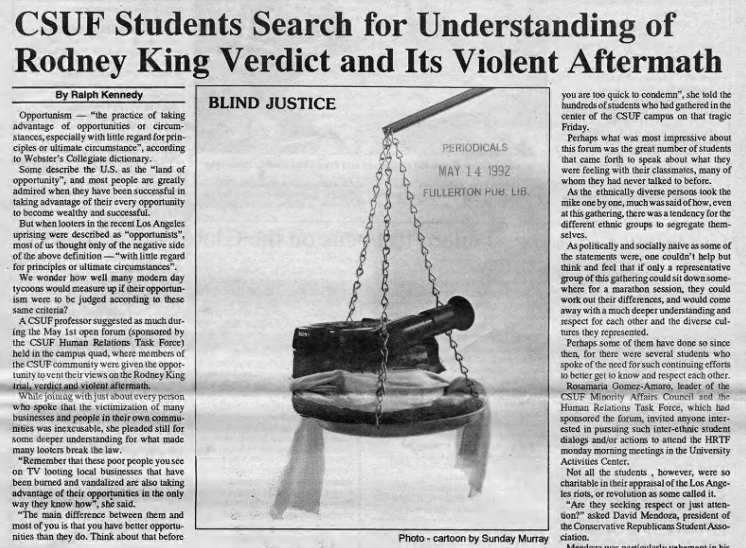
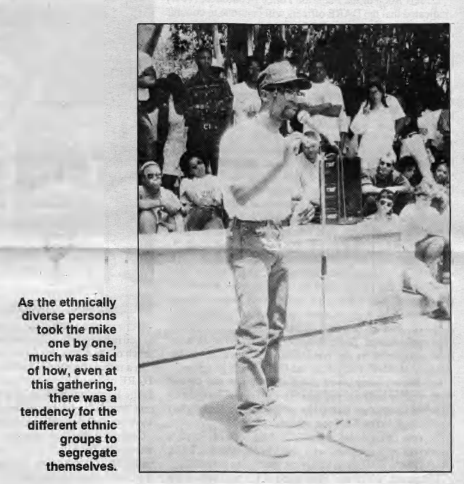
In 1992, an all-white jury acquitted the officers involved in the infamous Rodney King beating, which sparked the LA riots.
Those who grew up in Fullerton may remember the big cement slides at Gilman Park. These were a blast, but also kind of dangerous and a liability for the city. A city commission recommended that the slides be taken out.

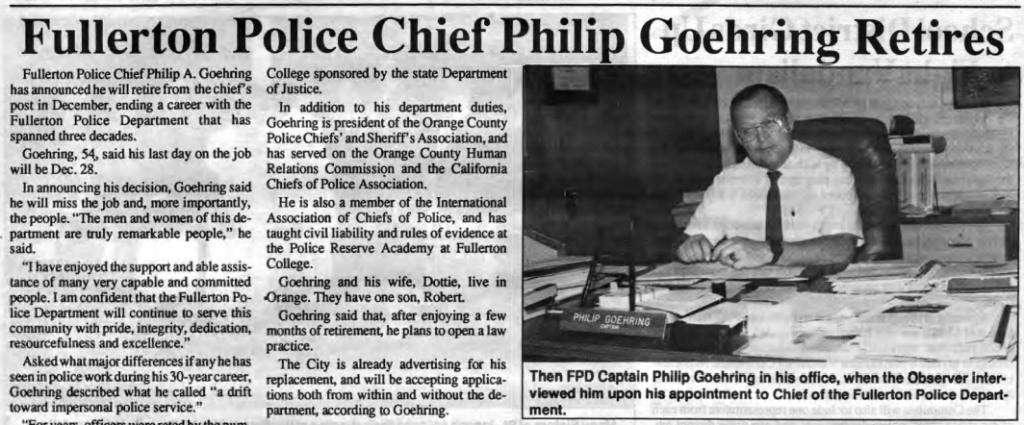
Fullerton Police Chief Philip Goehring retired at age 54. Must be nice.
And the world’s tallest man came to Fullerton to advocate against drugs and for nutritious lunches.

Deaths
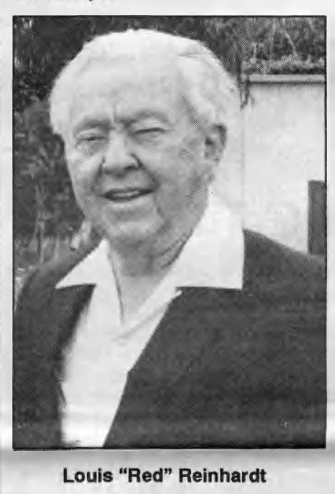
Former City Councilmember Louis “Red” Reinhardt died of a heart attack at his home in Fullerton at age 87. Here’s a bit from his obit.
“Born in Germany, and once interned in a concentration camp in Siberia, Reinhardt and his wife Anna came to Fullerton from Michigan in 1947. His first business in town was a gas station, which he later sold to start the NuArt Neon sign-making business which still survives today at its same location. Red was very active in the First Lutheran Church, the Fullerton Senior Multi-Purpose Center— where a room was named after him, and in local politics, serving on the Fullerton City Council from 1966 to 1972. He had, through the years, been a strong supporter and worker in the campaigns of State Senator John Briggs, Senator John Seymour, and Congress member William Dannemeyer.”
Fullerton High School student Angel Gonzalez was shot and killed near the high school in what was allegedly a gang-related shooting.
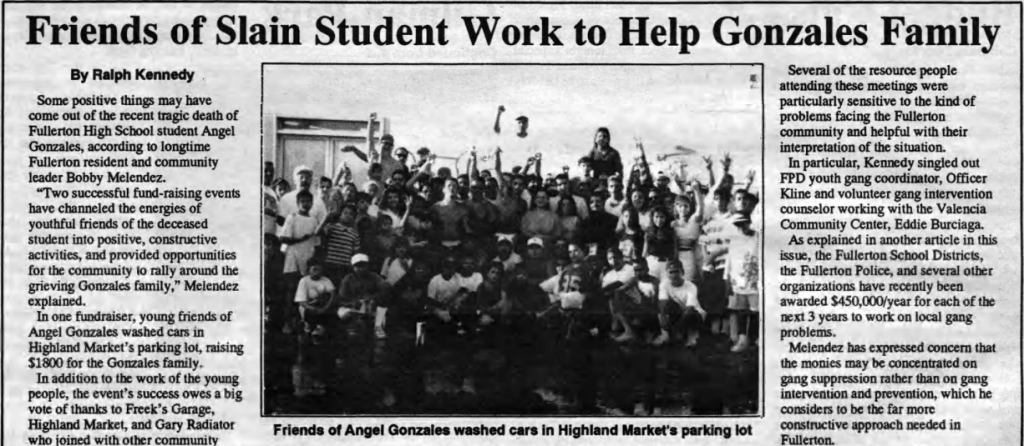
Community members held fundraising events for Gonzalez’ family.
Stay tuned for headlines from 1993!
 Fullerton History