The following is from a work-in-progress about the history of Fullerton. You can support my ongoing research and writing on Patreon.
The Fullerton Observer newspaper was formed in 1978 by Ralph and Natalie Kennedy and friends to provide a more progressive counterbalance to the more conservative Fullerton News-Tribune and Orange County Register. The Fullerton Public Library has digital archives of the Observer stretching back to 1979. Here are some top news stories from 1986.
Local Politics
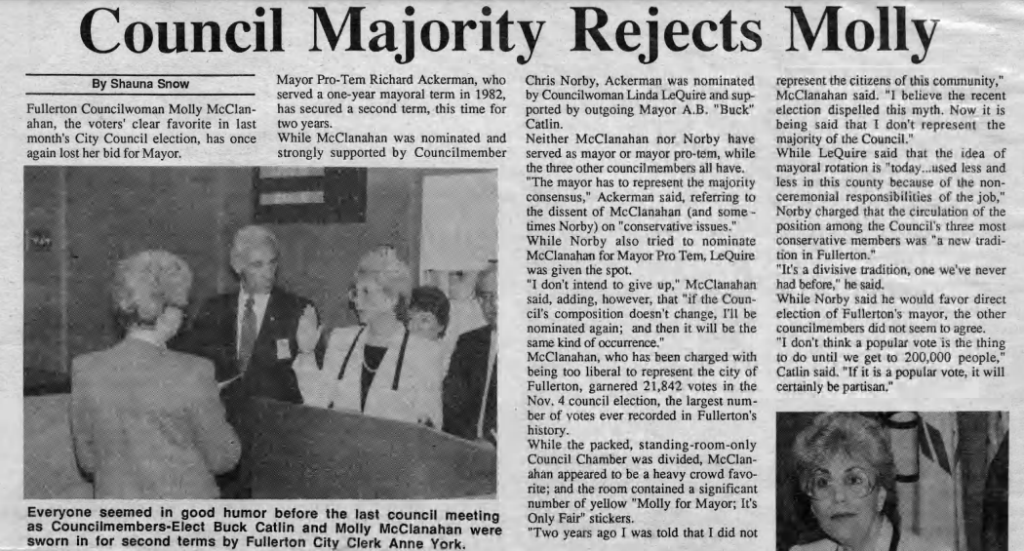
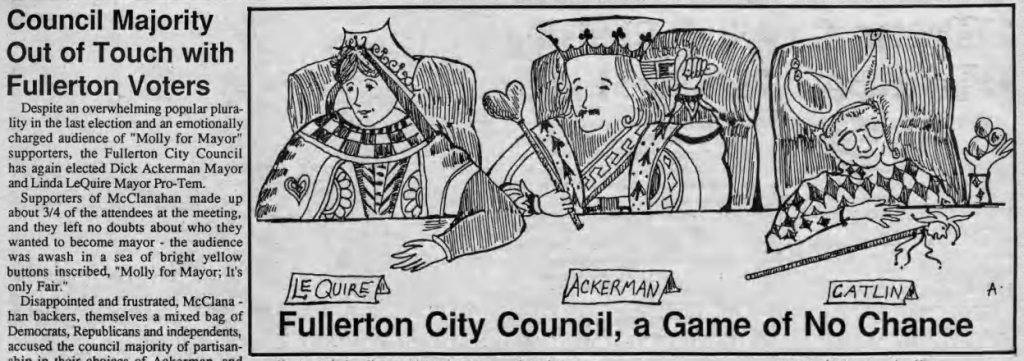
1986 was a midterm election, and incumbents Buck Catlin and Molly McClanahan were re-elected to City Council.

For the second time, the conservative council majority passed over moderate/liberal Molly McClanahan to serve as mayor, a position that (in theory) is supposed to rotate among councilmembers based on seniority. In practice, the position often goes to whoever can get three votes.

Republican state legislator Ed Davis accused arch conservative William Dannemeyer of hatred and bigotry for his statements against gay rights, particularly in the midst of the AIDS crisis.

Dannemeyer doubled down on the homophobia in a response letter to Davis in which he wrote, “I make no apology for my support for the heterosexual lifestyle which is the only one condoned in the basis for our JudeoChristian culture, the Bible. The fact is that God created us to be one man with one woman; Adam and Eve, not Adam and Steve.”
Budget
Here is the breakdown of the city budget for 1986/87. I note the relatively smaller percentage going to police and fire compared to today. What happened?

Housing and Homelessness
For years, the conservative council majority refused to use public funds for affordable housing.
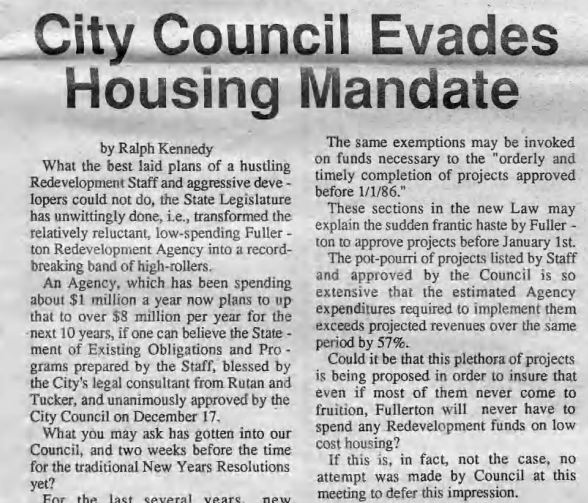
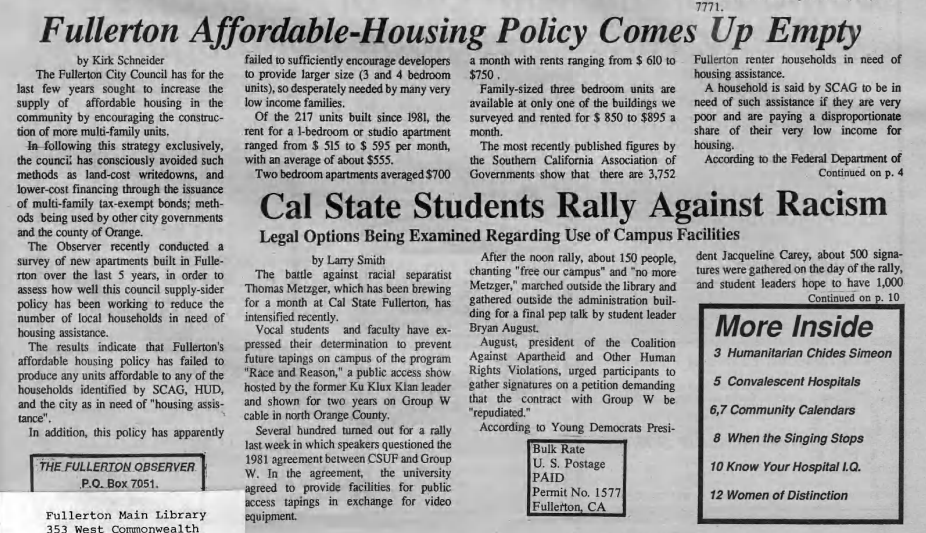
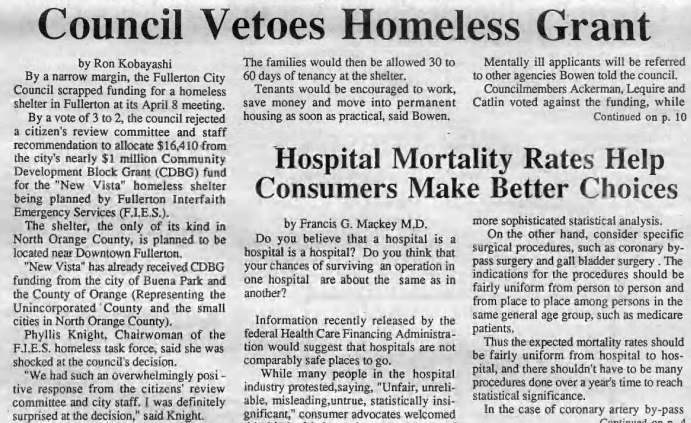
The council voted against using a relatively small amount of federal funds to support a local homeless shelter.

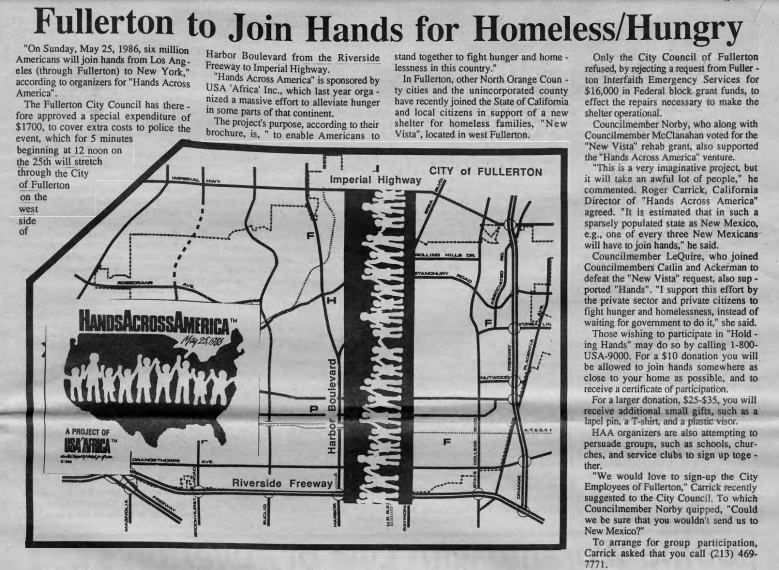
In 1986, Fullerton and other communities across the country participated in the “Hands Across America” event for the homeless and hungry. The Observer included a cartoon pointing out the hypocrisy of the council supporting this, while not allocating funds for a homeless shelter or affordable housing.



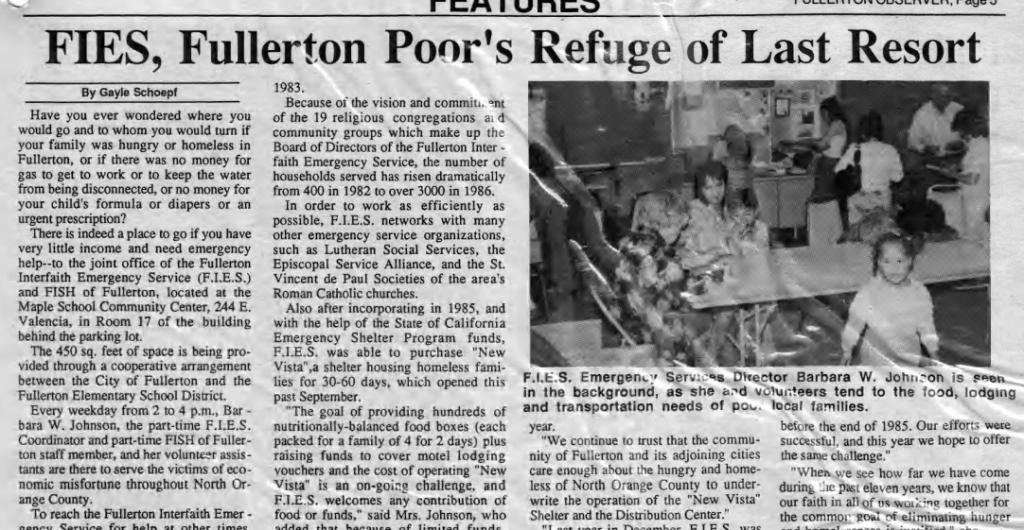
But then, facing push back from the community and some public shaming from the Observer, council reversed its decision on the shelter.

Local non-profit Fullerton Interfaith Emergency Services (now Pathways of Hope) opened the city’s first homeless shelter, with 12 to 20 beds for homeless families.


Redevelopment
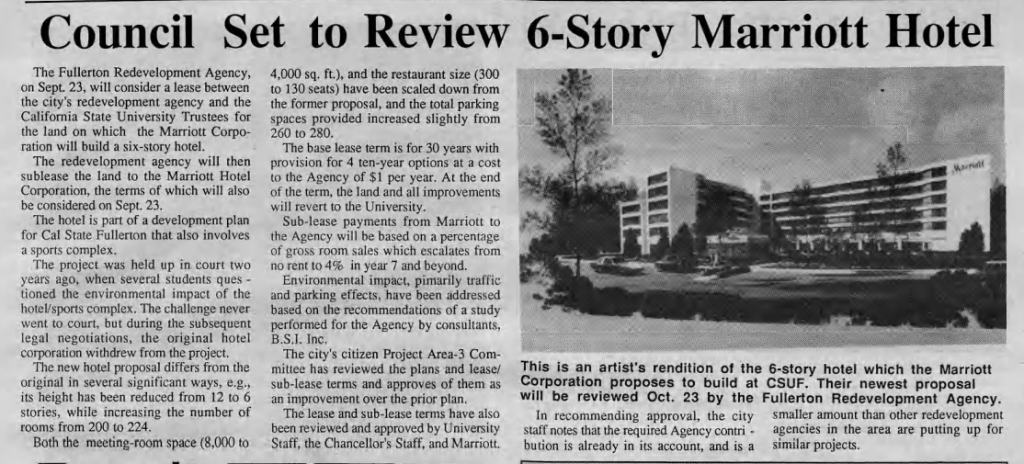
Instead of using redevelopment funds for affordable housing, the council majority preferred to use the funds to subsidize large private business developments, including restaurants, parking structures, a hotel, theaters (see below), and market rate (I.e. unaffordable) housing.




Downtown
In the 1980s, downtown Fullerton was relatively sleepy. An Observer article compared Fullerton’s downtown with Whittier’s, which was more popular and pedestrian friendly at the time.


Culture
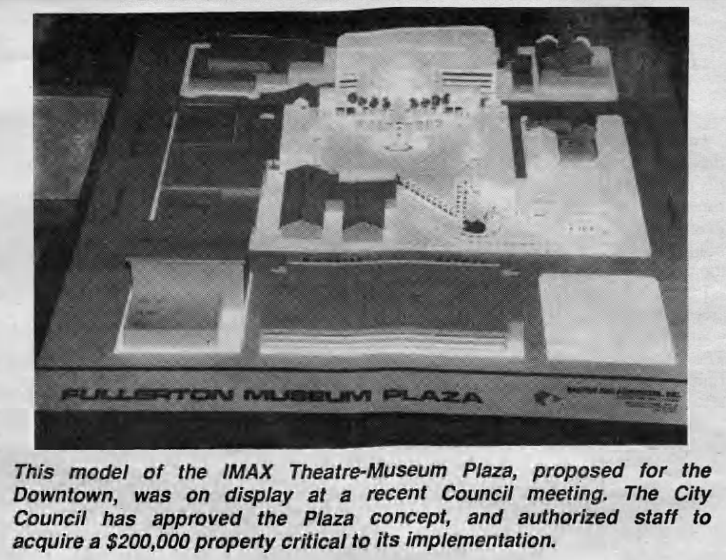
Plans were in the works to develop an IMAX theater at the Museum Plaza, subsidized by redevelopment funds. These plans ultimately fell through.

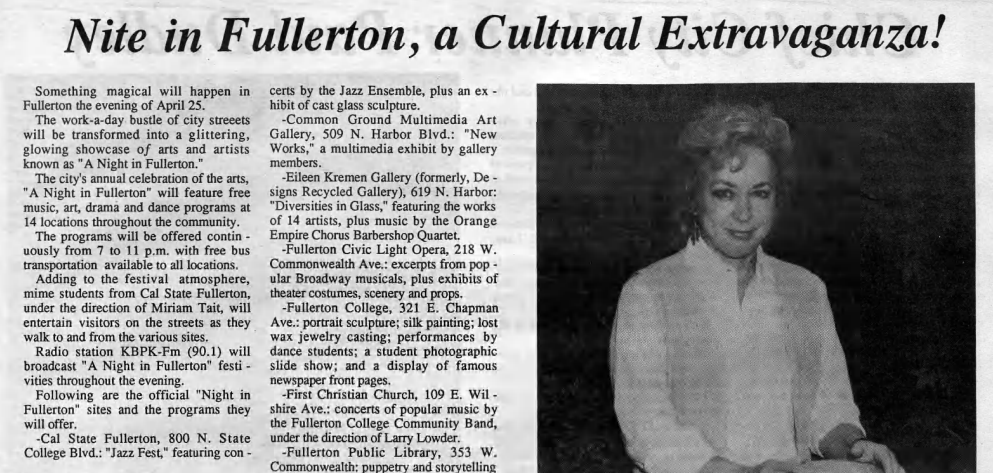
A major annual cultural event was A Night in Fullerton, which got started back in the 1960s.
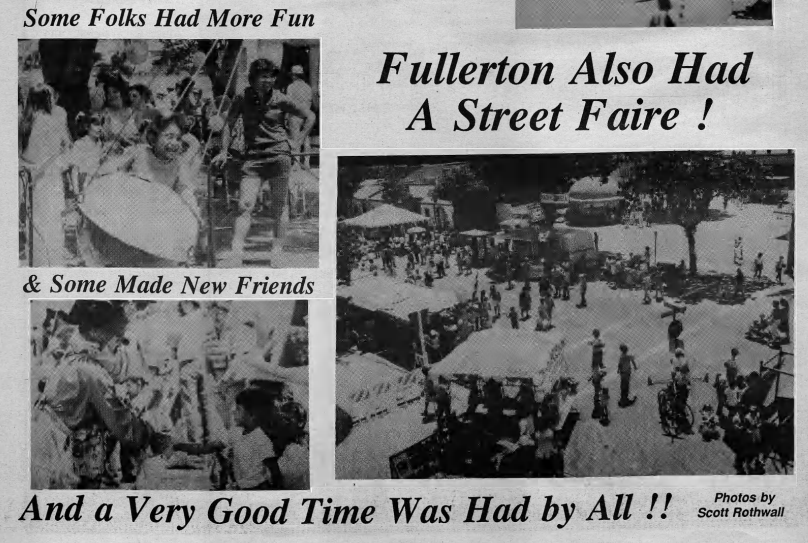
The City also celebrated an annual Founder’s Day Parade.

There were also a handful of cool art galleries downtown in the 1980s.
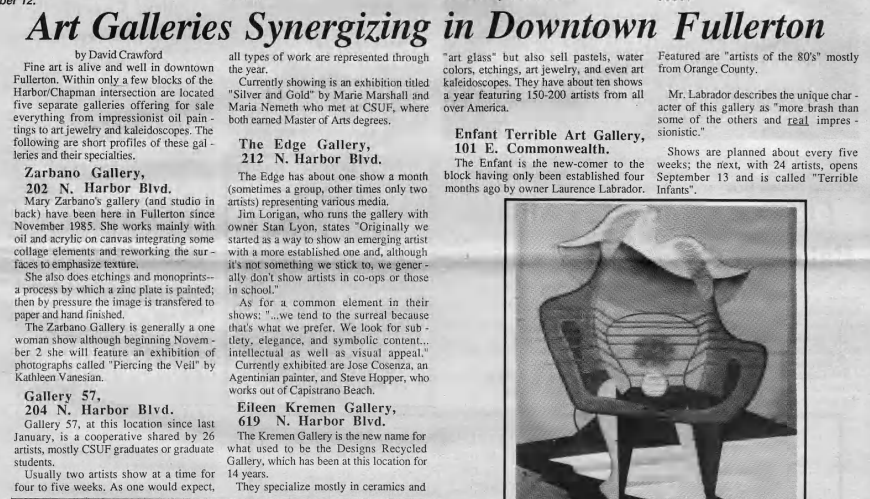


Unfortunately, one of those galleries, Common Ground, closed. Having co-owned an art gallery in Downtown Fullerton myself, I know how difficult it can be to keep it financially sustainable.

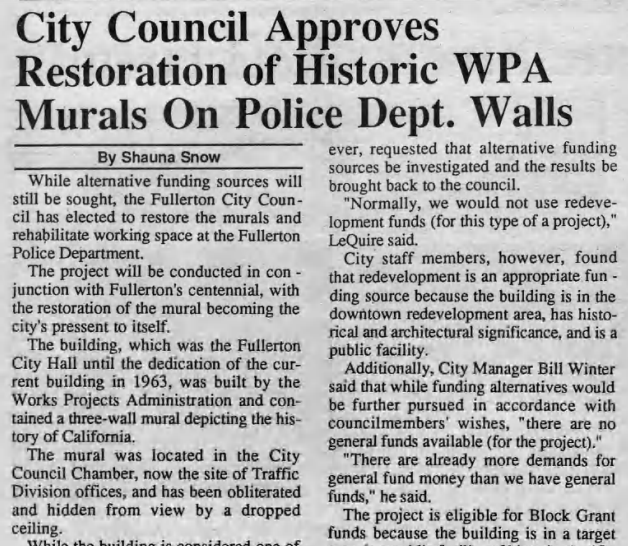
In historic public art news, council approved funding to restore the large WPA-era mural “The History of California” in the police station, formerly City Hall.
A Lively Music/Arts Festival was held at Hillcrest Park.

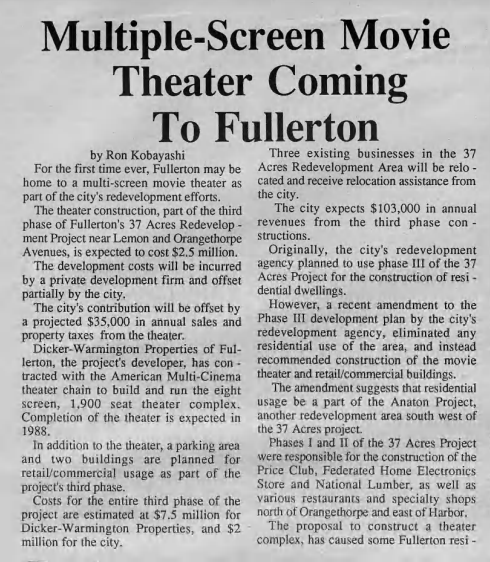
In popular entertainment news, the city used $2 million of redevelopment funds to subsidize the development of the new AMC Theater.
Education
Still facing budget shortfalls that were (partially) attributed to the passage of Prop 13 back in 1978 (which severely limited property tax revenue), the state of California started allocating a portion of the Lottery money for schools.

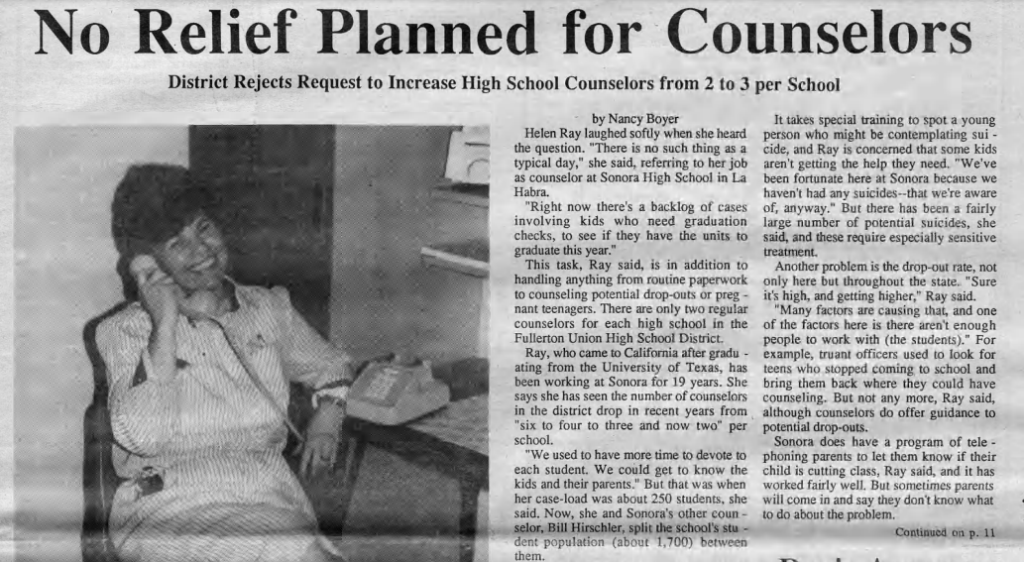
Meanwhile, the number of school counselors had been cut.
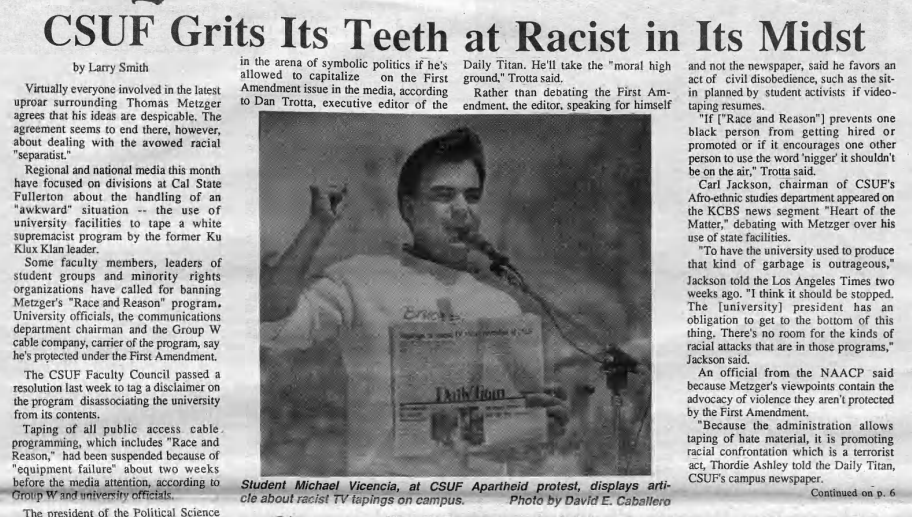
Some controversy arose at Cal State Fullerton as students protested against former Ku Klux Klan leader Tom Metzger taping his show “Race and Reason” on the campus.
In related news, CSUF students also protested against apartheid in South Africa, urging an economic boycott of the country.

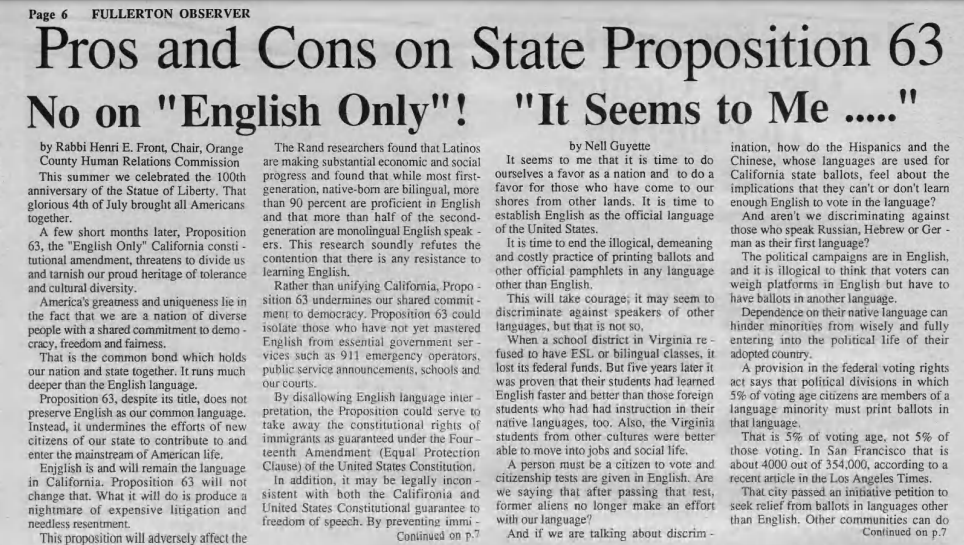
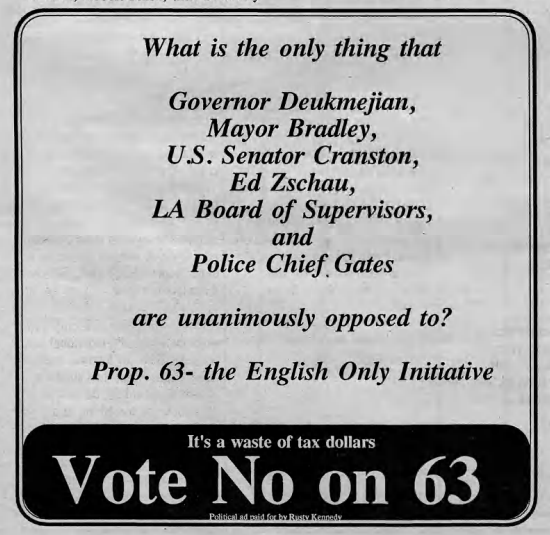
Californians voted to pass Proposition 63, which made English the “official language” of the state, ignoring the huge number of Latinos (and other ethnic groups) here plus the fact that California used to be part of Mexico. It was exclusionary policies like this that led to California flipping from red to blue (Republican to Democrat majority) in the late 1990s.
Transportation
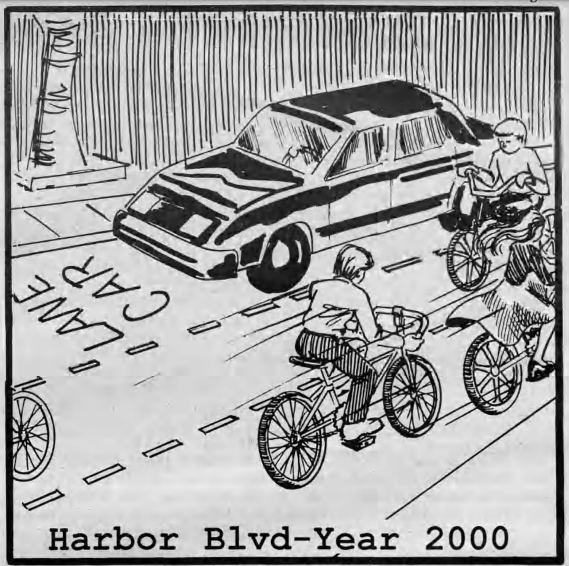
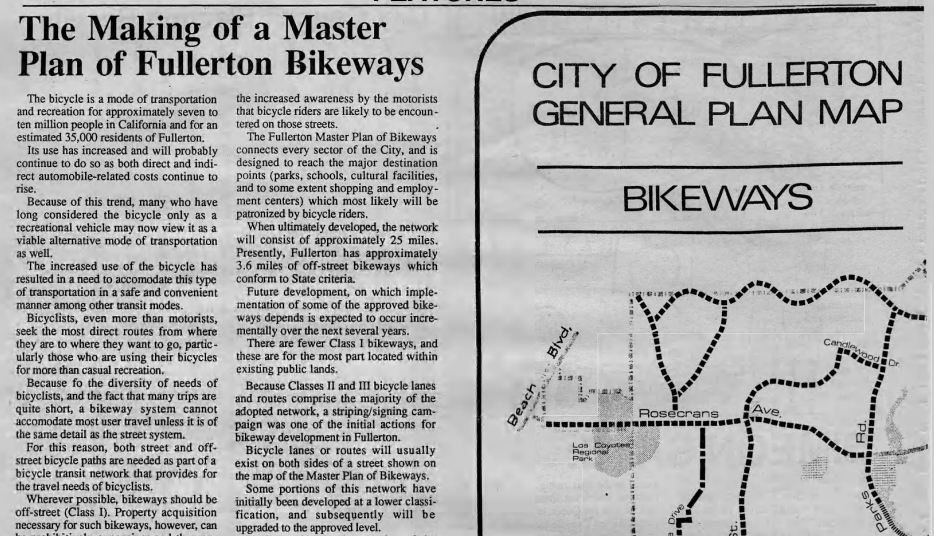
From its beginning, the Observer was an advocate of improving the city’s bicycle infrastructure, and improving public transit–for both individual health, environmental, and financial reasons. Local leaders were not always receptive to these ideas. Orange County was, and remains, a very car-centric place, although it doesn’t have to be.

Environment
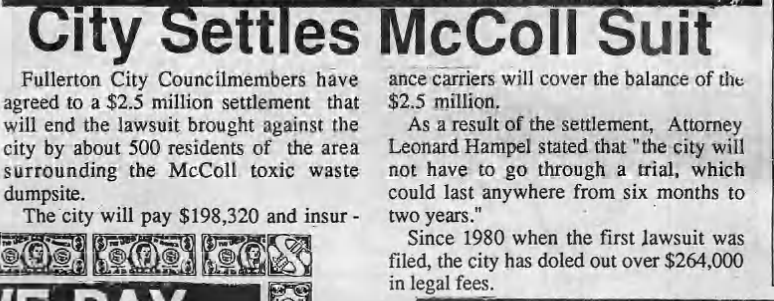
In other environment news, Fullerton settled a lawsuit brought by local residents as a result of the toxic McColl dump site, the City’s first Superfund site.
Religion
Both locally and nationally, more people went to church in the 1980s, as shown by the numerous advertisements for local churches in each issue of the Observer (as well as Gallup poll data).

Labor
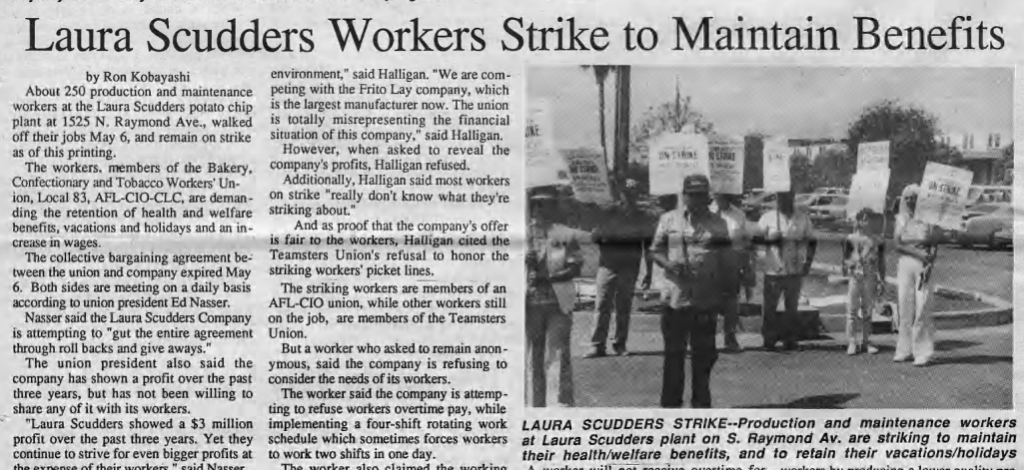
Workers at the Laura Scudder’s plant in Fullerton went on strike to preserve their benefits, which the company was planning to cut. Union membership declined in the 1980s, in part as a result of president Reagan’s anti-union policies.
National and International News
A national tragedy occurred on January 28, 1986 when the Challenger space shuttle exploded shortly after launch, killing all seven crew members. This disaster also dealt a serious blow to the Space Shuttle program.

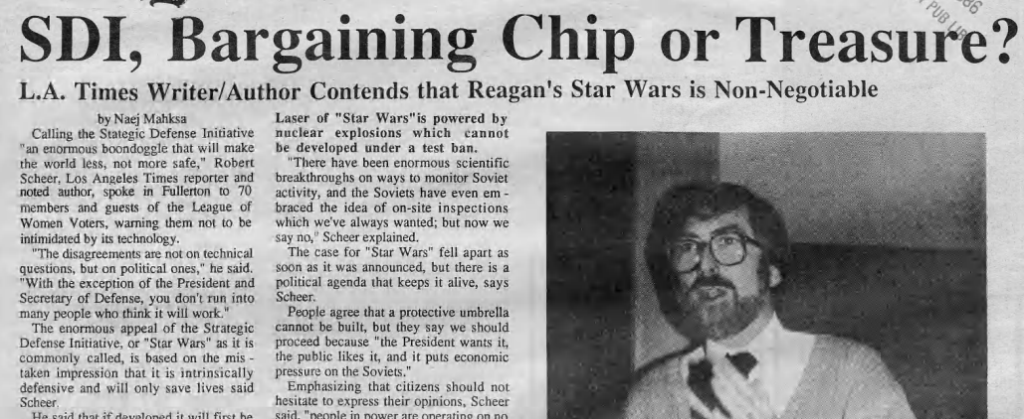
In other space news, President Reagan proposed his Strategic Defense Initiative (or “Star Wars”) program, a space-based program to defend against nuclear attack from the Soviet Union. The program was ultimately deemed unfeasible.
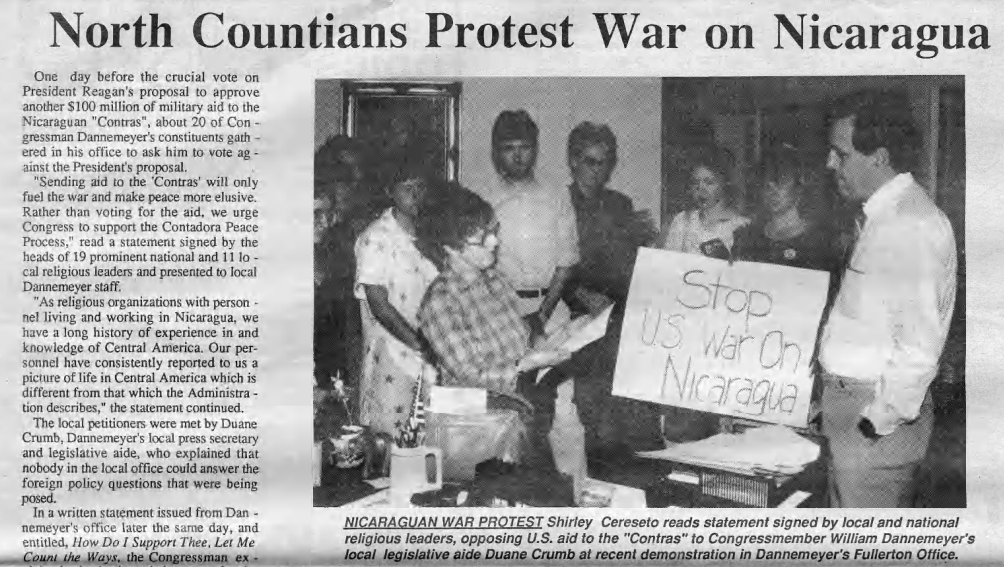
Local residents protested the United States’ involvement in the Civil War in Nicaragua. This would ultimately involve the Iran-Contra scandal that hurt, but did not end, the Reagan presidency.
Miscellaneous
Here are a few miscellaneous articles of interest from 1986:


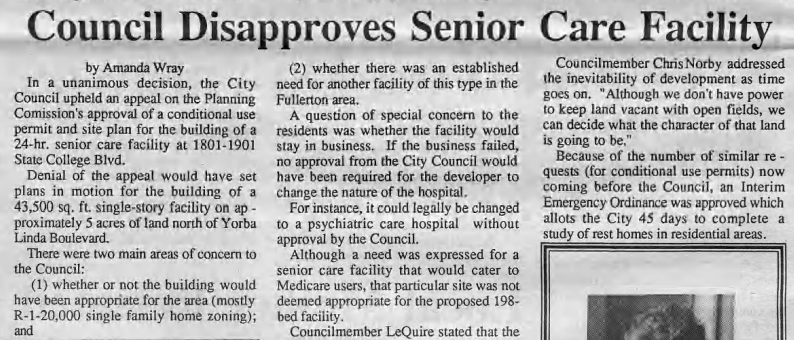
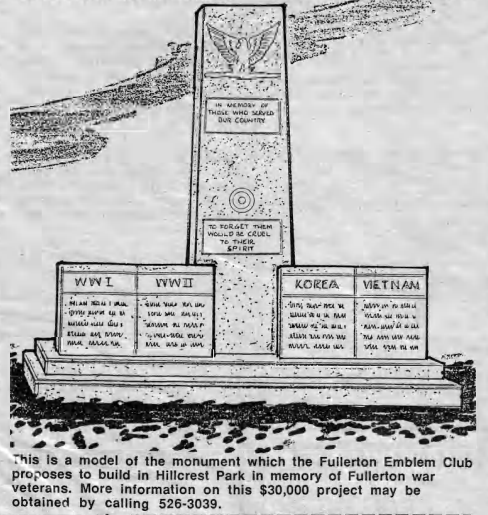
Deaths
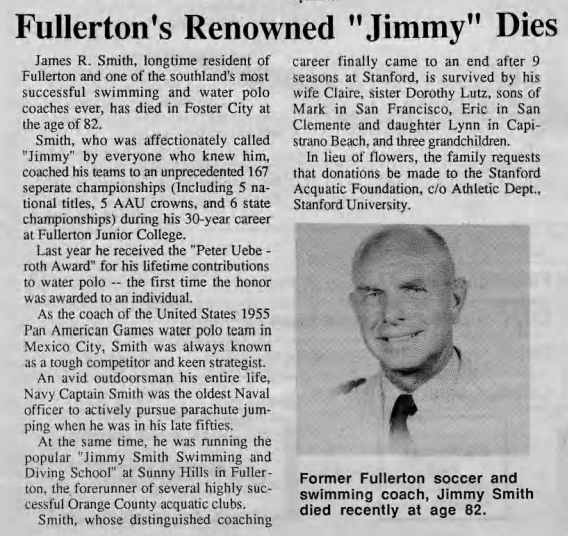
Popular local swimming and water polo coach Jimmy Smith died.
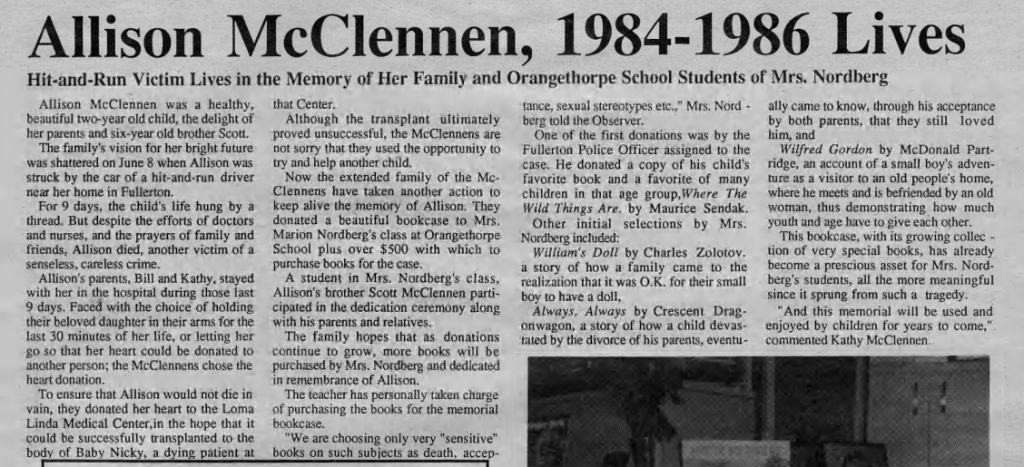
A toddler named Allison McClennen was tragically killed after being struck by a car.
 Fullerton History