The following is from a work-in-progress about the history of Fullerton. You can support my ongoing research and writing on Patreon.
The Fullerton Observer newspaper was formed in 1978 by Ralph and Natalie Kennedy and friends to provide a more progressive counterbalance to the more conservative Fullerton News-Tribune and Orange County Register. The Fullerton Public Library has digital archives of the Observer stretching back to 1979. Here are some top news stories from 1983.
Development
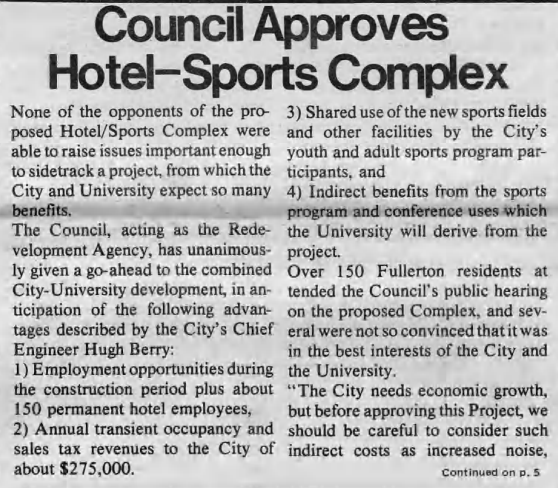
City Council approved a deal with CSUF to use redevelopment funds to help build a sports complex.
Housing
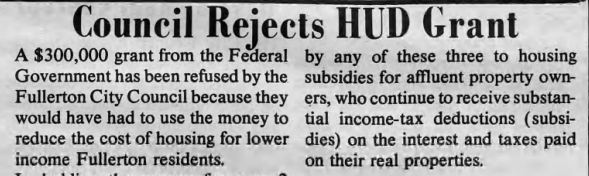
On the question of affordable housing, the conservative majority on City Council had a pretty bad record, turning down federal money for affordable housing, or re-allocating it to other purposes. But at some point Buck Catlin flipped and supported the use of county bonds for affordable housing.


Meanwhile, the county Board of Supervisors dismantled their inclusionary housing program, which previously required new housing developments to set aside 10% of the units as affordable.

Budget
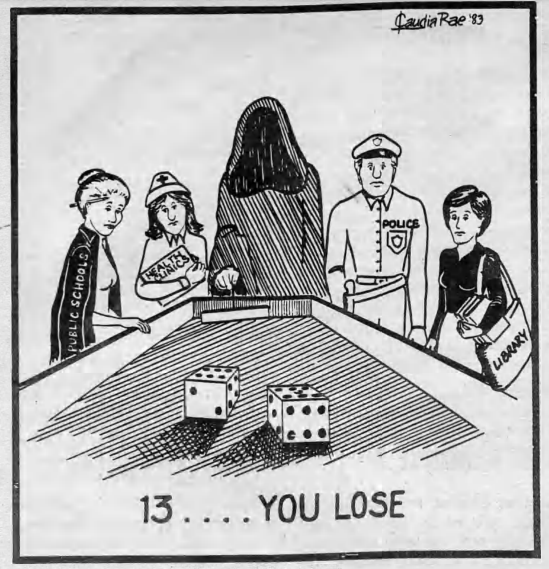
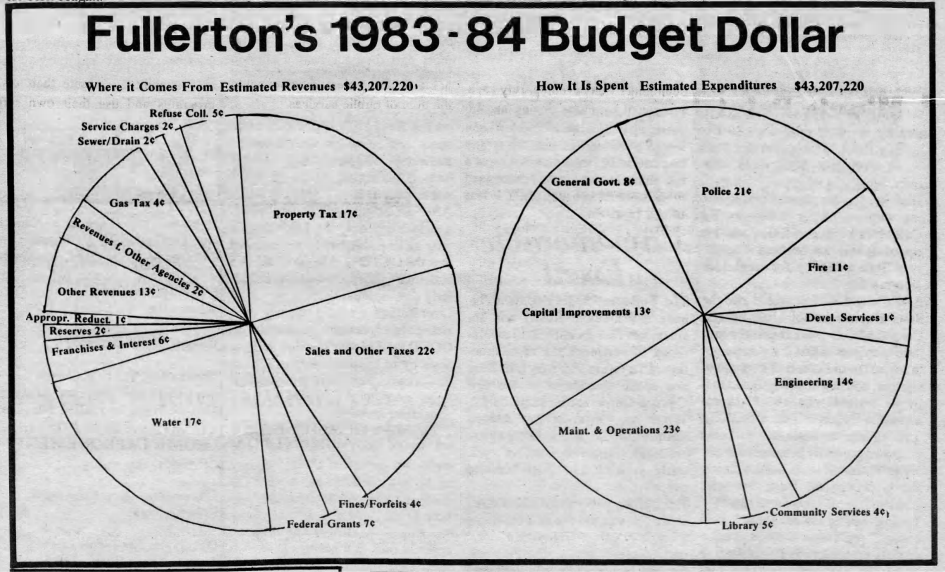
The City Budget was still recovering from the fallout of Proposition 13.
Education
Local school districts also faced budget cuts as a result of the decreased property tax revenues caused by Prop 13.

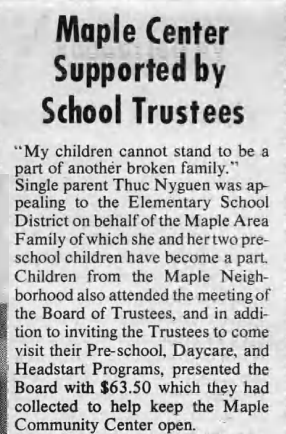
Amidst this decline of revenues, there was talk of closing the Maple Community Center, which served the largely Latino/lower income residents of south Fullerton. As a result of community pushback, the Maple Center was not closed.
Transportation
Fullerton’s bus terminal was built where it still stands today.

At this time, Fullerton bicyclists, including Observer editor Ralph Kennedy, were politically active on behalf of bike transportation.

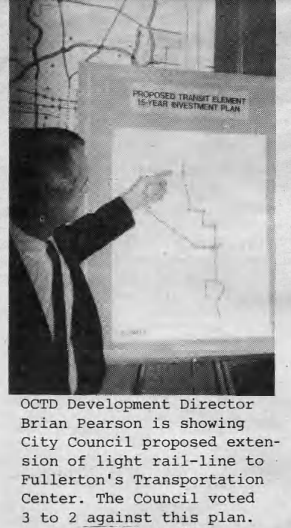
City Council voted against the extension of a light rail train to the City’s transportation center.
Culture
The City hosted a Fullerton Gold Rush Days Parade.

In the 1980s, Downtown Fullerton had a few cool book stores, including Mugwumps and Aladdin Books.

Open Space
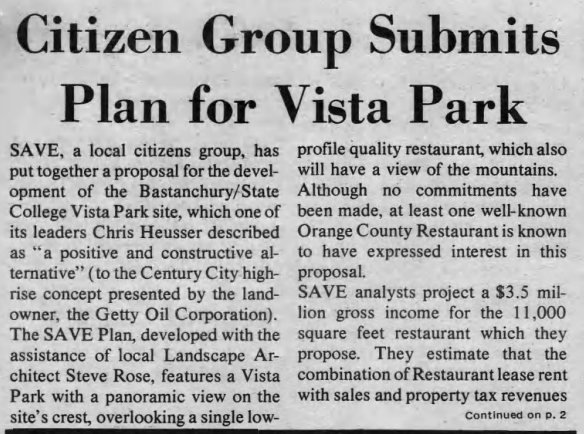
At this time, Fullerton had its share of activists pushing for the preservation of open space, such as the Vista Park at the corner of State College and Bastanchury and West Coyote Hills. In both cases, these involved lands owned by oil companies.


Religion
The marriage of the Republican Party and Evangelical/fundamentalist Christianity began to really take off in the 1980s with the emergence of figures like Jerry Falwell, whose group Moral Majority sought to implement socially conservative policies, like opposing homosexuality and abortion. Fullerton congressman William Dannemeyer, who famously opposed gay rights, spoke at the first annual Fullerton Mayor’s Prayer Breakfast, at which he laid out his ultra-conservative agenda. The Prayer Breakfast still happens every year.

Downtown
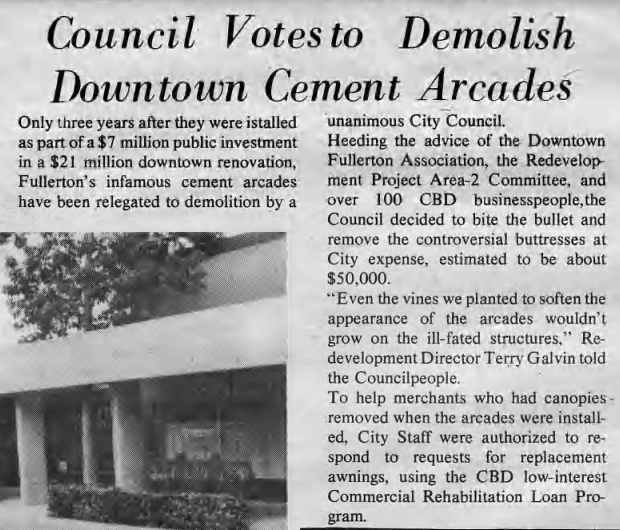
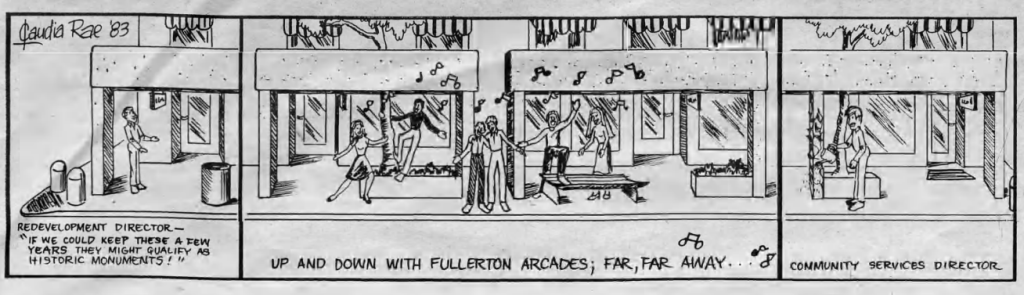
In 1980, Fullerton City Council spent several million dollars of Redevelopment dollars on big ugly cement “arcades” downtown, which were universally scorned. Three years later, they voted to tear them down. How many affordable housing units could have been built with those millions?

 Fullerton History