The following is from a work-in-progress about the history of Fullerton. You can support my ongoing research and writing on Patreon.
The Fullerton Observer newspaper was formed in 1978 by Ralph and Natalie Kennedy and friends to provide a more progressive counterbalance to the more conservative Fullerton News-Tribune and Orange County Register. The Fullerton Public Library has digital archives of the Observer stretching back to 1979, although the first few years are quite limited. Because of this, I will begin in 1982 with a summary of top news stories.
Local Politics
1982 was a mid-term election year. Molly McClanahan and Buck Catlin were elected, joining Duane Winters, Dick Ackerman, and Linda LeQuire on council. At this time, and for most of Fullerton’s history up to this point, City Council was dominated by white male conservative Republicans. The only somewhat progressive voice on council at this time was McClanahan.
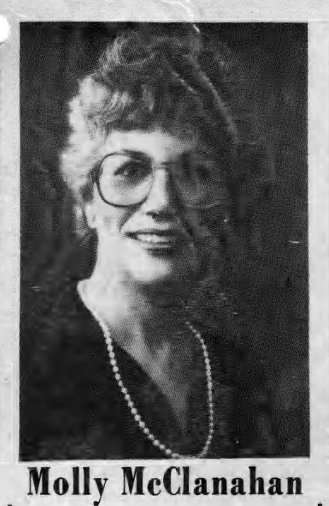
Fullerton incorporated as a city in 1904. By 1982 it had elected four women to council in 78 years–Frances Wood, Sue Tsuda, Molly McClanahan, and Linda LeQuire. It had elected only one minority–Louis Velasco.
Despite this, or perhaps because of this, the council majority opposed an initiative to bring more women and minorities into city government.

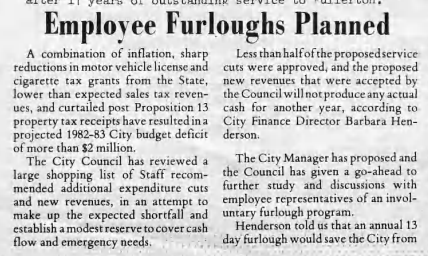
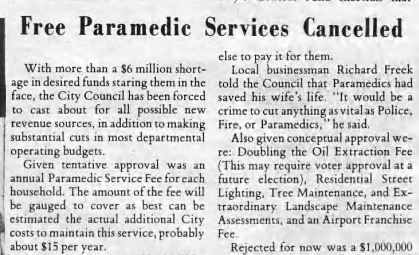
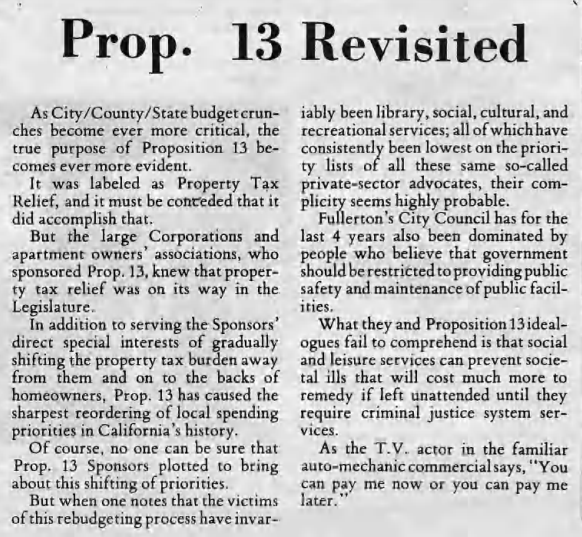
As a result of the relatively new Prop 13 (and other factors), Fullerton was facing a budget shortfall. On the chopping block were the usual suspects–human services, library services, etc. The police department, as usual, emerged relatively unscathed, probably because they have a powerful union that contributes to political campaigns.

Development
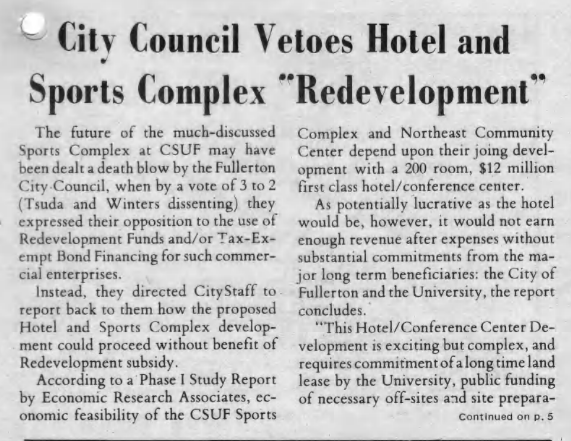
Back in the 1980s, Fullerton (and all cities in California) had something called a Redevelopment Agency–a pool of funding for community related development projects. At this time, the City was in talks with Cal State Fullerton to use redevelopment money to help the college to build various sports facilities and a hotel. In 1982, this project faced some setbacks, but it would ultimately be approved.
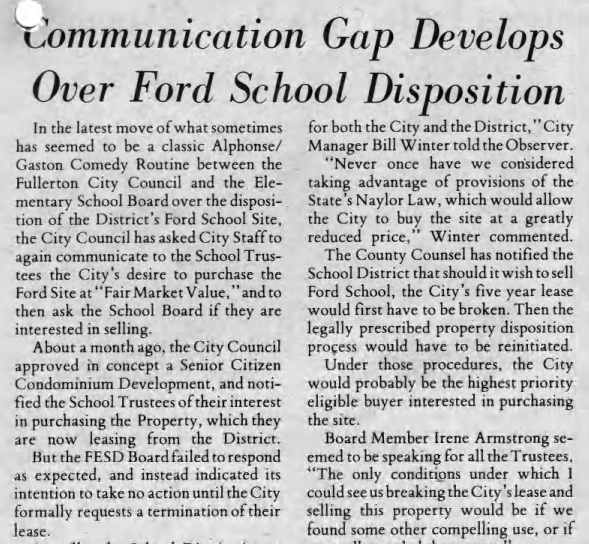
The school district would eventually sell the lands of the former Ford School to the city for a park and development of a senior housing complex.
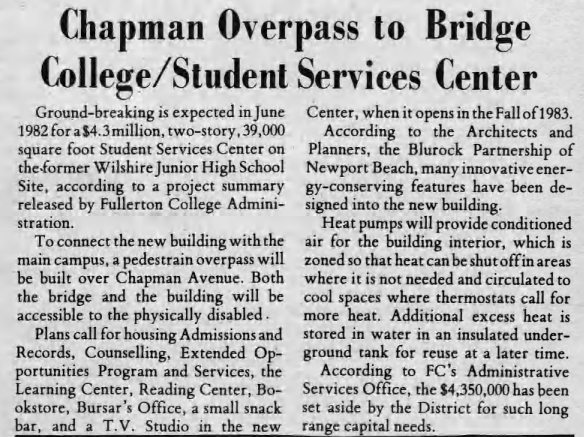
The (somewhat) iconic Fullerton College bridge over Chapman was built.
Environment
In environmental news, the city was in talks with Chevron over saving some land in Coyote Hills for a nature park. This fight would continue for decades, and is still ongoing, although some areas have been saved.

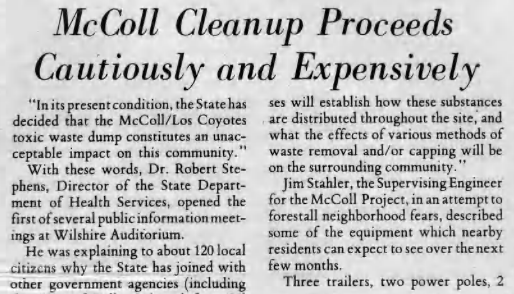
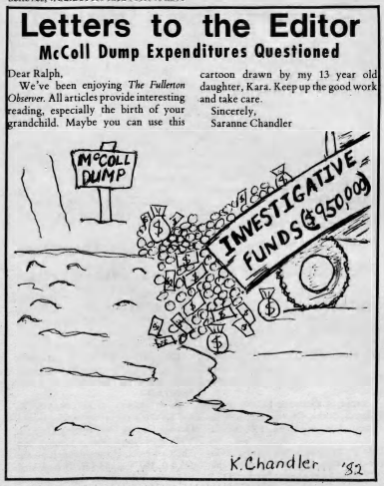
Various government agencies were deciding what to do about the toxic McColl dump site in northwest Fullerton, which was Fullerton’s first Superfund site.
Student Protests
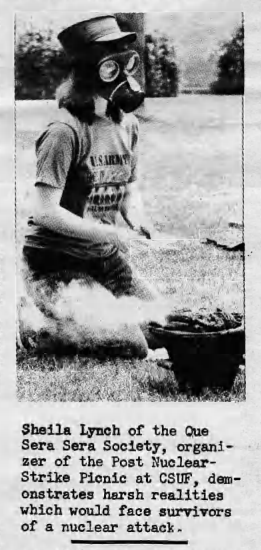
CSUF students protested the proliferation of nuclear weapons. This was the Reagan era and the Cold War was ramping up in intensity again.
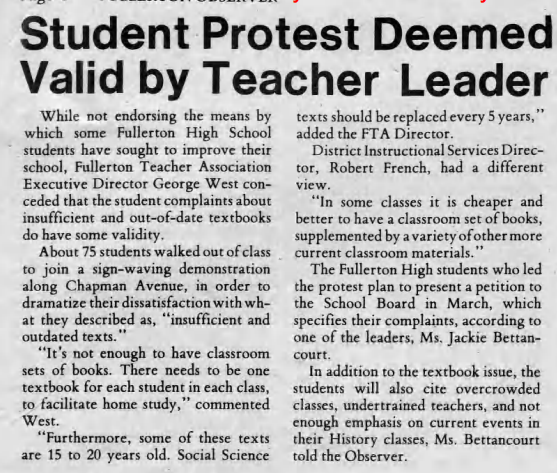
Meanwhile, Fullerton High School students protested for updated textbooks.
Culture
Downtown Fullerton in the 1980s was not the bar/club scene that it is today. It was sleepy, and a bit grungy. Despite this, there was culture. Along with the local punk scene, there were a handful of cool bookstores, like Mugwumps.

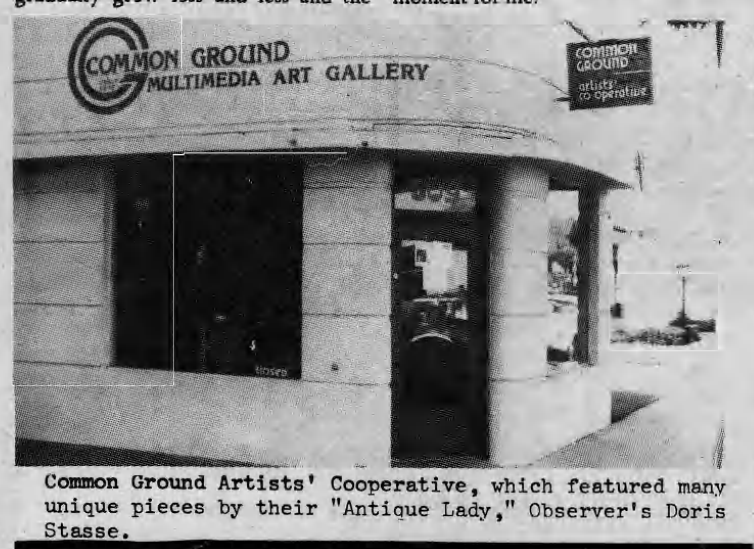
In the small art deco building across the street from the Fox Theater, there was an art gallery called Common Ground.
The major annual cultural event in Fullerton was “A Night in Fullerton”–a multi-venue night of art, music, drama, and dance that started back in the 1960s.

Housing
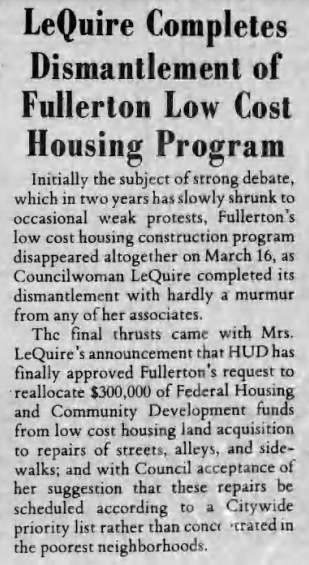
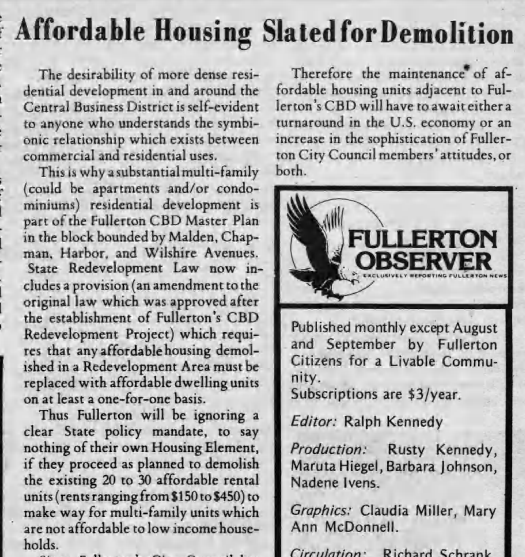
The ever-present problem of affordable (or unaffordable) housing was not helped by the conservative council majority, who consistently voted against affordable housing programs.

Stay tuned for news articles from 1983!
 Fullerton History