The following is from a work-in-progress about the history of Fullerton. You can support my ongoing research and writing on Patreon.
The Local History Room of the Fullerton Public Library has microfilm from the Fullerton Tribune newspaper stretching back to 1893. I am in the process of reading over the microfilm, year by year, to get a sense of what was happening in the town over the years, and creating a mini archive. Below are some news stories from 1925.
In 1925, the United States’ population was 114,340,000. The Teapot Dome scandal was resulting in indictments of powerful political and business figures. In Tennessee, the Scopes Monkey trial was deciding whether schools could ban the teaching of evolution. A massive Navy airship called the Shenandoah was destroyed in flight (kind of like the more famous Hindenburg). The Ku Klux Klan, which was at the peak of its power, organized a massive march down Pennsylvania Avenue in Washington D.C. that drew at least 50,000 robed participants. Fascists under Benito Mussolini had come to power in Italy, and a massive earthquake centered in Santa Barbara leveled much of the city.
Chapman’s Theater (later called the Fox) Opens
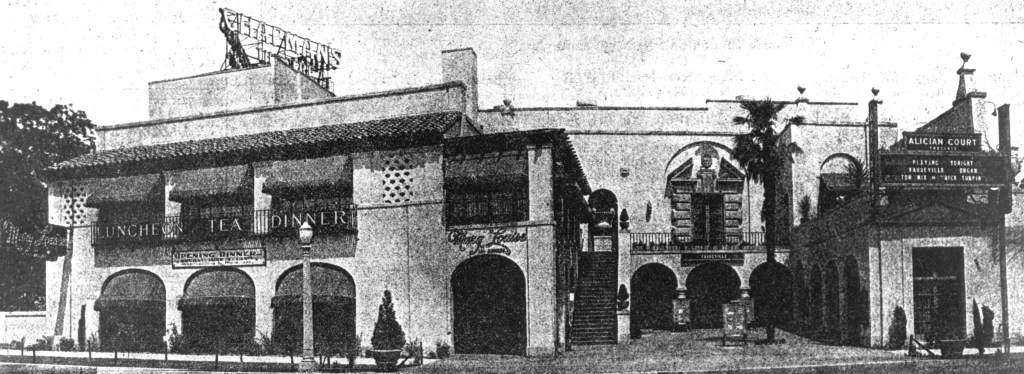
Probably the biggest news of 1925 for Fullerton was the opening of Chapman’s Alician Court Theater, which later became known as the Fox Theater, a classic old school movie palace. The theater was financed by C. Stanley Chapman, son of wealthy powerful orange grower Charles C. Chapman. The theater’s architect was Raymond M. Kennedy of the firm Meyer & Holler, which also designed Grauman’s Egyptian Theatre and the Chinese Theatre in Hollywood.
The theater opened with great fanfare with local and Hollywood notables in attendance, including Mary Pickford and her family.
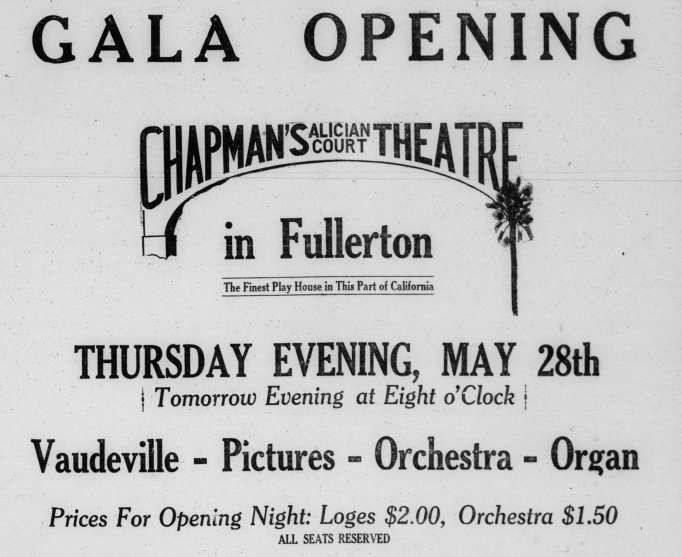
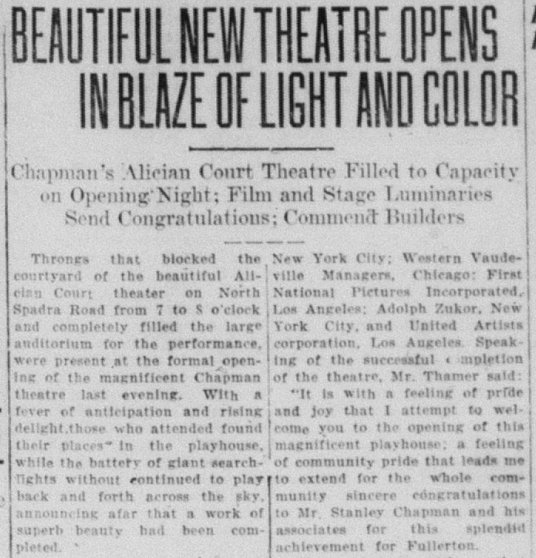
“Dainty usherettes in Italian peasant costume…directed the guests to their places. Among those seated in the loge section were many distinguished visitors including Mendell Meyer, architect for the structure members of the Chapman party, and well known residents of Hollywood Mrs. Pickford, Lottie Pickford Rupp and Mary Pickford’s small niece, Mary Pickford Rupp,” the Tribune reported.
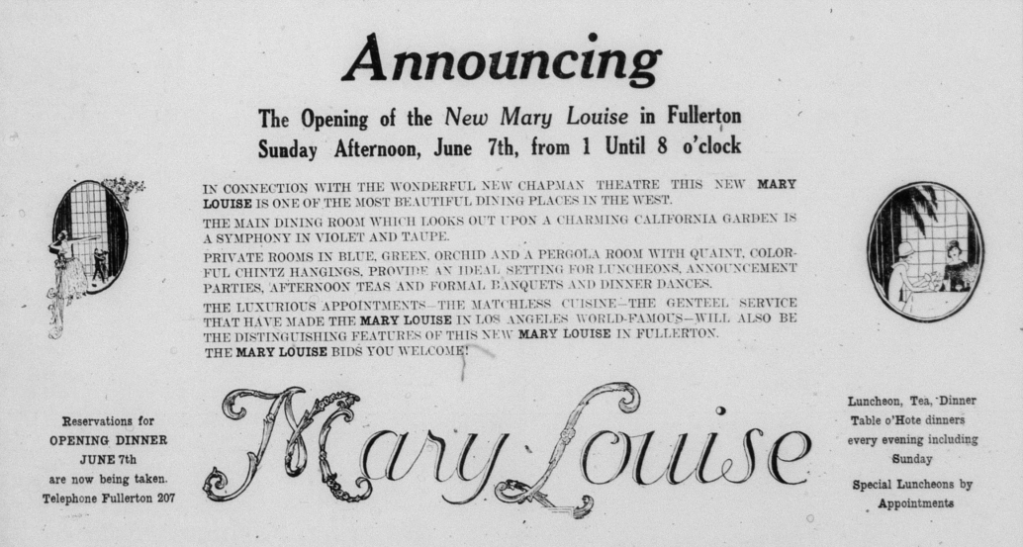
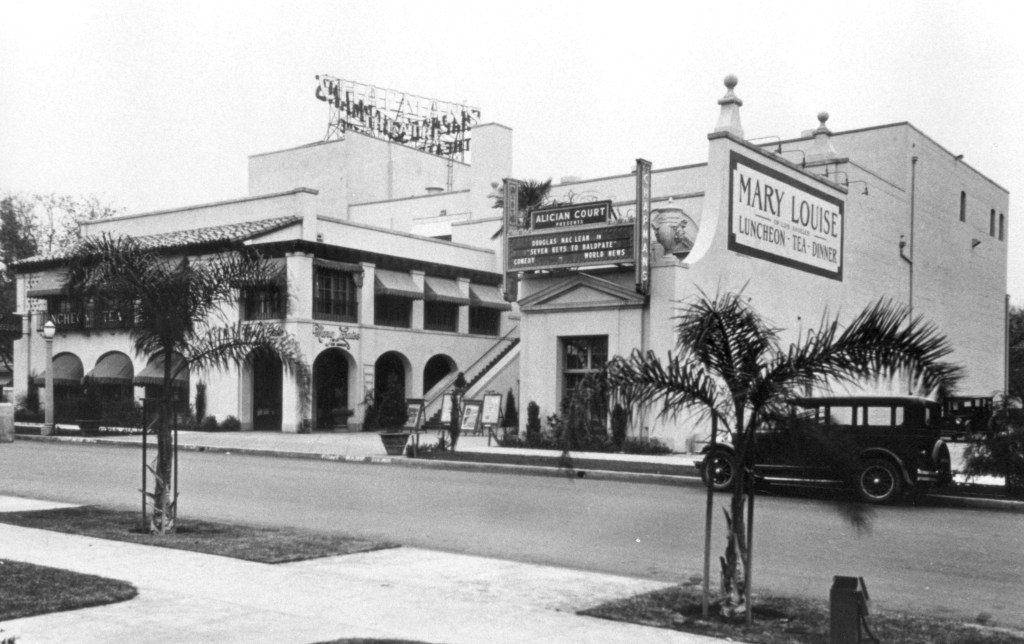
Attached to the theater was the fancy tea room known as the Mary Louise.
Here are a few early photos of the Fox that I obtained from the Local History Room:



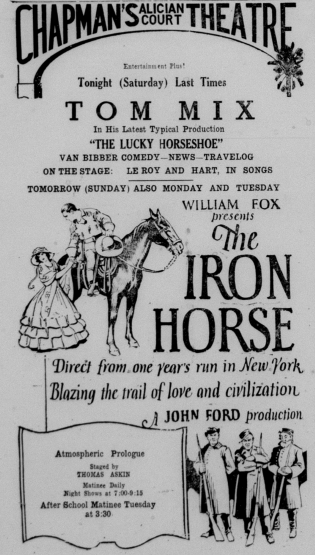
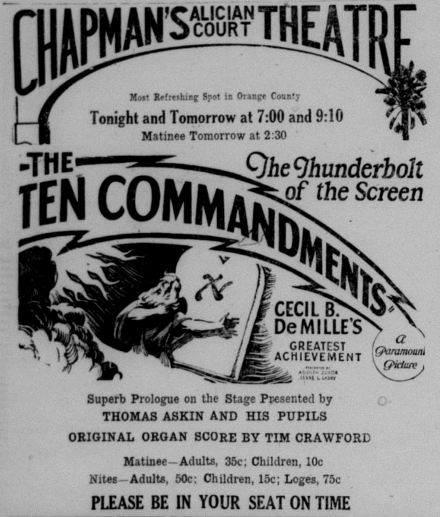
And here are some ads for movies and vaudeville shows at Chapman’s Theater:




Growth
Fullerton continued to experience relatively rapid growth throughout the 1920s, including a new industrial tract, new subdivisions opening, new sewer lines, and three new packing houses.


Education
In 1925, Fullerton was being considered as a possible location for the southern campus of the University of California–what would eventually become UCLA.
Gaston Bastanchury, owner and manager of the vast Bastanchury ranch in Fullerton, created a bound proposal with lots of photos, extolling the virtues of the proposed site.

Ultimately, the Fullerton proposal was rejected and UCLA was built at its present site in Los Angeles.

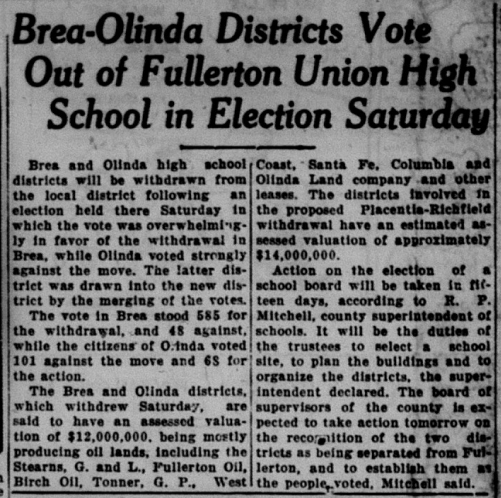
Residents of the oil towns of Brea and Olinda voted to leave the Fullerton Union High School District and form their own.
Fullerton High School built a new gym and swimming pool. This gym was torn down a few years ago and a new one built.
In 1925, many Mexican Americans in Fullerton lived in segregated work camps either on or near the orange groves. The Fullerton Union High School district created an “Americanization” program to teach certain classes to the Mexican workers.
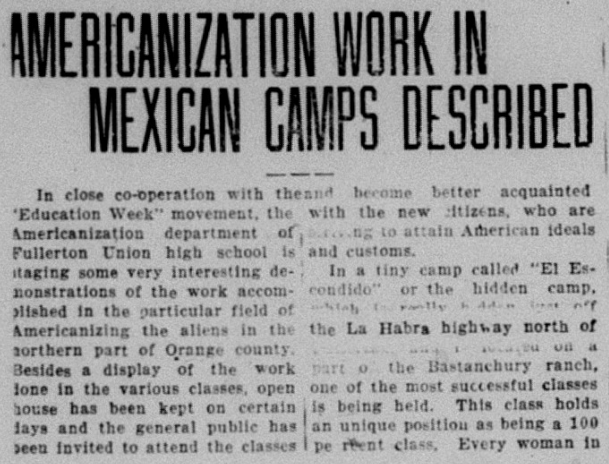
Here is some of the text of the article above:
The Americanization department of Fullerton Union high school is staging some very interesting demonstrations of the work accomplished in the particular field of Americanizing the aliens in the northern part of Orange County. Besides a display of the work done in the various classes, open house has been kept on certain days and the general public has been invited to attend the classes and become better acquainted with the new citizens, who are…to attain American ideals and customs.
In a tiny camp called “El Escondito” or the hidden camp…on a part of the Bastanchury ranch, one of the most successful classes is being held. This class holds an unique position as being a 100 percent class. Every woman in camp has attended each session since the school was opened and their enthusiastic cooperation with Mrs. Alma Tucker, their teacher, has produced some amazing results.
An outstanding example of this applied industry is that of Senora Guadaluope Rodarte, who has attended school eight weeks with only a two weeks absence when a new daughter arrived at the Rodarte home. With her new baby immaculately clean and in white pretty dresses, Guadalupe attends the classes each day. During the short time of her instruction she has acquired a vocabulary of about 200 words in the English language.
Dona Felipa Avilos, who has learned all the English she knows during a like period, can also converse in good English to the extent of a visit to a grocery store and the purchase of supplies.
Mrs. Tucker uses the Gonin method of teaching her pupils, but as adapted it to the local conditions, which add to its usefulness in teaching Mexicans. A new idea of using puppets to demonstrate a word or idea has been worked out by Mrs. Tucher which has proved very successful. The close cooperation and economy of the various departments of the Fullerton high school is demonstrated in this instance, for Miss Easton and Miss Bristol with their classes in art have prepared the puppets and the model houses and furniture, which Mrs. Tucker has found so useful. The class in the “Hidden Place” has a motto which is well understood and applied by the Mexican women and their teacher, and is written on the walls of the little dwelling, “Co-operation.”
In this instance the class is held at one of the Mexican homes, which although lacking many of the conveniences and sanitary additions of the American homes, is scrupulously clean with its board floor scrubbed white and pretty cretonne curtains at the windows. Flowers are in evidence both inside and outside the dwellings and in American flag is pinned to the walls of the room where the class meets.
The roll includes Gladalupe Rodarte, Marie Rodar, Isidra Avina, Rosario Gimenez, Felipa Avalos, Luciana Giminez, Maria Avila, Soledad Avalos, Maria Ramos, Aurelia Perez and Trinidad Rosales.
Ku Klux Klan
In 1924, at least four Ku Klux Klan members were elected to the Anaheim City Council. The next year, facing push back from the community, they were all recalled. In the mid-1920s, the Ku Klux Klan was a major political and social force in Orange County.

Fashion
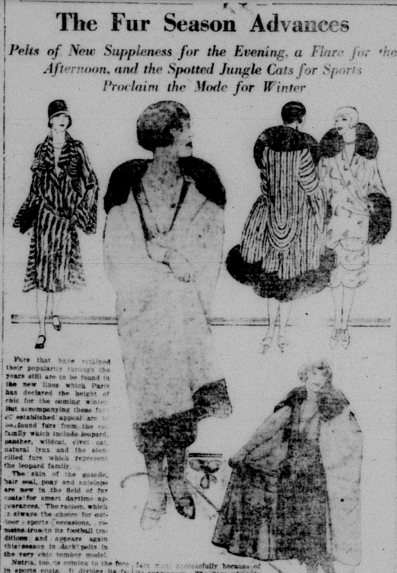
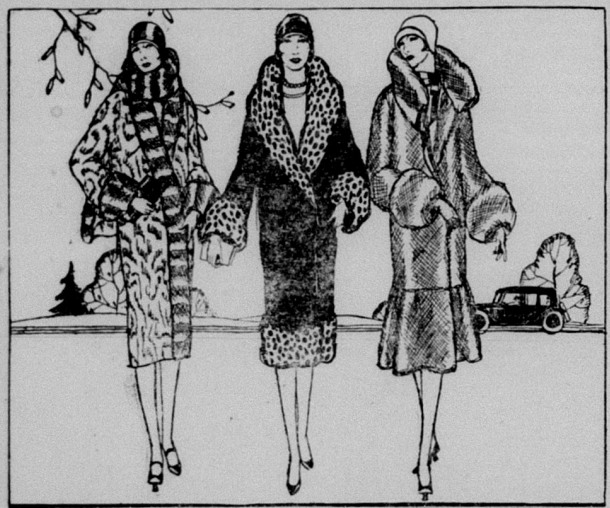
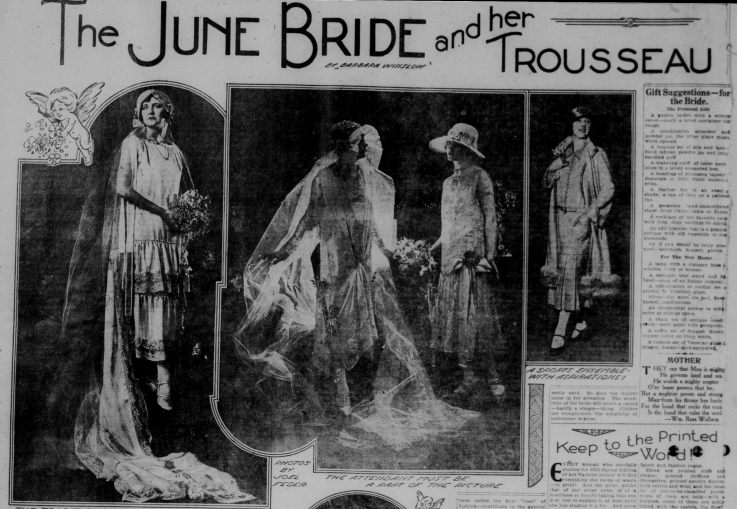
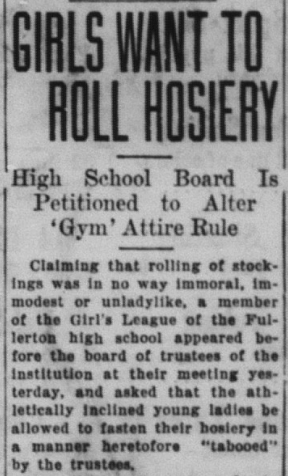
The 1920s were an exciting time for fashion, particularly women’s fashion, and the pages of the Tribune show many of these new fashions, available in stores in the growing downtown.



Miscellaneous
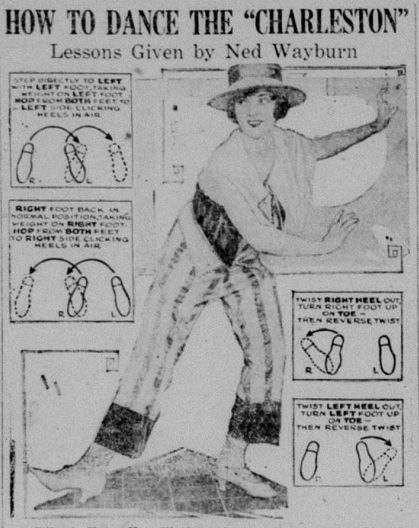
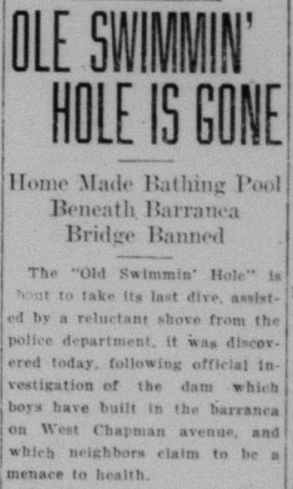
Here are a few random clippings from 1925.



Death
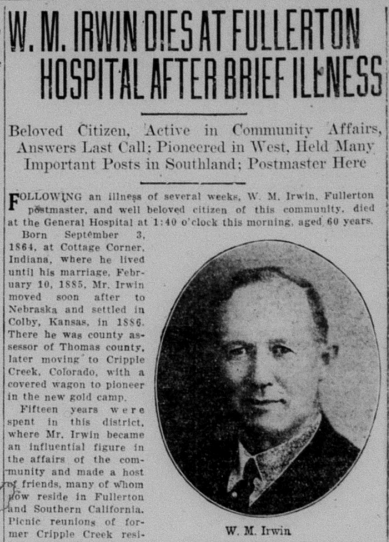
W.M. Irwin died. He had served as postmaster, the first president of the Rotary club, and other civic activities.
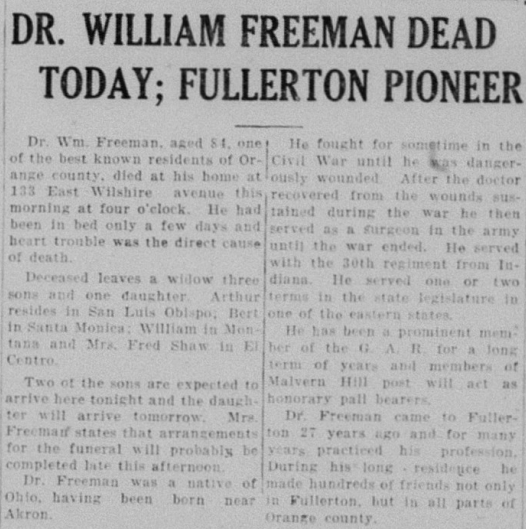
Dr. William Freeman, one of Fullerton’s first doctors, passed away.
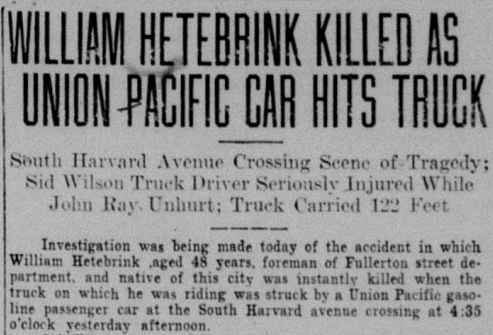
William Hetebrink, of the pioneer Hetebrink family, was killed in an accident. Many members of the Hetebrink would die in tragic accidents, almost as if the family was cursed.
The nude body of a boy was found hanging on an oil derrick near Olinda. Creepy.

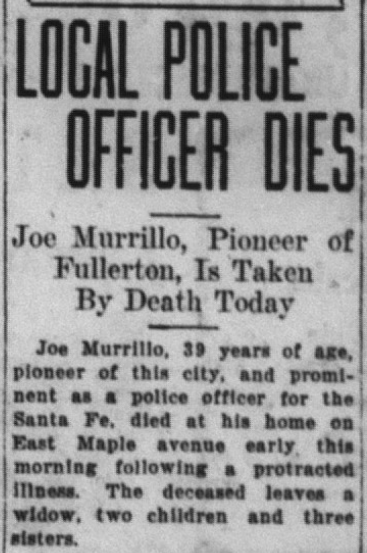
Local police officer Joe Murillo passed away.
Stay tuned for news headlines from 1926!
 Fullerton History