The following is from a work-in-progress about the history of Fullerton. You can support my ongoing research and writing on Patreon.
The Local History Room of the Fullerton Public Library has microfilm from the Fullerton Tribune newspaper stretching back to 1893. I am in the process of reading over the microfilm, year by year, to get a sense of what was happening in the town over the years, and creating a mini archive. Below are some news stories from 1923.
President Warren G. Harding died unexpectedly and was succeeded by Calvin Coolidge. Republican Friend Richardson was inaugurated governor of California. Also, in 1923, Mae Nolan, California’s first female congressmember was elected.
Growth
Fullerton continued to experience a building and population boom in the 1920s, with an estimated population of 11,156.

Some of downtown Fullerton’s largest and most iconic buildings were built in 1923, including the California Hotel (now the Villa del Sol) and the Chapman Building.

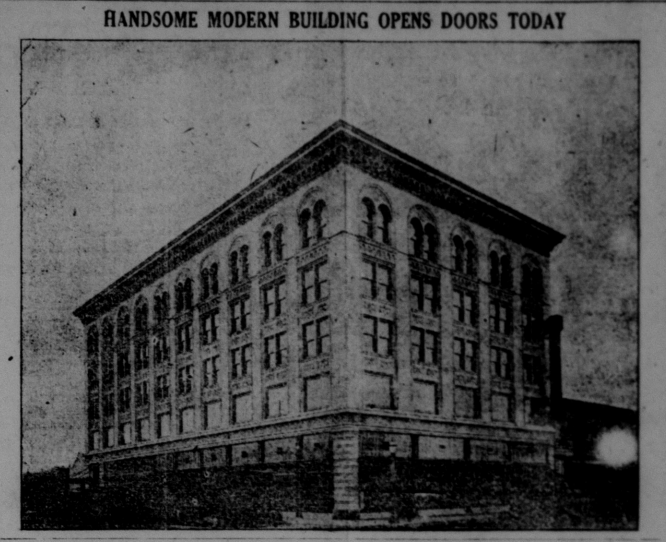
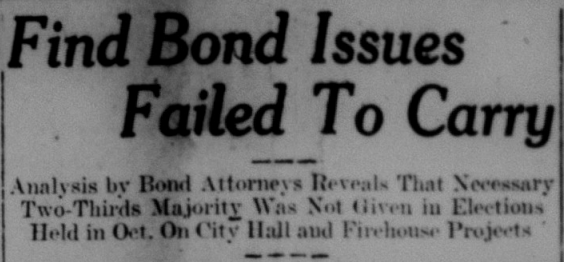
The City Hall That Was Not (Yet) to Be
Even though Fullerton had been a town since 1887, there was still no City Hall in 1923. City business was conducted out of the fire station and a business building downtown. To remedy this, plans were drawn up and a site chosen for a large new City Hall building, to be built on an open lot next to the newly-built California Hotel (now the Villa del Sol) downtown. However, when a bond issue was put before voters to fund construction of City Hall, the voters voted it down. Fullerton’s City Hall would not be built until 1942.

Zoning
In 1923, Fullerton first adopted zoning–a city planning tool that establishes what can and can’t be built in certain areas. The idea is to create orderly development, with clearly-defined business, residential, and industrial areas.
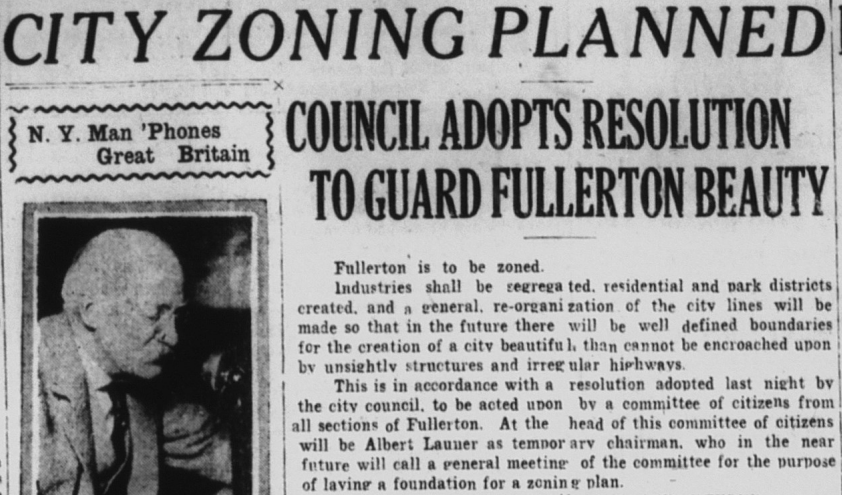
Although the main exports of Fullerton in the 1920s remained oranges and oil, zoning for industry allowed the first factories to be built in designated areas.

New Housing Subdivisions
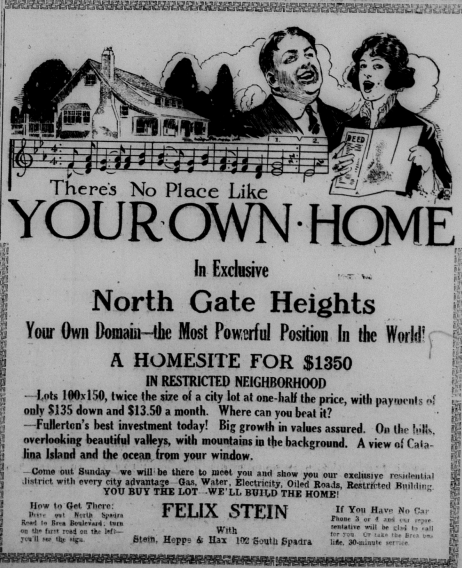
Throughout the 1920s, many new housing subdivisions were built, as the City grew. Spreading outward from the downtown area, orange and walnut groves were cleared for these new houses. Unfortunately, most of the subdivisions built in the 1920s had racially-restrictive housing covenants that prevented non-whites from purchasing these new houses. Virtually every issue of the Tribune had advertisements and articles about these new developments.
In a recent post on this topic, Fullerton Heritage wrote:
“By the 1920s, they [racial covenants] were quite common, particularly in what is now the historic areas of the city…Fullerton newspaper advertisements for new housing subdivisions often signaled whether a tract was limited to whites only. A few advertisements were direct, but most used a coded language that potential homebuyers would understand. Words or phrases, such as ‘rigidly restricted’, ‘exclusive tract’, ‘reserved for the finest’ indicated that minorities were excluded from a subdivision.”
Below is a sampling of some ads for the new housing subdivisions:


Ku Klux Klan
The Ku Klux Klan was on the rise both nationally and locally. The 1920s Ku Klux Klan, at the height of its popularity had around 5 million members all over the United States. The Tribune contains numerous articles about Klan activities around the country, in places like Atlanta, San Francisco, Portland, Oklahoma, Eureka (CA), and elsewhere.
And then, the Klan made themselves known in Anaheim.
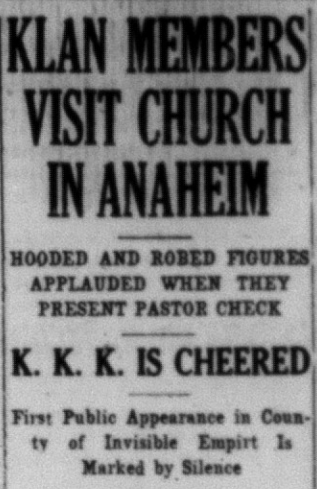
“The first public appearance in Orange county of members of the Invisible Empire, Knights of the Ku Klux Klan, in the First Christian church tabernacle, Anaheim, last night was marked by lusty cheers of the congregation, and unlike popular beliefs was not featured by bloodshed or riot,” the Tribune states. “While scores sat emotionless in their seats, petrified by mingled fear and amazement, what is estimated to have been more than a dozen of the white-robed and hooded figures silently entered the edifice, presented the partor, the Rev. C.L. Vawter, with a parcel and as silently departed.”
Fraternal Organizations
The 1920s Klan arose at a time when fraternal organizations were very popular throughout the United States. Not all of them were explicitly white supremacist, like the KKK. Others were fairly “normal” like the Masons and the Odd Fellows. An article in the Tribune gives a bit of history of Fullerton’s Masonic lodge.

Fullerton’s Masonic lodge was formed in 1900 and held its first meeting at the home of Edward K. Benchley, president of the Farmers and Merchants bank. Early meetings were then held on the top floor of the old grammar school. They built their first temple (now the Parker Building), and then they built an even larger temple in 1920, which still stands today–it is the Springfield Banquet Center.

The leader of a lodge is called a “worshipful master” and this title was held by a number of prominent local men over the years, including William McFadden, Dr. G.C. Clark, Arthur Staley, C. George Porter, Charles E. Ruddock, J.R. Gardiner, and C. Stanley Chapman.
In 1923, membership in the Masons was 425.
Another popular fraternal organization at this time was the Independent Order of Odd Fellows (or just Odd Fellows). Another article in the Tribune gives a bit of this group’s history.

The Fullerton Lodge of Odd the Fellows was organized in 1901. Like the Masons, a number of prominent residents joined, including William Schumacher, August Hiltscher, George H. Amerige, R.H. Gilman, Joseph Hiltscher, D.S. Linebarger, and E.R. Amerige, Edgar Johnson, Bert Annin, and Angus McAulay.
The Odd Fellows met above two different banks downtown before building their own massive hall in 1928. This building still stands today.
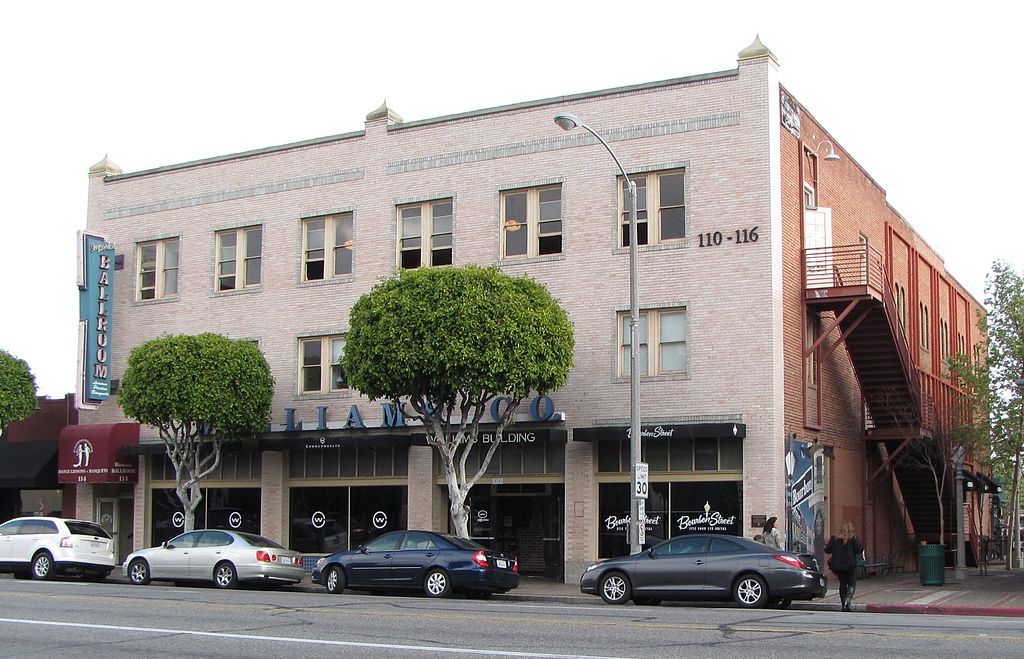
In 1923, the Odd Fellows membership was 162.
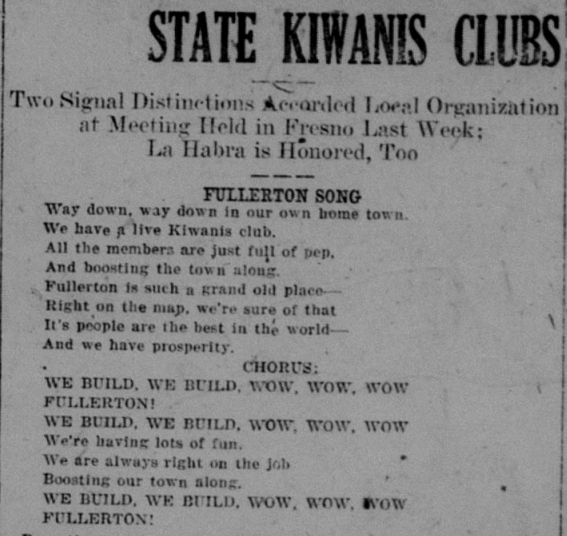
Another popular local group was the Kiwanis. At a meeting of the state Kiwanis clubs, a poem was printed in the Tribune, honoring the Fullerton club.
Prohibition
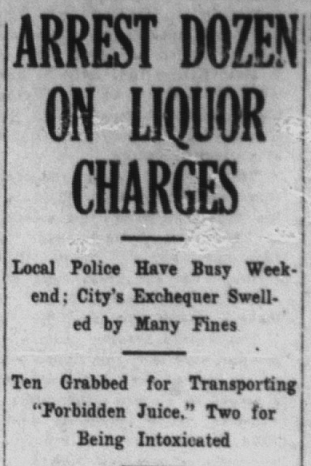
In 1923, Prohibition was in full effect, and local law enforcement struggled to keep up with all the bootlegging. Nearly every issue of the Tribune has a story about people being fined of arrested over illegal booze.

Although they had achieved their goal of national Prohibition, the Women’s Christian Temperance Union (WCTU) was still active, presumably because lots of people were still drinking.

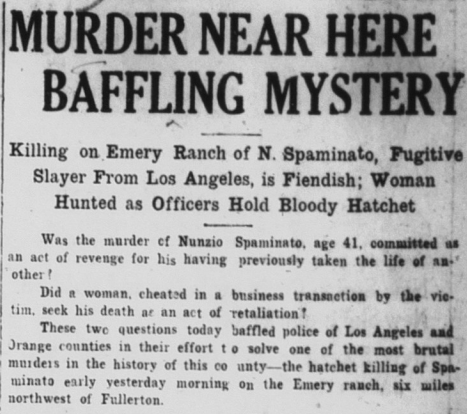
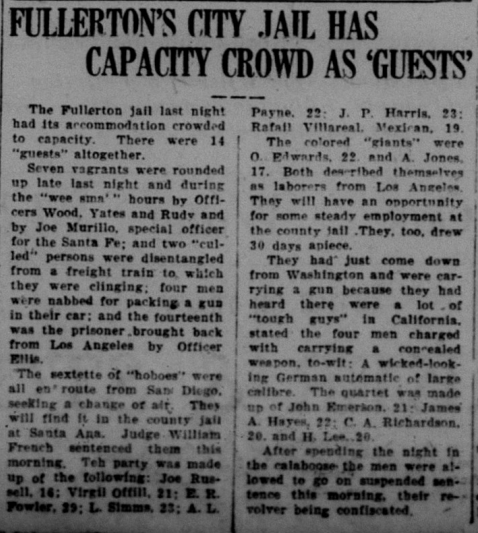
Other Crime News
Here are some other notable crimes in 1923:



Education
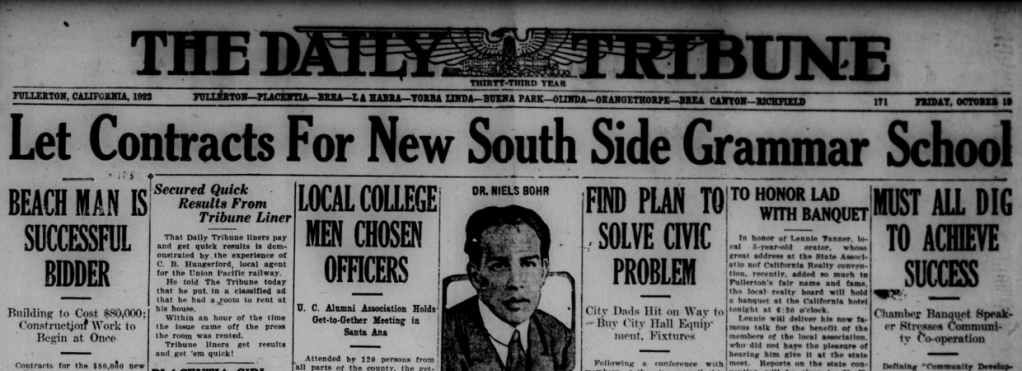
In education news, plans were being made to build a new grammar school on the south side of Fullerton. Maple School would open in 1924.
Culture and Entertainment
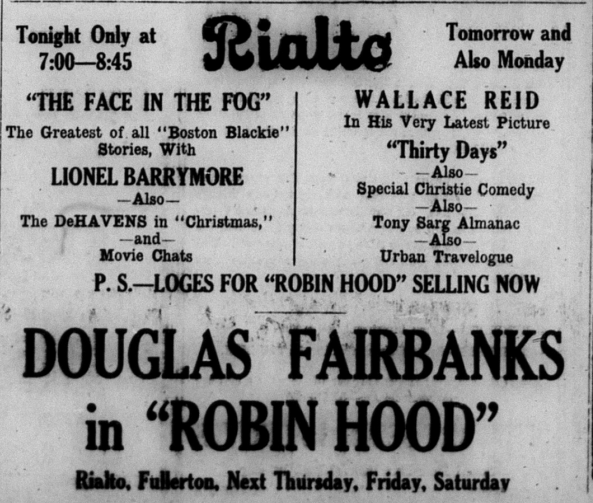
For entertainment, Fullertonians went to the Rialto Theater downtown to see movies.

Here are a few ads for movies showing in 1923:
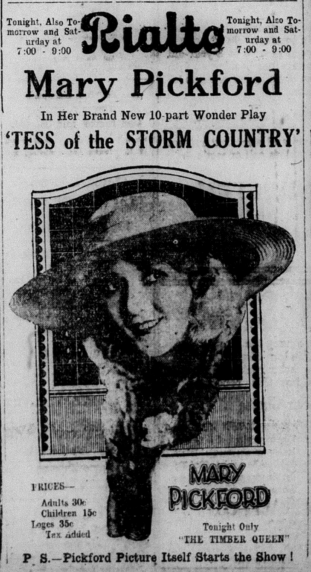
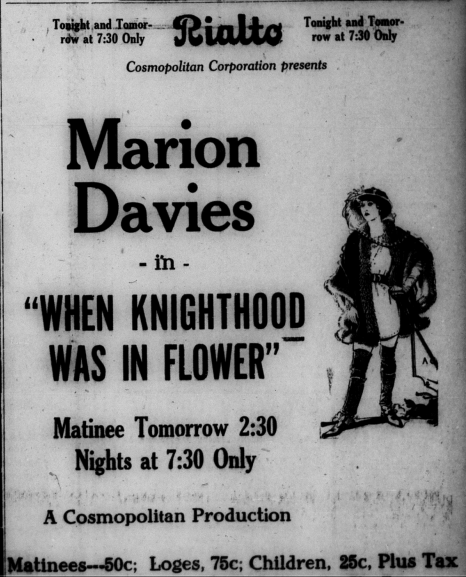
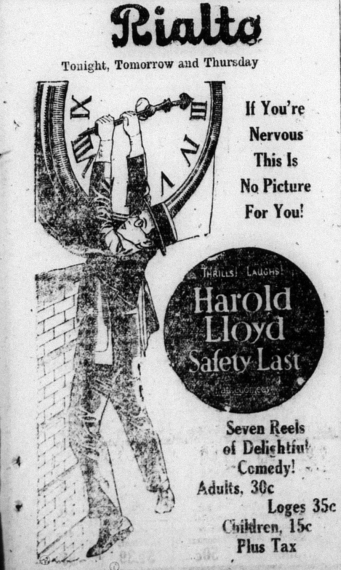
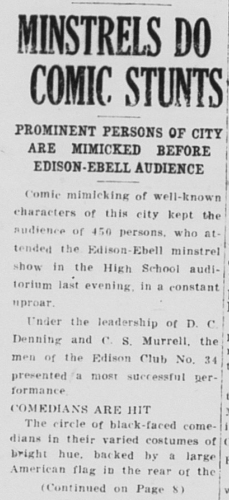
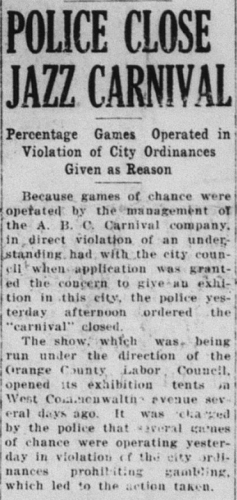
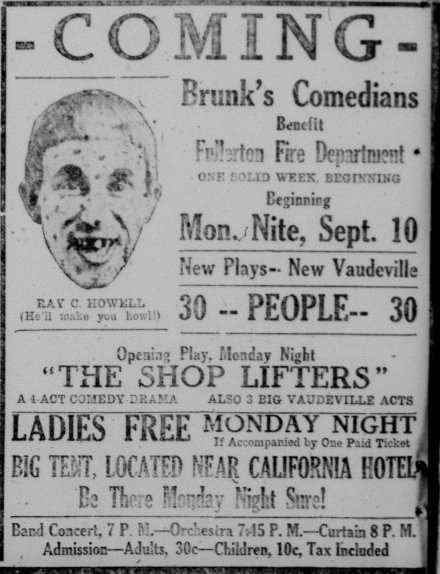
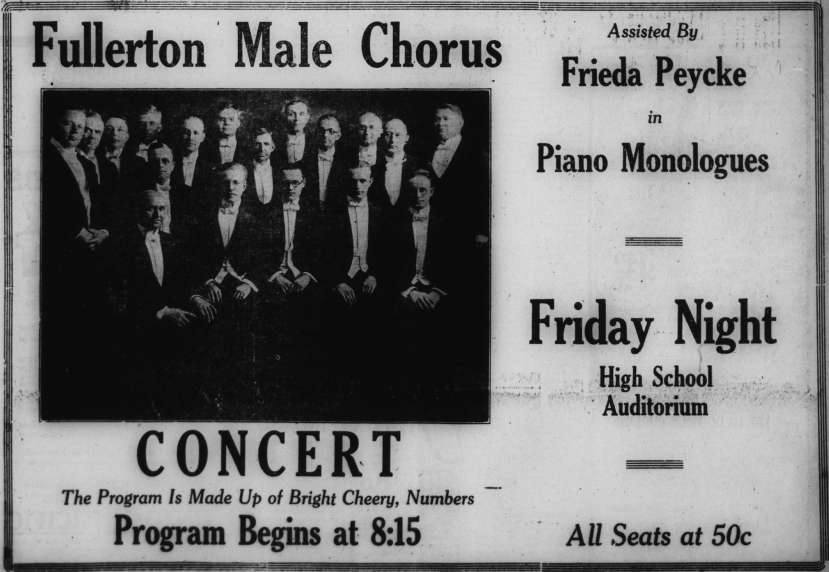
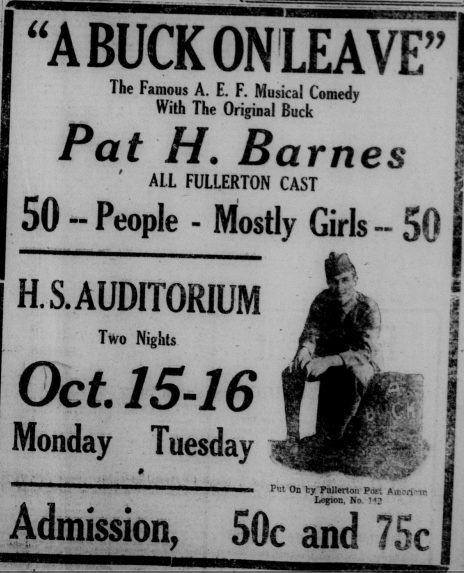
And here are a few other cultural/entertainment events advertised in the Tribune:

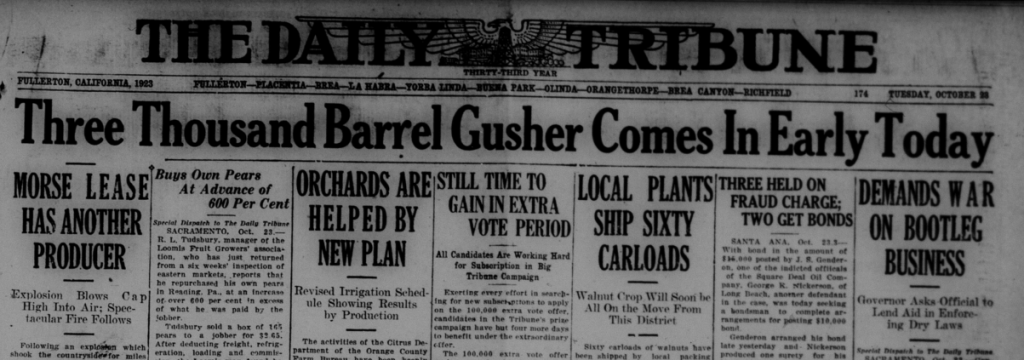
Oil!
In 1923, oil was a major export of Fullerton.
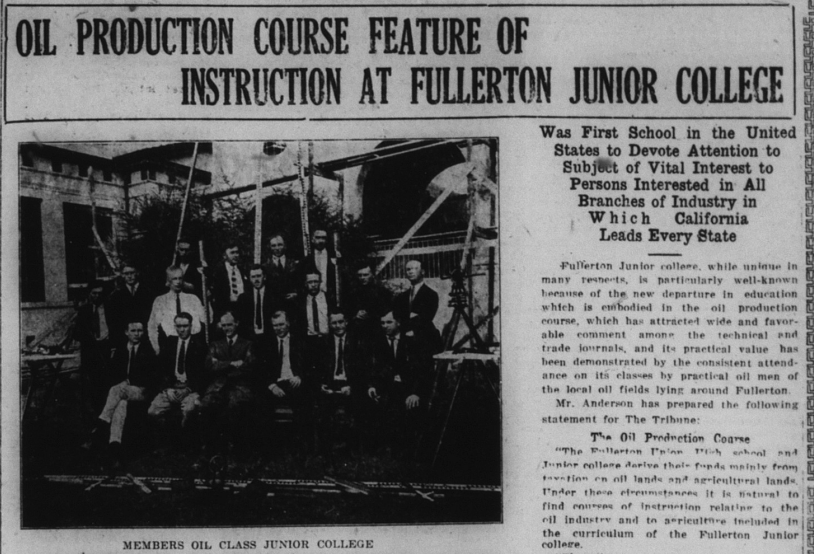
Fullerton College began to offer an oil production course.
Religion
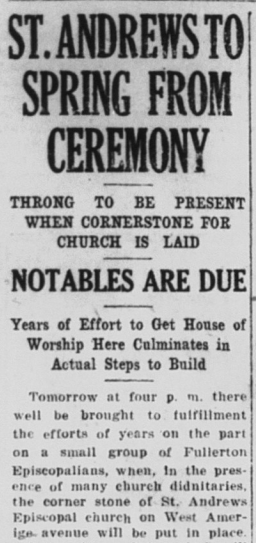
In religion news, new buildings were built for the Catholic, Methodist, and Episcopalian congregations. I apologize for not having pictures of these structures. I will work on that for a future post.

Hundreds gathered atop Hillcrest Park for an Easter church service.

Automobiles
With the increasing prominence of automobiles, Fullerton had a few notable car dealerships. On Commonwealth, William Wickersheim constructed a large building for his Ford car dealership. Unfortunately, it burned down in the 1950s and was eventually replaced with the Ace Hardware.

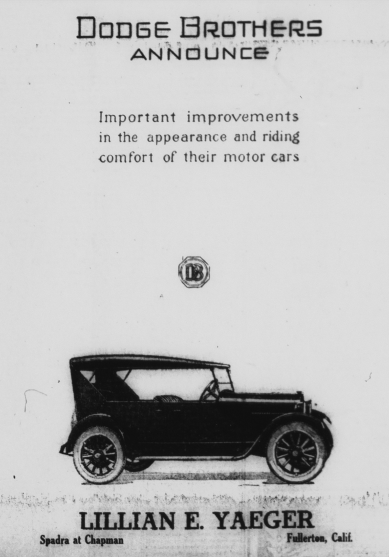
Other dealerships included O.L. Smith’s Oakland dealership on West Amerige, Albert Sitton’s Willys-Knight dealership on West Commonwealth, Lillian Yeager’s Dodge dealership in Spadra (Harbor) and Chapman, and William Goodrum’s Buick dealership.



Miscellaneous
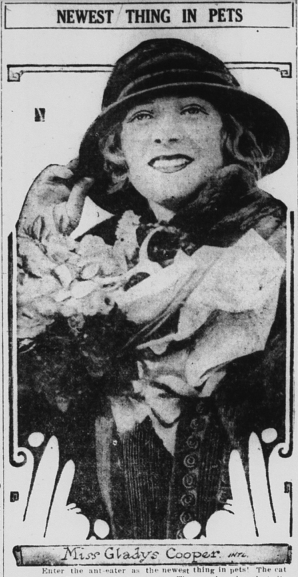
Here are a few miscellaneous news items:



Deaths
Local pioneer William Crowther passed away.

Crowther was a rancher and was active in local civic life, serving for many years as president of the Anaheim Union Water Company. He was a musician and organized the first municipal band in Fullerton.
Stay tuned for more news stories from 1924!
 Fullerton History