The following is from a work-in-progress about the history of Fullerton. You can support my ongoing research and writing on Patreon.
The Local History Room of the Fullerton Public Library has microfilm from the Fullerton Tribune newspaper stretching back to 1893. I am in the process of reading over the microfilm, year by year, to get a sense of what was happening in the town over the years, and creating a mini archive. Below are some news stories from 1922.
Growth
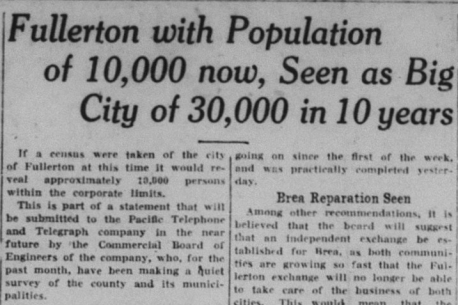
Throughout the 1920s, Fullerton enjoyed a period of rapid growth, as shown by a 1922 population of over 10,000, 20 miles of paved roads, 15 new subdivisions on the market, hundreds of new homes being built, and 15 new business blocks going up. The grammar school had 1071 students, the high school 800 students, and the junior college 150 students. The 1921 shipments of oranges and lemons was 2645 carloads, walnuts was 120 cars, and the oil territory produced 30,000,000 barrels annually.
Ground was broken for the California Hotel (now called Villa Del Sol), which would open in 1923.

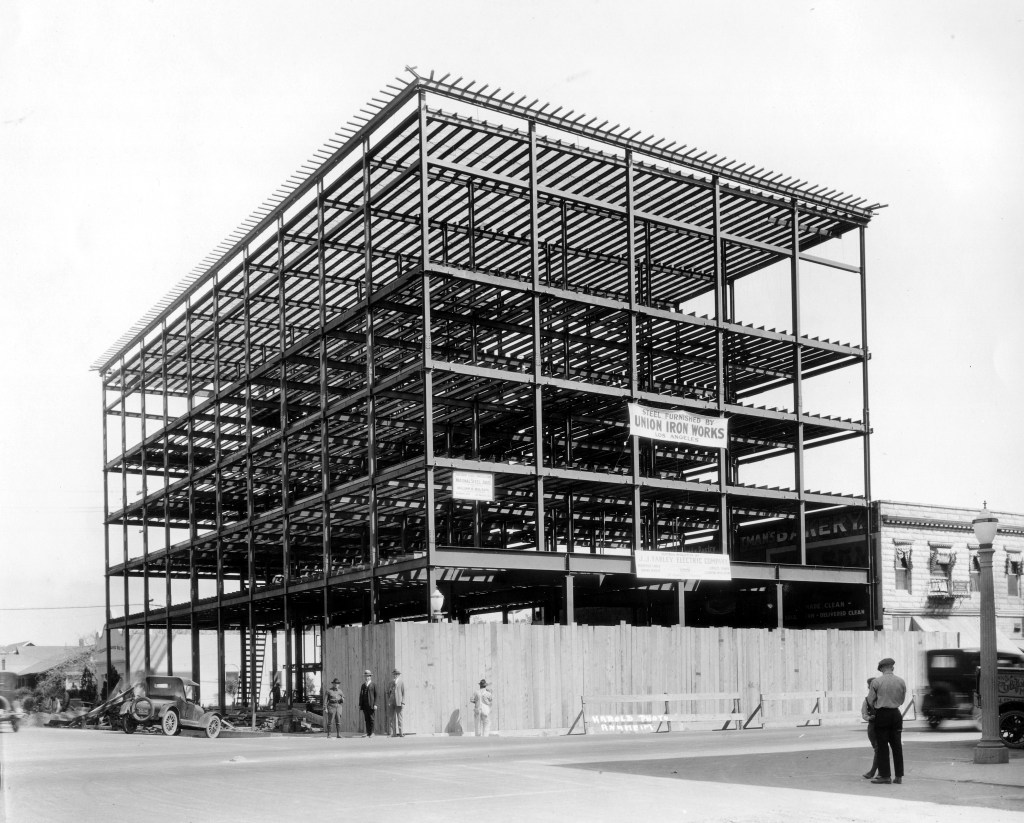
Additionally, plans were being made for the Chapman Building, which was at one time the tallest building in Orange County (5 stories).
New buildings were constructed at Fullerton High School.

There were plans in the works for constructing a City Hall; however these were stalled and eventually scrapped. Fullerton City Hall (now the police station) would not be built for another 20 years.

Meanwhile, the city government rented quarters in the Wickersheim building on West Commonwealth downtown.
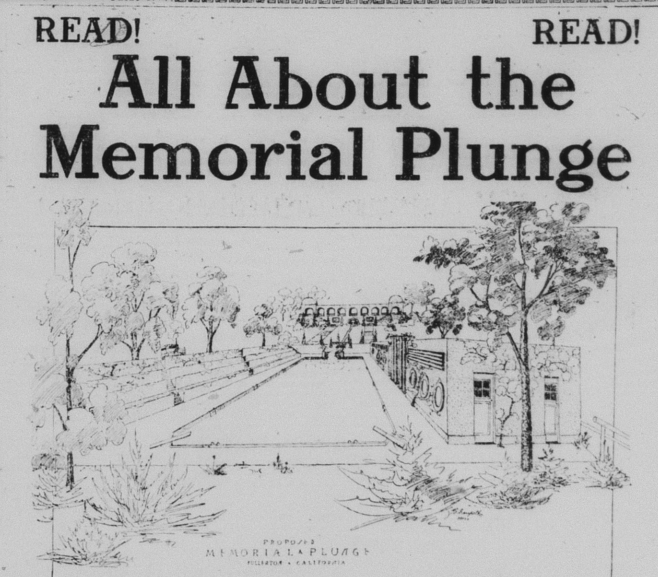
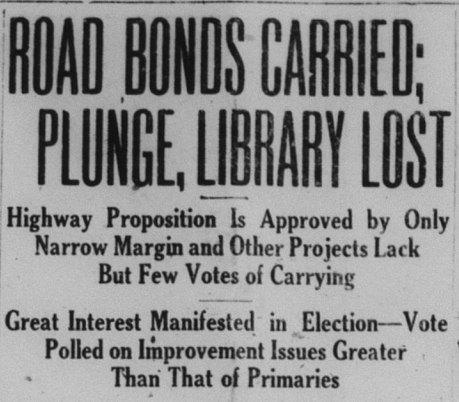
There were also plans to expand the Fullerton Public Library and to build a “Plunge” (swimming pool at Hillcrest Park). However, when a bond issue was put to the voters for the Library and Plunge, voters rejected them, preferring to only pass road bonds.

Infrastructure
Fullerton’s new downtown electric streetlight system went online.

Regionally, plans were made for the Prado Dam, which would help to conserve the water of the Santa Ana River for irrigation purposes.
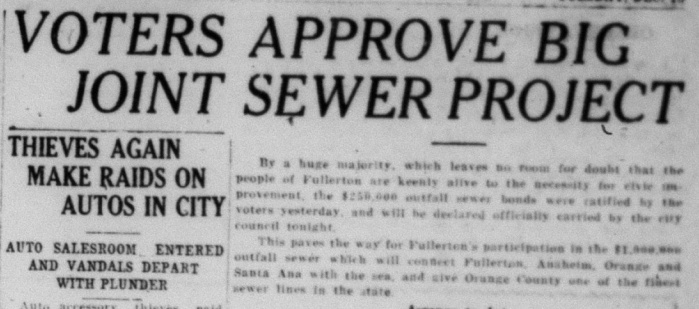
Fullerton joined other cities for the creation of a larger sewer system.
Education
Fullerton’s new grammar school (called Ford School) was completed (it was later torn down).
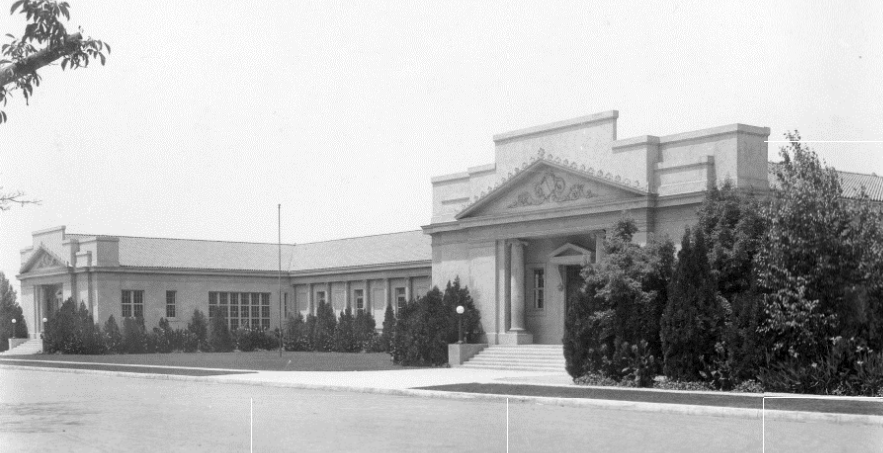
Another grammar school was built east of downtown, to supplement the old red brick schoolhouse (it too was later torn down).

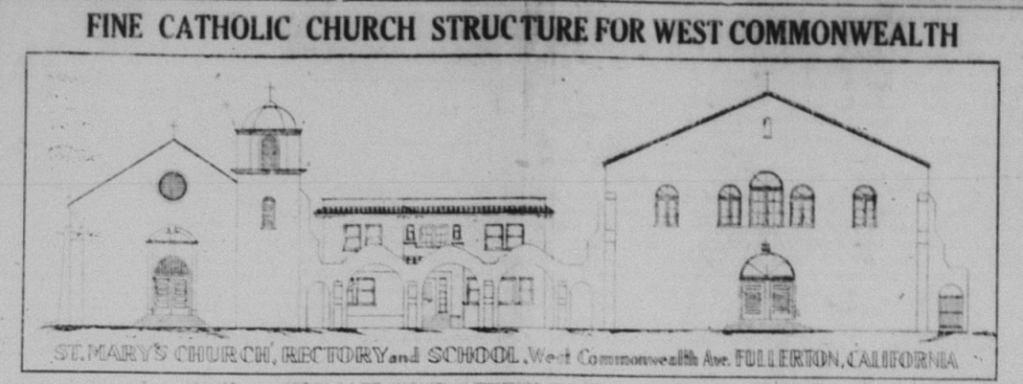
The Catholic Church was also busy building its own school.
Housing
As mentioned before, many new housing subdivisions were built. Unfortunately, most of these had racially-restrictive housing covenants, which prevented non-whites from purchasing or renting homes there.
In a recent post on this topic, Fullerton Heritage wrote:
“By the 1920s, they [racial covenants] were quite common, particularly in what is now the historic areas of the city…Fullerton newspaper advertisements for new housing subdivisions often signaled whether a tract was limited to whites only. A few advertisements were direct, but most used a coded language that potential homebuyers would understand. Words or phrases, such as ‘rigidly restricted’, ‘exclusive tract’, ‘reserved for the finest’ indicated that minorities were excluded from a subdivision.”
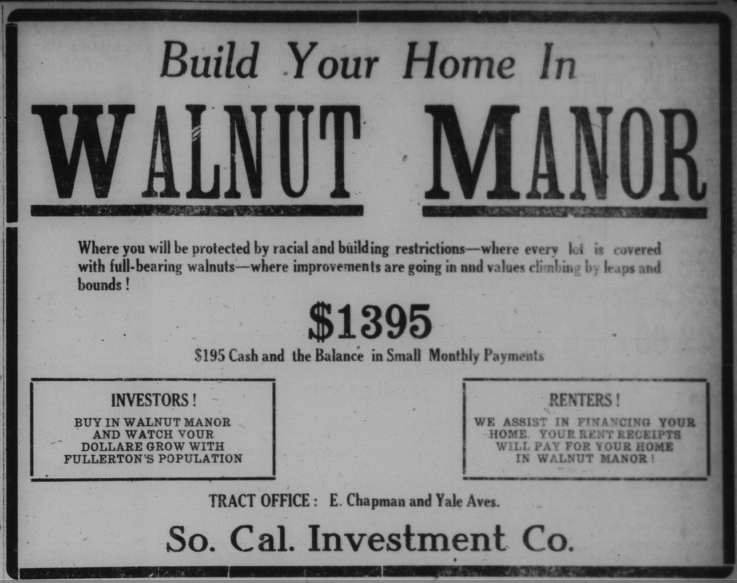
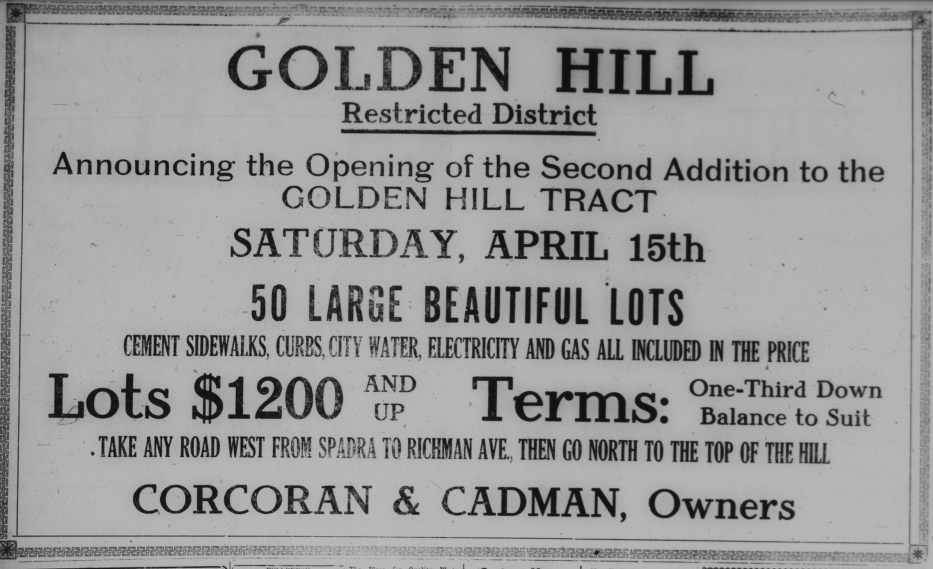
Advertisements for new housing subdivisions made bold claims about the importance of homeownership. As non-whites were excluded from this foundation of “nation-making,” residential housing restrictions may be seen as an example of institutional racism.

Builders could not build homes fast enough to keep up with demand. This “housing shortage” created a situation of very high rents.
To alleviate this problem as new homes were being built, the Fullerton Board of Trade came up with an idea to build temporary tent houses on the field next to the newly-built Ford School, which prospective home buyers could rent while they looked for a house to purchase.
Not surprisingly, this brought a storm of protest from surrounding homeowners.
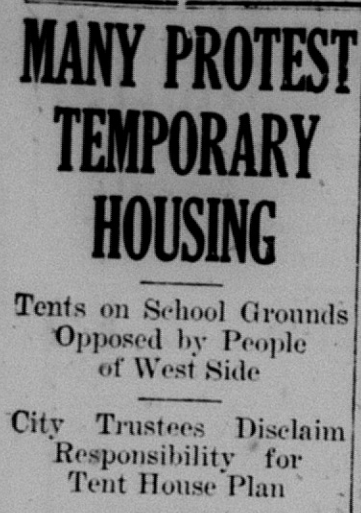
“Like the eruption of a Mt. Vesuvius, a storm of protest has burst forth against the action of those responsible for the erection of tent houses on the West side Grammar School grounds for rent to people seeking a place of abode,” the Tribune stated.
A Mrs. G.F. Molleda of 317 N. Richman avenue, said, “No decent white man will put his family in a tent among low class foreigners and criminals…The hundreds of children that are supposed to be surrounded with an environment of beauty and refinement while being educated, are to be daily confronted with a view of dirty tent inhabitants and clotheslines of black, dirty rags.”
“I am speaking for all the homeowners in the vicinity of the West Side grammar school when I make this protest,” continued Mrs. Molleda, “and a petition is being prepared which will voice this protest in no unmistakable terms.”
Despite the statements from the Board of Trade that the tent houses would be neat and sanitary and “only the most desirable class of people would be permitted” to rent there, the nearby neighbors weren’t having it.
“Two hundred people signed a petition condemning the idea of increasing Fullerton’s housing capacity in this manner,” the Tribune stated. “The main points set forth in opposition being that the established of the project in this particular location would be detrimental to property interests, a menace to the school children and would tend to destroy the effect of the beautiful new school building and grounds recently created up there.”
“R.S. Gregory of the Board of Trade housing committee, under whose jurisdiction the placing of the tent houses has been left, warmly defended the action of the committee, stating in effect that the colony was not one in which undesirable people would be housed, but instead would be one in which only the most desirable class of people would be permitted to live, and these only long enough to permit them to find homes in the city,” the Tribune stated.
Americanization
As Fullerton was building new schools and homes, it was also building separate facilities for its Mexican farm workers and their children under the auspices of an “Americanization” program.
“As Fullerton is the center of a great citrus and walnut growing section, many Mexicans are needed to do the work on the groves and great numbers of them are employed by the packing houses during the time when the fruit is being picked, packed, and shipped,” the Tribune stated. “On this account the Mexican problem has become quite a serious one, and Fullerton has been gradually increasing its facilities for handling this problem by educating the foreigner and teaching him American customs.”

“In order to promote Americanization in this community, the Bastanchury Ranch Company and the Placentia Orange Growers Association have announced their intention to Principal Plummer of the Fullerton Union High School and Junior College, to erect school houses on their properties in Fullerton,” the Tribune stated. “This work will commence shortly on the Bastanchury property and on the Placentia Orange Growers’ land in town and the school houses will be completed in time for the fall opening of school in September.”
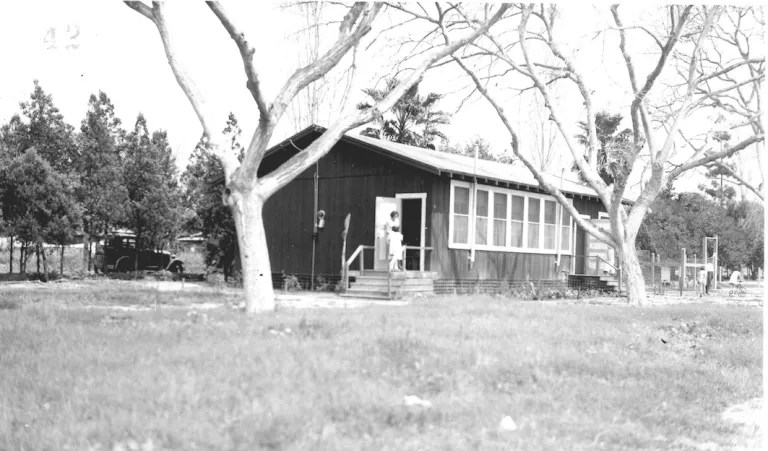
Druzilla Mackey, who had done similar work at “the Mexican colony in La Habra” was put in charge of Fullerton’s Americanization program.
There were at least two “Mexican” schools in Fullerton, one on the Bastanchury ranch amidst the several work camps, and another closer to downtown Fullerton, at Balcom.
The downtown camp, was called Camp Progressive, and later Campo Pomona “is at present composed of twelve houses each occupied by the family of an employee of the association. Each house is equipped with toilet facilities and there are two bath houses for community use, as a central community washhouse.”
The Placentia Orange Growers Association, who paid for the camp believed “that it will not only be an asset to their business but an institution of demonstrated worth to the community.”
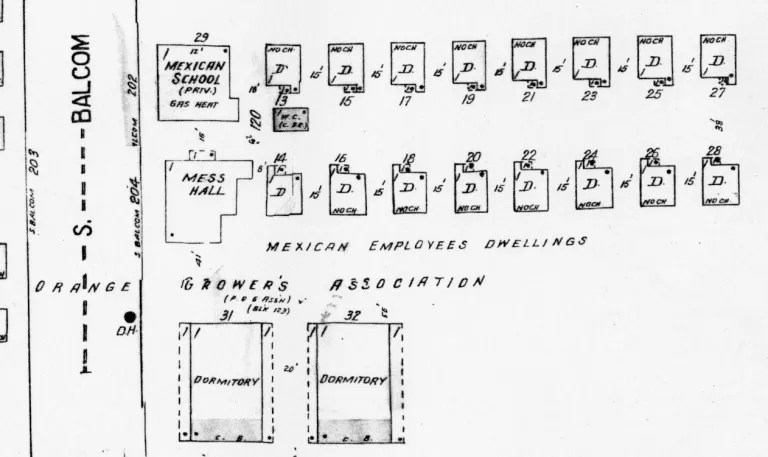
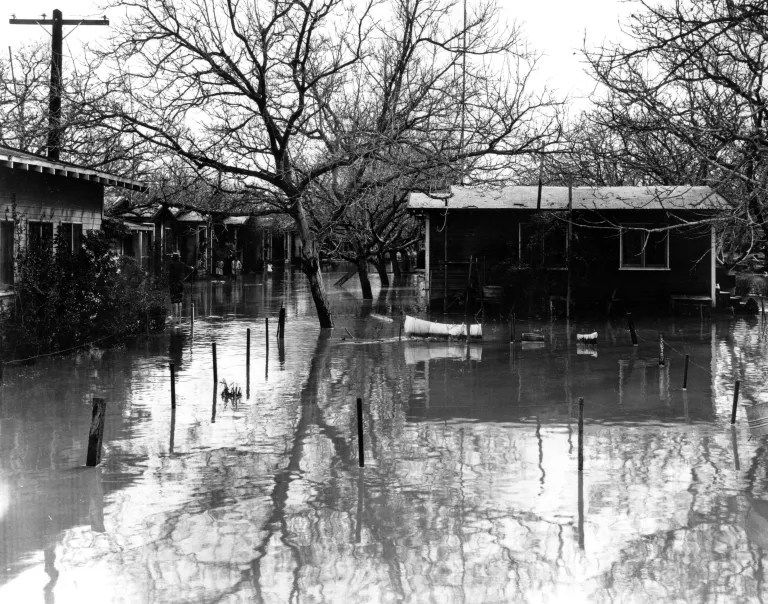
Despite the fact that Mexicans were generally excluded from purchasing houses in Fullerton’s neighborhoods or attending its stately new schools, the proponents of Americanization saw what they were doing as a positive, helpful thing.
Local Politics
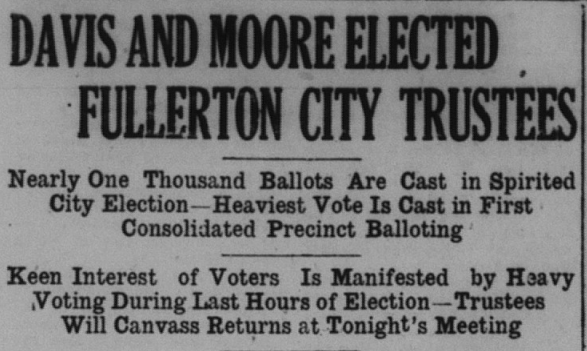
In the 1922 midterm election, Fullerton voters elected Roy Davis (who worked at the Fullerton Ice Co.) and W.A. Moore (of the Fullerton Realty Co.). Gurman Hoppe (of the Stein, Hoppe, and Hax store) was defeated.
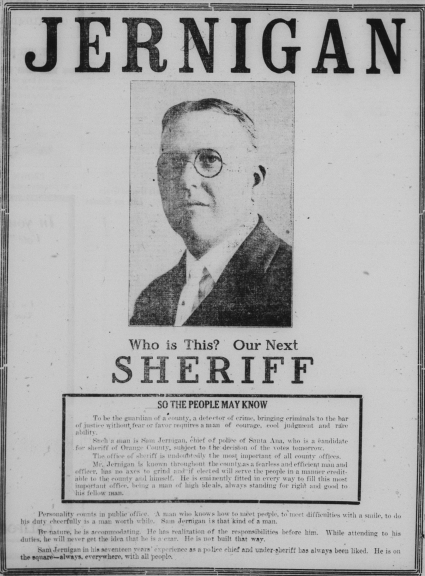
Sam Jernigan, a member of the Ku Klux Klan, was elected county sheriff.
Republican Friend Richardson was elected governor, defeating Republican incumbent William D. Stephens. During his tenure, Richardson would roll back many of the progressive reforms begun by Hiram Johnson.

F.M. Dowling and E.J. Munger were elected as Trustees of High School:
In 1922, at the prompting of the Chamber of Commerce, Fullerton considered hiring a City Manager, which would fundamentally alter the form of local government, moving a certain measure of administrative authority away from elected officials and toward an unelected (appointed) city manager.

“Characterizing certain departments of the city government as totally inefficient, lacking in harmony and not working to the best interests of the people of Fullerton, because of jealousy and interlapping authority, a resolution was today introduced by the executive committee of the Chamber of Commerce by G.W. Finch urging that organization to support a movement for the creation of a city manager for Fullerton,” the Tribune states.
Ku Klux Klan
According to a 1979 UCLA doctoral dissertation entitled “The Invisible Government and the Viable Community: The Ku Klux Klan in Orange County, California During the 1920s” by Christopher Cocoltchos, at least one of the men elected to Fullerton City Council in 1922 would join the Ku Klux Klan–W.A. Moore.
“Councilman W.A. Moore, Judge French, and Superintendent of Schools Plummer [yes, that Louis Plummer] joined the Klan in the latter part of 1923, and R.A. Mardsen entered in mid-1924. Civic leaders were especially eager to join. Seven of the eighteen councilmen who served on the council between 1918 and 1930 were Klansmen,” writes Cocoltchos.
The Ku Klux Klan was on the rise nationally in the 1920s, achieving a peak membership of around 5 million in cities and towns all over America—not just in the South, but also in the West.
Throughout 1922, there are numerous articles about the growing KKK both around the country and locally.

The above article includes a letter written by a prominent Santa Ana pastor, condemning the KKK and a local church for inviting a Klan member to preach:
“Christian civilization has fallen very low indeed, if the church must consent to men being ‘hooded and gowned’ to show kindness or to practice virtue. I have faith to believe that American Patriotism will never allow justice to lose its purity nor the law its righteousness and majesty in hooded lawlessness,” Rev. Oliver writes.
It’s important to understand that the Ku Klux Klan saw itself as a Protestant Christian organization.
At a standing-room only sermon, Rev. C.R. Montague, pastor of the First Methodist Church of Fullerton, gave a sermon in which he (sort of) condemned the Ku Klux Klan.
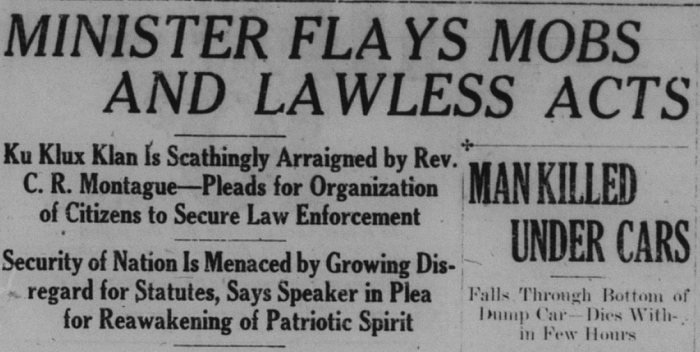
However, his condemnation was only for the actions of the KKK, not their principles or values.
“While he scored the alleged acts of the Ku Klux Klan wherein that hooded body is said to have perpetrated acts of violence in an effort to remedy conditions which they believed were without the pale of law, Rev. Montague stated that he believed in fair play for them all, and expressed his entire approval of the tenets of the Klan as outlined in their published statements and oaths–allegiance to the United States government and a ‘square deal’ for every man,” the Tribune stated.
One of the main tenets of the Klan not mentioned explicitly in this article was white supremacy.
In order to boost their membership, the Ku Klux Klan tapped into issues that were popular at the time, such as Prohibition, which had been the law of the land since the passage of the 18th Amendment in 1919. Bootlegging was widespread, and the KKK saw itself as a force against bootlegging.
A Klan raid on an alleged bootlegging operation in Inglewood in 1922 resulted in a policeman [and alleged Klan member] being killed and two others wounded. This prompted a grand jury investigation of the Klan’s activities locally.

Los Angeles District Attorney Woolwine sharply criticized the KKK, saying, “It seems to me that no right-thinking American could find the slightest excuse for the existence in this county of an organization such as the Ku Klux Klan.”
The grand jury found the Klan responsible:
“We, the jury, find that the deceased came to his death from a gunshot wound in the abdomen by Officer Frank Woerner in the performance of his duty while the deceased was acting as a member of an illegal, masked and armed mob, presumably instigated and directed by members of the Ku Klux Klan, and we recommend that the District Attorney convene the grand jury of this county to investigate this case further and take the necessary steps to prosecute the perpetrators of this crime.”
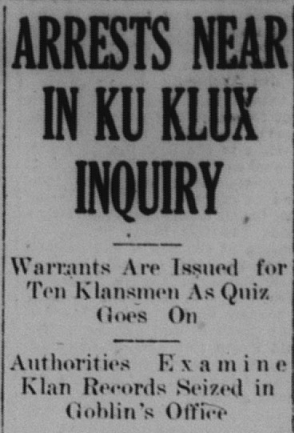
More arrests of Klansmen followed, as well as a raid on the KKK’s offices in downtown Los Angeles at Seventh and Broadway. As a part of this investigation, a list of Klansmen in Southern California was obtained, which revealed that the KKK had over 200 members in Orange County.

“That there are 203 members of the Ku Klux Klan in Orange county and only approximately 25 of that number are residents of other sections than Santa Ana, was the statement of District Attorney A.P. Nelson this morning,” the Tribune reported. “Of the Klan members outside of Santa Ana, there are said to be about 10 in Anaheim and three or more in Orange, Fullerton, Placentia, Huntington Beach and Seal Beach.”
It should be noted that this 1922 Klan list was incomplete, and another list would be discovered in 1924 that had over 1,200 names of Orange Countians.
Nelson chose not to make the names on the list public, but said he had it in his possession, should the KKK attempt further crimes.
Interestingly, like Rev. Montague, DA Nelson did not condemn the beliefs of the Klan, only their vigilante methods.
“Although stating that he thought the principles of the klan as outlined by the organization to be truly American, Mr. Nelson said that he was absolutely opposed to any organization, no matter what its principles that works by the methods attributed to the Ku Klux Klan, masked and with identities concealed to take law in their own hands,” the Tribune states.
After it became known that Nelson had the membership list, a mystery man appeared at his home while he was gone and tried to get his wife to get her husband to drop any further investigation into the Klan.
Meanwhile, the KKK tried to extort money from Black ministers in Los Angeles.
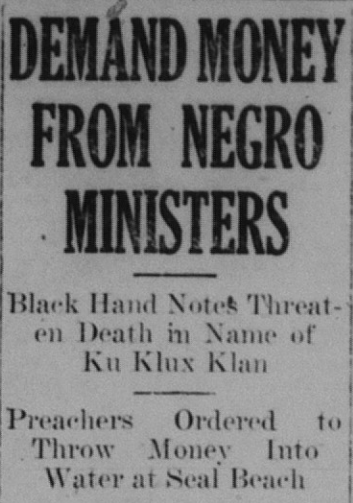
“Five negro ministers, one in Watts and the other four in Los Angeles, have received letters threatening themselves and their congregations with death unless they paid sums ranging from $1000 to $10,000 to the writers of the demands who signed themselves the ‘Ku Klux Klan’ according to a statement made at the sheriff’s office today,” the Tribune reported.
Given the growing popularity of the Klan and its threat to law and order, the Orange County Board of Supervisors voted to bar Klan members from working for the county.
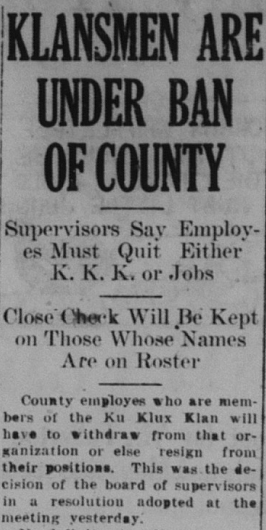
“With the complete list of Klan members in the possession of District Attorney A.P. Nelson a complete check will be kept on the actions of those affected by the ultimatum of the supervisors. The names of those affected will not be made public,” the Tribune reported.
The resolution adopted by the Supervisors was as follows:
“Whereas, it has been called to the attention of the Board that certain employees of the county of Orange are members of and identified with the branch of that organization known as the Ku Klux Klan, and
“Whereas, the Board feels that membership in such an organization is not compatible with the duty which county employees owe to the public as servants of the public
“Now, therefore, it is hereby resolved and ordered by the Board of Supervisors of the County of Orange, State of California, that all county employees, who are members of such Ku Klux Klan be and they are hereby requested to furnish to the District Attorney of the County of Orange satisfactory evidence of their withdrawal as members of the organization known as the Ku Klux Klan or tender to the proper officer of the county their resignation as an employee of said county.
Meanwhile in Oklahoma, an explicitly anti-Klan group formed. Because the KKK saw themselves as an “invisible empire,” this new group called itself the Knights of the Visible Empire.

“The Knights of the Visible Empire are gathering strength to oppose the white-shrouded host–the knights of the invisible realm. The Southwest is splitting into two factions–klan and anti-klan,” the Tribune reported. “Within the last few months the Ku Klux Klan has shown its strength. It appears to exist in every community. In the big, modern, fast-growing cities of the Southwest it numbers thousands of its “invisible empire.” This has been proved by parades and demonstrations in such cities as Dallas, Forth Worth, Beaumont, Waco, Oklahoma City, Tulsa, and other places.”
And then the Tribune makes a shocking, albeit buried, report:
“Here, only a few weeks ago, nearly 3,000 hooded figures passed through the streets. The parade was fifteen blocks in length. At its head masked riders bore aloft the emblem of the klan. Overhead an airplane circled, bearing a flaming cross.”
By “here” I can only assume Johnson meant Fullerton, or a nearby town.
In my previous research on the KKK in Fullerton and Orange County, I found evidence of large rallies in Anaheim and Fullerton, although I thought they only happened in 1923 and 1924. Evidently, there was also a huge Klan parade in 1922. Strangely, the Tribune doesn’t report on it outside the short paragraph above. Probably, as is sometimes the case today, some Fullertonians didn’t want to admit that the KKK was in their community, and prominent members joined.
Culture & Social Life
The Klan wasn’t the only group growing in popularity in 1922. A Bible class that met at the Rialto Theater drew hundreds, and then thousands of boys and men on Sunday mornings.
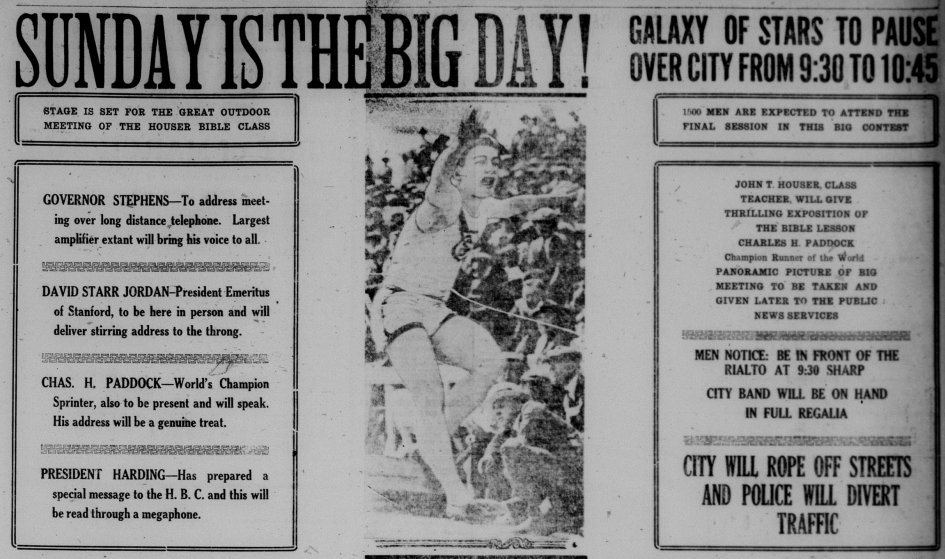
The Houser Bible class was in a kind of competition with a similar Bible class in Santa Ana to see who could draw the most members. Not really the point of a Bible class, but whatever. At its peak, the Bible class grew to such proportion that Spadra (Harbor) had to be closed for at least one high-publicized meeting.
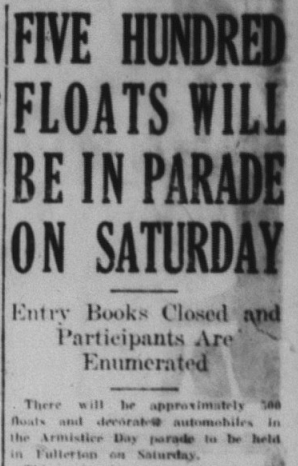
The other big gathering, outside of Klan Rallies and Bible Studies, was the Armistice Day parade, celebrating the ending of World War I. This was a truly massive event, with thousands of attendees and around 500 floats!


For more ordinary entertainment, Fullertonians went to see movies and vaudeville shows at the Rialto Theater (this was before the Fox was built).
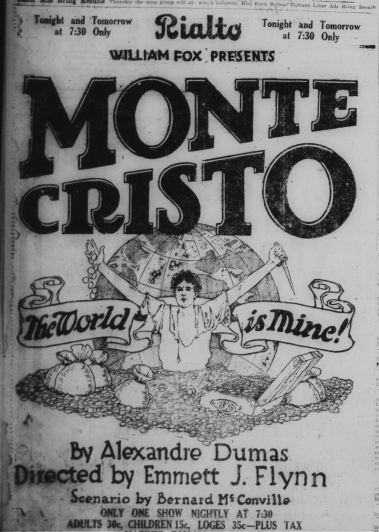


Unfortunately for movie-goers, Will B. Hays (former Postmaster General under president Harding) was hired to censor movies of content deemed objectionable.

“A genuine ‘spring cleaning’ to purge motion pictures of all semblance of salaciousness was promised today by Will B. Hays, who leaves President Harding’s cabinet March 4 to head a new association of motion picture producers and distributors,” the Tribune reported.
“I will head what you might term a moral crusade in the film industry after March 4,” Hays said, adding that this would not be censorship. “I have two objects. We will attempt to attain and maintain the highest standards in motion picture production and seek to develop the moral and educational values of motion pictures to their highest degree. That is all we plan.”

Movie mogul Joseph M. Schenck said, “Arrangements have been made for a review of each picture that is prepared. The report of this review will go to Will Hays and his decision will be final. If he orders the picture changed, it will be changed. If he orders it ‘scrapped’ it will be discarded without argument.”
Much of the discussion centered around depiction of sex in movies.
“Very much has been said on the subject of ‘sex’ in pictures. But there exists a confusion in the minds of many regarding the definition of sex. A great many think that the word sex is synonymous with salaciousness. This is not true,” Schenck said. “The sex picture will continue to lead in presentation on the screen. But the salacious picture will not be tolerated…And it will be one of the principal part of Mr. Hays’ duties to see that this is not done.”
There was much less discussion about depictions of violence. I always have found it ironic that many Americans tend to be much more averse to depictions of sex than depictions of violence in movies.
For musical entertainment, Fullertonians purchased and listened to records.

Just as there was something of a moral panic about sex in movies, there was also backlash against the influence of jazz music.

Another popular form of entertainment was the traveling Chautauqua show that came through town each Spring.

Crime
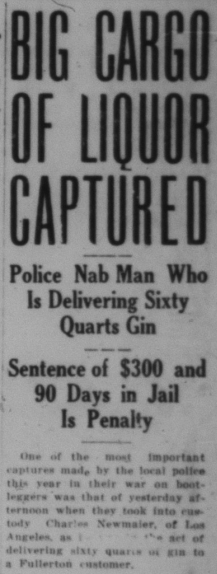
Because this was during Prohibition, the most common “crimes” were liquor-related. One of the major ironies of Prohibition was that, despite its goals of “cleaning up” America, it led directly to an increase in organized crime and political corruption.
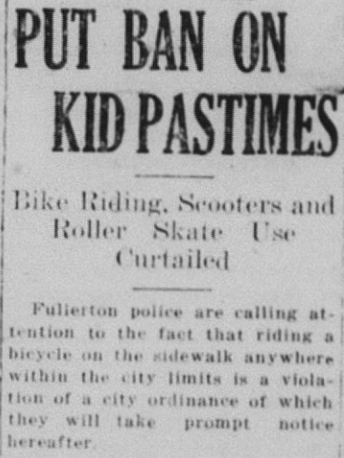
Among other fun-killing laws, Fullerton started cracking down on roller skating, scooters, and riding bikes on sidewalks.
Transportation
In transportation news, automobiles were very popular, with a few different car dealerships in town, like William Wickersheim’s newly-built Ford dealership on Commonwealth (It’s now the Ace Hardware Store).
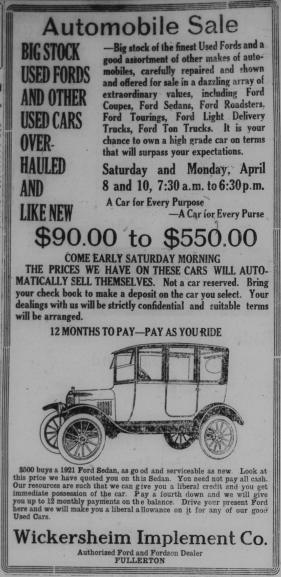

An auto camp at Hillcrest Park was a popular spot for travelers.

Residents of South Fullerton organized to fight a proposed new Union Pacific Rail line through their area.

Ultimately, the UP rail line went in.
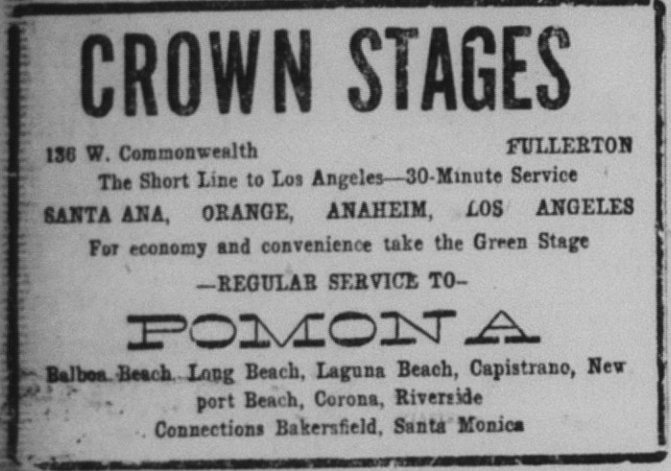
There was also bus service to and from Fullerton, the Crown Stages.
National News
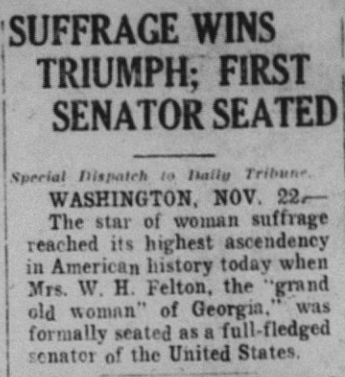
In national news, the first female U.S. Senator was elected, Rebecca Felton. Unfortunately, she was a former slave owner and white supremacist.
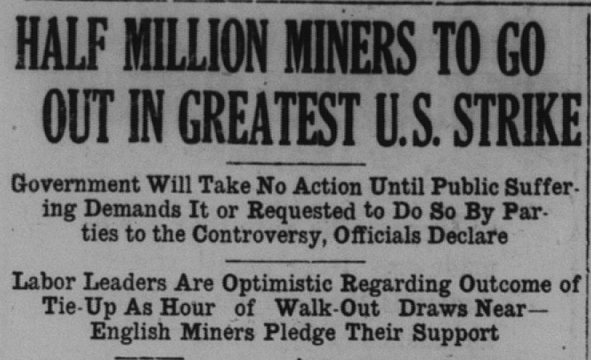
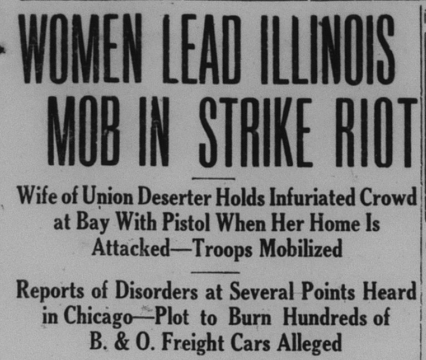
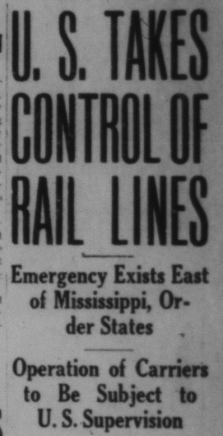
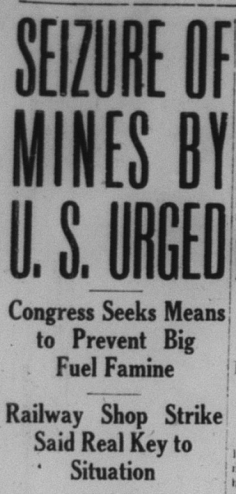
Major strikes happened across the United States, particularly coal miners and railroad workers. In the case of the miners’ strike, U.S. troops were called in. To force an end to the rail workers’ strike, the government (briefly) took control of the rail lines.
These two industries–coal and railroads–were vital to the US economy in the 1920s, as they were major sources of power and transportation of goods and people.

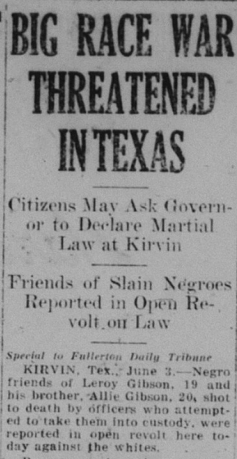
In keeping with the rise of the Ku Klux Klan nationally, there were occasional outbursts of racial violence.
World News
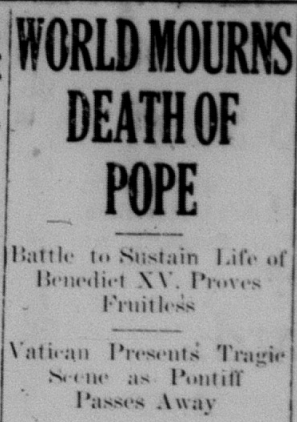
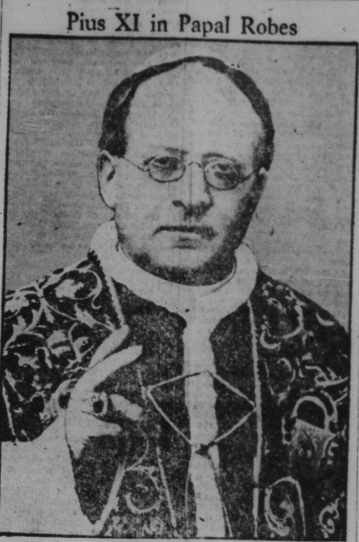
In world news, Pope Benedict XV died. In his place, Pope Pius XI was chosen as the next Pope.
In the aftermath of World War I, and in an effort to prevent further wars, major world powers sought to establish limitations on armaments.

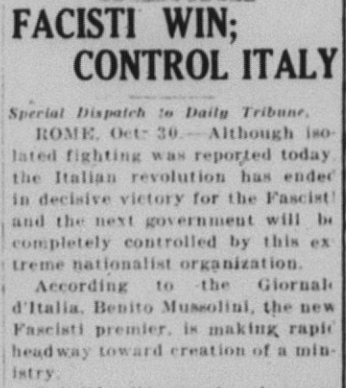
Unfortunately, this peace would not last. In Italy, fascists took over the country.

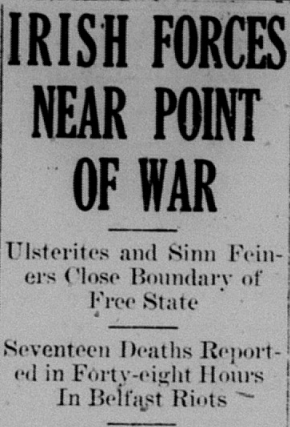
Great Britain was having trouble holding onto its empire, with rumblings of independence movements in Ireland, India, and elsewhere.
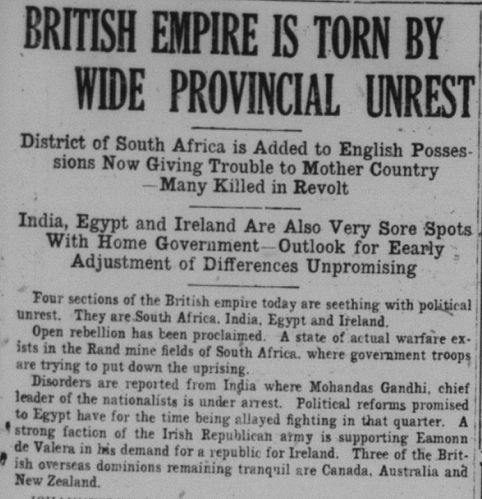
As is the case today, much of the global conflict was over resources, like oil.

Deaths
Among notable local deaths was Fullerton pioneer rancher Henry Burdorf, who died at age 81.
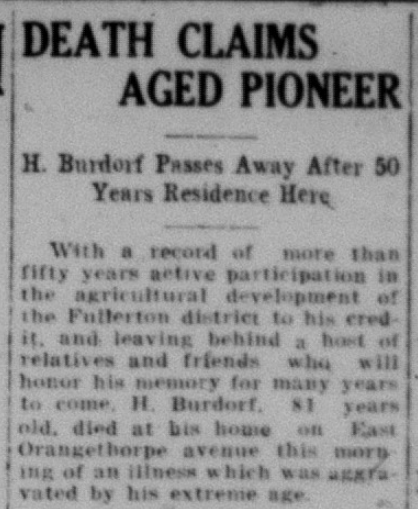
He died at his house on East Orangethorpe avenue. Burdorf came to Orange County from San Francisco and lived on his ranch for fifty years. He was one of trustees of the first grammar school district. I plan to write more on Burdorf in a future post.
After the death of the leader of a Placentia vegetarian cult, Walther Thales, died in 1921, his successor D.W. Weiderhold died in 1922.

Miscellaneous
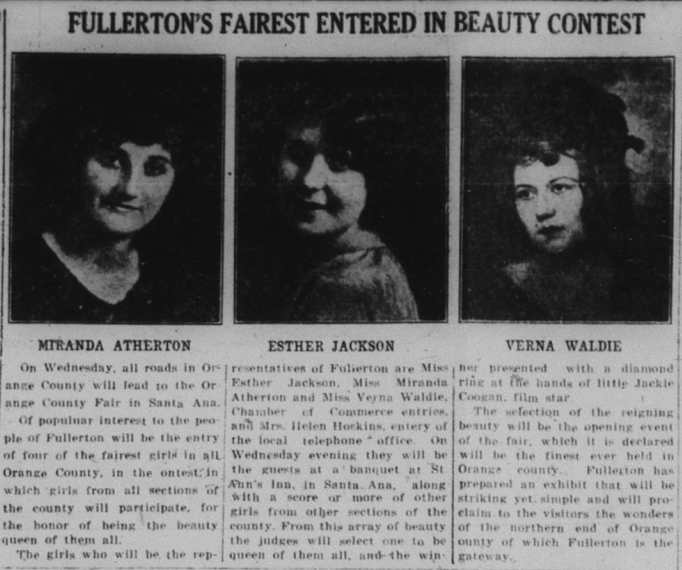
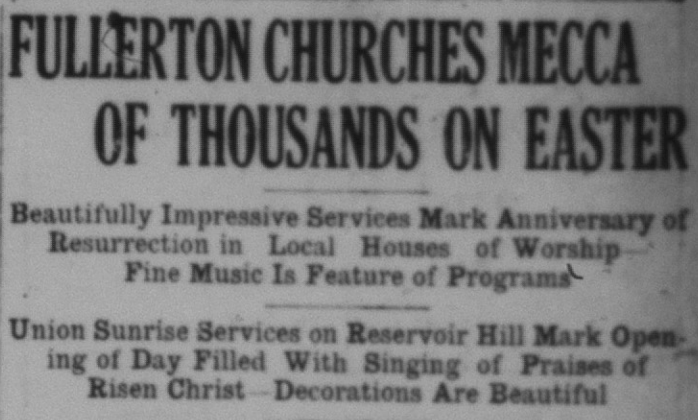
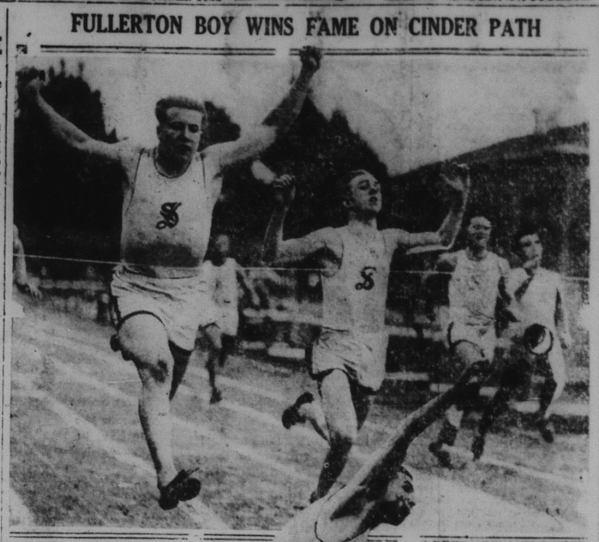
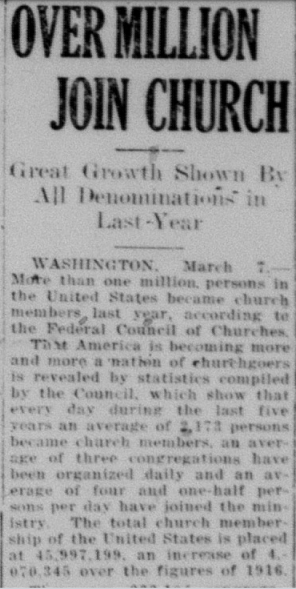
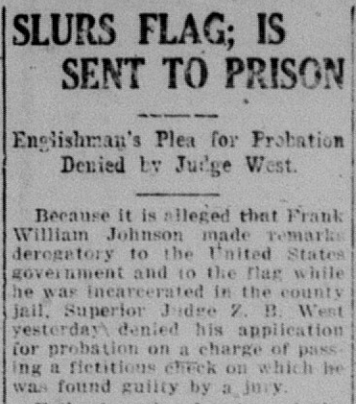
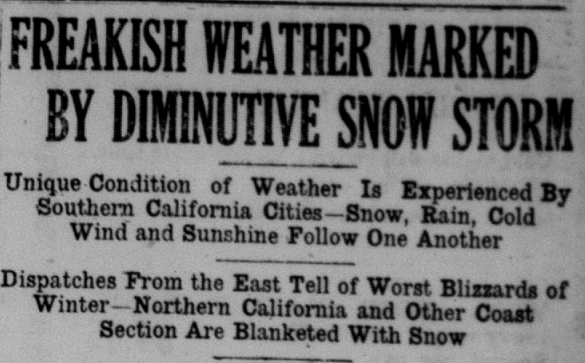
And here are some miscellaneous articles from 1922:







Stay tuned for more headlines from 1923!
 Fullerton History