The following is from a work-in-progress about the history of Fullerton. You can support my ongoing research and writing on Patreon.
The Local History Room of the Fullerton Public Library has microfilm from the Fullerton Tribune newspaper (which became the Orange County Tribune in 1908) stretching back to 1893. I am in the process of reading over the microfilm, year by year, to get a sense of what was happening in the town over the years, and creating a mini archive. Below are some news clippings from 1920.
According to the census, Fullerton’s population was 4,415, quite an increase from 2,690 in 1910. The 1920s would bring a population “boom” to the city as new subdivisions and business blocks were created.

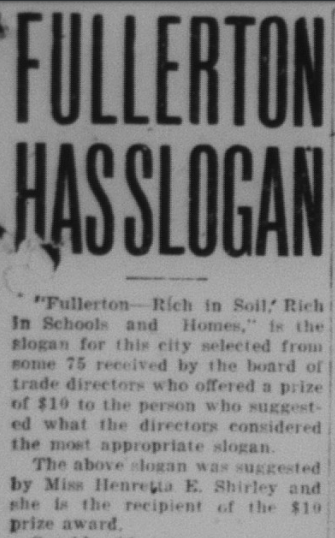
In 1920, Fullerton adopted the slogan, “Fullerton–Rich in Soil, Rich in Schools and Homes.” Having never heard this slogan, I assume it was later abandoned.
Local Politics
1920 was an election year and seven people ran for City Council. They were J.R. Carhart, Albert Sitton, L.P. Drake, Simon J. Oxarart, R.A. Mardsen, Arthur Marson, and W.F. Coulter.

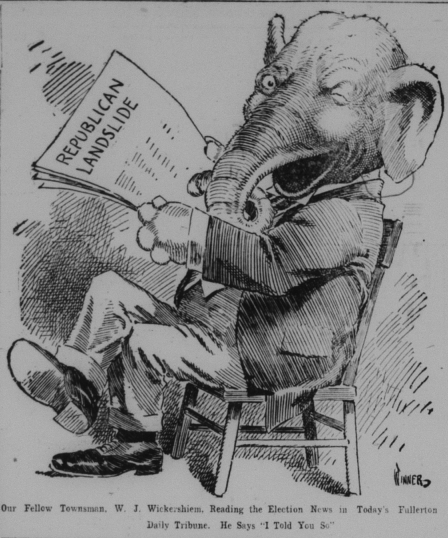
The election resulted in a “landslide” victory for Coulter, Drake, and Mardsen.

Coulter was chosen among his council colleagues as the Mayor.

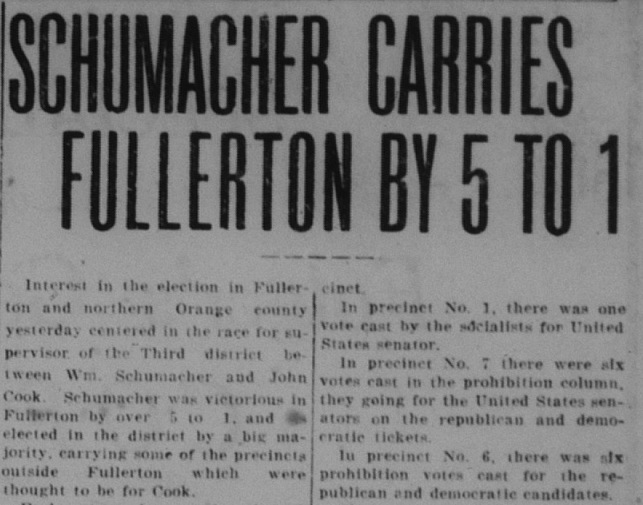
William Schumacher was elected to represent Fullerton on the Orange County Board of Supervisors.
Women’s Suffrage/Rights
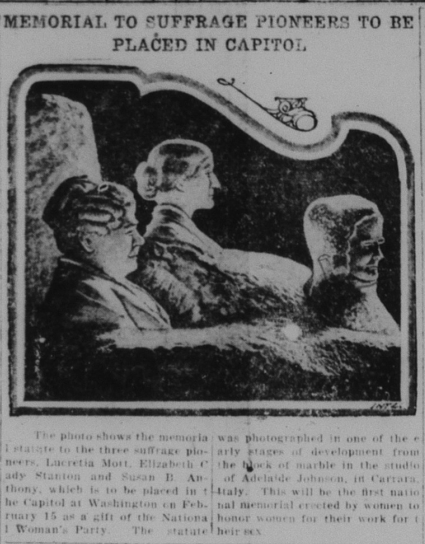
1920 was an important year for women, as that is when the 19th amendment to the U.S. Constitution took effect, granting women the right to vote. In California, this right had already been granted back in 1911.
Significantly, 1920 was the first year a woman was elected to public office in Fullerton. Belle J. Benchley was elected a grammar school trustee. Benchley would eventually move to San Diego, where she would become a noted zookeeper and author.

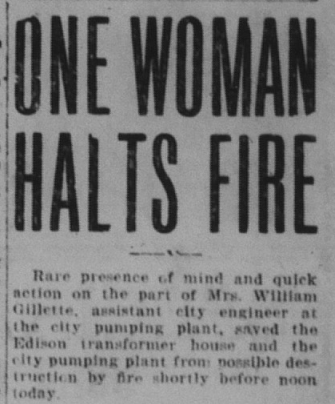
A Mrs. [no first name given] Gillette was hired as assistant city engineer.

Gillette heroically halted a fire that could have destroyed the city’s pumping plant and Edison transformer house.
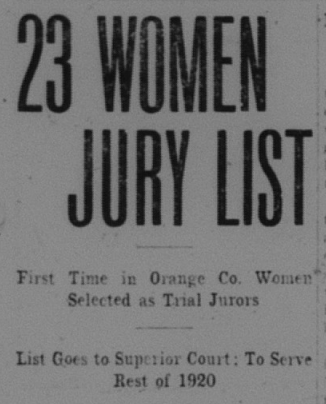
1920 was also the first year women were allowed to serve as trial jurors in Orange County.
The Town of Orangethorpe
Before the town of Fulleton was founded in 1887, some early ranchers settled in an area south of the town-to-be, an unincorporated community called Orangthorpe. In 1920, city leaders attempted to annex part of Orangethorpe so as to extend the city’s “sewer farm” which is now the Fullerton airport. The ranchers who lived around this area organized to fight this Annexation.
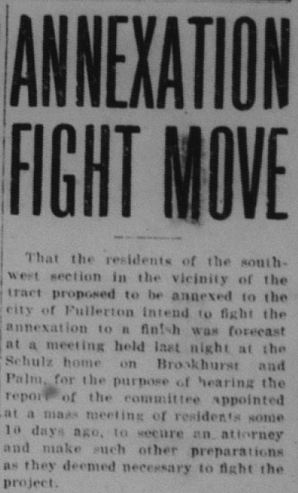
The ranchers were successful in blocking this annexation, and they even voted to incorporate as the town of Orangethorpe to protect the land from future annexation attempts.


New Housing Developments
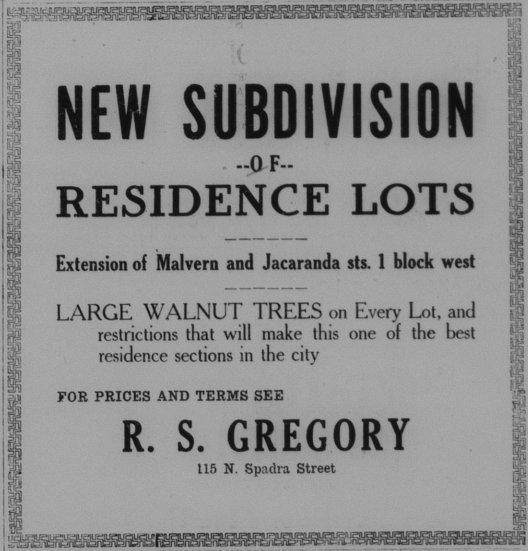
As I mentioned earlier, the 1920s would see a housing and business boom in Fullerton, as new subdivisions were created. In 1920, the Jacaranda tract was created near downtown.

New Business Developments
In addition to housing, new business blocks and buildings were added to downtown, such as the Gardiner Building, McKelvey & Volz Drug Store, the Sanitary Laundry Building, and more. I apologize for not including photos of these buildings. I will work on that for a future post.
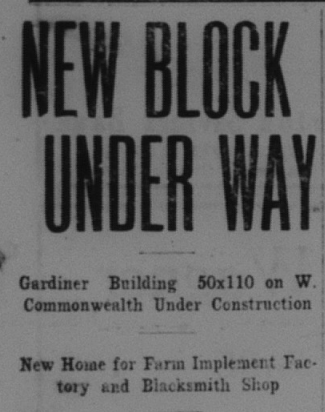


Unfortunately, part of this “progress” meant destroying old buildings, such as the Henderson Blacksmith shop, which was one of the oldest shops in town.

Oil!
Along with oranges and walnuts, oil continued to be a major industry in Fullerton, with lots of wells in the hills north of town.

The map below shows some of the local fields in La Habra, Brea, and north Fullerton.

Health Care
There was talk of making the Fullerton Hospital a municipal (city-owned?) one; however these plans were dashed when a man from Anaheim bought the hospital, which is now the Women’s Transitional Living Center.


Crime
By far, the biggest crime story of 1920 was the murder of local rancher Roy Trapp and the assault of his wife by a Black man named Mose Gibson, who fled town after the crime.
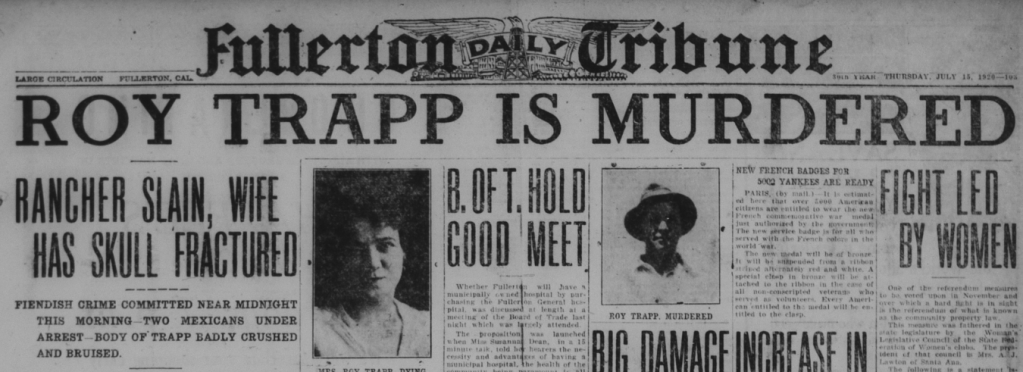
There was a manhunt for the murderer, who had given the false name of Henry Washington.

Because the murderer was Black, many local citizens wanted to lynch him when he was caught. This was the 1920s, when lynchings were not uncommon.

Eventually, Mose Gibson was captured near the Mexican border, and brought to the Los Angeles jail, where he confessed to the murder.


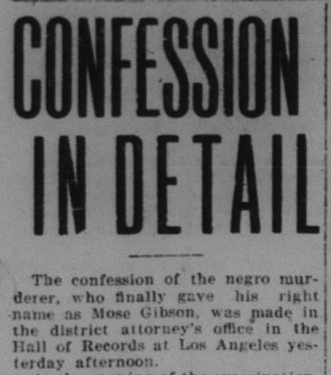
Gibson was tried and sentenced to death by hanging.

As reported by the Tribune, feeling in Fullerton regarding Gibson was “intense.”

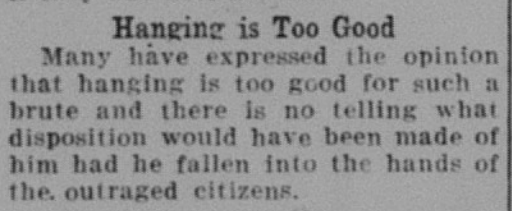
Tribune editor Edgar Johnson didn’t exactly help matters by calling Gibson “the lowest type of human beast.”

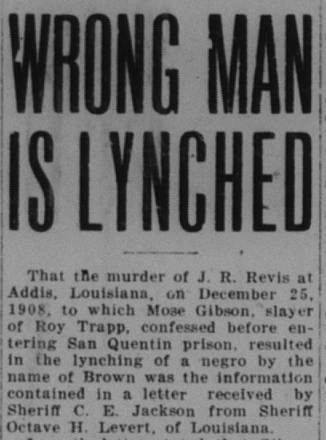
Prior to being hanged, Gibson also confessed to several other murders and crimes across the United States. One of the people he confessed to murdering was J.R. Revis of Louisiana. Unfortunately, a Black man named Brown, it turned out, had been wrongfully lynched for the murder.
While Gibson was in San Quentin prison awaiting execution, a group called the Housewives Union sent a letter to the governor of California, pleading for the man’s life.
“We ask your attention to the case of Mose Gibson, condemned to suffer the death penalty, September 24,” the letter stated. “The fact that the man is a negro is likely of itself to prevent him fro having that consideration before the law which a white man in his humble position might receive. It seems that when a negro is the culprit, that the white man feels it his peculiar privilege to indulge in any amount of brutality.“

Alas, Gibson was hanged, nonetheless.

Anti-Japanese Racism
In 1920, anti-Japanese feeling in California was intense. In 1913, the state had passed the Alien Land law, which sought to prevent Japanese immigrants from owning or leasing land.
Tribune editor Johnson contributed to this hysteria by printing articles such as the following:

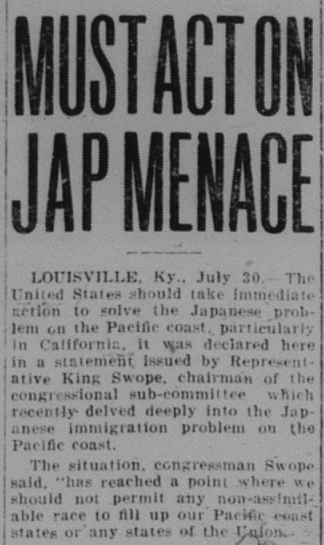
Apparently, it was politically advantageous to demonize Japanese immigrants. A Senator James D. Phelan came to Fullerton to speak on the “Japanese Menace.”

In 1920, Californians were asked to vote on a new Alien Land Law, which sought to close some loopholes of the 1913 law. Surprisingly, the Tribune published an ad urging voters to not to support the new law because, well, obviously.
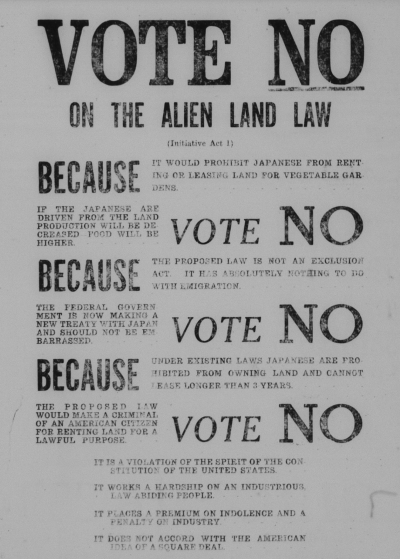
Unfortunately, the law passed by a large majority of voters, including a majority of Fullertonians.
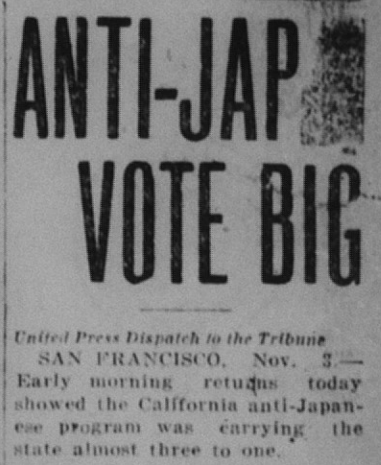
California was not the only state to pass an exclusionary law against the Japanese. Texas (of course) followed suit, a long with Arkansas, Florida, Minnesota, Nebraska, Oregon, Utah, Washington, and Wyoming.

Culture
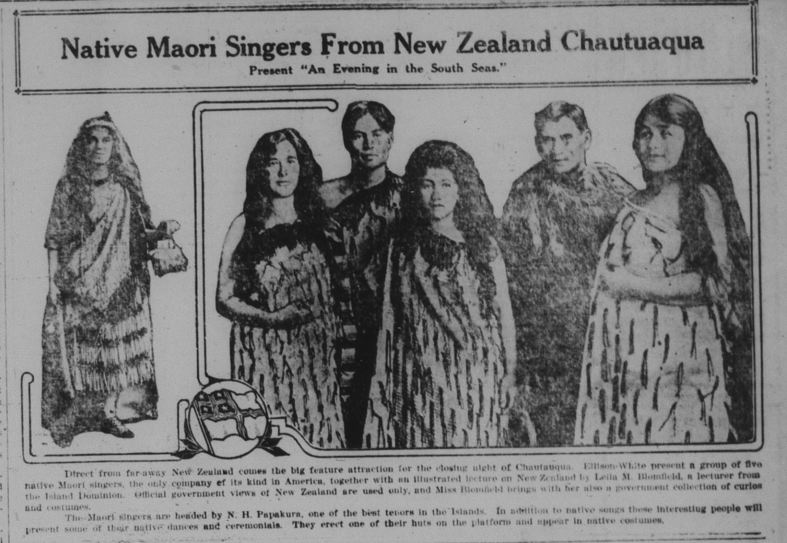
For entertainment and culture, Fullertonians would see movies at the Rialto Theater, performances at the Fullerton High School auditorium, visit the Orange County Fair, or check out the annual traveling Chautauqua show.

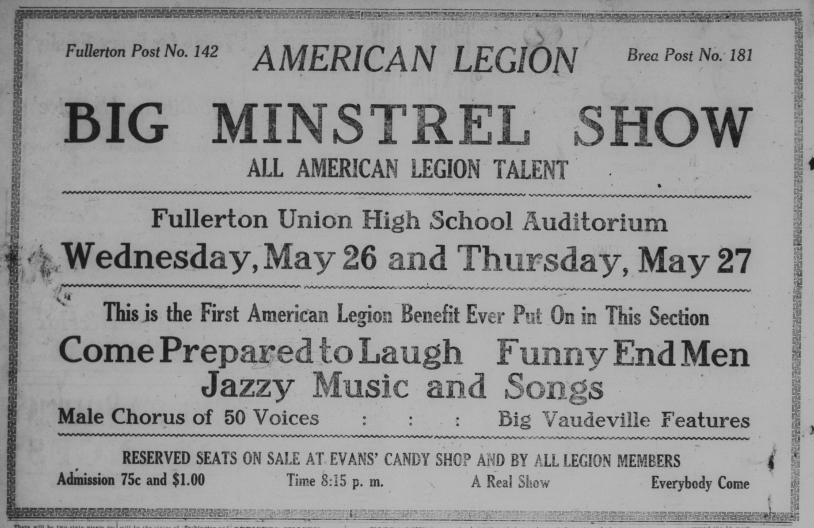
The local American Legion post sponsored a Big Minstrel Show, which presumably featured white performers in blackface.
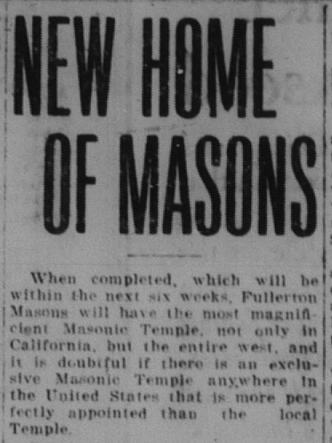
The local Masons built a huge new temple which is now the Springfield Banquet Center.
Sports
Fullerton opened a ball park at what is now Amerige Park, a popular venue for local teams to play, like the Fullerton Merchants.


International News
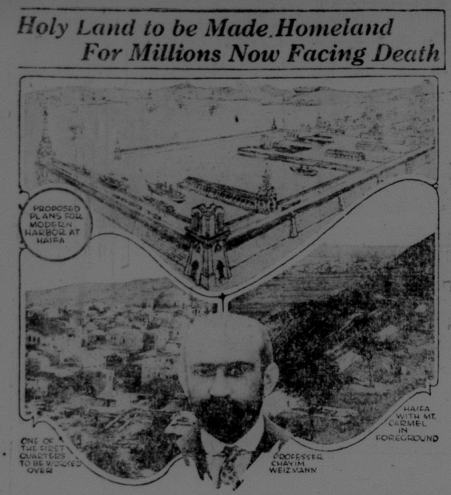
In international news that feels kind of relevant now, Zionist Jews began settling in Palestine, fleeing persecution in Eastern Europe.

The newly-formed League of Nations (a precursor to the United Nations) began to meet.

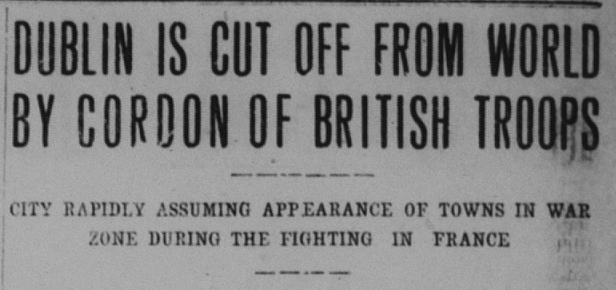
The war of Irish Independence raged.

The 1920 Presidential Election
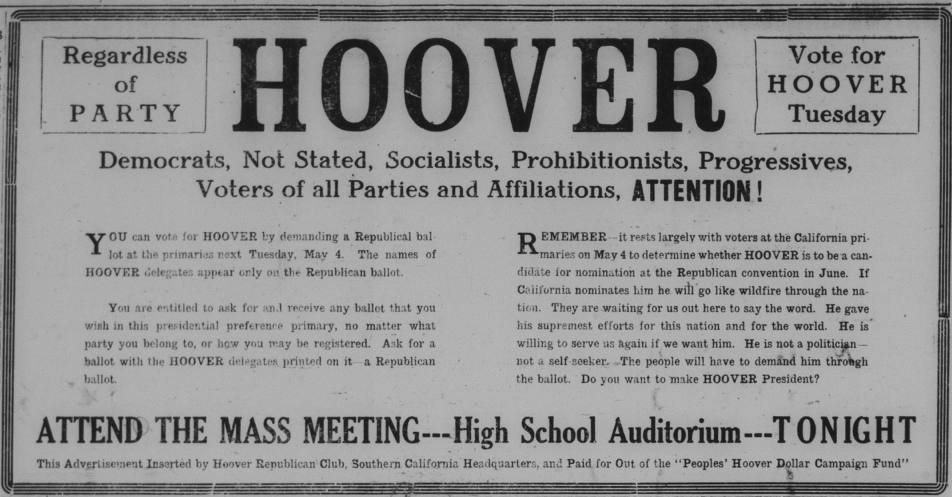
As I mentioned earlier, 1920 was an election year, and there was much local interest. During the California primary, there was support for Republican Herbert Hoover which took the form of a Fullerton Hoover Republican Club.

Seeking to cast a wide net, the Hoover Club sought members of all parties–Democrats, Not Stated, Socialists (yes, that was a somewhat popular party in 1920), Prohibitionists, Progressives, etc.
Another popular Republican hopeful was former California governor Hiram Johnson, who was a progressive Republican (yes, that was a thing).
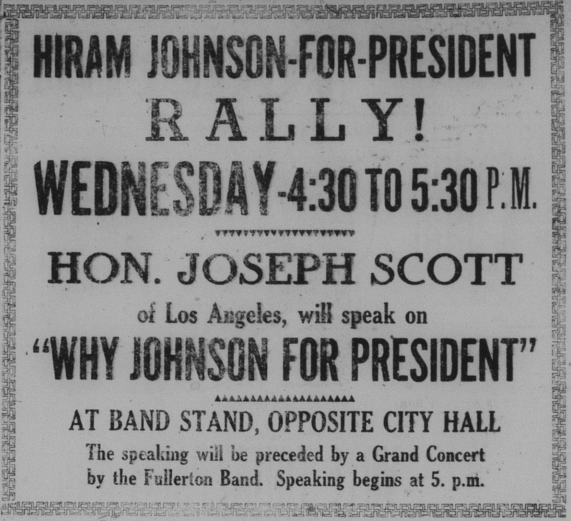
Ultimately, Hiram Johnson won the California primary over Hoover, although Hoover got more votes in Fullerton. This was back when California was a red state.


The 1920 socialist candidate for president was Eugene V. Debs, who ran from a prison cell because he objected to World War I.

Ultimately, however, Johnson wouldn’t get enough delegates to be the Republican candidate in the general election. That would go to Warren G. Harding, who would defeat democrat James M. Cox to become the 29th president of the United States, the first to be elected with women voting.
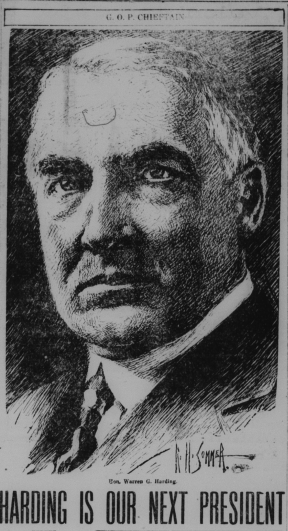
The 1920 election was a Republican landslide.
Deaths
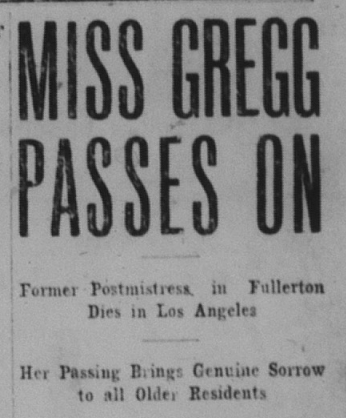
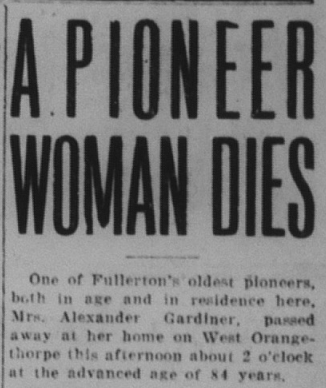
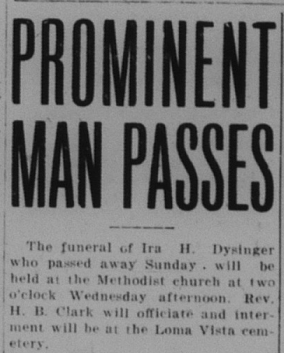
As reported in the Tribune, the following prominent people died: W.B. Houston, former postmistress Gregg, Mrs. Alex Gardiner, Anna Stone, and Ira H. Dysinger.


Stay tuned for more news stories from 1921!
 Fullerton History