The following is from a work-in-progress about the history of Fullerton. You can support my ongoing research and writing on Patreon.
The Local History Room of the Fullerton Public Library has microfilm from the Fullerton Tribune newspaper (which became the Orange County Tribune in 1908) stretching back to 1893. I am in the process of reading over the microfilm, year by year, to get a sense of what was happening in the town over the years, and creating a mini archive. Below are some news stories from 1916.
Politics and Business
In the local election for city trustee (now called city council), J.R. Carhart, J.M. Clever, A.H. Sitton, and Perry C. Woodward were elected. There were 1263 registered voters in Fullerton.
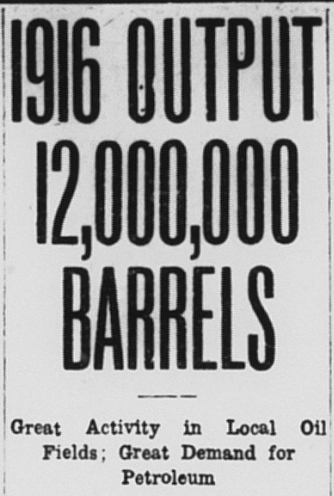
Oil and oranges were the two biggest local industries. The local output of oil in 1916 was 12,000,000 barrels. The Southern California citrus output was 32,000 carloads.
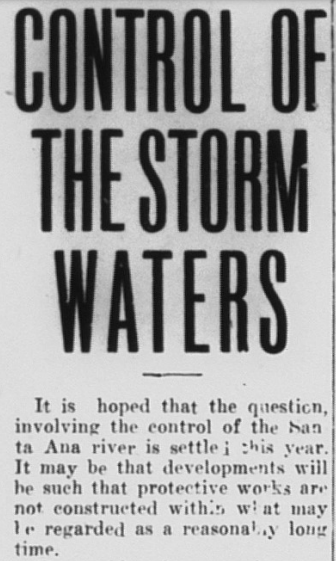
After a Major Flood, Local Leaders Seek to Control the Santa Ana River
A terrible flood took place in 1916 when the Santa Ana river overflowed its banks. This was particularly devastating for Mexican-American families who lived in the lowlands along the river’s path.
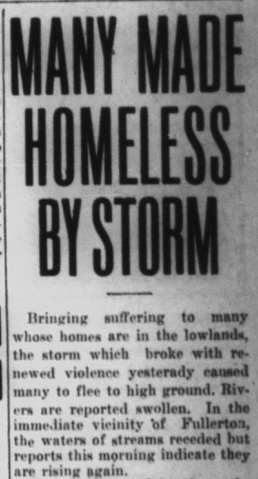
The above article states, “Ten Mexican families are being cared for by Alfred Vail, who lives between Fullerton and Anaheim, and other Mexicans, are being cared for at Anaheim.”
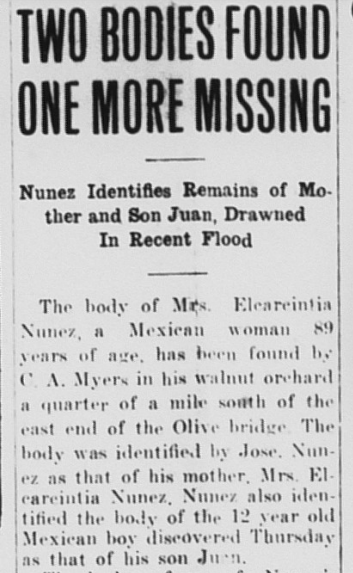
From the above article: “The body of Mrs. Eleareintia Nunez, a Mexican woman 89 years of age, was found by C.A. Myers in his walnut orchard. The body was identifited by Jose Nunez as that his mother, Mrs. Elcarcintia Nunez. Nunez also identified the body of the 12 year old Mexican boy discovered Thursday as that of his son Juan.
The body of one of Nunez’s sons is still missing. Alberto, aged 9, was in the house at Peralta that was washed away by the flood last Sunday night. There were three persons in the house, the two boys and their grandmother. Nunez and his two daughters had gone to Anaheim for supplies, and did not return Sunday on account of the rain. That is all that prevented them from being in the house that went down the river.”
After the flood, local leaders began to talk about plans to control the waters of the Santa Ana river.
The American Invasion of Mexico
As World War I raged in Europe, the United States was preoccupied with a closer threat–the Mexican Revolution. Pancho Villa’s fighting forces were raiding American settlements along the border.

This prompted a full-scale invasion of Mexico by U.S. troops, much to the consternation of Mexican president Carranza, who was also fighting Villa.

“Ignoring the plea of Mexico that the American invasion be delayed, 4,500 United States cavalry and mounted infantry crossed the border from Columbus, NM today,” the Tribune states. “The entire object of the swoop is an effort by superior speed to circle and capture Villa, who has been located hiding in the mountain fastness.”

As conflict escalated, practically the full strength of the United States army was sent to the border.
“Every available soldier will cross the line to the south and go to the aid of Pershing’s expedition,” the Tribune states. “The country is hostile. The natives are in sympathy with Villa, and his scouts, who know the country better than the Americans, can flank columns and operate in their rear.”
The front pages of the Tribune often had big headlines, photos, and stories about the threat south of the border, and clashes between U.S. soldiers, under the command of General Pershing, and Villa’s fighters.
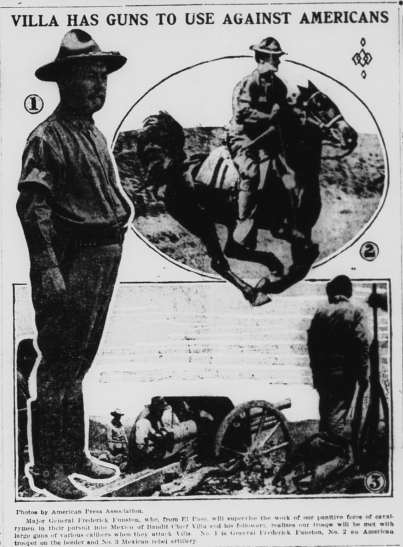
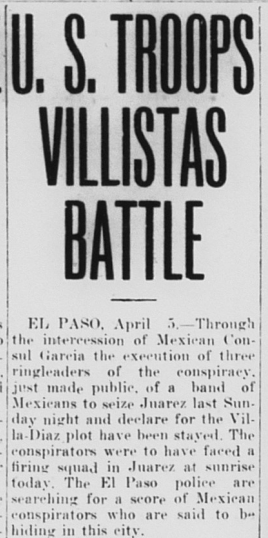
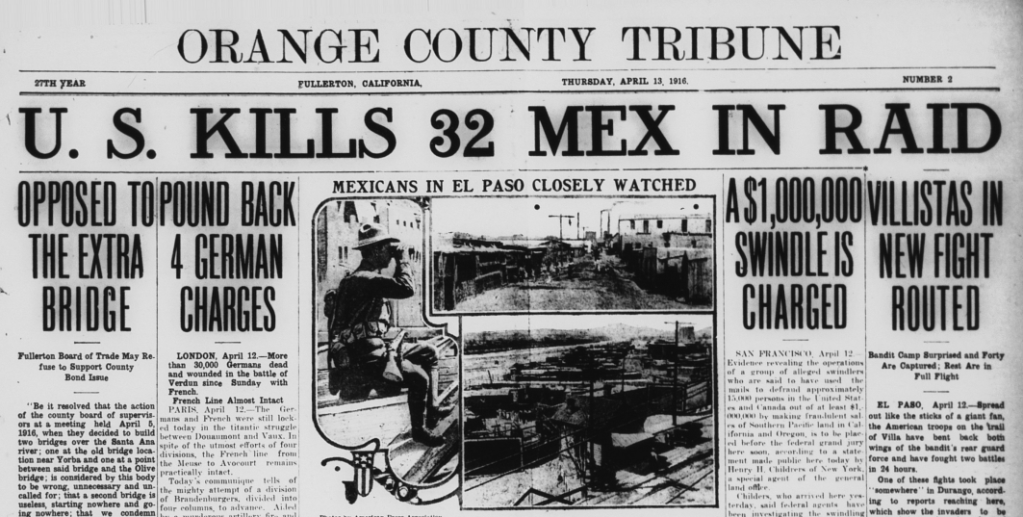
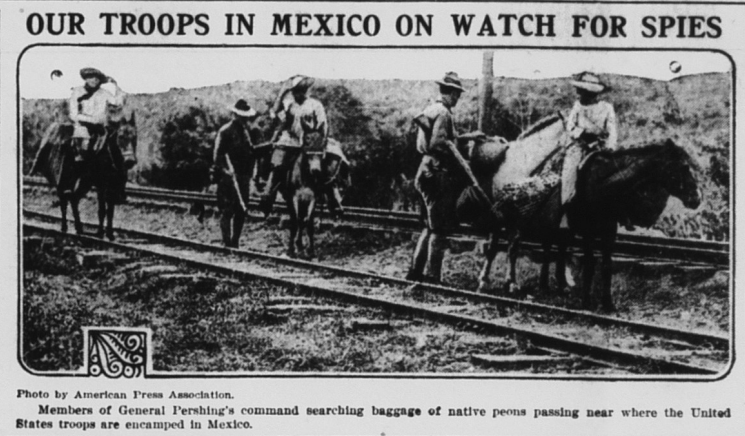
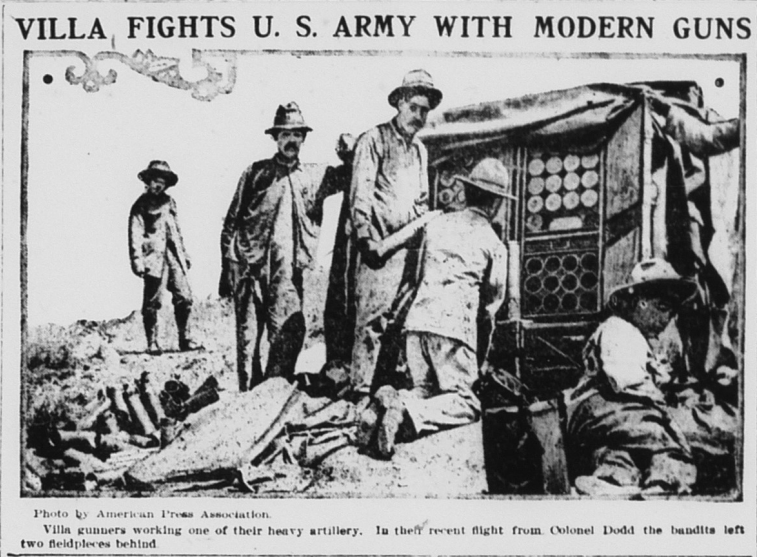
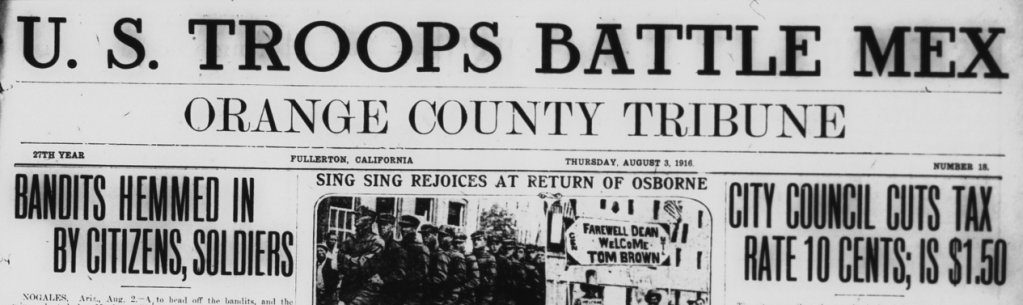
The fighting almost prompted a full-on declaration of war against Mexico.


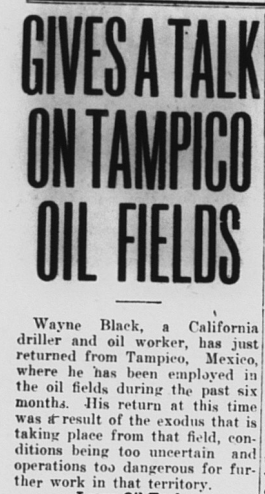
Part of the reason why the United States was so interested in the outcome of the Mexican Revolution was the fact that U.S. companies had strong financial interests in Mexico which were being threatened by revolutionaries like Pancho Villa and Emiliano Zapata, as the article below explains.
One unfortunate consequence of the conflict with Mexican revolutionaries was that it led to fear and suspicion of Mexicans in the United States, who were sometimes viewed as being in sympathy with Villa, or even secretly helping his cause.

The above article states: “That secret recruiting of Mexicans for the Mexican army has been going on in Fullerton for the last week became known today. Half a score of Mexicans are known to have left town and others are said to be preparing to leave.
Two well-dressed Mexicans, believed to have been the secret agents of a Mexican political faction held impromptu conferences with little groups of their countrymen last week, and shortly afterward a number of Mexicans left town suddenly. Ten of them have been accounted for and it is believed these men have crossed the border on the assumption that the United States intends to declare war on all Mexico.
It is believed similar tactics are to be used all over the United States to gain recruits for the Mexican army until the activities of the secret agents are halted by the United States department of Justice. That revolutionary ideas are being instilled in the minds of Americanized Mexicans by these same agents has been partly established and many cities and towns, recognizing this fact, have taken drastic precautions.”
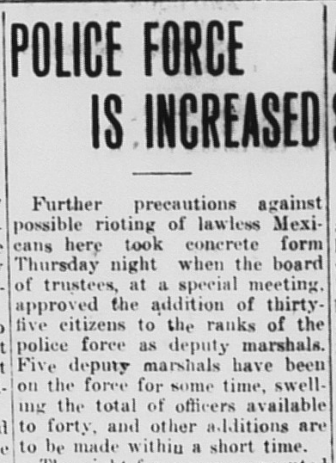
Fears of local Mexican revolutionaries led to increased policing of Mexican Americans and their communities. A Tribune article reports:
“Further precautions against possible rioting of lawless Mexicans here took concrete form Thursday night when the board of trustees, at a special meeting, approved the addition of thirty-five citizens to the ranks of the police force as deputy marshals…Five deputy marshals have been on the force for some time, swelling the total of officers available to forty, and other additions are to be made within a short time.
The situation, so far as the local Mexicans are concerned, is comparatively quiet. Close watch is being maintained over all Mexicans coming into town and those departing. Ten Mexicans were reported this morning by Marshal French as preparing to leave the city, and if these men head in the direction of Los Angeles, the police there will be notified.
Sheriff Jackson has asked the co-operation of officers all over the county in disarming all Mexicans with weapons and to arrest all Mexicans with booze in their possession. Only one case of drunkenness has come to the attention of officers here and the man was arrested immediately and lodged in the city jail.
In Los Angeles the Mexican district has been placed under a heavy police guard and the sale of firearms to Mexicans has been prohibited. At Santa Ana the board of trustees has likewise prohibited the sale of firearms to Mexicans and the police there have been organized to purchase a number of rifles for use in the event that race rioting prevails.
Placing of the water works here under armed protection was urged by one Fullerton man this morning, to prevent possible seizure or damage by Mexicans bent on mischief.“
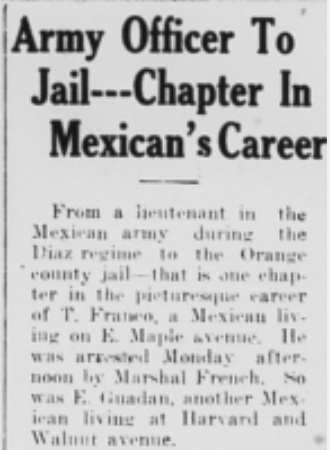
A Mexican man named T. Franco, who had served in the Mexican army under Porfirio Diaz and then immigrated to the United States (specifically Fullerton) was arrested after a drunken brawl. An article printed in the Tribune suggests that he was disloyal to the United States.
“Secret emissaries of Mexican factions still consort with him and it is said his home was headquarters for recruiting officers for the Mexican army at the time of the threatened breach between that country and the United States,” the Tribune speculates.”
No proof was offered of these charges.
Juvenile Delinquency and Other Public Evils
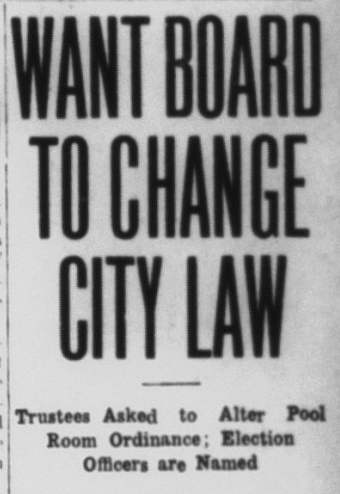
Fearing juvenile delinquency, the board of trustees of the Fullerton Union High School District urged the City Trustees to pass an ordinance banning teenage boys from pool halls.
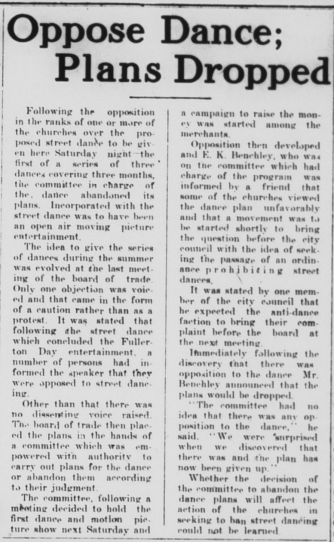
Also, in true Footloose fashion, local churches successfully lobbied to have a planned series of outdoor dance events banned.
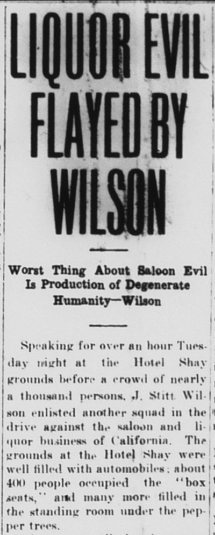
The Liquor Evil
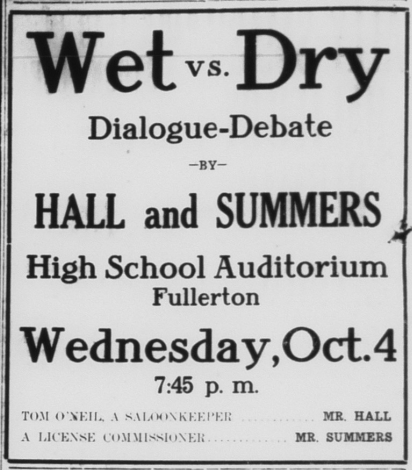
The question of prohibition was a prominent one of national and local interest.

Criminalizing Homelessness
The local policy toward homelessness had, for years, been to jail people on vagrancy charges. However, given the inadequacy of the local jail, town Marshal French decided to stop this practice, as the article below describes.
[Note that this decision did not come out of a sense of compassion, but rather as a ploy to get a better jail.]
“Throwing down the gauntlet to the county, Marshal French today declared that no more prisoners, bound for the county jail, would be placed in the Fullerton jail. The action of the officer has grown out of recent sweeping criticisms of the condition of the local jail.
“They can implore as much as they want,” he declared, “but I shall place no more prisoners in the city jail. In the first place the arrest of vagrants and tramps is not included in the duties of the city marshal. It is up to the constable to make those arrests and if the county wants the floating class handled, let him do it.
“The city gets nothing for those arrests,” he continued, “Even my expenses in taking them to the county jail is no longer paid. I used to receive mileage of twenty-five cents, but since the appointment of a constable even that has been curtailed.
“I shall no longer make an attempt to control the undesirable class in Fullerton so long as they violate no city ordinances. The necessity for a new jail will probably be impressed upon the people by the time the floating class is allowed to remain unmolested for a short time.
“Everyone knows that a new jail is needed.“
‘When a woman becomes a member of the city trustees, I go off.’
The state of California was ahead of the curve when it came to women’s suffrage. Women in the Golden State got the right to vote in 1911, as a result of a ballot measure, fully nine years before the passage of the 19th Amendment. Women could also run for political office. Although, by 1916, no women had run for City Trustees, rumors of the campaign of Mrs. Carrie E. Ford brought out the chauvinism in some city leaders.
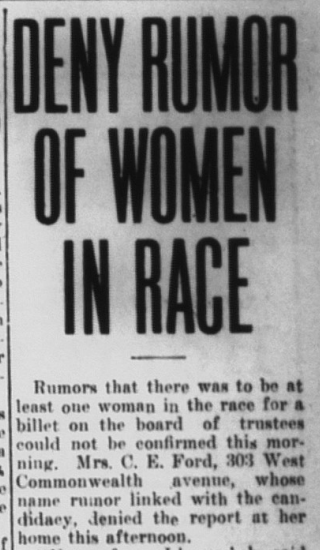
The above article states: “Rumors that there was to be at least one woman in the race for a billet on the board of trustees could not be confirmed this morning. Mrs. C.E. Ford, 303 West Commonwealth avenue, whose name rumor linked with the candidacy, denied the report at her home this afternoon.
“Not as far as I know,” she said when asked if there was any foundation for the statement that she intended to become a candidate.
Mayor Gregory, in discussing the report this morning, expressed himself as strongly against a woman member on the city board.
“The things which come up before board meetings and the places where the trustees have to go sometimes are not what a woman would like to discuss or where she would like to go,” he asserted.
“It isn’t that a woman is not capable, but I base my statement upon some of the unpleasant things which the board has to deal with.”
August Hiltscher, a member of the board, said when asked for his opinion, “that when a woman becomes a member of the city trustees, I go off.”
Principal Brunton is Sent Packing
In 1916, long time high school principal Delbert Brunton was essentially fired by the High School Board of Trustees, for reasons unclear. This prompted strong backlash among students and parents, who showed up at meetings to speak in support of Brunton.
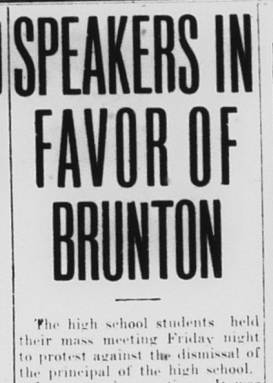
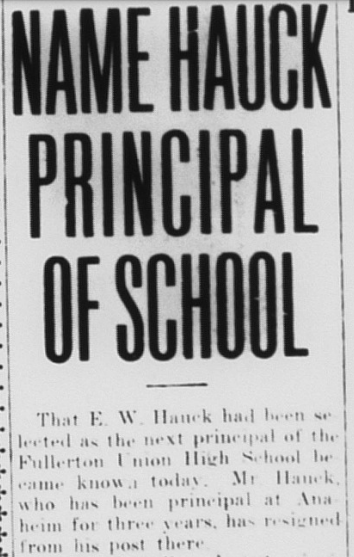
Ultimately, the Board stood by their decision, and a new principal, E.M. Hauck, was hired.

All are Invited to Fullerton Day
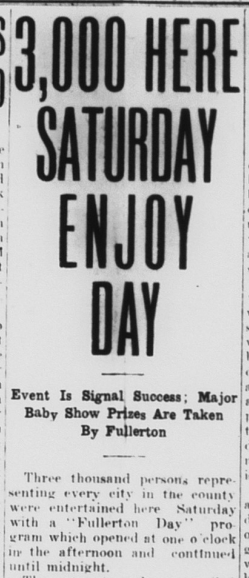
A big community celebration called “Fullerton Day” was held, drawing around 3,000 attendees.
Deaths
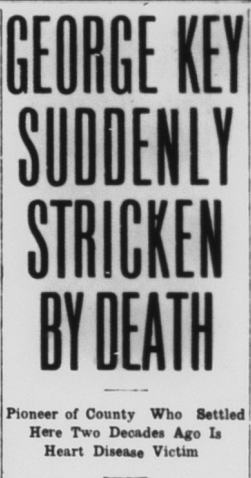
Local notables who passed away included orange rancher George Key, dry goods store owner W.R. Collis, and Placentia pioneer William Crowther.
Stay tuned for articles from 1917!
 Fullerton History
Leave a comment