The following is from a work-in-progress about the history of Fullerton. You can support my ongoing research and writing on Patreon.
The Local History Room of the Fullerton Public Library has microfilm from the Fullerton Tribune newspaper stretching back to 1893. I am in the process of reading over the microfilm, year by year, to get a sense of what was happening in the town over the years, and creating a mini archive. Below are some news stories from 1912.
Education
Fullerton’s second high school burned down in 1910, and so a new high school was built on Chapman, where the high school is today. There was some debate over the location of the school, but ultimately the Chapman site was chosen. The new high school opened in 1912.

Politics
In 1911, women in California got the right to vote with Proposition 4. Locally, Carrie Ford was the first woman to express interest in running for office.
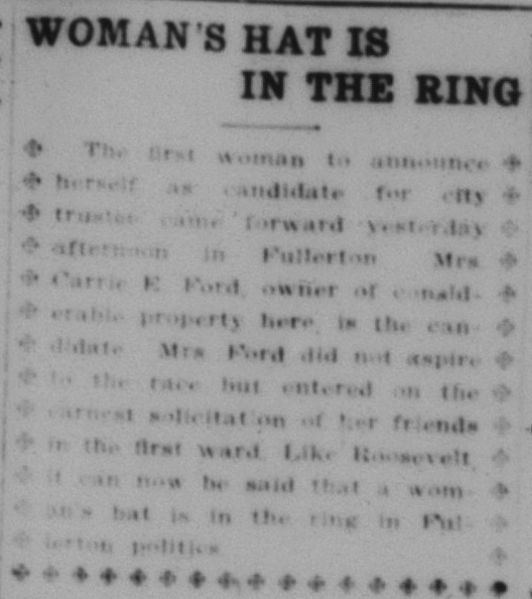
Ultimately, however, she withdrew from the race.

In 1912 there was a small but active Socialist Party in California. H. Gaylord Wilshire, an early developer of Fullerton, was probably the most vocal socialist in California. There were socialists running for local office.


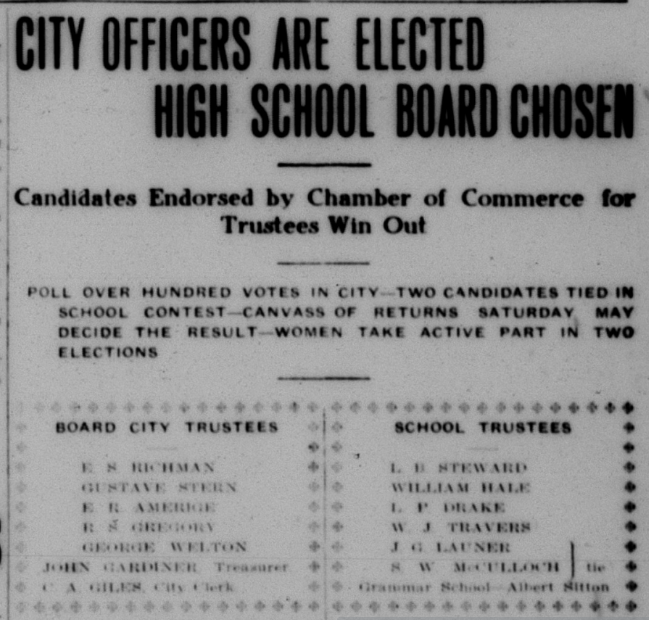
Ultimately, the Socialists were not elected locally. The ones who were endorsed by the Chamber of Commerce won.
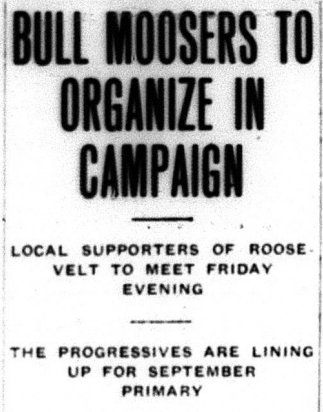
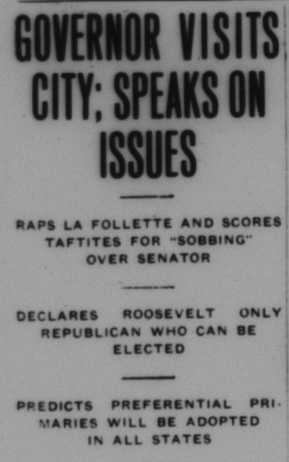
Nationally, politics were quite interesting in 1912. That was the year Theodore Roosevelt broke away from the Republican Party to form the Progressive (or Bull Moose) party. His running mate was California governor Hiram Johnson. These progressives were mostly former Republicans who were fed up with the corporate influence on politics, who wanted to make lots of reforms. Eugene V. Debs the Socialist was also running for President. Locally, supporters of these different candidates organized clubs and meetings. Hiram Johnson stopped in Fullerton to speak.
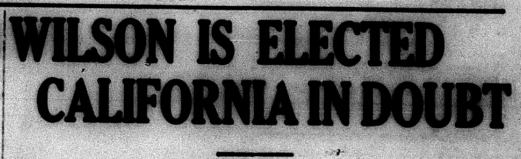
Ultimately, Democrat Woodrow Wilson defeated Roosevelt the Progressive, and Taft the Republican; however Roosevelt narrowly won California.
New Hospital
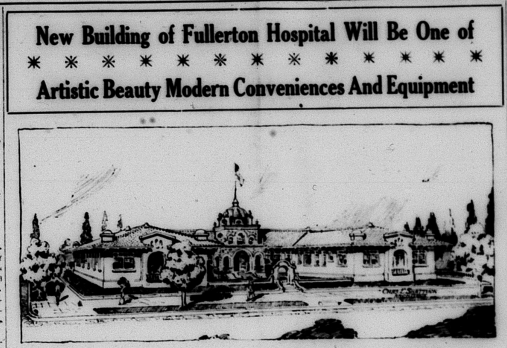
A new hospital was built at the corner of Pomona and Amerige. This building still stands today, although it is no longer used as a hospital.
Business
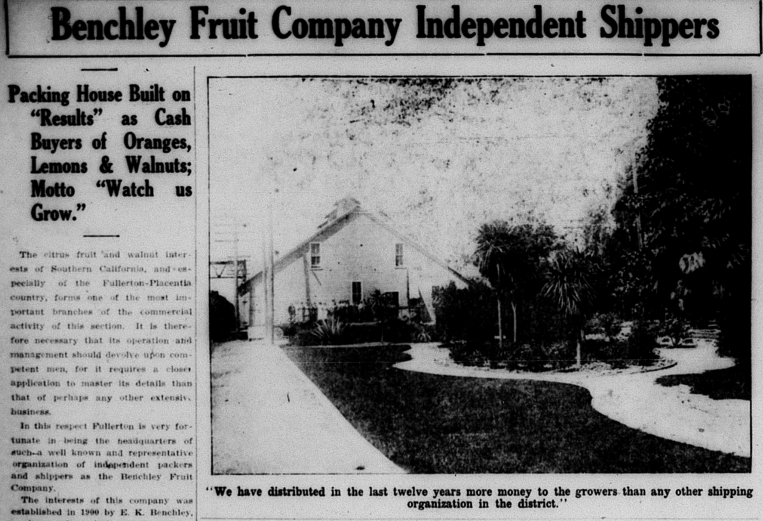
An issue of the Tribune highlights local businesses in town like the Benchley Fruit Company, the Brown & Dauser Lumber Company, and Clarence Boardway’s Amusement Hall.


Transportation
In 1912, cars were becoming increasingly popular. In those freewheeling early days of automobiles, there were few safety standards and lots of accidents.


Infrastructure
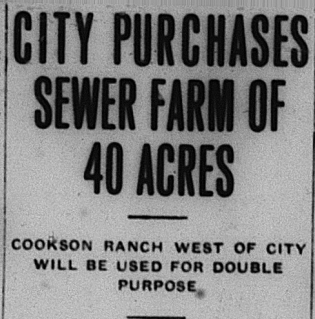
The City purchased 40 acres east of town, where the Fullerton Airport is today, for a sewer farm.
Deaths & Disappearances
In November of 1911, prominent local businessman Abe Pritchard disappeared in Los Angeles. Several months later, he returned to town with very little recollection of where he had been, or why. Apparently he had simply wandered the country, making it as far east as Florida, before returning back home. Weird.

M. Lovering, a pioneer resident of the Orangethorpe District, passed away.
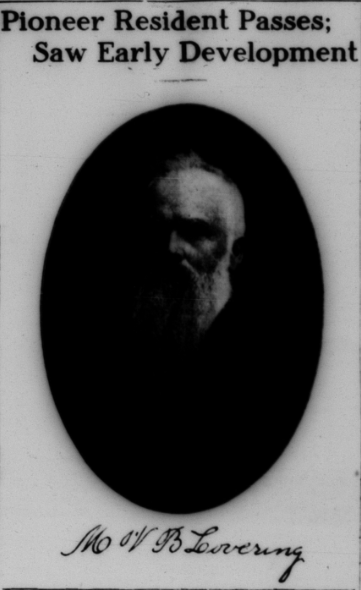
Joseph Goodman, co-owner of the Stern & Goodman general store, passed away.

Colonel Robert “Diamond Bob” Northam, passed away after being assaulted in his home. Northam was for years the agent of the Stearns Rancho company–which owned and sold thousands of acres of prime southern California real estate. He was a colorful and wealthy local figure.

Crime
After an Anaheim marshal was shot and killed by a Mexican man, local law enforcement scoured the region searching for the killer. There was even talk of lynching.

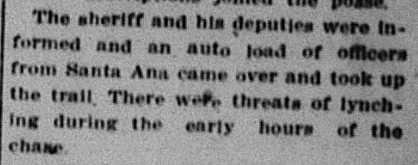
An ordinance was passed with the aim of “separating the bad element among the Mexicans from their guns.” Civil liberties were perhaps not being equally respected.

“It is my desire that all my deputies should enforce this ordinance at every instance, and especially among the Mexicans. It will be your privilege and duty to search every man you suspect of carrying a concealed weapon, and if found to bring him to the county jail, at the expense of the county,” OC sheriff Charles Ruddock stated.
In other crime news, a rancher named Gerorge Biggs brutally slayed his neighbor F.A. Montee and his wife in a debate over a strip of roadway. As far as I can tell, there was not a similar effort made by law enforcement “to separate the bad element among the whites from their guns.”

Oil!
Oil development continued in the fields north of Fullerton. At this time, oranges and oil were the main exports of Fullerton.


Homelessness
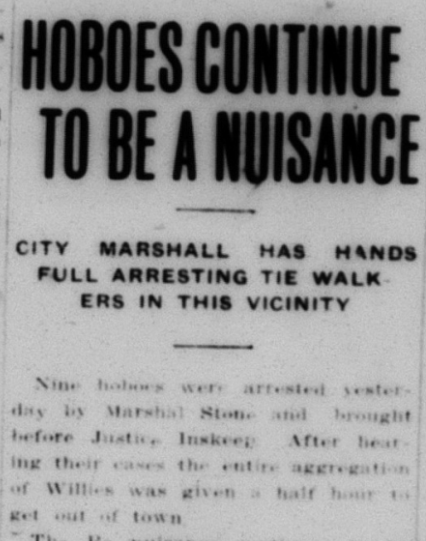
As it is today, homelessness was a social problem in Fullerton.
Labor
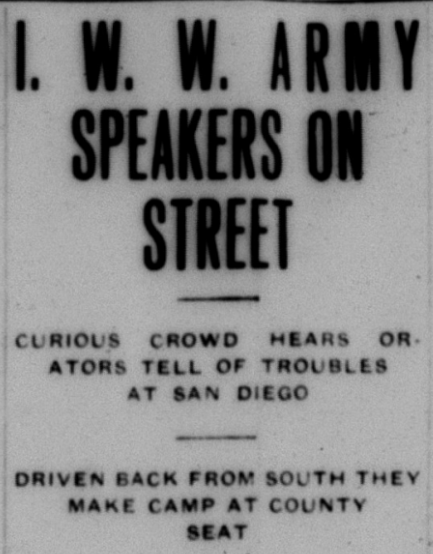
In labor news, members of the Industrial Workers of the World (or “Wobblies”) passed through Fullerton, spreading their message of working class solidarity. They were viewed with suspicion, fear, and hostility.



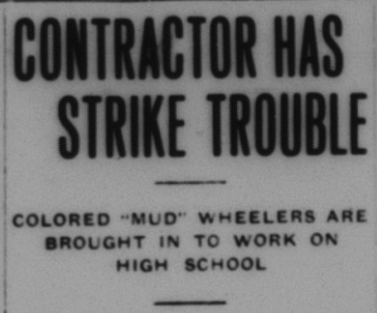
Meanwhile, the workers building the new high school went on strike, so the contractor brought in black workers to finish the job.
Religion
Maria Bastanchury, wife of pioneering sheep rancher turned citrus grower Domingo Bastanchuy, donated land to build the town’s first catholic church, at the southeast corner of Commonwealth and Malden.

Stay tuned for headlines from 1913!
 Fullerton History
Leave a comment