The following is from a work-in-progress about the history of Fullerton. You can support my ongoing research and writing on Patreon.
The Local History Room of the Fullerton Public Library has microfilm from the Fullerton Tribune newspaper stretching back to 1893. I am in the process of reading over the microfilm, year by year, to get a sense of what was happening in the town over the years, and creating a mini archive. Below are some news stories from 1910.
High School Burns Down
Unfortunately, the 1910 microfilm is incomplete, stretching only from January to April. One major news item that is missing is the high school building burning down. This was the second high school, and had only been open since 1908. It was located where Amerige Park is today, across from City Hall. Here are some before and after pictures.


The community would immediately begin plans for a new high school, which would be built on Chapman Ave–this is the high school that still stands today.
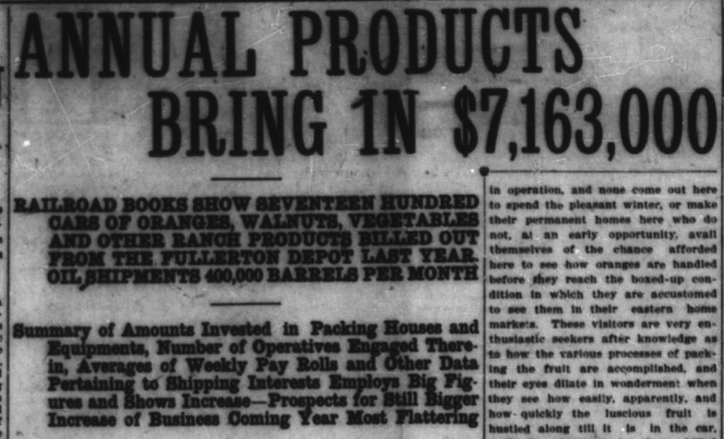
Agriculture
Fullerton’s wealth continued to rise from its two main industries–agriculture and oil.
Politics
1910 was an election year, and the following men were elected to City Council (which at that time was called Board of Trustees): R.S. Gregory, E.R. Amerige, and George C. Welton. Roderick D. Stone was elected Marshal, C.A. Giles was elected City Clerk, and W.R. Collis was elected Treasurer.

At the state level, California was in the midst of quite a political shake-up, with the election of progressive Republican Hiram Johnson as governor. At this time, the California Republican Party was divided between the more establishment/moderates (who were connected to large business interests like the powerful Southern Pacific Railroad) and the progressives, who wanted to enact many political reforms. One of these reforms was the creation of the direct primary system. This allowed the voters, rather than party bosses to choose candidates. It was intended to help “clean up” corrupt “party machine” politics.

For a time in California’s history, the state government was dominated by progressive Republicans. Today, the term “progressive Republican” sounds like an oxymoron. In 1912, Hiram Johnson co-founded the California Progressive Party and was elected on this ticket in 1914. Other progressive reforms included pensions for teachers, the abolition of partisan politics in school board elections, reducing child labor, establishing the 8-hour work day for women, women’s suffrage, and an effort to improve the disgraceful conditions of farmworkers.
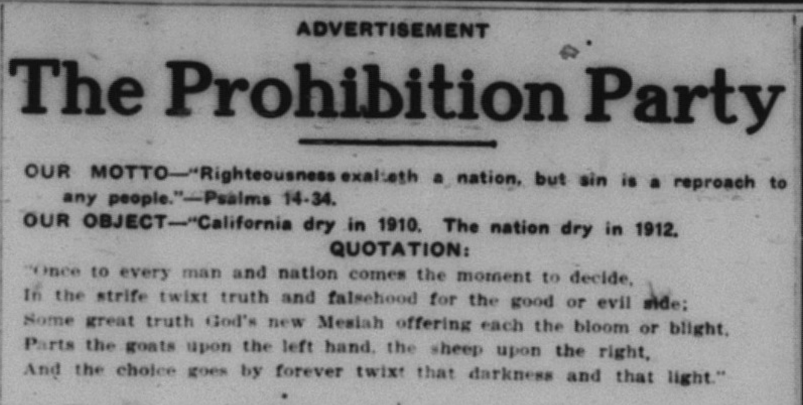
In 1910, there was also a Prohibition Party.
Roads
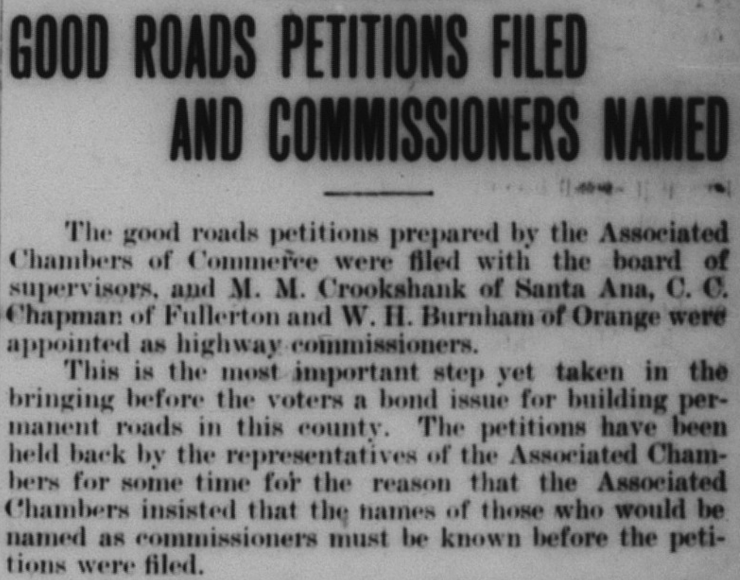
A perennial local issue has been investment (or lack thereof) in the improvement of roads. In 1910, there was a regional movement, sponsored largely by the Associated Chambers of Commerce, to get voters to approve bonds for improved county roads. This issue would be debated in the pages of the Tribune and other local papers.
Scandals
Fullerton at this time was still a kind of small town, and so local scandals/gossip were considered fodder for the newspaper. A man named Bob Stanfield ran off with his brother’s wife. They were both married with kids.

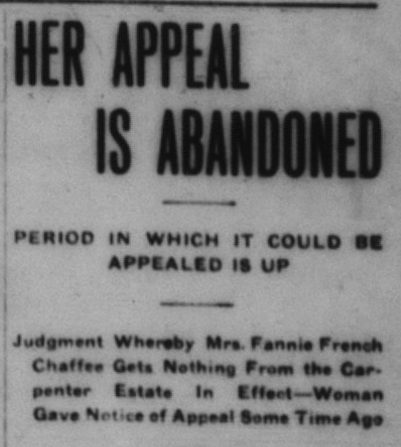
Another scandal involved the former high school principal W.R. Carpenter abandoning his wife and marrying the widow of the Baptist minister, Fannie French-Chaffee. Carpenter died shortly after the couple ran off, and Fannie sued Carpenter’s first wife for money she said she loaned to her deceased husband. The court denied her request.
Water
Another perennial regional issue was water. With agriculture booming and the population growing, it was necessary to procure and protect an adequate supply of water.
One of the main sources of local water was the Santa Ana River. Today, as it runs through Orange County, the Santa Ana river is a big, ugly concrete gulch. I used to wonder why people chose to turn a real, flowing river into such an ugly monstrosity. However, putting myself in their shoes, they did it to protect themselves from flooding.

Oil!
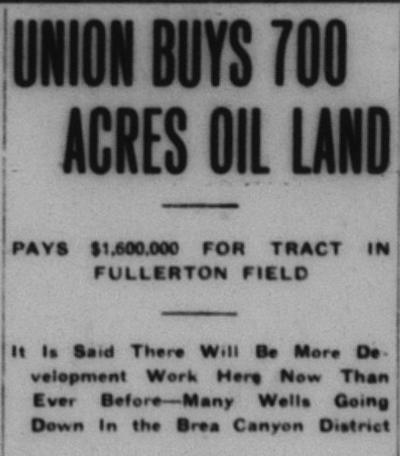
The Union Oil company (which later became Chevron) was buying up land in the oil-rich fields north of Fullerton.
Stay tuned for highlights from the 1911 Tribune!
 Fullerton History
Leave a comment