The following is from a work-in-progress about the history of Fullerton. You can support my ongoing research and writing on Patreon.
The Local History Room of the Fullerton Public Library has microfilm from two Fullerton newspapers, the Fullerton Tribune and the Fullerton News. The oldest of these is the Tribune, founded in 1893 by Edgar Johnson. The Fullerton News was founded around 1905, and was funded by wealthy orange grower/Fullerton’s first mayor Charles Chapman, perhaps because he didn’t like the coverage and criticism he was getting from Johnson in the Tribune.
Thus far, I have been focusing my attention on the Tribune, creating a mini year-by-year archive of top stories. However, when I reached the year 1909, it appeared that the Tribune microfilm was missing, so I asked Local History Room archivist Cheri Pape if I could look at the Fullerton News microfilm instead. Cheri warned me that this paper was much more of a business booster than Johnson’s so I was both apprehensive and curious to see how its coverage style differed from the Tribune’s.
Cheri was certainly correct in that the News was much more business/booster oriented, almost like an extension of the chamber of commerce and the personal interests of Mr. Chapman, its financial backer.
Some of the front page “news” stories are blatant puff pieces about Mr. Chapman and his sprawling orange ranch. Below are a few excerpts:
“He comes of that sturdy American ancestry which has ever in past times of peril been the salvation, and must in like times to come, be the hope of this country.”
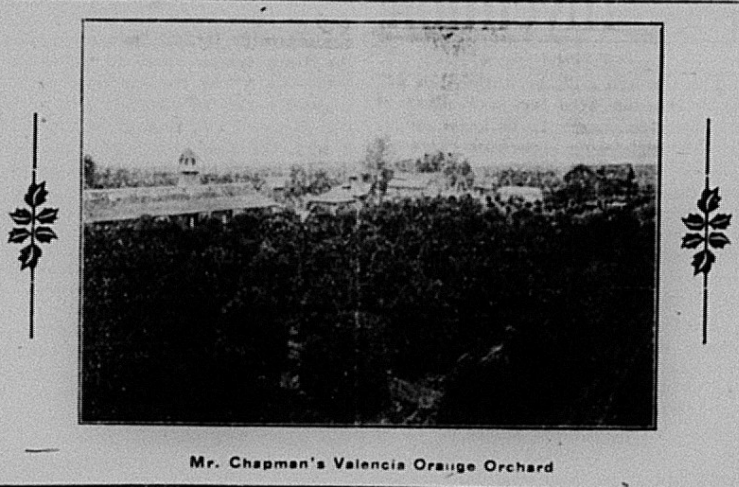
“Under Mr. Chapman’s ownership and management, this property has become the most famous orange ranch in the world, as well as one of the largest…Indeed, the Santa Ysabel is a model, perfect in every detail as an orange ranch and home, and one in seeking to describe it with justice would be forced to use language seemingly superlative to one who has not viewed it for himself. From the beautiful and elegantly appointed family residence to the cement flumes, ditches, and pipe lines no intelligent effort or expense has been spared, no opportunity neglected to bring everything as near perfection as lies within the power of human hand and mind.”
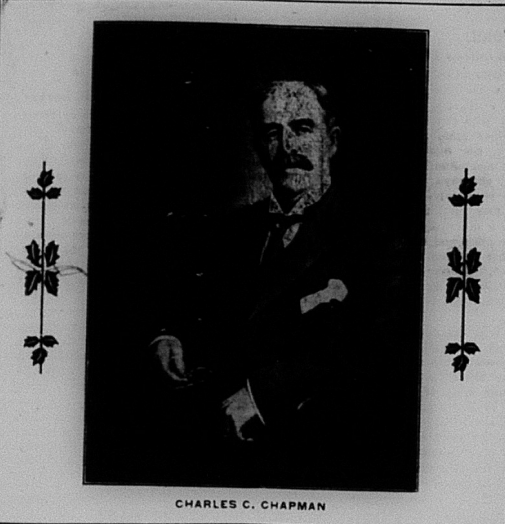
“It is to Mr. Chapman’s liberality that the Christian church of Fullerton is indebted for the cozy, attractive house of worship it now occupies. A well known religious periodical in speaking of him recently said: “This religion of his is not of the ‘holier than thou,’ sanctimonious sort, but the honest, rugged, straightforward kind that never parades itself, yet everywhere wins the respect of the world.”
[Okay, here I must interject. His faith is the kind that never parades itself? The newspaper he was bankrolling ran a front page “article” extolling the virtues of Mr. Chapman.]
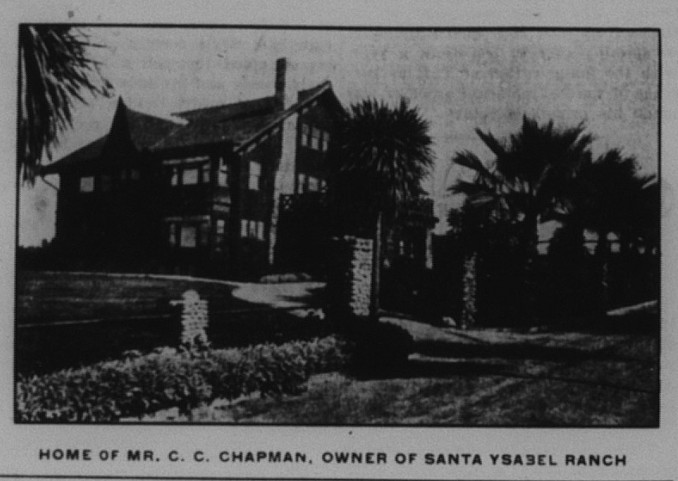
“Mr. Chapman resides at his beautiful, though unostentatious, home; busy with material affairs, hospitality and good deeds.“
[His “unostentatious” house had 13 rooms.]
“He has been justly termed ‘The Orange King of the World,’ and this he does not resent.
Okay, enough Chapman fluff. Thankfully, Cheri was able to locate the 1909 Tribune microfilm. From here on out, I’ll just present top news stories from both newspapers, organized by topic.
Prohibition
The residents of Fullerton narrowly voted in 1909 to ban liquor licenses in town, thus making Fullerton a “dry” town.
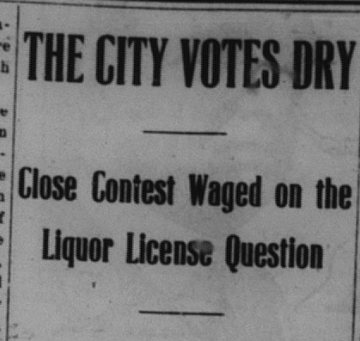
The Tribune article on this (below) states that there was overt voter suppression of Mexican voters: “A number of Mexicans who, it is believed, were anxious to vote for license, were challenged, frightened, and not allowed to vote, on the grounds that they could not read, etc.”

Religion
The Fullerton Episcopal Methodist church was constructed and dedicated. The building still stands today, and is a church called Cornerstone International Christian Church.

Crime

Land Development
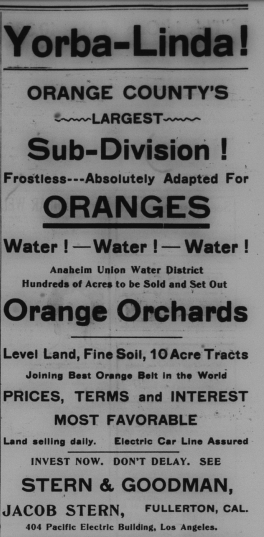
Jacob Stern, co-owner of the large Stern & Goodman general store in downtown Fullerton, was also increasingly invested in southern California real estate, including Yorba-Linda.
Culture


Fullerton celebrated the fourth of July on July 3 with a grand program featuring the Fullerton Military Band.
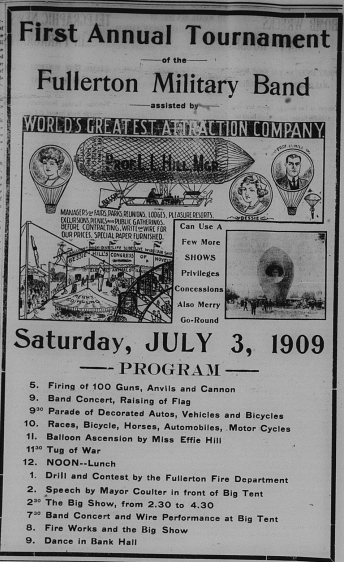
“The glorious Fourth was celebrated in Fullerton on Saturday, July 3, with much noise and enthusiasm. The streets were crowded with people when the band concert began, shortly after 9 o’clock. The national colors were raised while the band played the “Star Spangled Banner” and other patriotic airs, and following the concert was the parade of decorated automobiles…“

Politics
In California politics, the perennial question of division of the state into north and south was discussed.
Oil!
The oil fields in the hills north of Fullerton continued to increase their extraction.
“The Fullerton field from Olinda to Brea Canyon presents an extremely busy appearance,” the News stated. “As far as the eye can reach, new derricks rear their heads. Lumber and rigging are hauled in large quantities and the largest force in the history of the field is employed.”
Oil Companies operating in Fullerton in 1909 included the Graham-Loftus Oil Company, The Santa Fe, Fullerton Oil Company, Olinda Oil Company, Puente, Brea Canyon Company, Union Oil.


Fire
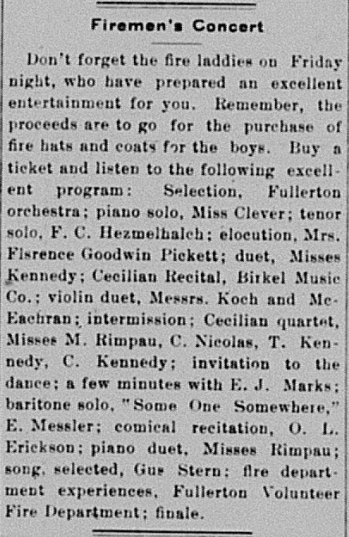
In 1908, following a a large fire downtown, Fullerton organized its first volunteer fire department. In 1909, there was a benefit concert to raise funds for the fledgling fire department.
Transportation
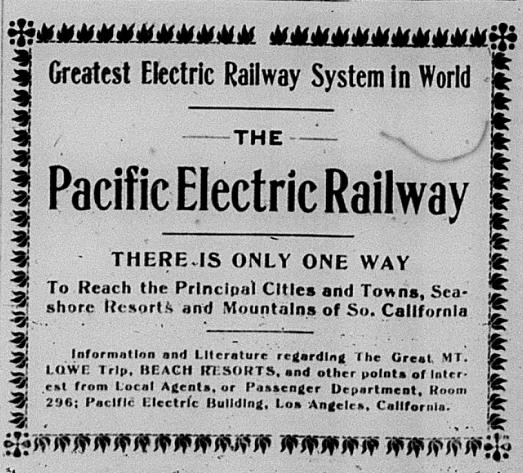
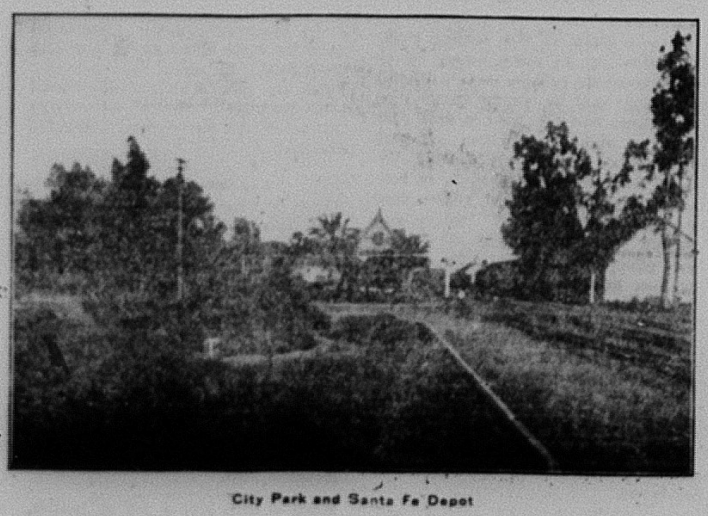
In 1909, the two main modes of travel were trains and automobiles. Fullerton had a train station. At this time, the Pacific Electric Railway, a sprawling interurban rail system that would eventually be dismantled, had not yet reached Fullerton.
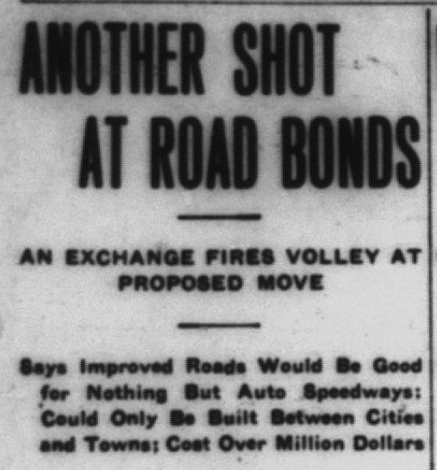
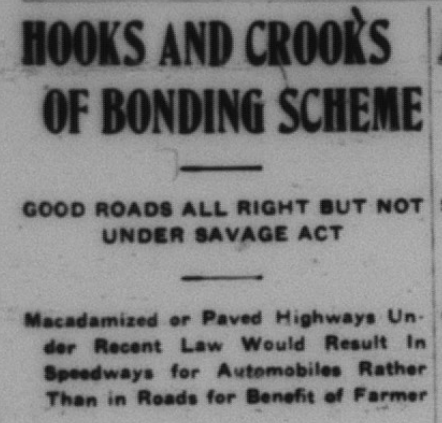
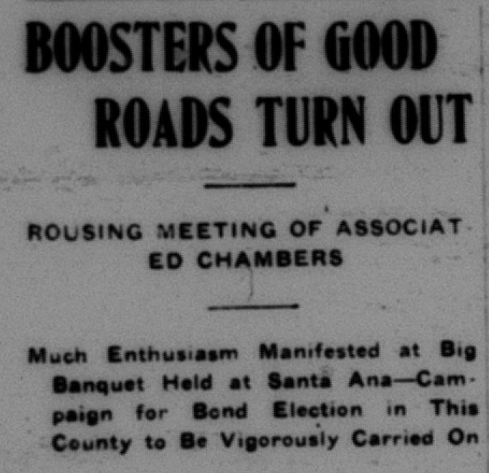
At the county level, local leaders were promoting the idea of floating bonds for improved roads. A couple years prior, a road bond issue was defeated by voters in Fullerton.
Lillian Yeager of Fullerton worked at Forster’s garage, and would eventually open her own auto garage and dealership.

Sports
Deaths
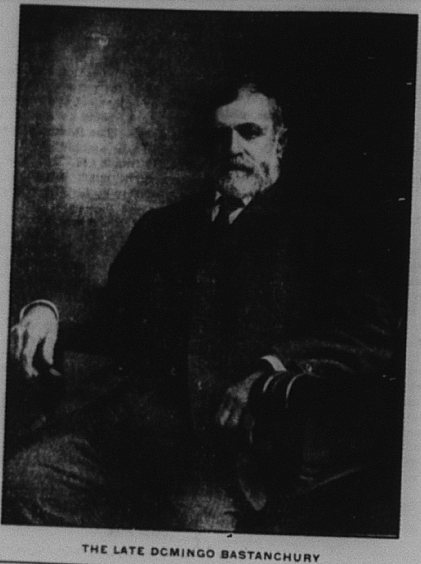
Pioneer Fullerton resident Domingo Bastanchury passed away.

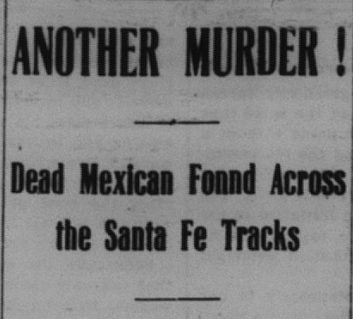
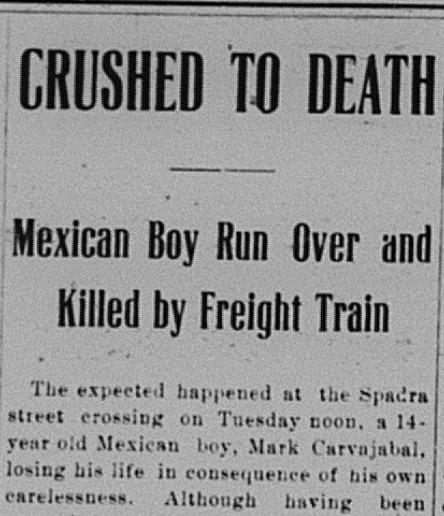
A Mexican boy was run over and killed by a freight train.
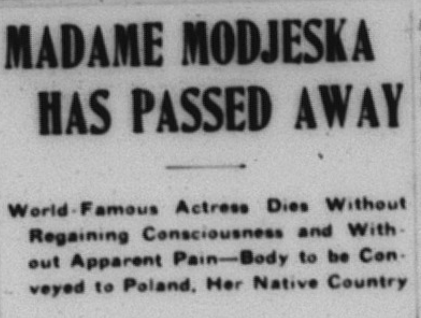
World famous actress Madame Helena Modjeska passed away.
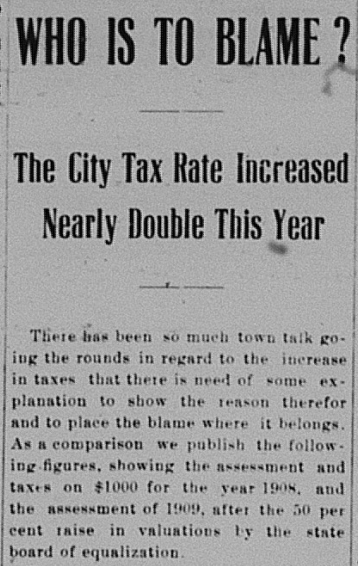
Taxes
Anti-Japanese Racism
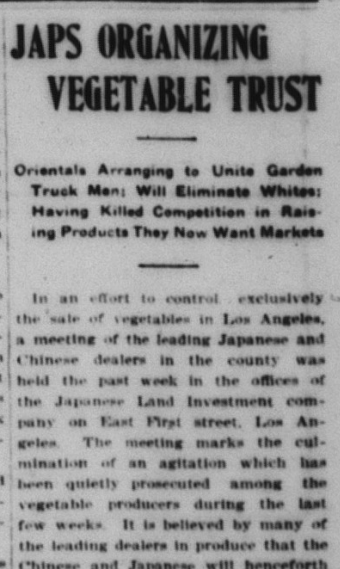
At this time, there was increasing agitation against Japanese people in California, which would ultimately culminate in the 1913 Alien Land Law which severely curtailed the ability of Japanese Americans to lease and own property. The root of the agitation, aside from racism, was competition with Japanese produce growers.

“The Associated Chambers of Commerce of Orange County is going on record against Japanese immigration, against encouraging the Japanese to settle in Orange County, and against the sending of Orange County literature to the Orient,” the above article states.
Women’s Suffrage
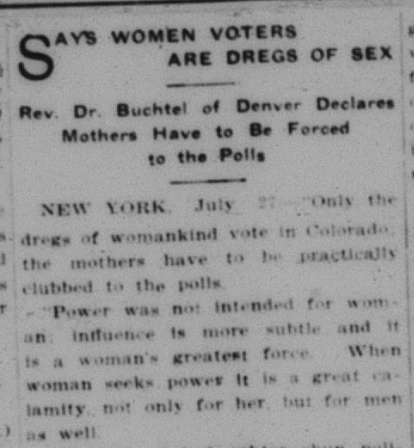
In 1909, women could not vote. Suffrage would not come until the passage of the 19th Amendment in 1920. Prior to this, however, some states began allowing women to vote. This, of course, was not always accepted, as shown by the following article from the Tribune.
Professor Carpenter and Mrs. French: the Saga Continues
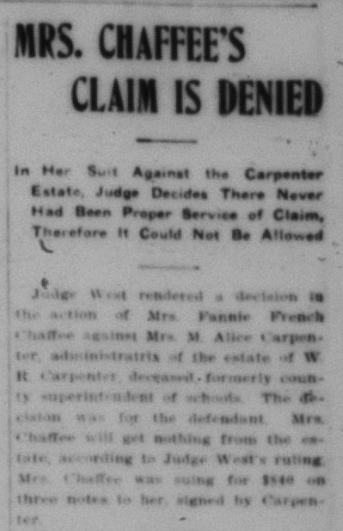
At the end of 1908, a minor scandal was revealed following reports of the death of a Mr. Carpenter, former principal of Fullerton High School, who apparently married a Mrs. French Chaffee (widow of a local Baptist minister) at sea when he was also married to another woman. Mrs. French sued Carpenter’s first wife for money that she claimed she had loaned to her “husband.” Ultimately, French Chaffee’s claim was denied in court.

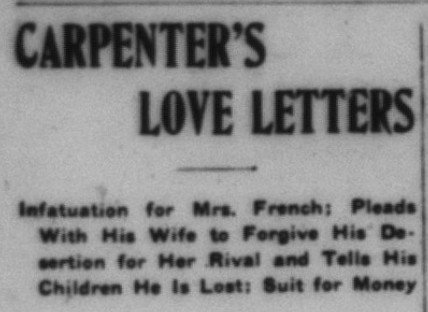
Meanwhile, the Tribune got its hands on some steamy love letters written by Carpenter to French Chaffee, and published some of them.

Water
In 1908, the Anaheim Union Water Company completed the Yorba reservoir. Unfortunately, it leaked.

Child Labor
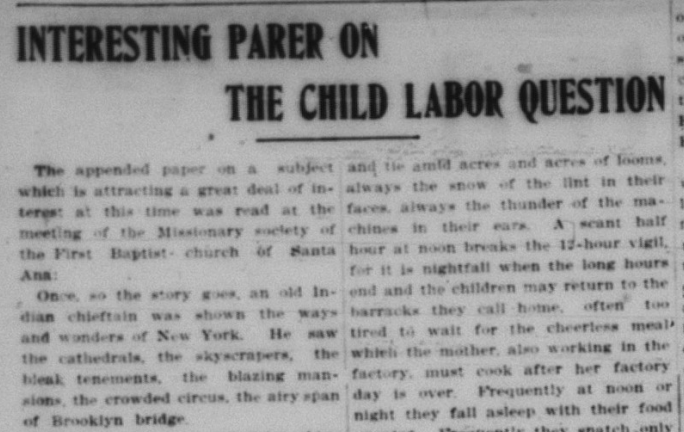
In 1909, child labor was still a question to be discussed in the United States.
Scenes from Fullerton
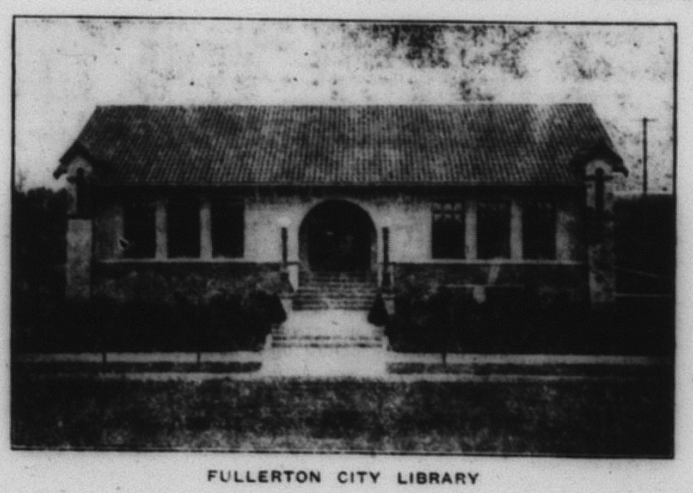
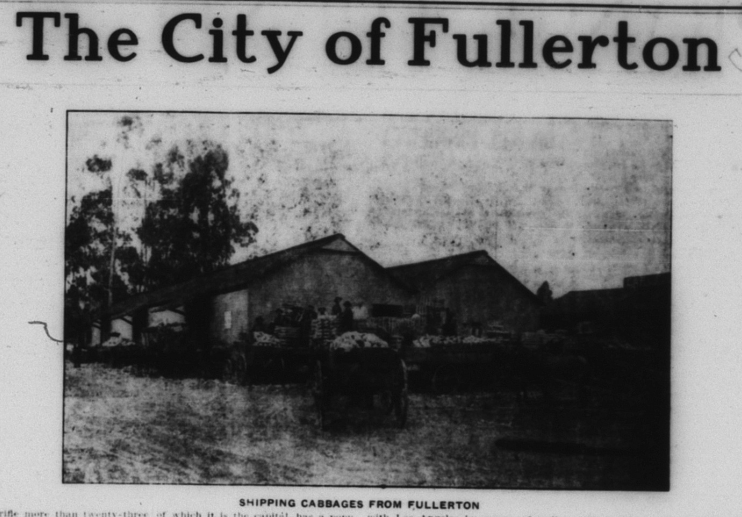
The 1909 papers include some cool photos from around town.

Stay tuned for more headlines from 1910!
 Fullerton History
Leave a comment