The following is from a work-in-progress about the history of Fullerton. You can support my ongoing research and writing on Patreon.
The Local History Room of the Fullerton Public Library has microfilm from the Fullerton Tribune newspaper stretching back to 1893. I am in the process of reading over the microfilm, year by year, to get a sense of what was happening in the town over the years. Below are some news stories from 1908.
The Orange County Tribune
For a brief period starting in 1908, the Fullerton Tribune became the Orange County Tribune, perhaps to increase circulation and advertising.

Anti-Japanese Racism
In a trend disturbingly similar to the anti-Chinese activities of the late 19th century which culminated in the Chinese Exclusion Acts of 1882 and 1892, an alarming anti-Japanese sentiment was emerging in 1908, which would ultimately culminate in the 1913 Alien Land Law in California, which severely restricted the ability of Japanese (and other Asian immigrants) from owning or leasing land.
By the turn of the 20th century, Japanese farmers and farm labor had replaced much of the Chinese labor that was curtailed by the Chinese Exclusion Acts. Dredging up the same arguments used to justify Chinese Exclusion (essentially, “they’re taking our jobs and doing better at business than we are”) white Californians agitated for excluding Japanese immigrants as well.
This anti-Japanese sentiment found expression in the pages of the Orange County Tribune, as shown by the following articles:

Below is the full text of the above article:
While there has been no open declaration of hostilities there is war between the Japs and the whites of southern California.
It is an industrial war and test of business acumen and working efficiency.
The Jap now clashes with the white, whether it be as a producer and shipper of vegetables, as a wage earner in the garden or orchard or as a laborer in other lines. This competition is becoming so strong that in some sections civic organizations are said to be preparing to appeal to the citrus growers and packers to employ none but Americans, says the Los Angeles Express.
Having more than held their own with American laborers in certain lines the Japs have advanced a step in their industrial aspirations.
The Nipponese may not possess any great inventive genius, but they have not overlooked the co-operative methods of fruit and vegetable men. With a large acreage of farming land under their control they are preparing to adopt, and in some cases have adopted the co-operative marketing method of the Americans. Already they are doing their own marketing of berries, while preparations are being made for a similar disposition of the celery and other vegetables produced by them. In line with this they have special marketing agents in San Francisco, Portland, and Mexico. Another will be placed in Seattle and later one in Japan.
“We already have co-operative fruit associations at Santa Ana, Newmark, Tropico and other points,” said Kats Baba [sic], secretary of the Japanese association of Los Angeles. “Later we expect to do our own marketing of fruits and vegetables independent of the American shippers.”
Many of the Chinese vegetable vendors here, who formerly depended upon their fellow countrymen for their supply, are now depending upon the association of Japanese ranchers for their supply, according to Baba.
Regardless of persistent reports to the effect that there are serious differences between the Japanese vegetable ranchers and the owners of the land, and that the former claim they are being discriminated against by the shippers, he smiles and declares that nothing of the kind has reached his ears. And then he gives assurance that such trouble could at best be of only short duration as the Japanese will soon be doing their own marketing.
“Now that there are more American laborers available,” said A.B. Woodford, general manager of the California Fruit Growers Exchange, “the tendency will be to give them preference, I think.”
Tribune editor Edgar Johnson, who supported the Chinese Exclusion Act, also seems to support some sort of Japanese exclusion. He re-prints an article by a Mr. Robbins, which argues that “The Japanese Must Go.” Below are some excerpts:


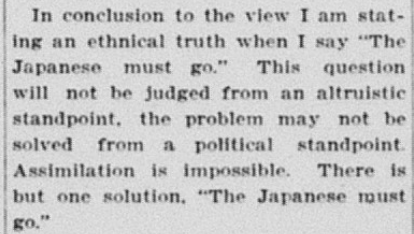
In the next issue of the Tribune, Johnson printed another article, arguing against Japanese exclusion. However, even this article showed racism against Japanese people.


Another article below describes local efforts to “drive out the Japanese.”

The question of Japanese exclusion was also being discussed at the national level with a Congressman Hayes introducing a bill “providing for the exclusion of the Japanese from this country, except certain favored classes.”
“As a matter of fact,” the article states, “the bill provides for excluding not only Japanese…but all orientals of the less desirable classes in other countries than Japan and China.”
“There is no doubt where the Pacific Coast stands on this question of Oriental immigration,” the article continues. “All of the western members met together recently and agreed to support the Hayes bill, or at least the principles in general which it advocates.”
Politics
1908 was an election year. The City Council election pitted the “All Citizens’ Ticket” against “The Peoples’ Ticket.” Tribune editor Johnson clearly favored “The Peoples’ Ticket, and they (mostly) won.
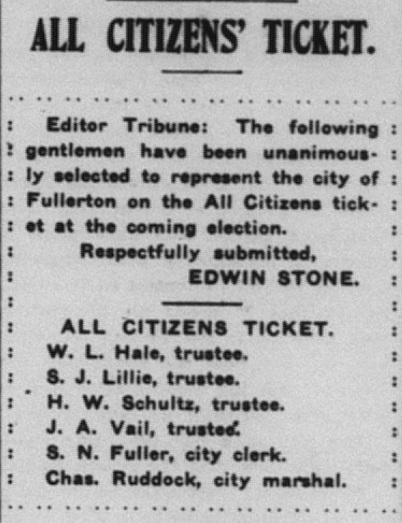
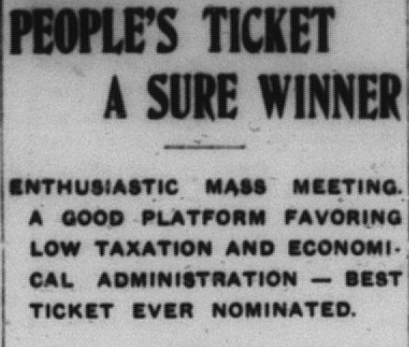

The newly elected trustees (council members) were: Will Coulter, August Hiltscher, J.H. Clever, and William Crowther. The treasurer was W.R. Collis, the clerk was W.P. Scobie, and the Marshal was Charles Ruddock. Coulter was chosen as Chairman, or Mayor.
Former trustee Chapman was not happy with the election’s result and had some harsh words for his political opponents. Editor Edgar Johnson, no fan of Chapman, responded with some choice words of his own.

In national political news, socialist candidate for president Eugene V. Debs stopped in Santa Ana to give a speech.

Another presidential candidate was Eugene W. Chafin, running on the Prohibition ticket.

Ultimately, Republican William Howard Taft won the election.

Taxes
City Trustees passed an ordinance levying a tax on businesses, which editor Johnson (and presumably business owners) took issue with.


Water
In water news, the Anaheim Union Water company completed the Yorba Reservoir, (later known as Yorba Linda Lakebed Park). The reservoir was located near Lakeview Avenue in Yorba Linda.
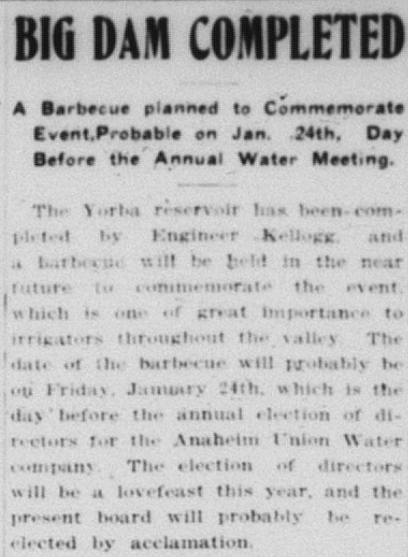
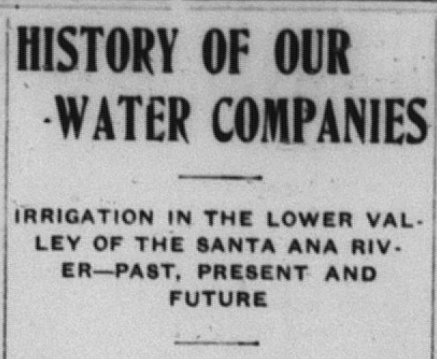
The 1908 Tribune included a five-part history of irrigation in Orange County. I have written about this topic elsewhere.
Prohibition
In 1908 there continued to be much local and national agitation for prohibition by groups like the Women’s Christian Temperance Union (WCTU).
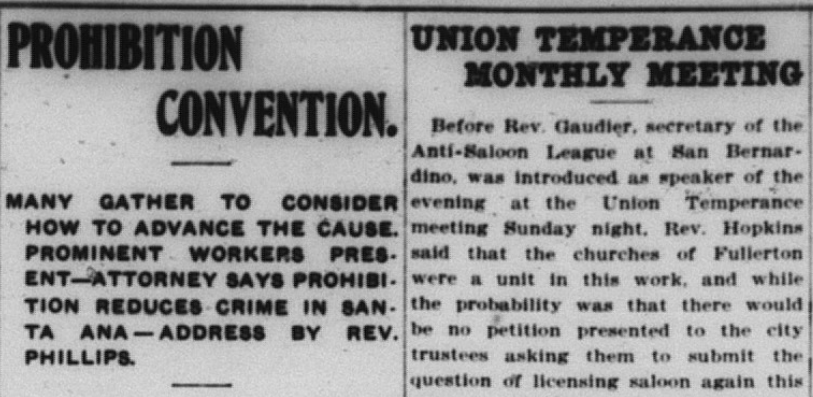

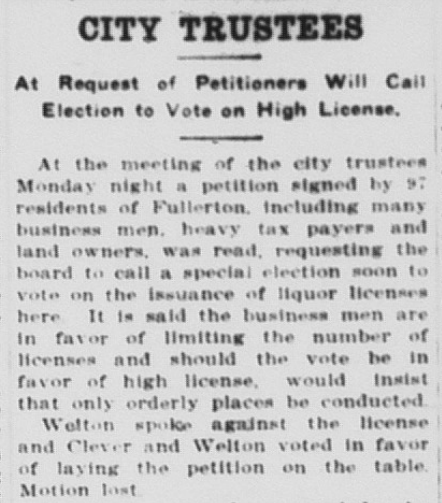
Fullerton often flip flopped between allowing and banning saloons. In 1908, a group of petitioners asked the city trustees to call for an election on banning liquor licenses. This election would take place in 1909. Stay tuned!
Crime
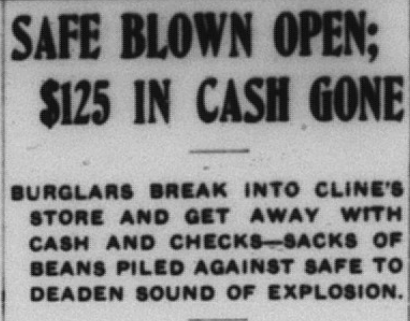
Below are a couple major crimes that took place in downtown Fullerton:

Oil!
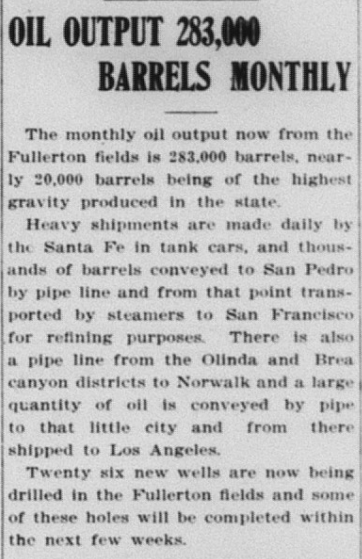
The oil fields north of town continued to produce large quantities of oil.
Fire
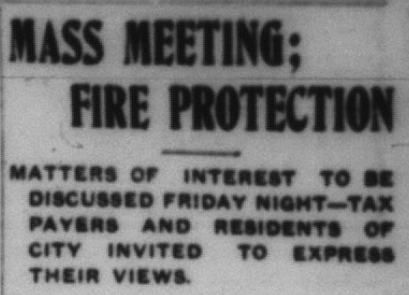
A large fire destroyed three buildings downtown.

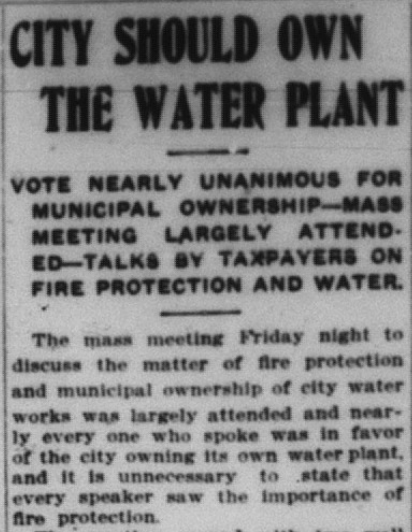
This fire prompted the citizens of Fullerton to organize the first volunteer fire department, to raise money for fire protection, and to consider municipal ownership of the waterworks downtown.


The Scandal of Professor Carpenter and Mrs. French
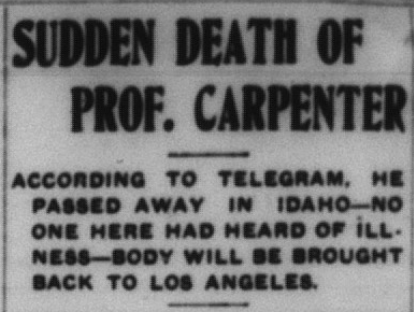
A seemingly normal article about the sudden death of W.R. Carpenter, former Fullerton High School principal ended up revealing a scandalous story about how Carpenter left his wife for the widow of the local Baptist minister.
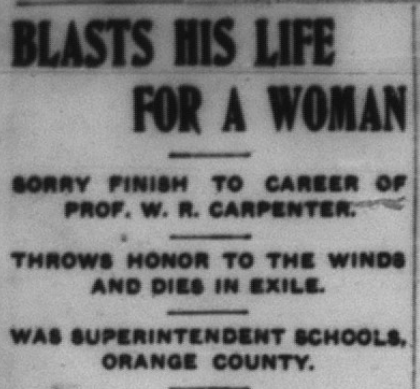
Here are some excerpts from the above article:
Death has freed W.R. Carpenter, former superintendent of Orange County, from the enthrallment of a woman for whose sake he gave up wife, children, an honorable career, and his good name. March 3 Carpenter sent his resignation to the board of supervisors at Santa Ana and he and his family left town. But while the wife, daughter, and son went to Los Angeles the man himself journeyed to Mountain View, Idaho, where he was joined by a Mrs. French, widow of a former Baptist minister of Fullerton, says the Los Angeles Times.
…Now, after less than two months with the other woman, his corpse lies in the morgue of Overholtzer & Mills, death being due to spotted fever.
Before becoming the county superintendent of schools in Orange County, Carpenter was for 14 years principal of the Fullerton high school. He was considered a square, straight man of unusual attainments and commanding ability…
In the early days of his principalship he met Mrs. Fannie French, who was the wife of the Baptist minister at Fullerton.
After the minister died, the affair began.

According to Mrs. French, she and Carpenter were married at sea, and he did not tell her that he was still married to his wife. After Carpenter’s death, Fannie French sued Carpenter’s former wife for $1850 that she apparently loaned him when he was alive.

Agriculture
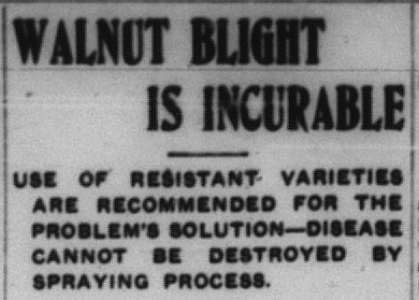
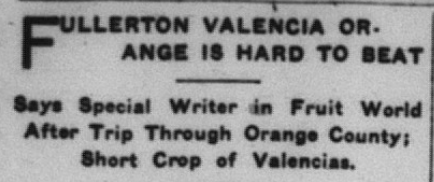
Oranges and walnuts were the main crops of Fullerton, although apparently the walnut crops were experiencing a blight.
Education
In 1908, Fullerton’s new high school building opened where Amerige Park is now. Unfortunately, this building would burn down in 1910.


Miscellaneous
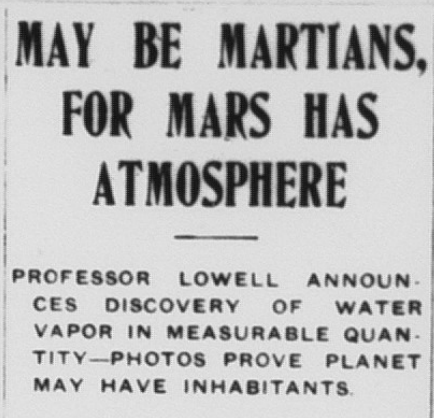
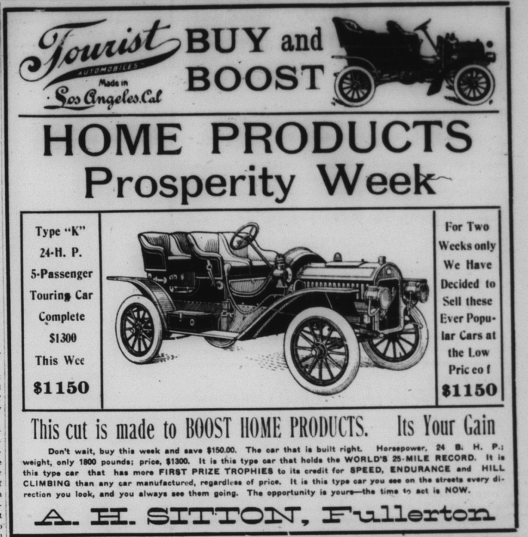
And here are a few miscellaneous articles and clippings from 1908 that I found interesting.



Stay tuned for 1909 headlines!
 Fullerton History
Leave a comment