The following is from a work-in-progress about the history of Fullerton. You can support my ongoing research and writing on Patreon.
The Local History Room of the Fullerton Public Library has microfilm from the Fullerton Tribune newspaper stretching back to 1893. I am in the process of reading over the microfilm, year by year, to get a sense of what was happening in the town over the years. Below are some news stories from 1907.
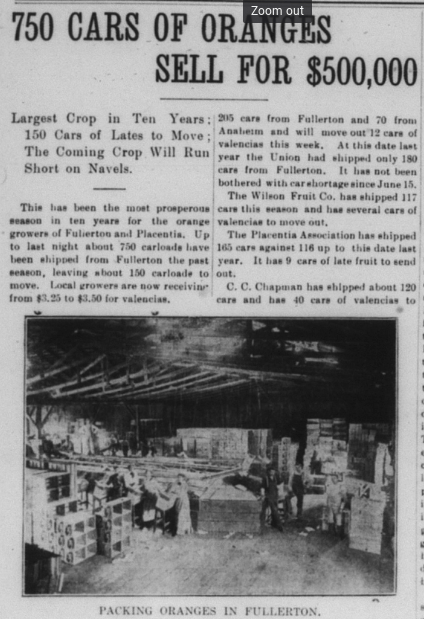
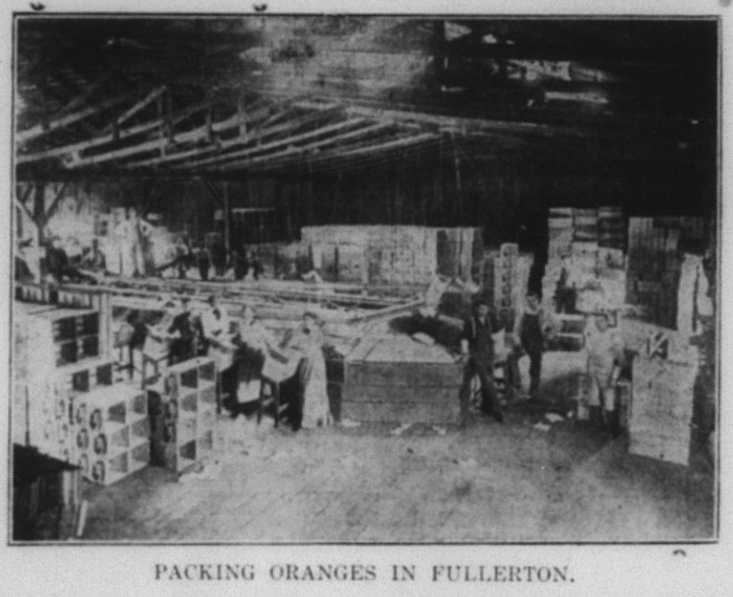
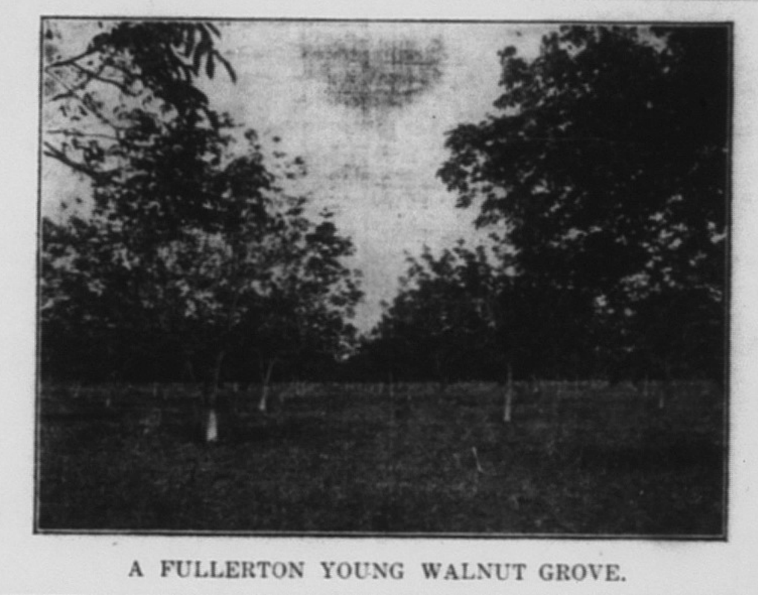
In 1907, according to an article entitled “Prosperous Fullerton,” the town had a population of 3,000, two banks, a new high school, four churches, and growers shipped 1,000 cars of oranges, 100 cars of walnuts, 300 cars of cabbages, and 200 cars of other farm products.
In 1907, the Tribune got a new linotype machine.

Racism
A disturbing article called “Japs Still in Town,” describes how a committee sought (apparently unsuccessfully) to run some Japanese people out of town, presumably because they were Japanese.

Here are a couple paragraphs from the article:
Sunday afternoon a number of young men about town decided to go to the house where five or six Japanese reside at a late hour Sunday night with the intention of driving them out of town. Frank Claudina overheard the conversation of two or three of the brave lads and offered to pay the whole bunch $5 a head and also pay their fines if arrested, if they would go to the house and manage to get even one Jap out of the city. They did not take Frank’s offer, but declared that they would make good and hustle the foreigners out of town that very night.
A Tribune reporter decided to go within one hundred yards or so of the field of battle to witness the round-up…The Japs are still in the house and may be there for some time.
Orange County’s First Lynching
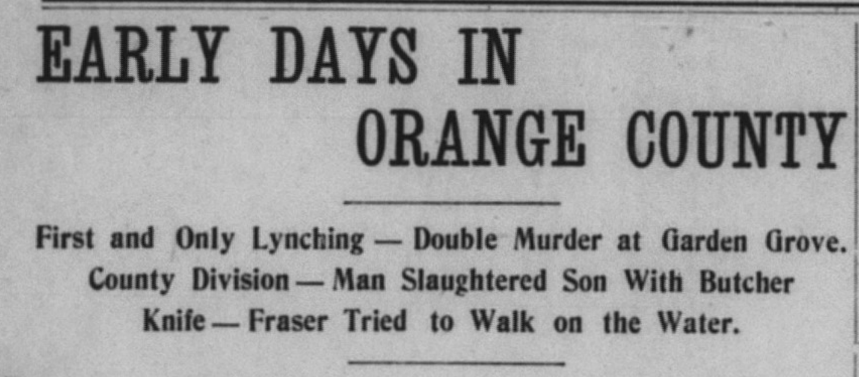
A front page feature titled “Early Days in Orange County” tells the story of Orange County’s first (and only) lynching, as told below:
Back in 1892 William McKelvey, a brother of Sid McKelvey of Fullerton and son of Mrs. McKelvey, also of Fullerton, was a foreman on Madame Modjeska’s ranch in this county, and a number of men were at work under him, including one named Torres, an Indian. The road-tax collector informed Madame Modjeska’s husband, that uncless the employees paid their road-tax, he would garnish their wages. Count Bozenta paid the poll-tax of the employee, and requested McKelvey to hold back $2.00 from each of the men when paying them off on Saturday night. Torres refused to pay his poll-tax, knocked Mr. McKelvey down with a pick-handle, and then stabbed him to death. Torres was arrested, being captured in San Diego County while trying to escape, and was placed in the small jail at Santa Ana. About a week after this cold-blooded murder had been committed, a crowd approached the little jail one night at midnight, all wearing masks. They demanded the keys from the night-watchman; he refused to give them up; within a few minutes the outer door, and the door leading to the cell were battered down, and a rope placed around Torres’ neck. He was so badly frightened he could hardly stand; he was pulled from the jail by force, led to the center of the city and the end of the rope was thrown over the first cross-arm of the telegraph pole at the corner of Fourth and Sycamore streets in front of Turner’s shoe store. The murderer was drawn up until his feet were about four feet from the ground, and the body was left there until after day-light next morning.
After first satisfying themselves that Torres was dead, the lynchers disappeared, and it is said many of them are still residing in Orange County today, some being well known businessmen. It is said Torres was unconscious when drawn up by the rope, it having been drawn so tight around his neck that he was strangled before the corner was reached. A doctor and another Santa Ana business man came along the street just at day-light, saw the body swinging just over their heads, and they almost tumbled over with fright. This was Orange County’s first and only lynching.
Click HERE for a more complete version of this story.
Water
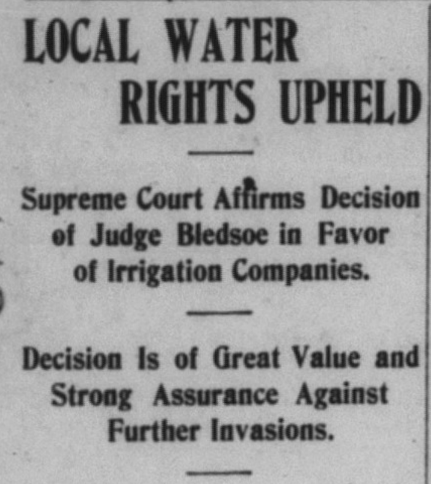
In water news, a seven year-long lawsuit upheld the water rights of the two Orange County companies, the Anaheim Union Water Company and the Santa Ana Valley Irrigation Company against a Riverside rancher named Fuller.
Fullerton rancher Charles Chapman was criticized by the Tribune (and apparently his neighbors) for changing the course of a waterway to protect his crops from flooding, meanwhile causing other ranchers properties to experience flooding during a recent storm.

New Library
Fullerton’s first real library, built with funding by industrialist Andrew Carnegie, was completed at a cost of over $10,000. The Library was on the site where the Fullerton Museum Center is today.

Below is a photo of the Carnegie Library taken a few years later:

Suicides
Fullerton resident L.E. Myers shot himself.

Bertha Luxembourger, brother of William “Big Bill” McFadden (who had died a couple years prior), tried to kill herself by jumping in front of a train, after her husband of four months left her. Amazingly, she survived.

Oil!
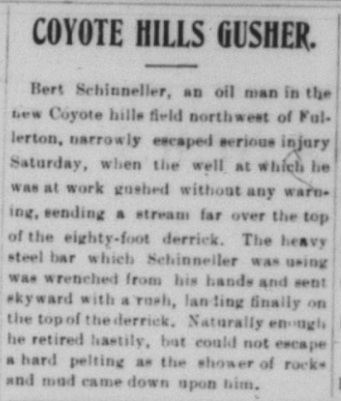
Many articles in 1907 were about the gushing oil fields north of Fullerton, including in Coyote Hills. Below are a few examples:


Agriculture
The orange and walnut industries continued to prosper.
Roads
The city trustees put before the voters an $80,000 bond, mostly to be used for road improvements. Tribune editor Edgar Johnson was against the bonds, and as he often did, he wrote front page “articles” that were actually opinion pieces against the bonds. I suppose, in this era of journalism, there wasn’t much separation between news and opinion. I suppose not much has changed.
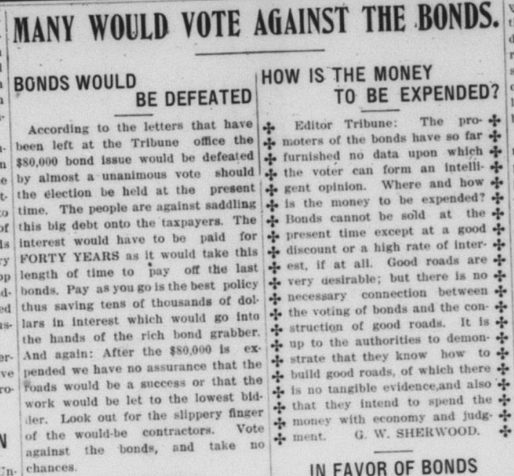


Ultimately, the bonds were roundly defeated. Fullerton would have to fund its road improvements some other way. The more things change, the more they stay the same.

The St. George Hotel
The large St. George Hotel, one of Fullerton’s first buildings, got a new owner. This building (near the northeast corner of Harbor and Commonwealth) has since been torn down.

Culture
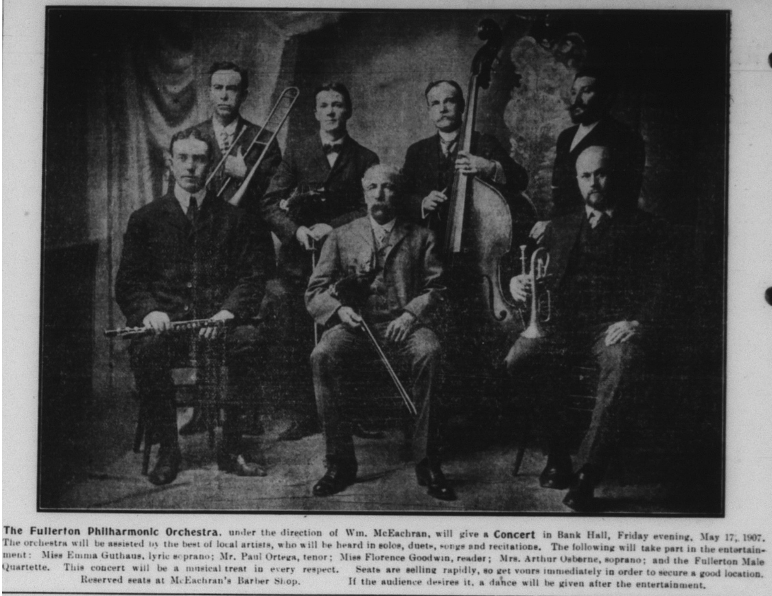
Fullerton had its own small orchestra, led by William McEachran.
Sports
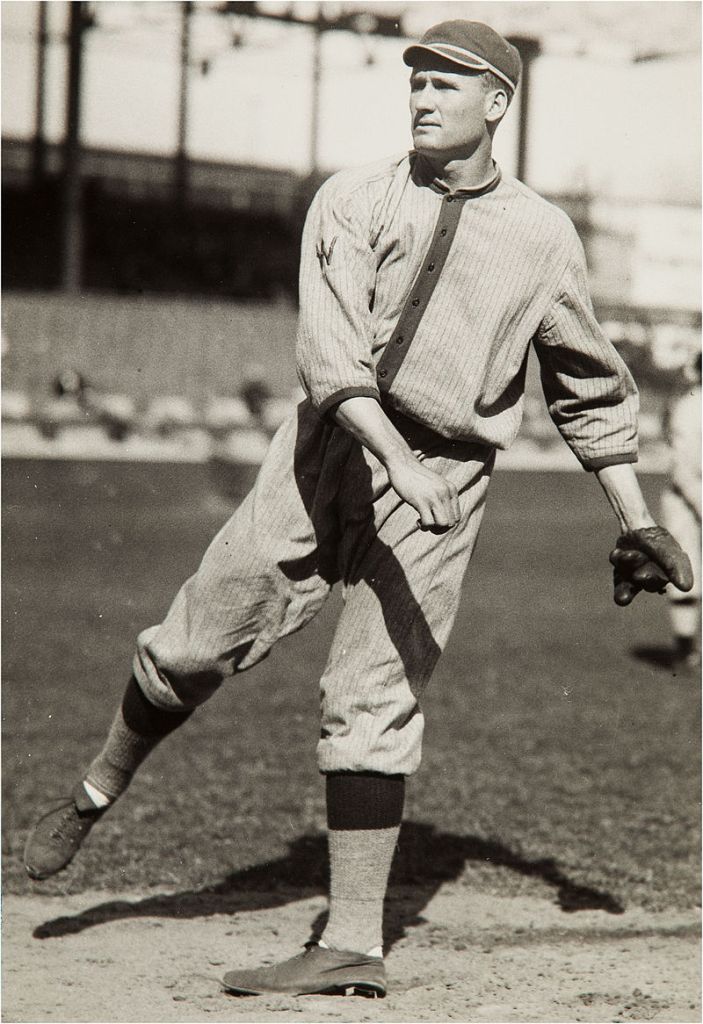
Walter Johnson, a future Hall of Famer, had been a pitcher at Fullerton High School. He went on to play for the Washington Senators, and became a source of pride for Fullertonians.

Here is a photo of Walter Johnson, taken by photographer Charles Conlon, circa 1910.
Click HERE to read highlights from previous years.
 Fullerton History
Leave a comment