The following is from a work-in-progress about the history of Fullerton. You can support my ongoing research and writing on Patreon.
The Local History Room of the Fullerton Public Library has microfilm from the Fullerton Tribune newspaper stretching back to 1893. I am in the process of reading over the microfilm, year by year, to get a sense of what was happening in the town over the years. Here are news stories from 1906.
Click HERE to read highlights from previous years.
Prohibition
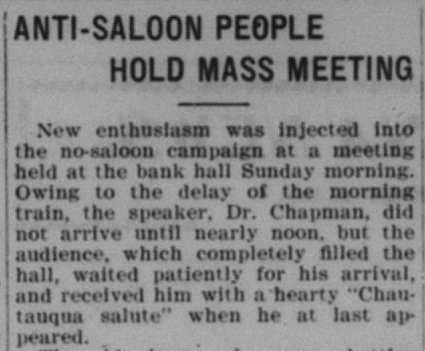
In 1904, the year Fullerton incorporated, the town’s residents (who were quite divided over whether to prohibit saloons), voted to allow them. Two years later, in 1906, the town voted to outlaw them.
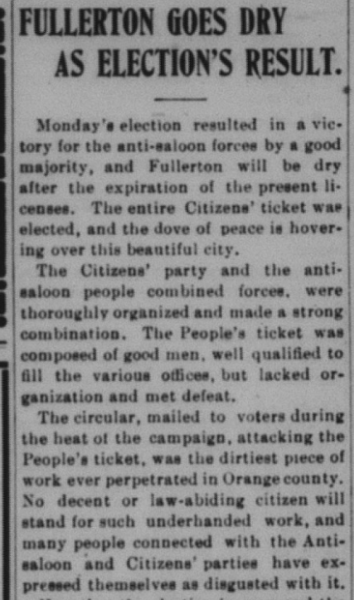
This was the result of years of organizing by the Women’s Christian Temperance Union and the Anti-Saloon League.
Local Government & Politics
As mentioned above, 1906 was an election year, and Tribune editor Edgar Johnson clearly had his favorite candidates. Prior to the election, he ran articles/editorials that advocated for what he called “The People’s Ticket,” which included City Trustee candidates E.R. Amerige, R.T. Davies, and L.P. Drake.

This was in contrast to what Johnson called “The One-Man Power Ticket.” That one man was Charles C. Chapman, whom Johnson had taken to calling the town “Czar” and “The Great I Am.”
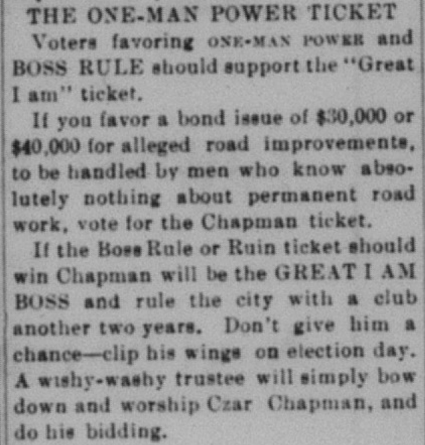
Unfortunately for “the people,” the Chapman ticket swept the race. Chapman, for some reason, was not up for re-election–perhaps he had a four year seat.
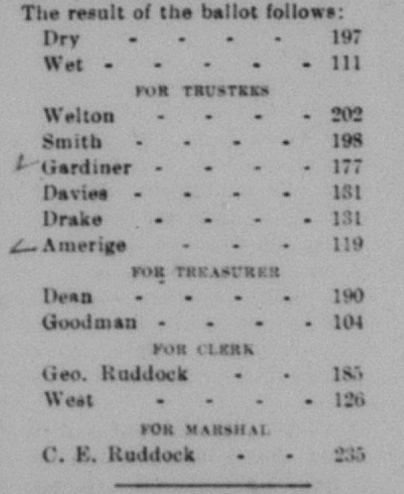
Town co-founder Edward Amerige, who was a part of the “People’s Ticket” wrote a letter to the Tribune after the election condemning dirty political tactics of his opponents. His words show that not much has changed in over a hundred years:
I desire to say a few words in your paper regarding the anonymous letter which was sent through the mails during the recent election. Such a contemptible, sneaking, lying and cowardly act is hardly worth replying to through the medium of newspapers. The proper place to answer such a blackmailing and malicious letter is through the criminal courts and should information be secured as to the authorship of this libelous letter such an action will be commenced. The men and parties who would stoop to such despicable means of trying to influence voters would stoop to anything to carry their ends, and are a dangerous and undesirable element in any community. Several of the parties who are mixed up in this disgraceful attempt to besmirch decent men are supposed to be respectable citizens, but when they resort to such methods and are so cowardly as not to dare sign what they write, they are worse than a coyote that roams in the dark. Fairness is one of the cardinal virtues, and one that every honest man should support and believe in. I know from personal knowledge that a great many voters of the All Citizens’ party condemn this method of securing votes, and are not at all in sympathy with such low methods. Some people attribute to me some of the articles which have appeared in different newspapers regarding Mr. Chapman. I have never written any article in relations to that gentleman; there are other people who do not agree with his political methods than I. The newspapers that publish such are responsible and are willing to stand by what they print or write.
–E.R. Amerige
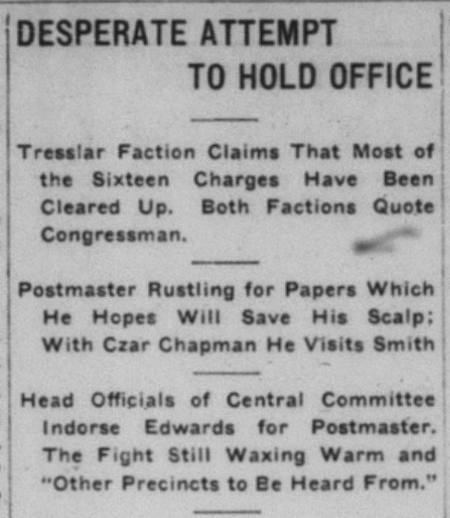
Interestingly, the town postmaster Vivian Tresslar, who was also the man Chapman hired to edit the Fullerton News, was in hot water for alleged legal violations.
Oil!
Although it’s not very evident today, Fullerton at the turn of the century was a very oil-rich region, and numerous wells were being drilled in the hills north of town.

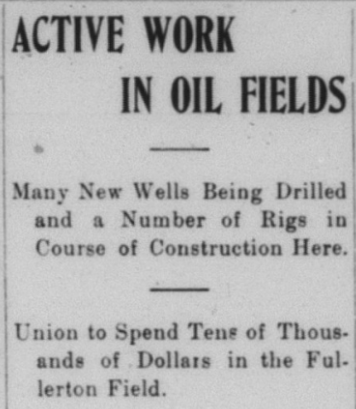
Among the numerous oil interests active in the Fullerton fields was the Murphy Oil Company, who actually screwed the Bastanchury family out of oil they were entitled to.
The story is told in more detail in an article from the web site Basques in California:
“In 1903, the Murphy Oil Company leased the West Coyote Hills lands from the Bastanchury Ranch to dig for oil. One year of excavations found them hot mineral water at 3,000 feet. As one of the oil workers later confessed, they found an oil well at 3,200 feet but covered it up. In 1905, Murphy bought off from Domingo Bastanchury more than 2,200 acres in the surroundings of La Habra, at $25 an acre. Allegedly, Murphy assured Domingo before the acquisition, that those lands held no oil. Time later, the Los Coyotes Hills area became South California’s largest oil field.”


In the oil industry, as in other industries, the larger companies (like Standard Oil) used their power to try crush local competition (like Puente Oil).

Water
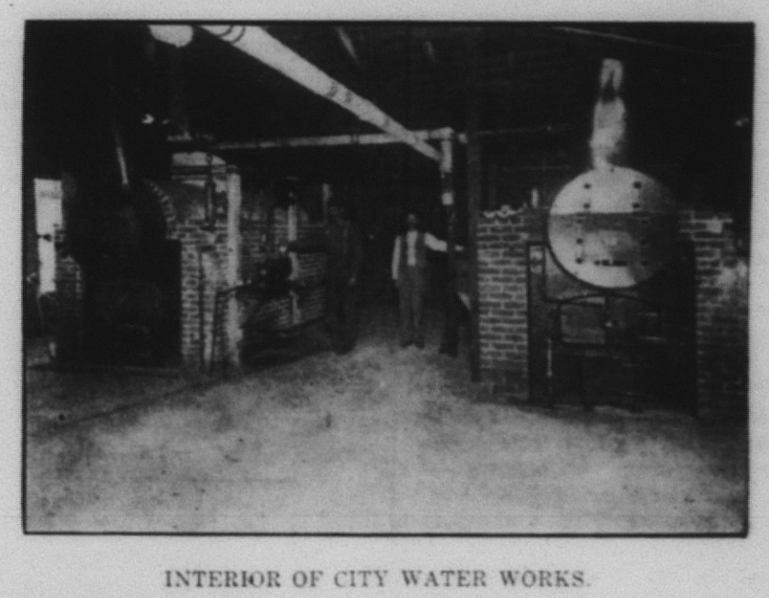
Perhaps the most contentious local water issue of 1906 was the question of whether the city would buy the town’s privately-owned Water Works (a pumping and storage plant) from its owners, the Adams-Philips Co. This issue created much public debate over the economic and philosophical merits of public vs. private ownership of utilities, a debate that feels relevant today. Prior to the election, it appeared that the majority of the citizens of Fullerton favored city ownership of the water works.

Ultimately, however, the issue went to a vote and was defeated. Tribune editor Johnson mused: “with the present plant owned by millionaires and in operation…the longer a city delays in acquiring public utilities, the more expensive becomes the undertaking.”
A group calling itself the Citizens Protective Association organized much of the opposition to the water bond issue.

Electric Power
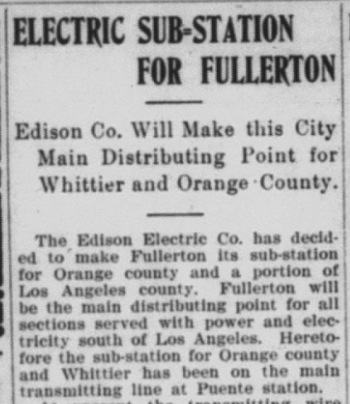
The Edison Co. built an electric sub-station in Fullerton that made the town the main distributing point for Whittier and Orange County.
Death
Fullerton pioneer rancher Henry Hetebrink died. His son John would later build that big old house (now vacant) on the Fullerton College campus, at the corner of Chapman and Berkeley.

Education
Voters approved the site for a new high school building to be built on Commonwealth Avenue, where Amerige Park is today. The community was outgrowing the first brick high school building on Lawrence Ave. near Lemon.

San Francisco Earthquake
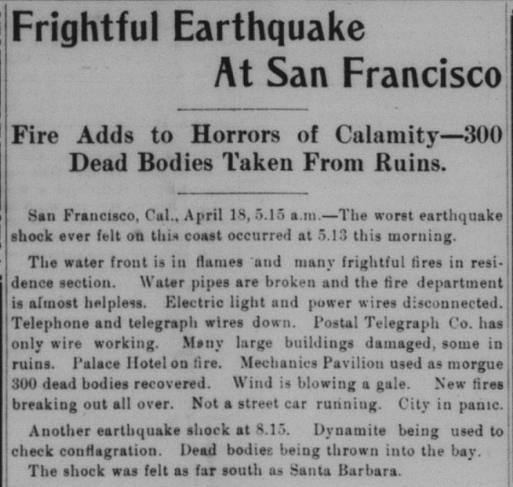
1906 was the year of the great San Francisco earthquake. More than 3,000 people died, and over 80% of the city was destroyed. The event is remembered as the deadliest earthquake in the history of the United States.
Placentia Vegetarians
A Tribune correspondent visited the strange vegetarian colony/commune in Placentia. I plan to write more about them in the near future. In the meantime, check out a brief history HERE.

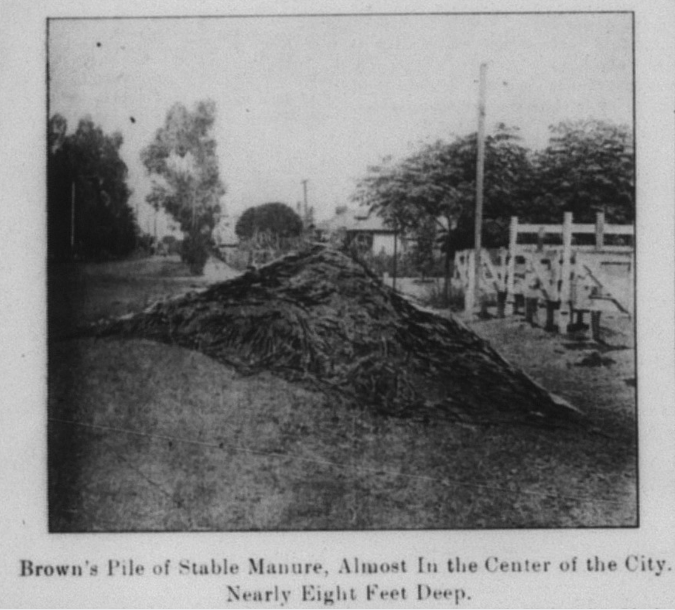
Brown’s Pile of Stable Manure
A Mr. Brown was ordered to remove his massive pile of manure from the center of town.
Voting by Women
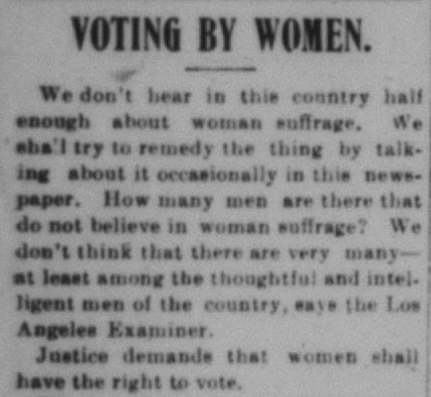
Women could not vote in 1906. The 19th Amendment would not pass until 1920. In the meantime, some editorials appear in the Tribune on the question of women’s suffrage.
 Fullerton History
Leave a comment