The following is from a work-in-progress about the history of Fullerton. You can support my ongoing research and writing on Patreon.
In 1978, George Mickle was interviewed by Anne Riley for the Fullerton College Oral History Program. Mickle was a groundskeeper for Fullerton Union High School and Fullerton College from 1926 until 1941. Here are some highlights from the interview.
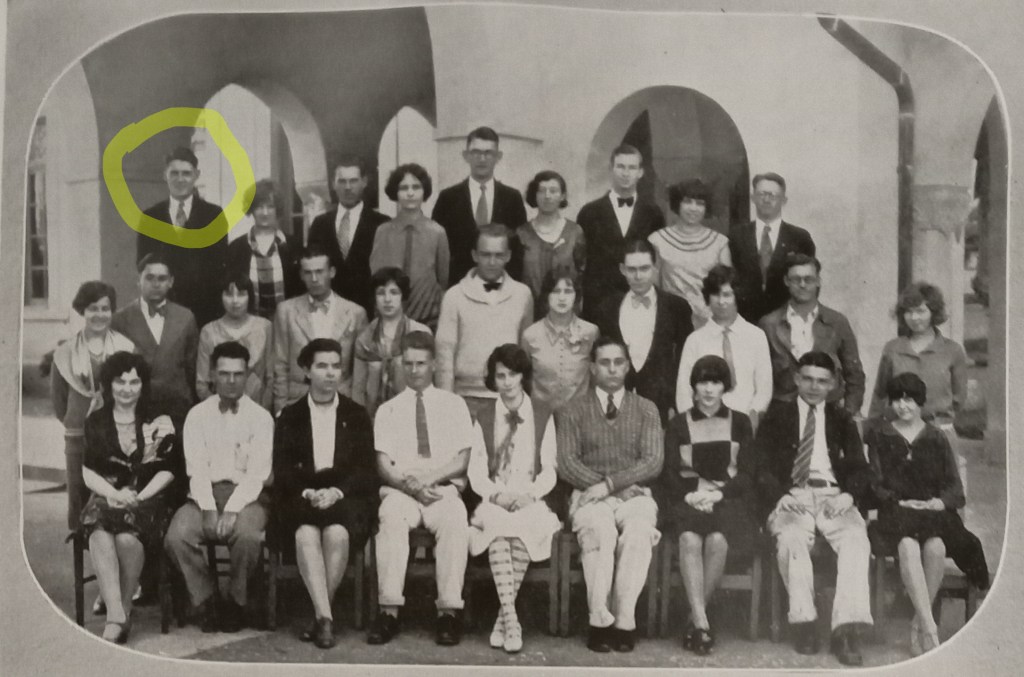
George Mickle graduated in 1926 from Anaheim High School, and attended Fullerton College from 1926-1928.
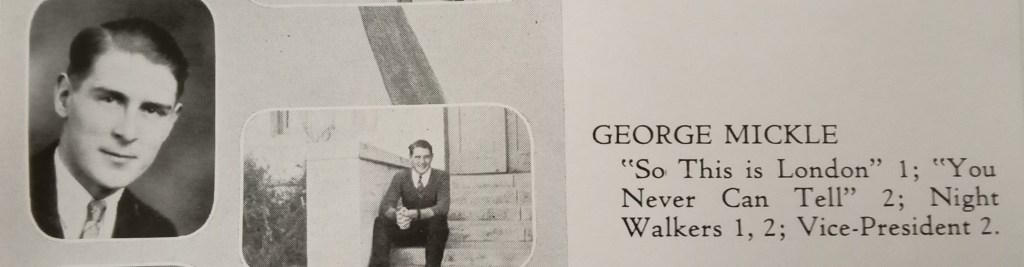
He was raised by an aunt and uncle, and his uncle was hired to take over as chief engineer of the heating department at the high school and junior college. So they moved to Fullerton. At that time the school furnished the chief engineer a house right on campus.
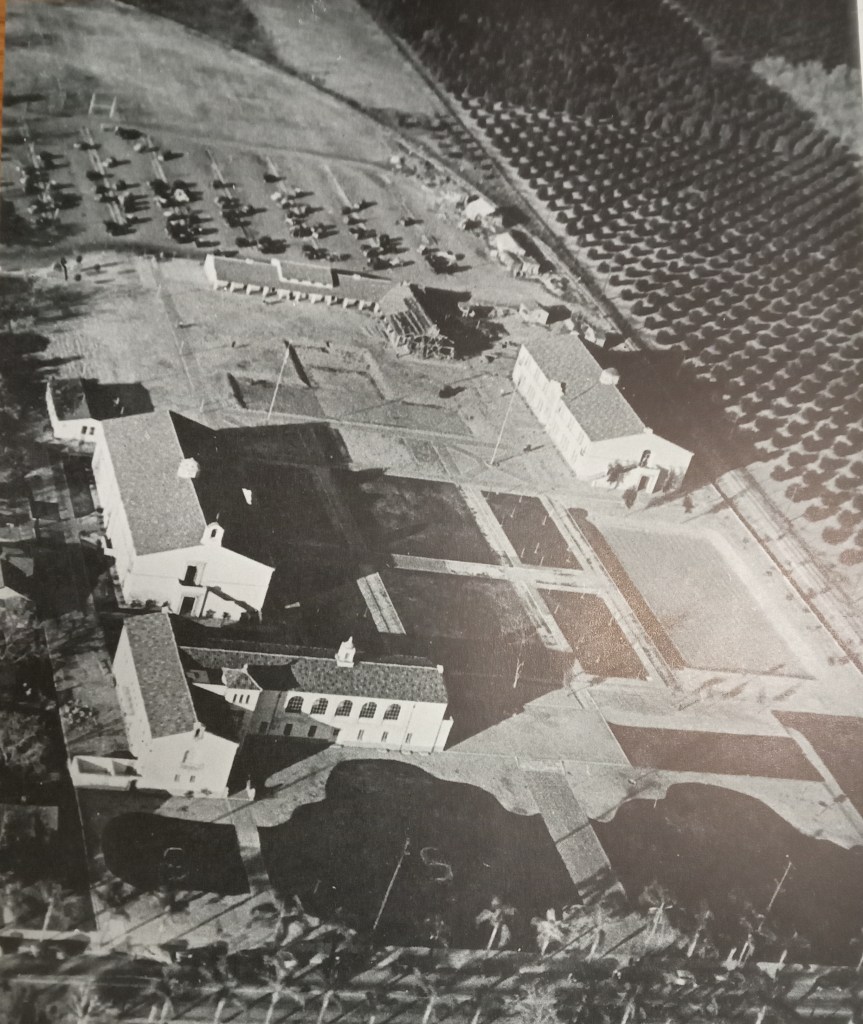
When Mickle was a student, Fullerton College shared a campus with the high school, where there was a single building known as the the Junior College building in the center of the high school campus.
He was vice president of the drama club, called the Night Walkers.
Fullerton College had its own school bank run by a Mr. L.O. Culp who taught banking and business courses.

Mickle remembers that a girl named Collie Bode designed the Hornet emblem in 1926 as part of a contest, and won $50.
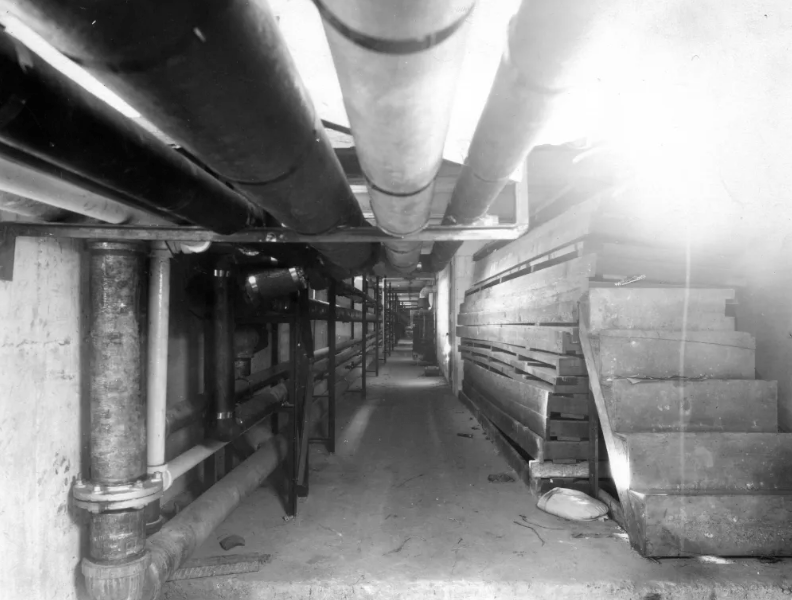
Because he worked as a groundskeeper, Mickle was well acquainted with the tunnels running under campus.
“Underneath every building on the high school and junior college campus, at that time, were tunnels coming from the heating plant,” he said. “That was my first job to go down at five o’clock every morning and go though all the tunnels and turn on air conditioning in the summer and heat in the winter time. There were big fans, all under the whole campus. All the pipes were down there, but there was plenty of room to walk.”
He said that Fullerton has always been “very much of a baseball city [and has] turned out some big league players” such as Arky Vaughn, Willard Hershberger, and Walter Johnson.
Every year, he remembers, Fullerton used to have a Jacaranda Festival, when all the Jacaranda trees were in bloom.
He remembers the annual Thanksgiving Day football game between Fullerton and its rival Santa Ana, which always drew a huge crowd and would sometimes get rowdy.

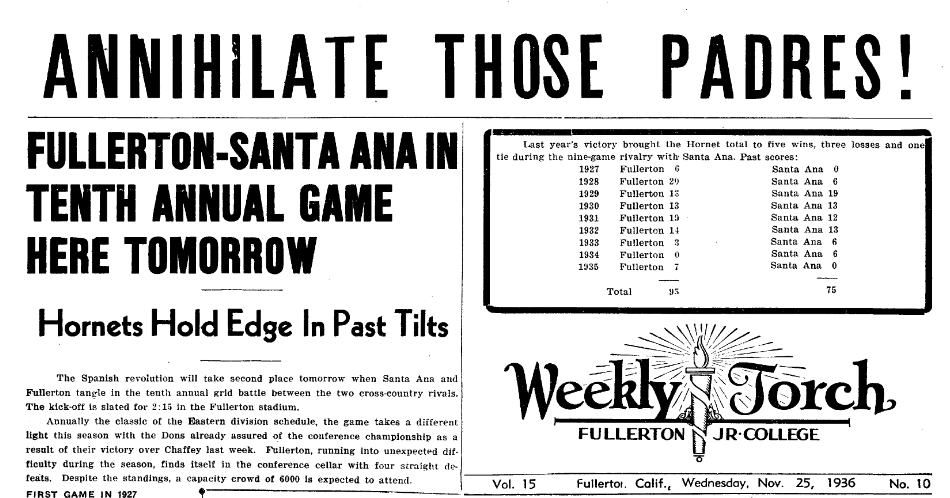
“After every game the people, the roughnecks, would rush out on the field and start a fight and pull down the goal posts,” he remembers.
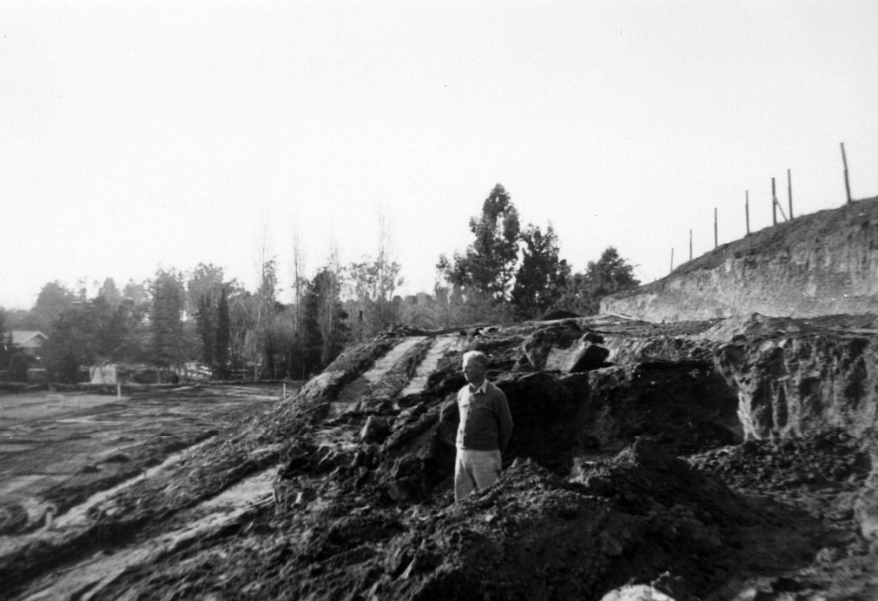
In 1933, when the college acquired its own property for a campus (a walnut and orange grove) he helped remove the stumps of walnut and orange trees to clear the land.
1933 was also the year of a major earthquake.
During the Depression, the school Board tried to cut costs by having no junior college or high school athletics in order to cut costs.
“The students all marched downtown in protest, and they decided to continue the athletics,” he said.
Although the Depression was hard times, it was also a period of growth for the college, thanks to the Works Progress Administration and other government programs.
It was WPA labor and funding that built the “new” stadium for the high school and college, and for the first buildings of the new college campus–the Commerce Building (1935), the Administration Building (1936), and the Trades building (1938)–all of these buildings still stand.
Mickle remembers working with those employed by the WPA, most of when were local.
“Some of them worked only two days a week, some would work three days, depending on the size of their family,” he said. “Workers were mainly from around here. Quite a few of these WPA and SERA and so forth were from out in the Placentia area and were Mexican Americans.”


He remembers when the “Pastoral California” mural was painted on the side of the high school auditorium, and when it was painted over.
Why the mural was painted over remains a subject of debate among local historians. Some have said it was painted over because the school board thought the figures depicted were “vulgar” or “grotesque” and some have said that the mural was “too Mexican” for the all white school board.
Mickle gives his own reason: “They finally had to take that one off of the auditorium because the kids doctored it up too much!”
He doesn’t say how the students “doctored” up the mural, but I know some complained at the time that the women in the mural were too bosomy. Perhaps the students “doctored” it to emphasize, or enhance this feature. The mystery continues.
Mickle remembers when the Pacific Electric tracks came through campus.
In 1938 school was closed due to a massive flood, when the Santa Ana river went over its banks.

During World War II, Mickle went to work for a Navy shipyard. After the war, he took a job with Johnson’s Fullerton Motor Parts.
 Fullerton History
Leave a comment