The following is from a work-in-progress about the history of Fullerton. You can support my ongoing research and writing on Patreon.
The Local History Room of the Fullerton Public Library has microfilm from the Fullerton Tribune newspaper stretching back to 1893. I am in the process of reading over the microfilm, year by year, to get a sense of what was happening in the town over the years. Here’s what what happening in town in the year 1902. To read earlier years of news archives click HERE.
Prohibition
The sale of liquor remained (mostly) illegal in Fullerton, following an 1894 county ordinance. Fullerton had not yet incorporated as a town–that wouldn’t happen until 1904–and prohibition would remain a big local issue. There was an active Women’s Christian Temperance Union and an Anti-Saloon League, and they involved themselves in county politics.
In 1902, a Jo Smith of Fullerton was arrested, charged, and found guilty of violating the county liquor ordinance by selling liquor.
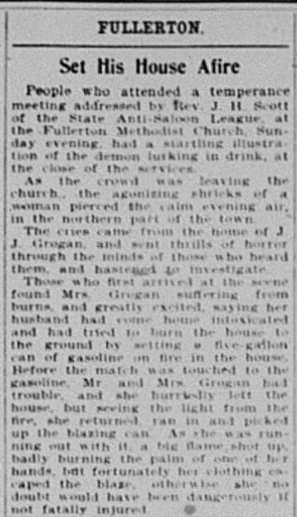
Perhaps adding some fuel to the fire of the liquor question occurred when attendees of a temperance meeting of the State Anti-Saloon League at the Fullerton Methodist church were interrupted by screams. Apparently, a Mr. J.J. Grogan had returned home intoxicated and attempted to burn down his house. See clipping below…
Politics
1902 was an election year. The total population of Fullerton was around 1,000, and there were 360 registered voters. Women could not yet vote, unfortunately. That wouldn’t happen until 1912 in California and nationally in 1920 with the passage of the 19th amendment.
Some Fullerton notables ran for county and state offices.
Dallison Smith Linebarger, a Democrat who owned a livery [horse] business in town was elected to represent District 3 on the Orange County Board of Supervisors. He defeated fellow Democrat B.F. Porter (a Fullerton rancher) in the primary, and Republican William “Billy” Hale (also a rancher) in the general election. He would be re-elected and serve until 1912.
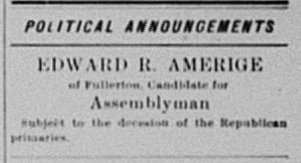
Town co-founder Edward R. Amerige, a Republican, was elected to the California State Assembly. He would serve two terms.
Meanwhile, another town co-founder H. Gaylord Wilshire, a noted socialist, had his magazine the Challenge banned from the U.S. mail. He ended up changing the name of the magazine to Wilshire’s Magazine and shipping them out of Canada, to get around the ban. Wilshire is a fascinating figure and I plan to write more about him soon.
Culture/Social Life
Fraternal organizations were a big part of the social life of Fullerton. At the turn of the century, around 6 million Americans were part of fraternal organizations. The most prominent of these were the Masons, whose members included Dr. George Clark, William Berkenstock, William McFadden, A.A. Pendergrast, Otto Des Granges, and other prominent community members.
Another fraternal order, The Odd Fellows, had members who included William Goodwin, Edgar Johnson, Edward Magee, August Hiltscher, W. Schumacher, James Conliff, and others.
In addition to regular meetings, the various organizations would host large social events, such as the New Years event described below, hosted by the local chapter of the Foresters of America, even though there were no forests in Fullerton.
Mask Ball Last Night
The grand mask ball given by the Foresters of America last night was one of the most sociable and successful events of that character ever witnessed in Fullerton. There were numerous costly and fancy costumes and a jolly crowd was present, making the evening very pleasant and enjoyable.
Masks were removed at 11 o’clock, followed by much laughter and many surprises. Supper was served at the Fullerton Hotel about midnight after which dancing was resumed and continued until an early hour this morning. When the new year set in ad midnight there were many hearty congratulations on all sides and Wm. Schumacher in Uncle Sam’s attire wished the party a “Happy New Year” on behalf of the order. Music was furnished by the Drake-McEachran orchestra and was very satisfactory to all.
Deaths
The Tribune chronicled illnesses and deaths of residents. William “Big Bill” McFadden, died at age 62.
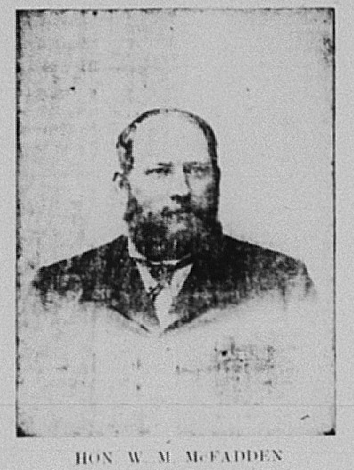
Originally a schoolteacher, McFadden came to California in 1864, and served as Superintendent of Schools in Santa Ana. In 1869, he became a pioneer of citrus farming and was the second orange rancher in Placentia. He helped organize the Southern California Fruit Exchange, the Fruit Growers Bank, which then became the First National Bank of Fullerton, the Anaheim Union Water Company (on which he served as president and as a director). McFadden was a prominent figure in the local Democratic Party and was a representative from Orange County at the national Democratic convention of 1900.
The pallbearers at his funeral were Edward R. Amerige, Alex Henderson, Richard Melrose, Elmer Ford, Henry Lotz, and A.S. Bradford. The local bank and other stores closed for his funeral. He is buried in the Anaheim Cemetery.
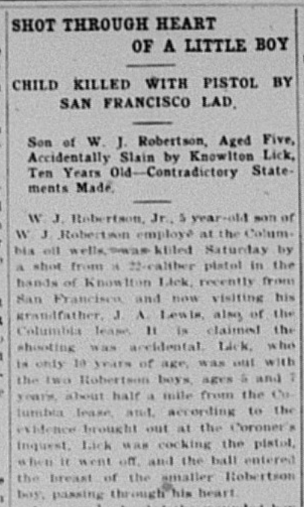
In the oil fields north of Fullerton, a tragedy occurred when a 10-year old boy named Knowlton Lick accidentally shot a 5-year old boy named W.J. Robertson.
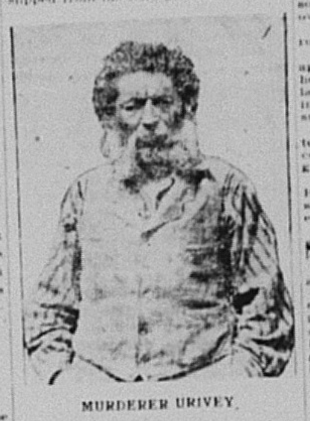
A man named Jose Juan Cabrillas was murdered by Jose Urivey over a dispute involving a 5-cent oil can. Alcohol may have also been involved.
J.S. Wallace, a civil war veteran who had lived in Fullerton for 12 years, died of typhoid fever at age 72.
A.L. Rogers, a zanjero (basically a water police who guarded irrigation ditches and enforced water allocations) for the Anaheim Union Water Company, died of “lung fever” [pneumonia?] after being exposed to a rainstorm while on duty. He was 40.
Anna Schaller, a 15-year-old who was heartbroken and distraught because her parents disapproved of her lover (who had recently left town), committed suicide by drinking poison.

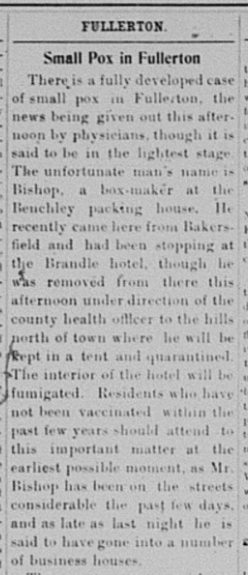
Diseases like smallpox were a concern, and the Tribune tells of a few cases in Fullerton, even though a vaccine existed. When patients were discovered to have smallpox they had to go quarantine themselves in a tent in the hills north of town until they recovered. Alternatively, they could have just gotten vaccinated.
A fight between two neighboring ranchers, W.R. Carpenter and Ed Kraemer, almost ended in a death when Carpenter allegedly trespassed (armed) onto Kraemer’s property. This resulted in a fight. Though no one was hurt, Carpenter was charged with assault with a deadly weapon (he was armed), but was not convicted.
Business
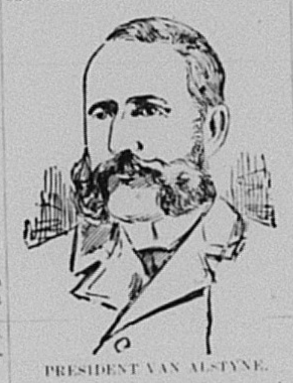
Local businessmen organized a Board of Trade in 1902 whose directors included Jacob Stern (co-owner of Stern & Goodman general store), William Brown, T.B. Van Alstyne, E.W. Dean, and V. Tresslar. Among the first matters taken up by the Board was securing electric lighting downtown, protecting the town against fires (the Fullerton Fire Department would not be organized until 1908), improving sidewalks and roads, and devising “a system of keeping tabs on any dead beats who may reside in the county or come this way…for mutual protection of our business men.”
A Chamber of Commerce was also formed, which seems a bit redundant with the Board of Trade. Its officers included Charles C. Chapman, Edward Amerige, and other prominent businessmen.
The First National Bank of Fullerton (formerly the Fruit Growers Bank) has as its directors B.G. Balcom, A. Barrows, A. McDermont, Jacob Stern, Erwin Barr, and Charles C. Chapman.
Agriculture
Along with oil, agriculture (mostly citrus and walnuts) was the big business in Fullerton. The most successful grower in 1902 was Charles C. Chapman, whose Old Mission brand Valencia oranges fetched the highest prices. Chapman’s ranch encompassed 300 acres. In 1901, he shipped 130 carloads of oranges.
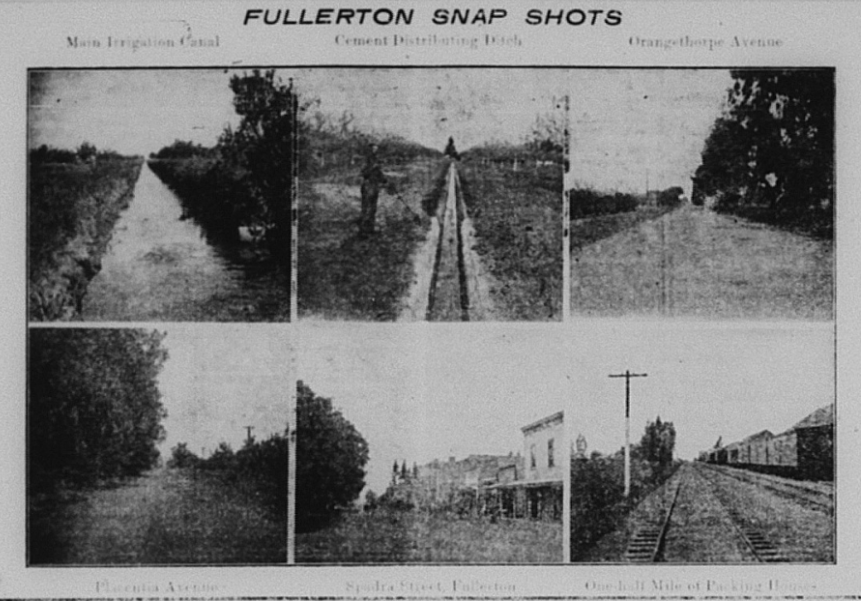
Describing the citrus business of Fullerton, Tribune editor Edgar Johnson writes, “It is the heaviest shipping point in Orange County, excepting Santa Ana. A distance of nearly half a mile along the railroad is taken up by seven large packing houses, several warehouses.
Water
In order to make this agricultural economy thrive, water had to be obtained and regulated. The company which oversaw allocation of water from the Santa Ana River and all the major irrigation channels in north Orange County was the Anaheim Union Water Company, who sometimes had legal fights with water companies to the South who also drew from the Santa Ana River, such as the Santa Ana Valley Irrigation Company.
These were private companies whose Board of Directors tended to be owners of large, local ranches. Water rights (also called riparian rights) were a really big deal—water is life, and profits for farmers. Around 1901, these two water companies met together to bring legal action against a Mr. Fuller, “the Riverside county land-grabber” to prevent his taking water from the Santa Ana River. This would be one of many ongoing legal battles over local water rights.
In the meetings of the AUWC, there was discussion of purchasing the water rights of James Irvine, the man whose descendants founded the Irvine Company, which now owns the city of Irvine. In those early days, “maintaining an accurate division of the water [was] difficult if not impossible to devise.”
The local climate was also not conducive to a steady supply of water, specifically from the Santa Ana River. The AUWC concluded: “The conditions of our climate are such that it is impossible to determine ahead when the water can be turned out of the ditch for any definite time, without danger of loss to our irrigators.” New sources of water would be needed to irrigate the growing fields of Orange County.
Meanwhile, the Anaheim Union Water Company and the Santa Ana Valley Irrigation Company cut a deal to share water rights. Mr. Sherwood, a sometimes AUWC Board Member who liked to write lengthy articles in the Tribune criticizing those who disagreed with him, took issue with the deal. To which Samuel Armor of the Santa Ana Valley Irrigation Company replied: “G.W. Sherwood seems to be afflicted with a diarrhea of words accompanied by a costiveness of ideas. For two years or more he has been filling the papers west of the river with misrepresentations and insinuations against the S.A.V.I. Co. until his followers have come to believe the the people on this side are equipped with hoofs and horns and forked tails.” To which Sherwood replied: “I have always taken pleasure in setting Armor right, when he gets tangled up in the mazes of his own alleged erudition…With regard to the proposed division of water, Armor’s premises are false and his conclusions are wrong.”
To read more about the complexities and controversies over water in early Fullerton and Orange County, check out my series entitled “Fullerton Water Wars.”
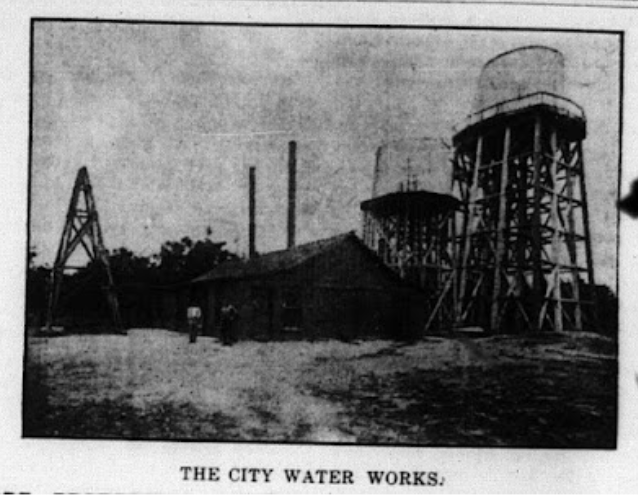
For municipal purposes, Fullerton constructed a town waterworks which was used primarily for downtown businesses and in case of fires. The waterworks drew from a large well.
Oil!
In addition to agriculture, oil was a big business in Fullerton in 1902. The large oil fields were in the north part of town, and were among the most active in the state of California at the time. A growing number of companies, big and small, were drilling, piping, and selling oil. These companies included: Associated Oil Company, Menges Oil Company, The Graham-Loftus Oil Company (who had a 75,000-barrel reservoir on their lease), Fullerton Consolidated Oil Company, Iowa Oil Company, Puente Crude, the Liberty Oil Company, Columbia Oil Company, Union Oil Company, the Santa Fe Railroad Company (which produced oil for its trains), and Standard Oil Company. The companies would either purchase or lease the land for drilling purposes.
The Union Oil Company alone was piping 30,000 barrels a month from its Fullerton fields to San Pedro Harbor, where it was shipped north for refining.
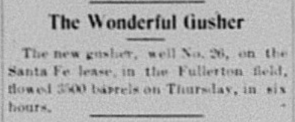
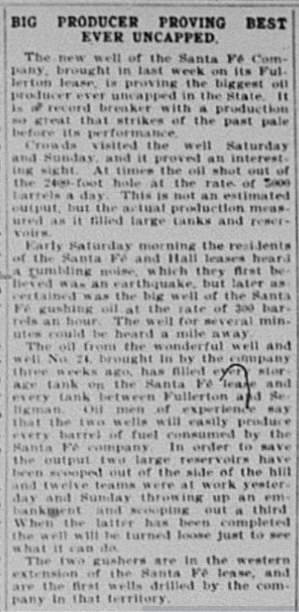
Occasionally, a “gusher” would come in, or catch fire. A single well could produce thousands of barrels a day.
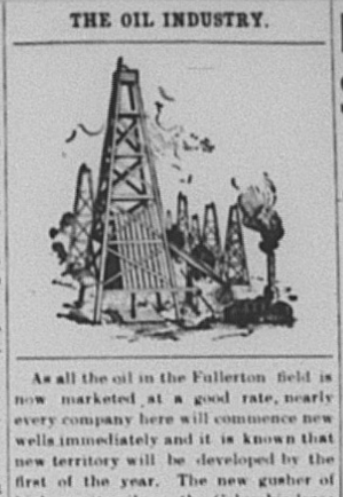
At this time, before people knew about things like global warming, local oil production was viewed with excitement, as it meant dollars, jobs, etc. When a new gusher came in, folks could hear and see it for miles around, and would sometimes gather to watch it spout the black gold into the air.
Education
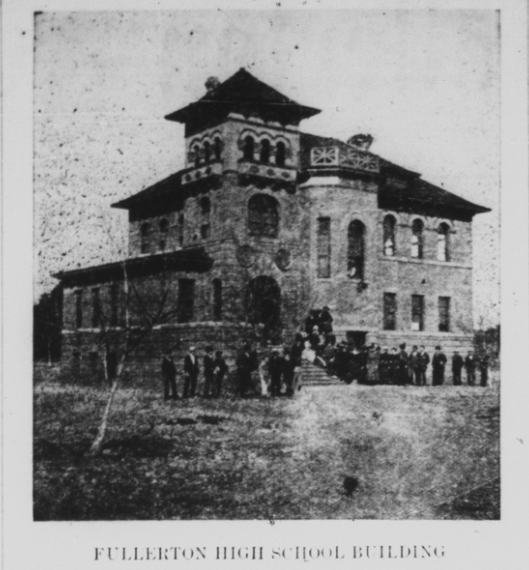
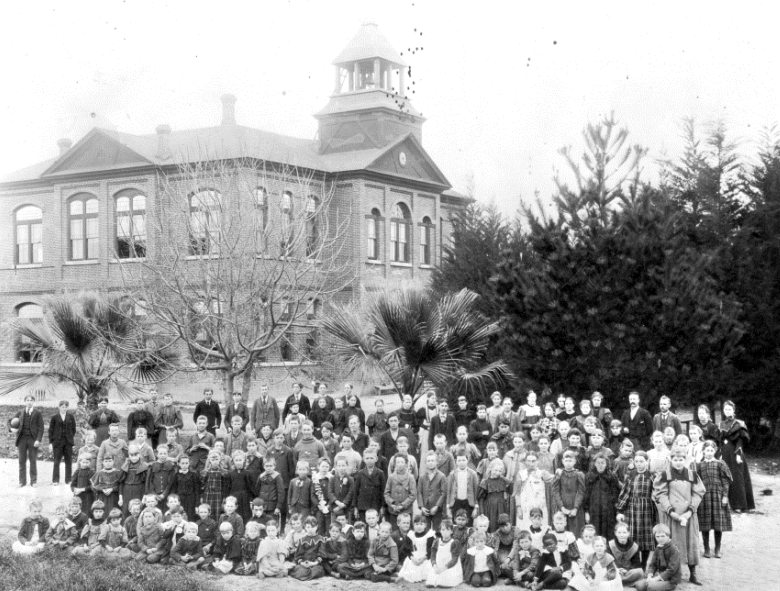
In 1902, Fullerton had a grammar school and a high school, with an enrollment in the hundreds. Neither of these buildings exist today.
Progress!
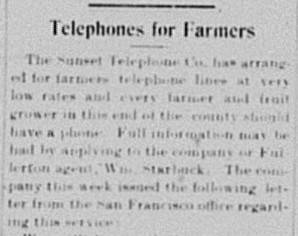
Communications technology, particularly the telephone, was advancing. New telephone lines were being built to connect residents with each other and the outside world.

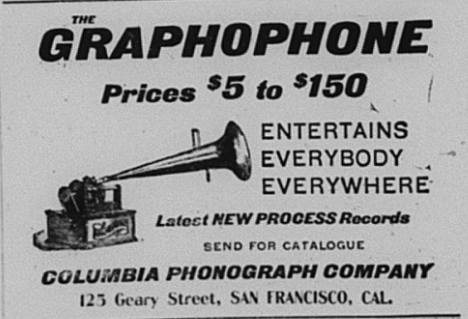
Advances in sound recording made it possible for people to listen to music in their homes.
Religion
By 1902, there were at least three churches in town, all Christian. A Baptist Church, a Presbyterian Church, and an M.E [Methodist Episcopal?] church. In addition to fraternal organizations and schools, churches allowed for social interaction among the townspeople.
Miscellaneous
There was a collision between a horse and carriage and a railroad “wrecking car” that severely injured the driver, Robert Carpenter.
Joseph Goodman, co-owner of Stern & Goodman store downtown married Therese Straus of San Francisco.
There was a major fire that burned hundreds of acres of grain and hay on the Bastanchury Ranch property.

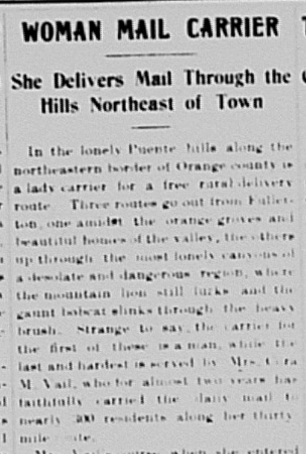
There was a female mail carrier named Cora Vail who served the rural route through the hills north of Fullerton.
National and International News
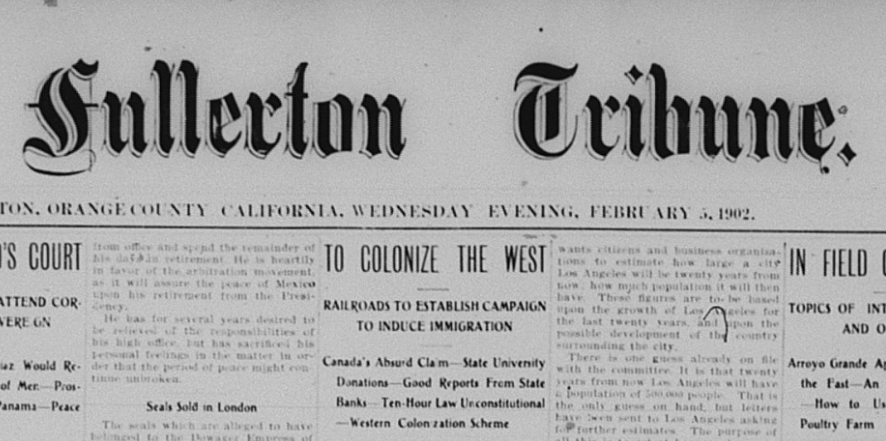
The United States is a settler-colonialist society. These are terms that folks don’t use much today, but they were widely used in the late 19th and even early 20th century. Railroad companies had campaigns to induce easterners “to colonize the west.”
Though less common after the advent of the transcontinental railroad, “prairie schooners” were still “filling up the west.”

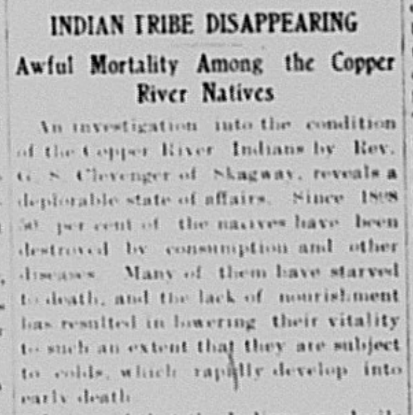
Unfortunately, this meant continuing to take land from Native Americans, who were experiencing a cultural and physical genocide as a direct consequence of United States expansion.
 Fullerton History
Leave a comment