The following is from a work-in-progress about the history of Fullerton. You can support my ongoing research and writing on Patreon.
Juanita Ferraris’ grandfather was Domingo Bastanchury, a Basque rancher who was one of the first settlers on the land that would become Fullerton. The extensive Bastanchury Ranch was, at its height, one of the largest orange groves in the world. In 1968, Ferraris was interviewed for the CSUF Oral History program. In this interview, she provides memories and insights about the Bastanchury family and the land they owned. Here are some highlights from that interview, along with some historic photos…
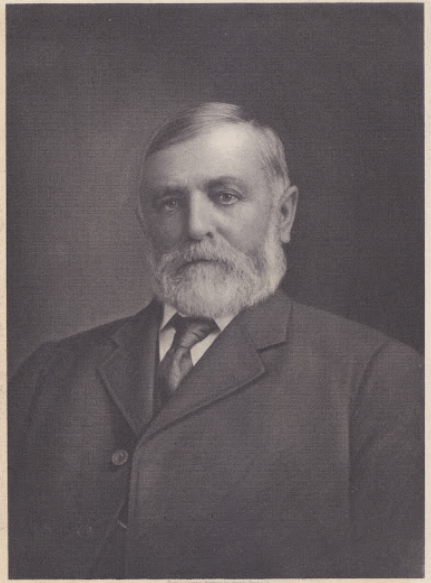
On her grandfather, Domingo Bastanchury…
Domingo Bastanchury…settled in the northern part of Orange County…northwest of the present location of the State College…Directly on the route of El Camino Real which is now called Harbor Blvd.
He was born in France in 1838. As a young man at the age of 20, he decided that life in Europe was not what he wanted. He was trained to herd sheep [and was] an excellent fisherman…the area in which he was born was hilly, rocky, most of the time rainy and the grounds were only plotted maybe for an acre or an acre and a half…
And that was not enough for a young man with a great ambition, so he decided that he would like to come to the United States because he had heard there was an abundance of wealth…He couldn’t read nor write so his friends induced him to come by working his way through on a ship since he was a seaman as well as a sheepman.
He came around the horn. It took him six months and all he did was to put the sails up and down. He had a tremendous amount of strength. He was a man of small stature—around 5’6”…blonde hair and blue eyed.
So he landed in San Francisco…in the International Quarters…where all the foreigners would gather, was a Basque clan that gathered…from there he worked as a fisherman on Fisherman’s Wharf in order to gain some money which was something like less than a dollar a day. And then his sheepmen; he was introduced to some of them that were prospering at that time, that the ideal place for him to come would be the Southern California area, which he did. And I don’t know whether he came on foot or the train or by horseback but I have an idea that he came through on a covered wagon horse and buggy type because he was looking for land.
He came further down past Los Angeles into this dry country as they called it and it was strictly Indians…he toured all that through San Juan Capistrano, the hills here, the barren hills of what is now the Standard Oil Company and all that and decided that he liked the rolling type of hill because the grazing was abundant in certain areas…
When he first came here he worked for another rancher, did he not?
That Grandmother was never very clear on. She told me he had accumulated enough money in San Francisco to acquire around 6,000 to 8,000 acres. At this time they ran $5 an acre…there isn’t a record here as to how he gained all this land. And from whom he bought this land.
But anyhow he gathered all this ground and then decided to have Grandma Maria Oxarart…in [France], to come over and help him out, which she did.
She was born on March the 15th, 1850 so you can see there is an age difference in Grandmother and Grandfather and she arrived in San Francisco in 1873. By that time he had already acquired this land here in the Northern part of Orange County…There was a 12 year difference in age between Grandmother and Grandfather.

Where did he acquire the sheep that he grazed here?
Well, that I don’t know either…you know the Basque are clannish people to begin with and if one is starting off they will loan x amount of herds in order to breed…
Were there other Basque families in the area when he settled here?
Yes, there were some in the Northern part, near what is now La Habra Heights. There were some families—and Lucky Baldwin was one of his greatest competitors and a man that worked with him on this sheep business.
So they settled right here on what is now the Fullerton Golf Course, directly east of Harbor Blvd. and south of the Union Pacific line that runs under Harbor. In the little knolls there. This is where they first started off.
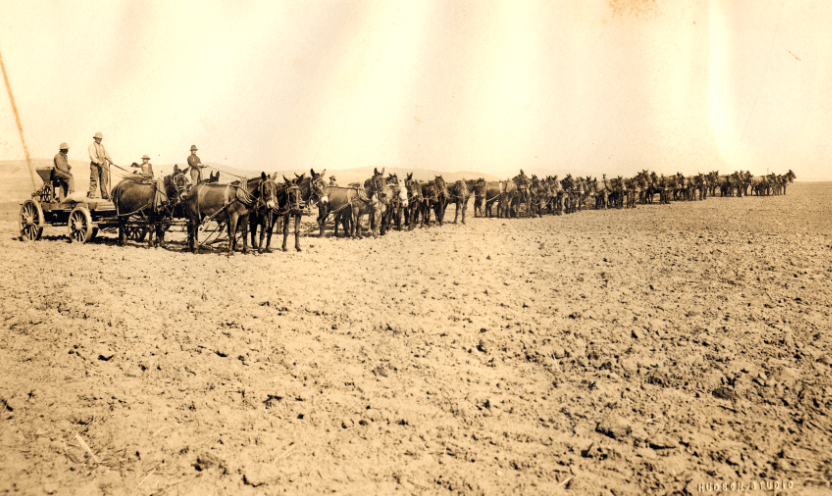
They had five sons. But one died in infancy and the oldest one was Dominic, he was born in Anaheim. And Fernando, that was the one that was born in Los Angeles and that’s the one that passed away. He was born in 1883. Gaston Bastanchury was born in Anaheim and Joseph [Juanita’s father] was born in Anaheim and John was born on the ranch.
Grandmother’s education was mainly in the nine to ten months that Grandfather had her go to this orphanage conducted by the Sisters of Charity in Los Angeles and that’s where she learned to read and write and do embroidery, hand craft work.
Your Grandfather never did learn to speak English or write?
No, he couldn’t. All his markings in any of the legal papers were done by an “x” or Grandmother did it for him with her initials.
Grandmother used to say that they didn’t have many neighbors. They were the only white people but they had an awful lot of Indians. Awful lot.
Ever any problems develop with the Indians?
Yes, she said that she was scared to death because she came from a country that she had never saw a colored person. And so when she landed in San Francisco, she saw these dark people and didn’t know who they were because they were not educated as to who were dark and where they came from. And then when she came to Southern California as a bride, why that was just too much for her because the Indians were entirely different from the colored. They were more in the savage. They used to stop and trade horses because they used to do the delivery of mail between San Francisco and San Diego.
The Indians?
Grandfather was very fond of the Indians and the Indians were fond of him because he was a great one to feed them. He used to feed them by—oh heavens—they spent three days wining, practically dancing. They’d do all these warwhoops and Grandma couldn’t understand what—she would hide…she was scared of them.
[Grandmother] said that they would have money in gold coins. And this is how they used to pay their sheepmen and they paid them once a month…the gold coin that we are not allowed to have unless we’re coin collectors…sometimes they’d have as many as a hundred depending on how many people they needed to herd the sheep.
What would you say was the largest number of sheep they ever had here at one time?
I was told that it was somewhere—anywhere between 8,000 to 10,000.
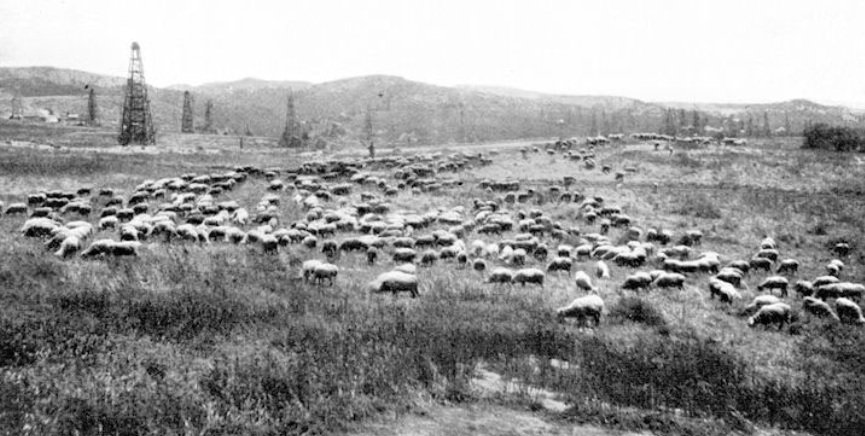
They were raising these sheep primarily for the wool?
Wool…right.
You mentioned something about having to drive the sheep up to San Francisco?
Yes, Grandmother said that originally this is what Grandfather did. He drove them up. I don’t know how long a time it took to go but I imagine it to be a month or so herding these sheep because there wasn’t any direct route that they followed, you see…LA was in its infancy.
Did they keep permanent quarters on the ranch for the help?
Yes.
How big a crew would you say they usually maintained?
In Grandfather’s time they maintained…oh Grandmother used to say several hundred. Not families, these were mostly men, Basque men, imported from Europe that did the herding of the sheep and then of course they had the Indians do the laborious type of work.
What tribe of Indians were these?
Good Lord, I don’t know. The kind that was around the Missions—San Juan, San Luis Rey, and San Diego Missions, that type of an Indian was here.
Oh, they drank a lot of wine. Of course, they made their own wine you see. They imported the grapes from the Escondido area…so wine was no problem and, I mean, it was like water.
They raised some vegetables and things on the ranch themselves, didn’t they?
Yes, they had. This is where the Indians came to raise corn and all that. Because the house was situated by a natural stream and it is still there…this is the same stream that the family used to get mushrooms, watercress, and drinking water, and it was a natural stream [part of the golf course]. During the summer months it would dry up and they would have to get their water source elsewhere. This was before they had plumbing in the place.
What kind of trip did it entail to go into Los Angeles to buy supplies?
Well, it took a horse and buggy, the whole day, complete. And then they would stay at a French Basque Hotel and maybe spend three or four days and then come back.
What part of town would you say that would be in?
Olvera street. In that old Plaza, near the Plaza. They had rooming houses, French people had hotel boarding room type of homes…Grandma owned some property there, too. She had some rooming houses and then tore it down in the early 20s to make parking lots out of them.
So around that area there were a great many French settlements, and all the Basque people would gather there. If they had any dentistry or any doctoring, this is where they would go.
Where were your father and his brothers born?
They were born in Anaheim because the facilities were…Fullerton wasn’t Fullerton when they settled. They didn’t have a thing. Anaheim was established because the German people settled in Anaheim.
That is from the Vineyard Society?
Right! And so everything that they purchased came from Anaheim. Grandfather decided when the boys were small and ready for school that they couldn’t go back and forth, so he rented a place which is now the city park of Anaheim, on the corner of Sycamore and Lemon streets…It was a two story home and the boys went to school at Saint Catherine’s Military School which is now on Harbor…Gaston Bastanchury was born in 1884 and attended St. Catherine’s in the early primary years of education. Joseph, my father, was born in 1887 and was baptized in Saint Boniface.
Grandmother also had a place in Los Angeles where she would stay with the children while they were receiving their education.
When your family bought the property here, in what is now Orange County, was the land at that time officially deeded? Was it possible to get a deed for the property? Or did you just mark it off and live on in?
I imagine it was counted in the amount of lineal feet. You know how they used to do it, put a fence up and this is mine…Eventually it was surveyed and deeded.
When the boys took over and Grandfather passed away in 1909 the boys had already received their schooling and Gaston had graduated from the Colorado School of Mines and took his graduate work at Columbia University.
All of the boys, when they were young, what kind of language did they use at home?
They all spoke Basque. In school they learned English. They also spoke Spanish and French…My father spoke Spanish, Basque, and English, and I had uncles who spoke French. But mostly Spanish and Basque and English.
Where was the main residence for your grandfather located at?
It was east of Harbor Boulevard and south of the Union Pacific tracks and north of the existing Municipal Golf Course…it was a single structure with an adobe front. That was the beginning. In 1906 Grandmother decided that she didn’t want to live in the low lands—it was too hot in the summer, so Grandfather said, “then pick out a site and build yourself a house. And this is when she built the 2-story home. Which is now Las Palmas, right at the dead end between Harbor Blvd. and Puente…that was torn down in 1953. Progress…
How long had it been after your family had been here before they found that sheep herding wasn’t adequate due to the climatic conditions?
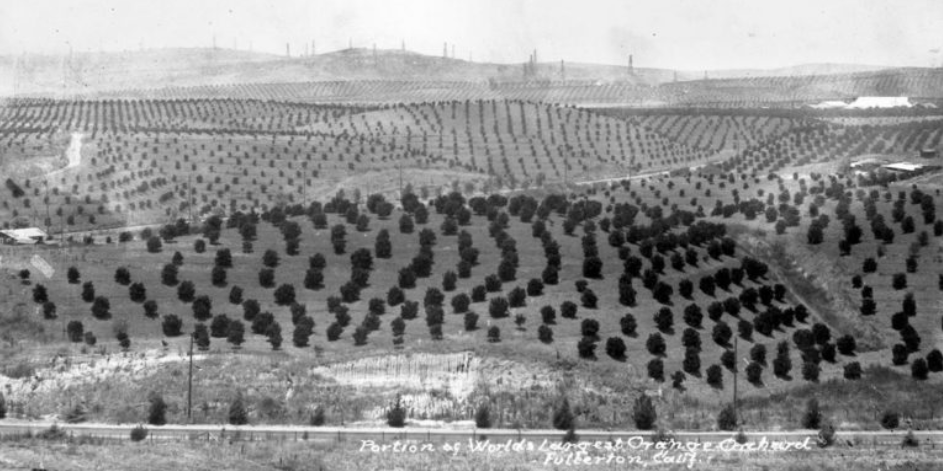
They started in 1910 considering changing the picture from sheep herding into citrus groves. The boys, particularly Gaston Bastanchury, was very well acquainted with the geological effects of the ground and the terrain…he took a section of the ranch and started it [around] 1910.
This is where they started an artesian well in the area?
They had water, yes. And they would only plant the areas where they could derive water. It’s now known as Laguna Lake, that was a man made lake but a water well was right along side of that lake…they had to use boosters, and they built the tank which is now on the Southwest side of…the tank is still existing.
Is it still in use?
It is at the end of the West Las Palmas Drive, way at the top and that was our source of water and this is from the Laguna Lake they would pump it up to…and we called that area Red Tank Hill…that was used for both irrigation and domestic…we also instituted water pumps around the ranch. This central sector comprised about 2600 acres which border Brea, La Habra, Fullerton, and Buena Park.
Was it your father that instituted the citrus?
No, it wasn’t. Well, the boys were incorporated, called The Bastanchury Ranch Company—three brothers were involved—Gaston, Joseph, and John…What happened was that when Grandfather passed away, Grandmother was left with all this kind of land. So the eldest got 500 acres, the other three boys got an equivalent and incorporated theirs, called the Bastanchury Ranch Company.
I understand that after they started, they were the largest individual citrus growers in the world.
Right, right because they developed 3000 acres into citrus groves.
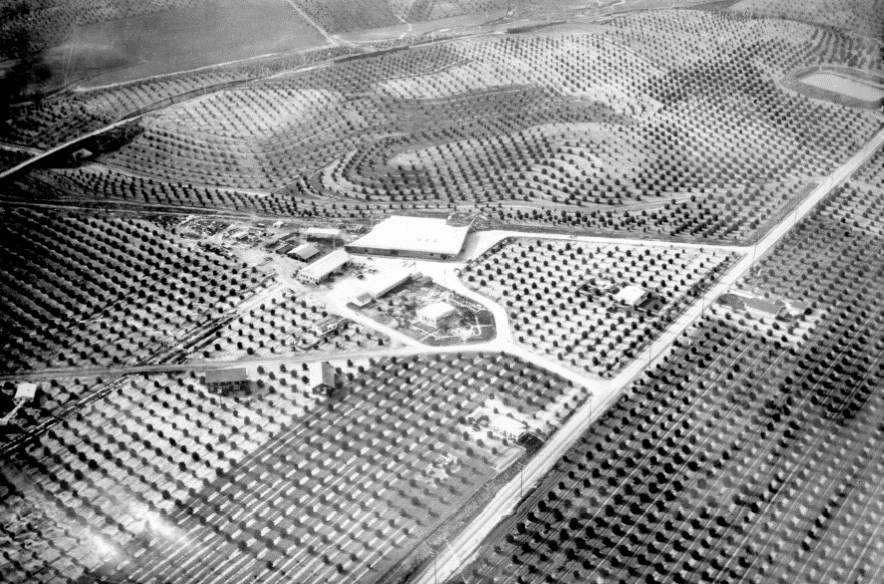
And you had a horticulturalist from Japan come in to develop the property?
Yes, the contour planning was done by a Japanese engineer and it was contoured. One of the first contour planning in the nation at that time…the reason was to conserve water because the contour planning conserved the top soil as well as the trees. It gave them a broad root system.
While they were developing the citrus, what did they do, gradually phase out the sheep?
Yes, that’s what they did…they raised lemons, oranges and grapefruit…walnuts…they did very well in the walnut industry, too.
How did your father happen to meet your mother?
My mother came with an old family that had extensive acreage in San Juan Capistrano behind the Mission…they all had to go to Los Angeles to get their medical and dentistry done…[My mother] stayed in this hotel that had a rooming house for Basque people and she met my [paternal] grandmother through a mutual friend, who said she was one of the wealthiest Basque ladies in the county, in Southern California…Grandmother liked mother…so she wanted her as a maid. My grandmother always had maids.
And so then she came to live at her house?
Yes, and then this is when there were four boys in that family, so you can imagine what happened, but my father won out.
And where did they build their home? On what property?
They built right across from the existing St. Jude’s where the automobile club is, about 100 yards right in back of it [on the corner of Harbor and Valencia Mesa]…That’s the home we were all born in, then from 1921 we were progressing so fast that they had to build their packing houses for the citrus. We had to move our house, and our present home is on East Las Palmas, still existing, a two-story home.
What are some of the recollections you have of the early citrus packing houses and the other operations they had?
Oh, I used to have a lot of fun as a kid. I really did…we had a full life, what with horses and boats on the lake and packing houses and using the rollers or slides and things of that nature.
When you were young, were the Indians still working on the ranch here for the family?
Well, not as extensively as it was in the time of Grandfather Bastanchury, but we had some that were from the old families whose fathers had worked for Grandfather Bastanchury and the boys maintained them as, oh, they made foremen out of them..
Were there any Mexican laborers being used at that time?
Yes, the family had two spots, and they housed 500 families in both spots. Built their little homes. It was a city of their own. One was called Mexicali and the other was called Tijuana and the cacti is still existing on this. If you go up here on north Euclid, to the west of Euclid Road, you will still see the cacti that the Mexicans planted around their homestead–it was just like a neat little city. I can’t tell you how many houses there were, but I know this, that they had their own store where they could buy their corn meal and all that sort of thing and the streets were lined up just like a little city with their little fences and their flowers. They were great for that.
Were there schools on the property or did they go to school in Fullerton?
Yes, they had teachers come in to teach.
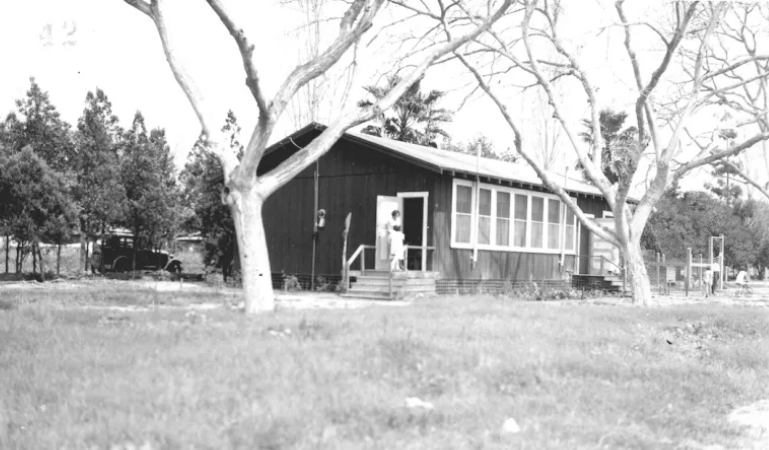
In the early or the late 1920s they put a cannery in because they also went into tomato planting…it was primarily citrus. They had three packing houses, one of the lemon house, orange house and then the cannery, the tomato which later was converted to Model Market and now it is torn down, where Mayfair Market is now [1968]. Then the original packing house, they had square dancing up here until recent years.
Can you recall any significant changes in the area from the time you were raised on the Bastanchury property to the present time?
I have seen the high rises coming right on the border here…in 1931 or so the Real Estate Convention was held in Los Angeles and apparently part of their itinerary was to come out…they came out to the ranch and I happened to be home from school…I was very anxious to hear what my uncle Gaston was going to speak to them about because here was this huge ranch with nothing but orange trees, the packing houses, and only the foreman’s house and the workmen’s area, but that was enough, we didn’t have anything else on the ranch, so I remember there was a huge crowd and I can very distinctly remember what he said, that the future of Northern Orange County was colossal because at that same time UCLA had not been established in West Los Angeles. They were seeking an area to establish a school, the University regents were and great consideration was given toward Northern Orange County for educating.
Would it have been on the Bastanchury property?
It would have been on the Bastanchury property. And this convention came along at the same time and he predicted at that time that in 40 years North Orange County…no one would recognize because of the development that was going to happen, the development of homes and industry…
Then you, like the other families in the area, lost the biggest share of the property during the Depression?
The depression, because at that time they had already overextended themselves. They had acquired another 3,000 acres that they were developing into citrus in which at that time it was only a year or two growth which was non-productive, so they had to borrow money and you know when you borrow money, this is what…You got to pay it back or otherwise you lose the whole thing.
Did the same situation happen with the other big ranchers and growers in the area? Did they have the same problem?
Well, I mean some, yes. They probably struggled just like the rest of us but they still maintained it…the Bastanchury debt was greater than most because of the extensive acreage they had…And, of course, he gave up some of the acreage which turned out to be a multibillion dollar area, where Standard Oil is now, and the reason for that was that he couldn’t raise sheep. They wouldn’t graze up there and he didn’t think it was worth anything because not even a weed would…but it was worth very much in that black gold in the bottom.
I believe you told me that your Grandmother lived to be 90 years old and she saw some changes.
Yes, she saw the first development of Sunny Hills area in the East Las Palmas. She saw the three houses being built. As she called them, the cracker boxes, because she was in this sturdy house, and they developed them so fast that she said one time she would go by and they had the foundation, the next thing the roof was on.
I understand that your Grandmother and your family made several contributions to the area, didn’t they, as far as land was concerned.
Yes, she did it here through the Catholic church, I know, in Fullerton. She contributed the lot to build the church on [St. Mary’s Catholic Church].
 Fullerton History
Leave a comment