The following is from a work-in-progress about the history of Fullerton. You can support my ongoing research and writing on Patreon.
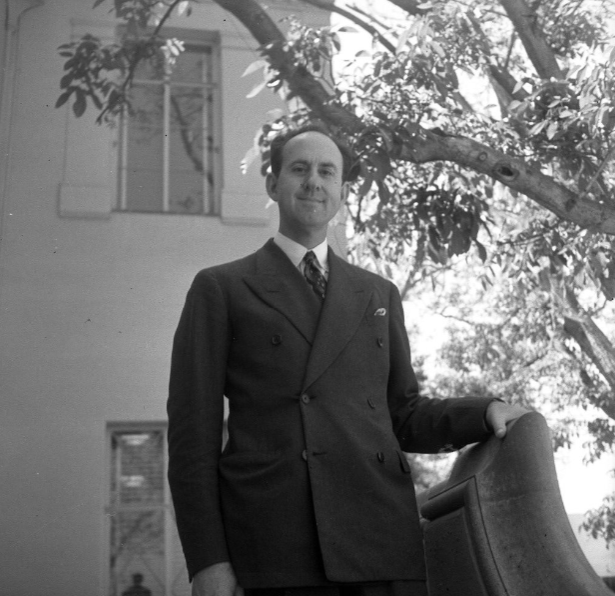
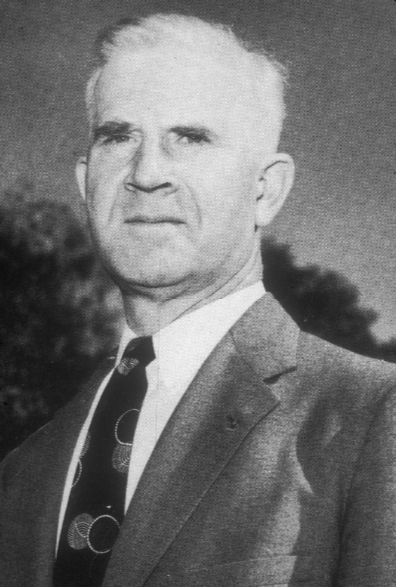
Dr. H. Lynn Sheller first came to Fullerton to teach English in the high school in 1927. He began teaching in the College in 1933. During the forties he served as a college counselor, later taking over the duties of college Registrar. When Dr. William Boyce, the College’s first president, retired in 1950, Dr. Sheller was selected to be his successor. He served as the second president of the College through the period of its greatest growth, the 1950s and 1960s. He retired in 1969.

He was interviewed in 1971 by Anne Riley for the Fullerton College Oral History Program. Here are some excerpts from that interview.
I was born in Melrose township of Grundy County, Iowa, on a farm in 1904…240 acres with a fairly large house on it.
I went to Manchester College in North Manchester, Indiana…In college I majored in English and French and had what you’d call a broad liberal arts education.
The year I graduated from college I applied for teaching positions in Indiana, Michigan, Wisconsin, the Ohio area, and got a unanimous turn-down…So when I didn’t get a job, I decided to follow a girl out to California. I had met Mary Gilbert in college in 1923, and we became engaged in 1926…I found it easy to follow Mary to Los Angeles, where her home was.
In September 1926, I entered the University of Southern California as a graduate student. I took a year of graduate work, then applied again for a teaching position and was hired to teach English, speech, and journalism at Fullerton Union High School. Mary and I were married in August of that year, 1927. The best thing I ever did in my life was to marry this girl.
Fullerton had a school system that was famous throughout the country. Fullerton Union High School was said to have a national reputation for excellence. Louis Plummer was the superintendent, and he hired me. [Louis Plummer, it should be noted, was evidently a member of the Ku Klux Klan in the 1920s.]
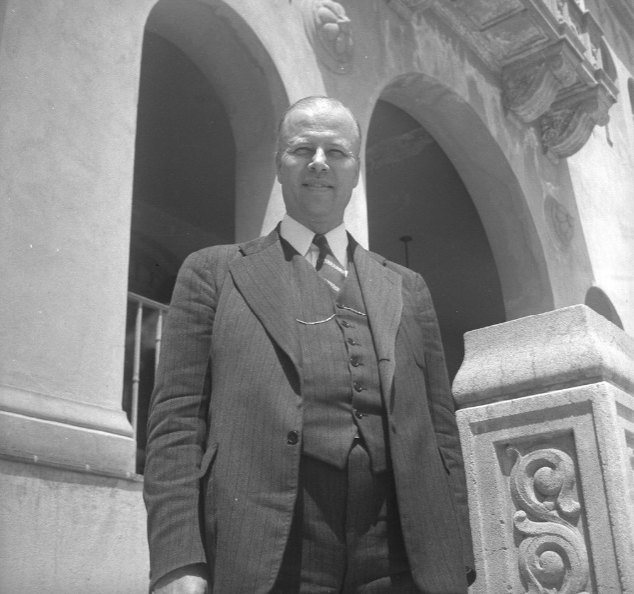
Fullerton was a small town at that time, about ten thousand, I think. Nearly all the distance between here and Los Angeles was orange groves at that time…It was beautiful, and everywhere the fragrance of orange blossoms in March and April—lovely beyond description. Fullerton was a small community in which it wasn’t too hard to get acquainted.
I taught English and Speech and advised for the Weekly Pleiades. Then in 1933 I began teaching some at Fullerton Junior College and gradually moved over entirely to college teaching. At that time the High School and the College were both on one campus, and their classes were conducted in the same buildings, though there was one building called the college building.
The process of separation from the high school was a little like the separation of one amoeba into two. It was a slow gradual process. I think it was in 1934 that the Board of Trustees first decided that maybe some day we would have as many as a thousand students in the college and we ought to put it on a separate campus. At that time they bought fourteen acres on the east side of what was then Harvard Street, now Lemon. It was a walnut grove owned by the Sheppards.
A Master Plan was drawn up for a fourteen-acre campus, the size of the future college campus. This was during the Depression years, and it took some courage on the part of the Board of Trustees to buy that property and to start planning a college.
The first building was completed, I believe, in 1936. Then it was called the Commerce building; now it is called the Business Education Building…The government paid over a third of the planning and construction costs.
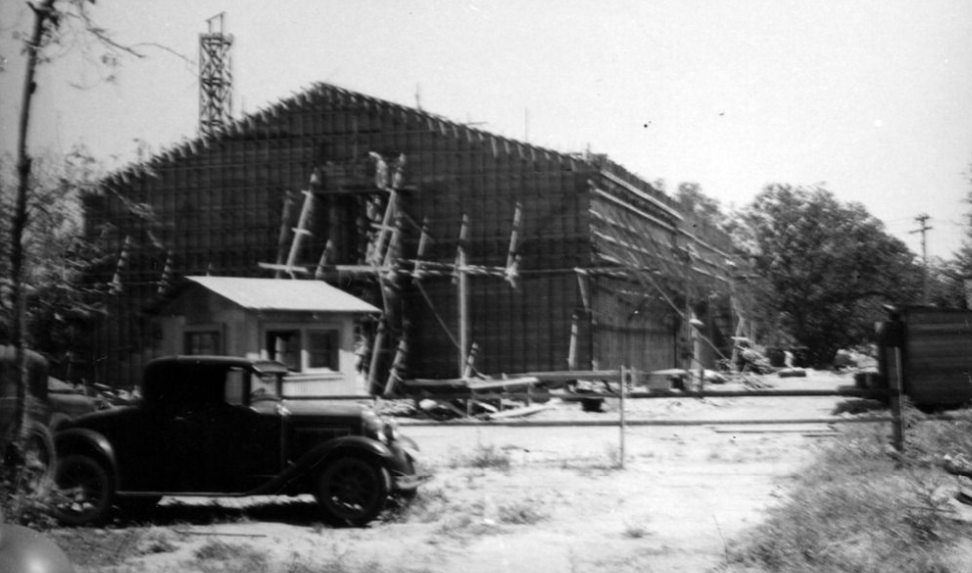
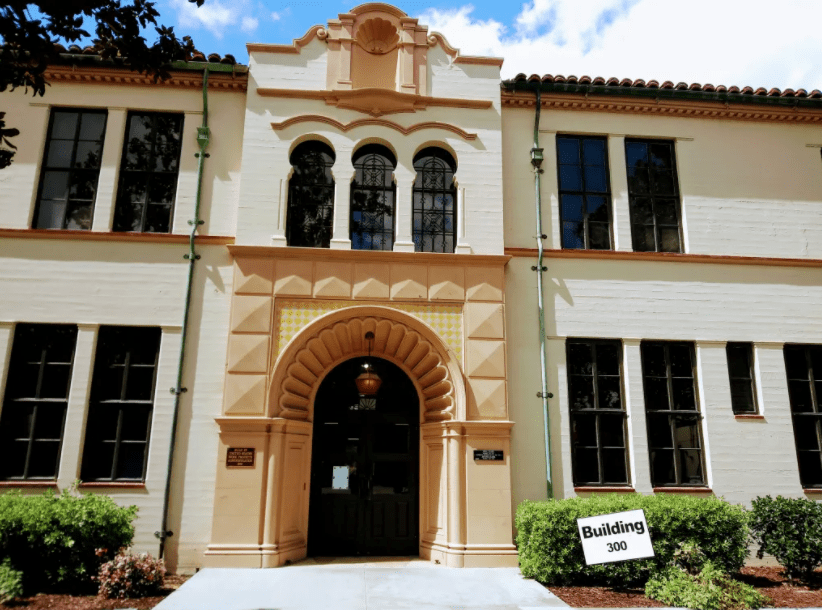
Who was the artist who painted the mural on the [high school] auditorium?
His name was Kassler. It was a fresco on the west wall. I watched him put the fresco up there. I would visit him day after day as he was working. Of course you know that the feature of a fresco is that the paint is mixed with the plaster, thus it is supposed to be permanent and not peel or wear off. The fresco covered the west side of the auditorium from approximately the stage door to the south exit on the west side. It depicted early Spanish life in this area–the recreational activities, the social life, women washing clothes together, the community life of people of that time, also Governor Pico and some other personalities.

How long was the mural allowed to stay before people started complaining about it?
There were very few people who complained about it. There was a little bit of vandalism, a little bit of scratching of it, you know, additions to it and so on. But it wasn’t until we had a group of trustees in here who were negatively inclined, that it was painted over. The whole story of that Board of Trustees really ought to be told sometime, but it’s the kind of story you don’t ordinarily tell, I guess. Plummer didn’t include it in his history; he was too much of a gentleman.

Was the mural insulting? Vulgar?
Some people felt it was vulgar or gross in some way. It simply showed the Mexican women as they were probably attired at that time. They were very bosomy women. I don’t think that we would feel that there was anything wrong with it. I never felt there was.
I recall that in the early 1940s Mr. Plummer was having trouble with a recalcitrant Board of Trustees. The Board was trying to take it upon itself the responsibility of interviewing every teacher, instead of letting the superintendent do it, as they should have done.
Mr. Plummer did have a loyal group of teachers, but always there’s somebody who creeps in, as at the Round Table. There’s a malcontent somewhere. He had his problems with a teacher whom he tried to discipline. Of course, the teacher didn’t take it well, and his trouble began with that.
Mr. Plummer also introduced some excellent vocational training in the high school. The high school had a print shop, a foundry, and an excellent machine shop. These were beyond the ordinary facilities you would fiend in a high school at that time. There was even a time in the early 20s when we had oil drilling technology, taught by Alexander Anderson.
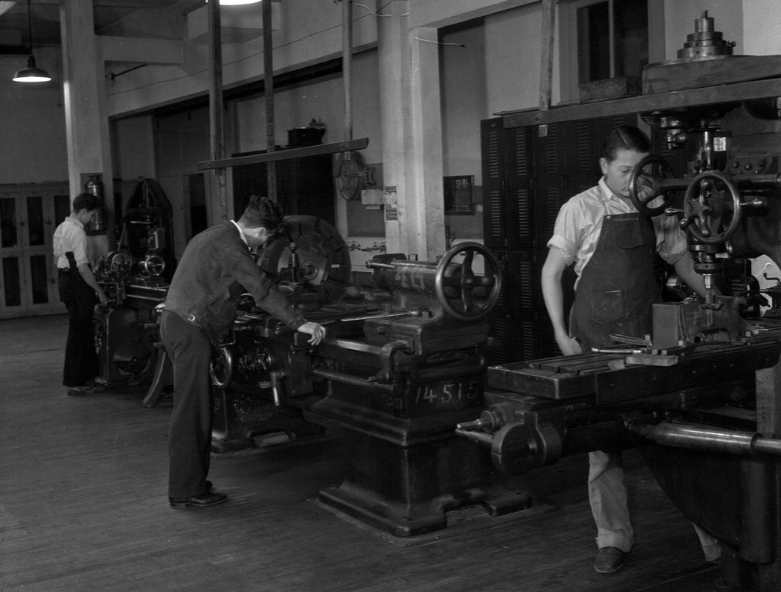
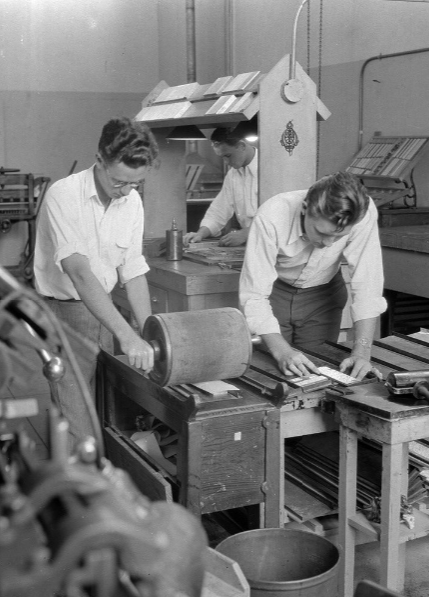
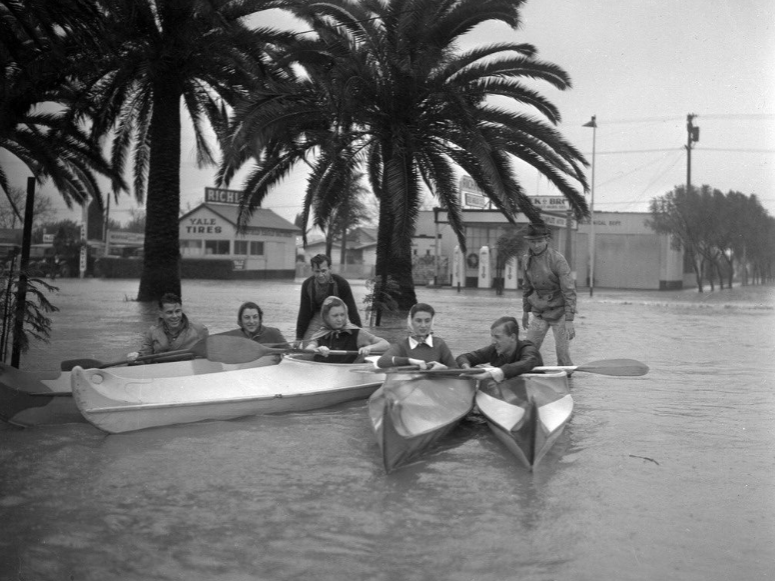
The head of the vocational department–R.A. Mardsen…he had his boys building kayaks.
The business education…was under the leadership of L.O. Culp.
Was Fullerton a school or town that was rather strict in its ideas or dress codes or in questions of manners and they way people had to act?
Well, I think probably no more than other schools at that time. They were stricter in requirements than now. I think it developed out of the feeling that teachers ought to be admirable people whom students could emulate. They felt that teachers should be of fine character. In fact that goes right along with what I said about Mr. Plummer. I said that he felt that character was the first thing to look for in a teacher.
How about teachers smoking? The students, of course, couldn’t, could they?
No. The application at that time, I think, asked whether the applicant used tobacco or alcohol. They did not expect teachers to smoke. They felt teachers could not tell students that it was bad to smoke and use alcohol if they themselves went ahead and did it.
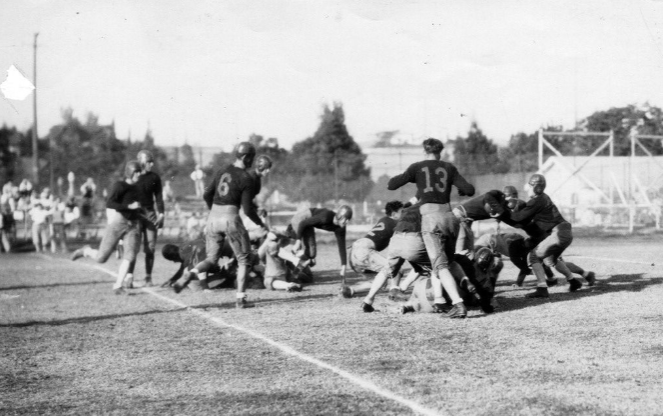
Turkey Day was a Thanksgiving Day football game which was traditional between Fullerton Junior College and Santa Ana Junior College…It was generally the high point of the season for these two schools. I believe it was about 1938 that we began choosing a Turkey Day Queen.
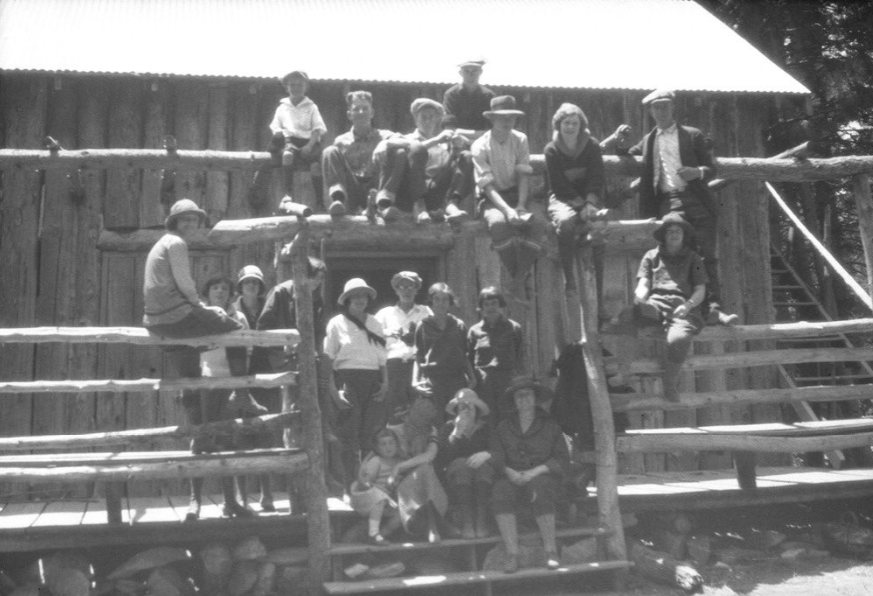
Didn’t the college own a cabin in the mountains that students might use?
Yes, it did. I don’t think that the cabin was primarily recreational, however. It was used more for Life Sciences expeditions. Mr. Harwood Tracy, one of our Life Science teachers at that time, and Mabel Myers, who was another, took students up there.
In discussing the history of the school we got as far as about 1941; will you continue?
Well, in the late thirties, a group of trustees came into the majority who were not friendly toward the administration of district, so in 1940 they brought in a man named Frederick Chemberlen to take the place of Mr. Plummer who, though he still held the title of Superintendent, was relegated to a subordinate role.
Before long the head of the college, Dr. Boyce was relieved of his position. Esther Hatch, the Dean of Women, was thrown out of her position, and Logan Wheatley, who was Dean of Men, lost his position. L.O. Culp, head of the Business Education Department, also lost his position. Actually, I believe he was first relieved of his position as head of the department, and then he resigned and left the school entirely.
These people were leaders and highly respected in the community, and as a result of their displacement the college and high school were thrown into a period of turmoil and suspicion from which they didn’t recover for a number of years. Then, in 1942, some of the reactionary members of the Board were replaced by others who opposed the reaction that had occurred from the time of Mr. Chemberlen’s arrival. So, in 1943 Chemberlen resigned under pressure, and the Board proceeded to restore Dr. Boyce to the position of Director of the college and Mrs. Hatch to the position of Dean of Women. Logan Wheatley was back in favor again, though I don’t think he went directly into the position of Dean of Men. They were not able to restore Mr. Culp because he had left the scene. Once more, however, at least the Board had a constructive attitude and the school was on its way to try to recover from the tragedy it had experienced for the preceding three or four years.
The community must have voted for these members of the reactionary Board. Did the community have these reactionary feelings too?
I don’t think that it was a general attitude in the community. The actions of the reactionary Board were probably inspired mostly by a couple of misguided teachers, and I think the Board was too willing to believe the things that it was told. Some of the things they did were done simply because the Board was misled. That’t not all, but part at least.
As for the community, there’s always a little negativism in any group of people. I’m not prepared to say exactly the source of the negativism which developed during the latter part of the 1930’s. Putting these people into office was partly due to the political efforts of some teachers. Apparently, they had willing followers in the members of the Board. All this probably sounds very evasive and circuitous, which is it. I haven’t been very specific, but I don’t feel this is the time or place where it’s possible to be as specific as one might like to be. There probably should be a time, sooner or later, for the detailed particulars of this period from the late thirties to about 1943. I don’t believe that I can put it on tape at this point.
Did the problem with this reactionary board have more to do with personalities, or with ideological differences?
I don’t think there were ideological differences that amounted to anything. I might add this. The members of the new Board who restored the Fullerton High School and the Fullerton Junior College to a sound educational frame were Colin Baker, Ross Hodson, Halbert Graham, Fred Dukes, and Carl Wolfe.
Was there anything of major importance going on in your career while all this was going on? Did you change jobs?
No. This was during World War II, part of it, and I was teaching and comparatively unnoticed at the time. I think that the way in which I got myself noticed was that I was openly loyal to Mr. Plummer at a time when teachers felt that they had to avoid him. I made it a point to associate with him, go bowling with him, and to let it be known that I was openly supporting him. So, at that time I think I was not looked on with favor, but nobody did anything overtly at the time.
In 1949 I also served as Acting Dean of Men.
With the return of the veterans after World War II, we brought in barracks from the air base in Santa Ana to use as classrooms and living quarter for the veterans.

One of the buildings was situated just west and north of the present Business Education Building. It was used for diesel engine and, I believe, air conditioning instruction. Harry Des Granges taught in that building at the time. Then there were two or three buildings which were situated north of what is now the shop building. Originally, we had a hangar at the north end of that building which was used for construction in aeronautics. Just north of that building where we now have the auto shop were other barrack buildings which were used for electronics and drafting. Then, there were still others, quite a group of them, which were situated on top of the hill, just east of the present district administration building. If you look there, you will see it’s terraced. One of the buildings still remains there as a storage place. Those buildings were used as residences for veterans.
Did you notice any difference in these men coming back and the students you had been teaching?
Yes. I did. I had those men in class, and they were some of the best students I ever had. When they came back from World War II, they were more mature and had a purpose in coming to school. They were more earnest. As a group they were probably the best students we ever had.
You were Registrar for approximately two years. Then in 1950 you were chosen to be President. When you started out in the position, did you have any particular objectives in mind, things you thought should be accomplished?
I think that naturally one wants to continue the growth and improvement that has characterized the system over the years…
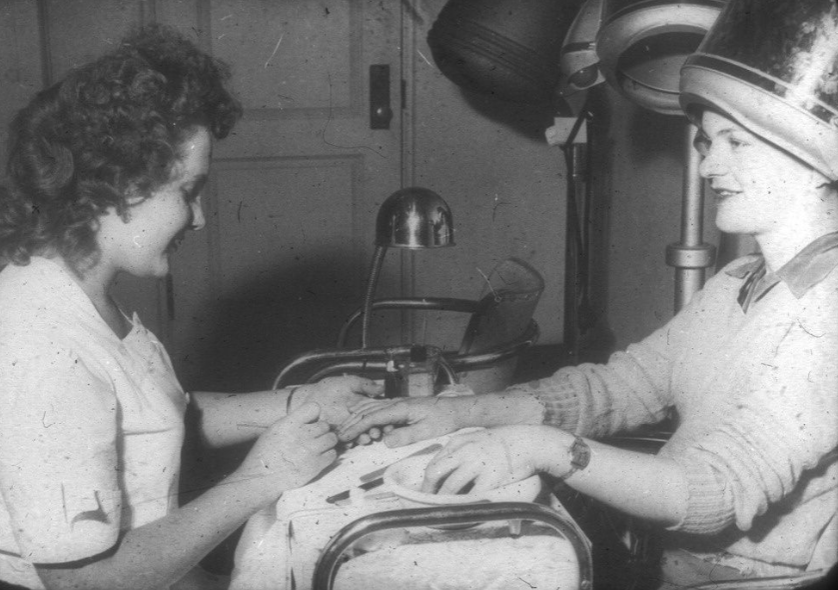
We had a very broad program of technical education for women, for instance. Vocational nursing was one of the programs which were inaugurated, also our X-ray technician program. The cosmetology program was one which was here about the beginning of the 1940s…
As for men, we had a good selection of programs in existence before I came. The electronics program was strong, and the printing program was one of the two best in the state. We had a good agriculture program, and we always have had outstanding lists of offerings in business education.
We branched out into work experience whereby students took mornings in college and afternoons in some industrial plant.
Beyond the meeting the needs of the students, we had the aim of separating our facilities completely from those of the high school, getting the college all moved onto one campus, which was a long and rather painful process at times.
Originally, when the junior college moved to the east side of what was then Harvard and bought fifteen acres from the Sheppards for the college, it was bought with high school money…So it was part of the high school and not junior college property, even though there was a junior college district legally separate from the high school at the time. The junior college district began back in 1922 and was a separate legal entity from that time on, but still it didn’t own this property that was bought.
Was there a reason?
The reason was that when it was purchased in 1934, in Depression times, the junior college enrollment was not great and some people thought that there might be a possibility that the junior college wouldn’t even survive.
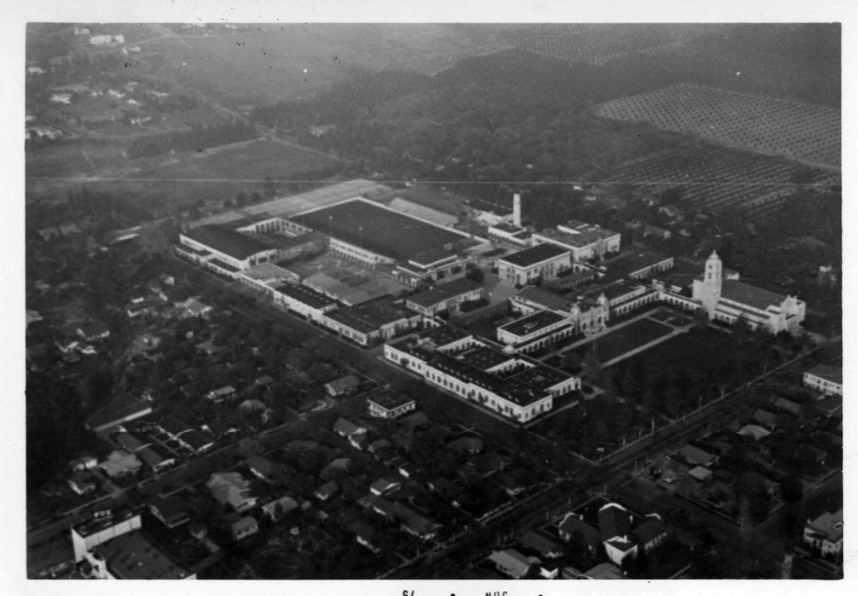
We needed to acquire property of our own…just a natural desire to be independent and have our own separate identity.
It took from 1937 to 1966 to effect the complete change.
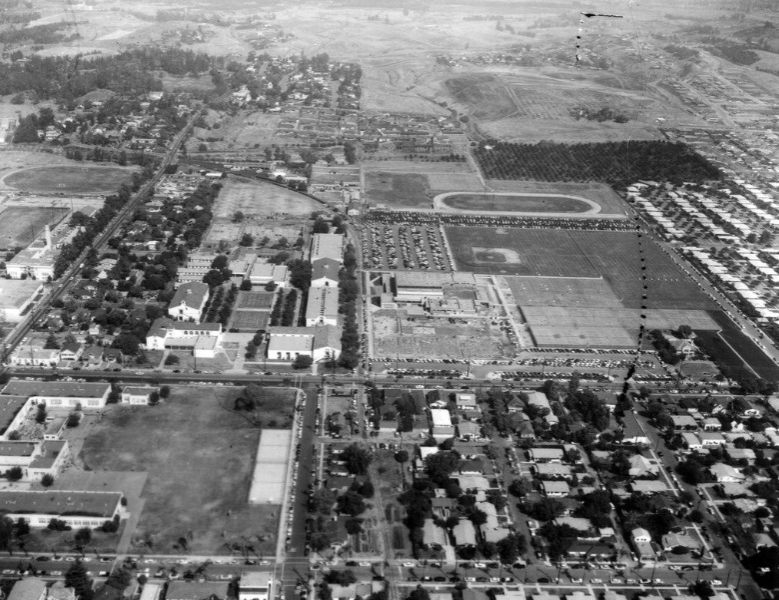
Then in 1958 came the addition of the Counseling Center to the Administration Building…The cafeteria was completed in 1958 and the two-story Technical Education building in 1959. The Home Economics and Fine Arts building in 1959 and the Auto Shop in 1960. The agriculture facility was completed in 1961.
Could you tell me about the Fullerton Junior College Foundation?
It was started in 1959…It was my idea.
It is an independent foundation and not subject to the college. Board members: William Boyce, Dr. John Casey, Walter Chaffee, Joe W. Johnston, Wanda McGraw, Arval Morris, Lorraine Plummer, Wallace Runcitel, Dr. Osborne Wheeler.
The purpose…was to establish an organization for administration of funds bequeathed or donated for educational benefit of students and former students of the junior college.
In 1959, the first two gifts which came to us were a gift of $500 from Jessamyn West for the creation of the Creative writing awards fund.
Can you talk about your philosophy of education?
I believe in the dignity and worth of every person, in the right of every person to realize his potential and to receive help in realizing this potential in the public schools. This is important not only for the individual himself, but for our society as a means of self-preservation. So, I believe in free public education through the four-year college program for all who will profit by it, both for the sake of the individual and the welfare of society. I think we can afford it but we seem to spend our money for other things.
We have emphasized facts too much…Helping students interpret, evaluate, appreciate, and use fats is more difficult…When we try to teach for implication and interpretation and application, it’s difficult to measure students’ growth and the success of our teaching. Nevertheless, we must do it.
The teacher has to be excited himself. That’s the first thing…The teachers need to have a genuine personal interest in their students.
The great teacher is not just interested in and conversant with his own little field of instruction but with the whole spectrum of life. This manifests itself in wide reading and concerns, a sense of humor, patience, tolerance, and a wisdom about priorities.
Freedom of mind and imagination…spontaneous flow of ideas among the members of the class without fear of ridicule or error.
“He cannot lead where he will not go, and he cannot teach what he does not know.”
 Fullerton History
Leave a comment