The following is from a work-in-progress about the history of Fullerton. You can support my ongoing research and writing on Patreon.
In his book The Gabrielino, Bruce Miller includes a number of photographs of objects from the native American tribe who were the original inhabitants of Los Angeles and north Orange County, who are also called the Kizh.
Additionally, the Bowers Museum in Santa Ana has in its collection a number of objects of Kizh culture.
Here are some of the images from Miller’s book and the Bowers Museum, as they give visual evidence of some important aspects of daily life of local culture before Europeans arrived in Southern California.
Basketry
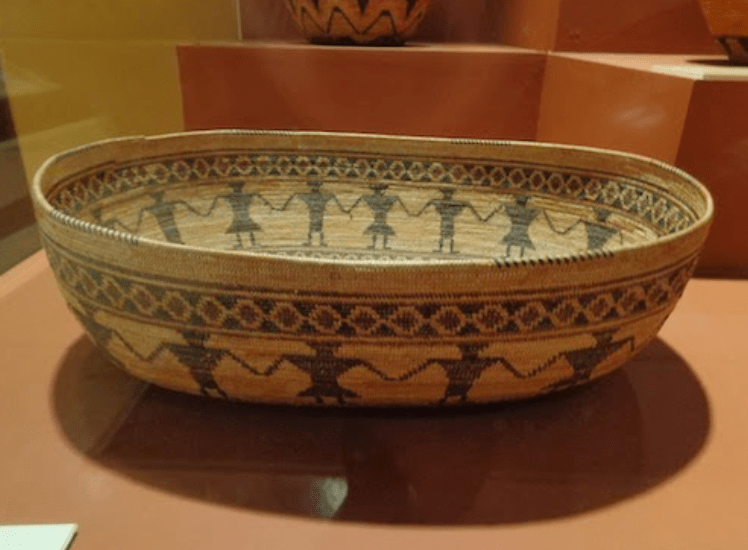
Basket hopper mortar. Courtesy Southwest Museum.Wicker seed beater. Photography by Bruce Miller. Courtesy Southwest Museum.The Kizh were expert basket weavers, and the Bowers Museum contains some lovely examples of this.
Wood and Stone Tools
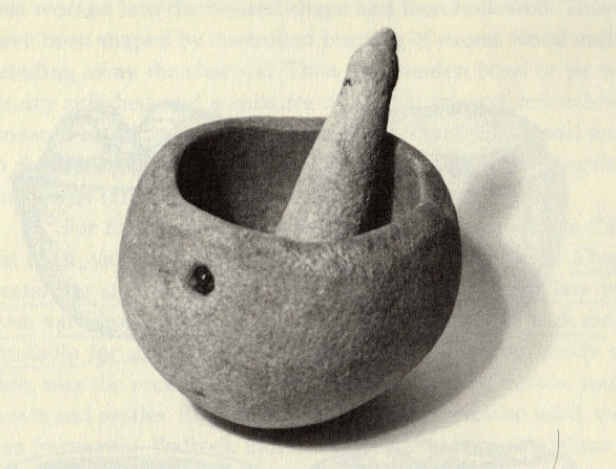
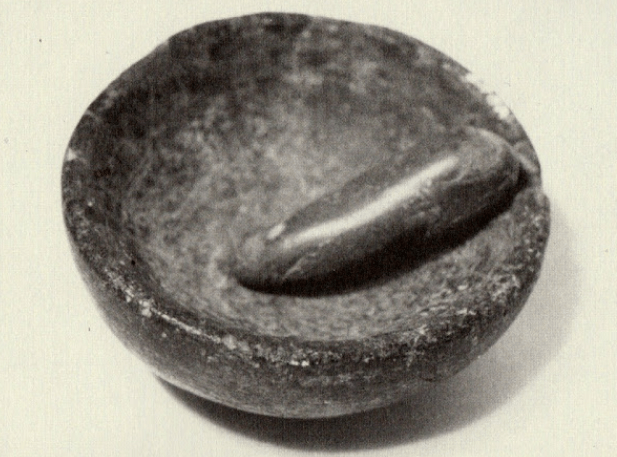
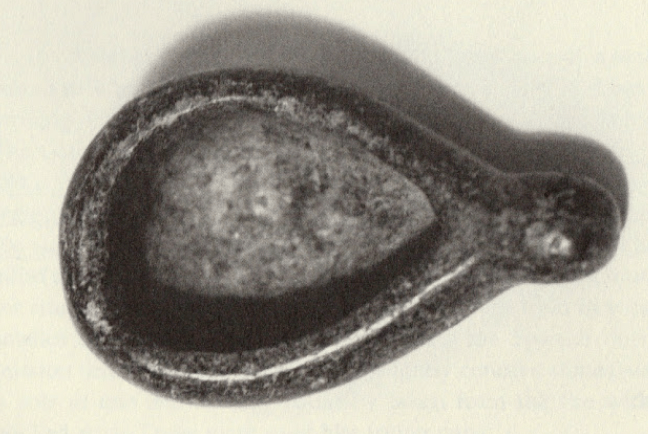
Small sandstone mortar and pestle. Photography by Bruce W. Miller. Courtesy Antelope Valley Indian Museum.Steatite Cup. Courtesy Antelope Valley Indian Museum.Sandstone cup. Courtesy Antelope Valley Indian Museum.Steatite paint mortar and pestle. Courtesy Antelope Valley Indian Museum.Small Serpentine finger bowl possibly for ritual use. Courtesy Antelope Valley Indian Museum.
Effigies (animal figurines with spiritual significance)
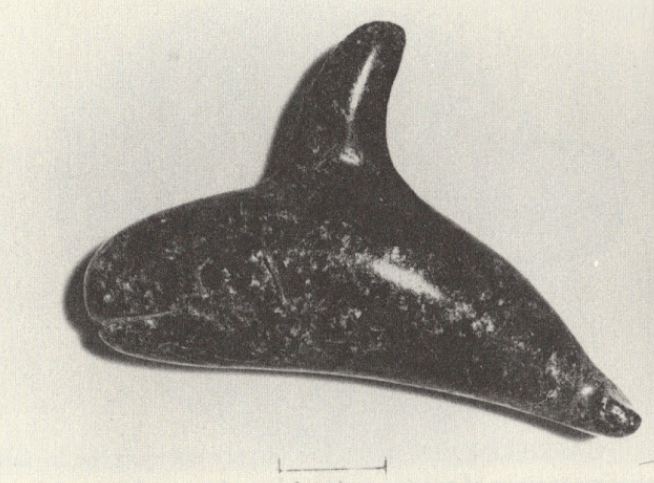
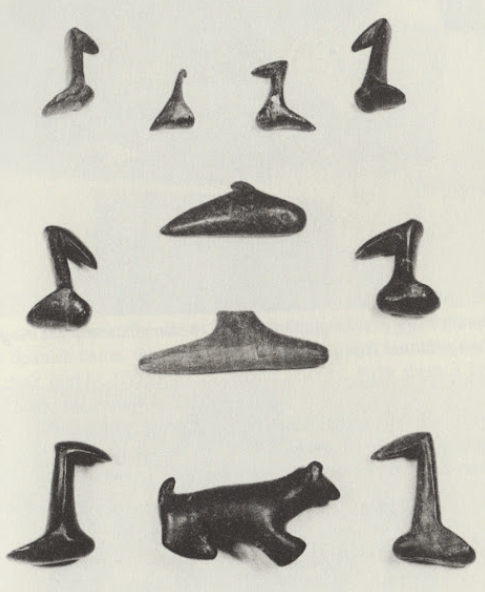
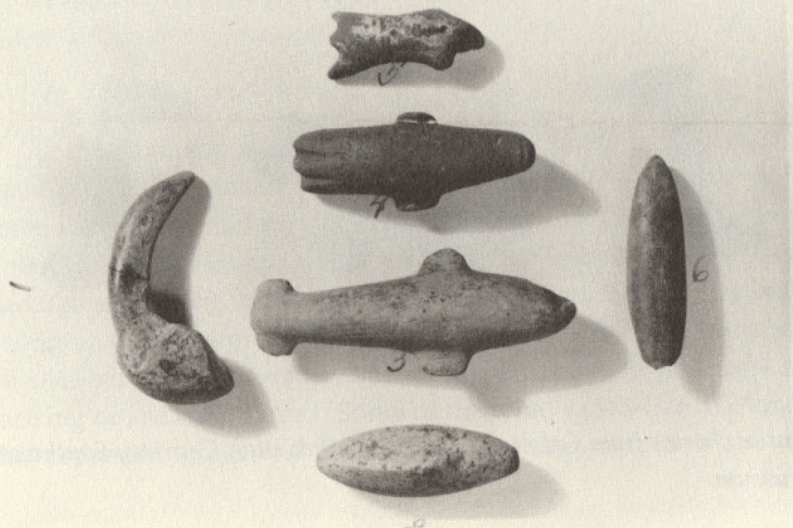
Steatite killer whale effigy found on the Rindle Estate, LA County. Courtesy Southwest Museum.Seatite charms from Catalina Island and other sites. Courtesy Southwest Museum.Swordfish effigy. Photograph Bruce W. Miller. Courtesy Los Angeles County Natural History Museum.Steatite charms and fetishes from Southern California. Courtesy Southwest Museum.
Hunting
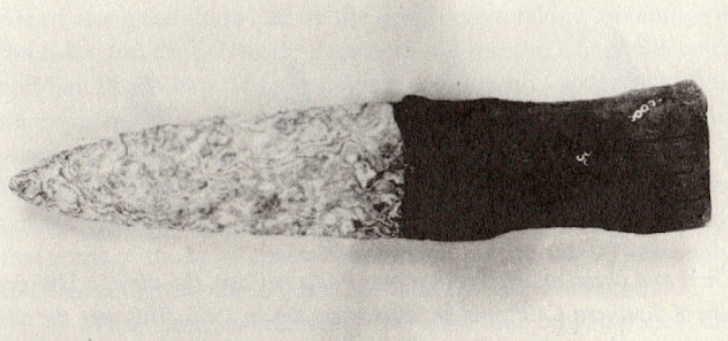
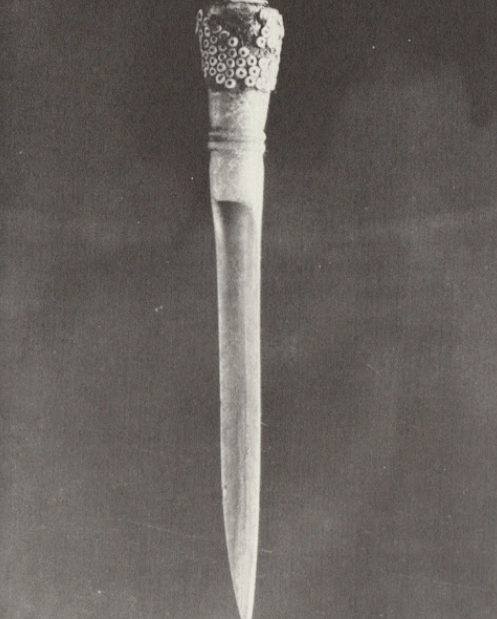
Stone knife with a wooden handle–Seal Beach, CA. Note shell bead inlay. Courtesy Southwest Museum.Chert and obsidian arrow points form Malaga Cove, site of prominent Kizh village Chowigna.
Fishing
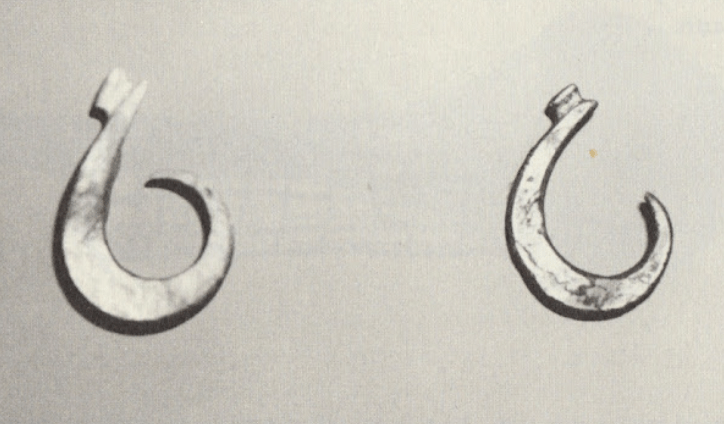
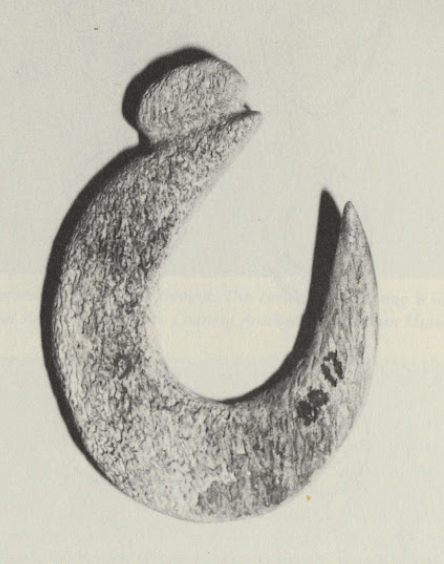
Unfinished abalone shell fishhook. Courtesy Antelope Valley Indian Museum.Two finished abalone shell fishhooks. Antelope Valley Indian Museum.Large fishhook, perhaps for ceremonial purposes. Antelope Valley Indian Museum.
Food/Cooking
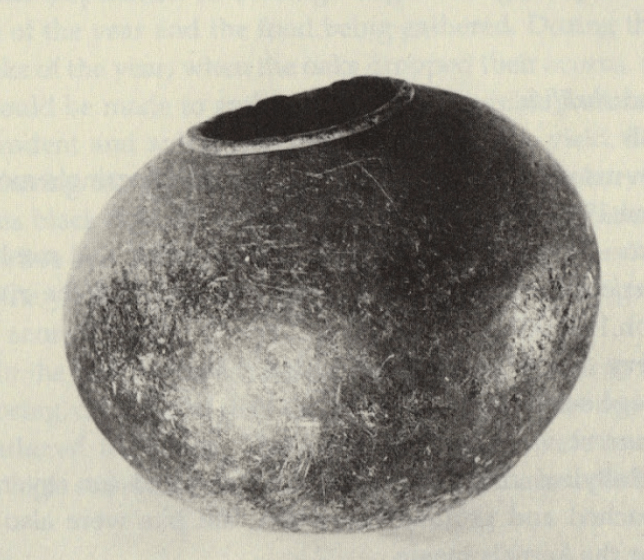
Steatite cooking bowl. Courtesy San Luis Obispo Historical Museum.Incised steatite bowl. Courtesy Southwest Museum.
Clothing
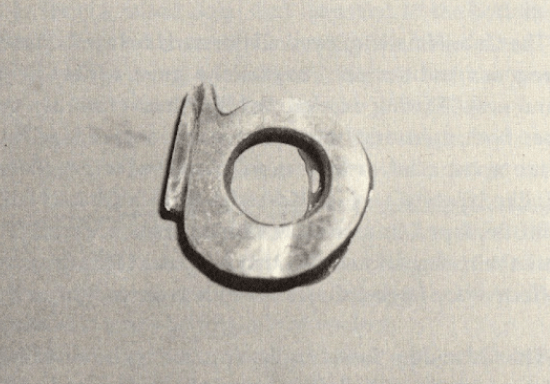
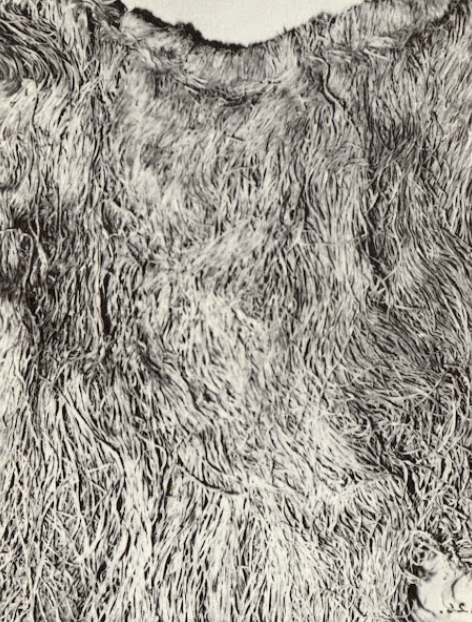
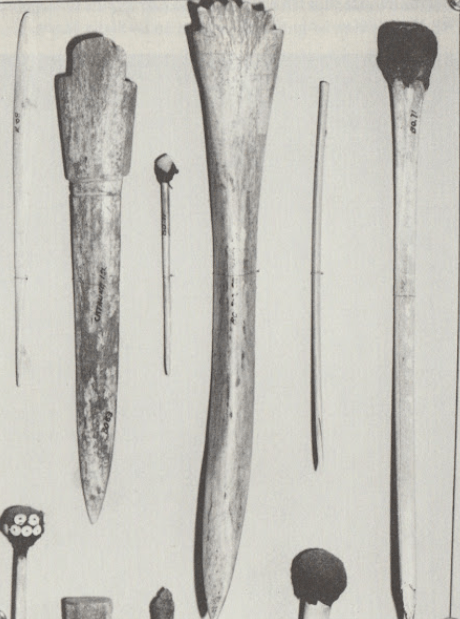
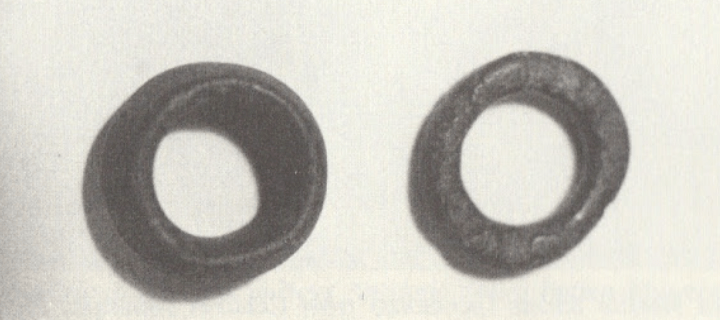
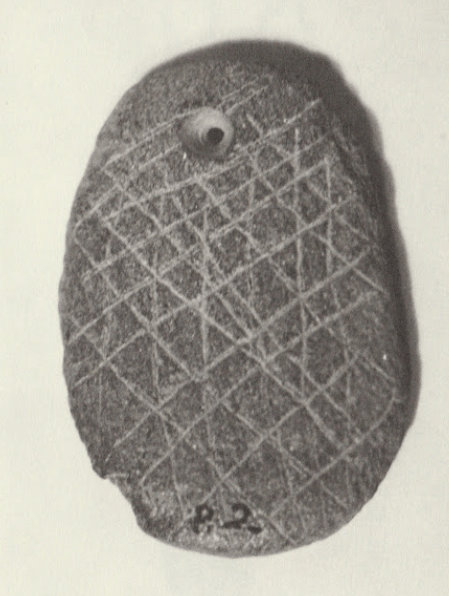
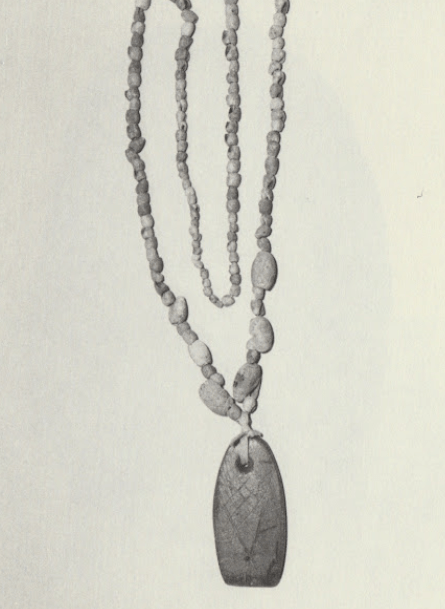
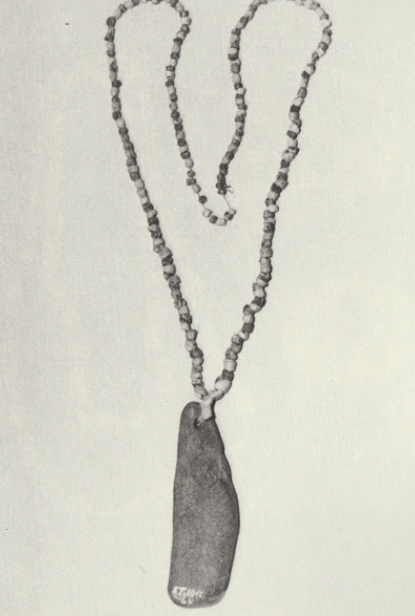
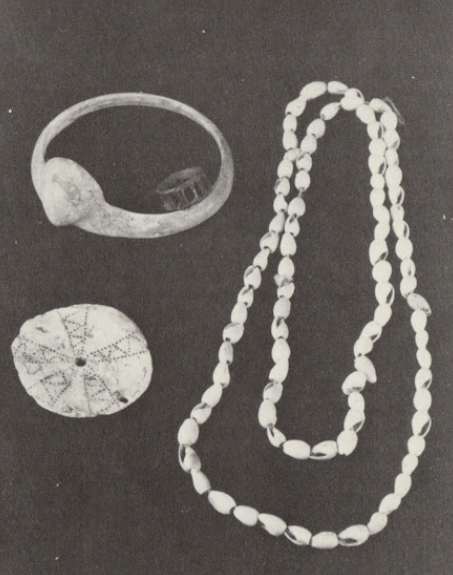
Woven grass skirt. Courtesy Antelope Valley Indian Museum.Bone awl or hair ornament. Decorated with olivella shell beads. Southwest Museum.Carved bone hairpins, some with decorative shell beads. Antelope Valley Indian Museum.Steatite finger rings. Antelope Valley Indian Museum.Perforated steatite pendants from Catalina Museum.Incised sandstone pendant. Antelope Valley Indian Museum.Olivella shell bead necklace with steatite pendant strung on rawhide.Olivella shell bead necklace with sandstone pendant. Antelope Valley Indian Museum.Shell artifacts from Catalina Island: bracelet, sand dollar pendant, ring.
Shelter
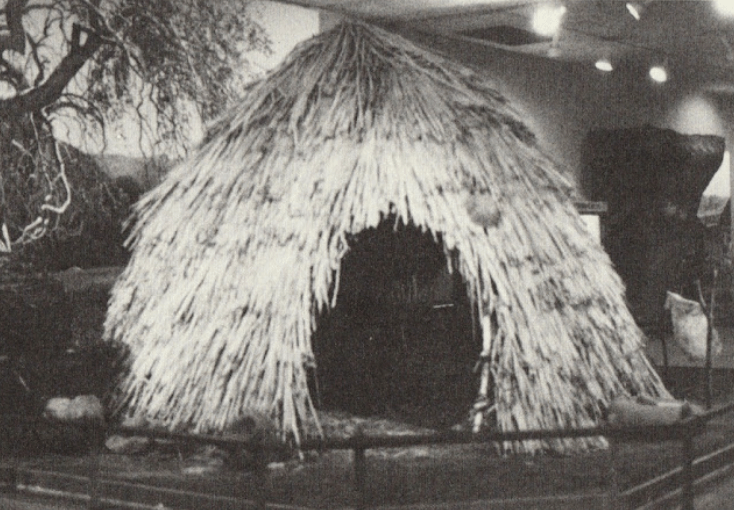
Thatched Kizh domicile. Photo by Bruce W. Miller. LA County Natural History Museum.
Trade
Shell bead money. Note relative uniformity. Antelope Valley Indian Museum.
Art
Rock painting attributed to both Chumash and Kizh/Gabrieleno. Southwest Museum.
Shamans
Charmstones. Used by shamans to predict the future and change the weather.
Music
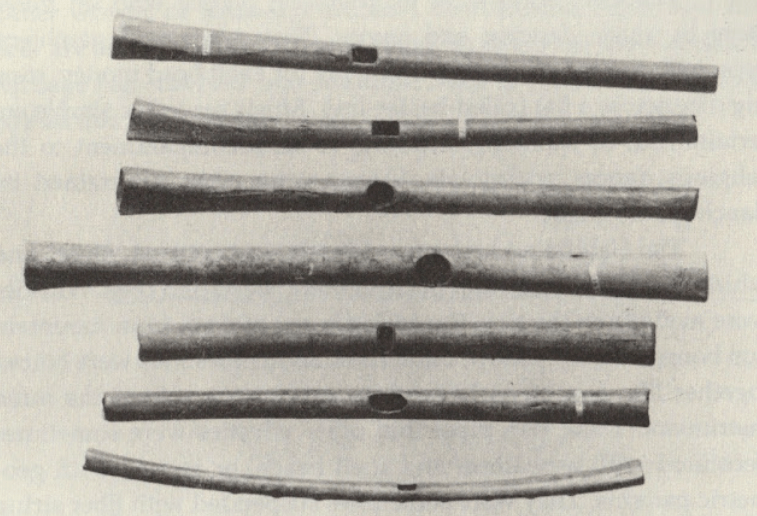
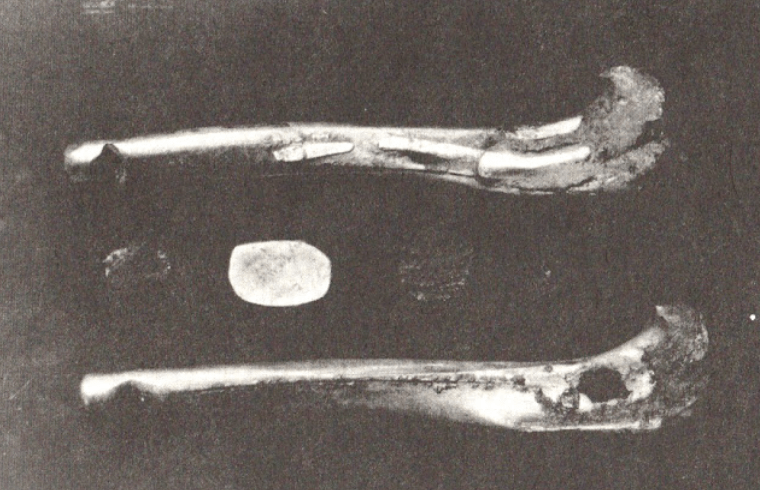
Bone whistles. Courtesy collection of J.A. Barro and Southwest Museum.Deer tibia whistles from San Nicolas Island. Southwest Museum.
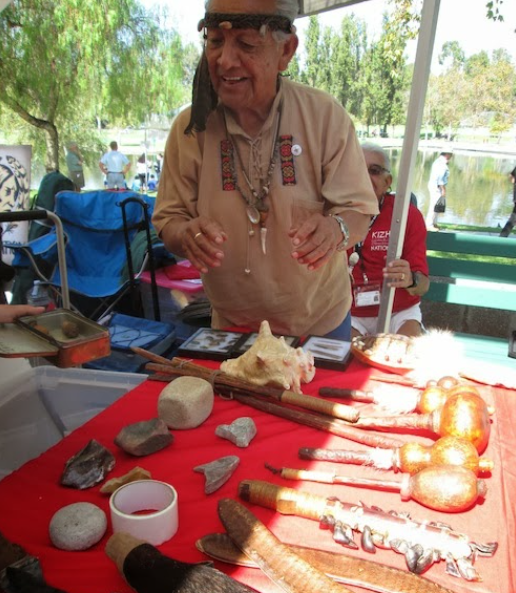
And lest we forget that the Kizh are a still-existing tribe, here is former tribal chairman Ernie Salas with some cultural artifacts at an event at Ralph Clark Park in Fullerton in 2013.










 Fullerton History
Leave a comment