The following is from a work-in-progress about the history of Fullerton. You can support my ongoing research and writing on Patreon.
We learned From Fullerton College geology professor Rick Lozinsky about the geologic history of Fullerton. Next, I would like to discuss some of the natural history of this area–its early plant and animal life.
As Lozinsky pointed out, for most of earth’s history, the lands that would be Fullerton were part of the ocean and its animal life included prehistoric sea creatures–large sharks, dolphins, and other marine life.
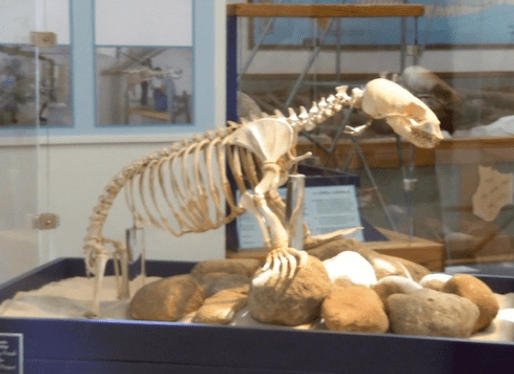
The evidence of this can be seen at the Interpretive Center at Ralph Clark Park in Fullerton–a little local treasure of paleontology.
Here are some of the marine fossils and bones that were found when that park was excavated, now on display:


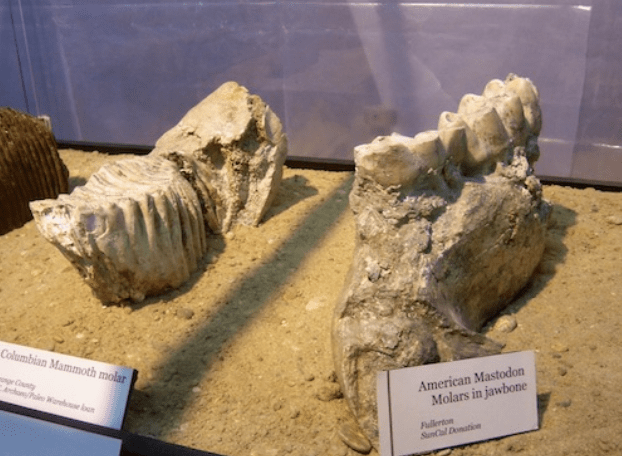
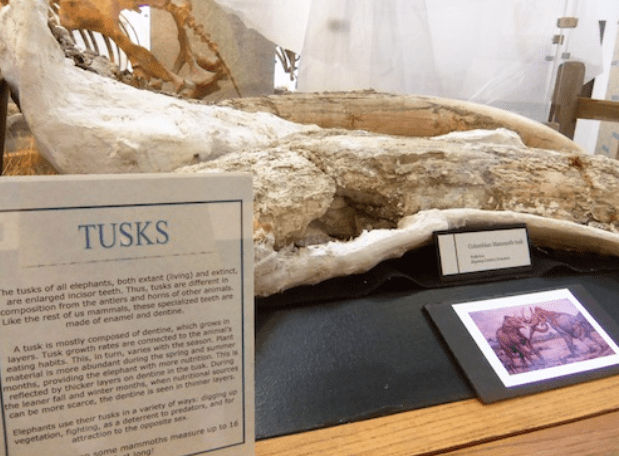
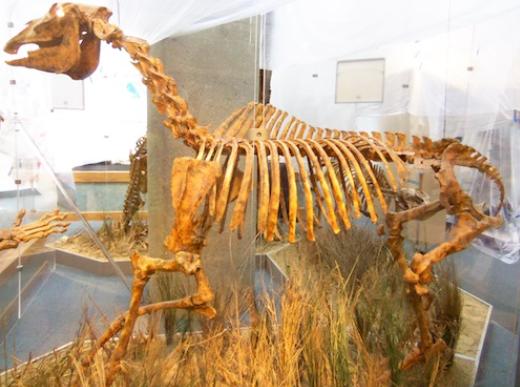
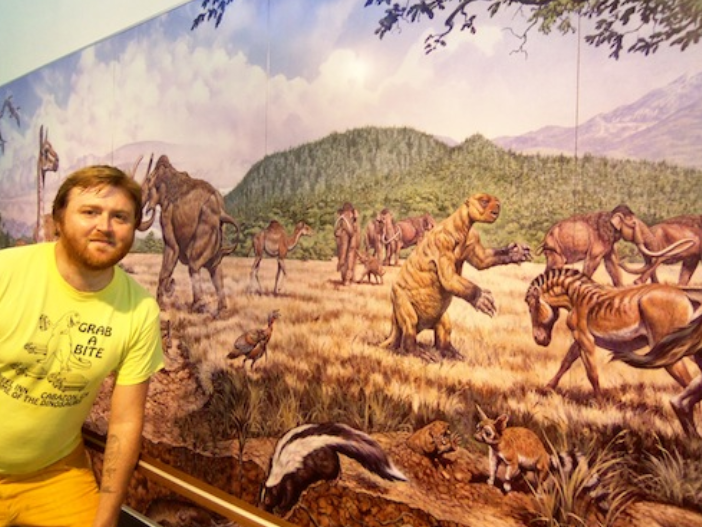
In his book Fullerton: a Pictorial History, Bob Ziebell writes, “It was, perhaps, seven hundred thousand years ago that the earth rose and played host to giant mammoths–larger than the elephants of today–and vicious sabre-toothed cats, and to lions similar to the African lions of today as well as the mountain lions which still inhabit the area, and a rare breed of llama, and camels, very large bison, wolves, coyotes, ancient horses and antelope, weird-looking sloths and tapirs–and the opposums of forty thousand years ago which remain with us today.”
Here are some of the mammal fossils on display at the museum:



What about the plant life?
Ziebell paints a picture of the landscape the first human inhabitants would have seen, perhaps 15,000 to 20,000 years ago: “They found these lands nurturing grasses, wild mustard and bushes, with some oak woodlands along streams on the plains areas and chaparral as well as gnarled, low-growing broadleaf evergreen plants in the hills…a fertile valley topped by gentle, rolling hills which dip again toward the basin known as the La Habra Valley. The Coyote Hills to the northwest and Puente Hills to the north and northeast, had drained their rich soil across this broad expanse, and a river–the Santa Ana–had often sent its flood waters meandering over the valley floor, depositing life-giving silt and creating the rich alluvium which was to serve these [later] farmers and ranchers so well.”
Thus the ancient prehistory of Fullerton’s landscape would lay the groundwork for two of its major industries: oranges and oil.
“The lesson in all this,” Ziebell concludes, “would seem to be that the many changes which have occurred in the 200-plus years since written history of this area began…are miniscule when considered in the greater perspective of the last one million years on life’s landscape.”
 Fullerton History
Leave a comment